Of Sanskrit and Freedom
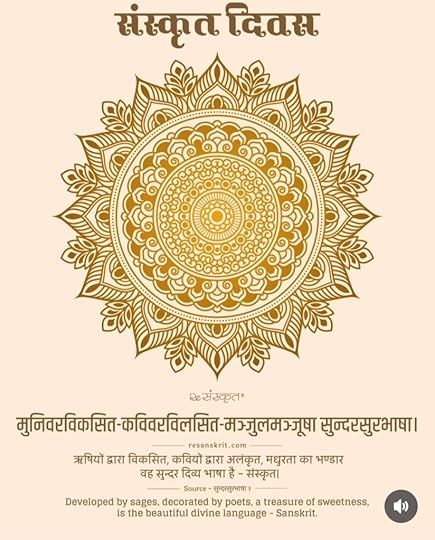
The full moon day of the month of Shraavana, which falls on the ninth of August this year, is also celebrated as the International Sanskrit Day. Coincidentally this is also the month in which we celebrate our independence from the British rule.
There was a time when Sanskrit was the language for interstate communication in India. Had we not been subjected to the rule of external invaders starting with the last millennium, Sanskrit would have perhaps continued its status as a kind of national language. Even though it is debatable whether Sanskrit was the mother of all regional languages, its influence in most of our country’s languages cannot be denied. Most of our recognised language scripts follow the pattern of Devanagari script. About sixty to seventy percent words of majority of Indian languages are either exactly like Sanskrit words or are slight deviations from their original Sanskrit.
The most intellectual discussions and debates in ancient India took place in Sanskrit. These were in contrast to the kind of television debates or other public debates we have these days. The subjects were then about highest goal of human life which of course was about how to find the ultimate freedom from all kinds of bondages.
Sometimes there were unique criteria as to who would be the winner in the debate. These days, debates are about who can be better at shouting out others. If you could shout out and shut up others, you hold the key.
There is the story of this famous debate between Adi Shankaracharya and Mandana Mishra. It was a debate to establish the supremacy of either advaita or dvaita darshana. The Judge was the wife of Mandana Mishra who was there to debate in favour of dvaita darshana. The judgment was to be delivered not only based on the quality of argument but also based on the attitude of the debaters. The debater, who was calmer during the debate, scored more points over his opponent. In this case, the story goes that even though both were equally adept in their arguments and grasp of the subject, the deciding factor was about who remained less agitated. Adi Shankaracharya won the debate. As a result, as was the custom, Mandana Mishra along with his disciples became the disciples of Adi Shankaracharya.
As English dominates to be a common, convenient and utilitarian language both at national and international level, it is unlikely that Sanskrit will regain its lost glory in the near future. However, individuals can enrich themselves a lot intellectually and spiritually by taking an interest in Sanskrit.
Those who are interested to have some introductory knowledge about the specialty of Sanskrit can go through my book – The Beauty of Sanskrit Language and Texts. The book is available online.