August Contemplations
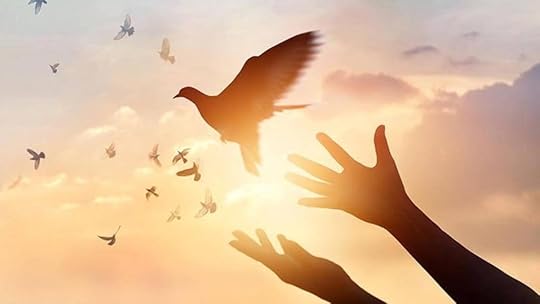
I: Spirituality and Freedom
August here in India is the rainiest month. In spite of that we have celebrations galore.
Most of our religious festivals follow the lunar calendar. There are two types of lunar months in India. Some states, especially those in South India follow a system where in the month ends on the new moon day. This is usually known as the amanta system of lunar calendar. Others follow a month that ends on the full moon day (Poonrnimanta). In this arrangement usually the bright half of the lunar month, which is known as Shukla Paksha, would be common to both. Coincidentally most of the major religious festivals fall on Shukla Paksha.
But one such exception is the celebration of the birth day of Lord Krishna. He was born on Krishna Paksha Ashtami – the eighth day of dark fortnight of the month of Shraavana (Amanta) / Bhadrapada. Even though there would be usually 24 astamis in any lunar year, this particular astami is known as Janmastami. This year Janmastami falls on 15th August, and as we know this is also our Independence Day
Sometimes certain crazy thoughts come to my mind.
Before 15th of August 1947, is it we who were dependent on the British or is it the British who were dependent on us?
Whatever it may be, since we are celebrating our freedom movement this month, maybe, it is time to ruminate on the true meaning of freedom.
And this month of Shraavan is a special month. Starting from this month is the period of four months known as chaturmasya. In ancient times, because of the rainy season, people did not take many outdoor adventures. Imagine the situation a couple of centuries back when rivers did not have bridges, roads were few and those few roads were not pucca like we have these days. Added to that public shelters were few. It was prudent to remain indoors.
But people did not let this period go waste. They flocked to the local gurukuls or Ashrams where there were regular discourses about the ultimate freedom of life. This was a time for them to listen and listen well to the ultimate knowledge.
The month of Shraavana derives its name from the Shravana Nakshatra (Aquilla Constellation). The word Shravan literally means to listen. Even though spiritual practices and seeking of knowledge should be pursued consistently, this is the month that is most ideal for listening to spiritual discourses.
By the way, there are three stages of mastering spiritual knowledge – Shravana (listening), Manana (contemplation), and Nididhyasana (internalisation after being convinced of its veracity and authenticity). In Jain tradition, a disciple in the initial years of discipleship is known as shravaka which literally means a listener.
For those who are interested in spirituality but have been postponing a serious pursuit of spiritual knowledge, this is perhaps the right time to start the journey by being a good shravaka or a listener of spiritual knowledge from a master. This tradition is still followed in many Ashrams in India where in the Master holds regular discourse for the disciples during this period.
As we know, the highest knowledge of our ancient Rishis were about the ultimate freedom of human life. Lord Krishna, who was born in a prison, gave us the ultimate knowledge of our duty and freedom throughout his life, especially through his discourses in the Srimad Bhagavad Geeta.
Volumes can be written about the glory of Lord Ganesha. Volumes can be written about the sacrifices made by our ancestors for obtaining freedom from the British rule. However, one thing worth mentioning is that in most of the years, Ganesh puja (which follows a lunar calendar) and our Independence day (which is as per the Gregorian calendar) usually fall in the month of August. Is it a mere coincidence?
By the way, Ganesha puja does have a role in inspiring patriotic feelings and bringing people together to fight the British. In ancient times Ganesh Chaturthi celebration was a private affair. But it is Gopala Krishna Gokhale who started the tradition of public or sarvajanika Ganesha puja in Maharashtra. This provided an opportunity for people to come together to discuss national issues at a time when the British discouraged public gatherings. Sometimes the British resorted to severe coercive measures to prevent public gatherings.
II: Unique sibling bonding of Sri Jagannatha Dhama
The full moon day of Shraavana, which falls on the ninth of August this year is a special day. Lord Balarama, the elder brother of Lord Krishna, was born on this day.
In Ramabatara, the elder brother Lord Rama takes the centre stage. However, in Dwapara, it is the younger brother Sri Krishna who takes the centre stage. It is said that both Laxmana of Treta-yuga and Balrama of Dwapara Yuga are the incarnations of Sheshanaga, the snake on whom Lord Vishnu takes rest.
Lord Rama and Lord Krishna are studies in contrast, though they are both avatars of Lord Vishnu.
While Lord Rama was the upholder of traditions, Lord Krishna was the rebel ultimate. Of course he broke only those customs that had become obsolete. Lord Rama is regarded as someone whose conduct is worth emulation. He is known as purushottama. At a time when taking multiple wives was the norm, he stuck to one and was loyal to her throughout his life. He was also not reluctant to sacrifice personal and family comfort for the sake of Raja Dharma.
Some say Lord Krishna’s life is not worth emulating while his wisdom is the ultimate knowledge. Many stories around his life are steeped in symbolism and mysticism. Taken literally, it may lead to lots of practical and ethical problems.
However, there is one thing that is worth emulating. In Jagannatha Dhama Puri, He is worshipped along with his brother and sister. Usually, in temples different deities are worshipped along with their consorts. But here in Jagannatha Temples he is worshipped along with his brother and sister. All three of them are seated in the same sanctum sanctorum. In Jagannatha tradition there are rituals when his consort Laxmi objects to this. But still Lord Jagannatha continues to side with his siblings.
In today’s world when family bonds are breaking even in eastern countries, this is a reminder not to break ties with siblings. As people grow up, usually this bond gets weakened.
Here it is worth remembering that as per the principles of Karma, siblings bring certain deep karmic bonds from previous lives. From this point of view also one should not forsake sibling relationships for trivial reasons. The full moon of Shraavana is also celebrated as Rakhi Poornima to highlight the bond between brothers and sisters. But why limit it only to brother-sister relationship? Looking at the history of Balrama, Krishna and Subhadra it should be celebrated as a sibling day. It should be a time to take stock of and strengthen all sibling relationships.
Another lesson that we learn from Lord Balarama is that even though he is the elder brother and his younger brother takes all the limelight, he does not suffer from the jealousy related with sibling rivalry. He continues to help his younger brother and sister whenever needed. He does not mind not being the centre of attraction and has full respect for his multi-talented younger brother, who is said to be a master of all sixty four art forms.
In addition to other celebrations associated with the Full moon of Shraavana, it would be worthwhile to celebrate all sibling relationships, following the example set by the deities of our beloved Jagannatha Dhama.
We may even take up the case to declare this day as International Sibling Day.
III: Of Sanskrit and Freedom
The full moon day of the month of Shraavana, which falls on the ninth of August this year, is also celebrated as the International Sanskrit Day. Coincidentally this is also the month in which we celebrate our independence from the British rule.
There was a time when Sanskrit was the language for interstate communication in India. Had we not been subjected to the rule of external invaders starting with the last millennium, Sanskrit would have perhaps continued its status as a kind of national language. Even though it is debatable whether Sanskrit was the mother of all regional languages, its influence in most of our country’s languages cannot be denied. Most of our recognised language scripts follow the pattern of Devanagari script. About sixty to seventy percent words of majority of Indian languages are either exactly like Sanskrit words or are slight deviations from their original Sanskrit.
The most intellectual discussions and debates in ancient India took place in Sanskrit. These were in contrast to the kind of television debates or other public debates we have these days. The subjects were then about highest goal of human life which of course was about how to find the ultimate freedom from all kinds of bondages.
Sometimes there were unique criteria as to who would be the winner in the debate. These days, debates are about who can be better at shouting out others. If you could shout out and shut up others, you hold the key.
There is the story of this famous debate between Adi Shankaracharya and Mandana Mishra. It was a debate to establish the supremacy of either advaita or dvaita darshana. The Judge was the wife of Mandana Mishra who was there to debate in favour of dvaita darshana. The judgment was to be delivered not only based on the quality of argument but also based on the attitude of the debaters. The debater, who was calmer during the debate, scored more points over his opponent. In this case, the story goes that even though both were equally adept in their arguments and grasp of the subject, the deciding factor was about who remained less agitated. Adi Shankaracharya won the debate. As a result, as was the custom, Mandana Mishra along with his disciples became the disciples of Adi Shankaracharya.
As English dominates to be a common, convenient and utilitarian language both at national and international level, it is unlikely that Sanskrit will regain its lost glory in the near future. However, individuals can enrich themselves a lot intellectually and spiritually by taking an interest in Sanskrit.
Those who are interested to have some introductory knowledge about the specialty of Sanskrit can go through my book – The Beauty of Sanskrit Language and Texts. The book is available online.