
Creative People Aren’t Good (Part 2)
Last week, I had a few things to disentangle about thecommonly-held societal more that being able to make stuff means you’re holisticallysmart. This week, I need to continue that train of thought to explain the cycleof sabotage plaguing online fandom communities.
As before, I’m talking about English-speaking communities incultures I can access. I truly don’t know if other communities and otherlanguage-speakers are doing the same toxic shit that we are. If you know the answer,please reach out! I’m very curious, and I love thinking and talking about theways that our culture and language shape us and feed into themselves.
I’m also obsessed with trying to understand exactly howthings got so fucked up, why they’re staying that way, and how we can fix it.
Cultural self-sabotage: a case studyLet’s talk about Neil Gaiman.
People who’ve followed my career for a long time, or whoknow me personally, are aware that I used to really admire Neil Gaiman. Idescribed his prose as feeling like a friend telling a whispered secret storyto you in a dark room. Loved the atmosphere of his writing, his mystery-shroudedworlds and complicated characters.
I’ve reconsidered anawful lot about whether he’s actually as good as I thought he was, but I’m notready to reread his work more critically yet. (If you’re interested in seeing somecritical essays, let me know.)
Obviously, a number of potent allegations about hispredatory behaviour have emerged. Some authors and people in the writing worldhave quietly mentioned that his name was a sour one among the whisper networks.Long before the viscerally upsetting details came out in courageous articles lastyear, at least some people in the BDSM scene in Australia and in fan conventionand expensive professional writing class scenes knew that Gaiman wasn’t to betrusted.
But Tumblr didn’t, and for a while, he was the internet’sbeloved English teacher. All of the affection for queer or queer-affirmingteaching professionals who saved so many of us from peers’ rejection andcruelty was projected onto Gaiman. He didn’t deserve it, but we didn’t knowthat.
And how could we? After all, there’s a persistent, clangingnotion that to be a creative person is to be a good person. That’s not true,but how did we get here?
Gifts from godHang on tight here, because I need to contextualise thisshit with cultural Christianity. I don’t think North Americans, especiallyex-believers and non-believers and pagans and whatnots, really grasp the powerof the background radiation of Christianity. Little turns of phrase representthe way our thoughts and feelings are shaped by this background.
Now, the idea of sainthood is particularly linked toCatholicism, which also happens to be part of my background, but it’s certainlyspread beyond that. Like mildew and algae blooming in one corner of a pond, theidea that creativity is a divine gift is casually accepted – and pernicious. (I’mnot getting into the Roman roots and how all of that affected the wayChristianity developed ideologically because frankly, I don’t know enough aboutit, and I’m also not sure that it’s really relevant to the discussion.)
“Talent” is considered a gift from god. A blessing. Anarbitrary state of being bestowed by deities or fate. Even secular people tendto talk about artistic skills as though they just happened overnight, as thoughsomeone simply woke up with them one day, a divine act of reward or caprice.
Creativity is a blessing, so the corollary of that is:creative people are blessed, and blessed people are sanctified, and sanctified peopleare better than others.
This simple assumption manages to hold firm against everysingle disproof imaginable. Simply put, we expect famous creative people to besaints, and then we get pissed off, shocked, and disappointed when – surprise! They’rejust people. Even the goddamn saints weren’t saints, as any hagiographer willtell you. (I’m not a biographer of the saints myself, but I have a few scrapsof passing knowledge.) St Jerome was famously cranky. Don’t even get me startedon the Apocrypha, the fig tree incident with Jesus, or any of that.
There was a time when we saw the imperfections of saints andgods as inspiring and relatable, but in the current era, all of those flawshave been sanded away. Some mistakes have a degree of acceptability, but othersare too deep to bear. The measures for which sort is which tend to be painfullyarbitrary. (Trust me, I have a lot more to say about our internet culturalstandards and how fucked up they are, so stay tuned for that in the future.)
What is talent?Here’s the goddamn problem. Because we see creative skill asa Thing, an inherent quality rather than a gradually developed one, our culturehas a very toxic relationship with it. We don’t want to talk about the hours uponhours of skill grinding required to improve at something, and we certainly don’twant to admit that sometimes, people will just not get very good at somethingthey practice. We don’t understand why some people are good at a thing andothers aren’t. Some level of enjoyment or satisfaction, plus the willingness tospend time and outlast frustration plateaus, are the only concrete metrics wereally have.
But those aren’t sexy and mysterious, unlike the concepts oftalent and inspiration. Can anyone grind their way to looking talented? Caneveryone do everything if they work hard enough at it? The first one is amaybe, and the second one is too expansive a claim to earn an honest “yes”.That whole Malcolm Gladwell “ten thousand hours” thing hasbeen debunked bya bunch of people more patient and possibly more spiteful than I am. (Asusual, misinterpreting and overapplying a scientific study was to blame. Who’ssurprised?)
And anyway, repetitive work and practice means embracingfailure. Failure is stigmatized here, in the English-speaking Western world,and is thought to indicate a moral weakness or faltering of some sort, so whothe fuck wants to embrace failure? No, better to sigh wistfully over the ideathat talent or inspiration simply passed us by. Never mind that creativity worksthe same way as other muscles, including the need for rest days.
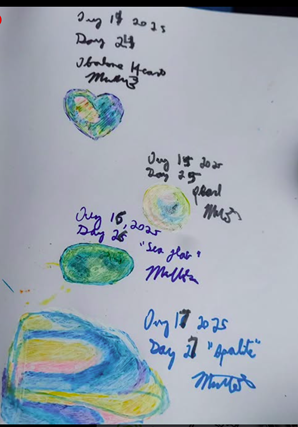
Above: my own slow, patient, grinding efforts to improve mydrawing skills. Drawing gems is really damn hard.
Who should we be?The thing is, as I talked about last week, just making stuffwell doesn’t indicate anything about the quality of a person.
Let that sink in. None of the artists or creative people youlike are guaranteed or even likely to be good, kind, or otherwise lovely bymere dint of their creative skill.
However, that means something rather nice – anyone who’skind, patient, or otherwise lovely got that way by choosing to be so. Anyonecan develop patience and kindness for others. It’s not a god-given talent; it’sa skill that’s trained.
Artists are not better people than the rest of the world –and we ought to forgive them for it, and the rest of us artists need to forgiveourselves for being messy, complicated, mistake-making creatures. We don’t owethe world goodness because we happen to be skilled at something. Kindness andgenerosity are their own rewards, not the side effects of a skill. Learning togive yourself and others grace, benefit of the doubt, kindness, and help? Wecan all earn those skills, regardless of whether we can paint a good sunset orwrite a brilliant string of code.
If you believe in God, maybe this is God telling you to giveyourself some damn credit. If you don’t, then hey! Take it from me and mymultiple therapists; recognizing your own achievements is a requirement for survival.It’s very hard to be nice to others when you’re busy being shitty to yourself,and not having been “blessed” with a “talent” tends to make people beat themselvesup. It’s not easy to stop hating yourself, but just fighting the ideas aboutwhat makes people good, important, or generally better than you is a vitally criticalstart.
***
A writer and artist, Michelle Browne lives in southern ABwith xer family and their cats. Xe is currently working on the next books inher series, other people's manuscripts, knitting, jewelry-making, and drinkingas much tea as humanly possible. Find xer all over the internet: *Website * Amazon * Substack * Patreon * Ko-fi * Instagram * Bluesky* Mastodon * Tumblr * Medium * OG Blog * Facebook


SciFiMagpie

- Michelle Browne's profile
- 605 followers

