
Celebrating Jane Austen in 6 Intriguing Essays
This roundup of intriguing personal essays celebrates Jane Austen’s life and legacy, and the unique place she holds in literary history.
In 2025, the year of Jane Austen‘s 250th birthday, her influence and talent have been recognized far and wide. Unusually for a woman of her time (she was born in 1775) her talent was recognized early on and taken seriously by her entire family.
Despite the popular portrayal of her as all charm and modesty, Jane was a writer and observer in full mastery of her gifts. She cared deeply about getting published and being read, despite myths to the contrary. Six exquisite novels crafted with compassion, humor, and insight into the travails of the sexes and social classes assured her lofty position in literary history.
. . . . . . . . . .
On First Reading Pride and Prejudice
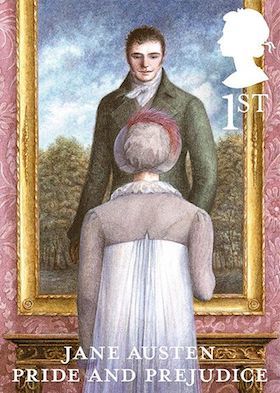
By Carol J. Adams: I first read Jane Austen’s Pride and Prejudice in the spring of 2005, while my mother-in-law recuperated in rehab from a broken leg. A year earlier she moved in with my husband Bruce and me.
It had been a difficult year, and she was soon to return. I wanted to make things easier for all of us, and was earnestly making lists of how to do that. “This time it will be different,” I told myself. And I turned back to Pride and Prejudice.
Flo Gibson narrates the Pride and Prejudice audio book. Flo (I think of her as Flo) pronounces the famous opening sentence: “It is a truth universally acknowledged, that a single man in possession of a good fortune, must be in want of a wife.” And off we went again. She never tired of reading to me and I never tired of listening.
Each time I entered the world of Pride and Prejudice, I felt a physical high. Each time, listening or reading, my only responsibility to this fictional world was to continue listening or reading. The novel’s wit and irony provided relief. Those single men in possession of good fortunes… do they know they are in want of wives? Read the rest of On First Reading Pride and Prejudice.
. . . . . . . . . .
Jane Austen, the Secret Radical
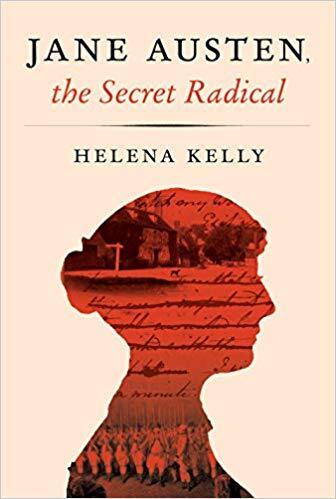
In Jane Austen, the Secret Radical, author Helena Kelly looks past the grand houses, drawing room dramas, and witty dialogue that have long been the hallmarks of Jane Austen‘s work to bring to light the serious, ambitious, subversive concerns of this beloved writer.
Kelly illuminates the radical views — on such subjects as slavery, poverty, feminism, marriage, and the church — that Austen deftly and carefully explored in her six novels, at a time when open criticism was considered treason.
Kelly shows us that Austen was fully aware of what was going on in the world during the turbulent times she lived in, and sure of what she thought of it. Above all, Austen understood that the novel — until then dismissed as mindless and frivolous — could be a meaningful art form, one that in her hands reached unprecedented heights of greatness.
Read the rest of Jane Austen, the Secret Radical: How She Would Have Liked to be Read.
. . . . . . . . . .
What (Jane Austen’s) Women Want
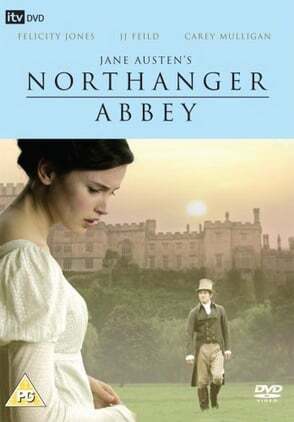
This musing that ondering the question of what Jane Austen’s women want, is by Janet Saidi, from The Austen Connection: If you’re like me, you’ve many times had to explain what Jane Austen is really about — you might find yourself explaining to friends who just don’t get it, that Austen is not all about finding a man who’s wealthier and more powerful than you are, to marry.
As we’ve said before and will point out often in these letters, the stories also — while not technically Romance-genre stories — introduce, build on, and play off of our favorite Romantic Tropes, from the hate-to-love or friends-to-lovers storylines, to the Alpha male, forbidden love, and proximity plots.
But we also know that within this scaffolding of she-who-identifies-as-girl-meets-complicated-person-who-identifies-as-boy, there is a lot of meandering to get to our much-anticipated engagement, and there’s also some analysis after the Love Declaration, where Austen shows us what she’s been doing all the while.
Sure, these novels follow the traditional Marriage Plot. These novels may have invented the plot as we know it today. Read the rest of What (Jane Austen’s) Women Want.
Jane on the Brain: Jane Austen and Empathy
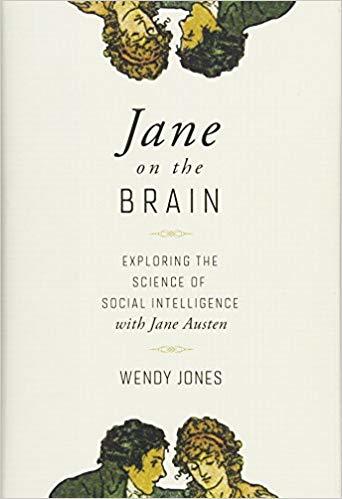
This excerpt from Jane on the Brain by Wendy Jones considers how Jane Austen’s stories not only convey empathy through mirroring and identification, but they’re about empathy as well — who has it, who lacks it, and how some of her characters deepen their capacity for this important quality.
Her novels get us to focus on the experience of empathy (neuroscientists would say they prime us to think about it) by showing its value repeatedly.
So we find ourselves reflected in novels that are all about the value of being able to find yourself reflected in other minds and hearts. Yet we’re not fascinated by empathy because it’s brought to our attentions, but rather we pay attention because empathy is essential to our well-being. And this is yet another reason we’re drawn to Austen — she understands this about us.
Perhaps it seems strange to characterize Austen’s novels as being about empathy. After all, Austen’s great subject is love: its different varieties, its frustrations, its nuances, and, above all, its satisfactions. And not just love between couples, but also between friends, parents and children, siblings. Austen certainly understood this most precious of human emotional resources. Read the rest of Jane on the Brain: Jane Austen and Empathy.
. . . . . . . . . .
Why Has Mr. Darcy Been Attractive to Generations of Women?
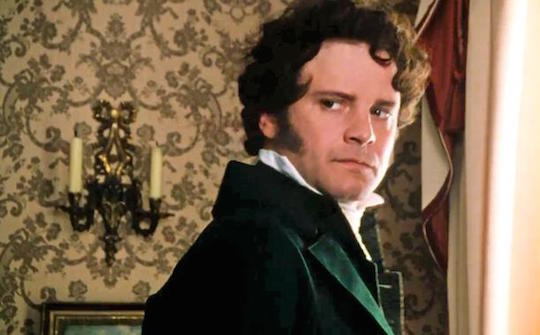
A delightful musing by Sarah Emsley: “Darcy is Still the Ultimate Sex Symbol” is the title of an article by Katy Brand in The Telegraph. The article features a photograph of Colin Firth and his famous wet shirt from the 1995 A&E/BBC Pride and Prejudice series. But now that I have your attention, I want to ask for your help in identifying what it is that makes Mr. Darcy so attractive — in the novel. Early in the story, he happens to accompany Mr. Bingley to the first assembly.
Within a few lines he becomes a “sex symbol,” with his “fine, tall person, handsome features, noble mien; and the report which was in general circulation within five minutes after his entrance of his having ten thousand a year.”
He’s attractive because he’s handsome and rich. The men at the assembly judge him to be “a fine figure of a man,” while “the ladies declared he was much handsomer than Mr. Bingley.” Read the rest of Why Has Mr. Darcy Been Attractive to Generations of Women?
. . . . . . . . . .
Reading (and Watching) Pride and Prejudice in India
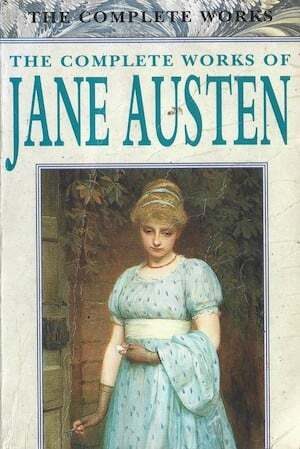
Here is a first person musing by our correspondent, Melanie Kumar, in Bangalore, India: Like most teenagers in India who enjoyed the English classics, Pride and Prejudice came into my life. It prompted me to borrow the Complete Works of Jane Austen from the library and to read all her novels.
But if you were to ask me to recall the plots today, Pride and Prejudice is the one that has etched itself most clearly in my mind. This could also be because I had to study this novel as part of my English Honors program in college. I recall the name of the teacher who took up this book but can’t remember many insights that she left me with.
What comes to mind is that she spoke of it as a “drawing room novel,” as a lot of the action indeed takes place in these various home settings, starting with that of the Bennet family in Pride and Prejudice.
But can one fault the teacher? Jane Austen did write the book in something of a bubble, after all. If there is a historical context to a novel, a teacher can probably reference it for students to think about it. Pride and Prejudice was devoid of any such allusions, except for being referred to as a novel of manners and satire. Read the rest of Reading (and Watching) Pride and Prejudice in India.
Jane Austen’s novels
Sense and Sensibility (1811)
Pride and Prejudice (1813)
Emma (1815)
Mansfield Park (1814)
Northanger Abbey (1818; posthumous)
Persuasion (1818; posthumous)
The post Celebrating Jane Austen in 6 Intriguing Essays appeared first on Literary Ladies Guide.


