
What you don’t know about AI (but must)
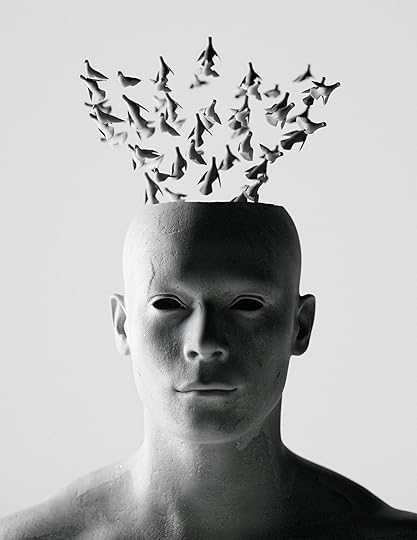 (Photo by Eren Yıldız on Unsplash)
First, they took our liberty by attaching us to trackable mobile devices; next, they destroyed our attention spans with social media. And now, they are after our brains!
Artificial Intelligence (AI) can be aptly described as the next big thing. Everywhere since the advent of ChatGPT, tech bros have been outdoing each other in releasing new AI businesses. From medicine, pharmaceuticals, education, politics, scamming or marketing, AI is being used everywhere. “We have followed traditional human thinking,” everyone seems to say, “But now there is a smarter way.”
Inspiration and original thought are underappreciated aspects of human life. But at its core, these are what makes us human. Scientists, storytellers and saints have come up with creations—real and imagined—enthralling thousands of people to act differently, develop social movements, and change lives. But now, everyone wants AI to do the thinking for us. Dismiss its supreme importance and you are a heretic or troglodyte. We are now at the crossroads—with a choice between human experience through evolution or computerised conception.
As I write this blog, I am in London for events to do with my new book, Biohacking Your Genes (Beyond Words, an imprint of Simon and Schuster, NYC) and soon to deliver a lecture at University College, London—at the population health department which hosts UCL-Lancet Commissions and collaborates with The Lancet, the prestigious medical journal. President Trump has been visiting here, and the UK government has announced a major investment by US tech companies in AI. “US tech giants pledge billions for UK AI infrastructure during Trump visit” screamed a headline in the Financial Times.
My publishers tell me that I am the only person to have written literary fiction, non-fiction, medical textbooks and poetry. My agent tells me not to mention that I write fiction when discussing non-fiction with publishers’ as it becomes too much to take in. We live in a compartmentalised, increasingly siloed world. I must say I don’t watch a lot of television. On the 24-hour long air travel from New Zealand, I did some writing, napped, ate some food and did some thinking. “Raw dogging” became a recently repurposed term for those only watching the flight path on the airplane’s TV screen. I must be the record holder, my daughter thinks, as that has been me on any flight for the past two decades! But has my productivity been because of this? Cede too much authority to AI to do your thinking while writing, and although it may not be apparent at the time, I believe there are downstream effects with respect to our decision making. I was therefore interested in a study that came out of the highly-ranked MIT university that studied cognitive brain function with people that used AI a lot.
This study from MIT’s Media Lab is one of the first to study the neuroscience of how regenerative AI affects us. See, essentially the brain remembers what it actively performs. If you write something by hand, you’ll remember it better than if you type it. This has been even recommended by mindfulness gurus for manifesting our wishes! When you use AI to write your document, your brain effectively outsources the tasks of memory, effort and ultimately cognitive engagement.
The MIT study was conducted over 4 months involved 50 subjects. Brain scans (functional MRI and EEG) to track neural activity were arranged along with memory tests (immediate recall of written text) and writing sample quality assessment (by experienced educators). The participants were divided into three streams: (A) No assistance, just the human brain (B) Google Search Engine to help the project (C) ChatGPT i.e. AI writing your essay based on your prompts. The findings: Memory loss in Chat GPT users (83% of ChatGPT users could not recall a single sentence that had been written by AI, even if directed by them); Loss of brain connectivity (fell from 79 to 42 points in ChatGPT users which translates to a 47% reduction in neural connectivity); Essays written with ChatGPT were called “robotic,” “soulless,” and “lacking depth” by educators. Things like spelling and diction may not matter much these days, but what concerned me was that those that wrote without AI assistance had a stronger memory, better brain activity, and higher quality outputs. AI does save us time, but perhaps the message is we need our brains to do the thinking. “Use it or lose it” comes to mind. You can use AI as a research-assistant, as I do, but rely on it at your peril. New technology can be exciting, but we must beware of surrendering our thinking minds, things that make us protest, love and reminisce. This study about brain depowerment caused by AI suggests that tech billionaires–especially the five horsemen of cognitive doom: OpenAi, Meta, Google, X and Apple– may have arrived at a new disturbing way to rule us. As Martin Luther King said during his sermon “Love in Action” on April 3, 1960, in Atlanta, Georgia: Nothing in the world is more dangerous than sincere ignorance and conscientious stupidity.
THE END
End note: AI was not used to write this blog.
Note: This blog is about science-communication, education, interesting science, and new medical research to do with (mostly) health and skin. It is not individual one-on-one medical advice. Please do not stop any medications without consulting your own doctor.


