
Great Reckonings in Little Phrases
 A World of Association
Journalism is meant to tell you what the world is; poetry is meant to tell you what it’s like. Journalism does its job by marshalling facts (one hopes); poetry does its job by creating associations in your mind.
Poetry can be more concise than prose, because an association or comparison can, in a single image, convey a lot of information. That’s the joy and fun of poetic language—and it’s also what tends to drive schoolchildren crazy. When E.E. Cummings says, “life's not a paragraph/ and death i think is no parenthesis,” what, exactly, does he mean? Or, I guess: what, inexactly, does he mean?
He doesn’t say. Poetry doesn’t explain.
“Feeling is first,” he says, in the title of his poem, so how does that line make you feel? Your personal experiences with paragraphs and parentheses may determine what you bring to the party. Does he mean that life is not short? That it is not a rhetorical argument tightly focused on a single topic? That it refuses concise structure? That it’s not an annoying and repetitive chore mandated by a teacher? You tell me.
Is death not a parenthesis because it is, instead, a period—not the closure of one idea within others, but a permanent stop? Or is it not a parenthesis because it’s only half of a circle, not the a closed loop that death (as far as we know) is?
Whatever he meant and whatever you think it means—or however it makes you feel—he nailed it in 11 words, six of them being words like, “a,” or “is,” or “no.” And I needed…well, a paragraph. And I probably made a hash of it.
Poetic language is magic, but you need to be prepared for it. It requires prior knowledge—or, if not knowledge, then at least some experience of the world. If this is like that, but you have no experience of that, you’re left with very little insight into this.
This is more dire in metaphor than it is in simile, because simile does a little of the work for you, pointing you in the right direction. You may never have thought about this, if your teachers said, “a simile uses like or as,” and left it there. That’s technically correct, but it doesn’t tell you anything useful.
Let me give you a rude example. If I said, “that kid, Hugo, is such a pig,” most of you would know more or less what I meant—the more or less depending on your knowledge and experience with pigs. Even if you’ve never met a pig in person, you know something about them, or at least what we think of them.
When I say, “Hugo is a pig,” I’m making a complete or holistic comparison: X = Y, in all of its aspects. Fairly or unfairly, every association you bring to the idea of a pig you will now bring to this kid named Hugo. That’s a metaphor. If I think a pig is fat, dirty, messy, smelly, and noisy, well…sorry, Hugo, I now think the same things of you. Of course, if I think a pig is cute, cuddly, and super-smart, Hugo will come out looking a lot better. But that’s probably going to be the minority opinion.
If I wanted to be more precise in my description, I might restrict the association and say, “that kid, Hugo, is as messy as a pig.” Now it’s a more limited comparison: one aspect of X = Y. That’s a simile, and that’s why it uses like or as. Myra is as fast as a cheetah, but she resembles a big cat in no other way. Ahmed is sharp like a tack, but he is neither made of metal nor used to pin pictures on a corkboard. And so on.
One of the challenges of teaching poetry, or prose with poetic language, is that associations and comparisons used by authors may become increasingly remote to readers over time. That can happen because of changing culture and language, and it can also happen because more and more modern readers live in cities, surrounded by concrete and plastic, making older, more nature-based imagery difficult to understand. When a student reads that Robert Burns’ love is a like a red, red, rose, does he get anything out of that image beyond its red redness?
I wonder: what metaphors and similes should we expect from poets growing up today? How will they turn their world into meaning?
I wrote more about this aspect of poetry, and even that particular Cummings poem, in a post here last year. Enjoy.
I want to move to another problem.
A World of AllusionImagery and metaphor enrich our language if we can access them, but so does allusion. Instead of equating something with something else, writers sometimes quote, or paraphrase, or hint at powerful and well-known phrases from the past—from the Bible, from Shakespeare, from a wide array of literature that they assume their readers are familiar with. Those shout-outs to The Greats can work in a similar way to metaphor—they can suggest, in a phrase or a sentence, much more than the words actually say. They can carry a lot of weight in a small package, just like imagery can.
If I write about an act of political violence and call upon us to awaken “the better angels of our nature,” I’m saying more than I’m actually saying. I’m summoning the spirit of Abraham Lincoln, who spoke those words in his first inaugural address on the eve of the Civil War. I’m aligning my thoughts with his. I’m aligning our moment in time with his. I’m suggesting, perhaps, that our moment holds great peril for us if we cannot recognize each other as fellow citizens and fellow humans. I’m saying all of that without saying all of it:
We are not enemies, but friends. We must not be enemies. Though passion may have strained it must not break our bonds of affection. The mystic chords of memory, stretching from every battlefield and patriot grave to every living heart and hearthstone all over this broad land, will yet swell the chorus of the Union, when again touched, as surely they will be, by the better angels of our nature.
But, just as with metaphor, a reader who does not know my reference may see nothing resonant in the words. The red, red rose will simply be red. X = X.
Long before we had an internet, we had something like hypertext in our literature, with invisible links woven into our language, referring out of one text into the entire literary canon, out of one period of time into the vastness of human history. Of course, you couldn’t click on a link and go to the source; you were just expected to know it.
And for many years, people did know—even non-college-educated people. If you grew up with a King James Bible in your house, you got the biblical references in anything you might read or hear. If you had a collection of Shakespeare plays, your ability to access allusion was even greater. Those are probably the two greatest sources of literary allusion in the English language, but for many people today, those wells may have run dry.
What Do We Hold in Common?How important is it that we all know the same source material—that we all get the joke?
My wife certainly thinks it’s important. It’s been one of the core tenets of her Craftlit podcast for almost 20 years.
Does it matter if you know where “hoist with his own petard” comes from (especially if you don’t even know what it means)? Does it matter whether you know the source of the phrase, “all flesh is grass” (especially if you’ve never watched grass live and die from season to season)?
I don’t know. A turn of phrase can lose meaning for so many different reasons. I worry that much of what our authors have written is losing connection with those to whom we’re handing their work. If we still bother handing it at all.
We’ve had decades of fights about the literary canon: Should one even exist? If so, who and what should be included in it? Does it matter whether today’s students know who Boo Radley is, just because yesterday’s students did? Does Holden Caulfield matter as much as Hamlet (if Hamlet even matters anymore)? Should Janie Crawford matter as much as Jay Gatsby?
In general terms, does the lack of a shared literary heritage erode our ability to communicate with each other on any plain but the most basic, with no echoes or resonances or links? Or should reading just be a free-for-all, matching kids with their interests and being happy that anybody’s reading anything?
When E.D. Hirsch published Cultural Literacy in 1988, in the midst of the Reagan/Bush era, liberals like me were not inclined to want to listen to his message. Who cared whether kids were reading the same things that adults had read when they were kids? Multiculturalism was more important to the discourse at that moment—representing the diversity of our country and its history, bringing voices and groups into the curriculum that had systematically been left out. That was important and it remains important.
But.
Shouldn’t our goal be to hear more voices, not just different ones? To be in on more of the jokes? To be included in more of the IYKYK crowd, whatever the topic of the day might be? Isn’t there room for Janie and Jay when you’re reading about 1920s America? We are large, as I say here ad nauseam; we contain multitudes.
If you get the reference.
OK BoomerCulture may be nothing more than “the way we do things around here,” but every part of that definition matters: the way, the we, and the here. Every part helps define you and, by putting a border around what you do and where you do it, it helps distinguish you and your group from others, whether they’re ethnic groups, religious groups, residents of a particular area, or generations. Your music is your music, not that crap they play on the oldies station, even if that station is playing music no more than 10 years old. Harry Potter? Dead to me; on to the next. And there’s nothing wrong with that. Culture is a liquid, not a solid; it takes the shape of whatever it’s contained in. Each of us deserves art and culture that takes the shape of the lives we’re living.
But the whole idea behind “cultural literacy” was that some things defined us across all of those sub-groups; some things were shared, and they gave us a common vocabulary that could transcend the esoteric cultural references that only your in-group would know. As different as we all were, there were some cultural touchstones that we all shared—a little bit of unum in a nation of pluribus.
But was that just special pleading from someone who wanted to cram his own culture down everyone else’s throats and pretend that what was his was really theirs?
It’s a fair question.
Avoiding the Lonely RoadHere’s where I come down on it.
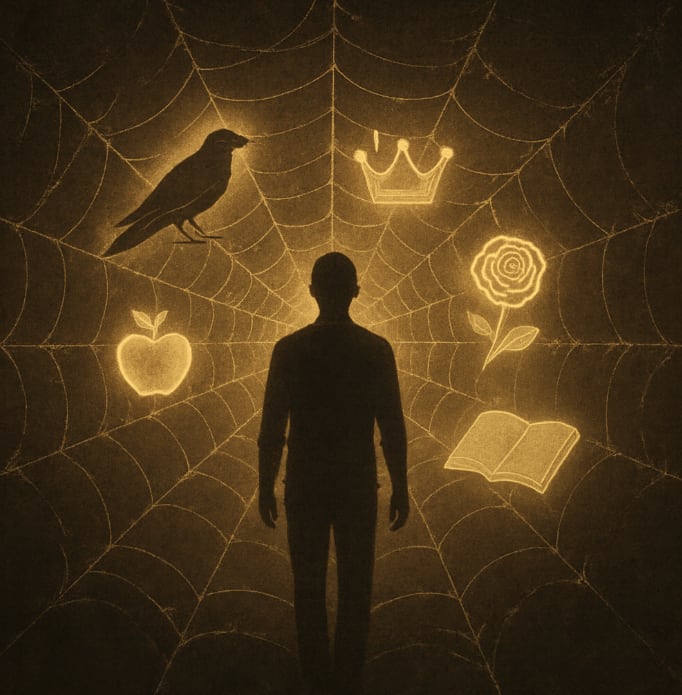
I love literature because it enmeshes me in a rich web of association that connects me to people and stories and ideas across continents and centuries. Whatever I encounter and grapple with in my life, I know it’s is like something else that has happened before, and my experience is like someone else’s.
There is great comfort in that. I am not walking the road of life by myself, even when I am alone. I’m riding down the river with Huck and Jim, trying to find a little free air to breathe. Or I’m Ellison’s invisible man (and his snarly Russian cousin) hiding out in the basement of my mind and curdling with resentment because of every dream that’s been deferred. Or I’m wandering lonely as a cloud, my heart filled with pleasure, just like Wordsworth. The more I read, the more company I have on the journey. My feet fit comfortably in their footprints.
It’s even more of a comfort when I can share what I’m feeling with my friends in a language they can understand. Or with strangers here on Substack, since I feel compelled to write, even if no one is listening. “Words, words, words,” as a disenchanted Dane of my acquaintance likes to say.
But what language will they understand? What do we all share?
Well, I could write a few paragraphs of quasi-journalistic prose telling people in simple, stark phrases exactly what my life is. I could do that. Plain and simple—just the facts. And you, the reader, would probably understand those facts and say, “OK.”
I mean, you’d get it. More or less.
But would you really get it—mind to mind and heart to heart? Would you feel it the same way I felt it, or at least understand how I felt it?
Maybe. But facts can hold us at a safe and sterile distance. I want more.
If I could cut through the facty forest and help you feel what it felt like—if I could transfer into your mind the experience of my hands and my heart—that would be different. If I could whisper, in a small, diamond-like concentration of thought, what I was feeling in a particular moment, and connect that to what you have felt and to what other people have felt, no matter what climate we’ve lived in or what political structure we’ve lived under or what age we’ve lived and died in…
Well, maybe, just maybe, you’d read my words with surprised recognition and a sharp intake of breath, and say, “Oh!”
The rest can be silence.
Closed parenthesis or period. It would be enough.
Friendly Reminder:
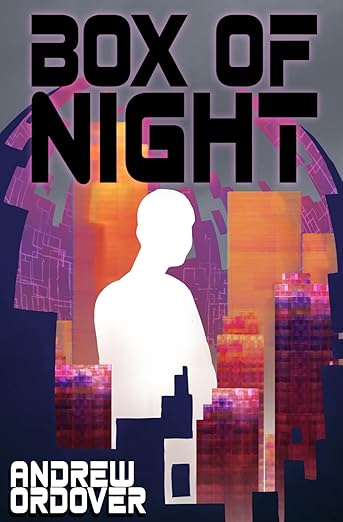
My new book, Box of Night, is available in paperback and Kindle eBook formats here. A little bit mystery, a little bit science-fiction, a little bit dystopian thought experiment. I hope you’ll give it a try.
If you do, and you enjoy it, let me know. And if you really like, it, please write a review at Amazon or Goodreads. Every little bit helps.


Scenes from a Broken Hand

- Andrew Ordover's profile
- 44 followers

