Professor Wikipedia: How Bulgaria’s “Harvard” Handed a Professorship to a Pro-Kremlin YouTuber
 AI+ Chris Kubecka
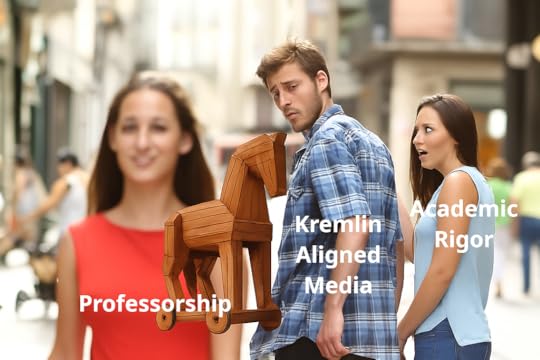
I want you to picture a simple scene. A pro-Kremlin YouTuber, popular at home, friendly with a small circle of like-minded academics, steps into a promotion hearing at Bulgaria’s most prestigious university. Inside the folder: his publications, his media work, and a monograph whose passages match English-language Wikipedia. Inside the room: reviewers who publish with him, sit on the same “Eurasian” projects, and appear on his show. Outside the room: the rest of us, told to keep a straight face while the word professor gets resized to fit politics.
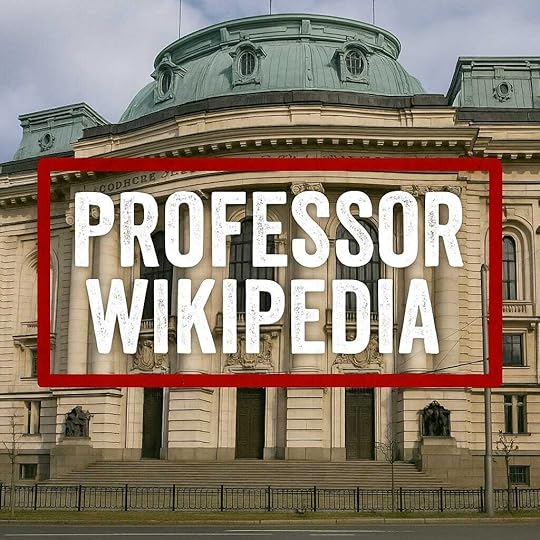
Welcome to Sofia University “St. Kliment Ohridski,” often called the Harvard of Bulgaria. And welcome to the scandal that shows how Kremlin-aligned narratives get laundered into academic authority inside an EU member state.
 AI+ Chris Kubecka
What happened
The short version is brutal. Alexander Sivilov, a historian, department head, and the coordinator of a pro-“Eurasian” centre. Was promoted to Professor. That would be fine if the work met normal standards. A formal reviewer, however, flagged Wikipedia-lifted passages in his monograph on Prohibition-era gangsters. Names like Al Capone and Bonnie and Clyde. Not rumour. Written, logged, explicit. The reviewer concluded Sivilov should not be appointed.
The promotion went through anyway.
Why. Because the jury that weighed his file reads more like a roster of collaborators and ideological fellow travellers than a firewall for quality. Colleagues from the same department. Co-authors. Members of the same “Eurasian” circle, VIA EVRASIA, which promotes the Russian world view as a respectable academic angle. Supportive reviews came from people intertwined with his work, his centre, and even his YouTube channel.
If you are wondering whether this would fly at Oxford or the Sorbonne, you already know the answer.
If you want to support further articles and research consider becoming a paid subscriber or buy one of my books :-)
The receipts, in plain language
A negative official review documents overlap with Wikipedia and ends with a clear “do not appoint” conclusion.The jury composition included department subordinates and long-time collaborators from the same “Eurasian” ecosystem.The supporting reviews praise his media presence, including a YouTube channel, as part of his “contribution.”The centre of gravity is VIA EVRASIA, where Sivilov is a coordinator, and several jurors are leaders or contributors.Most countries treat plagiarism as a stop sign. Here it was a speed bump.
Why this matters beyond Bulgaria
 AI+ Chris Kubecka
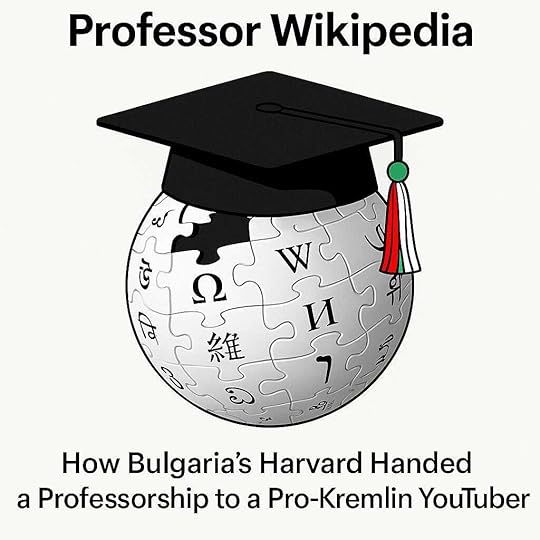
This is not a minor office drama in a Balkan faculty lounge. It is a textbook on how information operations gain legitimacy.
First, academic laundering. A professor title turns talking points into “expert commentary.” EU media bookers see a credential, not the conflicts. Viewers see a professor in a jacket, not the pipeline from YouTube to lecture hall to news studio.
Second, institutional capture. If the flagship university relaxes standards and ignores conflicts, smaller schools will follow. The signal to young scholars is poisonous: find the right patrons, not the right evidence.
Third, election cycles. Bulgaria’s politics are volatile. Add a credentialed, media-active professor and you have a reliable validator for “just asking questions” about sanctions, NATO, the EU, or Moscow’s wars. The audience doesn’t hear propaganda. They hear “Professor.”
Fourth, culture-war fuel. The same network pushing to restore Soviet-era symbols now enjoys academic cover. Monuments become “heritage.” Kremlin narratives become “alternative perspectives.” This is not debate. It is rebranding.
The ecosystem: Department ↔ VIA EVRASIA ↔ YouTube
Think triangle. At one point sits Sofia University’s Department of Modern & Contemporary History, where Sivilov holds influence. At another sits VIA EVRASIA, a hub presenting “Eurasian” positions as scholarship. At the third sits his YouTube channel, “Dimna Zavesa” (Smoke Screen), which amplifies anti-Western and pro-Kremlin narratives to a sizable Bulgarian audience.
The same names rotate through all three points. Reviewers who praise the channel’s “educational value” appear on the channel as guests. Collaborators in the centre sit on juries. A closed loop decides what counts as merit, then awards the title that validates the loop.
“But isn’t public engagement good?”
 AI+ Chris Kubecka
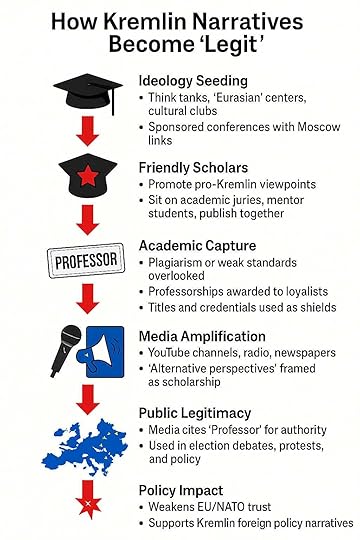
Absolutely. Academics should speak to the public. They should explain, challenge, translate. The problem is not outreach. The problem is substituting outreach for research and substituting reach for rigor. When a jury elevates a candidate on the strength of a partisan media channel and papers vetted inside a friendly centre, you are not incentivizing public scholarship. You are incentivizing propaganda with a syllabus.
A note on tone and dignity
Some will say this critique is disrespectful to Bulgarian academia. The opposite is true. Bulgaria’s scholars have earned serious recognition in hard conditions. Their reputations are hurt when the national flagship tolerates plagiarism risk and conflict-stacked juries for a candidate whose public profile runs on Kremlin-aligned talking points.
This case is not a Bulgarian “quirk.” It is the same playbook used across the region. Capture the credentialing choke points. Reward ideological loyalty. Blur the line between scholarship and political influence. Then point to the title when television calls. “He’s not propaganda. He’s Professor.”
Why “Professor Wikipedia” is the right headline
Sivilov’s defenders will say the Wikipedia overlap is small or irrelevant. They will say the committee weighed everything and decided. They will say the centre is academic, not political. That is the point. A single documented plagiarism flag at the professorial level should trigger immediate pause and independent review. The moment you ignore it, you announce to every department: ethics are optional if your network is solid.
That is why “Professor Wikipedia” lands. It is specific. It is visual. It makes the abstract breach concrete. Students understand it instantly. Editors do, too.
The EU-wide risk
Bulgaria is an EU member. That means academic titles travel. A Bulgarian professor can review EU-funded projects, appear in Brussels briefings, shape media narratives outside Bulgaria, and teach visiting cohorts. If the pipeline that produced the title is compromised by plagiarism tolerance and conflicts of interest, then the EU’s information hygiene problem is not just TikTok. It is the credentialing system itself.
What needs to happen now
Independent verification. The university and the ministry should commission a formal anti-plagiarism review of the monographs and articles used for habitation. No friends in the room.
Conflict-of-interest rules with teeth. No juror should review a candidate they co-authored with in the last five years, mentored closely, or reports to administratively. External reviewers should be genuinely external.
Transparency. Publish the jury protocols, votes, and written opinions in full. If a reviewer flagged Wikipedia, show how the jury addressed it. If they did not address it, explain why.
Firewall between media profile and academic merit. Public engagement can support a case, but it cannot rescue one. Media metrics should never outweigh research quality and integrity.
Student protection. Students deserve to know that their degrees are built on standards, not on politics. This includes offering alternative supervisors or course options where conflicts exist.
The bottom line
When the referee joins the team, the game is over. Bulgaria’s top university took a documented plagiarism flag, placed it next to a friendly jury, and still handed out a lifetime credential to a Kremlin-aligned influencer. That is not a local scandal. It is a live demonstration of how soft power captures institutions from the inside.
The good news is simple. Sunlight still works. Show the overlap. Map the network. Demand independent review. Do it now, while the word professor still means something.
Because if the academy loses its immune system, the rest of the body: media, policy, elections, gets sick next.
Слава Україні. Long live Bulgaria’s scholars who still believe standards are not for sale..
📌 More on Me • Chris Kubecka — Wikipedia
APA References
BG Elves. (2025, October 2). Професор „Уикипедия“: В най-престижното учебно заведение започва учебната година със скандал. Българските Елфи. https://www.elves.bg/articles/profesor-wikipedia
Arab News. (2025, April). Bulgaria cyber ‘elves’ fight Kremlin and cruelty. Arab News. https://www.arabnews.com/node/2603052/world
BG Elves — Official site: campaigns and initiatives (incl. Kraken Drone Program support).
Sofia University “St. Kliment Ohridski.” (n.d.). Homepage. Retrieved October 2, 2025, from
VIA EVRASIA. (n.d.). About the project. Retrieved October 2, 2025, from http://viaevrasia.eu/index_en.html
Dimna Zavesa. (n.d.). YouTube channel. Retrieved October 2, 2025, from https://www.youtube.com/@DimnaZavesa
Factcheck.bg. (2022, April 15). How Kremlin content spreads in Bulgaria via Pogled.info. This is the Kremlin speaking: How Bulgarian media turn into megaphones for Kremlin propaganda
EUALIVE. (2023, May). Pogled.info reprints analysis.
Pogled.info. (n.d.). Homepage. Retrieved October 2, 2025, from
#ProfessorWikipedia #Bulgaria #Disinformation #KremlinInfluence #BGElves #AcademicIntegrity #TheHacktress
Chris Kubecka is the founder and CEO of Hypasec NL an esteemed cyberwarfare expert, advisor to numerous governments, UN groups and freelance journalist. She is the former Aramco Head of Information Protection Group and Joint Intelligence Group, former. Distinguished Chair of the Middle East Institute, veteran USAF aviator and U.S. Space Command. She specializes in critical infrastructure security and unconventional digital threats and risks. When not getting recruited by dodgy nation-states or embroiled in cyber espionage, she hacks dictatorships & Drones (affiliate link to my books) and drinks espresso.
@SecEvangelism on Instagram, X, BlueSky LinkedIn Substack
[image error]