
The House on Rattlesnake Mountain Road
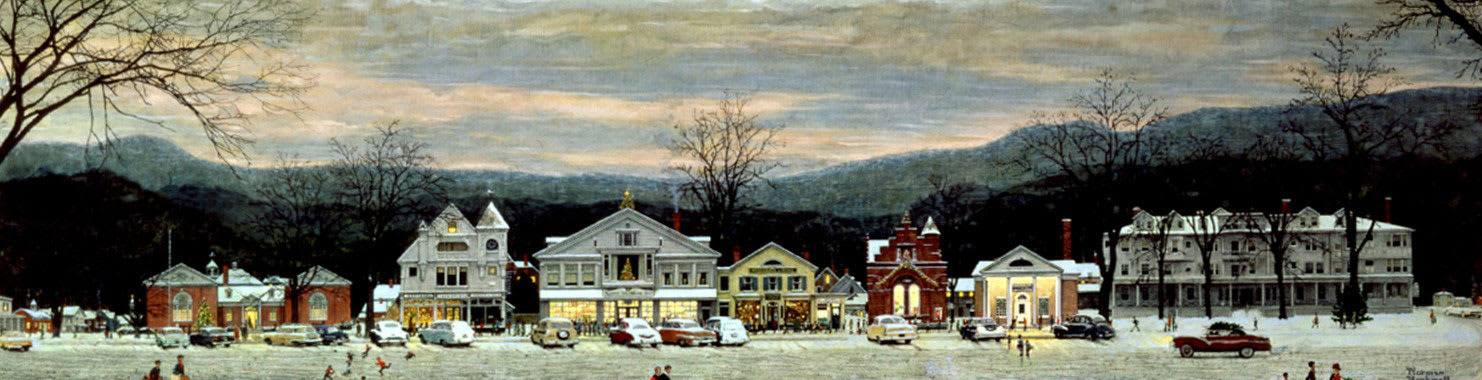
If you drive north on Prospect Hill Road from the town of Stockbridge, Massachusetts, and turn right onto Rattlesnake Mountain Road, you will not be able to see the house that my father helped design. A row of pine trees that he and I planted along the driveway over 40 years ago hides the house from view.
It doesn’t feel like that many years to me, but the trees say different. Trees mark the time better than I can.
Back when I was a toddler and my parents were young and strong, we bought a little cabin in the woods with help from my grandparents. It was near, but not on, the lake called Stockbridge Bowl. It was dark, and close, and woodsy, and I loved it. We spent many happy summers there, as I’ve written about before. But as my brother and I got bigger, the cabin got smaller, and my parents decided they wanted something they could use throughout the year, which the un-insulated cabin and the winding, little, dirt load leading down to it would not allow.
So, they sold the cabin to some other New York family, every member of which we privately accused of being weirdly flat faced. By we, I mean my younger brother, my mother, and me. I think my father was above such things…or at least pretended to be.
That is the only thing I remember about the buyers, and while I know the accusation was rude and cruel, if my mother was involved it was probably accurate.
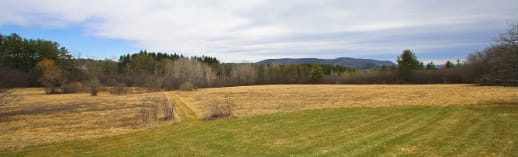
Anyway, we sold the cabin, and we bought a five-acre plot on a giant field belonging to a farmer named Ungar, away from the lake but just a couple of miles outside of town, along another dirt road, though a straighter and flatter one.
My parents reached out to a local architect they knew socially, named Tom Arienti, and he drew up some plans for them, which my father immediately rejected.
Arienti had imagined an unimaginative house—short and squat, with, if I recall correctly, an elevated and sharply-angled roof. My father wanted something more daring—something modern and angular, with more glass. If we were going to emerge from the woods and embrace the light, he wanted more of that light. He had purchased a plot of land that had a great and wide view of the Berkshire mountains to the south, and he wanted to be able to see his view from as many rooms as possible.
Arienti had given my parents a detailed drawing, but he had also included a variety of discarded sketches on onion paper, and when my father flipped through those, he found a picture that intrigued him—a tall, hexagonal house with lots of windows.
That was the house he wanted. So, he reached out to Arienti and the two of them talked through and sketched out how the house might work, adding a cathedral ceiling to allow for a two-story wall of windows, and a rectangular silo at the back to hold the staircase. Most of the second floor, including the overlook down into the living room, would be the master bedroom, with a third floor to accommodate some small, cell-like rooms for us kids.
My father had never designed a house before, but he was a creator at heart and a maker of things, from gardens to waterfalls to drainage ditches—and, of course, his actual day job of building academic programs for law schools (before his post-retirement career as an art photographer). He took to this project with zeal.
Most of the creative design work went into the living room and my parents’ bedroom. Everything else was pretty small and functional. There would be a little TV room on the second floor, next to the master bedroom, with not quite enough space for four people to sit together without some clever furniture arrangement. And the small rooms on the top floor—one for my brother, one for me, and one for guests—were kind of afterthoughts. It was a vacation house; how much time would the kids even be spending in their rooms?
This was before smartphones and video games, remember.
Once the house had been designed, it had to be situated on the property. We had purchased a five-acre parcel of land on a 30-acre field, and my parents originally wanted to build the house on the eastern edge of the property, far from the main road and the Ungar’s farmhouse. Knowing what the house was going to look like, I have a feeling my parents wanted to keep it as far away from the old farmer’s eyeline as possible. But that was not meant to be.
Because we were not going to be on the town’s water system, we were going to have to drill a well and put in a septic tank, and to do the latter, we had to pass a percolation test for the town, ensuring that our waste would drain properly. We failed that test, over and over again, as we moved ever closer to the road in an effort to find an absorbent-enough piece of ground. We never found one on our own property, and ended up having to get an easement on some of the Ungar property to sink the tank there.
That was probably a good thing, in the end, because it put us on higher ground than originally intended. It turned out that the bottom of the property had a small, mostly underground creek running through it, which likely would have flooded us in storms.
My parents decided to take advantage of the creek once they discovered it. They brought in a backhoe to excavate a big hole and build up a dam with an overflow pipe. Then we just had to wait for our theoretical pond to fill. We had to wait about a year, until Hurricane David made its way up the coast and dumped enough rain to fill the pond. It turned out to be a great swimming hole, though I never did get comfortable with the squishiness of mud under my feet instead of the sandy lake bottom I had been used to.
If you’re clever enough to find the house on Zillow, you’ll see pictures of it with lovely hardwood floors and blonde, wooden furniture. That is not what it looked like when we lived there. My parents wanted the decor to match the aesthetic of the outside, and, you know, it was the 1970s. So, there was a lot of glass and a lot of chrome. I remember two metal tube and leather strap chairs that I found weird and uncomfortable, and a dining room table that was great at trapping crumbs between its glass tabletop and its chrome frame.
What was warm about it was the beautiful, rich carpet of swirling earth tones (gone now) and the large, stone fireplace that stood at the back of the room, facing the windows (still there). And we did have some big, soft, white, sectional seating things that could be assembled into a variety of shapes, which were great for lounging around on during long, weekend mornings (though not so great for reading the Sunday New York Times on, given newsprint’s habit of rubbing off onto anything in its reach).
The summers were a little strange for me. I was too old for camp, and I didn’t always have something else to occupy my time. When I felt hemmed in by family (being a teenager), I happily took on the job of doing nighttime dessert runs. After dinner, I would drive out to the Friendly’s in Great Barrington with a small freezer bag, to pick up ice cream sundaes.
In my memory, the radio is playing “Ev’ry Breath You Take” on that trip, every single night, in both directions. This detail, unlike all the others I’m sharing here, I suspect may be incorrect.
I’d bring the ice cream back home, and we’d all cram into that tiny, little TV room, trying to angle the remote-controlled antenna to pick up a signal from one of the “local” stations, 40 or 50 miles away in Albany or Schenectady, NY. To watch…whatever garbage was on local television during the summertime.
When summer was over, we could simply lock up and leave. We didn’t have to drain the pipes and board up the windows to prepare for winter, as we had done every summer in the cottage. Now that we had a sturdier place to be, we could drive up for weekends or holidays year-round, especially for the fall harvest festival and for Christmas break.
Autumn in the Berkshires was maybe the best time to be there. Crisp air, crunching leaves, bright colors, and the smell of cinnamon donuts hanging in the air. That sense memory has always been autumn for me. The season spent in any other place, without those feelings and sensations, falls short.
Winters in the hexagonal house were bright and cozy—roaring fires and hot chocolate, listening to a cassette tape of James Taylor songs while watching snow fall across that wide vista through our windows.
For a while, we got into cross-country skiing. We could launch straight off our porch onto the giant field and the woods beyond it, sliding smoothly through that special silence of a snowy day.
In nice weather, whatever the season, it was an easy walk or jog into town, where we could sit at a little cafe whose owners became friends of my parents. We could sit and have breakfast while reading the paper and chatting with other locals before heading home. It was nice to feel like real residents of the town, and not just summer folk.
As it turned out, we didn’t have the house for long. I was already in high school when it was built, and by the time I graduated, my father had made the decision to take a job at Emory Law School and move the family to Atlanta.
We came back north for one summer, possibly two, but it became too expensive and too complicated to make the trip. My parents rented the house out for a while, hoping to find a way to return, but eventually they sold it. Renting to strangers who didn’t love the place and wouldn’t take care of it just broke their hearts.
As far as I know, neither of them ever saw the Berkshires again.
A few years ago, I took my youngest child up to Stockbridge for the weekend, to show them the town of my childhood and take them to the Norman Rockwell museum and a concert at Tanglewood. I drove them down the old, dirt road towards the lake, but the cottage was long gone, replaced by some oversized monstrosity. I drove up to Rattlesnake Mountain Road, but the house was hidden from view. The pine trees had grown up around it like a protective curtain, and now only the mountains could see it.
Of course, from time to time, when the house is up for sale, you can see a picture of it on Zillow. But that’s as close as you can get to it. As close as I can get to it, anyway, though it once was mine.
And that’s all right. That’s what time does. I have my memories. Most of them, I trust. And some things, it’s better share with words.
Friendly Reminder:
My new book, Box of Night, is available in paperback and Kindle eBook formats here. A little bit mystery, a little bit science-fiction, a little bit dystopian thought experiment. I hope you’ll give it a try.
If you do, and you enjoy it, let me know. And if you really like, it, please write a review at Amazon or Goodreads. Every little bit helps.



Scenes from a Broken Hand

- Andrew Ordover's profile
- 44 followers

