
1994
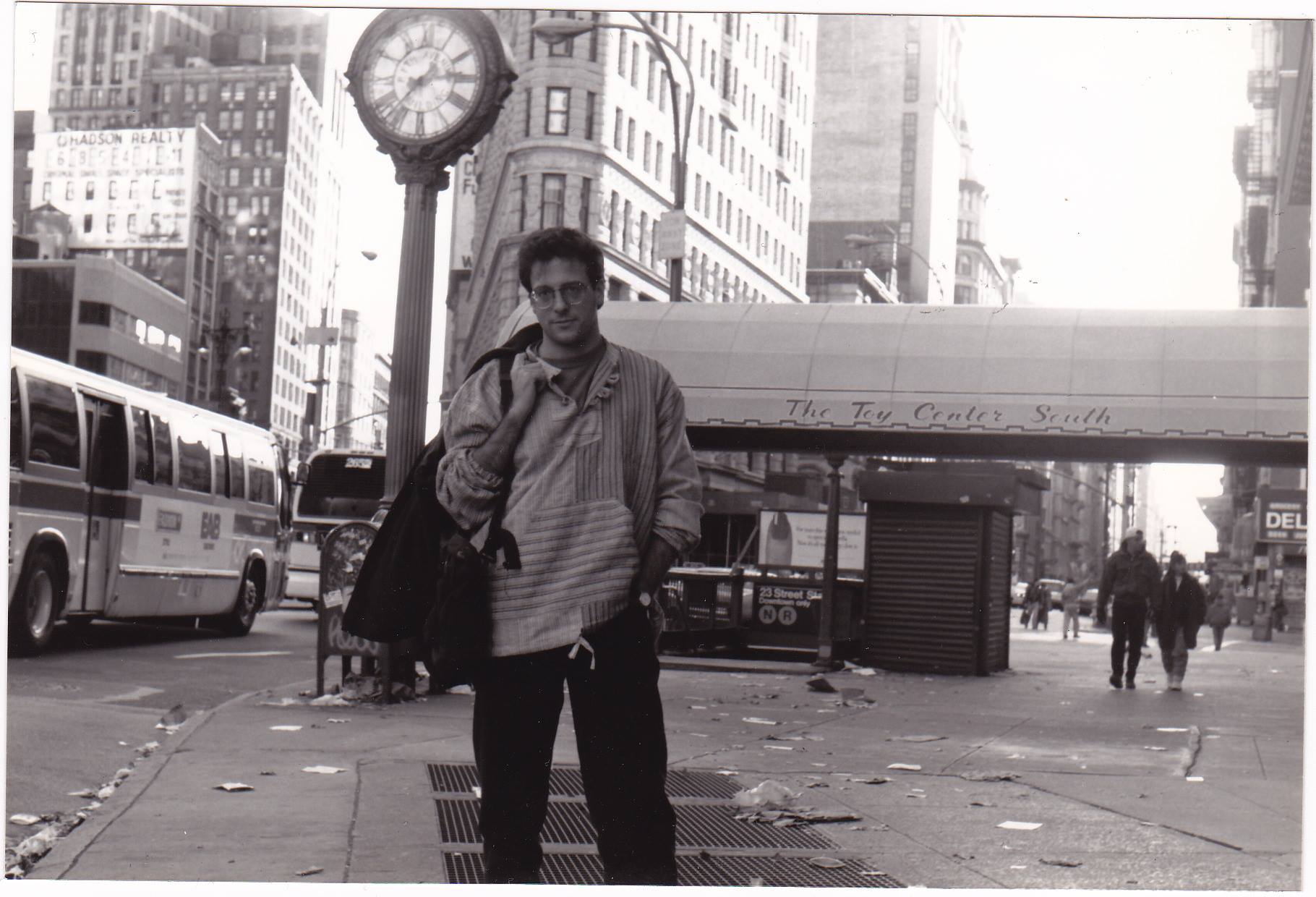
Today is my birthday.
I like my birthday. I like the October-ness of it, I like the symmetrical 10/10-ness of it—I enjoy the fact of it, all around. I am not a subscriber to the Patton Oswalt theory of extremely limited celebrations. Life is hard enough—you should celebrate what you can, when you can.
I don’t make a fuss about my birthday or ask anyone to do anything about it, really, but being stupidly passive aggressive, I will feel lousy if nobody notices or says anything. It’s a character flaw, and I definitely plan to work on it. Eventually, One of these years.
Assuming I have years.
Is that a reasonable thing to assume? I’m 62 today. I’m reasonably healthy, but…you know. My mother didn’t make it to 62, although her mother made it into her 90s, as did that grandmother’s father. My father is still going at 88. Pick a number and put your money down.
Sixty-two. It’s hard to believe. I don’t feel the years most of the time—certainly not as many as the calendar claims. I don’t feel much different from how I felt ten years ago, or even 20 (most of the time). I don’t think I look like whatever I thought this age looked like, back when I saw it from the perspective of youth. But I’m probably lying to myself.
Regardless, it’s been a long time.
I thought it might be interesting, as a little memory exercise, to cut the present number in half and see where I was and what I was doing, half a lifetime ago.
That would be the year 1994, when I was turning 31. Let’s see what I was up to.
LivingI was living in Greenwich Village, on Christopher Street, in an apartment I shared platonically with a beautiful redhead named Mandy. I had moved to New York a year earlier, freshly divorced and about to turn 30. I had put myself, my friends, and my family through a lot of drama and pain, the year before that—trying to understand what it was I wanted in life and love, trying to figure out whether I was at least on the right path, trying to figure out what step to take, and in what direction, and whether I had the courage to take a giant step in any direction.
After a prolonged spell of self-imposed exile in Eastern Europe, I had come home to Atlanta, gotten divorced, moved to New York City to do theatre with my friends, and turned 30. It was a lot of Big Stressors all bundled up together, but it somehow felt easier than spacing them out over endless months, And in the end, I had more or less survived to start something new.
Mandy and I weren’t close friends at the time we moved in together, but we were working together in our little theatre company, and we were both looking for a place to live. Plus, she seemed to find it amusing to be able to tell her parents that she was moving in with a 30-year-old, divorced playwright.
It wasn’t a big apartment, but it had two bedrooms and a living room large enough for Mandy to assemble and store the insane props that our theater productions required, including a 20-foot-long processional carpet made of stitched-together baby clothes dyed blood-red, and also a big, brass, 19th century chamber pot.
The living room looked down onto Christopher Street, right across from the Lucille Lortel Theater. That made our fire escape prime real estate for viewing big events like the Halloween parade, during which our apartment became public property for every performance artist we knew.
The layout of our place made it pretty clear that there had once been fewer, bigger apartments in the old building. One of the bedrooms still had the old, vintage, tin ceiling. The rest of the place had lost that decoration. At some point, someone had tried to make up for it by plastering thick, gold wallpaper on the living room ceiling. One summer, the intense humidity melted the glue, and it all started coming down in strips. We tried stapling it back in place, which looked terrible and worked badly. Eventually we tore it all down, leaving surreal swirls of dried, red glue in its place.
We were young and poor, so we did the best we could with the place. I brought a papasan chair to the apartment, and Mandy brought a papasan couch. That was the sum total of our living room furniture.
We had a Jamaican building manager named Vandalay, who I remember talking to me face to face only once (he usually just yelled at people through his door). The reason he emerged to speak to me was that some of our bathroom tiles had fallen off into the bathtub. He yelled at me that it was all my fault, for letting the shower water hit the walls, because water, as I should have known, was very, very powerful. He lectured me about this while angrily regrouting the tub.
Yes, you can grout angrily. I stand by that adverb.
WorkingEvery morning, I would walk or take the bus from the West Village to the East Village, to get to my school on East 12th Street and Avenue A. It was a small magnet school, then in its third year of existence, and it was housed on two floors of a gigantic public school building. We tried to feel reform-y and different, but it was a little challenging, being inside such a giant institution and having to make use of all of their facilities.
I taught a combined 7th and 8th grade Humanities class on a block schedule, meaning I taught two double-sized periods, with a 90-minute advisory period at the end of the day.
If you’ve never had to handle 7th grade boys and 8th grade girls in the same room, count yourself lucky, because they are barely the same species. The girls were fully teenagers, and the boys were strange shape-shifters—tweens one minute and little children the next.
The curriculum for the Humanities class was meant to be created and overseen by the four teachers who taught it: two English teachers and two history teachers. We were given an extra-long planning period once a week to share ideas and resources, and to hold ourselves accountable to some kind of plan. Unfortunately, about halfway through the year, there was some kind of conflict and disagreement that led us to stop planning together or even meeting together, and after that it was every man for himself.
The upside of going it alone: a longer lunch period, once a week, for extended trips to a nearby Polish restaurant for split-pea soup and kashka varnishkes. The downside: no one had any clue about, or control over, what the four of us were teaching. And I, personally, had very little clue about anything.
The advisory period had no curriculum at all, by design. I was allowed to do pretty much whatever I felt was needed with my group of 16 advisees, including taking them out of school if I thought they could be trusted. If the weather was nice, we usually went down to Tomkins Square Park so they could play basketball or laze around at the end of the school day. It was a very human and lovely way to spend time with my kids.
PlayingAfter school, I’d go home and correct papers, try to write, and perhaps sleep for a bit. Then it was right back to the East Village, where our little theater company rehearsed plays in church meeting rooms and other odd spaces, after which we’d go to the Tile Bar on 1st Avenue to drink, far too late into the night.
In 1994, we were still performing wherever we could find a space to rent. We had not yet established a residency at a theater; that would come later and last for several years. In 1994, we were rehearsing a version of Lysistrata that I had written for the company, to be performed at the Ohio Theater on Wooster Street. It was a Greek comedy follow-up to the modern adaptation of Agamemnon that we had done the previous spring. Agamemnon had been the reason for the red carpet made of baby clothes.
My version of the comedy, called Sister Strata, was set during the American Civil War, with Union and Confederate women banding together to launch a sex strike to stop the war and free the slaves. It was silly and slapstick-y (hence the chamber pot), and not quite as funny as we had hoped (in spite of the chamber pot), but it had some great songs and a climactic scene I had stolen shamelessly from the movie, Shenandoah.
We were a tight little company of friends, as many small theater companies are—and like many such groups, we were in each other’s lives completely and possibly too much. Most of the time, I didn’t mind. These were the people I had come to New York to be with and make art with. I didn’t socialize with anyone from the school where I taught; this group was it. If I was going to ride my bike (perilously) up 6th Avenue on a lovely Saturday afternoon to hang out in Central Park, it was with them. If I was going to go out at night to hit the Indian restaurants on East 6th Street, it was with them. If I was going to hang out with people in someone’s apartment, applying facial masks to each other semi-ironically and singing along with Salt N Pepa songs, it was with them.
Did it all get too close and too intense sometimes? Sure. But sometimes it was exactly the kind of closeness and intensity I needed, being the introverted, live-inside-my-head kind of person I was. They were the actors; I was the writer. I spent far too much time on the sidelines, watching and listening and taking notes.
Somewhere in there, I flew out to Los Angeles to see rehearsals for another play of mine—the one for which this Substack is named. It was one of the very few times that anyone other than my own company produced one of my plays, and it was exciting to go back to LA, where I had gone to graduate school, and to watch rehearsals like a Real Playwright.
LovingWhile out there, I got to see some old friends, including a former girlfriend who took me out to see a production of Steve Martin’s play, Picasso at the Lapin Agile. It was a lovely and fun night, and when I got back home to New York, this former girlfriend mailed me a computer disk with free software on it for a thing called AOL, which would let me, if I plugged my computer into the phone jack in my apartment, type-chat with her at night when I got home from rehearsals. We ended up chatting nearly every night.
Later that year, she would fly out to surprise me for opening night of my adaptation of the Epic of Gilgamesh, and I would kiss her in the stairwell of the theater.
That summer, she moved to New York City. We’ve been together ever since.
DreamingBut that was all still to come. In the fall of 1994, I was still alone and often lonely in my crowd of friends, still pushing the boulder of art up the mountain of indifference, hoping to reach some kind of stable peak that would tell me I had made the right decisions in my life. I didn’t know yet that the peak didn’t exist—not for me, anyway—that the rock would roll back down to sea level, show after show after show. I didn’t know that within three years, the members of our little company would drift apart and move on to other things in life. I didn’t know that I would re-marry, and become a father, and leave theater behind me—something I couldn’t have imagined, back then.
Would I want to alert my young self, if I could go back in time and talk to him? Would I want to grab him by the shoulders, and shake him, and say, “Give it up, kid. It’s not going to amount to anything. Stop wasting your time”?
No, I don’t think so. There’s nothing I am today that doesn’t have its roots in what I did back then—the teaching, the writing, the company-running, the longing. All of it mattered. And the work we did together was good work. We didn’t perform for millions, but we served our small audiences well during our brief lifespan, and they seemed to appreciate and care about the plays we performed for them. We served them, and they supported us. We built a little community. And that’s the gig, whether you play to tens or to millions.
No, I wouldn’t try to stop that young man. Let him keep dreaming, and writing, and working. Let him keep sitting in dingy rehearsal rooms and nursing drinks at dive bars. Let him despair at ever finding love, or giving love, or being seen, or accomplishing something worthwhile. Those things will come. He doesn’t know it yet, and those things won’t be what he expects them to be, or what he wants them to be, or even what he needs them to be.
But he doesn’t need to know that yet. It will all come to him in time.
Friendly Reminder:
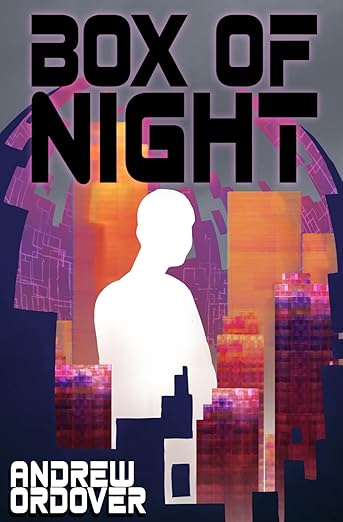
My new book, Box of Night, is available in paperback and Kindle eBook formats here. A little bit mystery, a little bit science-fiction, a little bit dystopian thought experiment. I hope you’ll give it a try.
If you do, and you enjoy it, let me know. And if you really like, it, please write a review at Amazon or Goodreads. Every little bit helps.


Scenes from a Broken Hand

- Andrew Ordover's profile
- 44 followers

