
From the Archives: The Nile
It is inevitable, at some point after I’ve returned from a trip I run out of blog-post steam. The notes I have made for myself about future posts no longer fire my imagination, or I don’t have enough information to turn them into stories.[1]
Before I give up and move on to the other stories that are clamoring for my attention, I’d like to share a review I did in 2014 about the account of another writer’s boat trip through history.
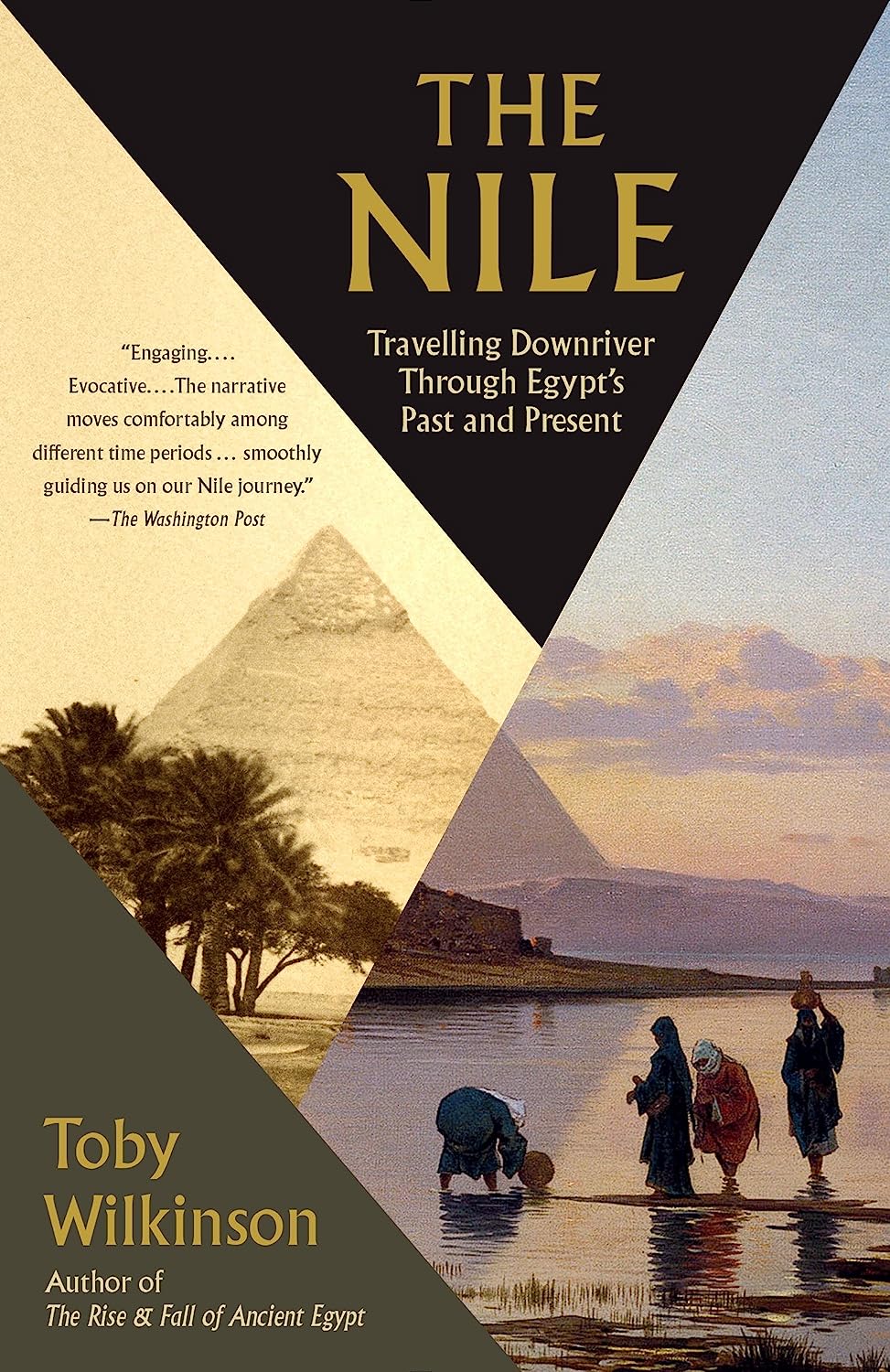
In The Nile: A Journey Downriver Through Egypt’s Past and Present, popular Egyptologist Toby Wilkinson leads the reader on a historical travelogue that moves from Aswan, home of the river’s First Cataract, to Cairo’s Gezira Island, from Paleolithic rock drawings to the Arab Spring.
The voyage that shapes The Nile is not simply metaphorical. Wilkinson floats down the river on a dahabiyah–a large luxury boat descended from the royal barges of the pharaohs. Aware that he is simply the latest in the historical line of travelers drawn to Egypt by its climate and its ancient civilizations, Wilkinson engages with their commentary as well as his own observations, creating a palimpsest of Nile voyages in the process. (Ancient Greek historian Herodotus and 19th-century British journalist Amelia Edwards are particular favorites.)
Because Wilkinson organizes his work by geography rather than chronology, his narrative is anecdotal almost to the point of stream of consciousness. His combination of scholarship and storytelling allows him to draw unexpected relationships through time. The ruins at Kom Ombo lead to a discussion of the crocodile god, Sobek, then on to ancient Egyptian tales about the dangers of crocodiles, a modern Crocodile Museum, and the impact of both 19th-century Western tourism and the Aswan Dam on the crocodile population in Egypt. Occasionally such temporal leaps are disorienting, but for the most part they are illuminating. Once a reader has learned to navigate the rapids, The Nile is worth the effort.
[1] For instance: Egypt used the (unwritten) Nubian language as a military code in its war with Egypt in 1973. Aa fascinating tidbit, but not enough to turn into a post. (And I really tried. Many rabbit holes were explored before I gave up.)


