The Character Who Wrecked Me (And Why That’s Weirdly Healthy)
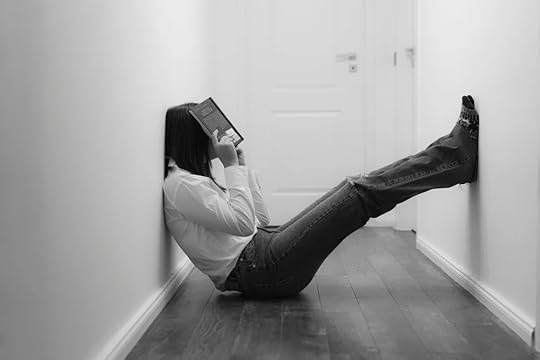
Courtesy of Teslariu Mihai on Unsplash.
I finished a season of a show I love the other night. No spoilers, I promise. A favourite character died, and my brain promptly scheduled a multi-day vigil. I went about my life—emails, writing, actual humans who needed things—but, beneath it all, I was not okay.
If that sounds dramatic, it isn’t. It’s human. And it’s old.
Why stories hurt so goodAristotle, who had Opinions about basically everything, argued that tragedy gives us catharsis—a purifying release. We feel pity and fear for people who don’t exist, and somehow we come out steadier. It’s ancient group therapy in a theater with better costumes.
Modern science gives us an upgrade on the same idea. Stories are mental flight simulators. They let us rehearse emotions—love, loyalty, loss—without wrecking a real plane. Your nervous system responds to “as-if” pain with real feelings, because that’s how empathy works. The line between “made up” and “felt” is porous on purpose.
So when a fictional death floors you, your brain isn’t confused. It’s doing its job.
The grief is real because the relationship felt realBut why do some character deaths feel like a gut-punch and others barely register? We grieve who we know.
That sounds obvious, but it’s the whole ballgame. If we’ve lived with a character—laughed with them, noticed their quirks, watched them keep a promise or break one—our minds file them under “people who matter.” When they’re gone, our bodies throw the appropriate alarms.
When we haven’t had that time? When all we’ve been told is, “Trust me, they’re important”? Our hearts shrug. You can’t outsource attachment to a narrator. We need receipts.
A quick peek behind my pagesIn my young adult epic mermaid fantasy book, The Undine’s Tear, there’s a loss near the end that rocks the heroine, Calandra. After reading the first draft, a beta reader told me something no writer loves hearing but every reader deserves to say: “I didn’t feel it. I just hadn’t connected to them.”
Reader translation: you’re asking me to mourn a stranger.
I went back and added a scene that didn’t just tell the reader why that character mattered to Calandra, it showed them. It made the character real, on the page, with in jokes, shared history, and the small, specific care that builds a life.
The change wasn’t about “being sadder.” It was about knowing someone well enough that their absence sent a real echo through the story.
And that’s why we read or watch fictional characters—to feel things. We want to experience life through their eyes, so we can tackle our own lives with greater resilience and better tools, having learned from their experience (even if it was fictional).
Why this is healthy (yes, healthy)It’s rehearsal. Life will hand all of us hard goodbyes, which I know too well. Stories are practice reps that strengthen empathy and help us make meaning when the real thing comes.
It’s values in action. The people we mourn in fiction usually stand in for something we care about—loyalty, courage, the hope that broken things can mend. Grieving them is a way of recommitting to those values.
It’s connection. When you text a friend “I’m not okay after last night’s twist” and they send back 400 caps-locked vowels, that’s community formation. Ancient audiences cried together too—we’ve just upgraded to group chats and memes.
And sometimes, yeah, it’s manipulation. You can feel the difference. An “earned” loss recognizes a life. A cheap shock plucks a string and runs. Your body knows which one you just watched.
What your favourites reveal about youThe characters who wreck us are mirrors. If you were destroyed by a steadfast sidekick, maybe loyalty is your north star. If it was the hopeful cynic who finally chose kindness, maybe you’re negotiating your own hard edges. Pay attention to who you grieve; there’s a clue there about who you’re becoming.
Back to my week-ruining episode. I won’t say what show or season—no hints—but if you know, you know. It wasn’t the shock that got me. It was the relationship I’d been allowed to live inside. The loss felt like losing a friend, someone who was as solid of a rock for the show as a whole as they were for the protagonist—someone who reminded me of people and relationships I value in my own life. That’s why it lingered.
You’re not “too sensitive” if you’re undone by fiction. You’re responsive. You’re participating in the oldest human technology for feeling things safely and learning who you are.
Your turn (no spoilers, please)Without naming plot specifics, tell me: what story left you in pieces for a few days—and why do you think it hit you? If you can, frame it like this: “A sci-fi series about found family,” “a fantasy trilogy with dragons and politics,” “a cozy mystery with a very good dog.” We’ll keep the comments safe and spoiler-light, but I’d love to hear what your heart recognizes.
If a story leaves a mark, it’s because it mattered.
That hurt? That’s the proof.
 WIP Update: Every Rose that Blooms
I’m still doing okay for the Novel November challenge—I’m working on Chapter 10 (of around 25 total) for Every Rose that Blooms. You can now read up to Chapter 5 as early access!
Start Reading