The Bloop: The Ocean Sound That Freaked Out Scientists for a Decade
There’s something about the ocean that feels… unknowable. Like no matter how much tech we throw at it, submarines, sensors, satellites, it’s still got the upper hand. You could spend your whole life trying to understand it, and it would still have secrets it’s not ready to share. The ocean doesn’t care about your curiosity. It’ll give you a little bit, just enough to keep you hooked, and then go back to being 70% of a planet-sized mystery.
And every once in a while, it makes a noise. So, in 1997, the ocean made one that freaked scientists out so much that it became one of the biggest modern mysteries for almost a decade. They called it The Bloop. And if that name sounds a little too cute for what might’ve been the sound of something massive lurking deep below the surface… well, yeah, that’s part of the charm.
The Sound That Shouldn’t ExistSo, picture this: it’s the late ‘90s, Titanic is in theaters, dial-up internet is screaming in the background, and a bunch of scientists at NOAA (that’s the National Oceanic and Atmospheric Administration, for anyone who doesn’t speak “government acronym”) are listening to underwater recordings from these Cold War-era hydrophones — basically giant underwater microphones.
Originally, they were built to spy on Soviet submarines, but once the Cold War ended, NOAA started using them to study ocean sounds. Whales, underwater earthquakes, volcanic eruptions, that sort of thing. Pretty normal stuff. Then one day, they hear something. A sound, low and rumbling, that lasted over a minute and was so loud that sensors more than 3,000 miles apart picked it up. That’s like something screaming underwater in Chile, and you’re still hearing it in New Zealand.
Whatever made that noise wasn’t small. It wasn’t even whale-sized. It had to be something huge — way beyond what scientists thought could exist down there. And here’s the kicker: it didn’t sound mechanical. It wasn’t an explosion, or a ship, or tectonic movement. It had this weird, organic tone to it — like the groan of a living thing. They didn’t know what to make of it.
Cue the Internet Conspiracy MachineBy the time word of “The Bloop” got out, the internet was already becoming this weird mix of nerdy curiosity and absolute chaos. So when people found out that a mysterious, biological-sounding noise had come from the deepest part of the ocean, and scientists had no idea what it was, they went nuts.
You had people saying it was some unknown whale species. Some said it was a prehistoric creature. Others, and this is my personal favorite, swore it was Cthulhu waking up from his nap under the Pacific. (And the wildest part? The coordinates of The Bloop are not that far from where H.P. Lovecraft set R’lyeh, Cthulhu’s supposed resting place. Coincidence? Sure. But still creepy.)
There were early-2000s forums dedicated to it, late-night radio shows speculating about it, even early YouTube conspiracy clips layering it over grainy ocean footage. It became this perfect mix of science mystery and internet myth — half legitimate research, half nightmare fuel.
The Scientists vs. the StoryNow, scientists weren’t ready to jump to the “sea monster” conclusion (because, you know, science), but even they couldn’t explain it at first. They analyzed the waveform, the pitch, the duration, everything pointed to something alive. The Bloop’s frequency was similar to that of whale calls, but the amplitude, the sheer volume, was way beyond any living creature we know. Even the biggest blue whale on record couldn’t come close.
So the question was simple and haunting: if it wasn’t geological, and it wasn’t a whale… then what was it? For nearly ten years, that question hung in the air.
The Real Answer (That Nobody Wanted)Fast forward to the mid-2000s. NOAA had expanded its underwater sound library and was starting to recognize certain “signatures” — patterns of sound that matched different ocean phenomena. And one day, someone noticed something familiar. It turned out that “The Bloop” had a match. Not with an animal. Not with a machine. But with something called icequakes.
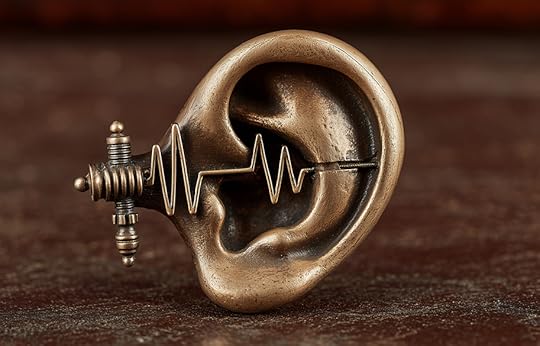
Basically, when massive chunks of Antarctic ice break off and slide around, they create these low, booming sounds that travel for thousands of miles through water. To a hydrophone, it can sound almost… alive. So yeah — The Bloop wasn’t a sea monster. It was just ice cracking.
And look, that’s not the worst explanation in the world. It makes sense scientifically. But still, it’s kind of like someone telling you Bigfoot was just a guy in a costume. Rational? Sure. Satisfying? Not really.
The Thing About DisappointmentWhen scientists finally confirmed the “icequake” explanation in 2005, it killed the mystery — but not the fascination. Because even though the truth wasn’t supernatural, the feeling behind it remained the same.
The Bloop was a reminder of how alien our own planet can be. That something as simple as shifting ice can make a noise so massive and strange that the smartest people on Earth thought it might be a living creature.
And honestly, that’s what I love about it. We always act like we’ve figured everything out, every map filled in, every mystery explained, but then the ocean goes and does something like this, and it reminds you: no, we really haven’t seen it all. Not even close.
The post The Bloop: The Ocean Sound That Freaked Out Scientists for a Decade appeared first on Malorie's Adventures.