The Sumerian King List — Why Ancient Rulers Lived for Thousands of Years
If you’ve ever felt like your work week just never ends, imagine being one of the Sumerian kings. According to an ancient document called the Sumerian King List, the very first ruler of humanity, a guy named Alulim, supposedly reigned for 28,800 years. Twenty. Eight. Thousand. Eight. Hundred. Years.
And no, that’s not a typo. His successors weren’t much different either — some ruled for 30,000 years, others for 36,000. It kind of makes our four-year election cycles look pathetic. So, what’s the deal here? Were these kings divine? Were the Sumerians just really bad at math? Or were they trying to tell us something deeper? Let’s find out.
What Even Is the Sumerian King List?The Sumerian King List is exactly what it sounds like — a list of rulers from ancient Sumer, one of the earliest known civilizations in human history. We’re talking southern Mesopotamia, modern-day Iraq. This occurred roughly 5,000 years ago. It’s written in cuneiform, the world’s first writing system. The text was carved onto clay tablets because paper hadn’t been invented yet. Also, tablets apparently last forever.
Archaeologists discovered several versions of the list across different cities, Nippur, Larsa, and Ur, to name a few. Each version had slight variations. But the structure is always the same: “After the kingship descended from heaven, the kingship was in Eridu.”
That first line already tells you this isn’t just a bureaucratic record. The Sumerians saw kingship as a divine gift — something literally handed down from the heavens. It wasn’t earned through elections or wars. Instead. it descended. And that’s where this document shifts from history into something more mythic.
The list goes on to name a series of early rulers from cities like Eridu, Bad-tibira, and Larak. Their reigns lasted tens of thousands of years. Eventually, the list transitions into shorter, more realistic lifespans as time goes on.
Before the Flood: The Age of the God-KingsIn the pre-flood section of the King List, there are eight kings ruling for a combined total of over 240,000 years. After that, the text says: “Then the Flood swept over.” Everything resets. Post-flood, the reigns suddenly shrink — kings rule for hundreds of years, then decades, until we reach normal human lifespans. It’s almost like someone hit “reset” on humanity.
This pattern is actually pretty common in ancient literature. You see similar flood myths and “decline from divine perfection” stories in the Epic of Gilgamesh, the Bible, and even Greek mythology. Before the flood: semi-divine rulers, giants, and godlike lifespans. After the flood: normal people, limited years, regular problems.
It’s as if early civilizations all shared the same nostalgic belief. They believed that once upon a time, humans were closer to the gods, and life was literally larger than life.
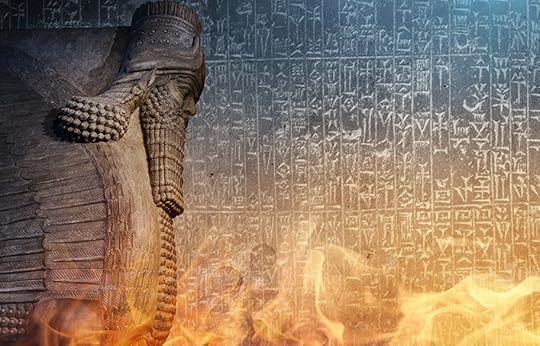 The Explanations
Now, historians and archaeologists have tried to make sense of these absurdly long reigns for decades. One theory is that the numbers are symbolic, based on the sexagesimal (base-60) system the Sumerians used for counting. If you multiply or divide the figures by certain factors of 60, the reigns start looking more reasonable — kind of.
Another idea is that the early “kings” weren’t individual rulers at all. Instead, they were dynasties — long lines of leaders. These later got compressed into single names. So maybe “Alulim” wasn’t one guy who lived 28,800 years. Rather, it was a family or ruling line that lasted that long collectively. Others think the exaggerated numbers were a way to separate myth from history. This served to mark a clear line between the divine era (the gods ruled) and the human one (we took over and messed everything up).
And then there’s the internet theory. The fun one. The one involving Anunnaki — ancient extraterrestrial beings said to have descended from the sky, given humanity kingship, and maybe even tinkered with our DNA.
What’s fascinating is how the King List lines up with other Mesopotamian texts. The flood it mentions isn’t a random event. It ties directly to the same flood described in the Epic of Gilgamesh. Most scholars agree it was based on an actual catastrophic flood that hit the region around 2900 BCE.
The post The Sumerian King List — Why Ancient Rulers Lived for Thousands of Years appeared first on Malorie's Adventures.