The Ars Goetia: The Demonology Text That Inspired Every Occult Movie Ever
There’s something about forbidden books that has always fascinated me. You know that weird, almost magnetic pull some old texts seem to have, the ones written in cramped handwriting on yellowed pages, bound in cracked leather, smelling like dust and danger? The kind of book you’d expect to find in the back of a museum? Yeah. That’s basically what The Ars Goetia is.
It’s one of those things that sits at the intersection of myth and history. It is a text that shouldn’t exist, but somehow does. And even though it was written hundreds of years ago, it still feels alive in a way. Like it’s not just a book but a doorway into a mindset that’s equal parts terrified and fascinated by the unknown.
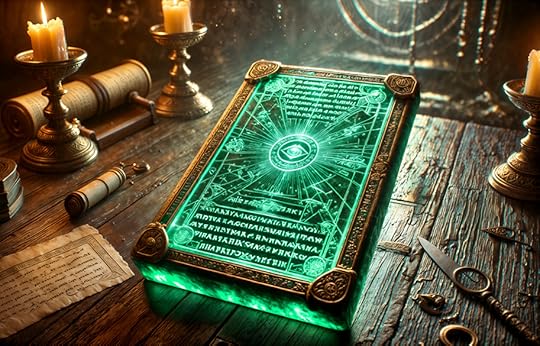
A Book Straight Out of a Horror MovieIf you’ve ever seen a horror movie where some clueless character opens a dusty old tome and accidentally summons a demon — congrats, you’ve basically seen the Ars Goetia in action. It’s the original “forbidden grimoire,” the playbook for every cinematic possession, summoning ritual, or “don’t-read-that-out-loud” scene we’ve all screamed at. But here’s the thing: it’s real.
The Ars Goetia is part of a larger 17th-century text called The Lesser Key of Solomon. It’s essentially a guidebook to dealing with demons — 72 of them, to be exact. Each one has a name, rank, job description, and even a little personality profile. It’s like some nightmarish version of a corporate org chart. It reads like an ancient Pokémon guide — except instead of catching them, you’re supposed to summon them. You control them, and hopefully not die in the process.
The text claims these rituals came from King Solomon himself — the biblical king who supposedly had a magic ring that allowed him to command spirits. Whether you believe that or not, it’s hard not to be intrigued. There’s something about the blend of religion, mysticism, and raw human curiosity that makes it feel more like a psychological artifact than just a myth.
How to Summon a Demon (According to a 400-Year-Old Book)What’s wild is how detailed it gets. The Ars Goetia doesn’t just name the demons — it tells you how to safely talk to them. There are instructions on drawing protective circles, reciting incantations, and using specific seals and symbols that are supposed to trap the spirit. The idea is that as long as you stay inside the circle, you’re safe. The demon can’t touch you. You can command it, question it, maybe even make a deal with it.
It sounds insane now, but in the 1600s, this wasn’t fringe stuff. Scholars, priests, and so-called magicians genuinely believed they were interacting with real entities. It was not out of evil intent, but as a way of understanding creation. For them, “demon” didn’t necessarily mean “monster.” It meant an intelligent, powerful force that could teach or reveal something about the universe.
Still, the stakes were high. The text makes it very clear that one mistake — one wrong word, one shaky line in your magic circle — could ruin you. There’s this constant underlying tone of both awe and fear. And honestly, I think that’s what makes it so compelling. It’s like reading an ancient science experiment that could destroy the lab if done wrong.
The Men Who Brought It Back to LifeFor a while, the Ars Goetia existed in the shadows — hidden away in private collections and whispered about in secret societies. Then, in the late 1800s, a man named Aleister Crowley — arguably one of the most controversial figures in occult history — resurrected it.
Crowley, who called himself “The Great Beast 666” (subtle, right?), republished the text with his own annotations. He claimed to have personally summoned some of the spirits. Whether or not that’s true, it gave the book new life. It became the cornerstone of modern occultism and an endless source of inspiration for secret orders, artists, and eventually, filmmakers.
And if you think this stuff sounds niche, think again — echoes of the Ars Goetia are everywhere. Movies like Hereditary, The Conjuring, The Nun — even shows like Supernatural and American Horror Story — all borrow from its imagery. Those intricate sigils, the chalk circles, the idea of binding a demon and commanding it by name? That’s all straight out of the Goetia.
 More Than Just a Scary Story
What gets me, though, is how much humanity there is behind it. For all its darkness, the Ars Goetia isn’t just about fear — it’s about control. It’s about wanting to understand the things that scare us.
Think about it. People back then didn’t have science the way we do. They didn’t have psychology or physics or therapy. The world was this mysterious, unpredictable place full of disease, war, and death. And when something bad happened, it felt personal — like something was behind it. So of course they tried to name it, to define it, to face it on their own terms.
That’s what the Goetia really represents — the human instinct to map out the darkness. To say, “Okay, I don’t understand this, but maybe if I study it, maybe if I write it down, I can make sense of it.” It’s kind of poetic, in a morbid way.
The Ars Goetia TodayFast forward to now — and you can literally download the Ars Goetia as a PDF. That blows my mind every time. What people once risked their souls (and lives) to even read, we now casually scroll through on our phones. It’s like it’s just another internet curiosity. But the fascination hasn’t died. There are still online communities dissecting the text, artists incorporating its symbols into fashion, and modern occultists claiming to practice its rituals (hopefully safely).
Even if you don’t buy into any of it, there’s no denying how it’s shaped our collective imagination. It’s the reason we still think of demons as ranked generals with names and seals instead of just vague evil presences. It’s why ritual scenes in horror movies feel so familiar. They’ve been recycled straight from this 17th-century manuscript.
The post The Ars Goetia: The Demonology Text That Inspired Every Occult Movie Ever appeared first on Malorie's Adventures.