Misinformation from one of America’s most trusted publications – “Reader’s Digest”
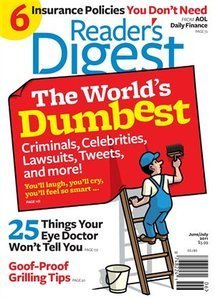
 In the June/July 2011 publication of Reader’s Digest an article written by Michelle Crouch called “13+ Things a Funeral Director Won’t Tell You” was one of their lead articles both in print and online. While conducting some research I ran into this article and found it incredibly upsetting. I’m all for the 1st amendment and supporting freedom of speech, however it’s my belief that people, especially the media should report the “facts” rather than slant the title or articles to increase readership or sales. I get that headlines are what sells, especially when they include celebrities, scandals and topics that most people elect not to discuss publicly – like funerals. After re-reading this article, it was evident that its author Michelle Crouch is a “self pro-claimed expert” and very misinformed. In fact, I “googled Ms. Crouch and found her website that listed several of her free-lanced articles that have been published in numerous well-known magazines. The majority of Crouch’s articles, especially in Reader’s Digest are examples of attempting to be a consumer’s advocate through fear based articles such as:
50 secrets your waiter won’t tell you
13 things your florist won’t tell you
50 secrets your pilot won’t tell you
My point here is there is large segment of the population who read articles and assumes there is truth behind it, as it’s printed by a respected publisher. I often wonder if the publishing entity ever verifies the information for its validity. I have been a funeral professional for over 25 years and my husband’s funeral home has been in existence for over 115 years. In fact, I can say with confidence that many of my colleagues both on the supplier side and the funeral home owner/director side would support my sentiments. To prove my point, I’d like to take the next few minutes to debunking “Reader’s Digest’s published article titled “13+ Things a Funeral Director Won’t Tell You”. I hope you find this as eye-opening as I did.
The black print is what was in print directly off the Reader’s Digest website, the burgundy is the factual answer. (http://www.rd.com/slideshows/13-thing...)
Misleading recommendation number 1:

Go ahead and plan your funeral, but think twice before paying in advance. You risk losing everything if the funeral home goes out of business. Instead, keep your money in a pay-on-death account at your bank.
Fact: Pre-paid funerals, especially since the late 1980’s have become regulated. In today’s pre-planning and payment environment it’s very difficult for a consumer to be taken to the cleaners.
1. When a consumer pre-funds a funeral it’s typically placed in a funeral home based insurance policy, final expense or funeral trust. All of the funding vehicles are transportable to other funeral home.
2. Funeral homes are audited to avoid such financial mishaps.
3. A pre-funded contract is between the consumer, the funeral home and the funding company. Therefore the consumer will have a receipt of where the monies are being held and can check on it at anytime.
4. Finally, if the funeral home goes out of business or is sold, the contract is transferable Conversely, if the pre-funded company is acquired by another insurance company the contracts are honored. If the insurance company itself goes out of business there are regulations and funds set in place for the state to kick in to protect the state's policyholders. Typically funeral home policies are smaller than traditional insurance plans so there isn't a problem.
There are many reputable funeral planning insurance companies, Forethought, Homesteaders and NGL are the leading pioneers and are nationally available. Outside of the big 3, numerous regional providers have conducted business and been working with funeral homes for decades.
Misleading recommendation number 2:
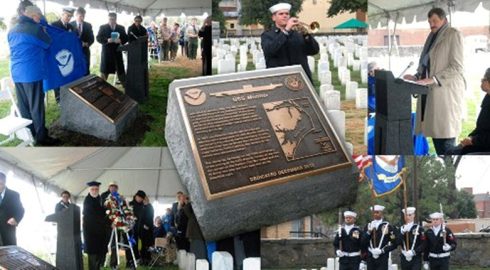
If you or your spouse is a honorably discharged veteran, burial is free at a Veterans Affairs National Cemetery. This includes the grave, vault, opening and closing, marker, and setting fee. Many State Veter ans Cemeteries offer free burial for veterans and, often, spouses.
Fact: Yes, the above is correct. Funeral homes always ask if the deceased was a veteran or a veteran’s spouse. A Veteran is also entitled a military ceremony and a United States flag, along with a grave marker. The difficulty with the blanket statement above, is that there are NOT Veterans National Cemeteries in every town. The challenge is that in the communities where there are NOT Veterans National Cemeteries close by, the deceased must be transported to the cemetery.
The other thing to keep in mind is that the following items are not included as part of a veteran’s benefit:
Funeral professional services
Transportation
Merchandise (casket, printed materials, etc...)
Cash advance items (obituaries and death certificates)
If a veteran would rather be cremated this is not free of charge.
Once a person understand exactly what veterans benefits are, depending on where the cemetery is located it may not make financial sense. http://www.cem.va.gov/
Misleading recommendation number 3:
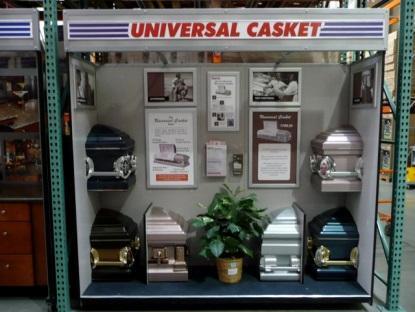
You can buy caskets that are just as nice as the ones in my showroom for thousands of dollars less online from Wal-Mart, Costco, or straight from a manufacturer.
Fact: Not necessarily. Yes, caskets are sold and have been sold for years at Wal-Mart, Costco, Amish woodworking craftsman and online. They are equally attractive as the ones that can be selected at a funeral home. Many of the chain store or online caskets come direct from China or Mexico so they are purchased in bulk to keep the consumer’s cost down. If the consumer truly compares steel metal gauge, to steel metal gauge, paint along with interior color and fabric, you will see that the pricing is the same or similar. What the article and recommendation didn't tell the consumer is that often times there is a large up charge or fee for delivering the casket to the desired funeral home. In fact, depending on the state, city and store where the casket was purchased it’s not uncommon to have union fees and delivery fees added to the retail price. In some cases, the caskets must be ordered as the retailers do not warehouse caskets, so if the expectation is that a consumer can go to a store, select a casket and bring it home the same day that may not be realistic.
Misleading recommendation number 4:
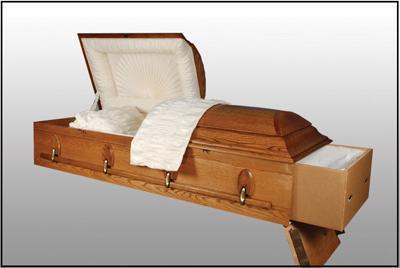
On a budget or concerned about the environment? Consider a rental casket. The body stays inside the casket in a thick cardboard container, which is then removed for burial or cremation.
Fact: The above statement infers two very different topics which can be the same or mutually exclusive. Money and Environment, which are two very different value propositions. Yes, rental caskets are typically and often used for cremations that have a visitation with the body present. After the visitation and or the memorial service, the deceased is cremated and the outer shell of the casket can be reused at another time after replacing the interior with a new liner or corrugated box. Another popular option is to purchase specially designed casket made for cremation (which costs less as it’s not made of bronze, copper or steel it’s made of wood, particle board or cardboard) and then bury that. Most funeral homes have access to these caskets. In reality, there are many caskets that are less expensive than using a rental casket, all you need to do is share that price is an issue. In regards to the environment the green movement / “Eco-friendly it's been around for many years. In fact, there are “green” cemeteries, just not in every state at this point in time. Just like anything else at this present moment in time, “green” doesn't always equate to less expensive. There are many green casket and urn options, some of which are very affordable. As a consumer, one must decide if they want to be environmentally conscious, cost-effective and or both. But please don’t assume “green” or rental always more affordable.
Misleading recommendation number 5:

Running a funeral home without a refrigerated holding room is like running a restaurant without a walk-in cooler. But many funeral homes don’t offer one because they want you to pay for the more costly option: embalming. Most bodies can be presented very nicely without it if you have the viewing within a few days of death.
Fact: Most, not all funeral homes do have refrigeration. In the rare case the funeral home does not have access too, or refrigeration AND there is a large gap of time between the funeral service and the time the body was received into their care, they will ask the family for permission to embalm out of convenience and body preservation – NOT to drive up the cost. In fact, when this is the case some funeral homes don’t charge as it’s for their convenience as well as wanting the family to have a good “last memory picture” of their loved one. Regardless, the funeral home must ask for the family’s permission to embalm by law.
Misleading recommendation number 6:

Some hard-sell phrases to be wary of: “Given your position in the community …,” “I’m sure you want what’s best for your mother,” and “Your mother had excellent taste. When she made arrangements for Aunt Nellie, this is what she chose.”
Fact: This only happens in movies and on television…and in a really bad reality show. (…and if it does happen in your funeral home…run screaming from the building!)
Misleading recommendation number 7:
"Protective” caskets with a rubber gasket - They don’t stop decomposition, in fact, the moisture and gases they trap inside have caused caskets to explode.

Fact: (note a personal favorite!) No one ever said a rubber gasket stops the decomposition. The body will always decompose. The rubber gasket is meant SOLELY to keep water and other earth elements out and to seal the casket airtight. Casket’s DO NOT explode.
Misleading recommendation number 8:

If there’s no low-cost casket in the display room, ask to see one anyway. Some funeral homes hide them in the basement or the boiler room.
Fact: Funeral homes have all price ranges of caskets available for families to choose from, in all price ranges. More than half of the funeral homes today don’t even have a casket selection room as they so it digitally on a flat screen TV and some just by using a lithos (photos).
This is done for the 2 primary reasons:
To keep overhead down by having no physical inventory; therefore passing the savings along to the consumer.
By virtually showing caskets and urns funeral homes are able to show more of a selection, therefore literally having price points for every budget.
Many years ago funeral home’s often kept cardboard box caskets for welfare funerals in their garage or basement as the majority of these services at one time were paid for by the state. Fast forward to this decade, this simply is not the case as the Department of Human Services is underfunded and there are limited, if any funds, depending on what state you live that will fully pay for a funeral.
Misleading recommendation number 9:

Ask the crematory to return the ashes in a plain metal or plastic container — not one stamped temporary container. That’s just a sleazy tactic to get you to purchase a more expensive urn.
Fact: Typically the consumer never meets with the crematory or its operators. The consumer will meet with a funeral director or arranger who legally must oversee the cremation. Depending on the state you live in and or the funeral home the consumer is working with, the funeral home/director then outsources the deceased to a 3rd party crematory or a sister company for the cremation to take place. It’s up to the crematory to determine what the cremated remains (pulverized bones NOT ashes) of the deceased in to return back to the funeral home in, if no urn or container was selected by the family. In fact, families can bring their own container for the cremated remains to be directly placed into.
Some funeral home’s and even crematories are leaning to be more “green” and will return the cremated remains in plastic bag that is placed in a cardboard box. Other crematories may elect to place the cremated remains in a plastic container that is meant to be temporary as no “urn” or container was provided. The reason the word “temporary” is even used is often times the cremated remains are scattered or even co-mingles with other cremated remains to be buried at a later date.
Misleading recommendation number 10:

Shop around. Prices at funeral homes vary wildly, with direct cremation costing $500 at one funeral home and $3,000 down the street. (Federal law requires that prices be provided over the phone.)
Fact: The Federal Trade Commission (FTC) requires that all prices are legally disclosed in a general price agreement. The cost of a cremation from start to finish does vary significantly from state to state and sometimes even from town to town. Typically in the coastal regions the cost to cremate is lower than in the Midwest or even Bible belt. What’s concerning is that people are basing the decision on a price and not comparing apples to apples. There are legalities involved with the cremation process. Natural gas is expensive, and the up keep of the retort (cremation machine) is very expensive. Crematories have insurance liabilities, vehicle up keep and trained personnel. There is some truth to the statement that cremation prices are less metropolitan city where volume can play a factor, however just like any thing else – when prices are good to be true one must ask why. Many crematories and funeral homes have ended up on NBC’s Dateline for breaking the law and unethical practices – don’t let this be you.
Misleading recommendation number 11:
We remove pacemakers because the batteries damage our crematories.

Fact: Yes, pacemakers are removed. The informant is asked to disclose if the deceased has any article limbs, parts and yes a pacemaker. Why - pacemaker explosions. When a pacemaker explodes it can and cause structural damage to the inside of bricking within the retort or more importantly injuries to the operator if it exploded while they were checking on the cremation. This is no joking matter, especially when a person’s safety is hand.
Misleading recommendation number 12:

If they try to sell you a package that say will save you money, ask for the individual price list any way. Packages often include services you don’t want or need.
Fact: Regardless of package pricing, the funeral home must show a standard general price list. Packages are made up so families can easily select the funeral of their choice. General Price Lists are confusing at best. In reality, it’s just the opposite. The package prices will offer families one or two more items at a discounted price if bundled together. On the rare occasion that items are not discounted, if you added each component up, it would match the itemized General Price List. (General Price List requirements http://www.business.ftc.gov/documents...)
Misleading recommendation number 13:

Yes, technically I am an undertaker or a mortician. But doesn't funeral director have a nicer ring to it?
Fact: Legally, a funeral director has a mortuary science license; therefore they are a licensed and practicing mortician. The names have evolved over the years based on what their primary function is. Who cares? It’s no different from a person who is a “meteorologist” who the general public calls a weather man.
In closing:
At the end of the day, society as a whole is death adverse. We don’t want to talk about it. In fact, frankly death creeps people out. What I don’t understand is why people don’t place more emphasis on questions to ask caretakers, physicians, or even construction workers. People will believe them blindly, and are often scammed. Somehow, when it comes to death, they feel that they will be taken advantage of based on a self-appointed expert with no real pool of knowledge to base it on. The majority of the funeral profession is kind caring individuals who have taken over their family businesses. Is it unrealistic for a small business owner to expect to make a fair profit for their services rendered? Most funeral homes are small businesses whose owners live in the community and give back to their community. People don’t barter with their doctor or dentist; however they may take advantage of coupons or sales at the grocery store or restaurant. What they don’t realize is that by pre-arranging their funeral in advance they can guarantee their future funeral home choice at today’s prices – therefore saving their family literally hundreds of dollars, let alone removing the anxiety of having their loved ones wondering if they selected the funeral they would have wanted. Another value added benefit of pre-arranging and funding your funeral in advance is that it’s considered exempt as an asset from Medicaid if you are attempting to go on assistance for long-term care. Funny how the positive attributes of funeral service are not proactively discussed openly for the public to realize the many benefits. Like anything else, media exploitation or sensationalism of miss-facts or half-truths increase ratings which translate to profits.
If you want to check out more of Michelle Crouch’s articles the link shown below.
http://www.rd.com/slideshows/13-things-a-funeral-director-wont-tell-you/#slideshow=slide22 Here is costco’s link for the costo question:
http://www.cem.va.gov/ for veteran cemetery information