Dying in the 21st Century
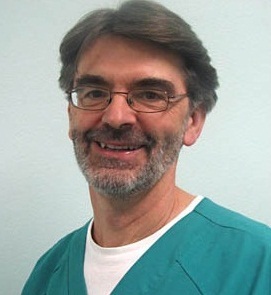
 Dr. Peter Saul is a Senior Intensive Care specialist in the adult and pediatric ICU at John Hunter Hospital, and Director of Intensive Care at Newcastle Private Hospital in Australia. After spending time as the Head of Discipline for Medical Ethics at Newcastle University, he is now a leading adviser to the State and Federal health departments. Over the past 35 years Peter Saul has been intimately involved in the dying process for over 4,000 patients. He is passionate about improving the ways we die.[/caption]
Last month I came on a very interesting study called "Dying in the 21st Century" conducted by Dr. Peter Saul in Australia who is an intensive care surgeon.
The findings of Dr. Saul's research I found to be parallel with what I so passionately advocate. Dr. Saul shared that in the 1970, '80s, and even in the '90s, the primary focus as a physician or surgeon was to "extend or prolong" life.
As a result of the medical profession prolonging life, today there are an extraordinary amount of people who have literally no quality of life. Meaning they are 100% mentally and physically incapacitated. Some of these people resemble those who have dementia or Alzheimer's who just sit and stare off into space while strapped in a wheelchair, others are on life support and or in a coma. Why?
Because their patient advocate forms and medical durable power of attorney documents were never completed. In talking to the family members of those who are incapacitated, the overall consensus was that they felt they would always discuss it at a later date. Sadly, the only thing that came upon a later date was an illness, accident or medical emergency.
Dr. Saul also went on to say that, through the eyes of those who practice medicine, is a belief that there are really only four ways to die, with the third being the most tragic.
The first form of death typically resembles some fluke, suicide or childhood disease. Fortunately, through vaccines, medications and other pro-active measures, this type of death has decreased dramatically and in some cases are obsolete.
The second way many people die is through a terminal illness or illness like cancer that was discovered too late.
Third, and sadly the most common way people die is in the hospital's ICU (illness or critical care unit). They enter into ICU via an emergency, illness, surgery or even an accident. They legally do not die, however, they often begin the equivalent to a death sentence through zero quality of life and are placed in a long-term care facility (The extremes cases we all know are Karen Quinlin and Terry Schivo).
Dr. Saul's team found out that each time a person entered into ICU, the next of kin was asked if their loved one had patient advocate forms completed along with their medical durable power of attorney. More often than not, their response was "no."
The fourth way death occurs is also increasing in numbers. Simply said, people are becoming frail. Longevity combined with their health and lifestyle have finally taken its toll on them, and their internal organs are becoming old, wearing out and shutting down. The physicians at Dr. Saul's hospital were in agreement that the third way people faced death, via living absolutely no quality of life, including the ability to remain on life support for the rest of their life, brought on even a greater sense of stress and financial hardship for the family. Families openly shared that if they possessed any documentation of "what" their loved one wanted, they would carry out those decisions as a gift of love.
The other realization that came out of this research was that, yes, doctors have the capability to saving a life. However, if there is no quality, maybe its better to spend the time to educate and inform people to have the "conversation or talk" about the pros and cons of advance directives and medical power of attorneys, then place the decision in on the potential patient for the family to carry out.
Through pro-active education in the young adult years, it's the intent to inspire people to document their wishes, as well as encourage them to revisit their choices every few years, as situations and or beliefs may change.
From my viewpoint, I couldn't agree more. I'm not an advocate of death; I'm an advocate of life. Life for me is an environment where I have the ability to recover and be functional, as well as independent.
My family will never have to make that decision, as I have already addressed these issues. Regardless of what your position is, my question to you is, "Have you had the conversation or talk yet AND are your decisions documented? If not, why not?"
I'd love to hear from you. Please share your thoughts at jodi@clockfuneralhome.com, Facebook, or @AuthorJodiClock on Twitter. or "like me on Facebook


No comments have been added yet.