From the Writer’s Corner: How Much is Too Much?
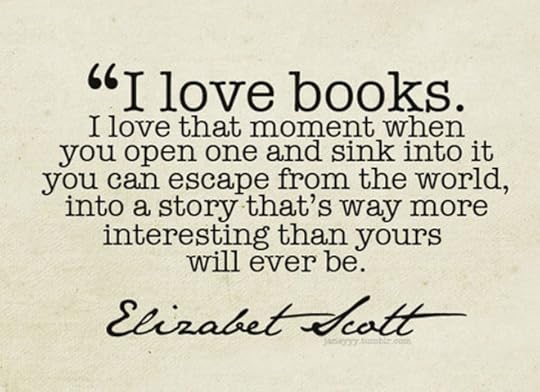
One of the things my husband and I first bonded over was our love of both reading and writing. We were both That Kid who spent summer breaks and vacations curled up surrounded by good stories and a TBR list that spanned over three miles long.
He took the path of reading, however, and I took the path of writing. He always dabbled in stories, and he’s got a talent for it, I’ll give him that. It wasn’t until I started pursuing my career of writing, though, that he took up the hobby with more serious intentions of actually pursuing the idea of having something published one day.
I think that’s pretty common in homes with writers. Partners are inspired to create something, and I think it should be encouraged. He’s been working on a story idea for a while now, and the other day he asked me a question. “How much effort do you put into scene building?”
I had to think about that one for a while, because my process tends to be more organic–and by that I mean, I don’t usually put a lot of conscious thought into how the scene is being built. I spend months, if not years, creating worlds and characters in my head, so by the time I sit down to write them, I know them all by heart. I know their names, what time they were born and when. I know their most embarrassing moment as a child, and what they wanted to be when they grew up. I know about their first day of school, and about their last. I know all their secrets, and I know what they dream about at night.
When I sit down to start a story, my brain splits in half. There’s one part paying close attention to the technical details. A part of my brain paying attention to spelling and grammar, when I need to break for paragraphs. Am I using too many adverbs? Dialogue tags? Have I accurately set up everyone in the room with everything they need in order to advance to the next scene?
The second part is busy pulling from the vast well of knowledge I created about this singular universe. It’s drawing on who the characters are as people, helping to create them as individuals so I know how they would react no matter what situation was presented to them.
The question my husband was asking, though, was on the technical side. “How much effort do you put into scene building.”
I asked him to clarify because that question can be interpreted in a few ways. But he did, and it got me thinking, I wonder how many authors worry about this. “I’m currently writing a scene where my character has managed to break into a place, and now he’s trying to get out unnoticed. He’s talking to a guard and walking through a room, and I’m not sure how much detail to put in to it.”
It made my ability to answer the question much easier. How much do you put into it?
Exactly the amount the reader needs to know. Authors have the entire world in their heads. The entire past, present, and future. But the reader doesn’t need that. The reader only needs to know what’s important to that particular scene, and nothing else. The color of the floor? Unless it’s important to the plot or characters– the answer is no. The reader is allowed to imagine the color of the floor any way they want.
The magazine the guard is reading? Only if it’s important to further the scene. Otherwise some people might imagine him reading Home and Garden. Some people might imagine it’s TIME magazine. Some people might envision vogue or Sports Illustrated, or People.
My advice to him– only write what matters.
That however, can be tricky for authors. Because to us, all of it matters. Every nuanced detail of the room and the people in it, and the motivations of their actions, and even the color of the damned tiles matter. We know what the room looks like in our heads and sometimes we get caught up in trying to make the reader see what we see.
But it’s important not to get carried away, because–at least for me–a lot of the fun when I was reading was being able to imagine things the way I wanted to imagine them. I always found myself extremely distracted by authors who go on and on for paragraphs about the way something looks. If down the line it wasn’t necessary for me to have a detailed image of what the bedroom looks like, I would get frustrated I wasted so much time reading about the particular shade of burnt coffee the person had painted their walls.
And it’s the same for bigger details, too.
I reminded my husband that a lot of the sci-fi he read as a kid had been written when the genre wasn’t popular. There weren’t hundreds of titles, movies, television shows, and web series featuring the insides of space ships and battle pods and alien worlds and space stations. When those authors were describing the flight room of their massive Space Cruiser, it was because no one had seen one before, so the concept was unfamiliar.
Now it’s everywhere. And some people might picture it Star Wars-esque. Some people (like me–Trekkie forever!) might envision something more like the Enterprise. But either way, we’ve been immersed in the sci-fi culture long enough to have our own versions of what these things look like. Wasting time, again unless it’s necessary to the plot— writing out a detailed idea of what your space station looks like, is just taking time away from letting your story get moving, of letting it get good.
Everyone of course has a different style. And everyone’s going to have a different opinion, and this just happens to be mine. But although I haven’t been writing professionally for longer than a few years, I’ve been reading a lot longer than that, and it happens to be something I’ve always carried with me. I’ve always loved the authors who leave just enough to the reader’s imagination to feel like you’ve crawled into your own private world.
So really, how much is too much? That’s up to you to decide.