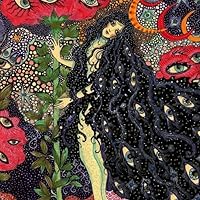
Works of Russian writer Aleksandr Sergeyevich Pushkin include the verse novel Eugene Onegin (1831), the play Boris Godunov (1831), and many narrative and lyrical poems and short stories.
People consider this author the greatest poet and the founder of modern literature. Pushkin pioneered the use of vernacular speech in his poems, creating a style of storytelling—mixing drama, romance, and satire—associated ever with greatly influential later literature.
Pushkin published his first poem at the age of 15 years in 1814, and the literary establishment widely recognized him before the time of his graduation from the imperial lyceum in Tsarskoe Selo. Social reform gradually committed Pushkin, who emerged as a spokesman for literary radicals and in the early 1820s clashed with the government, which sent him into exile in southern Russia. Under the strict surveillance of government censors and unable to travel or publish at will, he wrote his most famous drama but ably published it not until years later. People published his verse serially from 1825 to 1832.
Pushkin and his wife Natalya Goncharova, whom he married in 1831, later became regulars of court society. In 1837, while falling into ever greater debt amidst rumors that his wife started conducting a scandalous affair, Pushkin challenged her alleged lover, Georges d'Anthès, to a duel. Pushkin was mortally wounded and died two days later.
Because of his liberal political views and influence on generations of Russian rebels, Pushkin was portrayed by Bolsheviks as an opponent to bourgeois literature and culture and a predecessor of Soviet literature and poetry. Tsarskoe Selo was renamed after him.
Pushkin Alexander (1799 – 1837) The Poems, Prose and Plays.
Translated by various, but for the major part by ‘Babette Deutsch’ and especially “Eugene Onegin” is an outstanding verse translation. Alexander Pushkin was a Russian Poet, Novelist and Playwright who flourished in the golden age of the Russian romantic era introducing every literary genre of his day: lyric poetry, narrative poetry, the novel, the short story, the drama, the critical essay and even the personal letter. The reader will be entertained by love stories, intrigues, romances, heartbreaking deceptions, betrayals, cruelties, duels, fights, and war. We are set in the classic Russian countryside, during the various seasons but often in snow-covered wintertime. The manor houses, the peasants' mud houses, wooden buildings, and churches as we know them from ancient paintings. The period describes the situation when rich landowners had several hundred serfs including villages and when Aristocratic families were educating their children in the French language and literature. The mayor work, Eugene Onegin is a verse novel: …/… “When Eugene reached the restless season Of seething hopes and giddy play, And melancholy minus reason, Monsieur was sent upon his way. Now my Onegin, keen as brandy, Went forth, in dress—a London dandy, His hair cut in the latest mode; He dined, he danced, he fenced, he rode. In French, he could converse politely, As well as write; and how he bowed! In the mazurka ‘twas allowed, No partner ever was so sprightly. What more is asked? The world is warm In praise of so much wit and charm” …/… Eugene is a fictional character; however, the author wittily introduces himself in the first person along with the story. It is sometimes a challenge to keep up with who is who. Pushkin wrote on Eugene almost throughout his life and while the novel is not very long it is perceptively changing place and time as well as subjects in many colours and tunes. At times it seems to remind me of ‘Childe Harrold’ Other Byron-like works are a version of Don Juan, The Stone Guest, The Lay of the Wise Oleg, The Bronze Horseman. “The Prophet” is a poem too long to quote, but exceptionally original and impressive of him being called upon by God to become His prophet. Pushkin is a must-read for Russian classic readers. He comes before the others. P.S. A special thanks to my GR friend Johan who offered me this very valuable 1936 RH Modern library edition.
This is an excellent anthology for someone wanting an introduction to Pushkin. Many have delighted especially in The Captain’s Daughter, and it is indeed a great novel. The leads call for Errol Flynn and Olivia DeHavilland in an MGM production that will never be made.
The spine of my copy began to separate from the boards, but there is no complaint – it was printed in 1936 for the popular reader and has survived over 80 years as a library copy before being discarded to the used-book market.
Now that I have given the book a first reading, I will mend it with Lineco’s Neutral PH Adhesive from amazon.com. I cannot promise anything, of course, but this outstanding product has never failed to give satisfaction in repairing a number of my books.
Please note that I have no connection with amazon.com or with Lineco; I simply pass this on to other book lovers.
A Wish; Autumn; Bound For Your Distant Home; Confession; Day's Rain is Done; Devils; Don't Ask Me Why; I Loved You Once; I've Lived to See Desire Vanish; May 26, 1828; Night; The Black Shawl; The Bronze Horseman; The Drowned Man; The Prophet; The Talisman
Thine eyes of love appear more bright Than noonday's beam, more dark than night; Whose voice like thine can breathe of blisses, Filling the heart with soft desire?
I purchased and read this volume as part of the Great Courses on Russian Literature. It was the first of Pushkin's work I had ever read, and I enjoyed it. I particularly liked Eugene Onegin, The Queen of Spades, and The Captain's Daughter.
I have not read many books of poetry, and this may have been an ambitious book for a novice. I have just taken a trip to Russia, and Pushkin is revered there. I am glad I read it, and found much of the prose lovely and very telling of the time and struggles of Russian life in the 19th century.
Comprehensive collection of Pushkin's work, including three stories published after his death. I ended up reading a more recent translation of Eugene Onegin. Solid stories although the author's allusions to pop culture of his day need the explanatory footnotes for today's readers.
Boris Godunov – *** The premise of this play is interesting – a man claiming to be the son of Ivan the Terrible who in reality was murdered by the Czar Boris, and leads to indirectly to the death of Boris and directly his son. (The play basically starts with the death of a son and ends with a death of a son.) The irony is fascinating -- and, I suppose, the cosmic justice.
It would be interesting if there wer more ambiguity around the imposter. What if the characters didn't all really know he was the imposter? But that's a different play. This play ends with the pretender’s rise to the throne which is too bad because that’s when things just start to get interesting. The Pretender is murdered after only 10 months, and he was followed later by two more Pretenders. Pushkin was planning to continue the play through these other changes.
Pushkin reportedly modeled his play after Shakespeare’s histories. It lacks the depth, verve and characterization of Shakespeare’s histories. But you can feel the Shakespearean influence, and it is a remarkably good first full-length play. It offers a wide range of interesting characters and perspectives. It's too bad Pushkin never finished the series.
This translation is a bit strained and anachronistic. I don’t know when it was originally done, but it strives to make Pushkin sound Shakespearean, and not to a favorable result. (01/16 & 01/22)
of the entire collection, my absolute favorite was THE CAPTAIN'S DAUGHTER. vintage pushkin drama, ala EUGENE ONEGIN, but with a burst of humor on just about every page. a great collection in one tomb; nice to get my hands on the modern library edition!
This compilation released in 1936, has nearly everything Pushkin wrote in one volume. Excellent introduction and amazing translations. Notes very from sparse to extensive, but helpful.