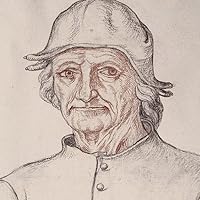
Pyotr Alekseyevich Kropotkin, prince, Russian anarchist, and political philosopher, greatly influenced movements throughout the world and maintained that cooperation, not competition, the means, bettered the human condition.
This was great! What a hopeful narrative of the state! Kropotkin tells us that the state is cyclical; here today, gone the next.
I think individualist anarchists should praise this book as well! Kropotkin seems to almost combine the conquest theory of the state along with the idea that it was territorial judicial monopolies that form states and that a rejection of legal pluralism for legal monism served as the basis for the state after the medieval era.
The only error that Kropotkin has is that he accepts villages or "communes" as being acceptable entities. He says that he fear "outside interference" from "the state", but what about if four people within a commune want to make an agreement with one another that goes against the will of the commune? Wouldn't the commune be "outside interference" upon those four people? And, if one commune is acceptable, then why not two communes together, or three, or an entire province of communes or a country of communes? The individualist anarchist never runs into such problems as they accept that the individual always has the right to "secede" from any political regime.
Usikker på kor historisk korrekt denne er, men boka har likevel eit grunnleggande tankemønster rundt makt og institusjonar som framleis er relevant (om enn i oppdatert form). Likte særleg godt detaljane om utdanningssystemet og om anabapitsitke kyrkjesamfunn.
Not bad, but outdated and kind of vague. Does not reveal the mechanism of empire fall to a sufficient degree to me. We have better, stronger arguments now.
El Estado de Piotr Kropotkin es una obra que critica profundamente la estructura y el funcionamiento del Estado, viéndolo como un instrumento de opresión que perpetúa la desigualdad y la dominación. Kropotkin sostiene que el Estado, en su forma moderna, es la manifestación de los intereses de una clase dominante, y que su existencia es incompatible con la verdadera libertad y la justicia social. En lugar de la autoridad centralizada, el autor defiende una sociedad basada en la cooperación voluntaria y el autogobierno, donde los individuos y las comunidades gestionen sus propios asuntos sin la intervención del poder estatal.
Desde una perspectiva crítica, esta visión anarquista del Estado puede ser vista como una amenaza para el orden establecido y la soberanía nacional, elementos que consideran esenciales para la unidad y estabilidad de la nación. La obra de Kropotkin propone un mundo sin jerarquías y sin estructuras de poder, lo que puede resultar incompatible con aquellos que creen que el Estado es necesario para preservar el orden, la propiedad y la seguridad. Si bien la crítica de Kropotkin al abuso del poder estatal tiene relevancia, su visión de una sociedad sin Estado y sin propiedad privada es difícil de conciliar con sistemas que valoran la soberanía nacional y la defensa de los derechos individuales en un marco de orden jerárquico.
"Y esas ruedas de la burocracia siguen como antaño intercambiando sus cincuenta documentos cuando el viento ha derribado un árbol en la carretera y transfiriendo los millones sustraídos a la nación a las arcas de los privilegiados"
Una disección del aparato estatal, de los procesos históricos que contribuyeron a su aparición: la amalgama entre el sacerdote, el soldado y el juez en una clase minoritaria separada de la sociedad y privilegiada por sobre la gente normal. Destacando la gran capacidad colaborativa que existió en la humanidad, cruzando por los humanos primitivos, las sociedades agrícolas, las primeras ciudades y las comunas medievales, se expone las truculentas fuerzas que conspiraban en el fondo para levantarse en lo que sería un aparato burocrático empecinado en favorecerse a sí mismo.
Como toda obra histórica antigua, especialmente una que cuenta con claros fines políticos, sus investigaciones históricas deben ser examinados con cuidado y contrastados con estudios actuales, si bien me atrevería a decir que el ímpetu retórico y persuasivo no se pierde si se toma cada una de las descripciones como ejemplo del punto que Kropoktin busca hacer. Una lectura vívida y colorida, además de ser sencilla y breve.
~3.5 The reason for a "low" rating is the oversimplification and the aim to present it in a way that fits his view. Now that's not inherently bad since most people have views and want to support them with evidence, and I like Kropotkin, but without much historical knowledge, you can read this feeling "hmm, so this is how that happened, hmm", as if it's a nice little tale or something. The "free towns" of the middle ages are being romanticised to an extent. There is local governance, federalism, etc, but an anarchist's dream? Noo. And it's not mentioned (although I guess you should tell) that this happened regionally. This isn't a linear, progressive, objective thing. In other places (in Europe) at the same time, there were other conditions. But he is right in some of his observations and even simplifications. Not much more could have been written in a book of that length. There are things to take from it, I'm just strict. Down with the state!
This is a really solid analysis of state development against people who claim the state can be used for "socialist" ends, it also shows how the growth and centralizing impulses of states are often responsible for their own demise. Kropotkin does mostly focus on the middle ages in his analysis, both because his focus is on how the modern state was created and I don't believe he had the same resources to study pre-medieval states like James C. Scott later had. I think the first half isn't as rigorous in this regard and I wish it was a little more developed, though I can forgive it as this was originally a speech. I think Rockers' Nationalism and Culture is a better take down of the state (exhaustively so) and I think this serves better as a more poetic introduction. I think the call at the end that you can either keep the state as an exploitive organ or eschew it in favor of developing decentralized federations to still ring true a hundred years later.
The Translator explains, “Peter Kropotkin was invited by… [the] editor of Le Temps Nouveaux, to take part in a series of lecture to be held … in March 1986, he chose two subjects: ‘The State: Its Historic Role’ and ‘Anarchism: Its Philosophy and Its Ideal.’ … he explains in his Memoirs ‘The research that I carried out in the course of familiarizing myself with the institutions of the barbarian period and those of the free cities of the Middle Ages, led me to carry out further interesting research on the role played by the State during the last three centuries… I summarized my findings as two lectures…’” As it happens the lectures were never delivered… when he disembarked from the … boat Kropotkin was met by police officers who detained him. He was told that he had been expelled from France and would have to return by the first boat; in the event of any resistance he would be taken into ‘administrative custody.’”
Kropotkin began his first lecture, “In taking the State and its historical role as the subject for this study, I think I am satisfying a much felt need at the present time: that of examining in depth the very concept of the State, of studying its existence, its past role and the part it may be called upon to plan in the future. It is above all over the question of the State that socialists are divided. Two main currents can be discerned in the factions that exist among us which correspond to differences in temperament as well as in ways of thinking, but above all to the extent that one believes in the coming revolution. There are those, on the one hand, who hope to achieve the social revolution through the State by preserving and even extending most of its powers to be used for the revolution. And there are those like us who see the State, both in its present form, in its very essence, and in whatever guise it might appear, an obstacle in the social revolution, the greatest hindrance to the birth of a society based on equality and liberty, as well as the historic means designed to prevent this blossoming. The latter work to abolish the State and not to reform it.” (Pg. 9)
Of ancient human history, he states. “the courageous… also became the temporary leader in the struggles with other tribes or during migrations. But there was no alliance between the bearer of the ‘law’ (the one who knew by heart the tradition and past decisions), the military chief and the sorcerer; and the STATE was no more part of these tribes than it is of the society of bees or ants…” (Pg. 15)
He observes, “Abject poverty, misery, uncertainty of the morrow for the majority, and the isolation of poverty, which are the characteristics of our modern cities, were quite unknown in those ‘free oases, which emerged in the twelfth century amidst the feudal jungle.’” (Pg. 30)
He notes, “In the commune, the struggle was for the conquest and defense of the liberty of the individual… for the right to unite and to act; whereas the States’ wars had as their objective the destruction of these liberties, the submission of the individual, the annihilation of the free contract, and the uniting of men in a universal slavery to king, judge and priest---to the State. Therein lies all the difference. There are struggles and conflicts which are destructive. And there are others which drive humanity forwards.” (Pg. 32)
He suggests, “under the influence of the Christian church… minds became corrupted as the priest and the legislator took over. Man fell in love with authority. If a revolution of the lower trades took place in a commune, the commune would call for a savior, thus saddling itself with a dictator, a municipal Caesar… And he took advantage of the situation, using all the refinements in cruelty suggested to him by the Church or those borrowed from the despotic kingdoms of the Orient.” (Pg. 37) Later, he adds, “With Luther the movement was welcome by the princes; but it had begun as communist anarchism, advocated and put into practice in some places.” (Pg. 40)
He points out, “What had in fact come of Benvenuto Cellini’s art under State tutelage? It had disappeared! And the architecture of those guilds of masons and carpenters whose works of art we still admire? Just observe the hideous monuments of the statist period and at one time you will come to the conclusion that architecture was dead, to such an extent that it has not yet recovered from the blows it received at that hands of the State.” (Pg. 52)
He states, “To give full scope to socialism entails rebuilding from the top to bottom a society dominated by the narrow individualism of the shopkeeper… In every street, in every hamlet, in every group of men gathered around a factory … the creative, constructive and organizational spirit must be reawakened in order to rebuild life---in the factory, in the village, in the store, in production and distribution of supplies. All relations between individuals and great centers of population have to be made all over again, from the very day, from the very moment one alters the existing commercial or administrative organization.” (Pg. 58)
He concludes, “EITHER the State for ever, crushing individual and local life, taking over in all fields of human activity, bringing with it all its wars and domestic struggles for power, its palace revolutions which only replace one tyrant by another, and inevitability at the end of this development there is…death! OR the destruction of States, and new life starting again in thousands of centers on the principle of the lively initiative of the individual and groups and that of free agreement.” (Pg. 60)
Δύο αστεράκια για την έκδοση της μετάφρασης χωρίς επιμέλεια. Μείξη λατινικού και ελληνικού αλφάβητου στην ίδια λέξη, γραμματικές ασυμφωνίες, ελλιπείς προτάσεις. Απευθυνθείτε σε εναν διορθωτή, δεν είναι ντροπή.
“They expect the State whose very raison d'etre is the crushing of the individual, the hatred of initiative, the triumph of one idea which must be inevitably that of mediocrity - to become the lever for the accomplishment of this immense transformation”
Ofrece buena base para entender los orígenes del socialismo, pero para hoy en día está extremadamente anticuado y obsoleto. Un poco rancio también podría decirse jajaja
L’état selon kropotkine a été mit en place historiquement comme institution pour remplacer la libre entente organisationnelle de l’humanité ainsi que pour séparer l’association directe des sociétés humaines dans un processus de mise en place d’antagonisme entre les gouvernés et les gouvernants. Donc l’état , a été imposé pour établir une structure de domination et de médiation hiérarchique sur l’ensemble de la société. L’état ce veut la structure institutionnelle à la solde des classes gouvernantes qui on été le clergé, la royauté et les commerçants. L’œuvre de kropotkine se veut une mise en situation historique et anthropologique de l’avènement de l’état et une critique fondamentale de cette organisation sociale qui prévaut encore aujourd’hui dans notre époque contemporaine , sous plusieurs forme d’ont le républicanisme, la monarchie constitutionnelle, etc , qui ne sont en fait que des aristocratie électives. Selon moi , la suite logique de sont œuvre sur l’entraide, l’auteur nous offre une bonne prémisse embryonnaire du concept d’agoraphobies et d’agoraphilie politique apporté par Francis Dupuis-Deri. J’adore kropotkine, vraiment mon philosophe anarchiste préféré. Format feuillet très accessible comme lecture.
A little historical information about the state. I don't know how much of this is true, it seems that kropotkin is just talking out of his head, but it all makes sense. Good read, short.