

What do you think?
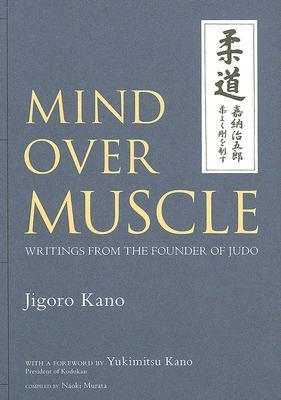
Mind Over Muscle: Writings from the Founder of Judo
In 1882 Jigoro Kano (1860-1938) founded Kodokan Judo at Eishoji Temple in Tokyo. It was the culmination of a lifelong devotion to the jujutsu of the past, which he reorganized while taking great care to retain its classical traditions. Historically, martial arts were practiced only by the elite in Japan. Kano, a renowned educator as well as a sportsman, is credited with popularizing the martial arts, and in particular, judo, among people in all levels of society.
When he was young, Kano studied jujutsu, a martial art practiced in Japan since feudal times, which involved throwing, hitting, kicking, stabbing, slashing, choking, bending and twisting limbs-and defenses against these attacks. After years of studying, he realized that although many different jujutsu techniques were taught, there was no one core value holding them together. Kano identified an all-pervasive principle- to make the most efficient use of mental and physical energy-and combined only those techniques in which this principle was correctly applied into modern judo. "Ju" means gentleness or giving way. "Do" means principle or the way. Judo, therefore is the Way of Gentleness, which implies that first giving way leads to ultimate victory. The Kodokan is literally, "the school for studying the Way." This book is a collection of Kano's essential teachings, selected and compiled from his wealth of writings and lectures spanning a period of fifty-one years. Today the International Judo Federation has 187 member countries and regions. As an official sport of the Olympic Games, judo has inspired young people of all nationalities, and Kodokan is universally recognized as the Mecca of Judo.
When he was young, Kano studied jujutsu, a martial art practiced in Japan since feudal times, which involved throwing, hitting, kicking, stabbing, slashing, choking, bending and twisting limbs-and defenses against these attacks. After years of studying, he realized that although many different jujutsu techniques were taught, there was no one core value holding them together. Kano identified an all-pervasive principle- to make the most efficient use of mental and physical energy-and combined only those techniques in which this principle was correctly applied into modern judo. "Ju" means gentleness or giving way. "Do" means principle or the way. Judo, therefore is the Way of Gentleness, which implies that first giving way leads to ultimate victory. The Kodokan is literally, "the school for studying the Way." This book is a collection of Kano's essential teachings, selected and compiled from his wealth of writings and lectures spanning a period of fifty-one years. Today the International Judo Federation has 187 member countries and regions. As an official sport of the Olympic Games, judo has inspired young people of all nationalities, and Kodokan is universally recognized as the Mecca of Judo.
160 pages, Hardcover
First published February 17, 2006
About the author
Jigoro Kano
34 books30 followersKanō Jigorō (嘉納 治五郎?, 28 October 1860 – 4 May 1938) was the founder of judo. Judo was the first Japanese martial art to gain widespread international recognition, and the first to become an official Olympic sport. Pedagogical innovations attributed to Kanō include the use of black and white belts, and the introduction of dan ranking to show the relative ranking between members of a martial art style. Well-known mottoes attributed to Kanō include "Maximum Efficiency with Minimum Effort" and "Mutual Welfare and Benefit."
In his professional life Kanō was an educator. Important postings included serving as director of primary education for the Ministry of Education (文部省, Monbushō?) from 1898–1901, and as president of Tokyo Higher Normal School from 1901 until 1920.[1] He played a key role in making judo and kendo part of the Japanese public school programs of the 1910s.
Kanō was also a pioneer of international sports. Accomplishments included being the first Asian member of the International Olympic Committee (IOC) (he served from 1909 until 1938); officially representing Japan at most Olympic Games held between 1912 and 1936; and serving as a leading spokesman for Japan's bid for the 1940 Olympic Games.
His official honors and decorations included the First Order of Merit and Grand Order of the Rising Sun and the Third Imperial Degree. Kanō was inducted into the IJF Hall of Fame on 14 May 1999.
In his professional life Kanō was an educator. Important postings included serving as director of primary education for the Ministry of Education (文部省, Monbushō?) from 1898–1901, and as president of Tokyo Higher Normal School from 1901 until 1920.[1] He played a key role in making judo and kendo part of the Japanese public school programs of the 1910s.
Kanō was also a pioneer of international sports. Accomplishments included being the first Asian member of the International Olympic Committee (IOC) (he served from 1909 until 1938); officially representing Japan at most Olympic Games held between 1912 and 1936; and serving as a leading spokesman for Japan's bid for the 1940 Olympic Games.
His official honors and decorations included the First Order of Merit and Grand Order of the Rising Sun and the Third Imperial Degree. Kanō was inducted into the IJF Hall of Fame on 14 May 1999.
Ratings & Reviews
Friends & Following
Create a free account to discover what your friends think of this book!
Community Reviews
Displaying 1 - 30 of 38 reviews

March 31, 2022
Aside from learning Martial Arts and the philosophies Judo entails, This is a great introduction into learning simple Japanese terms and phrases as well.
Three of Judo’s main purposed can be composed of 1. Perfecting Oneself (Mentally & Physically)
2. Contributing to Society
3. Adapt Oneself to the Times.
Significant Quote & Takeaway:
“Unused Treasure Is Wasted Treasure”
My interpretation =
We All have a gift in this world. If we know what that gift is; Why am I afraid/not willing to share it? It would be a disservice to those who really need it.
Jigoro Kano, the founder of Judo, placed much emphasis on the importance of education, moral development and the ability to serve your community/country/world through these characteristic developments - While taking part in Judo and how these correlate.
I really enjoyed this read as it’s a smaller sized book packed with phenomenal information on Life and Martial Arts.
Three of Judo’s main purposed can be composed of 1. Perfecting Oneself (Mentally & Physically)
2. Contributing to Society
3. Adapt Oneself to the Times.
Significant Quote & Takeaway:
“Unused Treasure Is Wasted Treasure”
My interpretation =
We All have a gift in this world. If we know what that gift is; Why am I afraid/not willing to share it? It would be a disservice to those who really need it.
Jigoro Kano, the founder of Judo, placed much emphasis on the importance of education, moral development and the ability to serve your community/country/world through these characteristic developments - While taking part in Judo and how these correlate.
I really enjoyed this read as it’s a smaller sized book packed with phenomenal information on Life and Martial Arts.

July 11, 2023
Interesting to hear the history around Judo as well as the mentality surrounding both Martial arts and just the way of life throughout. Overall I’d say Martial Arts are quite in tune with the way I look at mentality so always great to hear the different outlooks and studies of each.
April 26, 2025
This book helped me win a fight. I won’t specify which one, but it was resounding and clean and final

April 3, 2012
This book contains writings from the founder of judo - Jigoro Kano. Contrary to popular belief, judo is not just a sport, it is also a life philosophy. I highly recommend the book to all judo enthusiasts who wish to expand their knowledge concerning the origin and purpose of Jigoro Kano's creation.

February 9, 2016
Containing many segments from writings, lectures, and letters by renowned Judo founder, teacher, and Martial Arts Master Jigoro Kano, 'Mind over Muscle' speaks of both the practical and ideal elements to the philosophic lessons of Judo, as well as Sensei Kano's intended hopes for Judo and for all Martial Arts' futures.
His focus is clear, as his love for humanity and for learning abound in a free flowing, hard hitting report of the need for increased and sophisticated Physical Education as a part of a wholesome education system, that is as gentle and dominant as the martial art its founder helped to organize.
'Mind over Muscle' is essential reading for all interested teachers and martial artists, and it's call for a more balanced and classical education is now more important than ever.
His focus is clear, as his love for humanity and for learning abound in a free flowing, hard hitting report of the need for increased and sophisticated Physical Education as a part of a wholesome education system, that is as gentle and dominant as the martial art its founder helped to organize.
'Mind over Muscle' is essential reading for all interested teachers and martial artists, and it's call for a more balanced and classical education is now more important than ever.

September 25, 2023
This book is not so much about judo but how it comes about and the path one must follow as a judoka or simply a member of society. It explains the philosophical fundentals and the physical mechanics.
All in all, it reminds us that judo is much more than a competitive sport. It’s a way of living to contribute our best to society.
Defenetly needs rereading when feeling lost spiritually or in the sport itself.
So, yes, this book at first may not look at first as a book as the judo we know today but, it reminds us about the journey we must follow.
The only negative part can be the unnecessary rambling but it can be understood since, as the author states, it’s a collection of Kano’s notes that mostly had educational purposes. Thus, the repetition.
All in all, it reminds us that judo is much more than a competitive sport. It’s a way of living to contribute our best to society.
Defenetly needs rereading when feeling lost spiritually or in the sport itself.
So, yes, this book at first may not look at first as a book as the judo we know today but, it reminds us about the journey we must follow.
The only negative part can be the unnecessary rambling but it can be understood since, as the author states, it’s a collection of Kano’s notes that mostly had educational purposes. Thus, the repetition.
May 3, 2020
Written with well-meant intentions but, as Kano himself points out, though one aims to go about development with well-meant intentions, if one does so overzealously one will become riddled with illnesses despite ones effort. Meanwhile, those that may never exercise at all come home from office work healthy despite not exerting any physical effort at all. And so Kano has written numerous passages with well-meant intentions that go against his own efforts of recommending Judo.
Kano synthesized the the throwing and grappling techniques of that available in Japan at the time into what is now recognized as ju-do: gentle way. He trained under three masters of jujutsu and then worked with 19 other masters of various schools to found Judokan. However, despite being a master of martial arts and espousing his way, he never reached a full understanding of the way.
Kano speaks of practicing judo for the sake of judo, an end in itself, but continues to peddle judo as a means to an end of effectively jumpstarting the economy, rectifying social morals, and strengthening the national character of Japan. It’s here that he grows heavy-handed. Though he was council on numerous boards of Japanese society his main expertise remains in the martial arts, not statecraft nor theology, which is what he tries to shoehorn judo as a cure-all for.
Maybe it’s his lack of skill as a writer or maybe it was a bad translation, but the way he tries to explain what can’t be explained, and to then repeatedly sell it, judo, as process to solve the problems of education, nationalism, or morality demonstrates a lack of understanding that sullies the very leadership, or what he perceives to be leadership, that he himself is trying to recommend. It’s not as if he’s unaware or it.
There is a point in the book where he talks about on of his students. A general. Who, on getting dock leave, instead of going out for a drink or relaxing, would instead spend his time practicing judo. He appends this description with the apt conclusion, that one must not practice for the sake of outward observance but instead, like the general, be the person who would want to practice for the sake of practicing. That the only reason to pursue any art is for the art itself, not economy, moralizations, or society. For the art.
Kano knows this. That’s why he said it. But he seemed unable to reconcile his physical mastery, based on the art of hardness yielding to the soft, with the very breadth of intellectual openness that he himself tries to recommend. This mismatch between the physical practice of a gentle give and take and then the constant preaching of hardset rules, expectations and moralizing displays something akin to an intellectual dishonesty. And so, when he speaks, one can hear how disordered and contradictory his thoughts are.
This book also tends to repeat itself. A lot. Could be cut down to less than 50 pages without material loss.
Kano synthesized the the throwing and grappling techniques of that available in Japan at the time into what is now recognized as ju-do: gentle way. He trained under three masters of jujutsu and then worked with 19 other masters of various schools to found Judokan. However, despite being a master of martial arts and espousing his way, he never reached a full understanding of the way.
Kano speaks of practicing judo for the sake of judo, an end in itself, but continues to peddle judo as a means to an end of effectively jumpstarting the economy, rectifying social morals, and strengthening the national character of Japan. It’s here that he grows heavy-handed. Though he was council on numerous boards of Japanese society his main expertise remains in the martial arts, not statecraft nor theology, which is what he tries to shoehorn judo as a cure-all for.
Maybe it’s his lack of skill as a writer or maybe it was a bad translation, but the way he tries to explain what can’t be explained, and to then repeatedly sell it, judo, as process to solve the problems of education, nationalism, or morality demonstrates a lack of understanding that sullies the very leadership, or what he perceives to be leadership, that he himself is trying to recommend. It’s not as if he’s unaware or it.
There is a point in the book where he talks about on of his students. A general. Who, on getting dock leave, instead of going out for a drink or relaxing, would instead spend his time practicing judo. He appends this description with the apt conclusion, that one must not practice for the sake of outward observance but instead, like the general, be the person who would want to practice for the sake of practicing. That the only reason to pursue any art is for the art itself, not economy, moralizations, or society. For the art.
Kano knows this. That’s why he said it. But he seemed unable to reconcile his physical mastery, based on the art of hardness yielding to the soft, with the very breadth of intellectual openness that he himself tries to recommend. This mismatch between the physical practice of a gentle give and take and then the constant preaching of hardset rules, expectations and moralizing displays something akin to an intellectual dishonesty. And so, when he speaks, one can hear how disordered and contradictory his thoughts are.
This book also tends to repeat itself. A lot. Could be cut down to less than 50 pages without material loss.

March 28, 2023
I guess the only caveat I can think of with respect to this book is, it is in essence a biography. That is Kano's grandson (Now (or maybe then); President of the Kodokan) and others have chosen the selection of Kano's writings to include here. Nevertheless, I would still be tempted to take this as gospel
####
Foreword 7
Chapter 1 The Development of Judo 11
A Brief History of Jujutsu 12
From Jujutsu to Judo 18
The Development of Techniques - Kodokan judo was divided into three parts:
Fighting Method (martial art)
Training Method (physical education)
Mental Training Method (including the development of morals and intellectual capabilities)
Chapter 2 The Spirit of Judo 37
The Essence of Judo Seiryoku Zenyo 38
Ju Yoku Go Seisu = 'softness controls hardness'
Sieryoku Saizen Katsuyo = 'best use of one's energy'
seiryoku zenyo = 'maximum efficiency'
Judo and Physical Training 50
The Importance of Sports
Kano makes the point(s) that
'competition became emphasized...because they compete with the idea that they should win, they have no qualms about developing an unbalanced musculature'
'The best kind of exercise, then, would be to strive to develop a body that truly has value from a physiological standpoint, without injuring yourself, and put this body to good use.'
'No matter how valuable the method of physical education, if it is not put into practice, it will serve no purpose - therein lies the advantage of sports. But, in this regard there are matters to which we must also give a great deal of consideration. First, so-called sports were not created for the purpose of physical education; one competes for another purpose, namely, to win.
'However, in times like these, when many people are enthusiastic about sports, I would like to remind them of the adverse effects of sports as well. I also urge them to keep in mind the goals pf physical education-to develop a sound body that is useful to you in your daily life-and be sure to consider whether or not the method of training is in keeping with the concept of seiryoku zenyo.'
Kano recognised the importance of sporting contest, but not to the detriment of the martial art and aspects of intellectual and moral training he espoused (see above), these are tow of the three pillars of judo.
Judo and Intellectual Training 60
The One True Path
Judo and Moral Education 68
Judo as Martial Art 71
A Basic Principle for Everyone: Judo and Its Application to Everyday Life 78
Chapter 3 Judo Training 89
The Purpose of Judo 90
The Three Levels of Judo 94
The Practice of Judo 102
Judo and Education 110
The Samurai Spirit 126
Judo Practice at the Dojo 136
Kata Practice 140
Afterword 144
Bibliography
####
Foreword 7
Chapter 1 The Development of Judo 11
A Brief History of Jujutsu 12
From Jujutsu to Judo 18
The Development of Techniques - Kodokan judo was divided into three parts:
Fighting Method (martial art)
Training Method (physical education)
Mental Training Method (including the development of morals and intellectual capabilities)
Chapter 2 The Spirit of Judo 37
The Essence of Judo Seiryoku Zenyo 38
Ju Yoku Go Seisu = 'softness controls hardness'
Sieryoku Saizen Katsuyo = 'best use of one's energy'
seiryoku zenyo = 'maximum efficiency'
Judo and Physical Training 50
The Importance of Sports
Kano makes the point(s) that
'competition became emphasized...because they compete with the idea that they should win, they have no qualms about developing an unbalanced musculature'
'The best kind of exercise, then, would be to strive to develop a body that truly has value from a physiological standpoint, without injuring yourself, and put this body to good use.'
'No matter how valuable the method of physical education, if it is not put into practice, it will serve no purpose - therein lies the advantage of sports. But, in this regard there are matters to which we must also give a great deal of consideration. First, so-called sports were not created for the purpose of physical education; one competes for another purpose, namely, to win.
'However, in times like these, when many people are enthusiastic about sports, I would like to remind them of the adverse effects of sports as well. I also urge them to keep in mind the goals pf physical education-to develop a sound body that is useful to you in your daily life-and be sure to consider whether or not the method of training is in keeping with the concept of seiryoku zenyo.'
Kano recognised the importance of sporting contest, but not to the detriment of the martial art and aspects of intellectual and moral training he espoused (see above), these are tow of the three pillars of judo.
Judo and Intellectual Training 60
The One True Path
Judo and Moral Education 68
Judo as Martial Art 71
A Basic Principle for Everyone: Judo and Its Application to Everyday Life 78
Chapter 3 Judo Training 89
The Purpose of Judo 90
The Three Levels of Judo 94
The Practice of Judo 102
Judo and Education 110
The Samurai Spirit 126
Judo Practice at the Dojo 136
Kata Practice 140
Afterword 144
Bibliography
This entire review has been hidden because of spoilers.

July 29, 2020
A must read for every martial artist!
As a Gracie Jiu Jitsu student and a history buff of sorts, I really enjoyed the historical perspective and philosophical insights into the man who is essentially the ancestral founder of what is referred to today as the 'gentle art'.
The similarities between the foundation stories of Judo and Gracie Jiu Jitsu and the founders themselves was a real surprise for me, but on reflection perhaps it shouldn't be? To paraphrase Bruce Lee, human beings all have the same general physiology, martial arts is an expression of that physiology so it's therefore natural that similiraties exist across cultures in how we express our physical selves. Trying to claim 'ownership' over origin is therefore futile and misses the higher purpose of martial arts.
Jigoro Kano seems to share this view, which probably indicates that Bruce Lee read and was influenced by his work but it also provides the context for Gracie Jiu Jitsu's evolution from its Judo roots.
The philosophical insights on Jigoro Kano suggests that Helio Gracie's evolution of the Judo he learnt from his brother and/or one of Kano's students into Gracie Jiu Jitsu, may be the highest form of compliment to Kano's foundational principles of: 'seiryoku zenyo' and 'jita kyoei'.
As a Gracie Jiu Jitsu student and a history buff of sorts, I really enjoyed the historical perspective and philosophical insights into the man who is essentially the ancestral founder of what is referred to today as the 'gentle art'.
The similarities between the foundation stories of Judo and Gracie Jiu Jitsu and the founders themselves was a real surprise for me, but on reflection perhaps it shouldn't be? To paraphrase Bruce Lee, human beings all have the same general physiology, martial arts is an expression of that physiology so it's therefore natural that similiraties exist across cultures in how we express our physical selves. Trying to claim 'ownership' over origin is therefore futile and misses the higher purpose of martial arts.
Jigoro Kano seems to share this view, which probably indicates that Bruce Lee read and was influenced by his work but it also provides the context for Gracie Jiu Jitsu's evolution from its Judo roots.
The philosophical insights on Jigoro Kano suggests that Helio Gracie's evolution of the Judo he learnt from his brother and/or one of Kano's students into Gracie Jiu Jitsu, may be the highest form of compliment to Kano's foundational principles of: 'seiryoku zenyo' and 'jita kyoei'.

June 29, 2022
Jigoro Kano es el creador del judo y fundador del Budo moderno.
Hay ciertas preguntas que constantemente se tocan en las artes marciales.
¿Qué propósito tiene estudiar un arte marcial?
¿Cuál arte marcial es mejor?
¿Vale la pena pelear?
¿Por qué enseñar un camino y no solo las técnicas?
Este libro contesta de una forma muy pragmática todas ellas y muchas más. Explica los 3 niveles del judo (físico, moral, espiritual) y además da sus opiniones sobre hacia a dónde se debe ir en el judo.
Relata también la historia de la transición entre las artes marciales modernas y las viejas dónde se carecía de métodos didácticos.
¡Un libro invaluable y extrañamente muy entretenido!
Yo práctico judo, pero aún si no fuera el caso, me habría encantado leer estas palabras hace tiempo, es el mejor libro de artes marciales que he leído nunca.
Hay ciertas preguntas que constantemente se tocan en las artes marciales.
¿Qué propósito tiene estudiar un arte marcial?
¿Cuál arte marcial es mejor?
¿Vale la pena pelear?
¿Por qué enseñar un camino y no solo las técnicas?
Este libro contesta de una forma muy pragmática todas ellas y muchas más. Explica los 3 niveles del judo (físico, moral, espiritual) y además da sus opiniones sobre hacia a dónde se debe ir en el judo.
Relata también la historia de la transición entre las artes marciales modernas y las viejas dónde se carecía de métodos didácticos.
¡Un libro invaluable y extrañamente muy entretenido!
Yo práctico judo, pero aún si no fuera el caso, me habría encantado leer estas palabras hace tiempo, es el mejor libro de artes marciales que he leído nunca.

Read
February 7, 2018我一直以為柔道的基本理念是以柔克剛,其實是精力善用和自他共榮。創始人 Kano 還說,練柔道的終極目標是為社會做貢獻,通過練柔道培養出的強健體魄。沒有很多道的感覺,Kano 建立的講道館柔道非常實用主義。 Kano 是個很有 ambition 的人,他說大學剛畢業的時候想當首相或者百萬富翁,後來覺得唯有教育事業最崇高,最能夠流芳百世,於是他選擇教育事業,這個因果關係說明他不是一個超脫的人。看這本書反而減弱了我對柔道的興趣,因為我不是實用主義,也不知道為什麼要為社會做貢獻,如何做貢獻,教育是否真的可以讓社會變得更好,這裡的好又由誰來定義。我對人類命運的整體走向一直無法樂觀,對世界改良論也無法認同,我想要樂觀也想要認同,但不是靠欺騙自己的判斷。從明治維新時代開始,日本擯棄一些亞洲價值來學習西方。Kano 覺得當日本向其他國家學習了很多東西,卻沒有什麼能教給其他國家時,日本會感覺慚愧而且被看不起,所以他向世界推廣柔道。因為自己是日本人,日本被看不起就是他被看不起,他這麼要強的一個人。由於日本國土資源特別少,追求效用最大化和國際合作是很自然且唯一的生存之道。說柔道是日本道也不為過,跟 Shunryu Suzuki 萬物一全的禪道有地天之別,我更喜歡後者,兩者互補一下。我不提倡奢華浪費,但一味追求效用最大化活得也不爽快,可能也是個會改變的認知。周日要比賽了啊。。。樂觀點想柔道還是要發展的,可以加點新的理念進去,就像當年柔術變成柔道一樣。
希望找得到一個心嚮往之的 cause。
希望找得到一個心嚮往之的 cause。
August 12, 2026
Learned about the history of judo and the philosophy behind judo, and how those principles can be applied beyond judo. I would have liked some description of the mechanics of judo and how to apply the principles which he discusses, most notably seiryoku zenyo (maximum efficiency) within the martial art itself, to make it less abstract. It was slightly repetitive too. So very much enjoyed it, but 4 stars instead of 5
September 23, 2026
Practical reflections from the godfather of modern judo and jiu jitsu. There’s no woo-woo obscurantism that one often finds in writings on fantasy martial arts—no forbidden knowledge or secret killing moves. Kano was interested in synthesizing a discipline that would cultivate physically capable students but also virtuous citizens through judo’s emphasis on mutual wellbeing and maximum efficiency.

August 6, 2022
Very helpful for understanding Kano’s philosophy of judo. Learned a bit about the history of judo, the relationship between the older jiu jitsu forms and Kodokan judo. It’s dogmatic in places, but Kano is a thinker and is interesting even when he’s not so right or agreeable :) Overall, enjoyed the compillation

January 19, 2022
This book should be read also by people not interested to Judo. It can inspire and open minds.
The reading is sometimes a bit boring as there are a lot of terms and references that are not easy to understand without a specific research.
The reading is sometimes a bit boring as there are a lot of terms and references that are not easy to understand without a specific research.
July 22, 2024
The aspects of the book covering master Kano's philosophy is brilliant. Bear in mind there is a lot of history, direct stories that at times can seem unrelated, and some strong opinions expressed. overall a great read for the goals of Judo.

March 25, 2025
Not much about Judo in the sport sense. More about Jigoro Kano and his big picture ideas of how Judo is supposed to encompass ones whole perspective on life. Mostly Philosophical/Ethical bent. I found it boring, good thing it's short.
May 17, 2025
Interesting insights into the history of judo as well as the philosophical approach to life by the founder of judo, Jigoro Kano.
Boring in some parts but well worth a read for anyone who practices judo. Also it’s a small read only 140 pages best read in small chunks so you can ponder.
Boring in some parts but well worth a read for anyone who practices judo. Also it’s a small read only 140 pages best read in small chunks so you can ponder.
August 21, 2026
This is what I got into martial arts for
As a Gracie Jiu-jitsu, karate and judo black belt, the words of professor Kano ring true. I wholeheartedly recommend this book to anyone interested in growth through the martial arts.
As a Gracie Jiu-jitsu, karate and judo black belt, the words of professor Kano ring true. I wholeheartedly recommend this book to anyone interested in growth through the martial arts.

February 12, 2020
Раскрывает простые, но глубокие принципы, которые закладывал основатель дзюдо в свою систему.
November 22, 2021
Very interesting and inspiring read. Had a few concepts that I now apply not just in my practice, but also in my view of the world.
May 24, 2022
If you like the philosophy of judo or you want to know about, it's a must
December 13, 2022
Great book written by one of the most overlooked me in history. Kano provides his justification of why Judo is more than just a sport, but actually a way of life for the betterment of the world.

December 17, 2022
Read for research (HIST 397)
July 4, 2023
A fantastic book which is enjoyable and informative every time you read it. Brilliant book!!!

July 16, 2023
A short account of the philosophy behind judo. Muscular prose that leaves you with a sense of clarity about how to live life properly. Perfect yourself so that you can help others.
September 4, 2023
Essential for anyone practising Judo
May 28, 2025
Quite interesting to see how the founder thought of Judo. Disagree with many things.
Displaying 1 - 30 of 38 reviews