In this second book in Nancy Vo’s Crow Stories trilogy, a ranger and a fox form a special and unexpected friendship while navigating an indifferent and dangerous wilderness. In this memorable and beautifully illustrated story, a ranger comes across a fox caught in a trap. The ranger frees the fox and promises only to tend to its wounds. The fox recovers and remains curiously close to the ranger, and when unexpected twists occur, the fox ends up being the helper. The ranger asks the fox, “Does this make us even?” and almost immediately feels regret―keeping score has no place in friendship. And so the two continue their journey together. In this second book in the Crow Stories trilogy, Nancy Vo explores themes of friendship and how meaningful bonds form when we can openly give and receive. Vo’s stunning, spare illustrations are a delight, and complement the journey of these two nuanced characters toward understanding and companionship. Correlates to the Common Core State Standards in English Language CCSS.ELA-LITERACY.RL.1.2 Retell stories, including key details, and demonstrate understanding of their central message or lesson.
Vancouver artist Nancy Vo grew up on the Canadian plains. The Ranger, a simple, elegantly illustrated tale, is the second of her trilogy set there. I have yet to read the first, The Outlaw. Vo calls them "westerns" to bring attention to the fact that most westerns are associated with gunfights, whereas her story is about inter-species interdependence and friendship between a Ranger, Annie and a fox; Annie helps to heal the fox that she finds in a trap, and the fox has a chance to intervene on Annie's behalf when they encounter a bear.
There's a bit of magical realism in that 1) Annie encounters a magical healing woman along the way and 2) The fox makes it clear she doesn't want to be treated as less than equal in their friendship.
This picture book is the second in the Crow Stories trilogy. We all have certain stories that spring to mind when we think about Westerns, but there are other tales to be told about the Old West.
The illustrations are beautiful, and the story lovely. Do not read the blurbs. The less you know going in the better. I loved that this one challenged a particular assumption I'd made at the start. This is a much more developed story than the first book, and I look forward to seeing what the final installment brings.
Happening upon an injured fox one day, who has his foot caught in a trap, a ranger named Annie releases him and nurses him back to health, all while determined not to tame him. But when Annie herself is the one in danger - attacked and wounded by a bear - the fox (and perhaps a ?) is the one in a position to be of help. Annie's thought that now they are "even" is rejected by a clearly affronted fox, and the two head off together. Now they are Annie and Kit...
Following upon The Outlaw, this is the second in Canadian author/artist Nancy Vo's Crow Stories trilogy, in which she explores classic themes of the Western genre through picture-books. That earlier book examined the idea of the outlaw, and highlighted issues of forgiveness and redemption, whereas The Ranger looks at the human relationship to our animal cousins. Specifically, to our vulpine relations. As someone interested in the depiction of foxes in children's books - I wrote my masters dissertation on three centuries of Reynard the Fox in Anglophone children's literature - I was almost guaranteed to find this one fascinating. That said, Vo did some unexpected things that really gave her simple story depth. I loved the moment when Annie thinks that she and the fox are "even," after they each save one another, only to be met with snarling at the idea. Annie realizes she has offended the fox and apologizes, highlighting that friendship, love and fellow-feeling are all experiences that stand outside of concepts like debt, or obligation.
As powerful as the story here is - and despite the brevity and simplicity of Vo's text, the tale she tells here is thought-provoking and emotionally resonant - it is the artwork that truly shines. Done in ink, watercolor and acetone transfer on Rising Stonehenge paper, and utilizing newspaper clipping and fabric cuttings from the 1860s and 1870s as collage elements, the illustrations are both beautiful and fascinating. I loved the full-on portrait of Annie, but not surprisingly, it was the depiction of the fox, whose reddish-brown body provides a splash of color in an otherwise muted palette, that truly stood out. Given that striking color distinction, I think it clear that we are meant to read the , as a manifestation of the fox. Just a gorgeous, gorgeous book! I enjoyed Vo's first title, but this was a distinct improvement on that, making me wonder what the as-yet-unreleased third will be like. Recommended to young fox lovers, and to picture-book readers who appreciate gorgeous artwork or are looking for Western-style stories.
Striking and unusual with stunning illustrations, this one really struck a cord with me. It is a story about friendship - how it can develop, how it is received and what it brings. Imaginative and under-stated with an interesting bit of magical realism.
This could be a brilliant book to use in an upper elementary or middle school classroom as a writing prompt.
A very interesting story that reads like a fable. It is a story about a ranger and a fox who help each other in the wilderness. The message might go over children's heads so it would be an upper elementary book.
The prose and narrative plays out like western ballad/fable complete with twists, magical realism and the bonding with the natural environment. It was nice to witness.
ENGLISH VERSION BELOW --------------------------------
Ranger wurde mir immer wieder vorgeschlagen und hat viele gute Bewertungen. Ganz nachvollziehen, kann ich es nicht. Ich mag Bilderbücher, die es schaffen mit wenig Text eine ganze Geschichte zu erzählen und einen dabei noch berühren oder eine Botschaft vermitteln. Die Botschaft ist mir hier aber nicht ganz klar. Die Rangerin Annie befreit einen Fuchs aus einer Falle, versorgt seine Pfote und betont, dass sie ihn nicht zähmen möchte. Der Fuchs folgt ihr und rettet sie wiederum vor einen Bären. Annie sieht das als „nun sind wir quitt an“, worauf der Fuchs sie anknurrt, um zu zeigen, dass dies Blödsinn ist, denn er hat ihr um ihretwillen geholfen und nicht um eine Schuld zu begleichen. Am Ende sind sie gemeinsam unterwegs und der Fuchs hat einen Namen bekommen. Die Selbstlosigkeit einer Tat sowie seinen Weg selbst zu wählen, werden hier zwar vermitteln, dennoch ist mir die genaue Intention des Buches nicht klar. Die Illustrationen gefallen mir, es geht aber auch um einen Fuchs und da bin ich leicht begeisterbar.
Ranger was suggested to me again and again and has many good reviews. I can't quite understand it. I like picture books that manage to tell a whole story with little text and still touch you or convey a message. But the message is not quite clear to me here. Annie, a ranger, frees a fox from a trap, takes care of its paw and emphasises that she does not want to tame it. The fox follows her and in turn saves her from a bear. Annie sees this as "now we're even", to which the fox growls at her to show that this is nonsense, because he helped her for her sake and not to settle a debt. In the end, they are on the road together and the fox has been given a name. The selflessness of a deed as well as choosing one's own path are conveyed here, yet the exact intention of the book is not clear to me. I like the illustrations, but it is also about a fox and I am easily inspired.
I read and shared Nancy Vo's The Outlaw last year, and still remember the stark illustrations so beautifully created. Here again in her second of the Crow stories trilogy, Nancy writes that her art is done in "ink, watercolor and acetone transfer on Rising Stonehenge (a fine art paper), using newspaper clippings and fabric patterns from the 1860s to 1870s." I wanted to share the full description because the illustrations are fabulous! Here in The Ranger, a ranger, named Annie, comes across a wounded fox, helping it to recover, but promising not to tame it. After recovery, it keeps close, and one day, the ranger too needs help. A bear attacks. After the help, Annie asks now if they are "even", belying the belief that friends do not keep count; it hurts feelings. It's a story told in brief words with illustrations that share more, one to talk about with other readers, a lesson of friendship. There is a bit of magical realism in this story which will bring much discussion. I love these books!
I was intrigued by the cover of this book. Then I fell in love with the first couple of pages. The first shows only a genderless silhouette and the words, "Once there was a ranger. The next page shows an image of a girl and the words, "Her name was Annie." Annie finds a fox who is in a bad way, rescues it, and in turn the two become friends. What we readers eventually come to understand is that friendship is not about keeping score, it's about supporting each other when we need help without any expectation of payment.
Sparse text accompanies Nancy Vo's glorious mixed media artwork.
This is my second time with this book. Honestly, it just gets better. This time round I acknowledged the significance of this interpretation of the 'western' and the profoundness of this example of interspecies care.
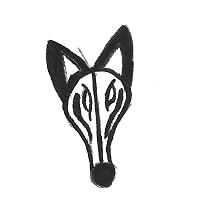
Three things drew me to Nancy Vo’s The Ranger. That cover. It’s the rare Western-genre picture book that looks both serious and not non-fiction. The Ranger (spoilers) is a girl, Annie. It involves a fox. Additionally, both Annie and the Fox have stunning portraits.
The landscape is a harsh one and you wonder why Annie is wandering it alone, not that she doesn’t prove capable, of course… And just because she is a girl doesn’t mean she goes soft and nurturing on the injured fox. She has the no-nonsense dialog familiar to the Western.
But the new companion does prove to be a valuable one. The arrival of the bear is as sudden and unexpected for the reader as it is for Annie. I mean, I forgot that was a plot point, I was so taken with the rhythm of the story and it’s spacious compositions.
Vo doesn’t insult the reader with hand-holding. You’ll absorb the details of the images (like the shadow casts). Vo doesn’t move to over explain why the fox snarled, why the fox was offended. A way of life is established and affirmed, and it wasn’t lonely as it is assumed at the beginning.
I’m going to hunt down a copy of Outlaw. I’m intrigued by Vo and her inspirations. The tale she tells here is one to own and share; a rarity and a delight.
"Once there was a ranger... Her name was Annie." So begins this haunting tale of friendship in the forest. Annie happens upon a fox caught in a trap. She binds the fox's wounds and feeds the fox, but does not promise any more. The fox follows Annie through the woods and comes to her rescue.
Wow! This one sent chills down my spine as I realized who the fox really was. As she did in The Outlaw (Groundwood, c2018), Vo's text harkens back to a time gone by when there is much magic in the air and things may not be what they seem. The text is direct and to the point, like that of a storyteller. Vo's illustrations were done in ink, watercolor and acetone transfer on Rising Stonehenge, using newspaper clipping and fabric patterns from the 1860s to 1870s. They are largely in shades of brown and gray, with the fox and Annie's bandana providing a pop of reddish-orange color. Things are sketched out, with few details - as if a memory.
When a ranger finds and helps an injured fox, the fox accompanies the ranger, even protecting her when a bear attacks.
I enjoyed reading Nancy Vo’s western featuring a female ranger. Set in the late 1800s, her illustrations are great, incorporating newspaper clippings from the 1860s. A beautiful story with a touch of magical realism, The Ranger is part of the Crow Stories trilogy.
We absolutely loved this fantastic book Annie, a ranger, is walking in the forest when she finds a trapped, wounded fox. A somehow predictable friendship will come out of this encounter, but we learn a lesson about not keeping scores with the ones we love. We are equals in friendship and true love. The tone is mysterious and slow, while the beautiful illustrations have letters embedded on them. Nancy Vo is a great artist.
One day a ranger named Annie comes upon a fox in a trap. She releases him and wraps his injury but tell him she will not tame him. She stays with him until he recovers and when she leaves the fox follows her. He stays by her side and one day protects her from a bear. Annie thinks they might be even, but when the fox snarls at her she knows that true friends don't keep score.
Enigmatic story, that emphasizes how friendship and kindness is not something you "owe" someone in return, like a monetary transaction. Love the mood of these illustrations and how the book leads children to ask questions and come up with their own interpretations, as the best picture books tend to do. It's a story that has stuck with me since I first read it in 2019.
Fantastic illustrations. Ink, watercolor and something called "acetone transfer" for richly textured scenery with minimalist accents. The story might not be understood by a younger child, but they can't help but be entranced by the visuals.