In the town of Trujillo, in Honduras, on the edge of the Mosquito Coast, Dr. Arturo Ochoa, a semi-retired psychiatrist, has a single a troubled young man named Thomas Stearns, the son of a wealthy Atlanta family. Stearns has been found adrift on the Carribean in a vessel owned by two Nicaraguans, both of whom are missing; he has been alone for eighteen days and has little memory of that time. Suspected of murder, Stearns is unconcerned. He knows his family will buy off the police. But he is reluctant to leave Trujillo, having developed an odd affinity for the town. As therapy progresses, he tells of a mysterious stone figure regurgitated by, improbably, a whirlpool, and Dr. Ochoa, drawn into his pathology, begins to doubt not only Stearns' sanity, but his own.
Skyhorse Publishing, under our Night Shade and Talos imprints, is proud to publish a broad range of titles for readers interested in science fiction (space opera, time travel, hard SF, alien invasion, near-future dystopia), fantasy (grimdark, sword and sorcery, contemporary urban fantasy, steampunk, alternative history), and horror (zombies, vampires, and the occult and supernatural), and much more. While not every title we publish becomes a New York Times bestseller, a national bestseller, or a Hugo or Nebula award-winner, we are committed to publishing quality books from a diverse group of authors.
Brief biographies are, like history texts, too organized to be other than orderly misrepresentations of the truth. So when it's written that Lucius Shepard was born in August of 1947 to Lucy and William Shepard in Lynchburg, Virginia, and raised thereafter in Daytona Beach, Florida, it provides a statistical hit and gives you nothing of the difficult childhood from which he frequently attempted to escape, eventually succeeding at the age of fifteen, when he traveled to Ireland aboard a freighter and thereafter spent several years in Europe, North Africa, and Asia, working in a cigarette factory in Germany, in the black market of Cairo's Khan al Khalili bazaar, as a night club bouncer in Spain, and in numerous other countries at numerous other occupations. On returning to the United States, Shepard entered the University of North Carolina, where for one semester he served as the co-editor of the Carolina Quarterly. Either he did not feel challenged by the curriculum, or else he found other pursuits more challenging. Whichever the case, he dropped out several times and traveled to Spain, Southeast Asia (at a time when tourism there was generally discouraged), and South and Central America. He ended his academic career as a tenth-semester sophomore with a heightened political sensibility, a fairly extensive knowledge of Latin American culture and some pleasant memories.
Toward the beginning of his stay at the university, Shepard met Joy Wolf, a fellow student, and they were married, a union that eventually produced one son, Gullivar, now an architect in New York City. While traveling cross-country to California, they had their car break down in Detroit and were forced to take jobs in order to pay for repairs. As fortune would have it, Shepard joined a band, and passed the better part of the 1970s playing rock and roll in the Midwest. When an opportunity presented itself, usually in the form of a band break-up, he would revisit Central America, developing a particular affection for the people of Honduras. He intermittently took odd jobs, working as a janitor, a laborer, a sealer of driveways, and, in a nearly soul-destroying few months, a correspondent for Blue Cross/Blue Shield, a position that compelled him to call the infirm and the terminally ill to inform them they had misfiled certain forms and so were being denied their benefits.
In 1980 Shepard attended the Clarion Writers’ Workshop at Michigan State University and thereafter embarked upon a writing career. He sold his first story, "Black Coral," in 1981 to New Dimensions, an anthology edited by Marta Randall. During a prolonged trip to Central America, covering a period from 1981-1982, he worked as a freelance journalist focusing on the civil war in El Salvador. Since that time he has mainly devoted himself to the writing of fiction. His novels and stories have earned numerous awards in both the genre and the mainstream.
Trujillo and Other Stories presents an outstanding collection of the author's writing, including this gem -
Eternity and Afterward is the tale of Viktor Chemayev entering a massive, exclusive, and freaky underground club to pay a high ransom to its owner, Yuri Lebedev. He seeks to rescue the beautiful Larissa—the woman he loves—who is currently employed by the club as a prostitute to work off huge debts incurred by her family. As to the success of Chemayev's venture, I'll leave that to Lucius Shepard.
Since so much of this 90-page novella published in 2001 highlights post-Soviet Russian culture and society when Vladimir Putin first takes power, I'll make this the subject of my review.
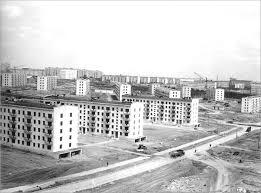
SOVIET LIVING – GOODBYE, COMRADES! "The club was located half an hour to the north and west of the city center amidst a block of krushovas, crumbling apartment projects that sprouted from the frozen, rubble-strewn waste like huge gray headstones memorializing the Krushev era—the graveyard of the Soviet state, home to generations of cabbage-eating drunks and party drones.” Gone are the days when providing affordable living for the average citizen was a top priority.
RUSSIAN-MADE The underground parking lot surrounding the club is packed with Mercedes and Ferraris and Rolls Royces. Chemayev drives his ten-year-old Lada, “shabby as a mule among thoroughbreds.” Ah! A Lada, made by his fellow Russkies, an auto described as noisy, slow, and uncomfortable with inferior clutches and brake pads along with failing electric systems and broken heaters, and, to top it off, prone to rust.
LEV POLUTIN When our intrepid hero finally pulls into a parking space, he's greeted immediately. “Someone tapped on the driver side window. Chemayev cleared away condensation from the glass and saw the flushed, bloated features of his boss, Lev Polutin, peering in at him.” One of Shepard's memorable gags: playing off the name of Putin to come up with something that suggests this goon is polutin' all the air and water in sight.
CRAPPY KITCH, RUSSIAN-STYLE Chemayev enters a huge room filled with a stage surrounded by tables and booths. “To many the room embodied a classic Russian elegance, but Chemayev, whose mother—long deceased—had been an architect and had provided him with an education in the arts, thought the place vulgar, a childish fantasy conceived by someone whose idea of elegance had been derived from old Hollywood movies.” That's the way it is. People with gobs of money have the notion that they possess the capacity to create marvelous grand works—discotheques, ballrooms, gardens, public spaces—but devoid of any refinement and developed aesthetic sense, such creations turn out to be little more than ghastly, garish monuments to bad taste.
CRIME PAYS Chemayev knows that the patrons of Eternity, the name of Yuri Lebedev's club, are members of various mafiyas, the people in Russia who now count themselves as very rich and powerful. Shepard wrote his tale at the dawn of the new millennium, looking back at the “Wild Nineties”, a chaotic era in Russia defined by the collapse of any central authority and the rise of organized crime. And it is no accident that one reviewer describes Lebedev as the “Beelzebub-like king” of the Moscow underworld.
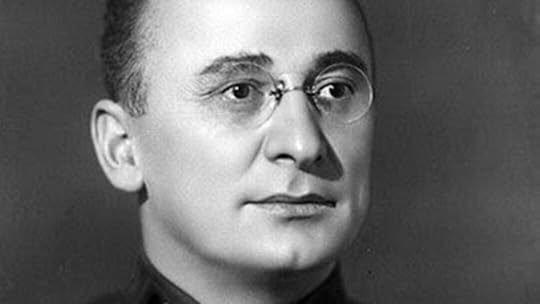
PAST GIANTS OF HISTORY Vintage Lucius Shepard: the supernatural intrudes into our “normal” world. In this tale, via a combination of the mystical and occult powers, Lebedev has concocted a room where there's an unending party. Chemayev becomes unnerved when he catches sight of familiar faces walking about from the brutal history of his country, including the most influential of Joseph Stalin's secret police chiefs—Lavrentiy Beria. Beria exchanges a few words with Chemayev which leads to an even more bizarre encounter. With this scene, Chemayev (and indirectly Lucius Shepard) recognize the profound influence old Soviet ghosts have on a Russia moving into the 21st century.
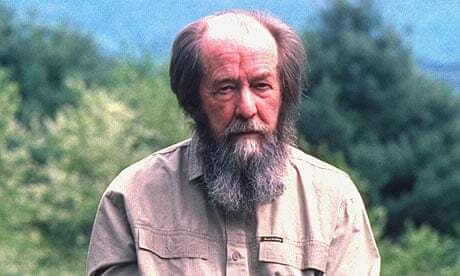
LITERARY LIGHT On one of the big screens in a bar, Chemayev looks up as Aleksander Solzhenitsyn holds forth on his weekly talk show, preaching the need for moral reform. He reflects: “His years in exile might not have cut him off from the essence of the Russian spirit, but they had decayed his understanding of Russian stupidity. People listened, sure. But they heard just enough to make them reach for a bottle and toast him. The brand of snake oil he was trying to sell was suited only for cutting cheap vodka.” Ouch!
BEAUTIFUL RUSSIAN WOMEN There's talk about Russian women, how they suffer incredibly in their youth and adolescence, where beatings and even rape are not that uncommon. Therefore, as sweet and innocent as the young Russian ladies appear when they hit their twenties, they have an incredible inner strength, a fierceness and cunning and durability that outmatches any man. Added to this, so speaks one of Polutin's thugs, this one from Ireland, of all places: Russian women have “the franchise for long legs and cheekbones.” Taking a gander at all the eye-catching photos of Russian women available on the web, does anybody doubt this obvious truth?
Will Viktor Chemayev have any degree of success in his meeting with Yuri Lebedev? For that, you'll have to read this incredible novella for yourself. But as you turn the pages, keep an eye out for all the social and cultural insights Shepard shares along the way. Eternity isn't just the name of a club; it's a sentence for a man like Chemayev, caught in a city that's never as strong as it looks, but never as weak and you'd hope.