

What do you think?

Blurb Your Enthusiasm: A Cracking Compendium of Book Blurbs, Writing Tips, Literary Folklore and Publishing Secrets
A joyful celebration of books – the perfect gift for bibliophiles, word lovers and anyone who’s ever wondered, should you judge a book by its cover?
We love the words in books – but what about the words on them? How do they work their magic? Penguin Books blurb wizard Louise Willder joyfully divulges what those 100-or-so words can tell us about literary history, the craft of writing, authors from George Orwell to Zadie Smith, genres from children’s fiction to bonkbusters, cover design, the dark arts of persuasion and even why we read. She also answers burning questions such
• Should all adjectives be murdered?
• Is blurbing sometimes maybe lying?
• Which classic novel was nearly called The High Bouncing Lover?
• What are the worst blurbs of all time?
We love the words in books – but what about the words on them? How do they work their magic? Penguin Books blurb wizard Louise Willder joyfully divulges what those 100-or-so words can tell us about literary history, the craft of writing, authors from George Orwell to Zadie Smith, genres from children’s fiction to bonkbusters, cover design, the dark arts of persuasion and even why we read. She also answers burning questions such
• Should all adjectives be murdered?
• Is blurbing sometimes maybe lying?
• Which classic novel was nearly called The High Bouncing Lover?
• What are the worst blurbs of all time?
352 pages, Paperback
First published September 1, 2022
About the author
Louise Willder
3 books6 followersLouise Willder (Gravesend, 1972) es escritora y redactora publicitaria británica. Por más de veinticinco años ha escrito textos de contracubierta para más de cinco mil libros, que van desde ensayos clásicos hasta novelas posmodernas.
Ratings & Reviews
Friends & Following
Create a free account to discover what your friends think of this book!
Community Reviews
Displaying 1 - 30 of 121 reviews

August 7, 2022
Louise Willder certainly makes a 5 star splash with her smart, joyful and knowledgeable non-fiction debut with its insights and history of the publishing industry, more specifically on the book blurb, the writing of which she has decades of experience, all of which she relates with wit, charm, warmth, with the occasional acerbic comment. If you love books, are in the publishing industry, are an author, a would be writer, or a book reviewer, then this is not one you should miss out on. Willder identifies the critical qualities that underline the thinking that goes behind the 100 words of blurb, citing a plethora of real life examples across literary fiction, classics, across every conceivable genre and non-fiction, the good, the bad, the ugly and the downright unhinged. The blurb works in a symbiotic relationship with the cover, title, first line of the narrative, to persuade, and/or manipulate, distort, or deceive through the use of the dark arts to get us to want and buy that book.
The author does a stellar job of taking us through the history of publishing and the development of the blurb, the authors who hate it, those who burn it, the hyperbolic nature of Americans and the French who have a habit of avoiding the commercial nature of it. Highlights include the changing blurbs to attract new audiences to classics such as Jane Austen and the reflection of society's norms and expectations when it comes sexism and sexist tropes in books and publishing, the derogatory comments about women writers and their areas of focus, where men write on what really matters, for everyone, whilst women write for women! Do not be surprised if after reading this, you find yourself venturing into reading a genre you normally avoid, and wanting to read a pile of other books that you had not anticipated, that is how good this is.
This is truly a thought provoking, perceptive, entertaining and informative book, it will have you immersed in the world of publishing and copywriters, whilst examining yourself, why you choose the books you read, and the psychology and practice behind blurbs, past and present. Willders expertise and passion for her subject shines, and I appreciated her pitch perfect tone, down to earth, comfortable and fun approach, and the fascinating literary stories through time, of writers, readers, books, and blurbs. Highly recommended to anyone who loves books! Many thanks to the publisher for an ARC.
The author does a stellar job of taking us through the history of publishing and the development of the blurb, the authors who hate it, those who burn it, the hyperbolic nature of Americans and the French who have a habit of avoiding the commercial nature of it. Highlights include the changing blurbs to attract new audiences to classics such as Jane Austen and the reflection of society's norms and expectations when it comes sexism and sexist tropes in books and publishing, the derogatory comments about women writers and their areas of focus, where men write on what really matters, for everyone, whilst women write for women! Do not be surprised if after reading this, you find yourself venturing into reading a genre you normally avoid, and wanting to read a pile of other books that you had not anticipated, that is how good this is.
This is truly a thought provoking, perceptive, entertaining and informative book, it will have you immersed in the world of publishing and copywriters, whilst examining yourself, why you choose the books you read, and the psychology and practice behind blurbs, past and present. Willders expertise and passion for her subject shines, and I appreciated her pitch perfect tone, down to earth, comfortable and fun approach, and the fascinating literary stories through time, of writers, readers, books, and blurbs. Highly recommended to anyone who loves books! Many thanks to the publisher for an ARC.
August 9, 2025
A few fun facts I learned while reading this book:
- Some alternative titles considered for The Great Gatsby were (1) The High Bouncing Lover, (2) Under the Red White and Blue, and (3) Trimalchio in West Egg. (Fitzgerald was most keen on #3.)
- When Jane Austen began working on Pride and Prejudice in 1796, it was originally called First Impressions.
- It's believed that the first piece of praise to appear on a book cover was for Walt Whitman's Leaves of Grass. The excerpt was chosen by Whitman himself from a letter written to him by Ralph Waldo Emerson.
- The earliest known dust jacket (that was not made from skin) was recently discovered in Oxford University's Bodleian Library and was for an 1830 gift book called Friendship's Offering.
- The 1960 book The Medium is the Massage was supposed to be titled The Medium is the Message, but a typesetter made an error, swapping the "e" for an "a". The author said to leave the error, as the title even better encapsulated the book's key points.
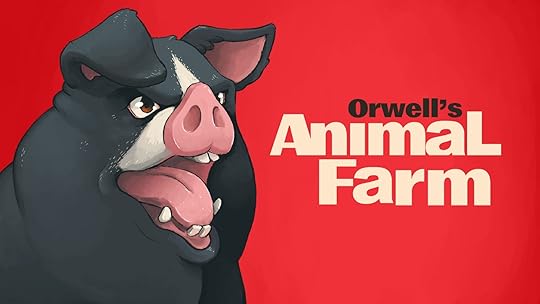
- In 2020, a text-based choice-driven narrative video game was released based on Orwell's Animal Farm in which you play as an overseer of the farm.
- In his 1992 book, The Intellectuals and the Masses, British literary critic John Carey asserted that modernism was an invention of cultural snobs (like Virginia Woolf) intended to ensure that newly literate classes wouldn't understand their work.
- It's estimated that author Nora Roberts sells thirty-four books per minute.
- Vladimir Nobokov was emphatically opposed to the cover of Lolita featuring any kind of representation of a little girl. As so many new variations of the book have gotten this one stipulation wrong, there's an entire book dedicated to Lolita's myriad covers called Lolita - The Story of a Cover Girl.
- In the US, a blurb refers to an endorsement or review, but in the UK it refers to the jacket copy.
- There's a monthly punning tournament in Brooklyn called Punderdome.
- In his book, Nabokov's Favorite Word is Mauve, Ben Blatt shared the top five verbs used after "he" and "she" in classic literature. When referring to men, it was mutter, grin, shout, chuckle, and kill. With women it was shiver, weep, murmur, scream, and marry.
- Some alternative titles considered for The Great Gatsby were (1) The High Bouncing Lover, (2) Under the Red White and Blue, and (3) Trimalchio in West Egg. (Fitzgerald was most keen on #3.)
- When Jane Austen began working on Pride and Prejudice in 1796, it was originally called First Impressions.
- It's believed that the first piece of praise to appear on a book cover was for Walt Whitman's Leaves of Grass. The excerpt was chosen by Whitman himself from a letter written to him by Ralph Waldo Emerson.
- The earliest known dust jacket (that was not made from skin) was recently discovered in Oxford University's Bodleian Library and was for an 1830 gift book called Friendship's Offering.
- The 1960 book The Medium is the Massage was supposed to be titled The Medium is the Message, but a typesetter made an error, swapping the "e" for an "a". The author said to leave the error, as the title even better encapsulated the book's key points.
- In 2020, a text-based choice-driven narrative video game was released based on Orwell's Animal Farm in which you play as an overseer of the farm.
- In his 1992 book, The Intellectuals and the Masses, British literary critic John Carey asserted that modernism was an invention of cultural snobs (like Virginia Woolf) intended to ensure that newly literate classes wouldn't understand their work.
- It's estimated that author Nora Roberts sells thirty-four books per minute.
- Vladimir Nobokov was emphatically opposed to the cover of Lolita featuring any kind of representation of a little girl. As so many new variations of the book have gotten this one stipulation wrong, there's an entire book dedicated to Lolita's myriad covers called Lolita - The Story of a Cover Girl.
- In the US, a blurb refers to an endorsement or review, but in the UK it refers to the jacket copy.
- There's a monthly punning tournament in Brooklyn called Punderdome.
- In his book, Nabokov's Favorite Word is Mauve, Ben Blatt shared the top five verbs used after "he" and "she" in classic literature. When referring to men, it was mutter, grin, shout, chuckle, and kill. With women it was shiver, weep, murmur, scream, and marry.

Read
March 1, 2023Entertaining account of blurbs (back cover copy if you're American): how to write them, what makes a good one, some glorious examples of bad ones, a dive into history, and of course the eternal question of why American blurbs are only slightly shorter than the novels they're attached to.
If you're the kind of person who likes books about books, you'll like this. It isn't a guide to How To Write A Blurb but I liked the shape theory of blurbs she puts forward and will bear that in mind for next time.
If you're the kind of person who likes books about books, you'll like this. It isn't a guide to How To Write A Blurb but I liked the shape theory of blurbs she puts forward and will bear that in mind for next time.

September 30, 2022
A delightful bibliophile’s miscellany with a great title – not just for the play on words, but also for how it encapsulates what this is about: ways of pithily spreading excitement about books. The first part of the subtitle, “An A–Z of Literary Persuasion,” is puzzling in that the structure is scattershot rather than strictly alphabetical, but the second is perfect: from the title and cover to the contents, Louise Willder is interested in what convinces people to acquire and read a book.
Over the last 25 years, she has written the jacket copy for thousands of Penguin releases, so she has it down to a science as well as an art. Book reviewing seems to me to be an adjacent skill. I know from nine years of freelance writing about books, in which I’ve had to produce reviews ranging from 100 to 2,000 words, that the shortest and most formulaic reviews can be the most difficult to compose, but are also excellent writing discipline. As Willder puts it, “Writing short, for whatever reason you do it, forces rigour, and it reminds you that words are a precious and powerful resource. Form both limits and liberates.”
How to do justice to the complexity of several hundred pages of an author’s hard work in just 150 words or so? How to suggest the tone and contents without a) resorting to clichés (“luminous” and “unflinching” are a couple of my bugbears), b) giving too much away, c) overstating the case, or misleading anyone about the merits of a Marmite book, or d) committing the cardinal sin of boring readers before they’ve even opened to the first page?
[An aside: Literary critics and blog reviewers generally see themselves as having different roles: making objective (pah!) pronouncements about literary value versus cheerleading for the books they love and want others to discover (a sort of unpaid partnership with publicists). I’m in the odd position of being both, and feel I engage in the two activities pretty much equally, perhaps leaning more towards the former. There’s some crossover, of course, with bloggers such as myself happy to publish the occasional more critical review. But we aren’t generally, as Willder is, in the business of selling books, so unless we’re pals with the author on Twitter we don’t tend to have a vested interest in seeing the book do well.]
Each reader will home in on certain topics here: the art of the first line, Dickens’s serialization and self-promotion, Orwell’s guidelines for good writing, the differences between British and American jacket copy, the use of punctuation, and so much more. I particularly loved the mock and bad blurbs she cites, including one an AI created for this book, and her rundown of the conventions of blurb-writing for various genres, everything from children’s books to science fiction. She frequently breaks her own rules (e.g., she’s anti-adjective and -ellipses, yet I found five of the one and two of the other in the Crace blurb; see below) and is very funny to boot.
Here’s some of the bookish and word-nerd trivia that captivated me:
J. D. Salinger didn’t allow blurbs on his books.
The American usage of the word “blurb” is for advance review quotes that fellow authors contribute for inclusion on the cover. I didn’t realize I used the word interchangeably for either meaning; in the UK, one might call such a quote a “puff.”
Marshall McLuhan invented the “page 69 test” – to decide whether you want to buy/read a book, turn to that page instead of (or maybe in addition to) looking at the first paragraph.
A New York publishing CEO joked that Lincoln’s Doctor’s Dog would be an optimal title to appeal to readers (respected president + health + animal), but there are actually now six books with some variation on that title and all were presumably flops!
“Wackaging” is the word for quirky marketing that has products talk to us (Innocent Smoothies, established in 1999, is thought to have started the trend).
I pulled out my copy of Jim Crace’s Quarantine to see how Willder managed to write a blurb about a novel about Jesus without mentioning Jesus (“a Galilean who they say has the power to work miracles”)!
Some more favourite lines:
For all of us who value books, whether we write about them or not, those seem like important points to remember. We read to learn, but also to feel, and when we share our love of books with other people we can do so on the basis of how they have engaged our brains and hearts. This was thoroughly entertaining and has prompted me to pay that bit more attention to the few paragraphs on the inside of a book jacket.
Originally published on my blog, Bookish Beck.
Over the last 25 years, she has written the jacket copy for thousands of Penguin releases, so she has it down to a science as well as an art. Book reviewing seems to me to be an adjacent skill. I know from nine years of freelance writing about books, in which I’ve had to produce reviews ranging from 100 to 2,000 words, that the shortest and most formulaic reviews can be the most difficult to compose, but are also excellent writing discipline. As Willder puts it, “Writing short, for whatever reason you do it, forces rigour, and it reminds you that words are a precious and powerful resource. Form both limits and liberates.”
How to do justice to the complexity of several hundred pages of an author’s hard work in just 150 words or so? How to suggest the tone and contents without a) resorting to clichés (“luminous” and “unflinching” are a couple of my bugbears), b) giving too much away, c) overstating the case, or misleading anyone about the merits of a Marmite book, or d) committing the cardinal sin of boring readers before they’ve even opened to the first page?
it can be easy to forget that a potential reader hasn’t read it: they don’t know anything about it. You can’t sell them the experience of the book – you have to sell them the expectation of reading it; the idea of it. And that’s when a copywriter can be an author’s best friend.
[An aside: Literary critics and blog reviewers generally see themselves as having different roles: making objective (pah!) pronouncements about literary value versus cheerleading for the books they love and want others to discover (a sort of unpaid partnership with publicists). I’m in the odd position of being both, and feel I engage in the two activities pretty much equally, perhaps leaning more towards the former. There’s some crossover, of course, with bloggers such as myself happy to publish the occasional more critical review. But we aren’t generally, as Willder is, in the business of selling books, so unless we’re pals with the author on Twitter we don’t tend to have a vested interest in seeing the book do well.]
Each reader will home in on certain topics here: the art of the first line, Dickens’s serialization and self-promotion, Orwell’s guidelines for good writing, the differences between British and American jacket copy, the use of punctuation, and so much more. I particularly loved the mock and bad blurbs she cites, including one an AI created for this book, and her rundown of the conventions of blurb-writing for various genres, everything from children’s books to science fiction. She frequently breaks her own rules (e.g., she’s anti-adjective and -ellipses, yet I found five of the one and two of the other in the Crace blurb; see below) and is very funny to boot.
Here’s some of the bookish and word-nerd trivia that captivated me:
J. D. Salinger didn’t allow blurbs on his books.
The American usage of the word “blurb” is for advance review quotes that fellow authors contribute for inclusion on the cover. I didn’t realize I used the word interchangeably for either meaning; in the UK, one might call such a quote a “puff.”
Marshall McLuhan invented the “page 69 test” – to decide whether you want to buy/read a book, turn to that page instead of (or maybe in addition to) looking at the first paragraph.
A New York publishing CEO joked that Lincoln’s Doctor’s Dog would be an optimal title to appeal to readers (respected president + health + animal), but there are actually now six books with some variation on that title and all were presumably flops!
“Wackaging” is the word for quirky marketing that has products talk to us (Innocent Smoothies, established in 1999, is thought to have started the trend).
I pulled out my copy of Jim Crace’s Quarantine to see how Willder managed to write a blurb about a novel about Jesus without mentioning Jesus (“a Galilean who they say has the power to work miracles”)!
Some more favourite lines:
“There’s always something to love and learn from in a book, especially if it lasts as long as these books [children’s classics] have, and part of the job of people like me is to pick out what makes it special and pass it on.”
“always ask yourself, what’s really going on here? Why should anyone care? And how do we make them care?”
For all of us who value books, whether we write about them or not, those seem like important points to remember. We read to learn, but also to feel, and when we share our love of books with other people we can do so on the basis of how they have engaged our brains and hearts. This was thoroughly entertaining and has prompted me to pay that bit more attention to the few paragraphs on the inside of a book jacket.
Originally published on my blog, Bookish Beck.

October 28, 2022
A fun book to read if you love books. It's all about the outside, covers, titles, and how those blurbs get written. Just as we suspected, some of the blurb writers haven't read the book at all. There's even a computer program that can be fed the facts and it will produce a blurb. Aha!
Willder has written over 5000 blurbs in her career as a copywriter, and happily shares what she knows.
Willder has written over 5000 blurbs in her career as a copywriter, and happily shares what she knows.
April 12, 2024
Entertaining and enlightening

February 16, 2022
I absolutely loved Blurb Your Enthusiasm. It was a recommendation and I wasn’t sure I’d be all that keen, but it’s fascinating, laugh-out-loud funny, very perceptive and completely compelling.
Louise Willder has been a copy writer for over twenty years and really knows what she’s talking about. She has read a huge number and a vast range of books, and both her knowledge and her engaging love of books shows through consistently. She is quite brilliant on the use of language, I think, quoting some excellent examples and analysing what makes good writing in a variety of contexts. She also has a very clear-eyed view of publishing and isn’t reverential where she thinks pomposity or pretence needs to be punctured.
There are sections on all sorts of things, including various genres, what makes a good book within them and what makes a good blurb in each case. Willder is often enthusiastic, sometimes withering but always thoughtful and enjoyable to read. There are also some wider reflections on books and publishing, including an excellent section on sexism and how it affects perceptions and the presentation of a book. It’s witty and punchy, making a not-at-all-funny subject very readable. (And boy, did it make me think!)
Most importantly, the book is immensely entertaining; I couldn’t wait to get back to it, which is by no means always the case for me with non-fiction (nor always with fiction, come to that). It has pointed me to a lot of things I really want to read – always a good sign – I laughed regularly and thought a lot. I highlighted far too many passages to quote here, but just as a sample, Willder quotes lots of pithy book comments by others. I really liked Margaret Atwood's 6-word story: "Yearned for him. Got him. Sh**!" and the summary of Crime And Punishment: "Man talks about an axe for three chapters. You put down the book never to return." (I have twice struggled to about page 150 of Crime And Punishment before losing the will to live...) Or someone's translation of adjectives in book blurbs:
"Charming: there's a child in it
Heartwarming: a child and a dog
Moving: child dies
Heartrending: dog dies."
Or her take on the sort of Literary Fiction where nothing really happens: “You know the kind of book. They win prizes. There generally isn’t much in the way of a plot. Or if there is, it’s something along the lines of woman goes away and finds herself, someone thinks about an event from their past, or sad middle-aged man has an affair – or even just considers said affair and doesn’t go through with it.” Followed a little later by “... Thomas Pynchon’s notoriously ‘difficult’ (in other words, mainly read by show-offs) novel Gravity’s Rainbow…. I wonder how many people have read it and then not told anybody they’ve read it? Zero, I suspect. Because the point of books like these is that they are an Iron Man literary challenge, and once you’ve been macho enough to read them you can boast about it.”
Or this, talking about thinking one must enjoy “classics”: “My most important classics principle, however, is this: some of them are definitely better than others, and you don’t have to like all of them. Magical realism, the Beats and most ‘Great American Novels’ have never done it for me, and I am at peace with that.” Whether you agree with her taste here or not, that’s a sensible, humane and, for me, helpful and encouraging approach.
I love all that and loved the book. (And anyway, anyone who says that Russell Hoban’s Riddley Walker is a masterpiece, that her new favourite detective is DI Manon Bradshaw and that Sue Townsend is a stone cold comic genius can Do No Wrong in my view.) Blurb Your Enthusiasm is a real gem and anyone with any interest in books will enjoy it immensely, I think.
(My thanks to Oneworld for an ARC via NetGalley.)
Louise Willder has been a copy writer for over twenty years and really knows what she’s talking about. She has read a huge number and a vast range of books, and both her knowledge and her engaging love of books shows through consistently. She is quite brilliant on the use of language, I think, quoting some excellent examples and analysing what makes good writing in a variety of contexts. She also has a very clear-eyed view of publishing and isn’t reverential where she thinks pomposity or pretence needs to be punctured.
There are sections on all sorts of things, including various genres, what makes a good book within them and what makes a good blurb in each case. Willder is often enthusiastic, sometimes withering but always thoughtful and enjoyable to read. There are also some wider reflections on books and publishing, including an excellent section on sexism and how it affects perceptions and the presentation of a book. It’s witty and punchy, making a not-at-all-funny subject very readable. (And boy, did it make me think!)
Most importantly, the book is immensely entertaining; I couldn’t wait to get back to it, which is by no means always the case for me with non-fiction (nor always with fiction, come to that). It has pointed me to a lot of things I really want to read – always a good sign – I laughed regularly and thought a lot. I highlighted far too many passages to quote here, but just as a sample, Willder quotes lots of pithy book comments by others. I really liked Margaret Atwood's 6-word story: "Yearned for him. Got him. Sh**!" and the summary of Crime And Punishment: "Man talks about an axe for three chapters. You put down the book never to return." (I have twice struggled to about page 150 of Crime And Punishment before losing the will to live...) Or someone's translation of adjectives in book blurbs:
"Charming: there's a child in it
Heartwarming: a child and a dog
Moving: child dies
Heartrending: dog dies."
Or her take on the sort of Literary Fiction where nothing really happens: “You know the kind of book. They win prizes. There generally isn’t much in the way of a plot. Or if there is, it’s something along the lines of woman goes away and finds herself, someone thinks about an event from their past, or sad middle-aged man has an affair – or even just considers said affair and doesn’t go through with it.” Followed a little later by “... Thomas Pynchon’s notoriously ‘difficult’ (in other words, mainly read by show-offs) novel Gravity’s Rainbow…. I wonder how many people have read it and then not told anybody they’ve read it? Zero, I suspect. Because the point of books like these is that they are an Iron Man literary challenge, and once you’ve been macho enough to read them you can boast about it.”
Or this, talking about thinking one must enjoy “classics”: “My most important classics principle, however, is this: some of them are definitely better than others, and you don’t have to like all of them. Magical realism, the Beats and most ‘Great American Novels’ have never done it for me, and I am at peace with that.” Whether you agree with her taste here or not, that’s a sensible, humane and, for me, helpful and encouraging approach.
I love all that and loved the book. (And anyway, anyone who says that Russell Hoban’s Riddley Walker is a masterpiece, that her new favourite detective is DI Manon Bradshaw and that Sue Townsend is a stone cold comic genius can Do No Wrong in my view.) Blurb Your Enthusiasm is a real gem and anyone with any interest in books will enjoy it immensely, I think.
(My thanks to Oneworld for an ARC via NetGalley.)

January 8, 2023
As someone with a good number of published books, I couldn't help be fascinated by Louise Willder's exploration of everything there is to know about book blurbs (and quite a lot about how books are presented that isn't about blurbs). But the good news is that you don't have to be in the business to find this chunky little hardback enjoyable. Willder has apparently written over 5,000 book blurbs (the bits on the back or dustcover flap that tell you about the book) and both knows the topic inside out and also delights in it.
We discover the difficulties of getting a whole book across in a couple of hundred words without resorting to gushing praise, how humour can entice the reader in, how blurbs differ from country to country and far more. As suggested above, Willder also brings in things like cover design, titles and subtitles, front cover text, review extracts and even opening lines (and page 69) as examples of other ways a potential reader might be persuaded to first lift a book off the shelf and then get it as far as the till. I've only recently got back to going into physical bookshops after the depths of the Covid pandemic, and it was brought home to me far more than usual as a result, how much the experience of picking books off the shelf and looking at the cover and back is so different from perusing a book website (and how much more enjoyable).
This is, then, an easy sell - though it's hard to fault the number of entertaining snippets, whether from history, books themselves or the experiences of other blurbists that Willder crams in. This is a book to savour. Having said that, I'm not sure it's a book that is best read from cover to cover as I did, because after a while it can feel a little samey. The book is dividing into many short sections (though it's not an A to Z in the conventional sense, despite the subtitle), and I suspect it would be perfect as a loo book, or for short train journeys, taking it in a chunk at a time.
Funnily, one of the few times I didn't agree with Willder was reflected in the title of the book itself. She is positive about puns as a way of winning over a book buyer, where I find them a bit cringe-inducing. They also sometimes require a particular cultural awareness. I didn't realise the book's title was a pun - I just thought it was rather clumsy. I had vaguely heard of the US TV show 'Curb Your Enthusiasm' - but not sufficiently for it to immediately spring to mind when adding the book to my Christmas list. However, that's a minor point - this is a delicious little book, if more a box of chocolates to be consumed with breaks than a plate of steak and chips to enjoy as a single entity.
We discover the difficulties of getting a whole book across in a couple of hundred words without resorting to gushing praise, how humour can entice the reader in, how blurbs differ from country to country and far more. As suggested above, Willder also brings in things like cover design, titles and subtitles, front cover text, review extracts and even opening lines (and page 69) as examples of other ways a potential reader might be persuaded to first lift a book off the shelf and then get it as far as the till. I've only recently got back to going into physical bookshops after the depths of the Covid pandemic, and it was brought home to me far more than usual as a result, how much the experience of picking books off the shelf and looking at the cover and back is so different from perusing a book website (and how much more enjoyable).
This is, then, an easy sell - though it's hard to fault the number of entertaining snippets, whether from history, books themselves or the experiences of other blurbists that Willder crams in. This is a book to savour. Having said that, I'm not sure it's a book that is best read from cover to cover as I did, because after a while it can feel a little samey. The book is dividing into many short sections (though it's not an A to Z in the conventional sense, despite the subtitle), and I suspect it would be perfect as a loo book, or for short train journeys, taking it in a chunk at a time.
Funnily, one of the few times I didn't agree with Willder was reflected in the title of the book itself. She is positive about puns as a way of winning over a book buyer, where I find them a bit cringe-inducing. They also sometimes require a particular cultural awareness. I didn't realise the book's title was a pun - I just thought it was rather clumsy. I had vaguely heard of the US TV show 'Curb Your Enthusiasm' - but not sufficiently for it to immediately spring to mind when adding the book to my Christmas list. However, that's a minor point - this is a delicious little book, if more a box of chocolates to be consumed with breaks than a plate of steak and chips to enjoy as a single entity.

August 22, 2022
We readers often rely on front/back cover ‘blurb’ when deciding whether or not to spend our hard-earned cash on the latest must-have novel. Critical endorsements, stellar recommendations, and pithy one-liners ought to have some basis in reality, surely?
Apparently not. It turns out there are smoke and mirrors galore in the book-blurb marketing world, including more spin than the earth’s axis and more puff than rough pastry.
This wry, humorous, searingly honest and revelatory book pulls back the veil on blurbs. It’s like comfort food for the mind. I read it in one sitting. Heartily recommended for bibliophiles everywhere!
My thanks to NetGalley and Oneworld Publications for granting this e-ARC in exchange for an honest review.
Apparently not. It turns out there are smoke and mirrors galore in the book-blurb marketing world, including more spin than the earth’s axis and more puff than rough pastry.
This wry, humorous, searingly honest and revelatory book pulls back the veil on blurbs. It’s like comfort food for the mind. I read it in one sitting. Heartily recommended for bibliophiles everywhere!
My thanks to NetGalley and Oneworld Publications for granting this e-ARC in exchange for an honest review.

March 8, 2022
Written by a professional copywriter who really knows her stuff, this is an immensely interesting book about all aspects of publishing (including cover design, marketing etc), taking as its focus the difficult job of attracting the widest range of readers using just 100 or so words, keeping as close as possible to the tone and spirit of the author.
Blurb writing is ventriloquism.
If you’re a writer, it’s all about finding your voice. If you’re a copywriter, it’s usually about expressing someone else’s. One is an art; one is a craft (or if it’s an art, it’s the art of imitation). You just have to listen.
The section that struck me most comes towards the end, discussing gender bias in writing reviews and the question of whether readers really tend towards male or female authors and ‘male or female subject matter’.
I think Rebecca Solnit nails it when she says ‘a book without women is often said to be about humanity, but a book with women in the foreground is a woman’s book.
The authors Jonathan Franzen and Jennifer Weiner have been duking it out over the issue of seriousness since 2010, with Weiner criticising the ‘Franzenfrenzy’ that greeted the publication of his novel Freedom. In her eyes, women writing about domestic situations were seen as limited in their appeal, but when Franzen ‘writes a book about a family … we are told this is a book about America’.
A book full of anecdotes from the author’s years of experience in publishing, shared with wit and passion - I can’t recommend it highly enough for enthusiastic readers out there.
With thanks to Oneworld via NetGalley for the opportunity to read an ARC.
Blurb writing is ventriloquism.
If you’re a writer, it’s all about finding your voice. If you’re a copywriter, it’s usually about expressing someone else’s. One is an art; one is a craft (or if it’s an art, it’s the art of imitation). You just have to listen.
The section that struck me most comes towards the end, discussing gender bias in writing reviews and the question of whether readers really tend towards male or female authors and ‘male or female subject matter’.
I think Rebecca Solnit nails it when she says ‘a book without women is often said to be about humanity, but a book with women in the foreground is a woman’s book.
The authors Jonathan Franzen and Jennifer Weiner have been duking it out over the issue of seriousness since 2010, with Weiner criticising the ‘Franzenfrenzy’ that greeted the publication of his novel Freedom. In her eyes, women writing about domestic situations were seen as limited in their appeal, but when Franzen ‘writes a book about a family … we are told this is a book about America’.
A book full of anecdotes from the author’s years of experience in publishing, shared with wit and passion - I can’t recommend it highly enough for enthusiastic readers out there.
With thanks to Oneworld via NetGalley for the opportunity to read an ARC.
January 22, 2023
Awesome. I’d recommend this to anyone who likes books (which is everyone on Goodreads I guess).
I’d recommend it more specifically, however, to people who have an interest in the publishing industry (which includes aspiring authors) and anyone who has a general interest in marketing.
It’s quite a long book, but it’s easy to read and pretty funny. More importantly though, it’s really interesting.
I’ll never look at blurbs the same way again!
I’d recommend it more specifically, however, to people who have an interest in the publishing industry (which includes aspiring authors) and anyone who has a general interest in marketing.
It’s quite a long book, but it’s easy to read and pretty funny. More importantly though, it’s really interesting.
I’ll never look at blurbs the same way again!

Read
January 31, 2026Willder estimates she’s written five thousand blurbs in her career as a publishing copywriter. In this book, the first thing published under her actual name, she pulls back the curtain on blurb efficacy: how do you convince people to open the covers of a book? Are spoilers ever okay? What kind of voice do you choose for each one? Do you have to read the whole book before blurbing it? (N.b.: in the UK “blurb” means the synopsising copy on the book jacket. In America, it means an advance quote of praise from another author. Willder uses it in the UK sense throughout.) Other chapters range further afield. Some of these worked better for me than others. Everything about cover design (including how text and image can be made to work around and with one another) fascinated me, as did theorising about the ideal title (Lincoln’s Doctor’s Dog, apparently, combining the commercial allure of presidential gravitas, medical content, and an animal – though several books under this title have been published, and unaccountably, none of them has been a bestseller). I was less convinced by chapters that dealt with historical publishing, which made the sorts of leaps that my supervisors would be annoyed at me for. (I actually think it is perfectly fair to see the extraordinarily long titles of Daniel Defoe’s era as proto-blurbs if that is your angle, but it feels like a substantial claim to make without any hedging. At the very least, it would be good to acknowledge that literary marketing has not remained unchanged for 400 years.) Some of the material on different genres – romance, sci fi, etc. – felt both under-considered and unnecessary. These are churlish complaints, though, given Willder’s infectious enthusiasm and the fun with which she infuses her behind-the-scenes tour of this under-appreciated area of the book industry. Its witty, low-key tone strikes exactly the right note.

May 29, 2023
Can this book change my life? Maybe just a small part of it.
Of the hundreds of books I read each year I would say that I read the blurbs ( or jacket cover) for maybe one third of them. I don’t like to have much given away before I read the book.
Willder has made me realize that these blurbs are themselves a work of art. I do believe I’ll pay more attention… but perhaps when I finish the actual book. 👍🏼
Of the hundreds of books I read each year I would say that I read the blurbs ( or jacket cover) for maybe one third of them. I don’t like to have much given away before I read the book.
Willder has made me realize that these blurbs are themselves a work of art. I do believe I’ll pay more attention… but perhaps when I finish the actual book. 👍🏼
September 19, 2025
Een prima boek om je op weg te helpen met het verkoopgedeelte van het boekenvak, maar Willder liet naar mijn smaak iets te vaak haar eigen mening de inhoud van het boek bepalen - wat vooral naar voren kwam in het hoofdstuk over het aanprijzen van literaire fictie. Nou moet ik zelf toegeven dat je ook niet onder mijn stoelen of banken hoeft te kijken om mijn kritiek over de "Literatuur" te vinden, maar voor een boek dat professionaliteit (althans, dat denk ik dan) probeert uit te stralen, schond me dit toch een tikkeltje te veel Willders integriteit
January 15, 2025
A smart and funny little book about-well, books. it's a very nice read with plenty of informative tips for anyone inside the books' industry or someone who just like to know more about books and publishing.

Read
April 9, 2024Warning: this book is mostly about blurbs, titles, and anything else on the outside of a book. Somehow I thought otherwise despite the book being very clear about its contents.
If that sounds interesting to you, it’s probably worth a read as what little I read was well written and insightful
If that sounds interesting to you, it’s probably worth a read as what little I read was well written and insightful
October 25, 2022
This is a jocular and jockey joke book, written with the one-size-fits-almost-anyone "sense of humor" that you can find gratis in ladies' blogs and ditto magazines.
There's no way to tell that this is written by a copywriter because there's nothing in this book that couldn't have been written by a journalist or blogger -- and a mediocre one at that. The writer always states the obvious, top-of-the-head stuff, the first result in Google concerning everything. And she always represents the communis opinio: never is a "masterpiece" anything else but a masterpiece, never is anything said about those masterpieces that could have been said by let's say a copywriter that doesn't read masterpieces. Could she have read those masterpieces or any book if she has "worked on", as she claims, 5000 (five-thousand) blurbs. That 25 years of working on a blurb every working day. This can only lead to one conclusion: writing blurbs doesn't teach you how to write a book. On the other hand, a jokey jocular joke book about books with no insight and hardly any skill past the journalese and bloggorhea -- thàt she can do, brava. That almost anyone can do, bravo.
Every cliché and hundred-times-told story or anecdote about books and publishing is repeated here. Never mind if some of those tales are untrue, because this is not a serious book, anyway. Nothing to see or learn here, just a few jokes, jokes, and jokes, it's like ten late-night monologues in a row.
The way this book is designed, bound, promoted, hyped... it's all on the cheap and on the nose, a "smooth" publishing job but as a book, no thanks.
(It's not really "bound", by the way, it's a stiff paperback with cardboard front & back, the worst of all worlds.)
There's no way to tell that this is written by a copywriter because there's nothing in this book that couldn't have been written by a journalist or blogger -- and a mediocre one at that. The writer always states the obvious, top-of-the-head stuff, the first result in Google concerning everything. And she always represents the communis opinio: never is a "masterpiece" anything else but a masterpiece, never is anything said about those masterpieces that could have been said by let's say a copywriter that doesn't read masterpieces. Could she have read those masterpieces or any book if she has "worked on", as she claims, 5000 (five-thousand) blurbs. That 25 years of working on a blurb every working day. This can only lead to one conclusion: writing blurbs doesn't teach you how to write a book. On the other hand, a jokey jocular joke book about books with no insight and hardly any skill past the journalese and bloggorhea -- thàt she can do, brava. That almost anyone can do, bravo.
Every cliché and hundred-times-told story or anecdote about books and publishing is repeated here. Never mind if some of those tales are untrue, because this is not a serious book, anyway. Nothing to see or learn here, just a few jokes, jokes, and jokes, it's like ten late-night monologues in a row.
The way this book is designed, bound, promoted, hyped... it's all on the cheap and on the nose, a "smooth" publishing job but as a book, no thanks.
(It's not really "bound", by the way, it's a stiff paperback with cardboard front & back, the worst of all worlds.)

June 13, 2023
A haunting tour de force of genre-defying wit and love, Blurb Your Enthusiasm will take you gently by the hand of Reading and hold your head under the water of Literary Appeal until you finally, finally appreciate the Art of Blurbs.
a REAL fuckin grab bag (the author herself says she took a pick-n-mix approach) and an absolute if occasionally bewildering delight. takes u on a Journey. took me ages to read but I enjoyed every chapter. this isn’t a review, it’s just me pulling the things that made me laugh (or use me brain—She Knows A Lot!!) for the most part!!!!
→ john donne ‘the sun rising’
→ w.h. auden observed that ‘one cannot review a bad book without showing off.’
→ t.s. eliot on louis macneice: ‘his work is intelligible but unpopular, and has the pride and modesty of things that endure.’
→ as benjamin dreyer puts it, ‘the best jacket copy is attention-grabbing and inviting without being chockful of fulsome self-praise – or, to put it another way, it shouldn’t sound as if the author, or the author’s mother, wrote it.’
→ king james bible preface to the reader
→ king charles I on himself: ‘Eikon Basilike or the Pourtraicture of His Sacred Majestie in his Solitudes and Sufferings.’
→ A reply as true as Steele, to a Rusty, Rayling, Ridiculous, Lying, Libell; which was lately written by an impudent unsoder’d Ironmonger and called by the name of An Answer to a foolish Pamphlet Entssuled. A Swarme of Sectaries and Schismatiques. The Divill is hard bound and did hardly straine; to shit a Libeller a knave in graine.
→ It is the history of a revolution that went wrong – and of the excellent excuses that were forthcoming at every step for each perversion of the original doctrine.
→ orwell’s greatest piece of advice for a copywriter in ‘politics and the english language’ is to let your idea choose the words; to ‘get one’s meaning as clear as one can through pictures and sensations. afterward one can choose – not simply accept – the phrases that will best cover the meaning.’ so to avoid the dread lack of clarity, think of something concrete from what you are describing, whether it’s a fact, a number, a memorable phrase, a tangible detail or a loyal cart horse sent off to the knacker’s yard. then the words will come. above all, work out what you really want to say before you say it.
→ T.S. ELIOT CRITICIZED ANIMAL FARM FOR “its lack of ‘public-spirited pigs’.”
→ pulp the classics p+p
→ specificity is key. vague waffle, in fact most description – whether of a character or the book itself – should be avoided.
→ ultimately, good copy should be able to see the wood for the trees – well, ideally, to quote a fellow copywriter, ‘to step back from the trees to work out what drove us into the wood in the first place, so that others will be tempted to follow’. we should home in on sparkly details like a magpie. chekhov said, ‘don’t tell me the moon is shining; show me the glint of light on broken glass.’ but preferably without adjectives.
→ call me twisted, but I get a strange sort of kick out of a word limit. it concentrates the mind; and the words. as they say, it’s the freedom of the tight brief.
→ parkinson’s law notes that ‘work expands so as to fill the time available for its completion’
→ there’s also evidence that swearing uses more parts of our brain than any other form of speech.
→ the ‘choose life’ bit from trainspotting
→ the explosion of meaningless white-collar jobs that exist purely to keep capitalism from crumbling
→ I remember working with one author who always wanted to put question marks at the end of statements in his titles, e.g. britain: a democracy? when used this way it gives off the air of a student essay, or an anachronistic 1940s ‘whither germany?’ energy. the question mark: a useful ally?
→ ykw I had never before heard the phrase ‘the gaiety of nations’!!
→ many people like this kind of thing. (although, according to john carey in the intellectuals and the masses, they actually don’t, and modernism was invented by cultural snobs such as virginia woolf just so that the newly literate classes wouldn’t get it.)
→ beatrix potter’s teaching of ‘at least one difficult word in each story’ :’)
→ one of the first tactile books for children was pat the bunny, 1940, which featured different textures inside, and was advertised with the great line ‘for whom the bell tolls was magnificent – but it hasn’t any bunny in it.’
→ george orwell’s ‘decline of the english murder’
→ ‘the spirit of dark and lonely water’
→ science fiction, as anyone with a nanoparticle of sense knows, is not about spaceships. it is about big ideas, and the human condition. it deals with life, death, time, fate, consciousness and belief. it plays with gender, perspective, language and reality itself.
→ ‘cancel culture’ is in itself a problematic phrase. but if I were to dip a toe into the culture war, I would come down on the ‘think before you censor, or even censure, if it plays into the hands of a libertarian’ side. why make life easier for your enemies?
→ john yorke: ‘the shape of all stories; the enduring pattern of how someone is found by being lost.’
→ it is, to use a great american coinage, highfalutin.
→ ‘confidence bred ornate, baroque words’, such as shebang, skedaddle, hunky-dory, splendiferous, lickety=split...
→ I would love to go to a french bookshop tbh!!!
→ the spelling bee, which came out of white foundational myths !!!!!! (also rightfully calls the pilgrims the ‘mayflower colonisers’)
→ quentin crisp: ‘I became one of the stately homos of england’
→ john pollack: ‘puns are threatening because puns reveal the arbitrariness of meaning, and the layers of nuance that can be packed onto a single word ... so people who dislike puns tend to be people who seek a level of control that doesn’t exist. if you have an approach to the world that is rules-based, driven by hierarchy and threatened by irreverence, then you’re not going to like puns.’
→ the rebus principle[...] is in effect a visual pun.
→ quick someone make a bagatelle pun please
→ there’s a bit in the chapter titled “ventriloquism” that would be good for teaching the analysis of syntax but it’s too long to write out here
→ [thanks to] my mum[...] for instilling in me such terror of not doing my homework that I handed my manuscript in on time.

July 22, 2024
We glimpse blurbs but do not usually perceive their power. The cynical attitude to take would be that they are merely the literary equivalent of marketing copy but they're a lot more artful than that.
Louise Willder writes blurbs for a living. She is an expert in taking detailed plots and distilling them to a hundred words or fewer that entice the casual eye. In Blurb Your Enthusiasm, she explores the myriad ways in which blurbs can provoke a reaction. This ranges from the shape of the text to certain words that excite readers. Did you know that negative emotionally-loaded words grab attention quicker than positive? How about the fact that a couple of unique nouns are worth more than a few familiar adjectives?
Not only does Willder focus on what makes great blurbs sparkle, she reflects on what makes embarrassing blurbs wilt. She shares industry secrets about how blurbs are written for literary novels that have little plot (i.e. with great difficulty) and a potted history of desperate attempts to make the classics sexier than they actually are. This collection of essays is a treasure trove of bibliophile trivia.
That being said, I felt Blurb Your Enthusiasm did digress from blurb-writing every now and then. Willder's passion for books is palpable throughout and I think it sometimes leads to tangents about Dickens' commercial acumen, six-word stories and other subjects that aren't as firmly tied to the core subject as they should be. Of course, this is barely a criticism at all, as I found myself getting easily drawn into all those subjects. It just doesn't make for as tight a collection as this could have been.
Nevertheless I found Blurb Your Enthusiasm an utter delight. It illuminates an aspect of literature that deserves much more appreciation. A well-written blurb can make or break the book it's covering. We really should be as impressed with them as the plot itself, and thank the unsung hero who composed it for attracting our attention. I recommend Blurb Your Enthusiasm to those who turn books over to glance at the back before opening on the first page. Or skipping to page 69 (read for context).
Louise Willder writes blurbs for a living. She is an expert in taking detailed plots and distilling them to a hundred words or fewer that entice the casual eye. In Blurb Your Enthusiasm, she explores the myriad ways in which blurbs can provoke a reaction. This ranges from the shape of the text to certain words that excite readers. Did you know that negative emotionally-loaded words grab attention quicker than positive? How about the fact that a couple of unique nouns are worth more than a few familiar adjectives?
Not only does Willder focus on what makes great blurbs sparkle, she reflects on what makes embarrassing blurbs wilt. She shares industry secrets about how blurbs are written for literary novels that have little plot (i.e. with great difficulty) and a potted history of desperate attempts to make the classics sexier than they actually are. This collection of essays is a treasure trove of bibliophile trivia.
That being said, I felt Blurb Your Enthusiasm did digress from blurb-writing every now and then. Willder's passion for books is palpable throughout and I think it sometimes leads to tangents about Dickens' commercial acumen, six-word stories and other subjects that aren't as firmly tied to the core subject as they should be. Of course, this is barely a criticism at all, as I found myself getting easily drawn into all those subjects. It just doesn't make for as tight a collection as this could have been.
Nevertheless I found Blurb Your Enthusiasm an utter delight. It illuminates an aspect of literature that deserves much more appreciation. A well-written blurb can make or break the book it's covering. We really should be as impressed with them as the plot itself, and thank the unsung hero who composed it for attracting our attention. I recommend Blurb Your Enthusiasm to those who turn books over to glance at the back before opening on the first page. Or skipping to page 69 (read for context).

June 27, 2024
The blurb. That thing you see but don't see. That thing that has a lot of power to sway you to read or put down a book and reach for another instead.
This book is effectively a book on marketing and copywriting aimed at book readers, but it manages to be more entertaining than that. Wilder's book is light and humorous but she delivers a lot of data and history to support the story.
As a writer with a small publishing company, I've had to write these darned things myself, so I picked up a lot of tips on language and trends, not to mention the politics, of blurbing.
One thing that comes across very strongly, is it's all about the language. Willder describes her work as a craft, as opposed to the art of writing the actual book, and all the things she's learned practising it. As a reader, I found some of the subliminal ways we are influenced shocking or annoying. The chapter, What women don't want: sexist blurbs, should be required reading.
This book is great for a shallow dip of occasional light entertainment, but reading it right through leads to more than a little enlightenment.
This book is effectively a book on marketing and copywriting aimed at book readers, but it manages to be more entertaining than that. Wilder's book is light and humorous but she delivers a lot of data and history to support the story.
As a writer with a small publishing company, I've had to write these darned things myself, so I picked up a lot of tips on language and trends, not to mention the politics, of blurbing.
One thing that comes across very strongly, is it's all about the language. Willder describes her work as a craft, as opposed to the art of writing the actual book, and all the things she's learned practising it. As a reader, I found some of the subliminal ways we are influenced shocking or annoying. The chapter, What women don't want: sexist blurbs, should be required reading.
This book is great for a shallow dip of occasional light entertainment, but reading it right through leads to more than a little enlightenment.

June 5, 2022
Book blurbs, how to write them, and how we read them.
The title - and the book's blurb - doesn't quite fit. Yes, this book concerns itself with the short summary - the blurb - on the back of a book jacket used to sell the book. But it is so much more than that.
Copywriter of hundreds of books, Wilder explores the less is more principle in writing, plus the history of publishing, gender politics in language, implications of typeface and design in different markets, how we read, cliche, punctuation, and so much more.
Many books concerns themselves with how to write and literary theory. Blurb your Enthusiasm combines the two elements into something new, illustrating the whole with fresh and apposite examples.
The title - and the book's blurb - doesn't quite fit. Yes, this book concerns itself with the short summary - the blurb - on the back of a book jacket used to sell the book. But it is so much more than that.
Copywriter of hundreds of books, Wilder explores the less is more principle in writing, plus the history of publishing, gender politics in language, implications of typeface and design in different markets, how we read, cliche, punctuation, and so much more.
Many books concerns themselves with how to write and literary theory. Blurb your Enthusiasm combines the two elements into something new, illustrating the whole with fresh and apposite examples.

January 12, 2023
The short paragraphs on the back that tell you what it’s about, the puff quotes that tell you others think it’s brilliant, even the title itself. All of these things have one purpose, to get you to take a book home rather than put it back on the shelf.
This is a book about the words on book covers. It dissects the elements of blurbs covering swearing, jokes, puns, punctuation, spoilers and more. Along the way there are lessons drawn from Dickens, Orwell, Jane Austen, Enid Blyton and more.
Author Louise Willder is well qualified to guide you through all this having worked as a publisher’s copywriter for 25 years. This shows in her writing style too, with short, punchy chapters and chatty asides that entertain as well as inform.
If you’re an author this ought to be essential reading, if you’re just interested in what makes books sell it’s fascinating, and it turns out that perhaps you can judge a book by its cover.
This is a book about the words on book covers. It dissects the elements of blurbs covering swearing, jokes, puns, punctuation, spoilers and more. Along the way there are lessons drawn from Dickens, Orwell, Jane Austen, Enid Blyton and more.
Author Louise Willder is well qualified to guide you through all this having worked as a publisher’s copywriter for 25 years. This shows in her writing style too, with short, punchy chapters and chatty asides that entertain as well as inform.
If you’re an author this ought to be essential reading, if you’re just interested in what makes books sell it’s fascinating, and it turns out that perhaps you can judge a book by its cover.

November 6, 2023
**Thanks to NetGalley for providing me with an ARC. This was in exchange for an honest review. All opinions are my own.**
What a fun book! If you're a book lover, a lover of words, then this book is for you!
Willder shares her wisdom and knowledge after decades of experience writing blurbs for the back covers of books. How to distil an idea? How to catch the eye? What makes a good narrative or a good hook?
I feel like I learnt so much about writing and all that with a fab sense of humour!
My only criticism is that it felt, at times, a little scattered - going from book blurbs to plots to Zadie Smith?
What a fun book! If you're a book lover, a lover of words, then this book is for you!
Willder shares her wisdom and knowledge after decades of experience writing blurbs for the back covers of books. How to distil an idea? How to catch the eye? What makes a good narrative or a good hook?
I feel like I learnt so much about writing and all that with a fab sense of humour!
My only criticism is that it felt, at times, a little scattered - going from book blurbs to plots to Zadie Smith?

June 6, 2023
This was such a delight! I literally laughed out loud during the chapter on literary fiction blurbs. "Does anything actually happen in this book?"
"it's never a story (heaven forfend), it's a meditation, an exploration, a reflection. It is a 'tour de force.' I could quote the whole chapter so I had better stop.
This book was a ton of fun, a bit educational, and mostly good-spirited! It may have spoken more to me since I read book reviews and blurbs for a living, but I think it would be enjoyable to any booklover.
"it's never a story (heaven forfend), it's a meditation, an exploration, a reflection. It is a 'tour de force.' I could quote the whole chapter so I had better stop.
This book was a ton of fun, a bit educational, and mostly good-spirited! It may have spoken more to me since I read book reviews and blurbs for a living, but I think it would be enjoyable to any booklover.

November 28, 2022
This one was very entertaining and informational. I assumed "blurb" meant the short "celebrity author" endorsements that you find on the back of books - and it does, although that is primarily an American meaning. This was about (mostly) the blurbs on the inside jackets, or sometimes the back, that give you a synopsis of the book while also enticing you to read it (or better yet, buy it). Very British (I was not familiar with a lot of the authors or situations she described) but still enormously educational - not just about Blurbs but also about book covers, editing, and marketing, and also full of tips on good writing.
March 20, 2026
Let's see how short I can condense this into.
Its a fantastic book contating lots more about the litrature world and it really helped me open my eyes from just a casual reader to how to industry really is like. It also provides lots of useful and great advice for writers, marketers and just people in general.
(I am well aware of the adjectives I used, please don't get back at me)
Its a fantastic book contating lots more about the litrature world and it really helped me open my eyes from just a casual reader to how to industry really is like. It also provides lots of useful and great advice for writers, marketers and just people in general.
(I am well aware of the adjectives I used, please don't get back at me)

January 18, 2023
As someone currently working in the book publishing industry, this book was fascinating. Louise Willder, longtime copywriter for Penguin UK, takes the reader on a humorous and interesting journey about the history of book design, from covers to blurbs, titles to straplines. Each chapter and part offers something genuinely interesting, and I found myself taking note of different examples and techniques constantly while reading.
January 16, 2023
This book was seriously good fun!

June 14, 2024
Отлично

June 30, 2026
what really irked me was that someone who works in publishing thinks sapiens is a complex book
Displaying 1 - 30 of 121 reviews