

What do you think?

Hændelser ved vand
I begyndelsen af 70'erne er Svartvattnet en hensygnende by blandt mange andre i Nordsverige. Men en dag sker der noget. Et dobbeltmord i midsommernatten. Der går 18 år, inden nogen begynder at ane sandheden om det, der er sket. Og så bliver der igen farligt ude i natten.
490 pages, Paperback
First published January 1, 1993
About the author
Kerstin Ekman
58 books281 followersKerstin Lillemor Ekman is a Swedish novelist.
She began her career with a string of successful detective novels (among others De tre små mästarna ("The Three Little Masters") and Dödsklockan ("The Death Clock")) but later went on to persue psychological and social themes. Among her later works are Mörker och blåbärsris ("Darkness and Blueberries"), set in northern Sweden, and Händelser vid vatten (translated as Blackwater), in which she returned to the form of the detective novel.
Ekman was elected a member of the Swedish Academy in 1978, but left the Academy in 1989, together with Lars Gyllensten and Werner Aspenström, due to the debate following death threats posed to Salman Rushdie. According to the rules of the Academy, however, she will remain a passive member for the entirety of her life.
She began her career with a string of successful detective novels (among others De tre små mästarna ("The Three Little Masters") and Dödsklockan ("The Death Clock")) but later went on to persue psychological and social themes. Among her later works are Mörker och blåbärsris ("Darkness and Blueberries"), set in northern Sweden, and Händelser vid vatten (translated as Blackwater), in which she returned to the form of the detective novel.
Ekman was elected a member of the Swedish Academy in 1978, but left the Academy in 1989, together with Lars Gyllensten and Werner Aspenström, due to the debate following death threats posed to Salman Rushdie. According to the rules of the Academy, however, she will remain a passive member for the entirety of her life.
Ratings & Reviews
Friends & Following
Create a free account to discover what your friends think of this book!
Community Reviews
Displaying 1 - 30 of 521 reviews

July 17, 2013
Book Review
There are [Swedish] writers who set their novels in the more rural and sparsely populated settings, lending a decidedly chill atmosphere to the stories (the Swedish have an almost mystical attitude towards wooded areas and trees).
The above I wrote in my review of and in response to Camille Ceder's Frozen Moment, the first example of a Swedish book I've read that alluded to a Swede's almost mystical attitude toward the woods. Blackwater is another prime exemplar of this type of book, and granted, to a much greater degree steeped in such mysticism. Publishers often compare Ekman's book to Peter Høeg's beautiful language in Smilla's Sense of Snow as well as the chill found in Renko's Gorky Park: though, in having read both of these, in the former the language is more lyrical and evocative and in the latter it is a more significant crime story than what is found in Blackwater.

Sweden's mid-north
I often have to remind myself that modern Scandinavia has its roots in the Norse sagas that are replete with stories of viking gods, fantasy, brutality, and a resplendent mythical nature. These sagas revolve around stories of mythic proportions where we see the earth reappearing from the water; where an eagle over a waterfall hunting fish on a mountain is of special significance; where wooden slips were used for divination; where the savage butchery of human beings was a matter of conquest; where the sons of two brothers could widely inhabit the windy world; and where it was said "that they will consume the morning dew, and will produce generations of offspring"; and where the human internal rhythm is deeply affected by a jarring unnatural sequence of daylight that invades Nordic nights, and conversely where night snuffs out daylight for weeks on end. The Scandinavian people before the Christianisation of Scandinavia were deeply entrenched in the Norse sagas and to this day, particularly in the North, this pagan aspect in their gene pool remains an integral part of Sweden's national character - in particular where it concerns nature. As Americans, we might equate this to the Native Americans' spiritual views toward the land and the earth. However, unlike Native Americans and through the eyes of Ekman, the Swedes appear to see nature as malevolent as can be seen by one of this book's narrators who observes a hawk in a tree above.
Moments later, she is overcome by an icy and frightening chill that sends her running back to the village, through the forest and pastures, where she cowers behind a shed so that the children cannot see her trembling. The book is replete with this underlying chill that seems to inhabit this part of Sweden's landscape. Every description seems to contain a feeling of foreboding. Even the task of rowing a boat takes on a darker significance:
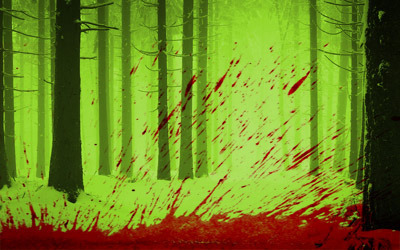
Kerstin Ekman's Blackwater takes us to a remote place in the mid-north of Sweden where Midsummer's Eve, a time of the year when magic is at its strongest, is celebrated as the greatest festival of the year. Young people pick bouquets of seven or nine different flowers and put them under their pillow in the hope of dreaming about their future spouse (herbs picked at Midsummer were highly potent). Greenery placed over houses and barns are to bring good fortune and health to people and livestock. Flowers are picked for their fragrance, color,and traditional meaning. Near a small village and while the rest of the inhabitants enjoy their festivities, on that evening of the summer solstice, a Dutch woman and an unidentified man are brutally murdered in their tent while camping alongside the Lobber river.
This is the crime that drives the book forward even while the crime itself remains unsolved for several decades. What then fills this gap between the crime and its resolution? Mounting tension, would be the short answer. Something's terribly wrong in Blackwater. Portrayed in the seventies and late eighties, one generation passes to another and as the new generation takes over the stigma of what happened at the river Lobber all those years ago the stigma too is carried forward, like hives that never leave the human body. It is the younger generation that reluctantly takes on the task of discovering the terrible truth.
Perhaps I might add this to my collection of what I call "Ethno-mysteries" so detailed is the author's ethnography of this part of the world: its people, its landscapes, and its socio and psychological narratives woven in between the story line like strands on a vast and magic loom. Ekman explores an entire society: its eco system, its inhabitants, their psychological motivations, its sociological shortcomings, its place in nature, its attempts at building communes, its means of production, tourism, and the devastating if not jarring consequences as these inhabitants - legal and illegal - collide at a single point in time: Midsummer's Eve.
As an aside, this might also serve as a warning to mystery readers in general: expect to be deviated from the story line in this book. This is not a who-dun-it...Scandinavian crime fiction rarely is. But, having said that and if we are to be deviated, then let it be as an invitation into Kerstin Ekman's mesmerizing and frightening world
Beautiful and ominous written passages, particularly where it concerns the landscapes which often take on the appearance of a character in the book; natural paths, rivers, lakes, mountains, the snow, a biting cold, the flourishing of spring, summer, nights made of daylight, scented and flower infested interiors of Nordic huts; eco-activists who eschew civilization while practicing some dubious ethics - all surround a small group of inhabitants whose lives are to be forever changed by two horrendous events (yes, there are two crimes).
Chilling overtones and superb characterization betray much of what could otherwise be inspirational: a measure of brutality in the inhabitants, psychological deviations, scorn, revenge, racism, love, betrayal, a profound dysfunctional attitude towards children and offspring, a novel approach to education quickly snuffed out, and a society seemingly living under a natural law all its own. Written from the point of view of several narrators and a complex weaving of first and third person we are invited inside the minds of the Lapps, Swedish, and Norwegians that populate Ekman's novel.
And yet, Ekman kept my interest by never straying too long from the story line even while giving us a slow, mounting and throbbing tension that builds in volume to a point of true insight into brutality. It's difficult to place a finger on what exactly makes Ekman pull this off. From other books I've read, this is certainly not an easy task and speaks to Ekman's expertise as an author. I found the book scary and delightful, especially as it represents a category of Scandinavian crime fiction largely gone unnoticed in the world of translations: that being books written about the deviance in the North of Sweden.
My only small beef with this novel is that often Ekman relies on pronouns at the beginning of chapters to render suspense, when in fact it is slightly disorienting while - given that we have several narrators - we wait to find out to whom "He" or "She" is actually referring to several paragraphs later.
Enjoy!
-------------------------------------------------------
About the author

Kerstin Ekman
Kerstin Lillemor Ekman is a Swedish novelist born August 27, 1933. She began her career with a string of successful detective novels (among others De tre små mästarna ("The Three Little Masters") and Dödsklockan ("The Death Clock")) but later went on to persue psychological and social themes. Among her later works are Mörker och blåbärsris ("Darkness and Blueberries"), set in northern Sweden, and Händelser vid vatten (translated as Blackwater), in which she returned to the form of the detective novel.
Ekman was elected a member of the Swedish Academy in 1978, but left the Academy in 1989, together with Lars Gyllensten and Werner Aspenström, due to the debate following death threats posed to Salman Rushdie. As someone once said: "No one leaves the academy of their own free will, except in a coffin." According to the rules of the Academy, however, she will remain a passive member for the entirety of her life. Chair number 15 in the Swedish Academy has remained empty since Kerstin Ekman walked out of the meeting room in protest.
Most writers have their own literary midwives. Ekman’s was the Nobel laureate Eyvind Johnson. For her masterpiece Blackwater she received the Nordic Council Literature Prize in 1994.
Few writers possess the ability to truly change the lives of their readers, even if we’d love to have it be so. But Ekman is perhaps one of the few to do so for her many fans.
There are [Swedish] writers who set their novels in the more rural and sparsely populated settings, lending a decidedly chill atmosphere to the stories (the Swedish have an almost mystical attitude towards wooded areas and trees).
The above I wrote in my review of and in response to Camille Ceder's Frozen Moment, the first example of a Swedish book I've read that alluded to a Swede's almost mystical attitude toward the woods. Blackwater is another prime exemplar of this type of book, and granted, to a much greater degree steeped in such mysticism. Publishers often compare Ekman's book to Peter Høeg's beautiful language in Smilla's Sense of Snow as well as the chill found in Renko's Gorky Park: though, in having read both of these, in the former the language is more lyrical and evocative and in the latter it is a more significant crime story than what is found in Blackwater.
Sweden's mid-north
I often have to remind myself that modern Scandinavia has its roots in the Norse sagas that are replete with stories of viking gods, fantasy, brutality, and a resplendent mythical nature. These sagas revolve around stories of mythic proportions where we see the earth reappearing from the water; where an eagle over a waterfall hunting fish on a mountain is of special significance; where wooden slips were used for divination; where the savage butchery of human beings was a matter of conquest; where the sons of two brothers could widely inhabit the windy world; and where it was said "that they will consume the morning dew, and will produce generations of offspring"; and where the human internal rhythm is deeply affected by a jarring unnatural sequence of daylight that invades Nordic nights, and conversely where night snuffs out daylight for weeks on end. The Scandinavian people before the Christianisation of Scandinavia were deeply entrenched in the Norse sagas and to this day, particularly in the North, this pagan aspect in their gene pool remains an integral part of Sweden's national character - in particular where it concerns nature. As Americans, we might equate this to the Native Americans' spiritual views toward the land and the earth. However, unlike Native Americans and through the eyes of Ekman, the Swedes appear to see nature as malevolent as can be seen by one of this book's narrators who observes a hawk in a tree above.
In the old days, people thought the cuckoo became a hawk when the summer was over. Then he struck with his claws extended, his beak bloody. He was calling like a bell in the forest. She was so close, she could see the slate-gray throat feathers trembling at each call. He was perched with his wings folded and black tail-feathers outspread, spotted with white.
Moments later, she is overcome by an icy and frightening chill that sends her running back to the village, through the forest and pastures, where she cowers behind a shed so that the children cannot see her trembling. The book is replete with this underlying chill that seems to inhabit this part of Sweden's landscape. Every description seems to contain a feeling of foreboding. Even the task of rowing a boat takes on a darker significance:
The lake looked peculiar, oily in the stillness, as if the water were sticky. The water enveloped the slim body of the canoe. As he dipped the paddle in and took a stroke, it seemed to him that muscles were trembling under the skin of the water.
Kerstin Ekman's Blackwater takes us to a remote place in the mid-north of Sweden where Midsummer's Eve, a time of the year when magic is at its strongest, is celebrated as the greatest festival of the year. Young people pick bouquets of seven or nine different flowers and put them under their pillow in the hope of dreaming about their future spouse (herbs picked at Midsummer were highly potent). Greenery placed over houses and barns are to bring good fortune and health to people and livestock. Flowers are picked for their fragrance, color,and traditional meaning. Near a small village and while the rest of the inhabitants enjoy their festivities, on that evening of the summer solstice, a Dutch woman and an unidentified man are brutally murdered in their tent while camping alongside the Lobber river.
This is the crime that drives the book forward even while the crime itself remains unsolved for several decades. What then fills this gap between the crime and its resolution? Mounting tension, would be the short answer. Something's terribly wrong in Blackwater. Portrayed in the seventies and late eighties, one generation passes to another and as the new generation takes over the stigma of what happened at the river Lobber all those years ago the stigma too is carried forward, like hives that never leave the human body. It is the younger generation that reluctantly takes on the task of discovering the terrible truth.
Perhaps I might add this to my collection of what I call "Ethno-mysteries" so detailed is the author's ethnography of this part of the world: its people, its landscapes, and its socio and psychological narratives woven in between the story line like strands on a vast and magic loom. Ekman explores an entire society: its eco system, its inhabitants, their psychological motivations, its sociological shortcomings, its place in nature, its attempts at building communes, its means of production, tourism, and the devastating if not jarring consequences as these inhabitants - legal and illegal - collide at a single point in time: Midsummer's Eve.
As an aside, this might also serve as a warning to mystery readers in general: expect to be deviated from the story line in this book. This is not a who-dun-it...Scandinavian crime fiction rarely is. But, having said that and if we are to be deviated, then let it be as an invitation into Kerstin Ekman's mesmerizing and frightening world
Beautiful and ominous written passages, particularly where it concerns the landscapes which often take on the appearance of a character in the book; natural paths, rivers, lakes, mountains, the snow, a biting cold, the flourishing of spring, summer, nights made of daylight, scented and flower infested interiors of Nordic huts; eco-activists who eschew civilization while practicing some dubious ethics - all surround a small group of inhabitants whose lives are to be forever changed by two horrendous events (yes, there are two crimes).
Chilling overtones and superb characterization betray much of what could otherwise be inspirational: a measure of brutality in the inhabitants, psychological deviations, scorn, revenge, racism, love, betrayal, a profound dysfunctional attitude towards children and offspring, a novel approach to education quickly snuffed out, and a society seemingly living under a natural law all its own. Written from the point of view of several narrators and a complex weaving of first and third person we are invited inside the minds of the Lapps, Swedish, and Norwegians that populate Ekman's novel.
And yet, Ekman kept my interest by never straying too long from the story line even while giving us a slow, mounting and throbbing tension that builds in volume to a point of true insight into brutality. It's difficult to place a finger on what exactly makes Ekman pull this off. From other books I've read, this is certainly not an easy task and speaks to Ekman's expertise as an author. I found the book scary and delightful, especially as it represents a category of Scandinavian crime fiction largely gone unnoticed in the world of translations: that being books written about the deviance in the North of Sweden.
My only small beef with this novel is that often Ekman relies on pronouns at the beginning of chapters to render suspense, when in fact it is slightly disorienting while - given that we have several narrators - we wait to find out to whom "He" or "She" is actually referring to several paragraphs later.
Enjoy!
-------------------------------------------------------
About the author
Kerstin Ekman
Kerstin Lillemor Ekman is a Swedish novelist born August 27, 1933. She began her career with a string of successful detective novels (among others De tre små mästarna ("The Three Little Masters") and Dödsklockan ("The Death Clock")) but later went on to persue psychological and social themes. Among her later works are Mörker och blåbärsris ("Darkness and Blueberries"), set in northern Sweden, and Händelser vid vatten (translated as Blackwater), in which she returned to the form of the detective novel.
Ekman was elected a member of the Swedish Academy in 1978, but left the Academy in 1989, together with Lars Gyllensten and Werner Aspenström, due to the debate following death threats posed to Salman Rushdie. As someone once said: "No one leaves the academy of their own free will, except in a coffin." According to the rules of the Academy, however, she will remain a passive member for the entirety of her life. Chair number 15 in the Swedish Academy has remained empty since Kerstin Ekman walked out of the meeting room in protest.
Most writers have their own literary midwives. Ekman’s was the Nobel laureate Eyvind Johnson. For her masterpiece Blackwater she received the Nordic Council Literature Prize in 1994.
Few writers possess the ability to truly change the lives of their readers, even if we’d love to have it be so. But Ekman is perhaps one of the few to do so for her many fans.

June 12, 2021
Wonderfully subtle and lowkey, this strange novel develops to a psychological firework that requires slowreading first and then the same kind of slow thinking afterwards.
Things that happen by the water have a blurry surface and a cold, deep, dark secret...
Recommended to all of you who suffer from prolonged reader's block. This novel will let you move at your pace, will coax you when you feel tired, and will lead you to the last page with a sense of happy grief or sad fulfilling.
My first Kerstin Ekman won't stay the last!
Things that happen by the water have a blurry surface and a cold, deep, dark secret...
Recommended to all of you who suffer from prolonged reader's block. This novel will let you move at your pace, will coax you when you feel tired, and will lead you to the last page with a sense of happy grief or sad fulfilling.
My first Kerstin Ekman won't stay the last!
May 11, 2007
Part of what continues to fascinate me about Scandinavian crime fiction is the routine respect with which the authors approach their genre--the real quality of the prose and complexity not only of the plots themselves, but of the milieus--the characters and settings peripheral to the events that these books are 'about.' Ekman's Blackwater is currently my favorite example of this--an eliptical rendering of a brutal, unsolved crime in a mountain village in Northern Sweden. For although this crime effectively changes the lives of all of the characters in the novel (three of whom narrate), it isn't truly the point, per se.
As in real life, horrible, arbitrary and unexplained things happen and the consequences often resonate for years to come. But even when one has been directly involved with such an event, the mundane, quotidian dramas--the (failed) romances, the family dysfunction, the fights with neighbors, the gossip, the trouble at work, the community struggles with the political, the racial, the progressive--these things are the real fabric of one's daily life. (If the book missteps, it is simply in an overzealous exploration of this environment—occasionally, her affection for the intervening lives of her characters pulls the narrative off course, although I confess enjoying such tangents for their sheer thoroughness and imagination.)
And so Ekman--coincidentally one of Sweden's foremost novelists (not only in the genre of crime fiction) and an ex-member of the Swedish Academy of Letters (she resigned in protest over what she deemed to be the society's underwhelming response to the 'Rushdie Affair')—allows her crime to precipitate the action of the novel, without defining it. We meet Blackwater’s ostensible narrator twenty years after the crime was committed, when a mysterious man reappears in the village. This leads to a prolonged flashback of the crime itself and all the events surrounding it at the time. We then return to the present, where the crime is eventually solved. However, such a protracted search for ‘The Truth,’ for an explanation of what Really Happened, is relatively useless. It doesn’t resolve anything or give the events more meaning. It merely is, leaving the characters to make their peace with such arbitrary violence as best as they are able.
As in real life, horrible, arbitrary and unexplained things happen and the consequences often resonate for years to come. But even when one has been directly involved with such an event, the mundane, quotidian dramas--the (failed) romances, the family dysfunction, the fights with neighbors, the gossip, the trouble at work, the community struggles with the political, the racial, the progressive--these things are the real fabric of one's daily life. (If the book missteps, it is simply in an overzealous exploration of this environment—occasionally, her affection for the intervening lives of her characters pulls the narrative off course, although I confess enjoying such tangents for their sheer thoroughness and imagination.)
And so Ekman--coincidentally one of Sweden's foremost novelists (not only in the genre of crime fiction) and an ex-member of the Swedish Academy of Letters (she resigned in protest over what she deemed to be the society's underwhelming response to the 'Rushdie Affair')—allows her crime to precipitate the action of the novel, without defining it. We meet Blackwater’s ostensible narrator twenty years after the crime was committed, when a mysterious man reappears in the village. This leads to a prolonged flashback of the crime itself and all the events surrounding it at the time. We then return to the present, where the crime is eventually solved. However, such a protracted search for ‘The Truth,’ for an explanation of what Really Happened, is relatively useless. It doesn’t resolve anything or give the events more meaning. It merely is, leaving the characters to make their peace with such arbitrary violence as best as they are able.

July 14, 2023
Excellent, fantastic, a classic. Should have read it sooner. But never too late.
The POVs change all the time, you never know whose you are going to follow when a new chapter starts. I just reread one of my reviews in which this also occurs all the time and I was fed up with it and downgraded the book for the same reason, but here it doesn’t bother me, I just read on, devouring the pages and still cautious not to miss a word. I guess this is down to the author’s brilliance, this is a true masterpiece, one I rarely come across.
I also noticed that the most sympathetic persons in this novel are two men, and I may have read too many books by female authors who would be sure to attribute the most positive character traits to the female characters, but still it struck me as somewhat unconventional.
The POVs change all the time, you never know whose you are going to follow when a new chapter starts. I just reread one of my reviews in which this also occurs all the time and I was fed up with it and downgraded the book for the same reason, but here it doesn’t bother me, I just read on, devouring the pages and still cautious not to miss a word. I guess this is down to the author’s brilliance, this is a true masterpiece, one I rarely come across.
I also noticed that the most sympathetic persons in this novel are two men, and I may have read too many books by female authors who would be sure to attribute the most positive character traits to the female characters, but still it struck me as somewhat unconventional.
July 3, 2009
Bleeeech. I hated everyone in this book and wished they all would die, and i am pissed that i spent my precious time reading it for nothing. The story kept promising interest, but never delivered. Crappy, crappy book.

July 13, 2007
A welcome discovery for insatiable fans of Henning Mankell. This complicated, disturbing novel reminds me of the best of Ruth Rendell. The story is spread over a couple decades, involving a crime that evades understanding, let alone a solution. First published in Sweden in 1993, Blackwater won the Swedish Crime Academy's Award for Best Crime Novel, the August Prize and the Nordic Council's Literary Prize. The translation is excellent: it won't disappoint English-speaking readers either, although you'll need to read slowly because — in the tradition of the best detective stories — there are layers and layers of meaning.

July 6, 2012
I always felt like I was being kept at arm's length while I read this book, and unfortunately that meant that I didn't develop any sort of sympathy for any of the characters. I'm thinking this is an "atmospheric thriller," because it definitely had a sense of time and place. However, when the location is not only the main character, but the only one that grows and changes, that is a bit of a problem. I have to admit, I finished the book not completely understanding everything that had happened. It's hard to know if this is a shortcoming of the author or the translator.

August 9, 2009
- Have you read Händelser Vid Vatten? Kerstin Ekman.
- Which one's that?
- You know, the controversial one. The teenage boy gets stuck down a well...
- Oh right, that one! Yes, I've read it. He escapes with a salamander in a bucket...
- Isn't it an eel?
- Well maybe an eel then. I don't know. And he somehow ends up in a relationship with this considerably older woman. He uses low-fat margarine to...
- Look, the low-fat margarine doesn't have anything much to do with the story.
- I know, I know. But somehow that detail stuck in my memory. I must re-read it sometime.

May 27, 2017
I simply could not connect with this book. It has been critically acclaimed. I can even understand why that is so. From a technical standpoint, it is brilliant. The narrative voice revolves around three main characters: Birger Törbjönnsson, a rural doctor; Annie Raft, an unwed mother; and Johan Brandbert, a sensitive misfit among four half-brothers and a brutal domineering father. The third person viewpoint in each case frees the author to expound unreliable narratives with convincing authority. At times, a character will simply not have connected the relationship between two events. At other times, a relevant memory has simply been forgotten. At other times, a critical fact is being concealed from scrutiny. For example, Birger, the doctor, alludes to marital problems with his wife Barbro. On page 33 we are led to believe Birgen and his friend Åke, the newly appointed district police chief, are merely enjoying a brief fishing trip while Barbro convenes with a group of ecology activists. There is only a hint of disquiet when he casually mentions that Barbro didn't want to celebrate Christmas the year before. By p. 51 he entertains the thought that she won't be returning home. This, of course, arouses our curiosity. In succeeding chapters his recollections begin to document a marriage in dissolution. He deals with Barbro's increasingly passionate denunciation of environmental affronts (in a chapter beginning on p.87) with an odd passivity. The recollections he chooses to relate paint a picture of an overwrought woman magnifying the hostility of neighbors and the long-term damage of clear-cutting the forests. Only later do we learn of a significant event and the connection to Birger's own emotional withdrawal. Time after time, Ekman repeats this pattern, forcing the reader to re-evaluate conclusions that seemed obvious before another revelation. Is there ever an unambiguous truth?
Ekman employs numerous elements to sustain a mood that ranges from somber to creepy. The opening chapters of Annie's story occur at Midsummer. The lingering light intruding on the nighttime sky lends an eerie unnatural vibe. Annie and her six-year-old daughter Mia wander between a river and forested hills searching for the commune they plan to join. Their physical discomfort is portrayed through the cloud of insects that hover and bite them. The land beneath their feet seems alive. “The tussocks looked like scrubby skulls sticking out of the earth, the birches were twisted and full of knots. On the last stretch down to the river, they cut across some marshland that swayed under their feet. They could hear the water now, a murmur as talkative as the streams, but with several voices.” (p.47)
The people in the story seem to mirror some of this hostile indifference. Annie and Mia linger in a fishing-tackle shop owned by a man named Lil-Ola Lennartsson. Four men (Johan's father and half-brothers) enter and suddenly fall silent. The owner looks at Annie: “She realized he didn't want them in there any longer and that made her feel ill at ease. She took Mia's hand and went out. The moment she had closed the door she heard the voices raised again.” (p.29)
Sometimes a main character will be struck by inexplicable anxiety. Here is a scene of Annie at the commune: “The first time she had walked down from the pasture and followed the stream in among the lichen-festooned trees, she had suddenly been frightened right in the middle of a step. Not by any sound, but frightened from within, icily and inexorably warned by an instinct she had never before known existed within her. She immediately turned around and started running back.” (p.178)
In Annie's story the isolation of the commune intensifies our sense of foreboding. The daily mantra of cooperation and openness is undercut by an obvious artificiality which denies natural emotions of like, dislike, unspoken hostility, jealousy and most important, secrecy. The ideals of the commune are constraining rituals, just as the conventions of regular society.
Oddly enough, the three characters barely interact with each other. Instead, the reader is forced to follow three separate stories occurring in real time simultaneously. The stories are told in short choppy chapters. (Prospective readers are advised to keep a note pad close by and annotate by page number since the chapters are unnumbered. Readers might also simply want to add the name of the main character at the beginning of each new chapter). The connecting event in the story is a gruesome murder of two campers. The identities of the two victims are almost irrelevant. One of them is not even identified (or rather divulged) until 20 years later. Annie stumbles on the corpses while trying to locate the commune. She encounters Johan briefly in the forest and 20 years later seems to recognize him as the man dropping her daughter off late one night. Birgen and Åke arrive at the scene to investigate and interrogate any potential witnesses.
Much of my problem with this book was due to its initial presentation as a dark crime story. The crime links the characters and precipitates a trauma that alters the course of their lives. However, its solution is almost an afterthought. The crime is more of a catalyst than a focal point. Second, I never really connected with any of the three characters. I can't explain why, but in a novel of over 400 pages, this was an insurmountable problem for me. It was a struggle to even reach the ending. The accelerated pace in the concluding chapters of the book failed to offset the extremely slow pace of the earlier chapters. As one review has pointed out, this book is not for the impatient reader.
NOTES:
An interesting essay about the role of landscape in the author's novels.
https://www.thefreelibrary.com/Landsc...
Ekman employs numerous elements to sustain a mood that ranges from somber to creepy. The opening chapters of Annie's story occur at Midsummer. The lingering light intruding on the nighttime sky lends an eerie unnatural vibe. Annie and her six-year-old daughter Mia wander between a river and forested hills searching for the commune they plan to join. Their physical discomfort is portrayed through the cloud of insects that hover and bite them. The land beneath their feet seems alive. “The tussocks looked like scrubby skulls sticking out of the earth, the birches were twisted and full of knots. On the last stretch down to the river, they cut across some marshland that swayed under their feet. They could hear the water now, a murmur as talkative as the streams, but with several voices.” (p.47)
The people in the story seem to mirror some of this hostile indifference. Annie and Mia linger in a fishing-tackle shop owned by a man named Lil-Ola Lennartsson. Four men (Johan's father and half-brothers) enter and suddenly fall silent. The owner looks at Annie: “She realized he didn't want them in there any longer and that made her feel ill at ease. She took Mia's hand and went out. The moment she had closed the door she heard the voices raised again.” (p.29)
Sometimes a main character will be struck by inexplicable anxiety. Here is a scene of Annie at the commune: “The first time she had walked down from the pasture and followed the stream in among the lichen-festooned trees, she had suddenly been frightened right in the middle of a step. Not by any sound, but frightened from within, icily and inexorably warned by an instinct she had never before known existed within her. She immediately turned around and started running back.” (p.178)
In Annie's story the isolation of the commune intensifies our sense of foreboding. The daily mantra of cooperation and openness is undercut by an obvious artificiality which denies natural emotions of like, dislike, unspoken hostility, jealousy and most important, secrecy. The ideals of the commune are constraining rituals, just as the conventions of regular society.
Oddly enough, the three characters barely interact with each other. Instead, the reader is forced to follow three separate stories occurring in real time simultaneously. The stories are told in short choppy chapters. (Prospective readers are advised to keep a note pad close by and annotate by page number since the chapters are unnumbered. Readers might also simply want to add the name of the main character at the beginning of each new chapter). The connecting event in the story is a gruesome murder of two campers. The identities of the two victims are almost irrelevant. One of them is not even identified (or rather divulged) until 20 years later. Annie stumbles on the corpses while trying to locate the commune. She encounters Johan briefly in the forest and 20 years later seems to recognize him as the man dropping her daughter off late one night. Birgen and Åke arrive at the scene to investigate and interrogate any potential witnesses.
Much of my problem with this book was due to its initial presentation as a dark crime story. The crime links the characters and precipitates a trauma that alters the course of their lives. However, its solution is almost an afterthought. The crime is more of a catalyst than a focal point. Second, I never really connected with any of the three characters. I can't explain why, but in a novel of over 400 pages, this was an insurmountable problem for me. It was a struggle to even reach the ending. The accelerated pace in the concluding chapters of the book failed to offset the extremely slow pace of the earlier chapters. As one review has pointed out, this book is not for the impatient reader.
NOTES:
An interesting essay about the role of landscape in the author's novels.
https://www.thefreelibrary.com/Landsc...

November 11, 2017
Ottimo romanzo: il plot noir si fonde felicemente con uno stile non banale e con una grande padronanza narrativa, grazie a cui la Ekman delinea in modo molto convincente le dinamiche psicologiche dei personaggi e il loro mondo interiore, delineando altrettanto bene l'ambiente naturale e sociale in cui essi vivono.
ps. ringrazio @Chomsky, grazie ai cui post ho scoperto questo libro :)
ps. ringrazio @Chomsky, grazie ai cui post ho scoperto questo libro :)

September 20, 2023
Viajamos al norte de Suecia junto con nuestra protagonista Annie, profesora y madre de Mia que buscan una nueva vida en Svartvattnet. Dan, el novio de Anne no acude a la parada de autocar y ellas tratan de llegar a pie al que será su nuevo hogar.
Exhaustas y desorientadas encuentran, a orillas del rio una tienda de campaña y cuando se acercan para pedir ayuda observan que dentro yacen dos personas brutalmente asesinadas.
Tengo que reconocer que me ha costado entrar en esta historia ya que en las primeras páginas la autora nos presenta a muchos personajes de golpe. Una vez situada la trama para mí gusto va de menos a más.
La ambientación es espectacular, ese ambiente veraniego de los pueblos pequeños y el estilo de la autora me ha gustado aunque es un libro bastante descriptivo algo que me suele dar miedo que por ello me saque de la historia y en este caso tengo que reconocer que en algunos momentos ha sido así pero no en su mayoría.
Hay partes algo lentas pero necesarias para comprender bien las actuaciones de los personajes y sus maneras de pensar.
Como conclusión es un libro que no me ha disgustado del todo a pesar de no tener grandes giros la historia me ha resultado bastante entretenido y donde la intriga y el misterio están servidos.
Exhaustas y desorientadas encuentran, a orillas del rio una tienda de campaña y cuando se acercan para pedir ayuda observan que dentro yacen dos personas brutalmente asesinadas.
Tengo que reconocer que me ha costado entrar en esta historia ya que en las primeras páginas la autora nos presenta a muchos personajes de golpe. Una vez situada la trama para mí gusto va de menos a más.
La ambientación es espectacular, ese ambiente veraniego de los pueblos pequeños y el estilo de la autora me ha gustado aunque es un libro bastante descriptivo algo que me suele dar miedo que por ello me saque de la historia y en este caso tengo que reconocer que en algunos momentos ha sido así pero no en su mayoría.
Hay partes algo lentas pero necesarias para comprender bien las actuaciones de los personajes y sus maneras de pensar.
Como conclusión es un libro que no me ha disgustado del todo a pesar de no tener grandes giros la historia me ha resultado bastante entretenido y donde la intriga y el misterio están servidos.

July 3, 2023
El crimen es la excusa para contarnos la forma de vida de un lugar y sus gentes. Los protagonistas son tres: Anni una joven maestra madre soltera, Johan, un joven lapón de 17 años y Birger el médico de la zona.
Aunque el libro está dividida en dos partes que podríamos decir pasado y presente, en realidad la cronología es un tanto aleatoria y añadiendo el ritmo pausado, es ardua y necesita concentración.
Muy descriptiva en torno al paisaje natural.
Aunque a mí me ha gustado mucho y la resolución final me ha parecido fantástica, reconozco que no es una lectura que recomendaría a todo el mundo.
Aunque el libro está dividida en dos partes que podríamos decir pasado y presente, en realidad la cronología es un tanto aleatoria y añadiendo el ritmo pausado, es ardua y necesita concentración.
Muy descriptiva en torno al paisaje natural.
Aunque a mí me ha gustado mucho y la resolución final me ha parecido fantástica, reconozco que no es una lectura que recomendaría a todo el mundo.

May 1, 2023
4.5-5, så det blir full pott för den här lågintensiva thrillern, denna grekiska tragedi i de norrländska skogarna.

May 31, 2016
Annie Raft and her daugher Mia arrives in the fictitious village of Blackwater in Jämtland in Sweden. They have left Stockholm to live with Annie’s boyfriend Dan in a collective in the mountains and Annie is going to work as a teacher. On their way there, they happen to stumble over a couple murdered in a tent in the forest. Twenty years later, the case is still unsolved, and Annie sees Mia with a man that she saw in the forest of the day of the murder.
The murder in the book is suggested to be loosely based on a real murder in Appojaure in 1984. Thomas Quick, or Sture Bergwall, who has confessed to sixteen murders, claimed he was the murderer even in this case. He was sentenced for eight of the murders, with the same prosecutor and a biased psychotherapist. On a later trial in 2013, he was freed from every murder due to lack of evidence.
There are many characters in the novel, of which many are not important. The most interesting character is Johan, who grows up in a destructive family, constantly under threat. There is a dark part where he is put in a well by his horrible brothers, which I will remember for a long time. Johan struggles with his past and his future. He saves an eel from the well, perhaps because of his own feeling of insignificance and loneliness. Such a character is interesting to follow, to see grow up and to face his situation. Birger, a doctor in the village, and his dysfunctional marriage, is also interesting. However, I can’t seem to care for any of the others.
The book was published 1993 and has earned Kerstin Ekman the August price, and is considered the best thriller in Sweden. I can’t really understand the wonder of this novel. It is well written and thrilling at times, but there are long passages that are not very exciting and seem to have nothing to do with the story. There are too many parts that slow the book down, without any obvious purpose. However, the last hundred pages are wonderful.
The murder in the book is suggested to be loosely based on a real murder in Appojaure in 1984. Thomas Quick, or Sture Bergwall, who has confessed to sixteen murders, claimed he was the murderer even in this case. He was sentenced for eight of the murders, with the same prosecutor and a biased psychotherapist. On a later trial in 2013, he was freed from every murder due to lack of evidence.
There are many characters in the novel, of which many are not important. The most interesting character is Johan, who grows up in a destructive family, constantly under threat. There is a dark part where he is put in a well by his horrible brothers, which I will remember for a long time. Johan struggles with his past and his future. He saves an eel from the well, perhaps because of his own feeling of insignificance and loneliness. Such a character is interesting to follow, to see grow up and to face his situation. Birger, a doctor in the village, and his dysfunctional marriage, is also interesting. However, I can’t seem to care for any of the others.
The book was published 1993 and has earned Kerstin Ekman the August price, and is considered the best thriller in Sweden. I can’t really understand the wonder of this novel. It is well written and thrilling at times, but there are long passages that are not very exciting and seem to have nothing to do with the story. There are too many parts that slow the book down, without any obvious purpose. However, the last hundred pages are wonderful.

April 25, 2021
Deze roman speelt zich af in Zweden, met name in het deel ten noorden van Stockholm. Het is een detective, maar vooral ook een roman. Het verhaal speelt in twee tijden, zo’n twintig jaar geleden en nu in de actuele tijd. In een kleine plaats is een moord gepleegd op een Nederlands meisje en haar metgezel, een Amerikaanse Vietnam-deserteur. Ze werden overvallen en vermoord in een tent. De dader is nooit gevonden. In de roman worden mensen die mogelijk hierbij betrokken waren ten tonele gevoerd, zonder dat erg expliciet te doen. Je voelt wel de spanning. Drie generaties vrouwen, oma, moeder en dochter spelen in het boek een belangrijke rol. De moeder, Annie probeert te achterhalen hoe het zat met die moord van twintig jaar terug en wordt zelf vermoord. Er rust een zwaar taboe op de waarheid. Pas tegen het einde van het boek vallen de puzzelstukjes in elkaar. Al lezend wordt je wel eens overdonderd door de vele personages en verhaallijnen. Hier en daar zit er ook wel humor in, zoals in de beschrijving van een zeventiger jaren commune met progressieve jonge Stockholmers in de plaats des onheils. Als het gaat om relaties tussen mannen en vrouwen nemen vrouwen vaak het initiatief. In het boek komen veel erotische passages voor. Zelf ben ik vanaf mijn twintigste diverse malen in Zweden geweest. In het noorden wonen de Samen, hier ten onrechte wel eens Lapland genoemd. Ook dit onderwerp speelt in het gecompliceerde boek een rol. Het is een boek waar je wel even de tijd voor moet nemen, het is ook zeker een tweede lezing waard, maar er is nog veel te lezen en of ik daarvoor tijd van leven heb, is uiteraard de vraag.
July 7, 2026
Otrolig!! Hur kan man skriva fram stämningar som Ekman gör! Mästerligt

July 15, 2026
Visst påminner omslaget till den här boken väldigt mycket om en annan bok: ”Den hemliga historien” av Donna Tartt i den inbundna svenska utgåvan? Den går i och för sig i grönt när denna är blålia, men i övrigt är det med träd som reflekteras i ett vatten helt klart samma koncept. Kanske var det en trend under tidigt nittiotal (Ekmans bok kom ut -93, Tartts -94) …
Med den reflektionen blir det lockande att fundera kring andra kopplingar. Båda böckerna kretsar kring ett brott, men det är kanske inte det som egentligen hamnar i fokus när man tänker tillbaka på dem. I ”Den hemliga historien” är det första jag själv tänker på istället en romantiserad collegetillvaro, här är det den jämtländska glesbygden och naturen. I båda skildras miljöer som är slutna och svåra att komma in i.
Just miljön och naturen känns hos Ekman nästan som en egen karaktär i boken med sina återkommande beskrivningar av skogar, växter och djurliv. Kanske har människorna påfallande ofta också något djuriskt över sig i sin närhet till starka känslor och flockbeteenden. Men även det unikt mänskliga blir belyst, i både sina bra och dåliga sidor.
Det är en snyggt komponerad och välskriven roman. Spänning utan att bli en platt deckare, politisk utan att skriva på näsan, tjock nog för att hinna bygga sitt persongalleri och låta det utvecklas. Kanske tappar den lite mot slutet när upplösningen ska sys ihop och kasten blir tvära, men det hör väl på sätt och vis till. På många sätt en perfekt sommarläsning ändå.
Med den reflektionen blir det lockande att fundera kring andra kopplingar. Båda böckerna kretsar kring ett brott, men det är kanske inte det som egentligen hamnar i fokus när man tänker tillbaka på dem. I ”Den hemliga historien” är det första jag själv tänker på istället en romantiserad collegetillvaro, här är det den jämtländska glesbygden och naturen. I båda skildras miljöer som är slutna och svåra att komma in i.
Just miljön och naturen känns hos Ekman nästan som en egen karaktär i boken med sina återkommande beskrivningar av skogar, växter och djurliv. Kanske har människorna påfallande ofta också något djuriskt över sig i sin närhet till starka känslor och flockbeteenden. Men även det unikt mänskliga blir belyst, i både sina bra och dåliga sidor.
Det är en snyggt komponerad och välskriven roman. Spänning utan att bli en platt deckare, politisk utan att skriva på näsan, tjock nog för att hinna bygga sitt persongalleri och låta det utvecklas. Kanske tappar den lite mot slutet när upplösningen ska sys ihop och kasten blir tvära, men det hör väl på sätt och vis till. På många sätt en perfekt sommarläsning ändå.

April 13, 2018
Annie Raft, is woken at 4 am by a car pulling up outside her home. She looks out of the window to see her 23-year-old daughter Mia getting out of the car and embracing a man who she doesn't know but whom she believes brutally murdered two campers some 18 years previously. She telephones her friend and lover, local doctor Birger Torbjornsson to tell him what she has seen and later discovers that the man she saw is Johan Brandberg, the youngest son of a local family.
Through Annie Raft, Birger Torbjornsson and Johan Brandberg the reader is transported back to Midsummer's Eve 1974, when Annie and her daughter, then 6 years old, arrived by bus in remote Blackwater where they are to move into a commune with Annie's lover, Dan Ulander. When Dan fails to meet the bus, Annie and Mia set off on foot to walk the four kilometres to the commune. En route they spot a young man coming in the opposite direction but he does not see them. Dan has given them a rudimentary map of the area but they are soon lost . When Annie spots a tent she decides to go and ask for assistance only to find the bodies of a young man and woman brutally stabbed to death. The identity of the young woman is soon established, but nobody can figure out why she was killed, who did it or who her murdered companion was. The mystery lasts for almost 18 years.
The unsolved murders makes the small community of Blackwater infamous, bringing it a lot of outside interest but has negative affects on its residents. So when Annie and Mia later decide to settle in Blackwater all their lives are haunted by the incident.
This book is portrayed as a thriller but it is told at a somewhat sedate, methodical pace with the author resisting the temptation to add to the body count. Instead Ekman concentrates on the effect the murders have on the community and the rich eerily bleak countryside thereabouts. In fact she creates a landscape that as equally as important to the plot as its human cast. Clear-cutting of the forests is a fairly central issue but this not a political bandwagon. Rather the plot purrs along at a slow steady pace threading its way through the seasons and the complicated lives of the people present.
When Dan fails to meet the bus Annie and Mia are forced to take a path that leads not only to the dead bodies but one that will also have unforeseen consequences, mirroring the way that decisions that we all make when we are young can shape our futures. This is no doubt particularly true for people live in small villages where everyone knows and are likely to be in some way related to each other. In fact it is Mia who eventually reveals the identity of the murdered young man despite only being a child at the time of his death.
The novel is not without some imperfections. In particular Johan is never properly investigated by the police despite the fact that he left home on the night of the murders and never returned to the village. Come to think of it, the whole police investigation seems to have been pretty haphazard. Similarly Johan's sex sessions with the woman who helped him to get away seem to be a little out of keeping with the rest of the novel. However, that all said and done, the author has created a gloriously rich and thoughtful page-turner that deserves to be read.
Through Annie Raft, Birger Torbjornsson and Johan Brandberg the reader is transported back to Midsummer's Eve 1974, when Annie and her daughter, then 6 years old, arrived by bus in remote Blackwater where they are to move into a commune with Annie's lover, Dan Ulander. When Dan fails to meet the bus, Annie and Mia set off on foot to walk the four kilometres to the commune. En route they spot a young man coming in the opposite direction but he does not see them. Dan has given them a rudimentary map of the area but they are soon lost . When Annie spots a tent she decides to go and ask for assistance only to find the bodies of a young man and woman brutally stabbed to death. The identity of the young woman is soon established, but nobody can figure out why she was killed, who did it or who her murdered companion was. The mystery lasts for almost 18 years.
The unsolved murders makes the small community of Blackwater infamous, bringing it a lot of outside interest but has negative affects on its residents. So when Annie and Mia later decide to settle in Blackwater all their lives are haunted by the incident.
This book is portrayed as a thriller but it is told at a somewhat sedate, methodical pace with the author resisting the temptation to add to the body count. Instead Ekman concentrates on the effect the murders have on the community and the rich eerily bleak countryside thereabouts. In fact she creates a landscape that as equally as important to the plot as its human cast. Clear-cutting of the forests is a fairly central issue but this not a political bandwagon. Rather the plot purrs along at a slow steady pace threading its way through the seasons and the complicated lives of the people present.
When Dan fails to meet the bus Annie and Mia are forced to take a path that leads not only to the dead bodies but one that will also have unforeseen consequences, mirroring the way that decisions that we all make when we are young can shape our futures. This is no doubt particularly true for people live in small villages where everyone knows and are likely to be in some way related to each other. In fact it is Mia who eventually reveals the identity of the murdered young man despite only being a child at the time of his death.
The novel is not without some imperfections. In particular Johan is never properly investigated by the police despite the fact that he left home on the night of the murders and never returned to the village. Come to think of it, the whole police investigation seems to have been pretty haphazard. Similarly Johan's sex sessions with the woman who helped him to get away seem to be a little out of keeping with the rest of the novel. However, that all said and done, the author has created a gloriously rich and thoughtful page-turner that deserves to be read.

January 22, 2012
Oh what a surprise this novel turned out to be. A pleasant surprise. I'd read about Kerstin Ekman in an article on "Nordic Nor", so was expecting another Wallender style police procedural. Was I wrong! Yes, there is a crime and it resonates through the book, but there is so much more. This is literature of the highest order. The theme of nature runs through this book like a mountain stream. The descriptions of the forests lakes and mountains are outstanding. Poetic and beautiful. The natural world seems at turns hostile, then welcoming.
Much of the book seems hypnotic, reminding me of some of John Fowles' writing. Like the Magus with cold weather. Something deep seems to lay just below the surface of the words.
I won't give away the story, just read it.
Much of the book seems hypnotic, reminding me of some of John Fowles' writing. Like the Magus with cold weather. Something deep seems to lay just below the surface of the words.
I won't give away the story, just read it.

January 23, 2023
Luin toisen kerran vuosien jälkeen ja pidin ehkä vielä enemmän kuin ensimmäisellä kerralla. Yleensä rikosromaaneista jää enemmän tai vähemmän lattea maku, mutta tämä hipoo täydellistä. Dekkarijuoni on oikeastaan vain yksi osa tarinaa ja pienen pohjoisen kylän ihmissuhteet, luonto ja rikoksen vaikutukset yhteisöön ovat keskeisempiä kuin murhien selvittely. Henkilöiden ja luonnon kuvaus onkin vahvaa ja kirjan ihmisiin kiintyy, kaikessa raadollisuudessaan. Varsinkin keskivaiheilla juoni etenee hitaasti, loppua kohden nopeammin. Teoksessa on jatkuvasti melankolinen ja painostava tunnelma, mutta paljon myös kauneutta.
Kirjan pohjalta on vastikään tehty Ruotsissa tv-sarja, toivottavasti se tulee pian nähtäville Suomessakin.
Kirjan pohjalta on vastikään tehty Ruotsissa tv-sarja, toivottavasti se tulee pian nähtäville Suomessakin.

December 26, 2020
”Jag är inte platsen, orörlig, som du ska återkomma till. Jag är inte märkt och avgränsad. Jag händer. Rörlighet.”
Mycket komplicerad men därför också himla välskriven och fascinerande bok. Jag är mycket imponerad av författarskapet bakom detta. Fängslande och berörande men inte det minsta lättläst för nu vill jag googla på spoilers eftersom det känns som att jag inte fattade allt
Mycket komplicerad men därför också himla välskriven och fascinerande bok. Jag är mycket imponerad av författarskapet bakom detta. Fängslande och berörande men inte det minsta lättläst för nu vill jag googla på spoilers eftersom det känns som att jag inte fattade allt

January 9, 2018
"De hade inte talat mer om det. Det hade varit en öppen fråga mellan dem om man kan se in i sitt eget mörker och om det rent av är ens skyldighet att göra det. Eller om man framkallar mörkret och gör det till sitt eget genom att kela med det."
January 2, 2021
Hmm ej så förtjust i ”mordhistorier”, men ojoj vad bra skriven den är. Gillade det mänskliga i boken
June 28, 2026
Rekommenderar inte att läsa den när man är ute å tältar själv

November 15, 2022
Hieno kirja pohjoisruotsalaisesta yhteisöstä jossa kepeän juhannusviikonlopun päätteeksi tapetaan kaksi nuorta ihmistä. Tapahtuman varjot ovat pitkät, ja parinkymmenen vuoden päästä pinnan alla kuplinut paine purkautuu ja mysteeriksi jäänyt väkivallanteko alkaa saada selityksiä.
Ekmanilla on taito luoda pienillä elementeillä niin ajan- ja tilannekuvaa kuin tihentyvää tunnelmaakin. Kirjassa oli useita jaksoja, jotka luin ihan konkreettisesti henkeäni pidättäen. Myös suljetun miljöön lainalaisuudet ja pienten yhteisöjen outo dynamiikka on käsinkosketeltavaa läpi teoksen.
Ja vaikka kirja periaatteessa voisi olla kuka-sen-teki-tyyppinen dekkari, sen ei voi sanoa istuvan varsinaisesti mihinkään genreen. Eri henkilöiden pään sisään päästään tavalla, joka pistää ennemminkin pohtimaan ihmisyyttä sen monissa (kauheissa ja surkeissakin) muodoissa, muistamista, unohtamista ja henkiinjäämistä.
Vaikuttava teos, jonka ainoastaan turha pieni loppukiihdytys meinasi tiputtaa neljän tähden tasolle. Ei kuitenkaan, niin hyvin tämä piti otteessaan ja perusteli jokaisen 580 sivuaan.
Ekmanilla on taito luoda pienillä elementeillä niin ajan- ja tilannekuvaa kuin tihentyvää tunnelmaakin. Kirjassa oli useita jaksoja, jotka luin ihan konkreettisesti henkeäni pidättäen. Myös suljetun miljöön lainalaisuudet ja pienten yhteisöjen outo dynamiikka on käsinkosketeltavaa läpi teoksen.
Ja vaikka kirja periaatteessa voisi olla kuka-sen-teki-tyyppinen dekkari, sen ei voi sanoa istuvan varsinaisesti mihinkään genreen. Eri henkilöiden pään sisään päästään tavalla, joka pistää ennemminkin pohtimaan ihmisyyttä sen monissa (kauheissa ja surkeissakin) muodoissa, muistamista, unohtamista ja henkiinjäämistä.
Vaikuttava teos, jonka ainoastaan turha pieni loppukiihdytys meinasi tiputtaa neljän tähden tasolle. Ei kuitenkaan, niin hyvin tämä piti otteessaan ja perusteli jokaisen 580 sivuaan.
August 23, 2018
One of the best crime novels I’ve read.
However I’m note sure that is the correct classification - there are murders and there is suspense, but I would classify Blackwater as literary fiction. It is incomparable in depth and quality to some of the easier reads of nordic noir, such as Nesbø or Nesser, but it is also not a quality police procedural, e.g Leif GW Persson.
No, this is a novel that happens to have a crime as its central theme, but that for me worked as a deeply moving story about the lives and relationships of a number of characters, most of them people, but nature and weather definitely also among the main cast.
However I’m note sure that is the correct classification - there are murders and there is suspense, but I would classify Blackwater as literary fiction. It is incomparable in depth and quality to some of the easier reads of nordic noir, such as Nesbø or Nesser, but it is also not a quality police procedural, e.g Leif GW Persson.
No, this is a novel that happens to have a crime as its central theme, but that for me worked as a deeply moving story about the lives and relationships of a number of characters, most of them people, but nature and weather definitely also among the main cast.
March 12, 2026
Vet inte om det var för att jag läste denna snabbare än Zlatan, eller om jag pendlade mellan ljudbok och fysiskt bok, men detta var riktigt förvirrande. Hängde knappt med handlingen. Helt plötsligt dog någon, och helt plötsligt låg någon. Kalla mig vad ni vill, okulturell eller korkad, jag tar det.
Ps. Mordets praktik sög den med
Ps. Mordets praktik sög den med

March 5, 2023
Härligt språk, långsam berättelse. 3.5

October 1, 2021
Zeer goed geschreven maar tussen thrillers en mij zal het toch nooit echt klikken.

October 29, 2022
Keltaisen kirjaston tuorein lisäys on uusintapainos. Kerstin Ekmanin (s. 1933) Tapahtui veden äärellä, Händelser vid vatten, ilmestyi Ruotsissa vuonna 1993 ja voitti heti samana vuonna August-palkinnon ja parhaan ruotsalaisen rikosromaanin palkinnon. Seuraavana vuonna kirja voitti Pohjoismaiden neuvoston kirjallisuuspalkinnon ja Otava julkaisi kirjasta Oili Suomisen käännöksen. Vuonna 2012 ruotsalainen dekkariasiantuntijoiden raati valitsi kirjan kaikkien aikojen parhaaksi ruotsalaiseksi dekkariksi. Nyt Tammi on julkaissut kirjan uudestaan, eikä se tällä maineella hullumpi juttu olekaan. Vuonna 2005 ilmestyneestä pokkaripainoksestakin on sen verran aikaa, että kirjaa on varmasti ollut jo hankala löytää.
Kirjan tapahtumat sijoittuvat kuvitteelliseen Svartvattnetin pikkukylään Jämtlandissa Pohjois-Ruotsissa, lähellä Norjan rajaa (suomalaisittain Jämtlandin tunnetuin paikka lienee Åre). Kylässä tapahtuu 1970-luvulla raaka kaksoismurha: teltassa yöpynyt hollantilainen nuori nainen ja tämän poikaystävä puukotetaan raa’asti. Selvittämätön tapaus jää vaivaamaan paikallisia ja vaikuttaa monien ihmisten elämiin.
Vaikka Tapahtui veden äärellä onkin dekkari, siinä ei tosiaan selvitetä rikosta. Päähenkilöinä ei hääri poliiseja. Kirjassa on paljon henkilöitä, mutta pääosaan nousee kolme. Annie Raft saapuu 1970-luvulla Svartvattnetiin kuusivuotiaan tyttärensä Mian kanssa. Hän on jättänyt taakseen työpaikan opettajana jonkinlaisen skandaalin vuoksi ja on muuttamassa ylös tunturissa sijaitsevaan Stjärnbergin kollektiiviin. Saapuminen paikalle menee tosin heti alkuun pieleen, kun poikaystävä Dan ei ole bussia vastassa ja matkasta Stjärnbergiin tulee monipolvinen ja vaivalloinen, ja se tosiaan päättyy telttapaikan verilöylyn löytämiseen.
Johan Brandberg on yksi paikallisesta veljessarjasta. Hän tuntee ulkopuolisuutta perheessään ja on varma, että Torsten Brandberg ei oikeasti ole hänen isänsä. Kun Torsten ja veljet pahoinpitelevät naapurin ja viranomaiset puuttuvat asiaan, Johanin luullaan vasikoineen, joten hänet pudotetaan kaivoon. Johan onnistuu vapautumaan kaivosta, lähtee pakoon ja omille teilleen. Karkumatkallaan hän kohtaa hyvin mielenkiintoisen naisen.
Kolmantena päähenkilönä on Birger, lääkäri, joka on murhan aikoihin kalastusreissulla seuduilla poliisipäällikkö Åke Vemdalin kanssa. Birgerillä on vaikeuksia suhteessaan vaimonsa kanssa. Vaimo Barbra on jollain tapaa myös sekaantunut johonkin: mielenosoituksiin metsien puolesta ja uraaninetsintää vastaan, stjärnbergiläisiin ja ilmeisesti vaimokin on ollut Svartvattnetissa murhan aikoihin.
Tapahtui veden äärellä sijoittuu kahdelle aikatasolle. Pikaisen kirjan nykyajassa 1980-luvun lopussa tai 1990-luvun alussa tapahtuvan aloituksen jälkeen se kuvaa ensin Svartvattnetin ja Stjärnbergin tapahtumia 1970-luvulla ja palaa sitten lopuksi nykyaikaan, jossa Annien tytär Mia on jo aikuinen ja seurustelee Johan Brandbergin kanssa. 1970-luvun murha on vielä selvittämättä, kun siitä seuraa vielä heijastuksia nykyaikaan. Lukijan lohduksi murha ei jää selvittämättä: nykyajassa Birger ja Johan yhdistävät sen, mitä tapahtumista tahoillaan tietävät ja pienen salapoliisityön perusteella tapahtuneelle löytyy sitten ratkaisu.
Kyse ei siis ole mitenkään perinteisestä dekkarista. Tapahtui veden äärellä on monipuolinen, kauniisti kirjoitettu kirja, jossa riittää tasoja ja ulottuvuuksia. Se nostaa esiin monenlaisia teemoja. Ympäristökysymykset esimerkiksi nousevat vahvoina esiin, kun metsäyhtiöt kaatavat Jämtlandin metsiä armotta. Annien tarinan kautta herää kysymyksiä naisten asemasta ja Ekman tekee huomioita myös syrjäseutujen miehistä. Tarinassa on myös runsaasti symboliikkaa, jota voi halutessaan tulkita.
Alkuun varsinkin Tapahtui veden äärellä on vähän vaivalloistakin luettavaa, henkilöitä ja paikkoja on paljon ja niistä perillä pysyminen vaatii vaivannäköä. Lopulta kirja kyllä palkitsee kärsivällisen lukijan. Tapahtui veden äärellä on hieno teos, tyylikkään vähäeleinen ja täynnä todella painostavaa tunnelmaa.
Kun oveen hakattiin, oli kello melkein puoli viisi aamulla. Birger ei ollut nukkunut ja päähän koski heti kun hän nosti sen tyynystä. Hän nousi varovasti. Kun hän avasi oven ja aamuilmaa virtasi sisään, hän tunsi, että kalankäry leijui yhä huoneessa jäähtyneenä ja ummehtuneena ja tupakansavuun sekoittuneena. Leirintäalueen omistaja Roland Fjellström seisoi ovella ja sanoi, että ylempänä Lobberjoen varrella oli tapahtunut jotakin.
Kirjan tapahtumat sijoittuvat kuvitteelliseen Svartvattnetin pikkukylään Jämtlandissa Pohjois-Ruotsissa, lähellä Norjan rajaa (suomalaisittain Jämtlandin tunnetuin paikka lienee Åre). Kylässä tapahtuu 1970-luvulla raaka kaksoismurha: teltassa yöpynyt hollantilainen nuori nainen ja tämän poikaystävä puukotetaan raa’asti. Selvittämätön tapaus jää vaivaamaan paikallisia ja vaikuttaa monien ihmisten elämiin.
Vaikka Tapahtui veden äärellä onkin dekkari, siinä ei tosiaan selvitetä rikosta. Päähenkilöinä ei hääri poliiseja. Kirjassa on paljon henkilöitä, mutta pääosaan nousee kolme. Annie Raft saapuu 1970-luvulla Svartvattnetiin kuusivuotiaan tyttärensä Mian kanssa. Hän on jättänyt taakseen työpaikan opettajana jonkinlaisen skandaalin vuoksi ja on muuttamassa ylös tunturissa sijaitsevaan Stjärnbergin kollektiiviin. Saapuminen paikalle menee tosin heti alkuun pieleen, kun poikaystävä Dan ei ole bussia vastassa ja matkasta Stjärnbergiin tulee monipolvinen ja vaivalloinen, ja se tosiaan päättyy telttapaikan verilöylyn löytämiseen.
Johan Brandberg on yksi paikallisesta veljessarjasta. Hän tuntee ulkopuolisuutta perheessään ja on varma, että Torsten Brandberg ei oikeasti ole hänen isänsä. Kun Torsten ja veljet pahoinpitelevät naapurin ja viranomaiset puuttuvat asiaan, Johanin luullaan vasikoineen, joten hänet pudotetaan kaivoon. Johan onnistuu vapautumaan kaivosta, lähtee pakoon ja omille teilleen. Karkumatkallaan hän kohtaa hyvin mielenkiintoisen naisen.
Kolmantena päähenkilönä on Birger, lääkäri, joka on murhan aikoihin kalastusreissulla seuduilla poliisipäällikkö Åke Vemdalin kanssa. Birgerillä on vaikeuksia suhteessaan vaimonsa kanssa. Vaimo Barbra on jollain tapaa myös sekaantunut johonkin: mielenosoituksiin metsien puolesta ja uraaninetsintää vastaan, stjärnbergiläisiin ja ilmeisesti vaimokin on ollut Svartvattnetissa murhan aikoihin.
Tapahtui veden äärellä sijoittuu kahdelle aikatasolle. Pikaisen kirjan nykyajassa 1980-luvun lopussa tai 1990-luvun alussa tapahtuvan aloituksen jälkeen se kuvaa ensin Svartvattnetin ja Stjärnbergin tapahtumia 1970-luvulla ja palaa sitten lopuksi nykyaikaan, jossa Annien tytär Mia on jo aikuinen ja seurustelee Johan Brandbergin kanssa. 1970-luvun murha on vielä selvittämättä, kun siitä seuraa vielä heijastuksia nykyaikaan. Lukijan lohduksi murha ei jää selvittämättä: nykyajassa Birger ja Johan yhdistävät sen, mitä tapahtumista tahoillaan tietävät ja pienen salapoliisityön perusteella tapahtuneelle löytyy sitten ratkaisu.
Kyse ei siis ole mitenkään perinteisestä dekkarista. Tapahtui veden äärellä on monipuolinen, kauniisti kirjoitettu kirja, jossa riittää tasoja ja ulottuvuuksia. Se nostaa esiin monenlaisia teemoja. Ympäristökysymykset esimerkiksi nousevat vahvoina esiin, kun metsäyhtiöt kaatavat Jämtlandin metsiä armotta. Annien tarinan kautta herää kysymyksiä naisten asemasta ja Ekman tekee huomioita myös syrjäseutujen miehistä. Tarinassa on myös runsaasti symboliikkaa, jota voi halutessaan tulkita.
Alkuun varsinkin Tapahtui veden äärellä on vähän vaivalloistakin luettavaa, henkilöitä ja paikkoja on paljon ja niistä perillä pysyminen vaatii vaivannäköä. Lopulta kirja kyllä palkitsee kärsivällisen lukijan. Tapahtui veden äärellä on hieno teos, tyylikkään vähäeleinen ja täynnä todella painostavaa tunnelmaa.
Displaying 1 - 30 of 521 reviews