

What do you think?
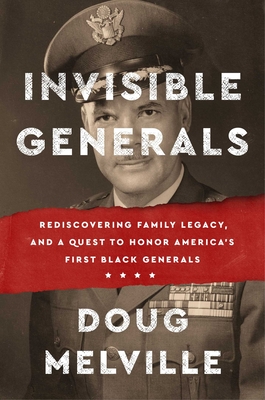
Invisible Generals: Rediscovering Family Legacy, and a Quest to Honor America's First Black Generals
The amazing true story of America’s first Black generals, Benjamin O. Davis, Sr. and Jr., a father and son who helped integrate the American military and created the Tuskegee Airmen. Perfect for fans of Devotion and Hidden Figures.
When author Doug Melville set out to rediscover his family’s story—one of sacrifice and perseverance—a valuable lesson revealed itself as he sifted through five generations of sometimes, you have to be invisible to make history.
Invisible Generals shares Melville’s incredible trip across three centuries, a journey from post-Civil War America to modern-day Europe. He uncovers the lives of two great men who sacrificed much for the country they always believed in, regardless of the hardships they endured. These trailblazers never received the recognition and fame they deserved in their lifetimes because they humbly prioritized service over self.
You’re invited to join Melville’s adventure as he brings these hidden stories into the light, fully honoring his family’s legacy and setting forth valuable examples you can follow as you draw strength from your own reclaimed
- Utilize your ancestors’ victories to broaden your vision of what’s possible today.
- Become a voice for the voiceless, advocating for those who have been silenced.
- Harness the power of perseverance to understand and overcome generational challenges and change the course of your family’s story.
- Build on and grow your family legacy, treating it like the high-value brand it is.
Our stories are America’s story, full of everyday heroes who worked behind the scenes to give their families, communities, and nation a better future—and the world needs to be inspired by them.
When author Doug Melville set out to rediscover his family’s story—one of sacrifice and perseverance—a valuable lesson revealed itself as he sifted through five generations of sometimes, you have to be invisible to make history.
Invisible Generals shares Melville’s incredible trip across three centuries, a journey from post-Civil War America to modern-day Europe. He uncovers the lives of two great men who sacrificed much for the country they always believed in, regardless of the hardships they endured. These trailblazers never received the recognition and fame they deserved in their lifetimes because they humbly prioritized service over self.
You’re invited to join Melville’s adventure as he brings these hidden stories into the light, fully honoring his family’s legacy and setting forth valuable examples you can follow as you draw strength from your own reclaimed
- Utilize your ancestors’ victories to broaden your vision of what’s possible today.
- Become a voice for the voiceless, advocating for those who have been silenced.
- Harness the power of perseverance to understand and overcome generational challenges and change the course of your family’s story.
- Build on and grow your family legacy, treating it like the high-value brand it is.
Our stories are America’s story, full of everyday heroes who worked behind the scenes to give their families, communities, and nation a better future—and the world needs to be inspired by them.
241 pages, Kindle Edition
Published November 7, 2023
About the author
Doug Melville
6 books16 followersDOUG MELVILLE is one of the most innovative voices in corporate diversity – and currently splits his time between the United States and Switzerland, where he is a global head of diversity, equity, and inclusion in the luxury industry.
His first book, Invisible Generals, which tells his family story of America’s first two black generals, a Father and Son – was released on Nov 7 in honor of Veterans Day on Simon & Schuster/Atria/BPP.
His first book, Invisible Generals, which tells his family story of America’s first two black generals, a Father and Son – was released on Nov 7 in honor of Veterans Day on Simon & Schuster/Atria/BPP.
Ratings & Reviews
Friends & Following
Create a free account to discover what your friends think of this book!
Community Reviews
Displaying 1 - 30 of 45 reviews

November 20, 2023
As a old white guy, I’ve felt compelled in my senior years to try to cast off long-held multi-generational assumptions and learn about the realities of the African -American experience, so I’ve been doing a lot of reading. This book sounded interesting.
I love airplanes, my Dad was a WWII aviator and I was fascinated by the “Red Tails”. It never occurred to me that Gen. Ben Davis, one of my heroes, was Invisible.
But his kin, author Doug Melville, makes a persuasive case that Davis, his father Ben Sr. like most African-Americans, have been made invisible by racism.
But instead of bemoaning the situation, Melville decided to follow his relatives’ example and do something about it. This inspired, easy to read book is the result.
My respect for Gen. Davis was heightened, but I also was helped along my personal quest to better understand a reality far afield from my relatively privileged white experience.
I love airplanes, my Dad was a WWII aviator and I was fascinated by the “Red Tails”. It never occurred to me that Gen. Ben Davis, one of my heroes, was Invisible.
But his kin, author Doug Melville, makes a persuasive case that Davis, his father Ben Sr. like most African-Americans, have been made invisible by racism.
But instead of bemoaning the situation, Melville decided to follow his relatives’ example and do something about it. This inspired, easy to read book is the result.
My respect for Gen. Davis was heightened, but I also was helped along my personal quest to better understand a reality far afield from my relatively privileged white experience.

February 10, 2025
Cloud ☁️ 😶🌫️ 🌤 library app
---
Interesting book 📖, Ben and Ali (sp?, audiobook) were incredible, complex, good humans.
I'm in awe of what they accomplished 👏. They deserve all the accolades and recognition.
There were a few things that I had never thought about, they blew my mind in a war.
We need more men like them, especially in the world 🌎 today.
Highly recommend 👌 👍🏼
---
Interesting book 📖, Ben and Ali (sp?, audiobook) were incredible, complex, good humans.
I'm in awe of what they accomplished 👏. They deserve all the accolades and recognition.
There were a few things that I had never thought about, they blew my mind in a war.
We need more men like them, especially in the world 🌎 today.
Highly recommend 👌 👍🏼

January 11, 2024
The author tells the fascinating story of his great-uncle, Ben Davis, Jr. and his great-great uncle, Ben Davis, Sr. (known as Ollie), who were America's first Black generals. They faced and overcame racism to pursue their dreams in the military. Ben, Jr. was finally admitted to West Point (which didn't used to accept Black men), but once there, the other cadets subjected him to "silencing," only speaking to him in the line of duty. No one would room with him, so he lived alone. No one would let him eat at their table in the dining hall, so he ate alone. But he persevered, used his solitary existence to study, and did well in all his courses, except those that required his classmates to talk to him.
Ben wanted more than anything to be a pilot, something that wasn't possible before 1941 when the Army decided to establish an all-Black flying unit. The Army was segregated prior to 1946. Black soldiers did mostly cleaning and cooking, not fighting. Ben nearly didn't get into the flying unit because the flight surgeon who performed his physical reported falsely that he had a history of epilepsy. Headquarters understood why he'd failed the physical and gave him another one, which he passed.
Ben finally became a four-star general twenty-eight years after he retired from the military, but on condition that he receive none of the financial benefits he would have had if he'd been given the fourth star when he should have. Melville estimates that this deprived Ben and his family of about a million dollars.
I don't know how much this book adds to the 1989 biography by Marvin Fletcher, "America's First Black General," although it does add details about the family, including the fact that Ben's wife, Agatha, had a hysterectomy in Tuskegee, something Ben apparently didn't know about. Was this something she consented to, or was she a victim or forced sterilization as so many Black and poor women were, or the overuse of hysterectomies for many medical conditions? This remains a mystery.
I almost didn't read the book because of the business school language at the beginning. The book is diminished by the author's focus on his own achievements and his advice at the end on how to succeed. I'm glad I did read it because the story is so interesting and the retelling of America's racist past (not over yet!) is so important.
Ben wanted more than anything to be a pilot, something that wasn't possible before 1941 when the Army decided to establish an all-Black flying unit. The Army was segregated prior to 1946. Black soldiers did mostly cleaning and cooking, not fighting. Ben nearly didn't get into the flying unit because the flight surgeon who performed his physical reported falsely that he had a history of epilepsy. Headquarters understood why he'd failed the physical and gave him another one, which he passed.
Ben finally became a four-star general twenty-eight years after he retired from the military, but on condition that he receive none of the financial benefits he would have had if he'd been given the fourth star when he should have. Melville estimates that this deprived Ben and his family of about a million dollars.
I don't know how much this book adds to the 1989 biography by Marvin Fletcher, "America's First Black General," although it does add details about the family, including the fact that Ben's wife, Agatha, had a hysterectomy in Tuskegee, something Ben apparently didn't know about. Was this something she consented to, or was she a victim or forced sterilization as so many Black and poor women were, or the overuse of hysterectomies for many medical conditions? This remains a mystery.
I almost didn't read the book because of the business school language at the beginning. The book is diminished by the author's focus on his own achievements and his advice at the end on how to succeed. I'm glad I did read it because the story is so interesting and the retelling of America's racist past (not over yet!) is so important.

February 12, 2024
This was more of a personal retelling of ancestry and the many accomplishments they made rather than a memoir. I didn’t finish the very end because the last chapter turns into more of a self help book on how to inspire you to share your family story and brand yourself.
I don’t like the military but thought it would be important to look into black experiences in the military. Particularly because in my undergrad, we had to talk about the discrimination and sexual harassment within the military and confront any biases we had towards certain populations. I personally don’t care for the military but I thought maybe this would put more things in perspective. It didn’t. This book is very contradictory because although it highlights these men did great things for their country it also repeats the fact that they did so because they weren’t given credit and were essentially “invisible.” Their mantra is to “change the system from the inside.” And with their personal goals of wanting to become a general for example,
like job well done you did it, but at what cost? Being mistreated by your peers, used and abused by your country, and never getting the proper acknowledgment that you should? Part of me wants to feel bad but generation after generation, maybe you should pick a different career path instead of suggesting your child endure the same bullshit. Also- them bringing up the Vietnam war and the general being sent to “diffuse” the situation on college campuses but not giving anymore info on the matter. How does one “diffuse the situation” of college kids getting killed for protesting? By coercing them and using propaganda? Or threatening them and killing them?
I thought this would delve into how black men were coerced into fighting in the civil war but thats on me because I just skimmed the back and took it home. I also blame Barnes and Nobles for not having a table for Black History Month, I really had to wander to find something.
I don’t like the military but thought it would be important to look into black experiences in the military. Particularly because in my undergrad, we had to talk about the discrimination and sexual harassment within the military and confront any biases we had towards certain populations. I personally don’t care for the military but I thought maybe this would put more things in perspective. It didn’t. This book is very contradictory because although it highlights these men did great things for their country it also repeats the fact that they did so because they weren’t given credit and were essentially “invisible.” Their mantra is to “change the system from the inside.” And with their personal goals of wanting to become a general for example,
like job well done you did it, but at what cost? Being mistreated by your peers, used and abused by your country, and never getting the proper acknowledgment that you should? Part of me wants to feel bad but generation after generation, maybe you should pick a different career path instead of suggesting your child endure the same bullshit. Also- them bringing up the Vietnam war and the general being sent to “diffuse” the situation on college campuses but not giving anymore info on the matter. How does one “diffuse the situation” of college kids getting killed for protesting? By coercing them and using propaganda? Or threatening them and killing them?
I thought this would delve into how black men were coerced into fighting in the civil war but thats on me because I just skimmed the back and took it home. I also blame Barnes and Nobles for not having a table for Black History Month, I really had to wander to find something.
February 21, 2024
This book is ideal for Black History Month, shedding light on the challenges faced by the pioneering Black Generals whose struggles still persist today. Shockingly, as of 2020, only 6.5 percent of Generals are African American. Here's hoping that one day, this statistic becomes irrelevant.

December 10, 2023
General Benjamin O. Davis Sr. & General Benjamin O. Davis Jr… PEERLESS!!!
Grace and elegance personified. This was one of those books that makes you tear up cause the trials and tribulations just seem so outlandish, unfathomable, down right awful!!! I’m hurt to know that the very institution that I serve in created such spaces for these men to not only question their worth but to question themselves… little did they know, the willpower bestowed upon these men was cut differently. I’ve had O’Day’s Autobio for some time now and after reading this book, I’ve now added it to my bedside pile and it WILL be read just as soon as I finish Four Seasons cause this is my history too! Shout out to these leaders, black men in the DoD that made it do what it do. 🙌🏽✨
Grace and elegance personified. This was one of those books that makes you tear up cause the trials and tribulations just seem so outlandish, unfathomable, down right awful!!! I’m hurt to know that the very institution that I serve in created such spaces for these men to not only question their worth but to question themselves… little did they know, the willpower bestowed upon these men was cut differently. I’ve had O’Day’s Autobio for some time now and after reading this book, I’ve now added it to my bedside pile and it WILL be read just as soon as I finish Four Seasons cause this is my history too! Shout out to these leaders, black men in the DoD that made it do what it do. 🙌🏽✨

January 20, 2024
I liked this book but had to adjust from my assumptions about what it would be. I assumed it would be a historical deep dive unearthing the true Davis family legacy from decades of racist cover-ups, but it instead was more about the author’s professional life and work to establish the Davis family brand, trademarks, estate…. How to do so for yourself and your family…. And an advertisement for the author’s advertising/DEI career and accomplishments. It’s all completely understandable to seek to cement the Davis family legacy after decades of racism and invisibility, especially after what they suffered being leaders in a military that didn’t acknowledge their humanity; but this was not really a memoir, it could be part of a reading list for a brand/corporate strategy course in business school. The parts about the West Point barracks naming process were new to me. It was insightful and interesting but I’m now going to seek out other books to fill out my knowledge about Benjamin O. Davis Jr. and Sr.

September 12, 2024
I stopped reading when I got to the Epilogue. I enjoyed reading about these hardworking men. It is disheartening what they had to put up with in their every day life because of race. The author of the book is the grandson of the most successful General talked about in this book. His grandfather wasn't paid fairly, and he had to do so much more then a white man would to become successful. I found it odd that well after his Grandpa Ben's death and after Ben seemed to make peace with things, that his grandson Doug continues to be obsessed with money. Is it bullshit that this happened in our country's history? Yes. Was General Ben Davis the only one not paid their worth? Absolutely not. I just hope that we can guarantee nothing like this happens today, and that we learned from it. Ben was at peace and agreed to his 4th star with no extra wages, so why should his grandson still be bitching about it decades later? RIP General Davis, you are an inspiration.

January 4, 2024
Aptly titled. Not so much a history or memoir but a motivational book to inspire. This book radiates passion, love, thoughtfulness, goodness, patience, persistence, and service. An intimate glimpse and voyage of discovery into a grandson discovering the depths of his ancestors total dedication to America despite being treated as second class citizens.

July 12, 2024
Very powerful story, both of the injustices the Generals Davis suffered during their careers but also how their great-nephew, the author, fought for their legacies. And Melville included tips for advocating for your own family legacies in a section near the end.

December 6, 2023
Read all of my reviews at bit.ly/PageBedtime
I first learned of Invisible Generals when I heard the author, Doug Melville, discussing the book on "The Daily Show." Then, a day or so later, I heard him talking about the story of his grandfather and great-grandfather - the U.S. Air Force's first Black American generals - on "The Breakfast Club" radio show. I was really intrigued by what he had to say and how the movie "Red Tails" did not properly give these two trailblazers credit. I had a Audible credit to burn, so I purchased a copy. (It didn't hurt that Melville has a nice speaking voice and narrated the audiobook.) I also shared the book's synopsis with my husband, who's a retired U.S. Army veteran, and he started listening with me. We both thoroughly enjoyed this accurate re-telling.
And that's basically the story of how I came to know and learn about Benjamin O. Davis, Sr. and Benjamin O. Davis, Jr., a father and son who helped integrate the U.S. military and were pivotal in founding the Tuskegee Airmen.
Like most stories from this time period, the Davis' were each met with their own struggles and challenges to pave the way in a world that viewed them as less than simply because the color of their skin. Melville gives some background on how his great-grandfather persevered, but the bulk of the book focuses on Benjamin O. Davis, Jr., who overcame insurmountable obstacles - physical, mental, and racial - to begin a career at West Point, while being shut-out by his white peers, and then to build an outstanding military career throughout several decades and leave a lasting legacy. I think the thing that makes this book inspirational as well as educational is that both generals and their families operated in grace even when grace was not reciprocated. My favorite line from Melville's book is when he mentions that Davis, Jr. and his wife always believed in leading with joy. That's powerful, especially during a time when you could say there wasn't much fairness or happiness. I am not related to this family, but I am proud of the accomplishments that were made as if they were my own. This was a story that had to be told, and I'm thankful the author invested the time and worked diligently to get the book published.
I truly enjoyed the way this story was presented. It was easy to follow, even in audio format, well-written, and it was a joy to listen to Melville because his passion for his ancestors permeates throughout the story. He is doing an excellent job of honoring their legacy in his own, albeit, civilian way.
Recommendation: I highly recommend listening or traditionally reading this story. It's inspiring, impressive, and simply wonderful to learn about people who achieved greatness and paved the way for many of us today.
Until next time ... Read on!
Regardless of whether I purchase a book, borrow a book, or receive a book in exchange for review, my ultimate goal is to be honest, fair, and constructive. I hope you've found this review helpful.
Read all of my reviews at bit.ly/PageBedtime
I first learned of Invisible Generals when I heard the author, Doug Melville, discussing the book on "The Daily Show." Then, a day or so later, I heard him talking about the story of his grandfather and great-grandfather - the U.S. Air Force's first Black American generals - on "The Breakfast Club" radio show. I was really intrigued by what he had to say and how the movie "Red Tails" did not properly give these two trailblazers credit. I had a Audible credit to burn, so I purchased a copy. (It didn't hurt that Melville has a nice speaking voice and narrated the audiobook.) I also shared the book's synopsis with my husband, who's a retired U.S. Army veteran, and he started listening with me. We both thoroughly enjoyed this accurate re-telling.
And that's basically the story of how I came to know and learn about Benjamin O. Davis, Sr. and Benjamin O. Davis, Jr., a father and son who helped integrate the U.S. military and were pivotal in founding the Tuskegee Airmen.
Like most stories from this time period, the Davis' were each met with their own struggles and challenges to pave the way in a world that viewed them as less than simply because the color of their skin. Melville gives some background on how his great-grandfather persevered, but the bulk of the book focuses on Benjamin O. Davis, Jr., who overcame insurmountable obstacles - physical, mental, and racial - to begin a career at West Point, while being shut-out by his white peers, and then to build an outstanding military career throughout several decades and leave a lasting legacy. I think the thing that makes this book inspirational as well as educational is that both generals and their families operated in grace even when grace was not reciprocated. My favorite line from Melville's book is when he mentions that Davis, Jr. and his wife always believed in leading with joy. That's powerful, especially during a time when you could say there wasn't much fairness or happiness. I am not related to this family, but I am proud of the accomplishments that were made as if they were my own. This was a story that had to be told, and I'm thankful the author invested the time and worked diligently to get the book published.
I truly enjoyed the way this story was presented. It was easy to follow, even in audio format, well-written, and it was a joy to listen to Melville because his passion for his ancestors permeates throughout the story. He is doing an excellent job of honoring their legacy in his own, albeit, civilian way.
Recommendation: I highly recommend listening or traditionally reading this story. It's inspiring, impressive, and simply wonderful to learn about people who achieved greatness and paved the way for many of us today.
Until next time ... Read on!
Regardless of whether I purchase a book, borrow a book, or receive a book in exchange for review, my ultimate goal is to be honest, fair, and constructive. I hope you've found this review helpful.
Read all of my reviews at bit.ly/PageBedtime
February 13, 2024
In my experience as a USAF veteran, I was familiar with America's pioneering Generals, Benjamin O. Davis Sr. and Jr. However, I didn't initially realize they were father and son. While I knew about Benjamin Davis Sr.'s groundbreaking role as the first Black general, I was unaware of his service as a Buffalo Soldier. Similarly, I knew Benjamin O. Davis Jr. as the first four-star general, but I didn't realize he commanded the Tuskegee Airmen. This book delves deeply into the lives of these two remarkable men, shedding light on their experiences, their marginalization, and the ongoing efforts of their family to preserve and share their legacies. Reading about the injustices they faced was difficult, yet valuable, especially as their stories are recounted by a family member within the broader context of history and global events. Over all I enjoyed this book and encourage everyone to read it or listen to the audiobook.

December 16, 2023
Doug Melville decided to let the world know about his extraordinary ancestors. His grandfather and his great-grandfather were both 4 star generals, an amazing accomplishment in the segregated air force at the time. His great-grandfather's last star was actually presented many years after he retired. For a black family at the time, they were incredibly secure living a middle class life and building equity through home ownership. They earned their career success through hard work and the ability to rise above the prejudice they suffered. Through Doug's work, they have recently been honored. The story is actually better than the book and I skipped the advice section in the back.
November 9, 2023
Praise God this story is now visible
This is an incredible story often lost in African American and honestly the history of many Americans as the Davis father and son esteemed to be seen as just that, proud Americans. They loved their country dearly and found meaning by serving in the armed forces paving the way as a foundational bridge for those that would come after them. This book is a must read, the invisible story that would have gone unknown without the author’s craving for understanding of his incredible lineage.
This is an incredible story often lost in African American and honestly the history of many Americans as the Davis father and son esteemed to be seen as just that, proud Americans. They loved their country dearly and found meaning by serving in the armed forces paving the way as a foundational bridge for those that would come after them. This book is a must read, the invisible story that would have gone unknown without the author’s craving for understanding of his incredible lineage.
April 5, 2024
Amazing and Inspiring
This book was wonderful and a truly enjoyable read. As both a graduate from Tuskegee University and a young black engineer learning to navigate the corporate world this book was inspiring. I was amazed at the role Ben and Olli played in creating the Tuskegee Airmen and the hardships the endured in their career. This book made appreciate even more what our ancestors sacrificed for us to have the opportunities we have today and empowers me to keep pushing for success in my career.
This book was wonderful and a truly enjoyable read. As both a graduate from Tuskegee University and a young black engineer learning to navigate the corporate world this book was inspiring. I was amazed at the role Ben and Olli played in creating the Tuskegee Airmen and the hardships the endured in their career. This book made appreciate even more what our ancestors sacrificed for us to have the opportunities we have today and empowers me to keep pushing for success in my career.

December 22, 2024
This book was definitely a 4 or 5 stars—I can’t quite remember which, but the story was incredible. Learning about the father-son pioneers in the Army and Air Force was not something I expected, but I’m so glad I read it.
Black people have endured so much, and books like this are crucial for keeping the next generation informed. A huge thank you to the author and the publishing team for bringing us such a powerful read.
That said, I don’t agree with the name change of Aunt Jemima, but that’s just my personal opinion.
Black people have endured so much, and books like this are crucial for keeping the next generation informed. A huge thank you to the author and the publishing team for bringing us such a powerful read.
That said, I don’t agree with the name change of Aunt Jemima, but that’s just my personal opinion.
January 11, 2025
If you want to learn about Generals Benjamin O. Davis Sr. and Jr. this is not the book for you. There’s a little on that, but you’ll be disappointed by the lack of detail (4 pages on Davis Jr’s wartime leadership of the Red Tails!). This is more a book about discovering a family’s legacy and keeping it alive, if that interests you, you’ll very much enjoy this book. Personally, I was pretty disappointed because I really wanted to learn more about the Generals. Bottom line, it’s a “skip it” for me
May 7, 2025
This is an interesting book. It kind of glosses over the actual achievements of the two men. Oliver, Ben's dad was in the 9th cavalry, one of the "Buffalo Regiments", fighting Indians in the West. As an officer, I'm sure he had some events there, especially with "Black Jack" Pershing's encroachment into Mexico.
Ben, leading the "Red Tails" in North Africa and Italy, he certainly had some things that would make the book more interesting.
There were a lot of interesting things concerning Family artifacts and Government museums, that I didn't know.
Ben, leading the "Red Tails" in North Africa and Italy, he certainly had some things that would make the book more interesting.
There were a lot of interesting things concerning Family artifacts and Government museums, that I didn't know.

May 7, 2026
There is so much repetition and endless padding. This felt like a magazine article or a quick read on a website turned into a 240 page book. Like i really didnt need to read ten different ways on how you used google and facebook to look up ancestry accounts.
Great history bogged down by awful pacing.
I can appreciate the passion, the motivation, and the goal but this didnt need to be a book in this style. The entire quest could have been condensed into a forward or an epilogue, and then the actual book should have been focused on the Generals and the military campaigns.
Great history bogged down by awful pacing.
I can appreciate the passion, the motivation, and the goal but this didnt need to be a book in this style. The entire quest could have been condensed into a forward or an epilogue, and then the actual book should have been focused on the Generals and the military campaigns.
November 24, 2023
If you have wondered what effect institutional racism might have on the lives of even prominent Black men and women in in this country, read this book. If you've seen the movie, Red Tails, read this book.
Except for Melville interjecting himself in to the story, this is a chronicle of one Black family's role in American military and civilian life. It is well worth the read.
Except for Melville interjecting himself in to the story, this is a chronicle of one Black family's role in American military and civilian life. It is well worth the read.

January 12, 2024
I knew a little about the Generals Davis but even less than l thought. It was good to learn so much more from this look from within the family and both disheartening and heartening in almost equal measure to learn with certainty how shoddily the military treated these honorable Americans and how they persevered and contributed.
February 23, 2024
Some of the stories riveted my attention and sent me looking for more information about the Red Tails -- the Tuskegee Airmen. What honorable, inspiring men to have as ancestors.
The book's second section is a tutorial in how to uncover one's own family stories, something near and dear to my heart.
The book's second section is a tutorial in how to uncover one's own family stories, something near and dear to my heart.
November 26, 2024
A very interesting story about black generals in the U.S. Army and how a grandson of one of them worked to get them recognized and visible. A quick read. Interesting side note, the author (as Chief Diversity Officer of his company) was able to influence several of the corporate decisions related to DEI in the early 2020s (Land of Lakes butter, buttermilk syrup).

February 24, 2025
This book is a really good one for college or high school students to read. It’s a memoir/guidebook that explores family history, social contribution, and living with intention. I thought it would be more of an extensive biography of the generals, so was a little disappointed. But taken for what it is - memoir and guidance, it did a great job.
August 19, 2026
Interesting read.
Story itself is representative of various situations throughout America during the time is less proud .
I felt the author was completing some Family History research and very proud of his very capable and strong and committed relatives.
A story that needed to be told and I’m glad I read it
Story itself is representative of various situations throughout America during the time is less proud .
I felt the author was completing some Family History research and very proud of his very capable and strong and committed relatives.
A story that needed to be told and I’m glad I read it

December 4, 2023
Very good book. I don't agree with some of the information but not everyone agrees on everything. Mostly, a great read. Well written and easy to follow along. Not to loaded with mindless dribble. I would definitely recommend.
August 5, 2025
I find most non-fiction books hard to get through but this one was quite entertaining. I loved that despite being at a disadvantage the Davis family lineage found ways to prevail and inspire those around them.

December 30, 2023
More history not taught in schools. Good coverage of minority Americans who have slighted by their country.

January 10, 2024
Didn't like the narrator nor the 45 minutes of acknowledgements.
January 23, 2024
An amazing story of a Man and his son both which became generals. Truly inspiring for all ages. Also a blue print on maintaining a family's legacy each of us can follow
Displaying 1 - 30 of 45 reviews