In “Twelve Who Don’t Agree”, journalist Valery Panyushkin profiles twelve Russians from across the country’s social spectrum: a politician, a journalist, an army officer, an author, a bank manager, a labourer, a university student… Despite varied backgrounds, they all have one thing in common—participation in the historic March of the Dissidents. Held in 2007 to protest the eroding state of affairs in Russia, the March was held in flagrant violation of increasingly stringent laws forbidding public demonstrations. Though each of these men and women had personal reasons for joining the demonstration, they shared a belief that the government of Vladimir Putin was betraying the promise of Russia’s future.
Per certi versi sembra un film: un antefatto, la presentazione dei personaggi, le loro storie personali che li hanno riuniti lì nello stesso posto (e sono dodici ottimi film a se stanti – come se fossero le diverse anime del paese), l’attesa dell’epilogo.
Se fossimo in un film, o in un paese normale, l’epilogo vedrebbe probabilmente i nostri dodici eroi artefici di una bella impresa, dell’happy ending che tutto il marcio cui abbiamo assistito fin qui spinge naturalmente a desiderare.
Ma non è un film.
Qualcuno li fa. E poi li accoppia.
E la Russia non è un paese normale: parafrasando Gandhi, il motto dello Stato russo sembra essere “Prima ti derido. Poi ti picchio. E poi ti tolgo tutto quello che hai”. Tanto, tu cittadino, non conti nulla.
Eppure, la Russia è membro permanente del consiglio di sicurezza dell’ONU: non dovrebbe somigliare un po’ di più a un paese ‘normale’?
Ma cosa ne so io, che sono italiano, di paesi normali?
Libro notevole, pieno di ironia, nonostante il dramma in corso.
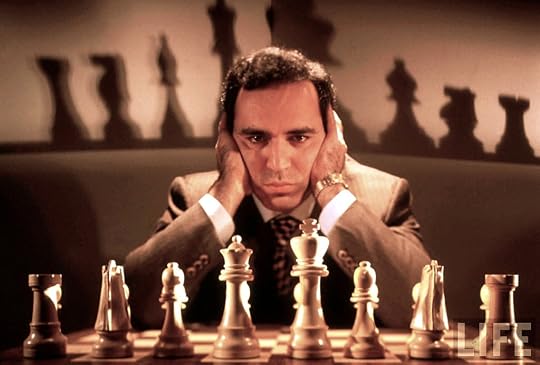
Tra i 12, uno dei manifestanti arrestati è l’ex campione di scacchi Garry Kasparov.
Valerij Panjushkin è un giornalista russo piuttosto noto, è stato inviato per Kommersant e Vedomosti, è corrispondente della rivista Snob e tiene una rubrica su Gazeta.ru. Qui parte dal 15 aprile del 2007, il giorno della Marcia dei Dissidenti, il giorno in cui l’opposizione a Putin scese in piazza a San Pietroburgo e fu duramente repressa, mette insieme i ritratti di dodici protagonisti della manifestazione, e così facendo ci racconta il clima che si vive attualmente nel paese.
Viene da concludere che molti russi abbiano accettato di scambiare la sicurezza con la democrazia, accettando in nome della paura del terrorismo e dell'instabilità politica (il Caucaso) la progressiva deriva autoritaria incarnata da Putin. Hanno, cioè, barattato i diritti civili con la sicurezza e i supermercati riforniti. Gli omicidi di giornalisti, gli arresti degli oppositori politici, i pogrom contro gli immigrati provenienti dal Caucaso si moltiplicano: eppure la situazione dei diritti civili non desta allarme nella popolazione.
Valerij Panjuskin
La verità sembrerebbe essere che moltissimi russi non sappiano che farsene dei diritti civili, non ne hanno bisogno perché in realtà non sanno bene che cosa sono e a cosa servano, non ci sono abituati: sono invece abituati ad avere ancora un rapporto con lo Stato che viene dritto dalla tradizione sovietica, e quindi, si sentono in qualche modo dei "dipendenti" dello Stato e non sono abituati a fare troppe storie, almeno fino a che le cose non cominciano ad andare veramente male sul piano economico. Se nell'era di Boris Eltsin, a comprarsi le ville a Forte dei Marmi e i voti in Parlamento erano gli oligarchi, i boss dell'economia e del petrolio, oggi le stesse case le comprano i dirigenti dello Stato: funzionari che ufficialmente guadagnano poche migliaia di euro al mese ma che hanno sempre una moglie, un fratello, un figlio o un qualche tipo di parente che dirige una società che lavora proprio per conto del loro ministero - per esempio, l'ex sindaco di Mosca, Luzhkov, appaltava all'impresa edile di proprietà della moglie la costruzione di edifici pubblici, e a un certo punto la signora era diventata la donna più ricca del paese - la stessa cosa si può dire per quasi tutti i ministri di Putin, a nessuno di loro manca un parente che faccia affari con lo Stato che loro stessi rappresentano.
Un altro libro di Valerij Panjuskin tradotto in italiano, anche questo pubblicato dalle Edizioni e/o.
This book surprised me. It is quite easy to read yet very entertaining and page turning. However, it is also very haunting as the situations described are so frustrating yet ring true to modern Russian politics. Would recommend if you are interested in this topic but don't know where to start.
Structured around a fictionalized meeting of twelve Russian dissidents amid the 2007 protests who 'meet,' at an inn between Moscow and St. Petersburg, this book, as the title suggests, provides 12 very real accounts of the stories of Russian dissidents, who are against the current regime. As is always the case with such works I found some of the accounts to be more interesting than others. However, I found it especially interesting for its illumination of the 'back handed' manner in which the modern power structures and security apparatus of the Russian state work, while giving some stranger-than-fiction, slice of life factoids. The accounts show how in some ways state media/propaganda policies are re-tooled versions of of the same ones that existed during the 1980s, by following many of the dissidents stories from the time just before perestroika up through the Putin era. By running the gamut of accounts across the political spectrum the author seems to be making the point that the opposition can be it's own worst enemy against a very united government; I would have like to see this analyzed a bit more in-depth.
Simply stellar book about the dissenters' movement of Putin's Russia. It's nonfiction, but reads easily, and if you're interested, it will keep you spellbound throughout. You can opt for the short summary/review or click on through to the longer one.
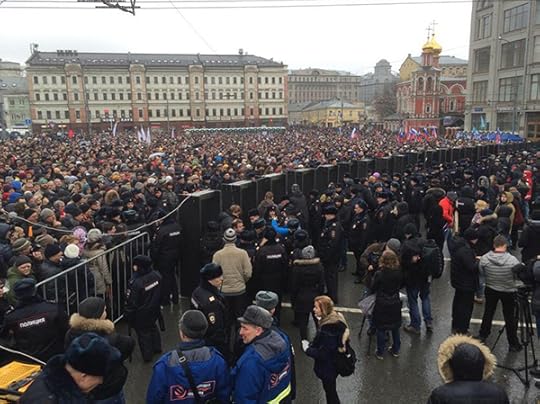
In 12 Who Don't Agree, Russian journalist Valery Panyushkin gathers together the individual stories of several Russian dissidents, linked together in various ways, especially as participants in the March of the Dissidents of 2007. The first of these protest marches was in held in Petersburg, and was only one of a series of planned events prior to the presidential election of 2008. Their intention was to call attention to their opposition to the social, political and economic policies of then president Vladimir Putin. During the first march, which was considered a "success" by its organizers (including Garry Kasparov, Russian dissident and former world-chess champion), the authorities called out the OMON (a police special forces unit), who reacted with violence against some of the protestors, but before the march was over, according to one observer, a "crowd of 10,000 had broken through the police cordons onto Nevsky Prospect... a human river as far as the eye could see, ... friends and comrades in arms free, strong, and dissenting." While much of the violence was officially blamed on the organizers, provocateurs hired by the regime took their place in the crowds, holding signs and stirring up trouble to make the protestors look bad. And all of this after the fall of the Wall and the end of totalitarian rule.
Supposedly.
All of the individual stories in this book deal with the gradual erosion of freedoms, human rights violations, threats, and other events that made these protests necessary as these individuals (and others) began to realize that "...we had returned to the Soviet Union, to a life we knew. When, no matter who you were, you could not have any effect on the regime or rise to power." These narratives also deal with the government's efforts to crack down on any form of public protest, as well as measures taken to edge out any real political opposition to the Kremlin, including censorship of opposition viewpoints and changes in the election laws. Did you know, for example, that in Russia, it's illegal to have more than one person picketing at a time? Add another person and you're violating the law, with jail time as a result. And did you know that there are people hired by the Kremlin to come up and stand with a solitary picketer, which ends the picket and makes the picketer a criminal? And now that another round of elections are coming up, and Putin is planning to run, well, the world should be watching. And then what happens with the protests come to a halt altogether?
If you are politically inclined or are interested in the state of human rights around the globe, this is a definite must-read that gets well beyond news stories we listen to with only half an ear (if at all, since it's not about us). The book starts out a bit slowly, but as Panyushkin gets through the intrigue, the political plays, injustices and protection of oligarchical interests of the government, he also gets into the hearts and minds of these eleven people as they try to find a vehicle for expression and change. He often exercises humor that doesn't belie the seriousness of what he's saying. Sometimes the narrative gets a bit bogged down and I found myself going to the internet for dates, etc., but for the most part, it's easy to read and to understand. And with what's happening around the globe, it's timely. Definitely and most highly recommended.
12 persons. 12 stories. All unique, yet intertwined by the same regime, same person, same ideas. The first book I read about Russia's post-Soviet regime, and it was informative for one who doesn't know anything about it. Definitely not objective, but really interesting perspectives, and with good narrative.
Indicazioni editoriali È la vigilia della Marcia dei Dissidenti indetta per il 15 aprile 2007 a San Pietroburgo: il giorno prima si è tenuta un’identica marcia a Mosca, risoltasi in innumerevoli arresti grazie a un incredibile spiegamento di forze di polizia e a un accorto uso di infiltrati e provocatori, per far credere ai militari e all’opinione pubblica che i pacifici dimostranti fossero in realtà pericolosi facinorosi al soldo degli imperialisti americani.
Valerij Panjushkin ci presenta in dodici cammei i portavoce delle varie anime dell’altra Russia e, insieme a loro, ci racconta le storie irrisolte della Russia contemporanea, quella che a fatica trapela sui giornali occidentali: il caos dopo la caduta del comunismo, la crisi economica, le nuove oligarchie economiche, la funesta gestione dell’attacco terroristico alla scuola di Beslan, finito in un massacro, le manovre poco chiare attraverso cui Putin e Medvedev sono arrivati al potere. Tanto disparate sono le storie pregresse e gli orientamenti politici di questi oppositori, tanto unanime è ciò che li muove: la rabbia e l’insoddisfazione di fronte al regime poliziesco e corrotto imperante in una Russia in piena crisi economica, un paese in cui la maggior parte dei cittadini si disinteressa alla politica perché troppo presa dalla sopravvivenza quotidiana, in cui bisogna ricorrere allo stratagemma dei sit-in “in solitaria” per aggirare il divieto di assembramenti non autorizzati con conseguenti manganellate e arresti arbitrari.
This book came out several years before Russia annexed Crimea and a good decade before the recent invasion of Ukraine, so it’s both informative and eerie to read these accounts when things were bad for the opposition, but there was still hope. Boris Nemtsov was still alive and while he’s not one of the twelve portrayed, he is still present in some of these accounts. I really liked how the author wove these essays together as part of his own narrative at the beginning and at the end. Europa Editions always has great publications and this one does not disappoint.
Sounds fascinating - focusing on the diverse lives of twelve people who were all part of the March of the Dissidents in 2007 Russia - but it was just too disjointed for me to get into. Also I realize how much of my brain was sucked out when I had four toddlers at home and therefore much of the background of the book in the 1990s I missed. It was good for me to look it all up but it took so much time to read up on the background that I just couldn't really appreciate this book.
Indubbiamente interessante, ma purtroppo non conosco abbastanza i fatti politici russi per districarmi fra le storie narrate. Ho bisogno di un corso accelerato di recupero!