

What do you think?
Arthurian Studies
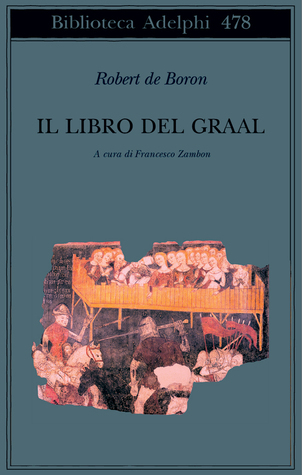
Il Libro del Graal. Giuseppe di Arimatea - Merlino - Perceval
Poche storie sono state tanto feconde di sviluppi e hanno lasciato un’impronta così profonda e duratura come quella del Graal, il recipiente con cui Gesù celebrò il sacramento eucaristico e nel quale Giuseppe di Arimatea, suo primo custode, avrebbe raccolto il sangue del Salvatore dopo la crocifissione. E tuttavia pochi hanno una diretta conoscenza del testo fondatore del mito, quel Libro del Graal che è anche, in assoluto, il più antico romanzo in prosa della letteratura francese. Nella trilogia narrativa che lo compone – databile ai primissimi anni del XIII secolo e almeno in parte basata su alcuni poemi, giunti a noi frammentariamente, del borgognone Robert de Boron –, la vicenda del Graal assume il carattere di una vera e propria Storia della Salvezza, di cui sono protagonisti i membri di una stirpe eletta da Dio che si trasmette, insieme al sacro calice, una rivelazione esoterica riguardante i misteri più alti della fede. La reliquia verrà poi trasferita in Gran Bretagna, dove sarà al centro delle avventure dei cavalieri della Tavola Rotonda – e qui si staglierà la figura di Merlino, profeta del Graal e guida di re Artù –, per essere infine consegnata al suo terzo e ultimo custode, Perceval. La visionaria «teologia della storia» costruita da Robert de Boron resterà alla base dei vasti cicli romanzeschi composti successivamente – ma forse nessuno di questi attinge la densità simbolica e religiosa del Libro del Graal, che al tempo stesso incanta con una varietà di toni narrativi di sorprendente ricchezza.
343 pages, Paperback
First published January 1, 1199
About the author
Robert de Boron
48 books9 followersRobert de Boron (also spelled in the manuscripts "Bouron", "Beron") was a French poet of the late 12th and early 13th centuries who is most notable as the author of the poems Joseph d'Arimathe and Merlin. Though little is known about him outside of the poems he allegedly wrote, his works and their subsequent prose redactions impacted later incarnations of the Arthurian legend and its prose cycles, particularly due to his Christian backstory for the Holy Grail, originally an element of Chretien de Troyes's famously-unfinished Perceval.
Ratings & Reviews
Friends & Following
Create a free account to discover what your friends think of this book!
Community Reviews
Displaying 1 - 27 of 27 reviews

August 9, 2017
Il Graal, Artù, Merlino... ecco il libro che ha dato vita ad una delle saghe più longeve ed appassionati della storia. Considerato da molti come il primo romanzo in prosa della letteratura francese, è giunto a noi incompleto, ma quel che c'è basta e avanza per soddisfare tutti gli appassionati di questo mito. Dalla storia di Giuseppe d'Arimatea a quella di Mago Merlino, creatura per metà demoniaca, concepito dal Male in persona, ma salvato dalla fede della madre. E poi il mito di Artù e della Tavola Rotonda, di Perceval e del Re Pescatore; insomma, una pietra miliare per conoscere il ciclo arturiano e la leggenda del Santo Graal. Un libro in cui fede e mito si fondono per indicare agli uomini la via della salvezza.

April 28, 2023
This Arthurian cycle, sometimes referred to as the Little Grail Cycle, adds substantial backstory, detail, and lore to the Arthurian legends. The man these three stories are attributed to, Robert de Boron, might not have authored all three. He might not have authored any of them. There seems to be some mystery as to whether he authored the first two, and a growing consensus that he did not author the third. But if he didn’t write them, it’s not known who did. For simplicity I’ll assume he’s the author.
Robert borrows heavily from Geoffrey of Monmouth’s legend-building myth-history published decades earlier, in his handling of Merlin and Arthur, and from Chrétien de Troyes’ developments of Perceval and the Grail. He builds off of these and ties together many threads of existent Arthurian lore that, before this point, had not been connected into a seamless whole. He places the genesis of all Arthurian legend in the time of Jesus, framing the Holy Grail and the bleeding lance in Biblical mythos. Merlin is conceived as a consequence of the events that unfold here. He plays a crucial role in uniting the Grail with Arthur and Perceval and the engrossing quests that were central to these romances. Robert, or whoever wrote this trilogy of tales, was responsible for a major leap in the legends of Arthur.
Chrétien de Troyes left his tale of Perceval unfinished. It was such an enigmatic and puzzling story that many came along to try to finish it. Robert de Boron doesn’t just finish it, he gives a purpose and mythic significance to the grail and the lance that were never made known in the original story. He unites Geoffrey’s Arthur and Merlin to Chrétien’s Perceval, bringing together the creations of arguably the two most significant figures in the evolution of Arthurian romance.
The lance bleeds from the tip because it is the spear with which Longinus stabbed Jesus in the ribs. The grail is holy because it is the vessel in which Joseph of Arimathea collected Jesus’ blood after he pulled his body off the cross.
The Round Table, too, has its origins in Biblical history, in Robert’s telling. Arthur’s is to be the third, modeled after a round table at which Jesus had his last supper with his supporters — one space left empty, signifying a traitor. A second round table was then built by Joseph, also to seat the faithful, and an empty seat signifying a traitor, a false believer, who, if deciding to sit at this seat, is cast into the abyss. So Arthur’s round table, many years later, is supposed to signify this, and its empty seat will be one day filled by a hero who has proven himself. It is no secret this hero will be Perceval.
At the end of the Joseph of Arimathea story, Jesus descends into Hell and frees Adam and Eve and generations of sinners. This is an outrage to the demons, who take their revenge through a conspiracy: impregnating a woman with Merlin. His all-seeing knowledge of all that has happened in the past comes from his demonic parentage, but the intervention by angels gives him the ability of prescience, making him the most powerful prophet in the world. The story of Vortigern’s tower, taken from Nennius and Geoffrey, is retold here with new life and a thoughtful back story that reveals more of Merlin’s childhood, character, and shape shifting abilities, seemingly a nod to his characterization in Taliesin’s poems, or those from the Black Book of Carmarthen.
Merlin’s involvement in the conception of Arthur, by disguising Utherpendragon as his Duke in order to gain entry to Tintagel and to trick the duke’s wife, is similar to how it appears in Geoffrey’s telling, but again with more back story and fleshing out. Merlin becomes a central figure in the book, whose oversight is known even when his presence is not. A new backstory is also provided for Arthur’s childhood, clarifying and elaborating on his relationships with most of his best known knights and men, like Kay, his foster brother, Gawain his nephew, and others.
Although there’s a lot of material added here by Robert that would go on to shape Arthurian legend, perhaps the most enduring and iconic thing introduced by Robert is the sword in the stone motif. Arthur casually pulls this sword from the stone and anvil that is to show who will be the true king of Britain. After many great men and knights have failed, Arthur succeeds without effort. He returns the sword to the stone st his foster father’s command, where it still poses a challenge for all men. Only Arthur is able to remove it, and thereby he becomes king.
The story of Perceval is changed from Chrétien’s, leaving out much of his boyish ignorance and stupidity, presenting him instead as an already heroic youth who is destined for greatness. Other mysterious aspects of the original are cleared up or left out entirely. Robert’s thorough fleshing out of many of the peculiar aspects of the original makes a cool contrast, still with enigmatic and enchanting puzzles, but filling in so many gaps that what was once dreamlike and esoteric is now a bit more grounded and cohesive. Less alluring in some ways, but still riveting and magnificent. Perceval’s quest has just as many diversions and distractions as one remembers from the earlier tale, and Gawain’s adventures that eventually take over much of the original narrative are nowhere to be seen. Merlin continues to guide our heroes, first Arthur, then Perceval, and again Arthur, after Perceval’s climb to lordly heights as the new Fisher King.
Arthur’s conquest of France is given an impetus here not seen before, as a way to win back his barons and knights, who are about to leave to seek out new adventures. Perceval’s achievement has ended the enchantments of Britain, and thereby ended all the marvelous adventures. To keep his kingdom united, Arthur sacks France. As in Geoffrey’s telling, he does so through single combat with France’s king. His conquest of Rome, his pursuit and defeat of his traitorous nephew Mordred, and his ultimate wounding and disappearance to Avalon serve as the grand climax, bringing together many of the threads of myth into a single strand of heroic epic. Robert’s characterization of these by-now familiar personalities is consistent with the lore while introducing some new motivations and quirks.
The trilogy is a terrific read and a worthy growth of the Arthurian traditions. There is some fuzziness in the chronology, and many anachronisms and timeline confusions that make it hard to place this in the proper mythical historical context. There is reference to Normandy in Arthur’s invasion. Normandy didn’t exist until after the Viking invasions of the European mainland, hundreds of years after Arthur was to have reigned. Plus, an attentive timeline of this trilogy sets Arthur’s reign not in the 5th-6th centuries, but within the first century. This is never stated but implied, given that Perceval’s grandfather the Fisher King/Bron was Joseph of Arimathea’s brother in law. Joseph’s nephew, Alain li Gros, son of Bron, is prophesied to have a son who will play a critical role in the grail. That son is Perceval.
So the span of time between Joseph (and therefore Jesus) and Perceval, unless his father and grandfather lived hundreds of years before reproducing, which is never suggested, must be merely a few decades. This would put Arthur’s reign sometime in the first or second century AD. Weird. Since there are explicit references to the Saxons, to Hengist, and their ongoing conflicts with the Britons, there is obviously a fusion of historical eras. That’s one of the great things about myths. They all do this. The Nibelungenlied did it, for example, placing Atilla and Theodoric of Ostrogoth in the same time, and making them allies.
Robert borrows heavily from Geoffrey of Monmouth’s legend-building myth-history published decades earlier, in his handling of Merlin and Arthur, and from Chrétien de Troyes’ developments of Perceval and the Grail. He builds off of these and ties together many threads of existent Arthurian lore that, before this point, had not been connected into a seamless whole. He places the genesis of all Arthurian legend in the time of Jesus, framing the Holy Grail and the bleeding lance in Biblical mythos. Merlin is conceived as a consequence of the events that unfold here. He plays a crucial role in uniting the Grail with Arthur and Perceval and the engrossing quests that were central to these romances. Robert, or whoever wrote this trilogy of tales, was responsible for a major leap in the legends of Arthur.
Chrétien de Troyes left his tale of Perceval unfinished. It was such an enigmatic and puzzling story that many came along to try to finish it. Robert de Boron doesn’t just finish it, he gives a purpose and mythic significance to the grail and the lance that were never made known in the original story. He unites Geoffrey’s Arthur and Merlin to Chrétien’s Perceval, bringing together the creations of arguably the two most significant figures in the evolution of Arthurian romance.
The lance bleeds from the tip because it is the spear with which Longinus stabbed Jesus in the ribs. The grail is holy because it is the vessel in which Joseph of Arimathea collected Jesus’ blood after he pulled his body off the cross.
The Round Table, too, has its origins in Biblical history, in Robert’s telling. Arthur’s is to be the third, modeled after a round table at which Jesus had his last supper with his supporters — one space left empty, signifying a traitor. A second round table was then built by Joseph, also to seat the faithful, and an empty seat signifying a traitor, a false believer, who, if deciding to sit at this seat, is cast into the abyss. So Arthur’s round table, many years later, is supposed to signify this, and its empty seat will be one day filled by a hero who has proven himself. It is no secret this hero will be Perceval.
At the end of the Joseph of Arimathea story, Jesus descends into Hell and frees Adam and Eve and generations of sinners. This is an outrage to the demons, who take their revenge through a conspiracy: impregnating a woman with Merlin. His all-seeing knowledge of all that has happened in the past comes from his demonic parentage, but the intervention by angels gives him the ability of prescience, making him the most powerful prophet in the world. The story of Vortigern’s tower, taken from Nennius and Geoffrey, is retold here with new life and a thoughtful back story that reveals more of Merlin’s childhood, character, and shape shifting abilities, seemingly a nod to his characterization in Taliesin’s poems, or those from the Black Book of Carmarthen.
Merlin’s involvement in the conception of Arthur, by disguising Utherpendragon as his Duke in order to gain entry to Tintagel and to trick the duke’s wife, is similar to how it appears in Geoffrey’s telling, but again with more back story and fleshing out. Merlin becomes a central figure in the book, whose oversight is known even when his presence is not. A new backstory is also provided for Arthur’s childhood, clarifying and elaborating on his relationships with most of his best known knights and men, like Kay, his foster brother, Gawain his nephew, and others.
Although there’s a lot of material added here by Robert that would go on to shape Arthurian legend, perhaps the most enduring and iconic thing introduced by Robert is the sword in the stone motif. Arthur casually pulls this sword from the stone and anvil that is to show who will be the true king of Britain. After many great men and knights have failed, Arthur succeeds without effort. He returns the sword to the stone st his foster father’s command, where it still poses a challenge for all men. Only Arthur is able to remove it, and thereby he becomes king.
The story of Perceval is changed from Chrétien’s, leaving out much of his boyish ignorance and stupidity, presenting him instead as an already heroic youth who is destined for greatness. Other mysterious aspects of the original are cleared up or left out entirely. Robert’s thorough fleshing out of many of the peculiar aspects of the original makes a cool contrast, still with enigmatic and enchanting puzzles, but filling in so many gaps that what was once dreamlike and esoteric is now a bit more grounded and cohesive. Less alluring in some ways, but still riveting and magnificent. Perceval’s quest has just as many diversions and distractions as one remembers from the earlier tale, and Gawain’s adventures that eventually take over much of the original narrative are nowhere to be seen. Merlin continues to guide our heroes, first Arthur, then Perceval, and again Arthur, after Perceval’s climb to lordly heights as the new Fisher King.
Arthur’s conquest of France is given an impetus here not seen before, as a way to win back his barons and knights, who are about to leave to seek out new adventures. Perceval’s achievement has ended the enchantments of Britain, and thereby ended all the marvelous adventures. To keep his kingdom united, Arthur sacks France. As in Geoffrey’s telling, he does so through single combat with France’s king. His conquest of Rome, his pursuit and defeat of his traitorous nephew Mordred, and his ultimate wounding and disappearance to Avalon serve as the grand climax, bringing together many of the threads of myth into a single strand of heroic epic. Robert’s characterization of these by-now familiar personalities is consistent with the lore while introducing some new motivations and quirks.
The trilogy is a terrific read and a worthy growth of the Arthurian traditions. There is some fuzziness in the chronology, and many anachronisms and timeline confusions that make it hard to place this in the proper mythical historical context. There is reference to Normandy in Arthur’s invasion. Normandy didn’t exist until after the Viking invasions of the European mainland, hundreds of years after Arthur was to have reigned. Plus, an attentive timeline of this trilogy sets Arthur’s reign not in the 5th-6th centuries, but within the first century. This is never stated but implied, given that Perceval’s grandfather the Fisher King/Bron was Joseph of Arimathea’s brother in law. Joseph’s nephew, Alain li Gros, son of Bron, is prophesied to have a son who will play a critical role in the grail. That son is Perceval.
So the span of time between Joseph (and therefore Jesus) and Perceval, unless his father and grandfather lived hundreds of years before reproducing, which is never suggested, must be merely a few decades. This would put Arthur’s reign sometime in the first or second century AD. Weird. Since there are explicit references to the Saxons, to Hengist, and their ongoing conflicts with the Britons, there is obviously a fusion of historical eras. That’s one of the great things about myths. They all do this. The Nibelungenlied did it, for example, placing Atilla and Theodoric of Ostrogoth in the same time, and making them allies.

March 22, 2012
This is a really fascinating, lively part of the Arthurian tradition. It's purported to be the first "CYCLE" of Arthurian tales, and pulls together earlier threads of the story with new material. Robert de Boron is probably most important in the way he handles and develops the Grail: inventing a Christian backstory or provenance, turning Chretien's "a grail" into "The Holy Grail." It's also full of hints about a "secret tradition" in writing handed down from Jesus to the Keepers of the Grail, and another one from Merlin to Blaise. Thus, this work planted the seeds of all kinds of conspiracy-theory and secret-society stories today.

May 16, 2025
I read this earlier in the year, as a spillover from falling down the rabbit hole with Le Morte Darthur and some of the most famous of the De Troyes Arthurian Romances. This book, Merlin and the Grail, collects a trilogy of Arthurian Romances attributed to Robert De Boron.
The first romance, Joseph of Armathea reads like an apocryphal gospel. I suppose that’s how and why it was written … the kind of thing that’d still be competing for space in what would become the New Testament. The tale centers on the death of Christ and how his body is taken off the cross and hidden, how his blood was saved in a magical cup (more on that later!)
The second romance is all about Merlin! Here Merlin is created by demons who believe it or not, assault a woman and spawn in her (rosemary’s baby-style) the anti-Christ. Merlin, while in the womb is also visited by the light of Jesus tho, who teaches him of goodness. So when this literal demon is born, yes Merlin is a DEMON, he has a perfectly balanced spirit, elevated above a normal creature, full of extra evil but also extra good. So this demon does magic tricks (like building Stonehenge) and then eventually befriends and helps the king, who you know well, his name is Arthur.
The third romance has to do with Perceval and his search for the holy grail via his encounters with the Fisher King.
All in all, this has been my favorite King Arthur-related collection of tales, to supplement what Death of Arthur did to simplify and standardize it all. This collection works wonderfully in a reading of top surface Arthur-stuff. Pair it with The Death of Arthur by Malory, as some strange peek behind the curtain to what Malory was working with when collecting all known Arthur-stuff into the smoother, easier on the wtf? masterpiece he eventually got out en masse.
The first romance, Joseph of Armathea reads like an apocryphal gospel. I suppose that’s how and why it was written … the kind of thing that’d still be competing for space in what would become the New Testament. The tale centers on the death of Christ and how his body is taken off the cross and hidden, how his blood was saved in a magical cup (more on that later!)
The second romance is all about Merlin! Here Merlin is created by demons who believe it or not, assault a woman and spawn in her (rosemary’s baby-style) the anti-Christ. Merlin, while in the womb is also visited by the light of Jesus tho, who teaches him of goodness. So when this literal demon is born, yes Merlin is a DEMON, he has a perfectly balanced spirit, elevated above a normal creature, full of extra evil but also extra good. So this demon does magic tricks (like building Stonehenge) and then eventually befriends and helps the king, who you know well, his name is Arthur.
The third romance has to do with Perceval and his search for the holy grail via his encounters with the Fisher King.
All in all, this has been my favorite King Arthur-related collection of tales, to supplement what Death of Arthur did to simplify and standardize it all. This collection works wonderfully in a reading of top surface Arthur-stuff. Pair it with The Death of Arthur by Malory, as some strange peek behind the curtain to what Malory was working with when collecting all known Arthur-stuff into the smoother, easier on the wtf? masterpiece he eventually got out en masse.

June 2, 2010
If you want something to read for fun, personally, this isn't my cup of tea. If overt Christianity in text bothers you, this text will bother you times a thousand. If you hate the links between Christ and the Grail myth, you will want to hurl it out of the window.
It's quite a dry text, particularly at the beginning, though interesting for the heavy involvement of Merlin in the middle section. If I actually did the dissertation I'd been thinking of, I'd have needed to talk about this text, because once order is established by Arthur, Merlin disappears from the text. After he's gone, the text starts to follow Perceval the Welshman, which doesn't please me as much as I could wish. He's not as childlike as he is in Chrétien de Troyes' version, but neither is he particularly likeable. None of the characters really are: there's little insight into how they feel, everything is just stated. Other characters such as Gawain and Lancelot are, in this tale, completely peripheral.
In its apparent influence on later texts, and on its origins in Chrétien de Troyes' and Geoffrey of Monmouth's works, and if you're interested in the grail story's early shape, it's fascinating.
The translation seems pretty good, and the footnotes are helpful in noting double meanings or departures from the main manuscript.
It's quite a dry text, particularly at the beginning, though interesting for the heavy involvement of Merlin in the middle section. If I actually did the dissertation I'd been thinking of, I'd have needed to talk about this text, because once order is established by Arthur, Merlin disappears from the text. After he's gone, the text starts to follow Perceval the Welshman, which doesn't please me as much as I could wish. He's not as childlike as he is in Chrétien de Troyes' version, but neither is he particularly likeable. None of the characters really are: there's little insight into how they feel, everything is just stated. Other characters such as Gawain and Lancelot are, in this tale, completely peripheral.
In its apparent influence on later texts, and on its origins in Chrétien de Troyes' and Geoffrey of Monmouth's works, and if you're interested in the grail story's early shape, it's fascinating.
The translation seems pretty good, and the footnotes are helpful in noting double meanings or departures from the main manuscript.

February 14, 2024
It’s a bloody masterpiece. In three short romances, Robert (or his redactor) creates an origin story for the Grail, tells the quest for it, and then the death of Arthur. In the process he creates something that we can recognise as the Arthurian legend today, not just rumours and whispering of it.
How he does this is very clever. Before you dive in to Joseph of Arimathea, it’s worth reading the Gospel of Nicodemus and some of the Pilate Cycle. These are all short works. Bear in mind that at the time people thought they were actual historical documents. Our author has wound his story around this history. It opens with an orthodox statement of faith. In the introduction (short but excellent), Bryant mentions a theory that this may be to counter accusations of Catharism. Well, possibly, but Robert is on dangerous ground anyway, playing around with truth.
In Merlin Robert switches to the Canonical Gospels and Geoffrey of Monmouth’s History of the Kings of Britain. Again, it’s worth having read these beforehand; and again they were all thought at the time to be genuine historical documents on the one had and an actual history on the other. Merlin is a kind of anti-Christ, as it were – not evil, but his life a reflection of Jesus’. I particularly enjoyed how Bryant translates his direct speech into the same rhythms and tone as Nicol Williamson uses in Boorman’s Excalibur. He does a similar thing in one of his other Arthurian translations where he quotes Monty Python’s Quest for the Holy Grail as often as he can.
Perceval opens in a sort of dreamland. Castles that move about, in a forest that can’t be mapped, though which lone knights can quest. A land bound with enchantments. Perceval’s achieving of the Grail is a sort of double-edged sword. On the one hand the enchantments are unbound, but on the other time starts. We’re suddenly in the 13th Century where knights are not lone superheroes but soldiers who can be killed.
I enjoyed this all the more for having read the other books mentioned above, but really you’re ready for this if you’ve read Chrétien de Troyes. As they say in blurbs, if you only read one Arthurian romance this year...
How he does this is very clever. Before you dive in to Joseph of Arimathea, it’s worth reading the Gospel of Nicodemus and some of the Pilate Cycle. These are all short works. Bear in mind that at the time people thought they were actual historical documents. Our author has wound his story around this history. It opens with an orthodox statement of faith. In the introduction (short but excellent), Bryant mentions a theory that this may be to counter accusations of Catharism. Well, possibly, but Robert is on dangerous ground anyway, playing around with truth.
In Merlin Robert switches to the Canonical Gospels and Geoffrey of Monmouth’s History of the Kings of Britain. Again, it’s worth having read these beforehand; and again they were all thought at the time to be genuine historical documents on the one had and an actual history on the other. Merlin is a kind of anti-Christ, as it were – not evil, but his life a reflection of Jesus’. I particularly enjoyed how Bryant translates his direct speech into the same rhythms and tone as Nicol Williamson uses in Boorman’s Excalibur. He does a similar thing in one of his other Arthurian translations where he quotes Monty Python’s Quest for the Holy Grail as often as he can.
Perceval opens in a sort of dreamland. Castles that move about, in a forest that can’t be mapped, though which lone knights can quest. A land bound with enchantments. Perceval’s achieving of the Grail is a sort of double-edged sword. On the one hand the enchantments are unbound, but on the other time starts. We’re suddenly in the 13th Century where knights are not lone superheroes but soldiers who can be killed.
I enjoyed this all the more for having read the other books mentioned above, but really you’re ready for this if you’ve read Chrétien de Troyes. As they say in blurbs, if you only read one Arthurian romance this year...
June 20, 2012
Tells the life story of Merlin, and tangentially the story of the life and death of the family that would produce Arthur. The first two books are beautifully written, with a gentle tone and a calm center. The third book was completely different, rushing through a dizzying number of fights and encounters in a rush to tell the whole story of the quest for the Grail. The book is deeply Christian, and inevitably anti-Semitic, and the translator does not gloss over anything. A good read, and one that filled in the gaps in my knowledge of the Arthurian legend.

April 11, 2017
Brilliant edition of the first trilogy of the Arthurian cycle with a focus on building a Biblical back-story for the Grail and the use of a transmission framework with Merlin and his secretary Blaise. Highly recommend for Arthurian exploration.

November 4, 2025
3.5 stars. Three Arthurian romances from 13th century: (1) Joseph of Arimathea - 2/5; (2) Merlin - 3/5; and (3) Perceval - 5/5. These tales follow after Chretien de Troyes and precede the Vulgate Cycle. Robert de Boron connects the holy grail to the death of Christ and Christian symbolism more broadly.
Joseph of Arimathea connects the Authurian stories and the holy grail to Jesus and the last supper. But it is filled with relics, mysticism, and other bad theology that detract from the story.
Merlin tells of Merlin’s birth by a demon, but also how in God’s grace, the demon’s bad intentions for him were turned to good ends. Merlin becomes a powerful seer, advises Constans (Arthur's grandfather) and Utherpendragon, supervises Arthur’s birth and childhood, and continues the Grail’s journey.
Perceval takes up the knight's story in a similar but unique way to that of Chretien de Troyes, then weaves in Merlin’s story and the grail background. He carries it forward, however, to the establishment of the grail castle, the company of the Grail, the fall of the Round Table, and the death of Arthur.
Joseph of Arimathea connects the Authurian stories and the holy grail to Jesus and the last supper. But it is filled with relics, mysticism, and other bad theology that detract from the story.
Merlin tells of Merlin’s birth by a demon, but also how in God’s grace, the demon’s bad intentions for him were turned to good ends. Merlin becomes a powerful seer, advises Constans (Arthur's grandfather) and Utherpendragon, supervises Arthur’s birth and childhood, and continues the Grail’s journey.
Perceval takes up the knight's story in a similar but unique way to that of Chretien de Troyes, then weaves in Merlin’s story and the grail background. He carries it forward, however, to the establishment of the grail castle, the company of the Grail, the fall of the Round Table, and the death of Arthur.

March 8, 2026
A relatively unread Arthurian Cycle centered on Merlin and the Grail. There is clear influence from Geoffrey of Monmouth as well as Chretien's Perceval, and the stories are combined in such a creative way that I wonder why it did not spawn a more popular Prose Perceval cycle alongside the Prose Lancelot and Prose Tristan. The Middle English Prose Merlin borrows from Robert de Boron, but primarily the second poem of Robert's trilogy, leaving Perceval out to dry. I quite liked the spiritual side of this trilogy, with great emphasis placed upon faith. Robert even sets the quest for the Grail in opposition to the worldly wants of the rest of King Arthur's court, wants that eventually lead to Arthur's downfall at the hands of Mordred. Perhaps someday a writer of great talent will adapt Robert's trilogy into a longer prose story centered on Perceval and Merlin, but it lacks the love tragedy that draws people to Malory.

October 9, 2015
This story is so sweet and good. There's action, humour, history. The whole narrative flows so well and makes you yearn to travel back in time to a period where the legend of Arthur was told as bed-time stories.

November 22, 2024
my professor thinks that robert de boron maybe had ptsd

November 23, 2025
The story teaches that this is why a man in distress should beware of being alone, for in solitude a man is more open to the Devil's wiles than he is in human company.
Well, I've read it. Didn't care much for Joseph of Arimathea, it was very repetitive and religious.
As the introduction states, Merlin would probably benefit from being performed. As a written text it's not that great, imo. Some scenes had almost a slapstick feel to them. Strange to read such a very Christianised version of the tale after reading Geoffrey. I did like all the feelings in this one. (Merlin cares deeply; Merlin is angry; Merlin the imp messes with the Pendragons because he thinks it's funny..)
'I'd be pleased to stay,' said Merlin, 'and to have you get to know my ways. You must understand that I sometimes need to be away from people; (..)'
He is such a strange being in this one, and I liked the premise of "the devil made my body but God saved my soul". Oh, and it's got at least some Arthur and Merlin. Hurray.
Perceval was.. an awkward blend of Peredur son of Efrog and Perlesvaus (thematically, probably not chronologically), but without it having any of the fun characterisation (and long spears) of the former or the hilarious weirdness of the latter. At the end it sounded like Merlin was about to have an aneurysm from Perceval's stupidity, which was funny. Arthur's empire ambitions and murder sprees were baked into this.

April 27, 2019
It's probably fortunate that the introduction made reference to this work being judged too harshly according to modern expectations, explaining that works of this era were more likely styled with a view to being read out rather than read alone and silently. Otherwise, as important to the Arthurian Epics as this work is reported to be, I would have had a harder time of getting through this slim volume. It took awhile to get into the rhythm as such, and I constantly attempted to read it as if reading aloud. So I'm content to let modern expectations fall where they will, and enjoy the content rather than the style.
Again, as with previous Arthurian works, I find myself constantly referring back to Boorman's Excalibur, and looking forward to tackling Malory's Le Morte D'Arthur. It seems that de Boron (or whoever wrote this first Arthurian cycle) was the first to Christianize the Arthurian tales. You be the judge as to whether that was a good thing or not *cough* *spiritual appropriation*. That does rather make it a very important development in the Arthurian tales. Not that that made it any easier to read as such.
All in all, mercifully short, a good range of historical perspectives, possibly a good story to attend as a recital, and a decent focus (if very Christian) of one of my favourite characters, Merlin.
Again, as with previous Arthurian works, I find myself constantly referring back to Boorman's Excalibur, and looking forward to tackling Malory's Le Morte D'Arthur. It seems that de Boron (or whoever wrote this first Arthurian cycle) was the first to Christianize the Arthurian tales. You be the judge as to whether that was a good thing or not *cough* *spiritual appropriation*. That does rather make it a very important development in the Arthurian tales. Not that that made it any easier to read as such.
All in all, mercifully short, a good range of historical perspectives, possibly a good story to attend as a recital, and a decent focus (if very Christian) of one of my favourite characters, Merlin.

December 20, 2024
Probabile primo romanzo in prosa della storia, scritto oltre 800 anni fa, Il libro del Graal è una lettura scorrevole e avvincente.
Diviso in tre parti ciascuna dedicata ad uno dei protagonisti della storia della sacra reliquia, trova forse il suo punto migliore nel capitolo dedicato a Merlino e inscrive le sue vicende in quelle più ampie della fede e della cristianità. Mancano molti dei topoi legati al ciclo arturiano come l'amore tra Ginevra e Lancillotto o il ruolo di Morgana nella storia e nel destino di Artù, de Boron tralascia il "gossip" per concentrarsi sulle vicende cavalleresche e belliche. In questo senso il capitolo dedicato a Perceval appare per una buona parte ripetitivo: una serie di incontri e scontri tutti abbastanza simili tra loro per testimoniare le imprese che lo rendono degno di sedere alla tavola rotonda e di incontrare suo nonno, il mitico re Pescatore, custode del Graal. La storia si riprende nel finale con le ultime battaglie di Artù e la sua morte. Dopo tante battaglie vittoriose, il fato girerà le spalle a lui e al suo esercito e gli destinerà una morte inevitabile quanto poco cavalleresca. In questo contrappasso a mio parere sta una delle grandezze di questo libro: possiamo anche vivere da eroi, ma di fronte alla morte, siamo tutti uguali.
Diviso in tre parti ciascuna dedicata ad uno dei protagonisti della storia della sacra reliquia, trova forse il suo punto migliore nel capitolo dedicato a Merlino e inscrive le sue vicende in quelle più ampie della fede e della cristianità. Mancano molti dei topoi legati al ciclo arturiano come l'amore tra Ginevra e Lancillotto o il ruolo di Morgana nella storia e nel destino di Artù, de Boron tralascia il "gossip" per concentrarsi sulle vicende cavalleresche e belliche. In questo senso il capitolo dedicato a Perceval appare per una buona parte ripetitivo: una serie di incontri e scontri tutti abbastanza simili tra loro per testimoniare le imprese che lo rendono degno di sedere alla tavola rotonda e di incontrare suo nonno, il mitico re Pescatore, custode del Graal. La storia si riprende nel finale con le ultime battaglie di Artù e la sua morte. Dopo tante battaglie vittoriose, il fato girerà le spalle a lui e al suo esercito e gli destinerà una morte inevitabile quanto poco cavalleresca. In questo contrappasso a mio parere sta una delle grandezze di questo libro: possiamo anche vivere da eroi, ma di fronte alla morte, siamo tutti uguali.

Read
February 8, 2024"Роман за Граала", писан в началото на XIII век, е първата художествена проза на френски език, адаптация на роман в стихове от Робер дьо Борон. Разделен е в три части - Йосиф, Мерлин и Персевал (добавена по-късно от друг автор) и няма известен автор. Най-вероятно вдъхновен от "Персевал или разказ за Граала" от Кретиен дьо Троа. От него се поставя началото на романите цикли във френската литература.
Първата част разказва за последните дни на Христос, неговата вечеря с учениците, предателството, разпъването на кръста и последвалото възкресение. Основен персонаж е Йосиф от Ариматея-римски войник и таен последовател на Исус. След разпъването, той пожелава да вземе тялото на пророка, както и чашата от последната вечеря. В последствие бива затворен, защото евреите го обвиняват, че е откраднал тялото на Христос. В килията му се явява самият Спасител, който му възлага тайнството на причастието, давайки му свещения съд. Разбира се, след множество чудеса и знамения, съдът е поверен на Крал Рибар, който ще го занесе в Британия.
Първата част разказва за последните дни на Христос, неговата вечеря с учениците, предателството, разпъването на кръста и последвалото възкресение. Основен персонаж е Йосиф от Ариматея-римски войник и таен последовател на Исус. След разпъването, той пожелава да вземе тялото на пророка, както и чашата от последната вечеря. В последствие бива затворен, защото евреите го обвиняват, че е откраднал тялото на Христос. В килията му се явява самият Спасител, който му възлага тайнството на причастието, давайки му свещения съд. Разбира се, след множество чудеса и знамения, съдът е поверен на Крал Рибар, който ще го занесе в Британия.

August 30, 2022
Whether or not creating a single unified tale out of the various elements, in the time and place de Boron lived, took great genius, it still doesn’t seem a great effort from the present age. But it’s entertaining with, and because of, its faults and clunkiness.
You even get some meta-storytelling with the book itself being written during its own telling. Fancy.
Works like this make me all the more impressed by the Icelandic sagas.
You even get some meta-storytelling with the book itself being written during its own telling. Fancy.
Works like this make me all the more impressed by the Icelandic sagas.

January 5, 2026
Robert briefly and effectively connects Arthurian Britain to a biblical lineage through Perceval. He retains the structural elements of Chretien's version, but makes Perceval more knightly, less of a buffoon, and central to the Christianization of the Grail story. There remains no greater treachery than that of Mordred, and would it be that Merlin and/or Arthur return, perhaps we could cast out the enchantments and miseries of our land today.

November 5, 2021
Successful in creating an Arthurian cycle? Perhaps, intriguing Christianizing project, not as well written or witty as Chrétien, probably saw role as accumulator compared to author which explains some lack of style. Very invested in expanding and creating backstory of Merlin which he does well
January 29, 2026
I lowkey love this characterization of Merlin
The Percival story is a little weird and racist (the part with the Muslim allies of Rome) because of the Historia tradition I guess but one star off for that
The Percival story is a little weird and racist (the part with the Muslim allies of Rome) because of the Historia tradition I guess but one star off for that

January 2, 2019
Just read Geoffrey of Monmouth or Thomas Malory instead. It's easier and feels less abridged.

February 20, 2022
A really enjoyable read! Although it’s not an easy read, I thoroughly enjoyed this book in conjunction to the Arthurian studies!

Read
June 4, 2023read 2009
August 17, 2024
Capolavoro della letteratura medievale curato da un grandissimo studioso. Eccellente.

April 27, 2016
Dimenticate Hollywood e il suo battaglione di sceneggiatori eccelsi. Dimenticate l'Académie Francaise (perdonate la cediglia che non trovo sulla tastiera). Dimenticate la piccola scuola Holden. Dimenticate qualsiasi grande scrittore e i suoi consigli. Non dimenticate Omero, questo no, nè Snorri Sturluson e la sua Edda ma dopo aver letto questo libro, potrei buttare via tutto quello che ho e tenere solo questi tre.
Robert de Boron, 1200 ca, forse chierico, forse cavaliere. Da leggere. Rileggere. Poi chiudere il libro e ripensare a cosa e scritto e COME lo ha scritto. Poi provare a scrivere una pagina voi. Poi riprendere il l libro in mano e rileggerlo. E provare ancora a scrivere o a capire cosa vuol dire scrivere in maniera eccelsa (senza aver mai seguito corsi o letto manuali per imparare a scrivere).
Robert de Boron, 1200 ca, forse chierico, forse cavaliere. Da leggere. Rileggere. Poi chiudere il libro e ripensare a cosa e scritto e COME lo ha scritto. Poi provare a scrivere una pagina voi. Poi riprendere il l libro in mano e rileggerlo. E provare ancora a scrivere o a capire cosa vuol dire scrivere in maniera eccelsa (senza aver mai seguito corsi o letto manuali per imparare a scrivere).

Read
April 4, 2021c. 1195–1210 - the first to mention the "sword in the stone" motif
First novel after greek/latin/hebrew/Irish
First novel after greek/latin/hebrew/Irish

April 24, 2023
I finally understand why Merlin is in Slytherin House. So far, Merlin’s story is my favorite out of all the Arthurian Legend stories
Displaying 1 - 27 of 27 reviews