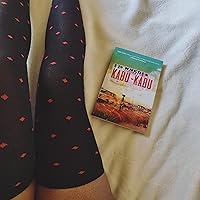
From the bestselling author of Caucasia, riveting, unexpected stories about identity under the influence of appearances, attachments, and longing.
Look out for Danzy Senna's latest book, New People, on sale in August!
Each of these eight remarkable stories by Danzy Senna tightrope-walks tantalizingly, sometimes frighteningly, between defined states: life with and without mates and children, the familiar if constraining reference points provided by race, class, and gender. Tensions arise between a biracial couple when their son is admitted to the private school where they'd applied on a lark. A new mother hosts an old friend, still single, and discovers how each of them pities-and envies- the other. A young woman responds to an adoptee in search of her birth mother, knowing it is not she.
Danzy Senna is an American novelist, born and raised in Boston, Massachusetts in 1970. Her parents, Carl Senna, an Afro-Mexican poet and author, and Fanny Howe, who is Irish-American writer, were also civil rights activists.
She attended Stanford University and received an MFA from the University of California at Irvine. There, she received several creative writing awards.
Her debut novel, Caucasia (later republished as From Caucasia With Love), was well received and won several awards including the Book-Of-The-Month Stephen Crane Award for First Fiction, and the Alex Award from the American Library Association.
Her second novel, Symptomatic, was also well received. Both books feature a biracial protagonist and offer a unique view on life from their perspective.
Senna has also contributed to anthologies such as Gumbo.
In 2002, Senna received the Whiting Writers Award and in 2004 was named a Fellow for the New York Public Library's Cullman Center for Scholars and Writers.
Danzy Senna is married to fellow writer Percival Everett and they have a son, Henry together. Their residences have included Los Angeles and New York City.
Danzy Senna has a knack for unsettling her readers. The stories collected in You Are Free are a testament to her ability to create and maintain an atmosphere of disquiet, one that adds to the ambiguous characters populating her stories. The people Senna centres her stories around seem perpetually uneasy and their behaviour—which ranges from being slightly worrisome to downright perturbing—is often a source of confusion to other characters and readers themselves. Like in her full-length novels, Senna hones in on race, racism, and racial identity. Her caustic social commentary is as piercing as it is unstinting. Senna spares no one and this adds to the murky tone of her narratives. As much as I love Senna’s writing, her short stories pale in comparison to her novels. The stories here are not as disturbing as Maria’s spiralling into obsession in New People, or as disconcerting as the narrator’s experiences in Symptomatic, or as compelling as Birdie’s story in Caucasia.
The first story is probably the most accomplished one, as we are introduced to a young couple who, as a ‘joke’, apply for their son to attend one of the country’s most distinguished private schools. When their son is actually offered a spot, the mother finds herself giving the school some serious consideration, while the father is adamantly opposed to it and wants his son to attend a local public school. What makes this story so effective is the increasingly creepy behaviour of the school’s member of staff. The other stories are less memorable, and many of them focus on new parents. I made the mistake of listening to the audiobook version of this collection and I can tell you that there are few things as irritating as an adult mimicking the voice of a whiny child crying for their ‘mama/mummy’. Anyway, the people within these narratives are varying degrees of terrible. Which was expected, but they did seem to share many of the same unlikeable traits, which made them rather samey. The short format also didn’t give Senna much time to flesh them out or to give them some nuance. I also could have done without the animal cruelty which seemed thrown in as an afterthought, or worse, for mere shock value. At times the character descriptions here verged on being lazy, which is quite unlike Senna (a character’s eyes are described as ‘asian’...). The focus on the parent-child and wife-husband dynamics had potential but ultimately the author prioritizes ambience over characterisation (also the lack of queer characters...). Senna is a fantastic author but this collection isn’t quite it…
Oh this book is kind of a mess. The writing is competent and each story has a lot of unrealized potential but the stories are a bland blur of the same themes over and over. There are few remarkable moments that really make you want to keep reading. Also, all the men have dreadlocks and the women have corkscrew curls. It's as if there's only one way to describe people.
The stories in this collection start out fresh and startling in all the right ways: characters' motivations are relatable but their actions aren't too predictable; the dialogue is spare and realistic.
But about half-through, the stories become a bit redundant. Every protag is a biracial, similar-aged married or cohabitating woman (with the exception of maybe one). People are almost constantly described by their complexions. Dreadlocks are mentioned really frequently. The husbands/love interests are all similarly condescending and distracted. And there's a lot of the same kind of new-motherhood-angst, around body image/desirability, labor/delivery/post-delivery trauma, and loss of pre-baby identity.
It isn't that Senna's observations and musings aren't spot on; many of them are. It's that there's too strong a throughline, story to story. Situations are interesting and varied, but the characters' appearance and ideas become interchangeable.
First, a big thank you to the Goodreads First-Reads program and Penguin books for an advanced copy of YOU ARE FREE. Below is my review...
What does it mean to be biracial and free in postmillennial America? The writer James Baldwin is quoted as saying, “Freedom is something that people take and people are as free as they want to be.”
By that definition, do the young interracial women that inhabit Danzy Senna’s first collection of short stories want to be free? Or do they want to belong to a collective…something, larger than themselves? The answer, as one might suspect, is complicated.
Danzy Senna – author of Caucasia, daughter of the African-Mexican poet Carl Senna and Fanny Howe, a white American of Irish descent – explores this question from her unique vantage point. Each of her characters is struggling for self-identity; each is hopeful and yet yearning for more. The short story collection is populated with ambivalent women, detached husbands, troubled girlfriends, and young babies and toddlers.
In the eponymous title story, Lara, a New Yorker who is anticipating her first byline from an obscure magazine tries hard to love her fate as a childless woman. Still, when she receives a mistaken call from a young girl who believes Lara is her mother, she goes into self-denial: “She had a family – a child – and the knowledge of this made her feel complete, though she knew she was not supposed to buy into such retrograde logic.” Yet still she does, with nebulous “what-ifs.”
Then there’s Livy, a Brooklyn-born artist and new mother who has found happiness with a Santa Fe gallery owner. When Livy hosts an old and spurned friend, she discovers that the connection between them has disintegrated: “She felt the daughter-self, young and vain, dying, and the mother-self, huge and sad, rising up in its wake, linking her to nothing less than history.” And we meet the liberal and African-American couple Cassie Duncan; tensions flare when their pre-schooler is admitted to a very tony private school and a decision must be made.
These women – and others – struggle with identity in a world that sometimes considers them interchangeable. (In the story What’s The Matter With Helga and Dave?, two women who look nothing alike are mistaken for each other because each is part of a supposedly interracial couple). Their greatest sense of comfort seems to be found in community: a young woman Janice takes in an abandoned puppy after being dumped by her black boyfriend and withdraws into a new world of dog caregivers who meet in the park each morning. Livy feels “love of a religious magnitude” for the world of new mothers, a world to which she has just gained entry. Helga’s friend Rachel gains a feeling of comfort after moving into The Chandler, an apartment building with other interracial couples.
These revealing stories have a seemingly effortless flow to them, despite some flaws. Some of the conclusions do have a retrograde feel: single women are inevitably unhappy; motherhood mostly brings meaning and fulfillment. Danzy Senna sometimes doesn’t trust her readers enough; for instance, the reader can evidently conclude that the mixed-breed dog Beulah is a stand-in for her owner, but Ms. Senna drums the message home. And her story Triptych – the same story told three times – is simply too gimmicky. Still, this is an insightful look about appearances and attachment in our increasingly hard-to-define nation.
Years ago I fell in love with Danzy Senna's first book, Caucasia. Her talent for storytelling continues in this new collection of short stories called, You are Free: Stories. This collection contains seven short stories, all centered around biracial characters who are trying to figure out what it means to be free in a perhaps, post-racial world. Judging by the characters' actions and behavior, the jury still might be out on if that world has come into being yet.
While this unique vantage point was fascinating in and of itself, I found that the way these women dealt with the universal themes in life (i.e., marriage, divorce, child rearing, rejection, etc.) far more interesting. I connected with several of the stories; maybe because I could relate to them in some way very personally.
In "The Admission," upwardly mobile couple, Cassie and Duncan, struggle with the decision of enrolling their young pre-school-aged son in an exclusive and expensive prep school. In "The Care of Self," two friends originally from New York meet up in New Mexico after many years of separation. It's a wonderful story that examines just how much a woman can change from her years of being single to becoming a wife and mother, and also coming to terms with what one gains and loses in the process. There's also the pain in knowing that it is quite possible to outgrow people who once played a significant role in your life. In "What's the Matter with Helga and Dave," two women (one white and one thought to be white) often mistaken for one another must deal with others' perception of race when it comes to the physical attribute of their children.
Sometimes in raising biracial or even bi-cultural children there is desire to form a community of sameness. Senna does a terrific job of illustrating this point via these well-crafted short stories. These stories also work because one could easily substitute biracial with any other characteristic, and these stories would still ring true on a universal level. I look forward to reading Ms. Senna's future work, and I hope more readers will consider reading short story collections.
A collection of short stories in which the main character is a mixed-race woman. She deals with marital, romantic, and domestic issues. These are all stories that are quietly chilling; a slow burn that creeps in and nests under your skin before you could sense that it got there.
All of the characters are resilient, and even at their worst moments, you can just feel that everything will be all right in the end. The title "You Are Free" refers to the horrible parts of being free; feeling unmoored, helpless, and free-floating in an infinite world. A common occurrence was characters forgetting what another character looked like, or realizing that the physical appearance of people feels so important initially but eventually means nothing. There's this soft-core nihilism that chills the characters to the bone, but they eventually muscle up because they have to. It's the only way any human can live.
(FTC disclosure: I won this great book in the Goodreads Firstreads giveaway.)
The short story genre is, I believe, overlooked and underrated, and this fine collection proves that. These eight stories, though different from each other, are all fun to read.
I'm not a writer, but I would imagine writing a short story is in some ways more of a challenge than writing a novel, because of the "space limitations," making character development difficult. This does not seem to be the case for this author, however. Her characters are vivid and so well drawn that I could picture them with ease and lose myself completely in their stories. The author's gift for crisp dialogue also keeps the stories moving and interesting.
I don't want to really review the individual stories, instead leaving it up to each reader to decide what they think, but there are a few specific comments I will make.
There is only one story here that I didn't like (The Land of Beulah), but not because it wasn't interesting or well written; I just didn't care for the subject matter and, in fact, hated the main character ... maybe that's exactly what the author wanted.
The story There, There seemed a bit unfinished; the ending had me wanting more. I really enjoyed the story The Care of the Self; it's a great little "girlfriends" tale. Finally, I found the unusual story Triptych to be weird and fascinating.
All in all, this is a great collection of stories, well worth reading by anyone who likes this genre. In fact, I will probably read them again.
I have a complicated relationship with the characters in this book. The stories in this book share the common theme of race, place, motherhood and caretaking. I respect Senna for not glossing over the more brutal aspects of child birth and its aftermath, such as tearing and nipples that look like they've been through a meat grinder (my words not hers). The lead characters are primarily multiracial or mixed black women who are basking in their status as mothers' while they view others whom do not share their state of socially sanctioned female completion with something akin to contempt,(but perhaps it's closer to pity)for these unattached women and their perceived shallow single lives.
However,for those other characters who are also mothers, (note I say mother and not parents)they also feel a simultaneous envy and anger-- at the ability of some to return quickly to a pre-pregnancy body, and an anger over the willingness of some women to hand over the care of their children to other less financially secure women. All the while they too have been reduced to an identity of feeder/breeder/giver of life, an identity that they seem to prefer to that of non-mother. I disliked most of these women and the men who inhabited the pages of this book; I disliked them for their smugness, for their sense of entitlement, for their child-mother centrality, for their codependency, and yet, I cannot deny the power of the characters in these stories, (flat endings aside) these women rang true, I've met them, I've met their husbands and they scare the living day lights out of me. 3.5 stars.
I was pulled into this collection of short stories slowly. The characters are flawed and often unlikable, and the outcomes of the stories are usually disquieting. But as I read on and noticed the motifs woven throughout I really enjoyed this collection by Causasia author Danzy Senna.
All of the characters are women, and most of them are bi-racial, allowing for an exploration of identity, cultural boundaries, and prejudices, both enforced and self-imposed. Rather than pointing a blaming finger at one party or another Senna presents each character’s weaknesses and strengths, worries and achievements equally, and in doing so demonstrates a universal human struggle.
My favorite story was “The Care of the Self,” which looks at motherhood as the dividing line between childhood and adulthood. Two best friends who have gone down different paths each envy the life of the other in a tragic grass-is-always-greener-on-the-other-side scenario. “Triptych” was also very cleverly done, presenting the same story over and over again and casting a different lead character each time.
I recommend reading the book from front to back, rather than skipping around the stories, as this collection is strongest when presented as a whole.
Look: I'm glad this book exists. I don't encounter mixed race protagonists enough in fiction, and there's a lot of us out there, so...what? No one feels like thinking about it? However, Senna's stories are not getting it done. And by "getting it done," I mean, writing fiction that contains a certain element without being overly message-y about that element. Or even writing fiction that contains a certain element without consistently bringing weirdly, possibly personal biases to the story. For example, why are there so many aggressively condescending black husbands? With mixed wives who feel racially inauthentic? I get that this particular scenario happens, but...in every story?
On the other hand, You Are Free contains stories that are quietly poetic, that present the domestic tension without bludgeoning me with it. I'm specifically referring to "There, There," which is awkward in all the most plausible ways, and "Triptych," which accomplishes far more in its repetition than I ever expected.
Whoopee! I received a free copy of this book in the drawing. Thank you so much for all the drawings that appear on "Good Reads"! It is so much fun to receive a book in the mail. This book has many interesting story lines in its short stories. I'd read with interest. However, the endings felt unfinished & left me wondering what the message was that I should've taken away. Guess ya just gotta spell it out for me 'cuz I don't get it. I get the general idea, of course, but prefer to read a more "spelled out" ending with what happens to the characters. All, or most, of the stories dealt with being bi-racial, "passing" for one race or another, or with "mixed" relationships. I don't wish to appear ungrateful for this free copy, however I must give an honest review. I didn't like it.
I love short stories and sometimes prefer them over novels. I love how at the end of each story, I yearn for more. That, however, did not happen with this collection. The running themes are racial identity, vanity, marriage and motherhood. It's simply a tease, and for the life of me I can't get over how bland a couple of these stories are.
As with most sets of short stories to me, a number of these just felt unresolved when they ended. Between that and that I really despised some of the characters, which made those stories unenjoyable, it was just ok to me.
Short stories about motherhood, race, gender, modernity, yuppies, etc. Which, frankly, could be the description of about 100,000 collections released in the past ten years, although very few of them are anywhere near this good. There is a sympathy and complexity to Ms. Senna's writing which marks her as a cut above her fellows, and these stories are genuinely thoughtful rather than overtly didactic. Good stuff.
I'm a huge fan of short story collections and this didn't disappoint. Constant themes throughout this book are race, gender, class. Throughout there is an examination of motherhood. The stories aren't plot driven, but character driven. Always my favourite!
A sound collection of Senna’s work displays her influences, themes, and core elements as Senna dramatizes intersectional challenges of being multiracial a generation forward.
Senna creates for her readers a beautiful, brown rainbow spectrum showing and naming manifestations which occur when cellular matter mingles and new strands of DNA are created. Senna describes characters as high yellow, tawny, butterscotch and more all poetic in their unique beauty.
Senna forces readers into the interior chaos a multiracial person may experience as they build their identity, share intimacy, interact with visible and invisible social ways and mores.
For Senna and her characters the struggle is real and ever present. Though they may be first generation born of multi races they experience the same conflicts their parents did as they fought to live their shared truths. Characters contend with the clash when races, cultures and classes come together and try to maintain a semblance of wholeness during these moments.
One can accuse Senna of being a visionary as she gives great play and consideration to an expanding universe of multiracial couples and families and though they’re similar in being multiracial, how that comes together is entirely variable from situation to situation and unique responses are resultant.
The cast of characters includes: violent, unapologetic fathers, weak, ill, victimized mothers, estranged friends, new born multiracial children, eccentric elder females who are maternal and not at the same time, and one woman who stands witnessing, questioning, and deciding on her life as she’s faced with truth and change. Her main character is consistently overshadowed with a racial question—who am I if I’m not entirely this or that and ultimately does it matter?
To Senna it does matter which is why she puts her characters into compelling, meditative scenarios which often end abruptly, unresolved and at times, unhappily. Her work while quirky is honest and as she finds comfort within the Black and white origins of her family leaning in to her Black identity, here she quietly remains, inclusive of her white kin leaving her readers here.
Strange collection, made of New York, LA, motherhood and babies, lonely marriages, breakups, untrustworthy friends and lost families, white, black, and mixed race women all touched by melancholy, stillness and change. Some of it was good, some of it was repetitive in its ideas; as I kept reading, it became dreary, often more weighted than insightful. Parts of this book reminded me of Jenny Zhang's writing, and the first and last stories had hints of Carmen Maria Machado's uneasy style (though "Helga and Dave" didn't commit to the tension, and wasn't successful, in my eyes).
Admission By far the best story in the book. Fresh and eerie, ironic.
The Land of Beulah Well-written, but heavy, and includes a lot of animal abuse. There's a clever comparison of the mixed race woman to the mixed breed dog that comments on a perceived "stray" or disposable quality? I'm not sure, it didn't hit home for me. This is the first of a couple stories that relate female independence and self-care to waxing/pedicures/spa treatments, and it's not a positive for all the characters, but it's still overused.
Replacement Theory
There, There An interesting concept, questions of emotional openness and sterility, but it didn't really go anywhere.
The Care of the Self I enjoyed the way this one approached marriage and young motherhood. Not much more than reflections on those things, and change.
I really like Danzy Senna's writing but this book was hollow to me. For one, it made all of the single, childfree women seem sad and pathetic, while holding all of the mothers up to be revered and adored, which is completely one-sided. The main problem I have with Senna's writing (in this case) is the constant bombardment of race. There's exploration of race and then there's a level that's just ridiculous, and she's crossed over into the ridiculous level. It's odd: she writes about blackness clumsily, turning her characters into extreme stereotypes in the process. I'm black and I cringed at the sloppy way these characters were written; she really made fools out of the black middle class and all of the stories started to read the same over time. I wish Senna would get back to the art of crafting a simple story. I know she has real issues with racial identity but I wish she would exorcise them on a therapist's couch, not within the confines of her fiction.
What I love about Senna's books, is that they are all quick reads. But just because they're quick, it doesn't negate the freshness and raw feel of the stories. She has a gift with words, her prose streaming across the page quick and beautiful, even if I don't quite care or sympathize with the characters at hand. When ever I pick up one of her books, I usually finish it within the day because I can't put it down, just like with this collection.
Some of the stories, I didn't care much for the narrator, there was just something inherently unlikable about them. Nothing very bad, but they weren't spectacular, and some of them felt like the same person, just with different names and slightly different scenarios.
My favorite story was "Triptych" because I had never seen a single short story written in this manor. It's the same story in three versions, but with different families and different narrators and different fruit, that makes each story unique and moving.
Senna's particular take on race--she's biracial and looks white--is fascinating. Each story is a variation on this theme (along with marriage vs. singlehood, motherhood vs. no kids, and the exact moment a relationship begins to fracture).
This woman can write! Her style is very pared down and direct, but each line is so vivid that you feel you're watching a movie. Her characters and dialogue feel real. Plot is psychological and unconventional.
She does not identify at all with her Caucasianess; there's a whiff of self-loathing, perhaps, in her rejection of that part of herself, but mostly what her writing captures is the discomfort of not being seen properly, of anger and disappointment.
Raises some interesting questions for which no easy answers are offered: what really makes a person black, or white--who are we?
Senna sure can tell a story! She's got this ability to quickly develop characters and pique your interest really quickly, too. But, she ALWAYS leaves you hanging.
Despite her talent, I wouldn't recommend this book. I read New People and thought it was interesting--it at least held my attention. So, I thought that I would enjoy "You are Free". I don't understand how the short stories relate to each other outside of people making sense of their multiracial identity, family and maybe socioeconomic status.
I'm not sure why Senna chooses to write exclusively about race, but it got a little frustrating by the third story. The characters seemed overly tragic or disturbed...was it because they were mixed race? I'm left with more questions than answers about the purpose of the book and really can't even understand why it's titled You are Free...irony?
I wanted terribly to like this book, but I just felt either lost or uncomfortable with some of the stories. I’ll be the first to admit that I probably didn’t get the entire concept of each narrative. The endings felt unfinished and left me at a loss. I’m a person of mixed race and even I couldn’t identify with many of the frustrations of most, if not all of the characters. It all felt a little forced and overdramatic. However, with that being said, I did find the tales rather captivating. As annoyed with the characters as I found myself,I was still interested in what was going on. I believe Senna is a remarkable writer, and if I could only grasp her message I’m sure I’d find her inspiring as well.
I loved Caucasia and have been waiting for something else from Danzy Senna for years now. You are Free didn't disappoint, with engaging characters and complementary themes about identity (all of the stories revolve around mixed-race women, many of whom are also new mothers). I gobbled up these stories over the course of a few hours and am back to eagerly waiting for her next book.
A little afraid of this illness, sickness attached to mixness thing but like the pacing and feel of the stories. Felt sort of the same way about Symptomatic as well.
I read Danzy Senna's most recent novel, 'New People,' and didn't think that I could love a book more. It was a brilliant, wry novel that was exceptionally well written. A very good friend of mine--whose taste I generally trust--recommended Senna's short story collection, 'You Are Free,' so I didn't hesitate to dive in.
In both 'New People' and 'You Are Free,' Senna is primarily concerned with crafting characters whose lives bring to light the complexities (and overlapping nature) of race, gender, and psychosis. That is where the similarities end. Where 'New People' is satirical, the stories of 'You Are Free' are marked by a graver tone. Like most short story collections, "You Are Free" is uneven, but its themes are both so intertwined and so varied that it keeps its reader beguiled.
"Admission," the strongest story in the collection, is a wonderfully rendered exploration of race, class, taste, and belonging in Los Angeles's (very white and very exclusive) Hancock Park. The following story, "The Land of Beulah," is the collection's weakest. Senna's consideration of anxieties over mixed-race identity isn't necessarily novel or well portrayed here. It falls deep into the "woe-is-me-tragic mulatto" stereotype. "Replacement Theory" shares the story of a woman whose neighbor's marriage collapses when her husband leaves her for a younger woman; the narrator is then left to wonder whether or not she too will be "replaced." In "There, There," a woman wonders what it means when her boyfriend does not share with her that his colleague committed suicide; does his lack of sharing mean that he doesn't trust her, that he doesn't envision a future with her? "The Care of Self" reveals a drifting and difficult friendship between two women, one recently married and one recently divorced; each considers the plight of the other and rests assured that her life is more fulfilling, but is it? "You Are Free" is an off-center but intriguing tale of a lonely, wandering woman who discovers the daughter she gave up for adoption; however, there's an interesting turn that makes the story strange, but great. "Triptych" was my second favorite story of the collection. There, Senna details a young woman's first days after the death of her mother in a really clever, unexpected way. The collection's final story, "What's the Matter with Helga and Dave," brings us back to Los Angeles where the meeting of two couples, one interracial, the other Black but of mixed race heritage, shifts the way that one woman considers both her identity and her marriage.
Motherhood and domesticity are looping themes throughout the entire collection. The stories do a great job of capturing a particular moment or set of moments that unveil anxieties around becoming a mother, not being a mother, losing a mother, or rejecting motherhood altogether. All of this is refracted through a lens that also considers the identities ascribed upon these women from "wife" to "wealthy" to "aspirational" to "writer" to "Black" or "mixed race" and so forth.
The stories aren't plot-driven. They are character driven and character focused. Psychosis seems to be a constant theme in Senna's work, and 'You Are Free' is no different in that regard. I’d recommend 'You Are Free' to fans of Sadeqa Johnson’s ‘And Then There Was Me.’ Both detail the intricacies of life's mundaneness in really engaging ways.
However, overall, I'd recommend individual stories in the collection over the collection as a whole. One story ("Admission") was absolutely fantastic, three were really good ("You Are Free," "Triptych," and "What's the Matter with Helga and Dave"), three were just so-so ("Replacement Theory," "There,There" and "The Care of Self"), and one ("The Land of Beulah") was just plain uninteresting.
I enjoyed 'You Are Free,' but it lacks the edge and sharpness that endowed 'New People' with excitement and wonder. Nonetheless, Senna's writing is ever stunning and the collection is a great reading for those interesting in short story style and form.
One of my favorite authors! I really enjoyed this short story collection. Both melancholy and at times witty. Per usual, Danzy is writing about race and biracial identity in America in a way only she can.
YOU ARE FREE
1. Admission: well I’m glad I read this after Colored Television. Cassie reminded me a lot of the main character from CT. Black-biracial trying to social climb in Los Angeles. The husband in this story reminded me of the husband from CT. Wry humor and an artist. This short story was a work shop for her novel. Despite the similarities I enjoyed this. Made me laugh and think about why we all want to social climb so bad when we know rich people suck?! 2. The Land of Beulah : this one was interesting but weird. A light biracial woman gets dumped by her light skinned but Black obsessed boyfriend and spirals into depression. She stumbles across the stray puppy from hell while dealing with her mess of a life. This is a good rep for depression. 3. Replacement Theory: this was a bit strange. I’m inferring that when it comes to relationships we’re all replaceable. Once again Danzy view of biracial experience is fascinating to read 4. There, There: was Danzy depressed when she wrote these stories? I enjoyed this one as well but idk girl it’s giving melancholy. This time we have a writer who is in a relationship with a man who doesn’t notice or care that she’s drowning and her book is not going well. In his mind all is well. Is he a bad boyfriend or just a straight man? 5. The Care of the self : my second favorite after Admission. Some humor and deep reflections on motherhood and how it changes you. Not for the better or worse but how you won’t be the same person you were. Also a great look at adult female friendship and how we kind of judge our friends and what it’s like to live in completely different stages. Enjoyed this one a lot. 6. You Are Free : the titular story. So far this one might be the most emotional of all. You have a woman who is firmly childless and strayed from all things domestic and living in Brooklyn. Gets contacted by a young woman looking for her mother. As story unfolds the protagonist Lara is forced to face her rape and abortion. Separate events that didn’t affect the other. My top contender for this collection 7. Triptych: thanks to Danzy, I know what this word means. I’ve never read a story like this. 3 for one. Each about a young woman losing her mother and having to face herself now living with grief. Each girl is a different race and it also shows how united we all are in so many ways. Innovative for sure. 8. What’s the Matter with Helga and Dave? : this is another best! A biracial couple that appears interracial in LA. LA is such an odd city to me. I’m fascinated to read about but would never want to live. A protagonist grappling with new motherhood, being biracial but perceived as white and later a possibly philandering husband. Also a hatred for the Cosby show. The couple in this story make me think these are real discussions between Danzy and Perceval disguised as fiction. Another favorite from this collection.
This entire review has been hidden because of spoilers.
This was an interesting collection of short stories. I liked the stories in the later half more than I liked the first few. The story, Triptych, was extremely interesting and I thought the structure of the story was fun. The writing was engaging. For the most part I thought there was the right amount of each story. I thought the topics brought up were thought provoking. However, I was a little confuse why mixed ancestry was a highlight of almost all the stories. I felt like a lot of time was spent on that topic but was almost exclusively an internal struggle. The other topics had a combination of internal and external pressure. So I am curious why this topic was handled differently. Overall this was an enjoyable read.