

What do you think?

Batman: A death in the Family
Batman: Ein Tod in der Familie
Batman readers were allowed to vote on the outcome of the story and they decided that Robin should die! As the second person to assume the role of Batman's sidekick, Jason Todd had a completely different personality than the original Robin. Rash and prone to ignore Batman's instructions, Jason was always quick to act without regard to consequences. In this fatal instance, Robin ignores his mentor's warnings when he attempts to take on the Joker by himself and pays the ultimate price. Driven by anger with Superman by his side, Batman seeks his vengeance as he looks to end the Joker's threat forever. Collects BATMAN #426-429.
144 pages, Paperback
Published January 1, 2010
About the author
Jim Starlin
1,348 books456 followersJames P. "Jim" Starlin is an American comic book writer and artist. With a career dating back to the early 1970s, he is best known for "cosmic" tales and space opera; for revamping the Marvel Comics characters Captain Marvel and Adam Warlock; and for creating or co-creating the Marvel characters Thanos and Shang-Chi, Master of Kung Fu. Death and suicide are recurring themes in Starlin's work: Personifications of Death appeared in his Captain Marvel series and in a fill-in story for Ghost Rider; Warlock commits suicide by killing his future self; and suicide is a theme in a story he plotted and drew for The Rampaging Hulk magazine.
In the mid-1970s, Starlin contributed a cache of stories to the independently published science-fiction anthology Star Reach. Here he developed his ideas of God, death, and infinity, free of the restrictions of mainstream comics publishers' self-censorship arm, the Comics Code Authority. Starlin also drew "The Secret of Skull River", inked by frequent collaborator Al Milgrom, for Savage Tales #5 (July 1974).
When Marvel Comics wished to use the name of Captain Marvel for a new, different character,[citation needed] Starlin was given the rare opportunity to produce a one-shot story in which to kill off a main character. The Death of Captain Marvel became the first graphic novel published by the company itself. (
In the late 1980s, Starlin began working more for DC Comics, writing a number of Batman stories, including the four-issue miniseries Batman: The Cult (Aug.-Nov. 1988), and the storyline "Batman: A Death in the Family", in Batman #426-429 (Dec. 1988 – Jan. 1989), in which Jason Todd, the second of Batman's Robin sidekicks, was killed. The death was decided by fans, as DC Comics set up a hotline for readers to vote on as to whether or not Jason Todd should survive a potentially fatal situation. For DC he created Hardcore Station.
In the mid-1970s, Starlin contributed a cache of stories to the independently published science-fiction anthology Star Reach. Here he developed his ideas of God, death, and infinity, free of the restrictions of mainstream comics publishers' self-censorship arm, the Comics Code Authority. Starlin also drew "The Secret of Skull River", inked by frequent collaborator Al Milgrom, for Savage Tales #5 (July 1974).
When Marvel Comics wished to use the name of Captain Marvel for a new, different character,[citation needed] Starlin was given the rare opportunity to produce a one-shot story in which to kill off a main character. The Death of Captain Marvel became the first graphic novel published by the company itself. (
In the late 1980s, Starlin began working more for DC Comics, writing a number of Batman stories, including the four-issue miniseries Batman: The Cult (Aug.-Nov. 1988), and the storyline "Batman: A Death in the Family", in Batman #426-429 (Dec. 1988 – Jan. 1989), in which Jason Todd, the second of Batman's Robin sidekicks, was killed. The death was decided by fans, as DC Comics set up a hotline for readers to vote on as to whether or not Jason Todd should survive a potentially fatal situation. For DC he created Hardcore Station.
Ratings & Reviews
Friends & Following
Create a free account to discover what your friends think of this book!
Community Reviews
Displaying 1 - 30 of 100 reviews

June 29, 2009
Treasure of the Rubbermaids 8: Dial 1-900 For Murder
The on-going discoveries of priceless books and comics found in a stack of Rubbermaid containers previously stored and forgotten at my parent’s house and untouched for almost 20 years. Thanks to my father dumping them back on me, I now spend my spare time unearthing lost treasures from their plastic depths.
The Robin character is something that has been a problem for Batman stories since comics ‘matured’. As Batman was turned into an increasingly grim and psychologically haunted character by various writers also trying to make him more grounded and realistic, the idea that this dark vigilante would have a young sidekick dressed up in bright colors and cracking jokes was increasingly out of sync with the tone of the comics. Plus, what kind of grown man dresses up a young boy in green short-shorts and a yellow cape?
(And I’ve always had a hard time buying the notion that no one in Gotham City would figure out who Batman is just by the presence of a Robin. Billionaire Bruce Wayne with the murdered parents adopted a young kid whose parents are also murdered, and now Batman is running around with a young man? What a coincidence!)
Original Robin Dick Grayson had broken away from Batman and become a new hero, Nightwing. Batman found his replacement in Jason Todd, a young orphan and juvenile delinquent. However, in 1988 shortly after ultra-violent and dark comics The Dark Knight Returns and The Killing Joke came out and with a big budget Tim Burton movie in the works that featured no Robin, the idea of having an increasingly edgy Batman work with a kid seemed just stupid. Plus, comic fans had never embraced the Jason Todd character even after one of DC’s many continuity reboots revamped his origin story.
So DC cooked up a scheme to put Jason Todd in a hairy predicament, and then let fans call a 1-900 number to vote on if he should live or die. It got a lot of attention from the media, and over 10,000 people spent 50 cents to have a say in Robin’s fate. It was close but the kid got the death penalty.
The story is pretty powerful for Batman fans, but there’s a lot of problems with it. There’s way too many coincidences with Jason searching for his long lost mother and just happening to end up the Middle East as Batman has trailed the Joker and a hijacked nuclear missile there. Then the Joker has an old connection to Jason’s mom and tries to blackmail her just as Jason finds her in Ethiopia. Apparently it’s a small freaking superhero world. Then there’s an international political storyline that introduces Superman, and it all seems too crazy and farfetched, even by the loose standards of comic stories.
(I did enjoy some of the dated ‘80s references like the Joker, desperate for cash, complaining that he’s another victim of Reaganomics.)
It’s still a disturbing scene to watch the Joker beat Robin relentlessly with a crowbar and then leaving him to be finished off by a bomb blast. The splash panel with Batman carrying Robin’s body out of the rubble is a classic. But if they wanted to kill off Robin, they should have done it in Gotham and not in Africa during a pretty standard crazy-Joker- is-selling-nukes-to-terrorists storyline.
Also, DC really screwed the pooch on the secret identity issue here. The Joker knows Jason Todd is Robin by the time he kills him. Later he gets into a stare-off with Bruce Wayne in public. So he‘s gotta know that Bruce is Batman, right? Uh, not sure, and it was never addressed later that I’m aware of. Plus, there’s an issue with no one in Gotham realizing that Bruce Wayne’s ward was killed in mysterious circumstances and suddenly Batman doesn’t have a Robin. No one could work that out?
So this is a groundbreaking comic in a lot of ways, but not a particularly great one other than the actual death of Robin. This also started the ugly trend of comic companies stunt killing characters for publicity. Usually, they bring them back shortly after that, but for a long time it seemed like Jason Todd would actually stay dead. Unfortunately, DC finally gave in and brought back Jason as an unhinged villain recently. Too bad because the death of Jason Todd was an event that had hung over the Batman stories and gave them a real sense of loss and consequences.
However, I did get a good laugh when I dug out this collection from 1989 and saw this blurb from legendary DC writer/editor Denny O’Neil on the back cover:
“It would be a really sleazy stunt to bring him back.”
Oops.
The on-going discoveries of priceless books and comics found in a stack of Rubbermaid containers previously stored and forgotten at my parent’s house and untouched for almost 20 years. Thanks to my father dumping them back on me, I now spend my spare time unearthing lost treasures from their plastic depths.
The Robin character is something that has been a problem for Batman stories since comics ‘matured’. As Batman was turned into an increasingly grim and psychologically haunted character by various writers also trying to make him more grounded and realistic, the idea that this dark vigilante would have a young sidekick dressed up in bright colors and cracking jokes was increasingly out of sync with the tone of the comics. Plus, what kind of grown man dresses up a young boy in green short-shorts and a yellow cape?
(And I’ve always had a hard time buying the notion that no one in Gotham City would figure out who Batman is just by the presence of a Robin. Billionaire Bruce Wayne with the murdered parents adopted a young kid whose parents are also murdered, and now Batman is running around with a young man? What a coincidence!)
Original Robin Dick Grayson had broken away from Batman and become a new hero, Nightwing. Batman found his replacement in Jason Todd, a young orphan and juvenile delinquent. However, in 1988 shortly after ultra-violent and dark comics The Dark Knight Returns and The Killing Joke came out and with a big budget Tim Burton movie in the works that featured no Robin, the idea of having an increasingly edgy Batman work with a kid seemed just stupid. Plus, comic fans had never embraced the Jason Todd character even after one of DC’s many continuity reboots revamped his origin story.
So DC cooked up a scheme to put Jason Todd in a hairy predicament, and then let fans call a 1-900 number to vote on if he should live or die. It got a lot of attention from the media, and over 10,000 people spent 50 cents to have a say in Robin’s fate. It was close but the kid got the death penalty.
The story is pretty powerful for Batman fans, but there’s a lot of problems with it. There’s way too many coincidences with Jason searching for his long lost mother and just happening to end up the Middle East as Batman has trailed the Joker and a hijacked nuclear missile there. Then the Joker has an old connection to Jason’s mom and tries to blackmail her just as Jason finds her in Ethiopia. Apparently it’s a small freaking superhero world. Then there’s an international political storyline that introduces Superman, and it all seems too crazy and farfetched, even by the loose standards of comic stories.
(I did enjoy some of the dated ‘80s references like the Joker, desperate for cash, complaining that he’s another victim of Reaganomics.)
It’s still a disturbing scene to watch the Joker beat Robin relentlessly with a crowbar and then leaving him to be finished off by a bomb blast. The splash panel with Batman carrying Robin’s body out of the rubble is a classic. But if they wanted to kill off Robin, they should have done it in Gotham and not in Africa during a pretty standard crazy-Joker- is-selling-nukes-to-terrorists storyline.
Also, DC really screwed the pooch on the secret identity issue here. The Joker knows Jason Todd is Robin by the time he kills him. Later he gets into a stare-off with Bruce Wayne in public. So he‘s gotta know that Bruce is Batman, right? Uh, not sure, and it was never addressed later that I’m aware of. Plus, there’s an issue with no one in Gotham realizing that Bruce Wayne’s ward was killed in mysterious circumstances and suddenly Batman doesn’t have a Robin. No one could work that out?
So this is a groundbreaking comic in a lot of ways, but not a particularly great one other than the actual death of Robin. This also started the ugly trend of comic companies stunt killing characters for publicity. Usually, they bring them back shortly after that, but for a long time it seemed like Jason Todd would actually stay dead. Unfortunately, DC finally gave in and brought back Jason as an unhinged villain recently. Too bad because the death of Jason Todd was an event that had hung over the Batman stories and gave them a real sense of loss and consequences.
However, I did get a good laugh when I dug out this collection from 1989 and saw this blurb from legendary DC writer/editor Denny O’Neil on the back cover:
“It would be a really sleazy stunt to bring him back.”
Oops.

January 25, 2016
I was totally amazed when I read this story line when it first came out, I could not believe they would kill off Robin, especially in the way it was done. Very intense story plot and even more so for the late 1980's mainstream comics. Very recommended
August 13, 2017
Wow! I am very impressed at how high in quality A Death in the Family turned out to be. I'll be honest, the stigma of this graphic novel being a bit aged and far before my time initially turned me off to the idea that it could be as worthwhile as some of the contemporary graphic novels I've read and enjoyed. I figured, at most, I would get a decent story out of it and not much more. Boy, was I wrong. Batman: A Death in the Family is by and large one of the most enthralling Batman graphic novels I have read thus far, easily toppling The Dark Knight Returns and The Long Halloween by a lot, and those are two heavy-hitters themselves.
The writing by Jim Starlin is fantastic and truly allows the story to play out to its fullest potential. It could have been so easy to ruin a story like this by forcing drama or censoring itself to reach greater audiences, but everything seemed to work just right in the grand scheme of things. For an older story, I have to give it a lot of credit for not pulling its punches in order to be more reader-friendly. I mean, just look at how Jason Todd was treated all throughout the story; I never could have fathomed the writers being so utterly ruthless to as campy a character as one of the old-school Robins! Such unforgiving treatment of a character of this importance made Jason Todd's Robin all the more tragic a figure in the Batman mythos, and the story that much more dramatic and entertaining.
I equate A Death in the Family with Spider-Man's The Death of Gwen Stacy, for both stories entail the death of a significant character in each respective hero's life, causing a great shift in everything thereafter. However, unlike Spider-Man's story arc, Batman's has much more at play than what can be seen on the surface. For example, the psychology of Batman becomes very important to consider throughout the story, as it helps us to understand why he does what he does, as well as understand how he feels after this tragedy transpires. A Death in the Family inspires further inquiry into questions such as "Why does Batman put these kids' lives at risk just to have a crime fighting ward at his side?" and, "Did Batman ultimately kill Jason Todd, not the Joker, because of his negligence?" I frequently found myself questioning Batman's mental stability as it related to companionship and loneliness; Batman, for as brilliant as he may be, seems to make the worst decisions when it comes to being a guardian to those he takes in, all for the sake of avoiding loneliness. I'm glad A Death in the Family made me think so deeply about these topics, for it helped me to develop a more profound appreciation for the Batman universe and its characters.
Also, how can you not love the Joker's maniacal performance in this graphic novel? To be quite frank, the Joker was much more menacing and interesting in A Death in the Family than he was in the highly regarded and disgustingly overrated The Killing Joke. Whereas the Joker of Alan Moore's piece was whiny, flustered, and failed to prove his point to Batman and thus came away from the whole ordeal a huge loser, the Joker under Starlin's watch was fun, unpredictable, and remained in charge throughout the story, ending up with a victory over Batman in the most meaningful and horrific way possible. That isn't to say that crippling Barbara Gordon in The Killing Joke was a minor event in the DC universe, though I would have to contend that taking the life of your sidekick has to be significantly more demoralizing to Batman's psyche. In short, after looking for a true-to-character Joker performance between several graphic novels, I finally found one worth admiring in A Death in the Family.
The only odd point of the whole graphic novel was the latter part when the Joker became a diplomat for the terrorist nation of Iran in order to gain diplomatic immunity from Batman's wrath as well as easy access to a major target for crime. Okay, that's a bit out there, even for one of these old comics, but it didn't hamper the main drama of the storyline. Perhaps its omission would have benefitted the arc overall, but having it there doesn't detract much from the best parts of the story and character development.
A Death in the Family far exceeded my expectations and proved to be a must-read Batman tale worthy of its legacy. If there was ever a Joker story that deserved all the praise and acclaim it garners, this would be it, not that miserable The Killing Joke travesty everyone so eagerly trips over themselves to applaud despite being lackluster at best...but I digress. Definitely pick up A Death in the Family if you want to witness a major turning point in Batman's life, but just be sure to follow it up with A Lonely Place of Dying.
The writing by Jim Starlin is fantastic and truly allows the story to play out to its fullest potential. It could have been so easy to ruin a story like this by forcing drama or censoring itself to reach greater audiences, but everything seemed to work just right in the grand scheme of things. For an older story, I have to give it a lot of credit for not pulling its punches in order to be more reader-friendly. I mean, just look at how Jason Todd was treated all throughout the story; I never could have fathomed the writers being so utterly ruthless to as campy a character as one of the old-school Robins! Such unforgiving treatment of a character of this importance made Jason Todd's Robin all the more tragic a figure in the Batman mythos, and the story that much more dramatic and entertaining.
I equate A Death in the Family with Spider-Man's The Death of Gwen Stacy, for both stories entail the death of a significant character in each respective hero's life, causing a great shift in everything thereafter. However, unlike Spider-Man's story arc, Batman's has much more at play than what can be seen on the surface. For example, the psychology of Batman becomes very important to consider throughout the story, as it helps us to understand why he does what he does, as well as understand how he feels after this tragedy transpires. A Death in the Family inspires further inquiry into questions such as "Why does Batman put these kids' lives at risk just to have a crime fighting ward at his side?" and, "Did Batman ultimately kill Jason Todd, not the Joker, because of his negligence?" I frequently found myself questioning Batman's mental stability as it related to companionship and loneliness; Batman, for as brilliant as he may be, seems to make the worst decisions when it comes to being a guardian to those he takes in, all for the sake of avoiding loneliness. I'm glad A Death in the Family made me think so deeply about these topics, for it helped me to develop a more profound appreciation for the Batman universe and its characters.
Also, how can you not love the Joker's maniacal performance in this graphic novel? To be quite frank, the Joker was much more menacing and interesting in A Death in the Family than he was in the highly regarded and disgustingly overrated The Killing Joke. Whereas the Joker of Alan Moore's piece was whiny, flustered, and failed to prove his point to Batman and thus came away from the whole ordeal a huge loser, the Joker under Starlin's watch was fun, unpredictable, and remained in charge throughout the story, ending up with a victory over Batman in the most meaningful and horrific way possible. That isn't to say that crippling Barbara Gordon in The Killing Joke was a minor event in the DC universe, though I would have to contend that taking the life of your sidekick has to be significantly more demoralizing to Batman's psyche. In short, after looking for a true-to-character Joker performance between several graphic novels, I finally found one worth admiring in A Death in the Family.
The only odd point of the whole graphic novel was the latter part when the Joker became a diplomat for the terrorist nation of Iran in order to gain diplomatic immunity from Batman's wrath as well as easy access to a major target for crime. Okay, that's a bit out there, even for one of these old comics, but it didn't hamper the main drama of the storyline. Perhaps its omission would have benefitted the arc overall, but having it there doesn't detract much from the best parts of the story and character development.
A Death in the Family far exceeded my expectations and proved to be a must-read Batman tale worthy of its legacy. If there was ever a Joker story that deserved all the praise and acclaim it garners, this would be it, not that miserable The Killing Joke travesty everyone so eagerly trips over themselves to applaud despite being lackluster at best...but I digress. Definitely pick up A Death in the Family if you want to witness a major turning point in Batman's life, but just be sure to follow it up with A Lonely Place of Dying.

October 26, 2022
Maybe because the conclusion of the story is well known or maybe because the art that didn't really impress me. For more than one reason, I've been delaying reading "A Death In The Family". But a couple of days ago I got a copy of the 1988 paperback edition and from the very first moment (and that witty introduction) I knew I'd like it. The writing was indeed very good (and heartbreaking sometimes) and the story really deserves its place among the best Batman stories in history.


August 11, 2024
Un clásico de Jim Starlin al guion y Jim Aparo al dibujo, este último también fue el dibujante de esa obra maestra de los 80, "Batman: la leyenda jamás contada".
Sin embargo, la que nos ocupa no llega a la altura de aquella debido a demasiadas coincidencias que hacen que sea algo inverosímil el que Batman y Robin se encuentren en el Líbano, Beirut, y luego también coincidan a su vez con el Joker no solo ahí, sino más tarde en Etiopía.
Lo bueno es que hay escenas de persecuciones y lucha de un gran dinamismo. Lo malo, que el guion tiene una estructura de pequeña historieta cerrada en cada capítulo que se vuelve algo repetitiva a medida que se avanza en la trama principal: Batman y el 2° Robin se juntan y luchan contra los malos; este último desobedece y se mete en líos; entonces es cuando Batman sale en su búsqueda, se produce un reencuentro entre ambos y de nuevo luchan juntos contra los criminales, y vuelta a empezar. Aún así se lee con fluidez y no aburre nunca por lo ya comentado al inicio de este párrafo.
Por último añadiré que entiendo que los lectores DCítas de 1988 prefirieron votar por ese final para Jason Todd, aún con solo 72 votos de diferencia: más de un@ vería al acróbata, obediente y más equilibrado emocionalmente de Dick Grayson como el único y verdadero Robin. Valoración final: 3'5 bat⭐ de 5.
Sin embargo, la que nos ocupa no llega a la altura de aquella debido a demasiadas coincidencias que hacen que sea algo inverosímil el que Batman y Robin se encuentren en el Líbano, Beirut, y luego también coincidan a su vez con el Joker no solo ahí, sino más tarde en Etiopía.
Lo bueno es que hay escenas de persecuciones y lucha de un gran dinamismo. Lo malo, que el guion tiene una estructura de pequeña historieta cerrada en cada capítulo que se vuelve algo repetitiva a medida que se avanza en la trama principal: Batman y el 2° Robin se juntan y luchan contra los malos; este último desobedece y se mete en líos; entonces es cuando Batman sale en su búsqueda, se produce un reencuentro entre ambos y de nuevo luchan juntos contra los criminales, y vuelta a empezar. Aún así se lee con fluidez y no aburre nunca por lo ya comentado al inicio de este párrafo.
Por último añadiré que entiendo que los lectores DCítas de 1988 prefirieron votar por ese final para Jason Todd, aún con solo 72 votos de diferencia: más de un@ vería al acróbata, obediente y más equilibrado emocionalmente de Dick Grayson como el único y verdadero Robin. Valoración final: 3'5 bat⭐ de 5.

March 3, 2023
For a comic written by a committee of well over 10,000 people, this is a fairly competent book for the most part. The gimmick of "A Death in the Family" is that DC got input from readers as to whether Jason Todd should live or die, and we all know how that turned out.
The story is a bit of a globe-trotting adventure where Batman chases a recently escaped Joker who is trying to raise money by selling a cruise missile to terrorists in Lebanon. The fact that the Joker has ballistic capabilities tucked away is undoubtedly one of the funniest things in a Batman comic I've read yet. Meanwhile, Robin has discovered that the woman he long believed to be his mother is actually his adoptive mother. Convinced that his birth mother is still out there, Robin begins a globe-trotting adventure of his own, seeking out three possible candidates. The silliest part of "A Death in the Family" is that the three women happen to be in the proximity of Joker's machinations. I almost expected this to be a plot point - that perhaps the Joker had planted a trail of crumbs that would lead Jason to him. But no. It was all coincidence. Absolutely lazy writing.
Is "A Death in the Family" worth reading? Perhaps for the more ardent lovers of Batman comics who have yet to get to this. The implications of this arc has indeed led to a long lasting ripple in DC comics, though I do think just the gist of this story is important. There are some good things in here, particularly with how Batman's concerns for Jason are expressed. There are some genuinely great father/son and mentor/mentee dynamics at play and that is best thing about this book. Otherwise, this is a fairly skippable Batman story if you already know the basics of what happens here.
The story is a bit of a globe-trotting adventure where Batman chases a recently escaped Joker who is trying to raise money by selling a cruise missile to terrorists in Lebanon. The fact that the Joker has ballistic capabilities tucked away is undoubtedly one of the funniest things in a Batman comic I've read yet. Meanwhile, Robin has discovered that the woman he long believed to be his mother is actually his adoptive mother. Convinced that his birth mother is still out there, Robin begins a globe-trotting adventure of his own, seeking out three possible candidates. The silliest part of "A Death in the Family" is that the three women happen to be in the proximity of Joker's machinations. I almost expected this to be a plot point - that perhaps the Joker had planted a trail of crumbs that would lead Jason to him. But no. It was all coincidence. Absolutely lazy writing.
Is "A Death in the Family" worth reading? Perhaps for the more ardent lovers of Batman comics who have yet to get to this. The implications of this arc has indeed led to a long lasting ripple in DC comics, though I do think just the gist of this story is important. There are some good things in here, particularly with how Batman's concerns for Jason are expressed. There are some genuinely great father/son and mentor/mentee dynamics at play and that is best thing about this book. Otherwise, this is a fairly skippable Batman story if you already know the basics of what happens here.

March 5, 2010
Siempre me consideré fan de esta saga... hasta que la leí. Jason Todd era un personaje que me gustaba mucho pese a haberlo leído poco. Cuando me enteré de que se moría me puse mal pero supuse que la saga en la que lo boleteaban era una obra maestra del 9no arte. Todo lo contrario: dibujo más bien pedorrón, historia tirada de los pelos y muchos insultos a la cultura islámica hacen que esta saga sea difícil de tomar en serio. Parece una historia de la Silver Age en cuanto a sus defectos pero con ninguna de sus virtudes. Cuando lo relea, seguro me expanda en mi reseña.

April 13, 2018
Esta es una historia con gran incidencia en la historia de batman, todo un fenómeno mediático en su momento debido a que se dejó en manos de los lectores (mediante una encuesta telefónica) la supervivencia de Jason Todd.
La idea de Starlin era que tenía que quitarse de en medio a robin porque no tenía sentido que batman pusiera en peligro constante a un adolescente (hoy en día es aún peor, porque ese adolescente es su hijo, pero bueno, se ve que algunos nunca aprenden la lección) y creó una historia que sirviera a batman para replantearse la idea de tener un sidekick, a partir de su final Batman seguiría sus aventuras en solitario fuese cual fuese la conclusión.
Esta historia sorprende por combinar un estilo de dibujo muy colorista, típico de la época, con unas buenas dosis de violencia y decisiones controvertidas desde el punto de vista moral por parte tanto de batman como de robin, ya no se hacen cómics de batman como este.
La idea de Starlin era que tenía que quitarse de en medio a robin porque no tenía sentido que batman pusiera en peligro constante a un adolescente (hoy en día es aún peor, porque ese adolescente es su hijo, pero bueno, se ve que algunos nunca aprenden la lección) y creó una historia que sirviera a batman para replantearse la idea de tener un sidekick, a partir de su final Batman seguiría sus aventuras en solitario fuese cual fuese la conclusión.
Esta historia sorprende por combinar un estilo de dibujo muy colorista, típico de la época, con unas buenas dosis de violencia y decisiones controvertidas desde el punto de vista moral por parte tanto de batman como de robin, ya no se hacen cómics de batman como este.

June 6, 2015
This is a must read for all Batman fans, its incredibly well written, the artwork is on point and the story is epic. I've always known what happens in this book (these comics) but I didn't know how much we learnt about Jason Todd and his back story. I really enjoyed the insight into what makes him who he is and who he becomes. I also think the people who phoned in to vote for the outcome made the right decision as this story would have lost something if Jason hadn't been "killed". If you haven't read this yet, get it added to your tbr!

August 25, 2020
Me habian advertido que este comic era malo, pero nunca pensé que llegara a tanto.
El autor hace todo lo posible al menos en este arco para que odiemos a Robin, y para mí la redención no llega a tiempo.
La acumulación de agujeros argumentales no se sostiene por ningún lado y la sucesión de coincidencias llega a doler en cierto punto.
Si hay 2 cosas que me escupieron en la cara fueronel deseo inminente de Batman de Matar al Joker y su desden por protejer su identidad secreta, aunque en un principio no lo parezca.
Absolutamente prescindible.
El autor hace todo lo posible al menos en este arco para que odiemos a Robin, y para mí la redención no llega a tiempo.
La acumulación de agujeros argumentales no se sostiene por ningún lado y la sucesión de coincidencias llega a doler en cierto punto.
Si hay 2 cosas que me escupieron en la cara fueronel deseo inminente de Batman de Matar al Joker y su desden por protejer su identidad secreta, aunque en un principio no lo parezca.
Absolutamente prescindible.
November 29, 2021
Pretty ghastly from start to finish. The first two issues have so many convenient coincidences that the authors were compelled to include a note that says "this isn't that much of a coincidence actually".

July 26, 2020
Part of my Batman comic book reread project. Continued from The Killing Joke.
I think I borrowed this from someone about 25 years ago and never gave it back to him. I don't even remember his name. And what's worse is that I knew him from church. That's it, I'm going to hell. Either that or Batman's going to come get me and put me in Blackgate penitentiary.
Jason Todd was the second, and least liked, Robin between Dick Grayson and the inimitable Tim Drake. I don't have much of an opinion either way because the only other stories I have with him in it are the two in which he was introduced. The first one is where he's caught boosting the tires off the Batmobile.
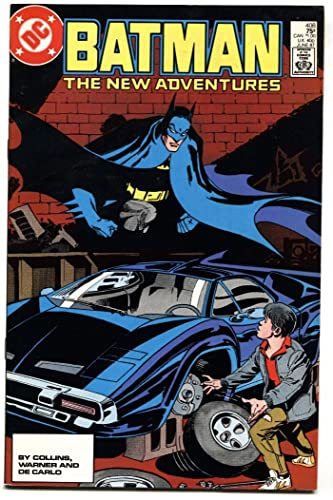
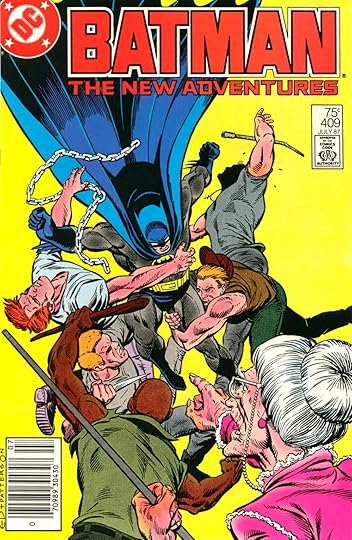
And it's fun watching how times change. This is from June 1987. Jason is 12 years old, and there are a couple of scenes showing him smoking.
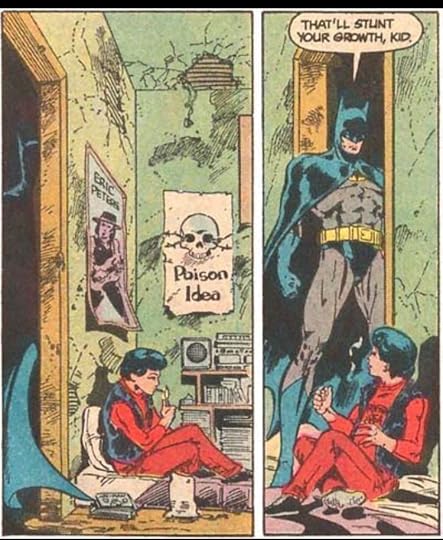
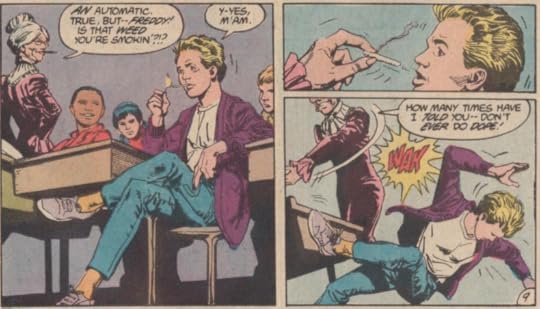
And even though Batman tells him it's a bad idea, I'm pretty sure that would never get past the editor in 2020. Batman takes Jason to a school for boys run by Ma Gunn in the next issue, and it turns out she's actually training criminals.
She smokes herself, but she apparently draws the line at weed.
Anyway, Jason helps Batman shut down Ma Gunn and her hoods on one of their capers, and Batman decides to take Jason home with him and train him to be the new Robin... even though he had just decided in the previous issue that having a kid with him was too dangerous for the kid because the prior Robin, Dick Grayson, had just gotten shot in the arm. At this point Dick decides to take his ball and glove and go home... or just go somewhere else and become Nightwing, or something.
Fast forward a year or so in real life, and a few years in comic book life, and Jason Todd has become such an insufferable douche nozzle that the editors ran a reader poll to see if he would live or die, and that's what this story was all about.
(Spoilers peppered throughout ahead).
The Joker is at it again. Having escaped from Arkham Asylum for the 5,973rd time, and broke because the government has seized all his assets...
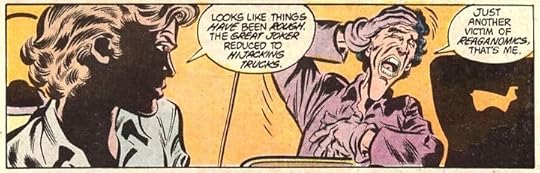
...he decides to sell a cruise missile he has lying around to some terrorists for some cash. This doesn't go well for anyone since the Joker rigged the thing to blow up instead of launching (just for kicks, don't you understand), but the terrorists launch it too soon because Batman and Robin are cleaning their clocks. Unfortunately, the Joker's money was still by the missile when it exploded, and he's once again broke. He escapes, and Batman and Robin resume their search for Robin's real mother which is why Robin was there in the first place. Batman was originally there looking for the Joker, but since the Joker seems to have pulled a disappearing act, he helps Robin. (There are a lot of super-coincidences in this thing, but that's okay in comic books and Dickensian literature.)
Stuff happens, and the dynamic duo run into Lady Shiva for a bit. I mention this only because she's one of my favorite villains/anti-heroes. This story is firing on all cylinders with its bad guy cast.
Meanwhile, the Joker has been in touch with Jason's real mother and is involved in a plot to steal relief supplies from Ethiopia and sell them to other terrorists. He's also sending boxes rigged with his laughing gas to the people who are supposed to get the original shipment. Just for more shits and giggles, you know?

"Love that Joker!"
Batman rushes to stop that shipment, and Robin, against orders and all common sense, goes into the camp to help his mother with the Joker. But it turns out the mother is a bitch. She turns him over to the Joker, and as you know, no good deed goes unpunished.
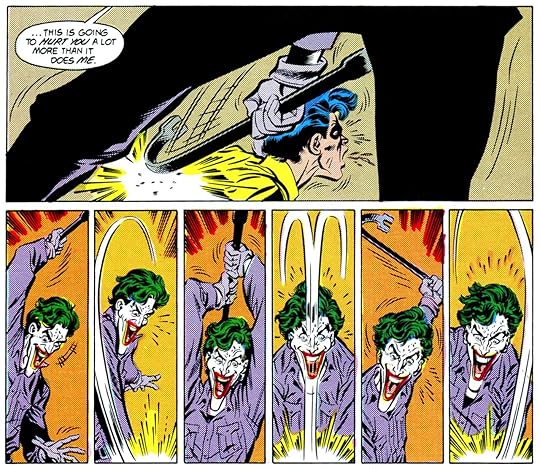
Mom just watches with maybe a slight wince, then lights up a cigarette. But, the Joker betrays her as well and blows up both her and Robin. That brings us to the end of chapter four, then the readers get to take a hand in matters by... well, see for yourself.
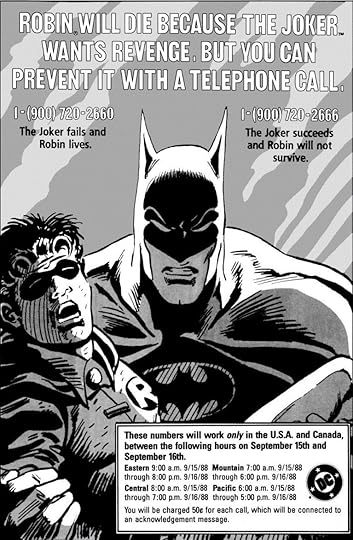
Only fifty cents a pop. Do you remember 900 numbers? Remember long distance charges? Final score was 5,271 for life, 5,343 for death. 72 votes made the difference, but years later it came out that maybe one dude rigged his phone to call the "kill the bastard" number every couple of minutes, so it's possible Robin was supposed to live after all. Alas.
Back to the story. After selling his ill-gotten medical supplies, the Joker is approached by none other than Ayatollah Khomeini.
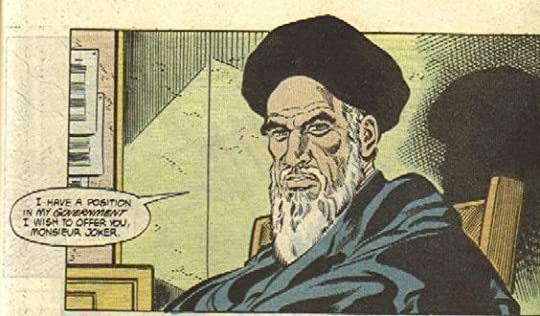
The Joker's made Iran's ambassador to the UN and is scheduled to make a speech there. Batman is told by top US officials not to interfere because the Joker now has diplomatic immunity, and they enlist Superman's aid to make sure Batman minds his P's and Q's.
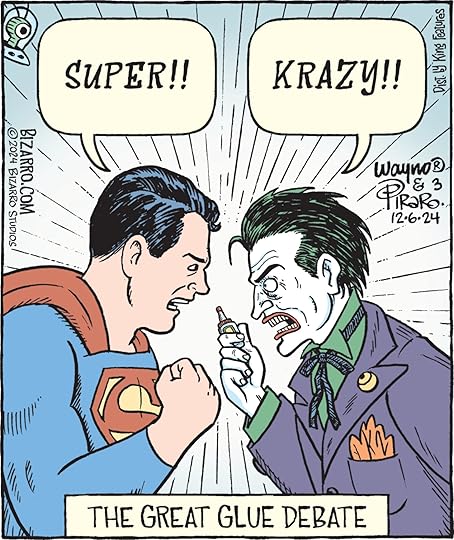
(Although Superman has been known to get rather passionate in his disagreements with the Joker from time to time himself.)
Batman decides to go anyway as Bruce Wayne, and we get my favorite image in this book with Bruce and the Joker staring at each other for a few panels.
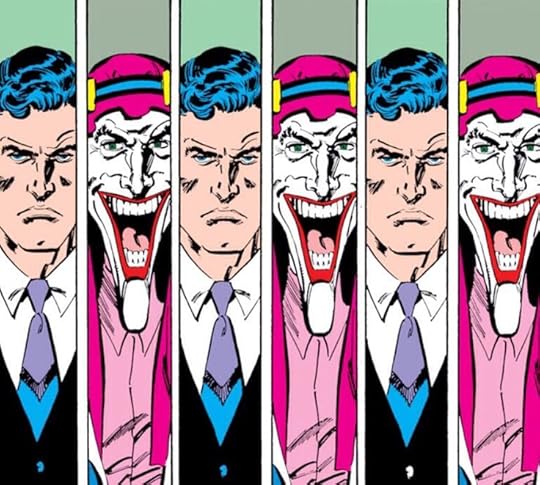
I don't know why I like that so much, I just do.
So, now we have a known psychopathic, mass-murderer representing a terrorist country, and they're going to put him in a room with the top representatives from just about every other country in the world, countries that are enemies of Iran. But they must allow it because immunity, rules, appeasement, diplomacy, words, etc. What could possibly go wrong? And really, this is typical UN arrogant idiocy. I could see this kind of thing happening in real life. Of course the Joker tries to gas everyone, but Superman sucks it all up and carries it outside. Now that the Joker has broken the rules and tried to kill everybody, Batman is allowed to beat his ass. He does so, but the Joker escapes again leaving an explosion and a couple of bodies behind him, the end.
This is a great story but still getting only four stars, maybe 4.5. A couple of things are just too silly, such as how Jason found out about his three possible mothers. And the coincidences were just way too many and too convenient. That keeps it from a five.
Since this was a trade paperback, there weren't any advertisements in it, but I'll drop one from the Jason Todd origin issues at the top.
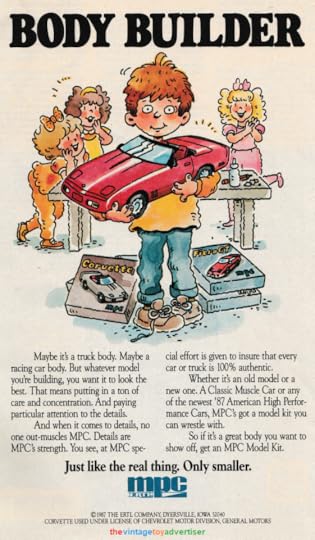
What the... The girls are all... I mean... Aren't these things a scream?!
Next checkpoint: Batman 443
I think I borrowed this from someone about 25 years ago and never gave it back to him. I don't even remember his name. And what's worse is that I knew him from church. That's it, I'm going to hell. Either that or Batman's going to come get me and put me in Blackgate penitentiary.
Jason Todd was the second, and least liked, Robin between Dick Grayson and the inimitable Tim Drake. I don't have much of an opinion either way because the only other stories I have with him in it are the two in which he was introduced. The first one is where he's caught boosting the tires off the Batmobile.
And it's fun watching how times change. This is from June 1987. Jason is 12 years old, and there are a couple of scenes showing him smoking.
And even though Batman tells him it's a bad idea, I'm pretty sure that would never get past the editor in 2020. Batman takes Jason to a school for boys run by Ma Gunn in the next issue, and it turns out she's actually training criminals.
She smokes herself, but she apparently draws the line at weed.
Anyway, Jason helps Batman shut down Ma Gunn and her hoods on one of their capers, and Batman decides to take Jason home with him and train him to be the new Robin... even though he had just decided in the previous issue that having a kid with him was too dangerous for the kid because the prior Robin, Dick Grayson, had just gotten shot in the arm. At this point Dick decides to take his ball and glove and go home... or just go somewhere else and become Nightwing, or something.
Fast forward a year or so in real life, and a few years in comic book life, and Jason Todd has become such an insufferable douche nozzle that the editors ran a reader poll to see if he would live or die, and that's what this story was all about.
(Spoilers peppered throughout ahead).
The Joker is at it again. Having escaped from Arkham Asylum for the 5,973rd time, and broke because the government has seized all his assets...
...he decides to sell a cruise missile he has lying around to some terrorists for some cash. This doesn't go well for anyone since the Joker rigged the thing to blow up instead of launching (just for kicks, don't you understand), but the terrorists launch it too soon because Batman and Robin are cleaning their clocks. Unfortunately, the Joker's money was still by the missile when it exploded, and he's once again broke. He escapes, and Batman and Robin resume their search for Robin's real mother which is why Robin was there in the first place. Batman was originally there looking for the Joker, but since the Joker seems to have pulled a disappearing act, he helps Robin. (There are a lot of super-coincidences in this thing, but that's okay in comic books and Dickensian literature.)
Stuff happens, and the dynamic duo run into Lady Shiva for a bit. I mention this only because she's one of my favorite villains/anti-heroes. This story is firing on all cylinders with its bad guy cast.
Meanwhile, the Joker has been in touch with Jason's real mother and is involved in a plot to steal relief supplies from Ethiopia and sell them to other terrorists. He's also sending boxes rigged with his laughing gas to the people who are supposed to get the original shipment. Just for more shits and giggles, you know?
"Love that Joker!"
Batman rushes to stop that shipment, and Robin, against orders and all common sense, goes into the camp to help his mother with the Joker. But it turns out the mother is a bitch. She turns him over to the Joker, and as you know, no good deed goes unpunished.
Mom just watches with maybe a slight wince, then lights up a cigarette. But, the Joker betrays her as well and blows up both her and Robin. That brings us to the end of chapter four, then the readers get to take a hand in matters by... well, see for yourself.
Only fifty cents a pop. Do you remember 900 numbers? Remember long distance charges? Final score was 5,271 for life, 5,343 for death. 72 votes made the difference, but years later it came out that maybe one dude rigged his phone to call the "kill the bastard" number every couple of minutes, so it's possible Robin was supposed to live after all. Alas.
Back to the story. After selling his ill-gotten medical supplies, the Joker is approached by none other than Ayatollah Khomeini.
The Joker's made Iran's ambassador to the UN and is scheduled to make a speech there. Batman is told by top US officials not to interfere because the Joker now has diplomatic immunity, and they enlist Superman's aid to make sure Batman minds his P's and Q's.
(Although Superman has been known to get rather passionate in his disagreements with the Joker from time to time himself.)
Batman decides to go anyway as Bruce Wayne, and we get my favorite image in this book with Bruce and the Joker staring at each other for a few panels.
I don't know why I like that so much, I just do.
So, now we have a known psychopathic, mass-murderer representing a terrorist country, and they're going to put him in a room with the top representatives from just about every other country in the world, countries that are enemies of Iran. But they must allow it because immunity, rules, appeasement, diplomacy, words, etc. What could possibly go wrong? And really, this is typical UN arrogant idiocy. I could see this kind of thing happening in real life. Of course the Joker tries to gas everyone, but Superman sucks it all up and carries it outside. Now that the Joker has broken the rules and tried to kill everybody, Batman is allowed to beat his ass. He does so, but the Joker escapes again leaving an explosion and a couple of bodies behind him, the end.
This is a great story but still getting only four stars, maybe 4.5. A couple of things are just too silly, such as how Jason found out about his three possible mothers. And the coincidences were just way too many and too convenient. That keeps it from a five.
Since this was a trade paperback, there weren't any advertisements in it, but I'll drop one from the Jason Todd origin issues at the top.
What the... The girls are all... I mean... Aren't these things a scream?!
Next checkpoint: Batman 443
August 9, 2026
la historia bien, pero había muchas partes que sentía que estaba leyendo propaganda estadounidense en contra de irán de manera un poco descarada… 🧍🏻♀️
En fin, me parece increible que muriera un personaje porque la gente habia votado (pagando☝🏻) para que muriera.
En fin, me parece increible que muriera un personaje porque la gente habia votado (pagando☝🏻) para que muriera.

April 6, 2022
Otra minietapa que me ha parecido normalita tirando a mala. Starlin continúa incluyendo a Batman en tramas unidas al momento político internacional. Aquí sale hasta Jomeini. Viajes a Oriente Medio y a Etiopía, cierto compromiso y una trama de búsqueda de la madre que se cruza de forma delirante con las maniobras criminales del Joker, que intenta vender un arma nuclear y que acaba como representante iraní, vestido de jeque y dando la charla en el edificio de la ONU.
La casualidad es todo lo que une la trama del villano con la búsqueda de Robin, y puesto que hablamos de encuentros fortuitos en el Libano y Etiopía, la palabra forzado se convierte en un eufemismo. Ni siquiera la muerte del segundo Robin, asunto por el que es recordado este cómic, me ha transmitido gran cosa. Entretenido, sin más.
La casualidad es todo lo que une la trama del villano con la búsqueda de Robin, y puesto que hablamos de encuentros fortuitos en el Libano y Etiopía, la palabra forzado se convierte en un eufemismo. Ni siquiera la muerte del segundo Robin, asunto por el que es recordado este cómic, me ha transmitido gran cosa. Entretenido, sin más.

May 10, 2024
February 2026 review (3 stars):
I was pretty close to bumping this up to 4 stars as I think I was a bit harsh on the artwork and quality of my copy, and didn’t give enough weight to the emotional depth that the book had. But I still feel like the general plot was too bizarre to raise the rating.
May 2024 review (3 stars):
This was a weird, but important book.
The plot that led to the main event was kind of odd (but unique) and the ending was strange and anticlimactic.
I thought the writing itself was pretty good. Got a good look into Bruce’s and Jason’s psyche throughout.
Art was serviceable. Not my style, but it was decent enough. They did well with the technology of the time.
Nitpicks: Colouring was a touch messy/misaligned at times.
One or two spelling mistakes.
But I was reading the 1988 edition of this book.
I was pretty close to bumping this up to 4 stars as I think I was a bit harsh on the artwork and quality of my copy, and didn’t give enough weight to the emotional depth that the book had. But I still feel like the general plot was too bizarre to raise the rating.
May 2024 review (3 stars):
This was a weird, but important book.
The plot that led to the main event was kind of odd (but unique) and the ending was strange and anticlimactic.
I thought the writing itself was pretty good. Got a good look into Bruce’s and Jason’s psyche throughout.
Art was serviceable. Not my style, but it was decent enough. They did well with the technology of the time.
Nitpicks: Colouring was a touch messy/misaligned at times.
One or two spelling mistakes.
But I was reading the 1988 edition of this book.

December 10, 2022
Una aceptable historia del Caballero Oscuro. Sigue sin convencerme la ilustración y especialmente el color, con tonos muy claros y llamativos. La forma en que está dibujado el Joker tampoco me gusta. Quizás lo más interesante de esta historia no es solo que se produce la muerte de un personaje protagónico, sino que los editores organizaron una campaña de votación telefónica para que los lectores decidieran si ese personaje, que se había vuelto un poco molesto para guionistas y lectores por igual, debía vivir o morir. La votación estuvo muy peleada, con 5343 contra 5271 votos. Ganó la muerte. El último episodio de la historia se mezcla con la política de los 80 y se vuelve inverosimil a un nivel ridículo. Y hace una aparición invitada Súperman.

October 21, 2020
No es posible no revelar detalles, siendo que la portada y el título revelan todo.
Batman, en una carrera frenética para detener al Joker, pierde a su compañero de trabajo.
La ilustración de Jim Amparo es impecable, la paleta de colores, que dan detalles de las expresiones y los momentos de nuestros personajes, poniéndonos en su piel.
La historia es quizás la que puedo encontrar simple, debido al número de coincidencias y situaciones convenientes para la trama, es algo que inquieta. No obstante, hay que entender el contexto en el que la obra fue escrito y el paisaje sociopolítico que da.
Batman, en una carrera frenética para detener al Joker, pierde a su compañero de trabajo.
La ilustración de Jim Amparo es impecable, la paleta de colores, que dan detalles de las expresiones y los momentos de nuestros personajes, poniéndonos en su piel.
La historia es quizás la que puedo encontrar simple, debido al número de coincidencias y situaciones convenientes para la trama, es algo que inquieta. No obstante, hay que entender el contexto en el que la obra fue escrito y el paisaje sociopolítico que da.

May 20, 2020
Esta saga es tan floja como la recordaba. Si bien fue importante para el universo DC en su momento, allá en los 80, se nota que envejeció mal y que Starlin ya no podía con la serie, de hecho fue lo último que hizo y se fue de DC. No hay mucho más que agregar, la mayoría de las escenas del Joker son ridículas y el final muy malo. Le pongo dos estrellas sólo por el arte de Aparo.

March 5, 2013
It's likely that finding this in a 25 cent bin influenced the positive review. There were a few things in the story that were quite absurd, but then again, it's a comic that had it's ending decided by a phone poll.

June 2, 2020
Disfruté mucho este crossover, sobre todo porque después de la muerte del segundo robbin, dieron los argumentos necesarios o quizás, las pautas para volver a un Batman más oscuro. El tebeo indicó que ellos no mataron eña robbin, fueron los seguidores de Batman en una votación telefónica

June 14, 2020
Most notable for reader involvement in determining the fate of a character by phone voting, and the press it made at the time. It is a great story besides that with Batman and Robin against the Joker. And I heartily enjoy Aparo's depiction of Batman.

March 7, 2022
Una historia dura en la que vemos como Robin(Jason Todd) muere a manos del Joker después de viajar con Batman a Oriente para buscar a su madre a quien creía perdida. La trama no es elaborada pero es entretenida y supondrá un antes y un después en la vida de Batman.

November 30, 2012
Aburrido, tedioso, forzado, demasiado extenso y con pésimas ilustraciones... lo único bueno es que muere Robin.

August 13, 2019
- * = Didn't grow attached to Todd in the few comics
It was a pretty good book and just easy to read, follow, and enjoy.
It was a pretty good book and just easy to read, follow, and enjoy.

April 28, 2020
Jason Todd aporta más a Batman estando muerto.

May 23, 2021
Edición española de Una muerte en la familia publicada como tomo 05 del primer coleccionable de Batman de Planeta.
March 15, 2022
Amato 🖤🦇

December 27, 2024
mi pobre jason 😢😢
January 26, 2025
No he llorado, tu has llorado

February 17, 2025
you will always be iconic, robin! jason todd 😔
Displaying 1 - 30 of 100 reviews