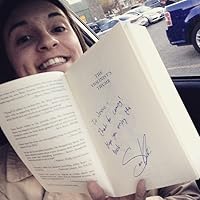
Designed for educators and other professionals who want to improve communication skills and boost learning, these simple storytelling techniques are as fun as they are effective. Haven's breakthrough approach helps you build on your natural storytelling abilities to refine your communication skills in the classroom, library, and even at home. This book has everything you need to get started, including detailed directions and guides for more than 40 powerful storytelling exercises to use with your class. You'll find the Golden List of what an audience really needs from storytelling, a proven, step-by-step system for successfully learning and remembering a story, the Great-Amazing-Never-Fail Safety Net to prevent storytelling disasters, a comprehensive discussion of the proven value of storytelling in education, and more. The book also shows you how to effectively use storytelling across the curriculum to capture student interest and boost learning. It even provides guidelines for teachi
Never judge a book by its cover. The cover on this book is hideous, garish colors and a really bad thumbs-up picture of the author. What were they thinking?! The layout of the book matches the poor cover: large pages of grey text, wide lines and a fairly ugly font (especially in the titles). That said, I found the contents really quite useful. A very practical analysis of the uses of storytelling in semi-formal settings, mainly the classroom. Settings where usually the story itself is not the goal, but stories are told with a specific teaching purpose in mind. The author provides easy-to-use steps, tips and ideas for any teacher aspiring to be a storyteller in their classroom (as every teacher should be!) As an unexpected bonus, the author provides a wealth of information for teaching storytelling to a class. There are many exercises, some good, others less than spectacular, but still useful. Haven is clearly not a teacher. His chapter on the purposes of classroom storytelling is incomplete and not entirely systematic. He himself seems to be aware of that. I find myself disagreeing with Haven on two key points (and that's where the book loses a star, apart from the cover and layout): 1. It's a myth that non-verbal communication is 70% of the message, whereas the words convey only 30%, as Haven claims. He gives the often-repeated example that when you say "I hate you" in a soft, purring voice, that will shift the meaning of the message 180 degrees. He's right. Yet changing the words to "I just repaired your car" changes the message a lot more. 2. Stories are not character driven, as Haven claims (many others do too, by the way). While characters are very important, a story with one-dimensional, unknowable or very general characters, but with a very strong plot (most jokes, horror stories, just-so stories, folk tales and fairy tales) are very enjoyable. A story in which we learn everything there is to know about a character, but without any actions or events (I.e. without a plot) is very boring. Unfortunately Haven doesn't give us many tips and ideas on plot construction. He does however say very sensible things about character construction. For plots we'll turn to Robert McKee's Story.
Last grad school textbook! This was fine. I liked learning about storytelling, and I do think this is useful for educators. Some flimsy arguments about the difference between storytelling and acting, but that's neither here nor there.
Easy to read and encouraging for anyone looking to beef up their storytelling skills, but are nervous about it. Definitely directed to classroom teachers over librarians.
Could there be a more horrendous cover than this? Besides the cover, I really like this book. Great tips to improve storytelling skills. Haven also helps you believe that you actually can be a good storyteller. Great writing style too.