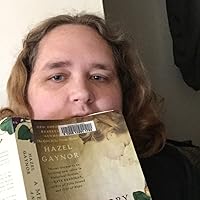
Barcelona. 18 cm. 284 p. Encuadernación en tapa blanda de editorial ilustrada. Colección 'Colección Fábula', numero coleccion(75). Traducción del inglés por Soledad Giral Silió. Indice .. Este libro es de segunda mano y tiene o puede tener marcas y señales de su anterior propietario. 8432041750
Persevere! The first few chapters of this novel may put you off as the writing is somewhat stilted and formulaic. However, once Ling Ling, the book’s heroine, arrives in Longxiang far away from the comforts of Shanghai, this becomes a whole other book and a compelling one at that.
It is 1949 and the Chinese land reform movement has just begun with the communists as modern day Robin Hoods, taking land from the rich to give to the poor. Of course it’s not quite that simple but the ethical argument behind it seems to be. From movies such as ‘The Blue Kite’ my perception of the change to communist government in China was solely a negative one. Reading ‘The Dragon’s village’ has made me understand that again, it isn’t that simple.
The novel’s description of the poverty in which millions of rural Chinese were living in is shocking, as is the cultural attitude towards women in these areas. Daughters murdered because they are not sons, sisters sold in order to pay for food, wives routinely beaten as a husband’s given right, arranged and forced marriage. The new laws aimed to change these attitudes and practices and to ensure that each Chinese person would have the means to support themselves by owning land. The novel only covers a year or so at the beginning of the reform and so it’s long term consequences are not discussed (more reading to be done here) but generally it comes across as a good thing for the rural poor.
The novel, however, is about the reform in minutiae, about how it affects one village and the people within it. We see the best and the worst of people, in Ling-ling, the other cadres and in the villagers. Revenge is a strong motivation and blame and secrecy are rife. Mistakes and misunderstandings are commonplace and Chen does a wonderful job of showing how Ling Ling, as a young city girl, copes with a completely different world and also alternates between zealotry and doubt. Women are the real focus of the book and as someone who herself took part in the land reform, Chen’s voice is an authentic and compelling one. She details the almost totally negative experiences of women yet shows how change was allowing a move toward equality and for women’s voices to be heard, without fantasizing that this is permanent and all encompassing. Yet there is hope at the end of the book and regardless of what came after, the hope is one that the reader shares.
I’m surprised by the low ratings too. I find it difficult to fault a book of ‘autobiographical fiction’ (there’s something very Eastern about that right there), especially one describing such a fascinating, important event. As she emphasizes in the story, this massive social and cultural shift affected 300 million people, at the time a sixth of the world’s population, who had endured thousands of years of feudalism.
Since Ling-ling was a Shanghai society belle when she volunteered to organize peasants in the remote Northwest, not an intellectual or radical, the reader has the educational benefit of following her learning curve. She’s certainly thrown into the deep end of the pool in this tiny town where little has changed since time began. Yet there’s no patronizing of the rural poor, there’s great respect and sympathy, even at times when the villagers need to be told that some of their traditions no longer apply. This creates some nicely realized moments of token victories: a bright young woman campaigns for local office, Chairman Mao’s photo replaces the image of the kitchen god in a superstitious peasant’s home, a baby girl is grudgingly allowed to live, the town’s loose woman starts wearing less makeup, and justice hits at least some of its targets despite having the aim of a wobbly newborn fawn.
Was there much more that could have happened to advance women’s rights? Of course. But let’s not cloud the lens of history with our modern standards. As progress penetrates even this sometimes frustrating, mystifying, faraway time and place, the book delivers a very satisfying emotional and political journey for the country as well as the hero.
This was a powerful story based around a time in revolutionary China I knew little about. She gave a snapshot of her journey over the months spent in the village, connecting with the people there during the turbulent winter and going about their work. This was a personal glimpse into a brief period of history that shaped her country.
I liked this a lot. Made me realize how little I know about the land reform movement. Reminded me of Red China Blues, but more ambivalent and sad. Probably best for people already interested in PRC history.
As in so many countries around the world, China's landlords of the early and mid-20th century---a small minority---owned most of their country's land while the majority held little or none. Taking advantage of the wealth and power land ownership gave them, the rich landowners exploited the villagers in their grasp in every conceivable way, while sometimes living a life of luxury and cultured ease behind the walls of their extensive compounds. Even in dirt poor, remote areas, far inland, the landlords' life bore no resemblance to the life of the mass of peasants. In some countries with such unequal distributions of wealth or land, change came gradually (western Europe)or with a foreign occupation (Japan), but in China change was suddenly imposed after the victory of the Chinese Communist Party in 1949. This process has been described very vividly by William Hinton in "Fanshen" and "Iron Oxen", as well as by Jan Myrdal in "Report from a Chinese Village". Almost overnight (historically speaking), land was confiscated from landlords and redistributed among the destitute, often-starved peasants and laborers. Clothes, food supplies, and other property were also shared out. Violence, petty local politics, and injustices inevitably played a role in such a vast, far-reaching transformation for alas, people are always people, no matter what color flag they wave. Still, without the destruction of the conservative class of landlords that sat atop the country like vultures, the modern China we see advancing in a million directions today would probably never have appeared. China might now resemble more an enormous Philippines or Egypt.
THE DRAGON'S VILLAGE provides an ant's eye view of this major event in human history, an event seldom thought about outside China now. It is the semi-autobiographical tale of one bourgeois girl's journey to a poor, remote village in Gansu province to assist in the land reform. While lyrically descriptive at times, the girl's own lack of understanding or perspective prevents us from thinking in a wide fashion about the whole process. We read and perhaps realize in a very concrete way what individual cadres might have gone through at the time. The story struck me as extremely honest with little attempt to write about anything not personally experienced. While interesting from a social, historical, or political point of view, I would not call THE DRAGON'S VILLAGE great literature. Anti-climax follows anti-climax, the end is disappointingly flat. I believe that such an ending reflects reality, but art forms need not imitate life so exactly. The author does not explore her personal trials and tribulations in a reflective manner, leaving us wondering what she felt ultimately. In sum, for a historical moment of such excitement and importance, the novel is amazingly mild. We appreciate the barren landscapes of northwestern China in winter, the descriptions of poverty and suspicion of the peasants. However, the transformation process and meaning of the resistance to it are seriously underplayed. I would recommend this book for university (or even high school) classes on the Chinese Revolution.
Read this in a class on student protest in China and was totally blown away. It is such a personal look into the hope and turmoil of one of the most important moments in world history, China's land reform. It gives really good insight into what happens when a big theory like communism hits the real world -- where gender or familial ties define people as much as their economic status.
At one point in the book, the people in the village are voting with rocks. And at first they just place their rocks in the first bowl - they don't understand how voting works. I won't spoil how that scene ends, but the main character is watching this election, hoping people understand, knowing it could all be pointless in the end. I think about that every time there is an election. Democracy requires faith. This book is a beautiful insight into the faith revolution requires.
I gave this book 3 stars out of 5 because I felt like it was quite a boring read. I struggled to get through the book due to the beginning not grabbing my interest and me continuing the book through the rising action and climax that I didn't care about made it really boring. This book is about a Seventeen-year-old Chinese Girl named Ling-ling joining a revolutionary theater group that carries out reforms in the Chinese countryside in 1949. I was originally hooked by the book due to it taking place during revolutionary China and the girl being from Shanghai which is also my place of origin. The story being about a theater group that carries reform in the Chinese countryside was really a miss for me, I felt like the author could have done so much more with this book. The book is mediocre, not bad, but the main conflict didn't intrest me at all, that's why I gave it 3 stars.
This book has opened my eyes to the Chinese revolution. I believed that it was an evil communist plot and a terrible event. The truth is, the revolution brought about a much needed land reform and fair laws. Through the eyes of a young sophisticated woman the story is told. She volunteers to do her duty by going to a rural, backward village and bring about the message from Mao. She writes about the peasantry that believed it's ok to beat your wife, infanticide of girls and dire poverty. The revolution I've read about discussed the forced labor, the confessions and torture. This author believes in the land reform, lived it and worked it. it is not "sugar coated" the famine, poverty and backwardness of the country but it changed my perspective of the Chinese revolution.
I wish this autobiographical novel had been a little less autobiographical and a little more novelish. There are a lot of characters, many of whom served similar functions in the story; it would have been good to consolidate. On the other hand, I was glad to learn more about Chinese history, specifically the way "land reform" was carried out.
If you aren't interested in rural mid-20th century China, this is not your cup of tea.
Given the Good Earth is one of my favorite books, I enjoyed seeing how the Chinese peasant experience evolved (or lack there of) from the time period of that book to this one. That said, it can drag at times and the arc of the plot isn't straight forward. Personally I give it a 4, but if you aren't interested in this period of Chinese history I can see why you'd rate it a 3 or lower.
There is a minor industry in accounts of the Cultural Revolution, but this is the first novelistic account I have seen of the heady days of land reform just after the 1949-50 victory of the Chinese Communists. The author's foreword states that she participated in the land reform and that "the story is fiction, but it is true." She immigrated to the United States, so I expected something of an expose, but no, there is the usual comedy of city-dwellers sent to the countryside to tell peasants how to live and the land reform is not smooth, but in the end at least one of the criminals is exposed and punished. Justice is served; the dispossessed are given their small plots of land (quality and access to water largely left undiscussed). The narrator is a little trying, almost inevitably chipper, even though, while still an adolescent, she leaves the glittering (if crumbling) society of Shanghai in the company of people from the theater and dance for the barren lands of western China, where people are not fully aware of what the Revolution is, how long it will last, and which side to choose. She feels the hunger of eating the local gruel, fright, finds herself lying, is subject to those humiliating self-criticism sessions the Revolution loved so much (the author is excellent on how to manipulate them to their advantage), and is often clueless about the people she is leading. The land reform is not unblemished; one of the local leaders is in the pocket of the man who had been most powerful under the old regime, a man who is merely better-off is humiliated to the point of suicide. And the author is very clear that the Revolution did some things, but not enough, to empower women. There is a ghost hovering over this book -- the Cultural Revolution that waits a little more than fifteen years in the future. Early on in the novel, the author recounts a debate over the future of socialist art under the new regime. Two of the speakers are Lao She and Ding Ling (the foremost woman writer of the Revolution who, prophetically, has only begun to speak of the need to address women's issues when the meeting is adjourned). Lao She, who wrote some of the most visionary Chinese fiction of the first part of the twentieth century, including "Rickshaw", a devastating look at the punishing life of the urban poor, was interrogated and beaten and probably committed suicide. Ding Ling, who wrote powerfully of rural life under war, was sentenced to jail and was released to twelve years of labor. I remember when I was young that there was a vogue among some intellectuals for reading Mao's Little Red Book. How naive, how blind.
Ling Ling lives a life of privilege in China. She lives with her aunt and uncle, who throw parties for the wealthy and powerful set. All around them, they hear that the good life is coming to an end for people like them, that Communism is sweeping the country, and that things will never be the same.
Ling Ling gets swept up into the excitement. When a friend from school asks if she can hide from the police for the night, she says yes, and suddenly she's questioning her upbringing and beliefs. Her aunt flees to Hong Kong, but her uncle tries to stay put a little longer. Soon he must leave too, and Ling Ling decides to stay and see what will become of this new nation.
She joins a group of land reform workers, whose job is to go out into the country, examine the land deeds of the landlords, and redistribute the land. Landlords will lose their wealth and status, and the peasants will be empowered.
Except that things aren't quite that simple. Reading this book, I have the benefit of hindsight. I could tell how naive Ling Ling is, how little she really knows of farming or of poverty, how little she understands human nature. All too soon, she finds that things are much more complicated than she imagines. There are tragedies along with occasional triumphs. Ling Ling learns more about herself than she imagined, and finds that she is capable of being independent.
I really enjoyed this book. I was anticipating a tragic end, but I was pleased to see that that wasn't the case, at least not completely. I found myself wanting to read more, to see what happens to the villagers Ling Ling meets and befriends. The title calls this an 'autobiographical novel', and I would love to know more about the author. The only notes in my edition say that the author was also a land reform worker, and I really want to know how much of her experiences are reflected in the book. I would recommend this to anyone who could find a copy. I found it very enlightening and a good story besides.
I must have had to read this book for a college course I took, but I likely didn't read it fully back then. It was on my bookshelf, so I decided that I'd read it so that I didn't just "waste" a book.
Granted, this was definitely a culturally and historically necessary book, it was just a bit hard to read because it wasn't the most well written. The character development was really poor--I didn't get a sense at all for who Ling-Ling was and it wasn't clear what really motivated her to join the movement. That part was all very vague, along with the other characters in the book. However, I think I understand that the book would have been twice its size to have made much more of the story clearer and more cohesive, as I felt some parts of the story were just thrown in randomly to show that something did happen that way, even if it wasn't developed enough.
I do appreciate the "eye witness" detailing of what went on in villages like Longxiang during that time, like what the villagers initially thought about the land reform, how the cadres struggled, the politics within the villages themselves, how the landlords were sometimes wrongly categorized and attacked, and the consequences of the attacks. It was nice to see a positive outcome from all the work and suffering of some of the cadres.
One of the quotes that I enjoyed--even though it is morbid--was about a character named Sun: "Sun's wife was about twenty years old. She had been married to Sun when she was thirteen. She had given birth to three babies and now she was carrying her fourth, yet the couple had no children: All three babies had been girls. As soon as they were born, Sun had taken them away from his wife and left them in the brushwood on a mountainside. There they had died of hunger and cold, not knowing they had lived."
I enjoyed this book, but not enough to recommend it to anyone. The story is entertaining to follow and I generally enjoy learning about this time period, but it lacked any elevated language, or devices to make the narrative stronger. It was a simple plot to follow with simple dialogue like something I might have read in elementary school (aside from communist and land reform jargon). I would have liked to see more complex characters or more meaningful dialogue; there are definitely certain aspects of the main character’s personality that grew, but not enough to keep me enthralled or enthusiastically rooting for her.
I enjoyed (well, enjoyed is not the best description of a book where everyone suffers - both peasants and landlords in the late 1940's Northwest China)this well written book about the communist takeover in China in the late 1940's written by a woman who experienced it close up. I would have given it 5 stars if the ending had included some kind of epilogue with details of what happened to the author after her work in Gansu (?) Provence was completed. How did she get out of China to the US? How did she feel about communism after everything she went through?
An interesting little read about the re-distribution of land in China. The author was there and part of the brigades of young people who gave up, sometimes lavish lifestyles, to live in solidarity with the folks in the countryside.
I read this book for a women's history class in college, and really enjoyed it. I thought it was an interesting perspective on history that I had never seen before. I'm surprised this book has been rated so poorly on Goodreads.
I couldn't even get through the entire book. I thought it was terrible. The beginning didn't grab my interest, and trying to continue along the story was painful.