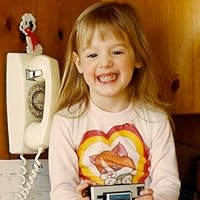
Can a white girl feel at home on an Indian reservation?
Based on the author’s childhood experience in the early 1960s, this novel centers on Kitty, whose father is a government forester at Warm Springs Reservation, Oregon. Kitty is one of only two white kids in her class, and the Indian kids are keeping their distance. With time, Kitty becomes increasingly aware of the tensions and prejudices between Indians and whites, and of the past injustice and pain still very much alive on the reservation. Time also brings friendships and opportunities to make a difference. Map, author’s note, glossary, and pronunciation guide.
Katherine Schlick Noe taught high school English and reading in Zillah, Washington and now teaches graduate literacy courses at Seattle University for beginning and experienced teachers. She grew up on Indian reservations in Washington and Oregon where her father was a forester with the Bureau of Indian Affairs. The family also lived near Washington, DC. Her debut novel, Something to Hold, is inspired by her childhood experiences on the Warm Springs Indian Reservation in central Oregon in the 1960s. It will be published by Clarion in 2011. Katherine is the co-author of four professional books on literature circles and is webmaster of the Literature Circles Resource Center (http://www.litcircles.org). Learn more at her website: http://katherineschlicknoe.com.
A book worth reading. Short chapters (made it easy to read here and there with little people awake), simple and honest with a good plot, good message, and touchy subjects were written with sensitivity. Nothing was overdone in this book which for me invited thought. I love that the author did not push any views or show any prejudice in her writing.
The content of this book is universal and quietly powerful...as well as giving some accurate insights about interactions between indigenous and white people. I looked forward to reading this each night after the little people were asleep, and it was one of few books lately that I've been willing to lose precious sleep in order to read. This is one I'll save and share with my children as they get older. The content was clean and appropriate for about any age. Reading level is probably about 10 years and up.
This was a truly sweet, 'moment in time' kind of book, one that allows you to just fall right into the story. Using her own life experiences author Schlick Noe writes of Kitty and her family's transition from all-American white suburbia to living and attending school with Native Americans on a reservation in Oregon, in the early 1960s. Kitty must make new friends and deal with the regular dramas of school life, while also facing tougher issues like prejudice and abusive situations during her time on the reservation.
I was hooked into this story just a few pages in--it is full of realistic life and school drama, as well as powerful themes like prejudice, bullying, child abuse, and alcoholism. While this makes for a compelling story, I am unconvinced that this book is appropriate for all 9 year olds (as marketed). I would recommend this book to children 11 and up, due to these heavy themes. I also felt the book could have been even better if it had been more middle grade or young adult in its writing style and treatment of such adult themes, as I wanted to venture deeper into the story and characters. Overall, this was great historical fiction with lots of heart, and I am going to highly recommend it to my 6th graders!
Kitty's dad is U.S. forest ranger and her family lives on Warm Springs Indian Reservation in the mid-60s. Being one of the very few white people living at the reservation has some challenges for Kitty and, not through her actions but the behavior of others, we see subtle and not-so-subtle insults and prejudices suffered by Native Americans in their own schools, stores, and reservation.
The book caught my attention because it's about a topic I've only read about one other time. I enjoyed it. It didn't strike me as an exceptionally good book but I'm giving it 4 stars rather than 3 because of the unusualness of the subject matter.
P.S. I was also a little put off for awhile with the first-person narrative. Our protagonist, Kitty, is a very sensitive and caring person who feels injustices deeply and she stands up for every victim. Which I found a little weird after a bit. After all, she's only 12 and it is the 1960s and, in my experience (the character is my age), most of us weren't empowered enough at that age, in that era, to be crusaders--especially towards adults. Although the character wasn't boastful it still felt boastful to me because of the first-person slant. I got over it but I think it's a flaw in the book that it would draw my attention in the first place.
Kitty is a wonderful person and through her sensitivity we see injustices made manifest.
While this book is historical fiction (the mid-60s), the author shares with us in a note at the end of the book that a great deal of the story is from her childhood living on Indian Reservations as a child. Her father was with the forest service and Katherine (Kitty in the book) and her family moved frequently because her father being stationed at different posts. The book contains many of the typical tween angsts, such as making friends in a new place, understanding how boys and girls respond differently to situations, wondering if her parents really understand her, and navigating different cliques of girls. What I enjoyed most about the book though was learning more about the Native American population and their stories through her eyes. She readily admits that she can't really understand their situation but she wants to and she listens and watches with an open heart. Interestingly, her mother also wrote about their experiences in a non-fiction memoir that the author references in her notes. Again, while this is fiction, I think I would show students how a memoir can morph itself into a "fiction" story using a great deal of non-fiction experience.
This was a very good book. The girl in the story learns so much, becomes aware of the world around her, stands up for herself and others. It takes place in the 1960s and I love that the author is writing from personal experience. The story is very authentic, gives a good look into how Native people are treated on their own land and how they are viewed by outsiders. It deals with abuse, the danger of forest fires, and what it's like to grow up. It was a good read and sucked you in. Some heavy topics, but good.
1962 Warm Springs Reservation, Oregon This story is based on the author's experiences as a child, and the words ring true as she describes events. There are several story lines, and they all are woven nicely together: Kitty's the new kid in school, one of the few white students in this school for native children; bigotry; abuse; strong family love; friendship; truth; history; honor. It's an engaging and heartwarming story.
I loved this glimpse into life on a reservation, told from a young girl’s perspective. All of the different feelings of fear, sadness, anger, love and courage seeped through the pages and into my heart. While I’m biased in this review since Katherine Schlick Noe was a beloved professor in my teaching program at Seattle University, this book is amazing. My 12-year-old daughter also loved it!
Katherine Schlick Noe's Something to Hold is a rare find in the children's literature scene. With one caveat (discussed below), I would wholeheartedly recommend this book to anyone interested in a realistic portrayal of American Indians, their life, culture, and land, as well as issues of racism, courage, and the forging of unlikely friendships.
I found Noe's book extremely moving (I admit to tearing up at the end), and also completely believable. Noe was inspired by her own childhood, some of which was spent as one of the only white kids on an Oregon reservation, but it's unclear how much of the story is exactly biographical. That's to her credit - nothing in the story sticks out to the reader as the "obviously fictional" part of the book. It's also worth pointing out that anyone can write about real events - but not everyone can do it in a way that is consistently convincing, engaging, and moving.
Kitty (the main character) is an admirable character, but still flawed enough to be believable. She proves to be a very brave girl who is willing to stand up for her friends and question others' racist ideas, so she's a good role model; she's nervous about fitting in and wants to be liked, so she's realistic.
Now, the one caveat - don't look for a well-rounded portrayal of Christian believers or beliefs here. The most prominent "Christian" character is an extremely strict, unfeeling teacher who reads Scriptures on diligence and stupidity in class as a tool of humiliation and explains away one notable student's suffering (both emotional and physical) as something of his own doing. Kitty's peers at Sunday school are either racist or openly condone racist comments. In short, and particularly because this book is for the 9 to 12 set, Noe's one-sided portrayal of Christians and their beliefs sets up a prejudice even as it seeks to battle a different one. It would have been helpful to me to have some counterpoint to the terrible "Christian" characters here - to show that these characters are so flawed because they are people, not because they profess to be Christians.
When my kids are old enough, I think this will be an excellent book for them, and an enjoyable one - as long as it comes with a chaser of William Wilberforce, Acts 17:26, Dorothy Day, etc...
Acutely perceptive, profoundly meaningful and poignant this stunning novel is an utterly compelling read.
Beautifully evocative and deeply touching this wonderful tale of colorful culture and vibrant history is both enchanting, and a thoroughly gripping read. Set in 1962, Kitty moves from one country to another, never settling until they land in the warm springs Reservation in Oregon. Being ‘white’ in an Indian community is strange, with racism and segregation towards those with colored skin being clearly obvious; as the Indian children in the school are met with hostility. Unlike others, Kitty chooses not to shun those with casual contempt but to respect their strength, generosity and embrace their unique customs. Speaking out against injustice and discovering ancient traditions and a new way of life, by exploring varying ethnic groups makes this an eye-opening read.
As Kitty makes friends, fights battles and gains the courage to be open and stand-up for what she believes in one uncovers a powerful tale of heroism…even in its simplest form. This inspiring story contains such truth-drawing connotation, reflecting the times perfectly with such effortless ease and a clear outlook. Captivating and indisputably remarkable, this extraordinary journey takes you on an intense adventure of exploration and enlightenment. Impressive and quite ambitious, the moral of this story is simple – to learn to judge from what lies within others. Just as one is advised not to judge a book by its cover, it highlights how forming an opinion based on another individual’s outer shell is not always advisable; for with any journey ones horizons must be broadened.
If you look beneath the surface, there is no knowing what you might find…
Katherine Sclick Noe has created a beautiful Young Adult novel, full of warmth and sincerity that will make you reflect on life and look back on our history with new eyes. I really enjoyed reading this so much, and so concider myself to have been extremely privileged to have had this opportunity. If you are looking for something different and engaging, then I would highly recommend this!
*I won a signed hardback copy of Katherne Schlick Noe’s “Something to hold”, through a book blog giveaway*
When Kitty Schlick's father requires the family to move to Warm Springs Reservation in Oregon in 1962, Kitty is nervous about being one of the few white children to attend Warm Springs Grade School. Although she finds the other students standoffish, some of them find her the same way. Eventually, she makes friends with some of the First Nation students--of course, they're called "Indians" in keeping with the times. As she observes some students being bullied by other students and others being bullied by the school's teachers, she begins to question the unfairness of some of the teaching practices and the content being studied. As Kitty matures over the course of the year, she learns a great deal about herself and the world around her. I liked how the book focuses on cultural identity and the difficulties faced by someone who is an outsider in a culture. I also liked how well the author evokes a sense of place by describing the trees, the roads, and the daily lives of her characters. I could feel the love of Kitty's parents for their children and the strong ties between Jewel and Raymond and their grandmother. While the book feels packed with a lot of weighty issues, including alcoholism, racism, abuse, and poverty, it also addresses those issues through the eyes of a middle grade girl which makes it more appealing to young readers. Sometimes Kitty seems too brave to be true and stands up at points where it's not so likely that she would be able to find the courage to do so. Then, too, there are incidents surrounding Raymond and Howie, two of her schoolmates, that are only touched on and not explored as thoroughly as they might have been. The two teachers described in the book don't come off in a flattering light either; one is depicted as being blithely unaward of the need for culturally responsive pedagogy while his replacement spends her days using Bible verses to teach her charges. Some of the passages that take place in the classroom were difficult to read because of the teachers' cluelessness or heartlessness.
In this new novel, debut author Katherine Schlick Noe tells a fresh and compelling story, based on her own childhood experiences of growing up on an Indian reservation as one of the only white families in the community.
When our eleven-year old heroine, Kitty, arrives at the Warm Springs Reservation in Oregon in 1962, she's used to being the new kid--her dad works for the government as a forest manager and they're always moving around. But it's hard to fit in at the reservation school where she's one of the only non-Indians. She doesn't feel comfortable with the white girls dressed in their fancy dresses and stiff petticoats whom she meets at church on Sundays either. They dismiss all Indians as drunks, and their prejudice bothers Kitty deeply. Even her teacher tells her that none of the Indian students are going anywhere, and that "they will drag you down if you let them."
The story, narrated by Kitty herself, takes Kitty through her first year living on the reservation, a year of growth and change for this sympathetic character. As Kitty gets to know her classmates, she begins to appreciate them and their culture, as well as striving to understand the "dark shadows" in their lives, which are so much more complicated than her own happy two-parent family. She even becomes friends with Jewel, the powerful and angry girl who once intimidated her, and is faced with the difficulties of keeping Jewel's secrets. Should she speak out to help Jewel and her brother?
Something to Hold was recognized by Amazon as one of its best books for December for children. Although the book discusses sensitive subjects, particularly prejudice and an abusive father, these difficult topics are always handled in an age-appropriate way, and in the end the novel is an uplifting coming-of-age story with appealing characters and an unusual setting.
Something To Hold by Katherine Schlick Noe tells the story of Kitty a white girl who moves onto an Indian reservation in the early 1960's with her father who works for the forest service. Kitty's year starts out very rocky, she feels like an outsider in a world she doesn't understand. She soon makes friends and finds herself confused by the differences in the way she is treated compared to her Indian classmates and neighbors.
This is a fantastic book, based on the authors own childhood, that explores what life was like for those on the reservation. This is the type of book that belongs on a library shelf to be explored by kids for years to come. It presents several complex issues such as racism, child abuse and injustices that Native Americans had to deal with. I enjoyed Kitty's story and finished the book without putting it down.
Appropriateness: There are some difficult topics in this book (addiction, abuse, racism) that are handled very appropriately for the intended audience although some adult discussion to the full context of these issues would be helpful for readers to get a full understanding of the topic. Kitty is eleven and there is no romance. I would recommend this book to readers 9-14.
This novel takes place in the 1960s on an Indian Reservation in Oregon. What is really interesting about this book is that the main character, Kitty, is not Indian herself, but lives on a reservation because her father works for the government. The novel is based on the childhood of the author, so she has actual experience living in this perspective. There are not many great novels about Native Americans that are not stereotypical or relatively racist, so this is a good read to see what some reservations were actually like. It is different because the story is in the perspective of a "white girl", but I think it actually makes the book more meaningful. You can hear the emotions that Kitty had to deal with and the identity crisis she had growing up. She was not Native American, but she also didn't fit in with the white kids at church. Where did she belong? What was her identity? Besides being a great novel to learn about the realities of Native American reservations (including political and government involvement/mistreatment), this novel also sparks interesting conversation about cultural identity. Do we have one identity that we belong to? Can it change? Do you need to be a part of that culture to truly identify yourself or can you assimilate to a culture?
When Kitty’s father lands a new job on the Warm Springs Reservation in Oregon, Kitty moves to a place where she is one of two white children in her school. It is 1962, and at her new school, Kitty is an outcast because of her race. The Indian population have a strong resentment of white people and it takes Kitty a little while to truly understand why. Once she does, she begins to make friends and feel less like an outsider. She becomes interested in the rich culture of the Indians and aware of the way some of the white adults in the school treat the Indians with barely contained contempt. The story has its moments of adventure (fleeing from deadly wildfires), friendship, and enlightenment. This would be a great story to discuss with students. It is a differing perspective on racism and prejudice, but one that may help some students better understand this rich culture!
Price: 16.99 Suitability: Grades 4-7 Illustrations: N/A Genre: Historical fiction/realistic fiction Possible Censorship Issues: N/A Call #: FIC NOE
I read this book on vacation in Mammoth this summer. It's about a white girl who grows up on Indian reservations because her father works for the US Forestry Service. The book is well done and shows some of the tensions and prejudices between the two cultures. What I really liked was the way it also showed that once you move beyond labels and really get to know people as individuals, you can become friends. The story includes hard issues like child abuse, but does so in an appropriate and sensitive way. It also includes some gripping action from a forest fire. This book reminded me of my father-in-law who also grew up on an Indian reservation because his father worked for the government in land and range management. My father-in-law remembers his dad fighting prairie fires in situations similar to the forest fires in the book. This is a quality debut novel by Katherine Schlick Noe. I'd give it a 3.5 if I could.
I really enjoyed this book. It engaged me emotionally and kept me wanting to read. Love the positive message of being kind.
I found some of the things the kids did unbelievable. Not so much that they ruined the book though. For instance, while I agree the reticence of a shy/new kid could be perceived as "stuck up" I don't believe an 11 year old would identify it and call it out. Similarly, I agree being nice and jumping in is good advice I can't see an 11 year old giving it.
Speaking to the criticism of some other reviewers that all the Christians in the book are portrayed negatively, the author's family is Christian and they are clearly positive.
I realize it's a novel but the book would have benefited from a photo or two. Look up the fire towers on the web.
Chosen for the 2015 Community Reads book in Jefferson County, Oregon, where the book takes place.
This is a well-written, and sometimes moving, YA novel about a sixth grade girl who moves to the Warm Springs Indian Reservation in the early 1960s. She is there because her father works for the Bureau of Indian Affairs as the forest manager. As one of the few non-Indians in the community, she slowly makes friends with the Indian people.
The book is somewhat autobiographical. The author did live for a few years at Warm Springs when she was in grade school. She says many of the characters in this novel are based on composites of people she knew then.
I grew up in Jefferson County and enjoyed reading about locations and circumstances I recall.
Something To Hold by Katherine Schlick Noe Fiction story based on the author’s experience as an eleven-year old, non-Indian living and going to school on the Warm Springs Reservation where her Father was a forester with the Bureau of Indian Affairs. Most of her classmates were Indian and she writes her fiction story based on the people and places of the reservation. This is a good book for the Junior High age. Using the treatment of Indian children by non-Indians (including teachers), this fiction story covers and teaches (thus the rating) many learning themes such as friendship and acceptance, courage, and understanding differences.
Kitty's dad works for the government so they move frequently. This time they ended up on an Indian reservation in Oregon. Her brothers seem to be making friends quickly, but Kitty is having a hard time with it as they are some of the few white people living there. Prejudice rears it's ugly head, but Kitty is able to work through it with the help of some of the people that she meets. An insightful look at life on a reservation in 1962. Hopefully some things have changed for the better since then. There is a very authentic feel to the characters and descriptions as it is based partially on the author's own life experiences.
I've only read a few middle grade memoirs but one thing that I believe is crucial is an authentic voice. Noe definitely nails it which makes this not only believable but enjoyable. Kitty's challenges are universal; great jumping off points for further discussion. I especially appreciated the layers of bullying she exposed. I think we often simplify the subject into bullies and the bullied, but reality is much mor complex than that. I highly recommend this as a great read-aloud for parents and teachers.
The author of Something to Hold tells a captivating story of a white girl and her family living on an Indian reservation in Washington. There are problems and situations introduced that kids can most definitely relate to. Bullies, child abuse, first day of school jitters, and not-so-dedicated teachers are issues that can probably be found in most schools. The aspect of living on the reservation from the perspective of a white girl who believes everyone should be treated fairly regardless of their race is refreshing. The writing shows that there is not a usual stereotype where Indians are all good and whites are all bad.
It's 1962 and eleven-year-old Kitty moves with her family to the Warm Springs Reservation in Oregon, where her dad works for the forestry service. Kitty isn't comfortable being one of two white kids in her class, and she also isn't comfortable learning the state song or being taught about Columbus Day by the white teacher. While I enjoyed those moments, they were subplot to a story lines about the abusive (white) stepfather of Kitty's classmates. The climactic scenes at the end almost felt out of place in this quiet story, which I would have preferred to stay focused on identity, place, and friendship.
Something to hold has a very relatable story because the character in this book goes through a lot of things for all kinds of different reasons. She is now part of a native American tribe, but her family is one of the only people who are different based on their ethnicity. So she tries to be just like them by trying to make new friends and she does find one. This book gave me a little synopsis about what else is going to happen in life like friends, bullies, and a lot more. I hope this book teaches you the same thing!
This entire review has been hidden because of spoilers.
1960's (How can the time I was in high school be historical?? really makes me feel old) Anyway, Kitty's dad works for the forestry service and their lastest move in onto a reservation in Oregon. Kitty is one of only 2 white children in her class. AS she gets to know the Native Americans as people/friends, she begins to see the sometimes unwitting insults and racism for what they are and speaks out on behalf of her new friends.
What I loved about this book is how the author gives you a glimpse into live on a reservation during the 60's. Even though I live near a reservation my knowledge about native American life and customs is limited. This book would be great to share with any upper elementary and middle school child. I am sure it would bring about interesting conversations and debate about cultural bias and injustices.
Wonderful book about one of the few white kids on the Warm Springs Indian reservation in 1962. Based on her real life experiences growing up on this reservation. Great storytelling, sad look at how the native Americans in our country are so badly treated.