The third in the Vic Brown trilogy. Vic has finally left Ingrid, and Donna has left him. The story is in two parts; one part is about his life as he tries to pick up the pieces; the other picks up the story ten years later.
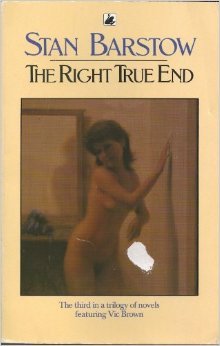
As another reviewer mentions, this may be the weakest storyline of the three books in the Vic Brown trilogy. Even so, as it culminates in an extremely satisfying ending to Vic's saga, I have given it 5 stars. I found myself compelled to read on and on until the finish. Barstow puts just the right thoughts and words into his characters, with a skill that can make a midwest American born in the 1950s identify with a 1940s born young Yorkshire man. This trilogy was an extremely satisfying reading experience that I shared with the other 88 Goodreads readers who have finished the trilogy. I do wish they would republish the last two books of the trilogy, if only to get a replacement for the soft-core cover of the last book. Made me read it at home rather than at a coffeeshop.
Vic has finally left Ingrid, and Donna has left him. The story is in two parts; one part is about his life as he tries to pick up the pieces in the aftermath of the second book (The Watchers On The Shore); the other picks up the story ten years later.
Although A Kind of Loving is a wonderful stand alone novel, I'd urge anyone who enjoyed it to read the complete trilogy.
Selflessly rescued from the storeroom by my local librarians - though the first book is widely available, the two follow-ups seem to have been out of print for about thirty years.
After having read all three books back-to-back, I can perhaps objectively see the reason for this: whereas A Kind of Loving stands on its own as a novel that, whilst perhaps from a contemporary eye is not revolutionary in its plotting, paints an extremely evocative picture of late 1950s Yorkshire (indeed to far better effect than some of Barstow's contemporaries), the sequels don't really add a great deal to that picture.
As much as I enjoyed The Watchers on the Shore, part of me did wonder whether it was a necessary sequel; what I am sure of is that The Right True End is a necessary ending to the trilogy. If you enjoyed the world of the first novel, and its characters, I would definitely recommend trying to hunt down some tatty paperback copies of the other two.
Third and final book of the 'Vic Brown' trilogy. Vic is now a Londoner with a top job, a nice car, and an attractive mistress. He should be enjoying life to the max, but actually feels there is something, someone missing from his life, and that is Donna, who crosses his path once again in the big city.
Perhaps the weakest in the Vic Brown trilogy, but a good read nonetheless. somebody should re-publish Barstow, his books are hard to find but significant socially for UK readers .
Volume three of the Vic Brown trilogy is a novel of two halves. The first picks up immediately from ‘The Watchers on the Shore’ and deals with the acrimonious dissolution of Vic’s marriage to Ingrid. The second moves the saga forward a decade, charting his successful career progression, the fragility of familial interrelationships, and the constant pall of loneliness that is beginning to define his existence. Then he meets Donna again and the possibility of a second chance has never seemed more ephemeral. Although it drifts towards melodrama in the closing chapters, ‘The Right True End’ provides a solid conclusion to the saga and Barstow is savvy enough to leave a pale shadow of uncertainty hanging over things.
Ah, the inevitable end of the northerner determined to find himself in the 60s and 70s was the south; usually Surrey; a sophisticated wife, a two seater MG and the knowledge of which wine goes with a Chinese takeaway. Add the turning away from cask ale and stew and dumplings and the absolute need to pour a scotch on the rocks after a hard, but successful, day at work.
Beautifully situated in the living memory past, the trilogy completes itself quite nicely and the metamorphosis of Terence Collier into Robert Scarborough Ferris nears completion.
Happily there were other ways for northerners to satisfy any short-comings in their upbringing.
Having just suffered a novel that was pure saccharine, this dose of realism was welcome. The third book of a trilogy, the first two chapters give enough of a recap so that it can be read as a standalone.
Set in the days of my youth and published the year I left school it felt like coming home. It makes mention of 'The L Shaped Room', another worthwhile trilogy to give a go if you enjoyed this.
A re-read for me. I first read this in 1976, the year it was published. The Vic Brown trilogy covers the late 50s early 60s and is very redolent of the social mores and attitudes of the time.
Excellent story, wonderfully told. Apt but agonisingly arrived-at title. (and I did right waiting for the second to arrive before continuing with the third)