In 1914, when Nicandra is eight, all is well in the grand Irish estate of Deer Forest. Maman is beautiful and adored. Dada, silent and small, mooches contendedly around the stables. Aunt Tossie, of the giant heart and bosom, is widowed but looks splendid in weeds. The butler, the groom, the landsteward, the maids, the men—each has a place and knows it. Then, astonishingly, the perfect surface is Maman does something too dreadful ever to be spoken of. "What next? Who to love?" asks Nicaranda. And through her growing up and marriage her answer is to swamp those around her with kindness—while gradually the great house crumbles under a weight of manners and misunderstanding.
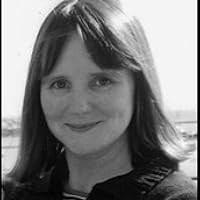
Molly Keane (20 July 1904 – 22 April 1996) was an Irish novelist and playwright (born Mary Nesta Skrine in Ryston Cottage, Newbridge, County Kildare). She grew up at Ballyrankin in County Wexford and was educated at a boarding school in Bray, County Wicklow. She married Bobby Keane, one of a Waterford squirearchical family in 1938 and had two daughters. She used her married name for her later novels, several of which (Good Behaviour, Time After Time) have been adapted for television. Between 1928 and 1956, she wrote 11 novels, and some of her earlier plays, under the pseudonym M.J. Farrell. Molly was a member of Aosdána. Her husband died suddenly in 1946, and following the failure of a play she published nothing for twenty years. In 1981 Good Behaviour came out under her own name; the manuscript, which had languished in a drawer for many years, was lent to a visitor, the actress Peggy Ashcroft, who encouraged Keane to publish it. The novel was warmly received and was short-listed for the Man Booker Prize.
After the death of her husband, Molly Keane moved to Ardmore, County Waterford, a place she knew well, and lived there with her two daughters, Sally and Virginia, until she died in 1996. She is buried beside the Church of Ireland church, almost in the centre of the village.
I was going to give this 2 stars, because while it was supposedly humorous in that it had Molly Keane’s wit infused all over it, it was also sad with pretty much 90% of the characters unlikable and behaving badly. And early on in this novel I was shocked by the abject cruelty shown by a rich girl (Nicandra) who lived in “The Big House” in an Anglo-Irish upper-class household towards a mentally challenged boy. It was just so, so, cruel…I wasn’t sure why Molly Keane had written such a thing. I only found out, I think, in the last part of the book, and then in the last sentence there was a denouement that satisfied even me. So, I will give it 2.5 stars and ergo rounded up a 3-star review a la GR standards (i.e., they don’t allow half-point gradations).
Aside from Silly-Willie, or William, as he was called in the end (but not by Nicandra…she continued to call him by the diminutive name of Willie), there was nobody to like in this novel. Her loser of a father – Dada, mother – Maman, aunt – Aunt Tossie, husband – Andrew, supposed best friend – Lalage, and herself – Nicandra. The hell with all of them. 😐 🙁
This is my 3rd Molly Keane book….Good Behaviour (1981, I gave it 5 stars) and Time after Time (1983, I gave it 2.5 stars, same as this) were the other two.
This is my second brush with Molly Keane and most likely my last.
Love, generosity and even happiness are often mentioned in this rather cynical tale of a young aristocrat girl and then woman in the interwar, but there is in fact very little evidence of them. Those emotions are in fact bone-dry expressions of some form of selfishness or other, some ugly desiccated neediness. Although there are moment of grotesque farce the book is ultimately a lacklustre tragedy served by a cast of unappealing and mostly not very likeable characters.
The only appealing aspect of the narrative for me was the way Keane repeatedly simply implies the occurrence of quite majors events, leaving the reader to deduce what has truly happened from quite secondary circumstances.
Perhaps I wasn't in the right mood for this book, or perhaps Ms Keane is just not my cup of tea. Having no recollections of my previous encounter with her work (Good Behaviour), other than a vague sense of bored dislike, I suspect it's the latter.
Nicandra, named after her father's favourite racehorse, is desperate to please and longing to be loved. Sadly, she fails ultimately at both. Her life parallels the dying days of the grand Irish home which her family has long occupied. The home is neglected, in a ruinous state and falling apart. Poor Nicandra follows suit. I did not enjoy this novel as much as Good Behaviour. For me it lacked the subtlety and the finely drawn comic-tragic line of Good Behaviour. Just dark and tragic.
The child's perspective in the first part of the book was brilliant.
The author consistently portrayed different personality types (givers, takers, etc.). The novel featured her signature satirical humor and criticism of Irish families and social structures.
I have to admit that while the ending was cohesive and, overall, a great twist, I was hoping for something a bit different—but I wouldn’t count that as a negative.
Molly Keane spent many years writing ripping yarns about displaced Irish socialites and fox hunting, or so it seems if you raid her back-catalogue. But the novels she wrote in later life, like Loving and Giving, and razor-sharp, compassionate deconstructions of families and relationships. Always sparklingly witty but this one is coloured through regret, hope, despair and honesty.
Complex and dark. Probably worth another read. Occasionally found I had to read a sentence more than once before the full meaning hit me.
Houses, animals, people and places are all characters in the book. The nature of loving and giving and how it shapes the characters' lives seems to be the central theme of the novel. How love limits and oppresses the givers and takers of love in this book is illuminated in the day to day activities of the characters and I found the world Molly Keane created rich and memorable.
This book gained my interest due to seeing several references to Keane as an influential writer beginning in the early part of the 20th century -- a period I love to learn more about. Loving and Giving was actually published in 1988, more toward the end of this Irish novelist's long career. The story begins during the childhood of Nicandra in 1914. Her family life is an odd mix of concerned, crass, and flighty family members living off old money and horseracing. Entering adulthood, the troubles continue for Nicandra as she faces the reality of her marriage and the decline of her family. There are a few characters who enter the story, but there just seems a disconnect in really bringing them smoothly into the plot.
This story is a hard one to describe. It turns toward twisted fate for its outcome almost before you feel you have a handle on things to begin with. I am curious about the style of her other novels.
This is an odd book and I am unable to group it within anything I have read before. Funny that I saw a comparison to Jane Austen in some of the editorial reviews listed by the bookseller. I really find no similarities with Austen -- I just don't see a solid enough story or characters to even begin that kind of comparison.
I chose the book because of the blurb, something unusual with me, as I often find the blurbs, even those of excellent books, uninspiring. This one read very promising, it presented a very interesting premise. Though the plot was more than adequate, I thought the characters hadn't been fleshed up enough, at times there was a confusion of voices and too much detail that was not relevant enough. I got stuck on many sentences that were a bit confusing, they seemed to be inexpertly written. That made the reading uncomfortable a big chunk of the time. I never felt I got to know the characters very well, starting with Nicandra. All of this applies mostly to parts two to five. The first one wasn't bad.
I thought the last part was almost pitch perfect, so much so that it could stand alone as a short story, there was so much conflict and dialogue in it. This last part needed little background information to be enjoyed. It put into relief how much the first five sixths of the novel suffered from a certain ambiguity in the way the personal relationships had been drawn. Perhaps more dialogue would have done the story more justice.
All in all, I wonder if the incidents that were chosen to move the story along did the job well enough, I never got to completely understand Nicandra's psychological disfunctionality, why the emphasis on loving and giving. It's an intriguing story nevertheless and I mostly enjoyed, though with a sense of dissatisfaction and impatience lurking just below the surface of my experience for the most part.
For those of you, like me, who prefer books without violence or passion, this novel is for you. Although through the middle, it is perhaps a little too quiet, the final chapter is pure brilliance, quite stunning, and for this reason I give it five stars. Nicandra's relationship with Silly Willy, the boy in the outhouse from the stately home she lives in, is wonderfully drawn in their reversing roles, and Aunt Flossie's preference for her caravan in the grounds over the grand house, which is a character itself, is wondeerfully comic. I urge readers to press on to the end.
Goodreads posted I had finished this when I had not! Still says currently reading on the site! Loving the book, but Christmas duties are holding me back! Now finished, and going to hand on to my daughter who might like it. She is not a reader, but it might interest / entice her! Her own daughter loves to please/help other people like Nico.
Not sure what to say about this book. Selfishness personified. The only redeeming character had a bit part and showed up occasionally. Yet it kept me turning pages. Why I don’t know. But the end... wicked! Left me speechless. I even re-read the last few paragraphs to make sure I read it right!
Did not enjoy this as much as I enjoyed Good Behaviour and The Rising Tide , even though the characters were all superbly written. I guess the conflicts just didn't hold up as compared to what I have come to expect out of Molly Keane.
A most vivid and troubling account of the treachery of loving - 3 people love, (the daughter Nicandra, her aunt Tossie and Robert) and what they do to show their love does not help the loved one, but rather damages or embarrasses them at best. 2 others (Andrew and Lalage) who are entirely selfish seem to prosper and then there are others (Nicandra’s parents) who don’t even begin to love anyone, or at least, not among these characters. Who is at fault? Who makes the worst mistakes? Is this really love? It is an exceedingly troubling book.
8 year old Nicandra is longing to show her love but needs to be rewarded- and is not. She turns to bouts of spiteful cruelty to a child unable to tell what she has done. At her first dance, she falls in love in complete ignorance. Is the ensuing misery inevitable because these people don't match; because this child was uncared for and lonely? or because all are only able to feel what they want without being able to see what the loved one needs? But two who are seen as self-seeking and wicked by some of the other characters, prosper by together doing what they want, and taking what they want from others. Well-being comes to those concentrating on their own needs and using others. The ones trying to give through love suffer most. It is the bleakest of stories so strongly told that this reader at least sees it all and cannot forget.
For such a short book, it takes a while to get where it's going. Then, in the last act, a chilling, haunted rot creeps over everything, at first slowly and then all at once. A horror story about Keane's twin lifelong addictions, loving and giving, it is almost physically painful to read at times. Keane wrote it from her sickbed, near the end of her life; though imperfect it both has and is an extraordinary ending.
The ending was a complete surprise and made me want to re-read to see what clues I missed. The tone and imagery put you into the time period and set the backdrop for complex characters. Not a book to speed read, too much detail and while some of it didn't seem necessary, I may have missed its significance the first time through. One to read when you can set aside an afternoon.
Once again a Keane novel has shocked and surprised me. I didn't see this ending coming at all. As usual, the characters are more than a little off and some are down right disturbing, but Keane writes will a wit and style that makes the characters' peculiarities seem almost commonplace.
Having enjoyed Keane's Good Behaviour and Time After Time (suggested in that order), I was disappointed with this story, really rounded up from 2.5 as Keane is an excellent writer in terms of setting and characters.
Problem here was that the characters were largely unlikeable, especially Nicandra herself. The abandonment by her mother early on didn't seem tragic to me, because her cold mother had no maternal feelings in the first place; the girl was better off without her. The father and aunt who raised her were likeable, though pretty much detached from reality. In that sense they provide comedic relief from a grim story.
Keane's strong suit of You Are There in the world of the post-independence (former) gentry came through here again. She does setting so well that's it's easy to visualize the scenes. The characters were differentiated well, although the remaining loyal servant, Willie, really comes into his own near the end, standing up to Nicandra on her aunt's behalf.
So, it's solid historical fiction, but without the balance of the more approachable Time After Time.
Another Molly Keane-guided tour to the world of the fading Anglo-Irish gentry and the clumsy navigation of the shifting ways of the heart by a naive scion of same. The need to give and receive love and kindness is universal, but a life imperative for those who grew up deprived of these qualities.
Nicandra, named for a winning horse, is the inconvenient daughter of preoccupied parents. Wealthy Aunt Tossie is her one champion, but a poor substitute for Nicandra's absent mother, whose approbation was Nicandra's sole focus.
Nicandra marries a handsome bounder, who becomes her reason for living. The emotional insufficiency she carried from childhood leaves her without resources when Andrew the Bounder acts according to his nature.
I only discovered Molly Keane this year, and this is my third book of hers. The ones I have read all explore the same world: the heroines are hapless, the mothers are heartless, the social code all horses and Hunt Balls. Good Behavior, the first book I read, remains a standout for me. I want to say this is because of the immaculate writing, the exquisite observation, the delicate yet razor-sharp expression of her revelations. But it could also be because Keane's style and subject were utterly new to me.
Humans are pretty horrible in Molly Keane’s fiction. Beneath the frothy, genteel, world of her upper class Anglo-Irish characters lie hearts of pure lead. While keeping up a civilized façade, one family engages in adultery, cruelty to animals, and drunken exhibitions. While Keane's books are not overtly political (casually she mentions one family burned out of their home by rebels), one can’t help but wonder if this is not the natural state for these usurpers --taking all that was good from Ireland and its people, and treating them all as servants and inferiors. Into this frightening clan is born Nicandra, a sweet, beautiful, but stupid girl who only wants to love and serve—notions totally alien to her family. Keane’s icy cold point of view rewards the girl’s need for love with cruelty, often making Nicandra the unwitting bringer of misfortune to herself and her family. Her life is a series of stumbles where everything she longs for is denied to her. Unfortunately, Keane does not make her, or anyone else, sympathetic in this book so the unflagging meanness begins to take a toll on the reader. .
I found this book a little challenging - I love mysteries in English country houses, PG. Wodehouse, and Jane Austen - but though this had elements of those, it was darker; I think meant to be an expose of the decay and rot in English property owners in Ireland, but a passing reference to one family being “burnt” out of their home wasn’t quite enough on that.
Agree with previous reviewers that there are few likable characters - I did like Aunt Tossie best. I felt sort of sorry for Nicandra (what a name!), but ended up thinking these were people of privilege, with first world problems, indeed rich English people in an Irish country house problems. Too many biscuits and tea…
Molly Keane is a master of capturing the slow decline of the wealthy. In Nico's constant need to show her love, she comes across as pathetic and comical and even cruel. I found it both funny and depressing then that Nico is constantly repulsed by the same behavior in others, such as Robert and her aunt. I found her devotion to her husband baffling, but perhaps she can only give love to those who don't need it.
The ending is so good, you can feel Keane sharpening her focus, the relationships she’s woven and the motifs and topics she wants us to pay attention to. Man, she knows how to end a novel!
Nicandra wants to please. As a small girl she doesn't realise the consequences of her actions. As a young woman she surely must but convinces herself of the rightness of her approach. Her one cruel, childish act comes back to haunt her, providing a surprising end to this richly dark comedy. Action takes place in a crumbling family home in Ireland in the early 1900s. The gardual decline of the house is matched by changes in the family and social structures. There are layers to the book, and the author cleverly slips in references from time to time which reveal quite another side to things. A good read.