Most people think they know what 'believing in God' means but, as we begin to think more carefully, we discover that this is a far from simple concept. There are many views about 'God'; some of which we may have accepted or rejected without knowing where they have come from. The Puzzle of God explores different ideas of God and their origins, and then shows the effect of these ideas on religious beliefs such as eternal life, prayer, miracles, omnipotence and omniscience.
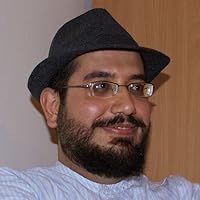
Dr. Peter Vardy (born 1945) is a British academic, philosopher, theologian and author. Since 1999 he has held the post of Vice Principal at Heythrop College, London.
Vardy was originally a chartered accountant before becoming an academic. He holds a Masters Degree in Theology (with distinction) and a Ph.D (on ‘The Concept of Eternity’) from King's College London and has lectured in Philosophy of Religion at King's and also at the Institute of Education, London on their Masters Degree in Education programme.
I decided to read this book after meeting Peter Vardy at the Candle Conference in Cambridge in 2019, luckily my friend had a spare copy and gave me it! I would recommend this book to anyone regardless of their philosophical knowledge, it is easy to read and does not assume any previous knowledge. I found it particularly useful as an A Level Philosophy student because it serves as the perfect tool for revision but also as wider reading since it also mentions some other scholars that are not studied in my particular course.
I’ve just started my a level religious studies course and I found this to be interesting without being too complicated. It doesn’t go into a huge amount of detail and it’s easy to read so I think it’s a really good introduction to philosophy of religion.
To the best of my knowledge, very few introductory books delve into the realism-antirealism debate as a foundational approach shaping the entire discourse within the realm of analytic philosophy of religion rather than treating it merely as one among many topics. The sole exception that comes to mind is Peter Vardy's work from the 1990s: The Puzzle of God. The debate between realism and antirealism held significant prominence in the 1990s and early 2000s but has since waned in importance. However, it remains a pivotal discussion because it has the potential to profoundly influence the way we engage with topics in the analytic philosophy of religion.
If we consider that discussions about God do not involve discourse about an independent reality that exists irrespective of our thoughts and language concerning God, but rather that talking about God is akin to discussing a particular form of life, then this perspective could necessitate a reevaluation of traditional topics within analytic philosophy of religion. These topics encompass the science and religion debate, theistic arguments, concepts of life after death, petitionary prayer, miracles, and more. They would either need to be set aside or undergo a radical reinterpretation under this antirealist framework.
Peter Vardy, originally a successful accountant, experienced a pivotal moment during his third decade when he asked himself, "What am I here for?" Subsequently, he made a significant shift by embarking on studying philosophy and theology. It appears that Vardy leans towards an antirealist stance within the realm of philosophy of religion.
A good, if not simple, little book that certainly poses interesting questions about God. However I cannot rate this book 4 stars because Dr. Vardy is obsessed with an “anti-realist” view of God for which he provides few criticisms, when he (rightly) shows an abundance for the realist standpoint(s). This is because there aren’t any and the “anti-realist” view appears to me to essentially be a matter of opinion.
Although I only read the summaries for each section (and the full sections for those which did not have summaries), I found this to be useful in consolidating my knowledge of the topics we have studied in the philosophy section of the Religious Studies A Level.
This book is a great companion to the study of Philosophy. At 230 pages, it doesn't offer superfluous amounts of detail to the arguments, but just enough to get across the main ideas. Would recommend it to anyone studying A-Level Philosophy of Religion.
It was really interesting. I am a GCSE student debating A-level Philosophy and Ethics and this has steered me in to that path. He's a brilliant writer and I recommend this book to anyone who finds philosophy interesting. It honestly makes you see the world differently.