This title tells the story of a secret war fought by British mercenaries in the Yemen in the early 1960s. The book features British military history, much in the spirit of Ben MvIntyre's Agent Zigzag i>nd 'Operation Mincemeat'.
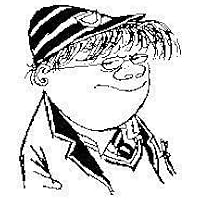
Peter Duff Hart-Davis, generally known as Duff Hart-Davis was a British biographer, naturalist and journalist, who wrote for The Independent. He was married to Phyllida Barstow and had one son and one daughter, the journalist Alice Hart-Davis. He lived at Owlpen, in Gloucestershire.
This book was very insightful considering I have done a lot of research on Egyptian History... certainly revealing and helped other bits of information, which I gleaned from reading other historical books, slot into place. You know those moments when you are reading historical books and there are just certain chunks missing or things that just done sit right, like there is a huge void in the whole scenario? Well this is a book that will help you fill in a lot of gaps.
It was also interesting to read this knowing what I know about Egypt and the politics of the Middle East, Gulf and the rest of the Arab world. With the insights this book gives, you get a better understanding of why certain tensions are there between certain countries and why international trade is very strained.
None of it surprised me though, it was just good to piece some of the information together.
I would highly recommend this to the many Egyptians interested in their own history.. especially given they are only given Pharonic history to learn in schools. They would learn a lot and it would help them understand why they are faced with issues when travelling to other Arab countries.
Philip Hensher in The Spectator: The War That Never Was Duff Hart Davis Century, 400pp, £14.99 ‘Enormous fun and a tremendous adventure,’ one of the participants called it afterwards, voicing the sentiments of every British soldier running amok since the beginning of time. Probably there were soldiers under Boadicea who said exactly the same thing. This little known story from the very end of the imperial adventure is redolent of cheek, bravado and the undertaking of a challenge for no other reason than thinking ‘Why the heck not?’ It is almost incredible that it took place well within living memory. Although Aden had been a British crown colony since 1838, Yemen in the early 1960s was pretty well terra incognita for the western world. It was known to the Romans as Arabia Felix. It had been ruled by the same line of priest-kings for eight centuries. The country was closed to foreigners, and outside a very few urban areas, there was no infrastructure whatsoever. Most of the population had never seen a white man. (When the heroes of this story turned up in rural areas, the locals took to rolling up their trousers without invitation to discover whether they were the same strange colour all over.) The foreigners who did live there endured a peculiar, Waughish existence of absurdity and constraint. If Ronald Bailey, until 1962 the British Consul in Taiz (the country’s second city) wanted to go for a walk, he first had to obtain permission from the Imam, which could take two weeks to arrive:
If permission was eventually granted, he was obliged to perambulate carrying an open umbrella, to demonstrate that he was a figure of importance, so that people would treat him with respect. Tribesmen in the hills were in the habit of dressing themselves in anything that came to hand whenever the temperature dropped, including, according to one report, ‘a woman’s thin black evening coat with a tattered fur collar ... a relic of the Gay Twenties.’ Some of them had four thumbs, through a genetic quirk. This astonishing country was suddenly dragged into the 20th century by the unwelcome attentions of that undeniably modern figure, Egypt’s General Nasser. In pursuit of his dream of a united Arab world, Nasser saw a Yemen under his control as the soft underbelly through which he could proceed effortlessly up through Saudi Arabia and on to Jerusalem. He first wooed the alcoholic, fat, drug-addicted son of the Imam, promising Crown Prince al-Badr 25,000 Egyptian pounds and two cases of pistols if he would kill his father. (Drug- addiction was taken for granted in Yemen, and this book includes a memorable photograph of an elderly gentleman chewing qat, the Yemeni narcotic, quite clearly out of his tree.) When a telegram arrived ordering the prince to carry out the deed, al-Badr broke down and confessed everything. Strangely enough, his father forgave him. But shortly afterwards, to everyone’s surprise, the Imam — himself grotesquely obese — died of natural causes and was succeeded by his would-be assassin. By this time Nasser had had enough. In a palace coup, a puppet of Nasser’s, Abdullah al- Sallal (until fairly recently a street charcoal-seller) took charge, as Egyptian battleships steamed towards Hodeidah, Yemen’s main port. In time-honoured fashion, the new Imam took to the hills. Enter the British. With Suez fresh in everyone’s mind, and the larger Cold War implications involved in Nasser’s grandiose gestures, there was no great appetite in Britain for a Yemeni adventure. It was all too clearly bound to end in humiliation. Still, there were plenty of people around who thought that Nasser could usefully be stalled. These included Alec Douglas-Home and Julian Amery, as well as members of Mossad. Who was to do the job? Colonel David Stirling ‘arranged (with the connivance of Home and Amery) for Billy McLean to meet Brian Franks (then Colonel Commandant of the SAS) at White’s Club.’ Franks knew a man called Jim Johnson.There have been more likely masterminds of insurgency — Johnson at this time was an underwriter at Lloyd’s — but Franks must have realised that he had his man as soon as he explained that the Royalists in the hills were being attacked by Russian aircraft based in Sana’a: ‘Would you like to go in and burn all these aeroplanes?’ he suggested. ‘Well, yes,’ Jim replied nonchalantly. ‘I’ve nothing particular to do in the next few days. I might as well have a go.’ This Buchanesque figure was quickly supplied with a cheque for £5,000, which he cashed at the Hyde Park Hotel (‘What do you need all this money for?’ ‘My daughter’s getting married.’) and set about acquiring an office in London and some mercenaries, under the strictest conditions of official deniability. Not only was it deniable; those people in the Government who had been aware of the project believed it had been cancelled. After the political explosion of the Profumo affair, Duncan Sandys, the Colonial Secretary, had telephoned David Stirling to call the whole thing off. Sandys, remembered by posterity chiefly as the prime candidate for the ‘headless man’ in the polaroids in the Argyll divorce case, was subsequently described as ‘that shit’ by Johnson. The campaign went ahead. The potential implications of the war between the Royalists and the Republicans were global in scope. But the fascination of this intricate story lies in the gamy flavour of the characters who brought Nasser’s substantial forces to their knees. Previously, ‘the Yemenis’ normal form of attack was to rush forward, barefoot and screaming, brandishing their jambiyas or firing rifles (if they had any)’. With only a few dozen mercenaries getting the Royalist forces up to scratch, the episode became Nasser’s very own Vietnam, a source of constant humiliation and pain. Among the dramatis personae was a Canadian dealer in postage stamps calling himself Brigadier General Abdurrahman Bruce Alphonso de Bourbon-Condé; an inspector for the Good Food Guide turned guerrilla; and an airman who later in life took a great interest in developing a medieval siege engine ‘with which he managed to throw a dead sow 340 yards’. We meet various London ‘Q’ types, used to showing visitors who had ‘brought some equipment’ into cellars stuffed with submachine guns; one man got a frightful shock since, it turned out, he was actually a vacuum-cleaner salesman. And there is Jim Johnson himself, who only visited Yemen once, but who was clearly one of those up-for-anything types who stuff the pages of Buchan, Sapper and Dornford Yates. Duff Hart-Davis has taken over the writing of this book from Jim Johnson’s second-in-command, Tony Boyle, who was working from Johnson’s archive; both men died before the work was completed. He has done his extraordinary subject justice. Why did any of them get involved with the project? Well, the pay was good, but that is exactly the sort of thing men say to cover their enjoyment and excitement. The fact of the matter is that it was a terrific adventure, the sort which is supposed to have come to a definitive end with the end of the Empire.
Well written account of an obscure war that the world chose to forget
A great read, so many of the tragic events currently unfolding in the Yemen have their roots in the events described in this book. The perfidy of the successive British governments, including those who toadied up to Nasser comes as no surprise. As ever the Foreign Office rather than the elected government of the day determined foreign policy and seemed to with unerring predictability act against their countries interests. The resilience of the tinny band of reserve soldiers who fought this secret war is admirable. A good read indeed....
This is a gripping narrative of the struggles the few British mercenaries faced in North Yemen during its civil war. While I cannot fault this side of the book, I was definitely handicapped in its reading by my almost non-existent knowledge of North Yemen, the South Arabian Federation, and Egyptian policy of the times, all factors which played a role here. Hence, I'd recommend a more general overview to be read first and then this book, so that the overall context is easier to grasp.
It took me a while to chew through this. Very interesting story, a bit difficult to access because it was necessarily written as a series of anecdotes from some of the principle participants. Somewhat monotonous in that sense, but overall an important episode in the Cold War and the development of the modern Middle East. If Middle Eastern history and politics are of interest to you, and you can get your hands on a copy (somewhat tricky in the States), it's worth the read.
Its good someone finally told these men's story now that many of them have departed or are on the way out. Its a common story in geopolitics to often achieve victory only to be undone by your own hubris. Colonel Nasser certainly got his by invading Yemen. The book is quite informative and readable drawing on the accounts of those who carried it out. A decent read. Especially in light of the crisis in the middle east the last few years and the fighting in Yemen with the Houthis.
Reminds me of James Bond, Wild Geese (the mercenary movie featuring Richard Burton) and the wild west in the 1960's. It is a story of mainly ex SAS people and a future head of the British army, fighting a private war to defend British influence in Yemen. Incredible read.
Here is the reason for Yemen's current situation. A government willing to let it's elite troops take extended leaves to fight in country it wouldn't internationally back for political reasons. Brave men, hopeless politician's! Well worth the read.
It is amazing what many of us don't know. I'm an avid reader of history and have been for as far back as I can remember, but I never knew of the effort or the war related in this book.
Yemen is in the news of late, but like the war discussed here, is pretty well unknown outside the Middle East. This war was due to the efforts of Egypt's President Nasser to extend the hand of Arab Republicanism to Yemen and the Arabian Peninsula, and to defeat the specter of British colonialism in the area.
This is a story of big personalities, ineffective political leaders, and indifferent people who just wanted to be left alone - like most victims of war. And it is a good primer toward the understanding basics of the current Yemen War.
Detailed discussion of the secret operation in Yemen by British mercenaries in the 1960's from a very British perspective. The book almost reads like some Oriental account of the British adventurer among the wild Arabs. But I did enjoy the historical account of the political situation in that area.