

What do you think?

Lamia. Testo inglese a fronte
Lamia: donna serpente, figura del male e della seduzione, inganno dei sensi e del cuore. Ma anche figura tragica, essa stessa ingannata e condannata a svanire e disfarsi alla luce fredda e tagliente della ragione, sotto lo sguardo intrusivo e impietoso dei mortali e di un mondo dal quale sono fuggiti gli dei e i miti, i giochi infiniti del sogno e della poesia, lo spazio irriducibile dell'ambiguità e delle metamorfosi. La storia di Lamia e Licio, incorniciata da quella dell'amore di Hermes per una ninfa del bosco, è storia dell'incontro impossibile tra dei e mortali, tra sogno e realtà, tra illusione e verità, tra poesia e ragione.
Testo inglese a fronte.
Testo inglese a fronte.
138 pages, Paperback
First published January 1, 1820
About the author
John Keats
1,444 books2,573 followersRich melodic works in classical imagery of English poet John Keats include "
The Eve of Saint Agnes
," "
Ode on a Grecian Urn
," and "
To Autumn
," all in 1819.
Works of Percy Bysshe Shelley include "Adonais," an elegy of 1821 to John Keats.
Work of the principal of the Romantic movement of England received constant critical attacks from the periodicals of the day during his short life. He nevertheless posthumously immensely influenced poets, such as Alfred Tennyson. Elaborate word choice and sensual imagery characterize poetry, including a series of odes, masterpieces of Keats among the most popular poems in English literature. Most celebrated letters of Keats expound on his aesthetic theory of "negative capability."
Wikipedia page of the author
Works of Percy Bysshe Shelley include "Adonais," an elegy of 1821 to John Keats.
Work of the principal of the Romantic movement of England received constant critical attacks from the periodicals of the day during his short life. He nevertheless posthumously immensely influenced poets, such as Alfred Tennyson. Elaborate word choice and sensual imagery characterize poetry, including a series of odes, masterpieces of Keats among the most popular poems in English literature. Most celebrated letters of Keats expound on his aesthetic theory of "negative capability."
Wikipedia page of the author
Ratings & Reviews
Friends & Following
Create a free account to discover what your friends think of this book!
Community Reviews
Displaying 1 - 30 of 77 reviews

July 14, 2017
Do not all charms fly
At the mere touch of cold philosophy?
At the mere touch of cold philosophy?

February 22, 2016
The God Hermes seeks out the most beautiful Nymph in the land and finds Lamia instead. Lamia, in serpent form, earns release from slithering to her human form when she helps Hermes find the Nymph. Lycius becomes infatuated with her beauty and pursues her. When he finally gets her a Sage named Apollonius ruins dreams with the power of truth.
Highly recommended for romantics and poetry lovers. Written with vivid imagery and unique, powerful language.
Highly recommended for romantics and poetry lovers. Written with vivid imagery and unique, powerful language.

March 15, 2017
So enchanting, I loved every word of it.
I liked a lot the figures that John Keats chose to tell this story, I couldn't put the book while I was reading it and now I need to read more of his work, because this one takes you to another world in so very few pages and that's extraordinary.
I liked a lot the figures that John Keats chose to tell this story, I couldn't put the book while I was reading it and now I need to read more of his work, because this one takes you to another world in so very few pages and that's extraordinary.

October 23, 2017
I don't understand poetry, but it sounded cool.

November 17, 2019
Hermosas rimas...
Beautifully written. He mixes the Greeks, the gods and philosophy. It's an interesting dialogue of which I understood nothing. :v
Beautifully written. He mixes the Greeks, the gods and philosophy. It's an interesting dialogue of which I understood nothing. :v

November 2, 2020
Contemporary poets can go home.
November 22, 2021
Bella poesía romántica, con grandes toques de maestría de un joven Keats. Dan ganas de seguir leyendo la obra de este gran poeta, muerto de forma muy muy prematura.

June 30, 2014

“And soon his eyes had drunk her beauty up,
Leaving no drop in the bewildering cup”
Well, not bad!
I enjoyed this poem. John Keats is one of the most influential romantic poets and I'm one of his big fans.

The super short plot summary is:
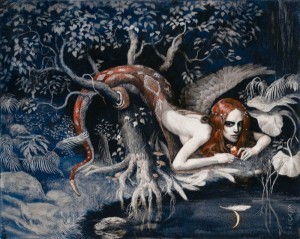
“Lamia, a serpent, asks Hermes to give her a woman form in exchange for leading him to the girl he loves. He agrees, she's transformed to a woman, she goes and allures Lycius, the one she loves, to marry her, he does, but at their wedding Apollonius, a sage, uncovers her true self and tells Lycius that she's a serpent! She vanishes instantly and Lycius dies!”
It's worth reading. Especially for those who are so in love with romantic poems :) :)

June 24, 2014
My Keats as usual! Opened to me a gate to another world of gods and wretches and those who seek love and get lost to find misery instead! A human falls in love with a creature got him from heaven down to earth.
A serpent falls in love with a powerless creature just when she found out that her soul matched his.
Wow!
A serpent falls in love with a powerless creature just when she found out that her soul matched his.
Wow!

April 10, 2013
Stunning. Nothing we write, with all of our pale adverbs, compares to the intensity wrought with concise imagery.

February 18, 2021
Poema narrativo mitológico donde una ninfa aparece como protagonista, con una belleza excepcional a la que el dios Hermes desea conocer. Se encuentra rodeada de tritones, una serpiente y hasta el agua siente su belleza ante el contacto con su piel desnuda.
Está muy bien escrito y para los lectores aficionados a la mitología, seguro que será de su agrado. Pero personalmente no es de mis géneros predilectos, es una narración que no me dice nada, no me llega. Pero al ser breve, podéis leerla si tenéis curiosidad.
Está muy bien escrito y para los lectores aficionados a la mitología, seguro que será de su agrado. Pero personalmente no es de mis géneros predilectos, es una narración que no me dice nada, no me llega. Pero al ser breve, podéis leerla si tenéis curiosidad.

January 7, 2023
Lamia is a serpent, Lucius a human. After earning a beautiful human body, Lamia and Lucius meet and fall in love.
A beautiful poem which makes us question about love: Is it merely vain and superficial ?
A beautiful poem which makes us question about love: Is it merely vain and superficial ?


August 29, 2025
Christabel No. 2

September 24, 2024
One of my favorite poems from the romantics, Lamia does a very good job of blurring the lines between good and evil. It is one of those works that will leave you wondering which side to take and which you should have taken from the beginning. Keats wrote it in the hopes of making a lasting sensation. And in this, it is still very effective.
The poem begins with the trickster god, Hermes, sneaking past Zeus on an errand of his own. Down on earth, Hermes meets Lamia, a woman trapped in a snake’s body. The two agree that Hermes, using his serpentine rod, restores Lamia to her feminine glory on the condition that she tells him where to find a beautiful nymph, the object of the god's infatuation. After a painful metamorphosis, Lamia reemerges as a woman, and now wants nothing more than to see Lycius, a Greek guy whom she loves. Things move forward from there.
The poem is divided in two parts. The first, which is my favorite, is more thematically nuanced, whereas the second is all about the dramatic unfolding of the story. One of the most interesting sections of the poem is the conversation between Hermes and Lamia, which puts an intertextual layer to the understanding of the narrative by placing it as a sequel to the original mythology. Another is when Lamia pulls at the thread of her divinity, signifying the multiplicity Lycius must contend with now that he is in love—the multiplicity we have to deal with whenever we are in love. These are my favorite bits.
The sensation Keats hoped for becomes obvious as the ending deflects from the reader's desire to see the unfortunate couple succeed. This is indeed what I wanted to see. However, the blindness of Apollonius, the so-called voice of reason and enlightenment, precludes any satisfactory conclusion, and we are left with nothing but hate for him and his stupid intrusion.
Lamia is now one of my favorite romantic poems. Anyone interested in 19th century romanticism and in John Keats in particular should read it.
The poem begins with the trickster god, Hermes, sneaking past Zeus on an errand of his own. Down on earth, Hermes meets Lamia, a woman trapped in a snake’s body. The two agree that Hermes, using his serpentine rod, restores Lamia to her feminine glory on the condition that she tells him where to find a beautiful nymph, the object of the god's infatuation. After a painful metamorphosis, Lamia reemerges as a woman, and now wants nothing more than to see Lycius, a Greek guy whom she loves. Things move forward from there.
The poem is divided in two parts. The first, which is my favorite, is more thematically nuanced, whereas the second is all about the dramatic unfolding of the story. One of the most interesting sections of the poem is the conversation between Hermes and Lamia, which puts an intertextual layer to the understanding of the narrative by placing it as a sequel to the original mythology. Another is when Lamia pulls at the thread of her divinity, signifying the multiplicity Lycius must contend with now that he is in love—the multiplicity we have to deal with whenever we are in love. These are my favorite bits.
The sensation Keats hoped for becomes obvious as the ending deflects from the reader's desire to see the unfortunate couple succeed. This is indeed what I wanted to see. However, the blindness of Apollonius, the so-called voice of reason and enlightenment, precludes any satisfactory conclusion, and we are left with nothing but hate for him and his stupid intrusion.
Lamia is now one of my favorite romantic poems. Anyone interested in 19th century romanticism and in John Keats in particular should read it.

April 24, 2015
Okay, so this work was certainly better than "Endymion" (review here). It was also one of the better long works by Keats in general. The plot was actually interesting, although Keats has this funny way of coming off just a tad too scholarly and "oh-so Greek and trained".
This poem was intriguing, however, because it's about a snake who turns into a woman who vanishes mysteriously for little to no reason. The best part about this is that Keats based this off of a myth that this really happened one time in ancient Greece. Isn't that just funny?
I have to admit that the reason why Keats is so famous is really for his short poems, which contain sheer brilliance. His longer works are sometimes a bit long-winded, which is an issue for writers of all sorts that happen to have amazing vocabulary. But you know what? I enjoyed myself decently while reading "Lamia", it's just a little too easy to get lost. While this may be my own fallacies in reading poetry, that's just the way it turned out.
This poem was intriguing, however, because it's about a snake who turns into a woman who vanishes mysteriously for little to no reason. The best part about this is that Keats based this off of a myth that this really happened one time in ancient Greece. Isn't that just funny?
I have to admit that the reason why Keats is so famous is really for his short poems, which contain sheer brilliance. His longer works are sometimes a bit long-winded, which is an issue for writers of all sorts that happen to have amazing vocabulary. But you know what? I enjoyed myself decently while reading "Lamia", it's just a little too easy to get lost. While this may be my own fallacies in reading poetry, that's just the way it turned out.

April 12, 2017
Es difícil puntuar hoy, en internet, un poema romántico lleno de alusiones a la mitología griega. Pero me ha gustado. Se podría adaptar a un cuento de hadas (a lo mejor hasta a una peli) y, si eres capaz de atravesar la selva de símiles, cuenta una historia interesante.
Si yo soy Licio, me quedo con la serpiente.
Si yo soy Licio, me quedo con la serpiente.

January 1, 2019
El último del 2018.
Me encanta la forma en la que Keats describe el entorno en el que se desarrolla la historia. Sin duda alguna me a dejado muy satisfecho. Aparecen algunos Dioses conocidos y otros personajes también.
Me encanta la forma en la que Keats describe el entorno en el que se desarrolla la historia. Sin duda alguna me a dejado muy satisfecho. Aparecen algunos Dioses conocidos y otros personajes también.
las palabras de ella sonaron como música
celestial a su oído, y era como si Licio
la hubiese amado ya todo un largo verano

February 15, 2015
Love in a hut, with water and a crust,
Is—Love, forgive us!—cinders, ashes, dust;
Love in a palace is perhaps at last
More grievous torment than a hermit's fast—
That is a doubtful tale from faery land,
Hard for the non-elect to understand.
Is—Love, forgive us!—cinders, ashes, dust;
Love in a palace is perhaps at last
More grievous torment than a hermit's fast—
That is a doubtful tale from faery land,
Hard for the non-elect to understand.

January 5, 2012
From BBC Radio 4:
Adaptation of Keats's sensual narrative poem.
Adaptation of Keats's sensual narrative poem.
October 7, 2013
Nice enough to read, but I think I kind of lost the plot. :( It's not you, it's me! But it might be you.

August 8, 2015
No esperaba tanta belleza en las palabras de Keats.

December 14, 2018
"... and she began to moan and sigh
Because he mused beyond her, knowing well
That but a moment's thought is passion's passing bell."
Because he mused beyond her, knowing well
That but a moment's thought is passion's passing bell."
August 17, 2022
John Keats' Lamia is a long poem in two parts. It has a number of layers which can be interpreted in a few different ways. For the sake of her love, Lamia, cursed to be ugly and guard a nymph from everyone's sight, betrays her charge to the love-lorn Hermes, who takes possession of that nymph. Lamia happily unites with Lycius, her lover, and their bliss is complete for a while, until Lycius decides to display her. She begs to be kept hidden from Apollonius, the sophist who was Lycius' master. But Apollonius comes to their wedding celebration anyway, and Lamia perishes because of her proximity to him. Lycius dies of grief the same night.
At one level, this poem is a representation of power play between the sexes, conveyed in terms of sexual relationships. Men desire and pursue women because they realise that their happiness is tied to the company of a woman, whereas for women, sexual relationships with men, regardless of their quality, always compromise their safety and autonomy. Thus Hermes' desire exposes the nymph, and Lamia's own desire makes her first expose her charge to Hermes' advances and then exposes herself to Lycius. The nymph is dismayed when she first sees Hermes, and has to be coaxed into accepting him, and Lycius himself after begging and worshipping Lamia tries to assert dominance over her and display her to the public as his possession, which she reluctantly submits to, leading to her own destruction through the fault of her male lover and his destruction through his insistence on following a convention that he knows will harm his beloved. Oscar Wilde's bitter declaration that "each man kills the thing he loves" comes to mind.
On another level this poem functions as an allegory about the mutual antipathy between reason and emotion, worldly engagements and idealistic musings. Lamia, extraordinary in her transcendental beauty, represents the vitality of devoted emotion. Apollonius, the cold and indelicate sophist, represents the inescapable material reality from which any enlightened seclusion or romantic exaltation can only be a temporary refuge, sure to fall before the necessity and pervasiveness of rationality sooner or later. The insight into and meditation of the idealistic vision collapses when the breath of rational thought intrudes upon it, and thus Lamia dies when exposed to Apollonius, the representative of the quality that is antithetical to what she stands for. Lycius' own death at her loss, and his outburst directed at Apollonius shortly before he dies, represent the shock of disillusionment and the abhorrence the sensitive, artistic soul harbours towards a nature so contrary to its own inclination, and potentially (in this case actually) fatal to it.
The Romantics are celebrated for their relatively easier language and style. This poem, full of imagery so evocative that the scenes unfold before the reader's eyes in perfect synchronisation with the flow of the text, is a good example of how readable and thoroughly enjoyable Romantic poetry is. The vocabulary that conjures up the enchanting scenes of the poem is deceptively simple, a testament to Keats' mastery over the craft of poetry.
I give this poem 5 out of 5 stars. A classic that is enjoyable, easy to read, relevant and relatable, all with gorgeous imagery and a touch of mystery — what more could anyone want? I recommend this poem for people who like classical literature, are trying to start reading classical literature, are looking for a quick read in classical literature, or just anyone who is curious because I believe that reading a classic is never a total waste. If nothing else, one becomes familiar with another style of expression, one that would not be found in contemporary books, even those that are set in an archaic context.
At one level, this poem is a representation of power play between the sexes, conveyed in terms of sexual relationships. Men desire and pursue women because they realise that their happiness is tied to the company of a woman, whereas for women, sexual relationships with men, regardless of their quality, always compromise their safety and autonomy. Thus Hermes' desire exposes the nymph, and Lamia's own desire makes her first expose her charge to Hermes' advances and then exposes herself to Lycius. The nymph is dismayed when she first sees Hermes, and has to be coaxed into accepting him, and Lycius himself after begging and worshipping Lamia tries to assert dominance over her and display her to the public as his possession, which she reluctantly submits to, leading to her own destruction through the fault of her male lover and his destruction through his insistence on following a convention that he knows will harm his beloved. Oscar Wilde's bitter declaration that "each man kills the thing he loves" comes to mind.
On another level this poem functions as an allegory about the mutual antipathy between reason and emotion, worldly engagements and idealistic musings. Lamia, extraordinary in her transcendental beauty, represents the vitality of devoted emotion. Apollonius, the cold and indelicate sophist, represents the inescapable material reality from which any enlightened seclusion or romantic exaltation can only be a temporary refuge, sure to fall before the necessity and pervasiveness of rationality sooner or later. The insight into and meditation of the idealistic vision collapses when the breath of rational thought intrudes upon it, and thus Lamia dies when exposed to Apollonius, the representative of the quality that is antithetical to what she stands for. Lycius' own death at her loss, and his outburst directed at Apollonius shortly before he dies, represent the shock of disillusionment and the abhorrence the sensitive, artistic soul harbours towards a nature so contrary to its own inclination, and potentially (in this case actually) fatal to it.
The Romantics are celebrated for their relatively easier language and style. This poem, full of imagery so evocative that the scenes unfold before the reader's eyes in perfect synchronisation with the flow of the text, is a good example of how readable and thoroughly enjoyable Romantic poetry is. The vocabulary that conjures up the enchanting scenes of the poem is deceptively simple, a testament to Keats' mastery over the craft of poetry.
I give this poem 5 out of 5 stars. A classic that is enjoyable, easy to read, relevant and relatable, all with gorgeous imagery and a touch of mystery — what more could anyone want? I recommend this poem for people who like classical literature, are trying to start reading classical literature, are looking for a quick read in classical literature, or just anyone who is curious because I believe that reading a classic is never a total waste. If nothing else, one becomes familiar with another style of expression, one that would not be found in contemporary books, even those that are set in an archaic context.
This entire review has been hidden because of spoilers.
July 22, 2023
Lamia forma parte de tres poemas narrativos incluidos en la última obra publicada por Keats antes de su muerte. Pertenecen a la última madurez del poeta, si se puede llamar así la obra de un joven de 25 años.
Los poetas ingleses siempre fueron tentados por el largo poema narrativo, incluso los más grandes poetas líricos como Keats no podían dejar de considerar que esas obras ambiciosas serían sus obras más importantes.
Keats ajusta su tono al contenido del poema, pero ahí está parte del problema. A mayor ambición parece que va aparejado un lenguaje y una dicción más convencional, más superficialmente rica. Naturalmente el verso es bellísimo, como siempre en Keats, y la famosa sensualidad que lo caracteriza es más evidente que nunca. Pero da la sensación de un estilo más lejano, trabajado, hasta cierto punto convencional, que en los sonetos. Los poemas largos de Keats son a veces obras magníficas, como en este caso, pero difícilmente, y a pesar de lo que él podría considerar, serían las obras que le consolidarían como uno de los más grandes poetas del canon inglés.
Personalmente creo que los sonetos son la parte más genial de su obra, esos poemas a menudo circunstanciales, a veces fruto de una competición entre amigos, que podía componer casi de golpe.
Pero los críticos no favorecen al poeta lírico, sobre todo los anglosajones favorecen las obras de ideas, y los sonetos se les quedan pequeños. Las odas, más elaboradas, más atildadas, son sus obras más valoradas por la crítica anglosajona, y pertenecen también a mi juicio a ese grupo de sus mejores y más disfrutables obras.
Por otra parte la tendencia a valorar las últimas obras de un poeta por encima de las más tempranas (especialmente en un poeta que murió tan joven), favorece a las Odas, escritas en su mayoría en la primavera de 1819, por encima de los sonetos que venía componiendo desde 1815 (con tan solo 20 años…).
Pero Keats podía escribir en 1817 de golpe versos como:
The calmest thoughts came round us; as of leaves
Budding—fruit ripening in stillness—Autumn suns
Smiling at eve upon the quiet sheaves—
Lamia tiene evidentemente un contenido más complejo, un lenguaje más rico y apretado y es para mí sin duda alguna el más interesante de los tres poemas incluidos en el libro, muy por encima del mediocre Isabella o del medievalizante The Eve’s of St Agnes.
Lamia, la imaginación o la poesía, sucumbe ante la barata mediocridad del mundo y ante el inmisericorde análisis científico. El narrador nos representa esta serpiente convertida en mujer como una figura peligrosa, absorbente, necesaria, rebajada al contacto con el mundo, y derrotada ante la primera mirada del filósofo que destroza ese mundo de ilusión aplicándole la fría razón.
Los temas son muy característicos de Keats y del romanticismo en general, y el argumento permitía al poeta lucirse en descripciones como la transformación de la serpiente en mujer o el fantástico banquete preparado por Lamia en su irreal palacio.
Los poetas ingleses siempre fueron tentados por el largo poema narrativo, incluso los más grandes poetas líricos como Keats no podían dejar de considerar que esas obras ambiciosas serían sus obras más importantes.
Keats ajusta su tono al contenido del poema, pero ahí está parte del problema. A mayor ambición parece que va aparejado un lenguaje y una dicción más convencional, más superficialmente rica. Naturalmente el verso es bellísimo, como siempre en Keats, y la famosa sensualidad que lo caracteriza es más evidente que nunca. Pero da la sensación de un estilo más lejano, trabajado, hasta cierto punto convencional, que en los sonetos. Los poemas largos de Keats son a veces obras magníficas, como en este caso, pero difícilmente, y a pesar de lo que él podría considerar, serían las obras que le consolidarían como uno de los más grandes poetas del canon inglés.
Personalmente creo que los sonetos son la parte más genial de su obra, esos poemas a menudo circunstanciales, a veces fruto de una competición entre amigos, que podía componer casi de golpe.
Pero los críticos no favorecen al poeta lírico, sobre todo los anglosajones favorecen las obras de ideas, y los sonetos se les quedan pequeños. Las odas, más elaboradas, más atildadas, son sus obras más valoradas por la crítica anglosajona, y pertenecen también a mi juicio a ese grupo de sus mejores y más disfrutables obras.
Por otra parte la tendencia a valorar las últimas obras de un poeta por encima de las más tempranas (especialmente en un poeta que murió tan joven), favorece a las Odas, escritas en su mayoría en la primavera de 1819, por encima de los sonetos que venía componiendo desde 1815 (con tan solo 20 años…).
Pero Keats podía escribir en 1817 de golpe versos como:
The calmest thoughts came round us; as of leaves
Budding—fruit ripening in stillness—Autumn suns
Smiling at eve upon the quiet sheaves—
Lamia tiene evidentemente un contenido más complejo, un lenguaje más rico y apretado y es para mí sin duda alguna el más interesante de los tres poemas incluidos en el libro, muy por encima del mediocre Isabella o del medievalizante The Eve’s of St Agnes.
Lamia, la imaginación o la poesía, sucumbe ante la barata mediocridad del mundo y ante el inmisericorde análisis científico. El narrador nos representa esta serpiente convertida en mujer como una figura peligrosa, absorbente, necesaria, rebajada al contacto con el mundo, y derrotada ante la primera mirada del filósofo que destroza ese mundo de ilusión aplicándole la fría razón.
Los temas son muy característicos de Keats y del romanticismo en general, y el argumento permitía al poeta lucirse en descripciones como la transformación de la serpiente en mujer o el fantástico banquete preparado por Lamia en su irreal palacio.

September 9, 2019
Wow, what a performance. My favorite part is actually the beginning, when Hermes comes down from Olympus to see the snake:
I have noir fiction and film on the brain, but I don't think it's a stretch to say poor Lamia is one of those lost women hanging out in the underworld, like Lauren Bacall's Vivian Rutlege in The Big Sleep, beautiful, but broken, hapless, marked, "a snake in the grass."
The God, dove-footed, glided silently
Round bush and tree, soft-brushing, in his speed,
The taller grasses and full-flowering weed,
Until he found a palpitating snake,
Bright, and cirque-couchant in a dusky brake.
She was a gordian shape of dazzling hue,
Vermilion-spotted, golden, green, and blue;
Striped like a zebra, freckled like a pard,
Eyed like a peacock, and all crimson barr'd;
And full of silver moons, that, as she breathed,
Dissolv'd, or brighter shone, or interwreathed
Their lustres with the gloomier tapestries --
So rainbow-sided, touched' with miseries,
She seem'd, at once, some penanced lady elf,
Some demon's mistress, or the demon's self.
Upon her crest she wore a wannish fire
Sprinkled with stars, like Ariadne's tiar:
Her head was serpent, but ah, bitter-sweet!
She had a woman's mouth with all its pearls complete:
And for her eyes: what could such eyes do there
But weep, and weep, that they were born so fair?
As Proserpine still weeps for her Sicilian air.
I have noir fiction and film on the brain, but I don't think it's a stretch to say poor Lamia is one of those lost women hanging out in the underworld, like Lauren Bacall's Vivian Rutlege in The Big Sleep, beautiful, but broken, hapless, marked, "a snake in the grass."

March 10, 2022
This was a beautiful poem, and I was rather surprised by the turn it takes. After all, we have a story about a giant snake who tricks a lovesick god into turning her into a beautiful woman so she can hunt a handsome young man. Well, that's what you would think the story would be about.
But, Lamia doesn't appear to be looking to make a meal of her lover, Lycius. In fact, the two have been living together in a remote mansion for years. If she really wanted to eat him, wouldn't she have done it by now? While Lamia of mythology is a man-eating monster, I think Lamia of the Keats poem is actually a deeply sympathetic and tragic character. And I felt really sorry for her in the end.
The writing style took a little getting used to, as I haven't read Romantic poetry like this since college, but I rather enjoyed it. An interesting take on a fascinating monster.
But, Lamia doesn't appear to be looking to make a meal of her lover, Lycius. In fact, the two have been living together in a remote mansion for years. If she really wanted to eat him, wouldn't she have done it by now? While Lamia of mythology is a man-eating monster, I think Lamia of the Keats poem is actually a deeply sympathetic and tragic character. And I felt really sorry for her in the end.
The writing style took a little getting used to, as I haven't read Romantic poetry like this since college, but I rather enjoyed it. An interesting take on a fascinating monster.
This entire review has been hidden because of spoilers.

August 1, 2020
Riprendendo un aneddoto narrato da Filostrato nella "Vita di Apollonio di Tiana", Keats scrive nel 1819 questo poemetto ambientato nell'antica Corinto.
Testo pensato per colpire la vista del lettore-spettatore, sin dal proemio è ricco di immagini a dir poco abbaglianti, come nella descrizione di Lamia, ambigua e malinconica donna-serpente, innamorata del giovane Licio.
Ottenuta da Hermes una sembianza umana, Lamia si reca a Corinto con il proposito di sedurre Licio.
I due amanti vanno a vivere in un palazzo magico fino al giorno in cui Licio fissa le nozze.
Giunto il giorno della cerimonia, al banchetto si presenta a sorpresa il celebre filosofo e taumaturgo Apollonio di Tiana, maestro di Licio, che non è stato invitato alla festa.
Questi rivela al giovane sprovveduto la vera identità della sua futura sposa, ponendo così fine all'incantesimo. Il palazzo e Lamia scompaiono e l'infelice Licio muore di dolore poco dopo.
Dal punto di vista stilistico, Keats scrive questo poema scegliendo ancora l'heroic couplet, ovvero il distico a rima baciata ma, a differenza di Endymion, il testo appare molto più naturale e sobrio.
Sorprende in particolare la capacità del poeta di ricreare atmosfere tipiche della letteratura ellenistica, pur avendo egli una conoscenza solo indiretta della letteratura greca.
Sebbene la vicenda narrata sia molto essenziale, si tratta di un'opera di grande valore stilistico che può essere però apprezzata pienamente solo in lingua originale, anche se vanno riconosciuti al traduttore gli sforzi per richiamare la trama fonica del testo inglese in italiano.
Testo pensato per colpire la vista del lettore-spettatore, sin dal proemio è ricco di immagini a dir poco abbaglianti, come nella descrizione di Lamia, ambigua e malinconica donna-serpente, innamorata del giovane Licio.
She was a gordian shape of dazzling hue,
Vermilion-spotted, golden, green, and blue;
Striped like a zebra, freckled like a pard,
Eyed like a peacock, and all crimson barr'd;
And full of silver moons, that, as she breathed,
Dissolv'd or brighter shone, or interwreathed
Their lustres with the gloomier tapestries. (vv. 47-53)
Ottenuta da Hermes una sembianza umana, Lamia si reca a Corinto con il proposito di sedurre Licio.
I due amanti vanno a vivere in un palazzo magico fino al giorno in cui Licio fissa le nozze.
Giunto il giorno della cerimonia, al banchetto si presenta a sorpresa il celebre filosofo e taumaturgo Apollonio di Tiana, maestro di Licio, che non è stato invitato alla festa.
Questi rivela al giovane sprovveduto la vera identità della sua futura sposa, ponendo così fine all'incantesimo. Il palazzo e Lamia scompaiono e l'infelice Licio muore di dolore poco dopo.
Dal punto di vista stilistico, Keats scrive questo poema scegliendo ancora l'heroic couplet, ovvero il distico a rima baciata ma, a differenza di Endymion, il testo appare molto più naturale e sobrio.
Sorprende in particolare la capacità del poeta di ricreare atmosfere tipiche della letteratura ellenistica, pur avendo egli una conoscenza solo indiretta della letteratura greca.
Sebbene la vicenda narrata sia molto essenziale, si tratta di un'opera di grande valore stilistico che può essere però apprezzata pienamente solo in lingua originale, anche se vanno riconosciuti al traduttore gli sforzi per richiamare la trama fonica del testo inglese in italiano.
January 20, 2026
She was a gordian shape of dazzling hue,
Vermilion-spotted, golden, green, and blue
Maybe I'm biased, but the references to classical mythology and the Greco-Roman classical setting gives the poem such a lovely depth of tone. Lamia is a divisive, conflicted character that I have endless sympathies for, and Lycius is interesting when viewed from both Lamia's perspective and a more impartial perspective, but I hold no love for him. Apollonius is an good symbol, and it was certainly a choice for Keats to create a physical opponent rather than leave the conflict cenetered around Lamia's choice.
Vermilion-spotted, golden, green, and blue
Maybe I'm biased, but the references to classical mythology and the Greco-Roman classical setting gives the poem such a lovely depth of tone. Lamia is a divisive, conflicted character that I have endless sympathies for, and Lycius is interesting when viewed from both Lamia's perspective and a more impartial perspective, but I hold no love for him. Apollonius is an good symbol, and it was certainly a choice for Keats to create a physical opponent rather than leave the conflict cenetered around Lamia's choice.

February 5, 2019
He leído la versión traducida por Luis Alberto de Cuenca y José Fernández Bueno. Me ha encantado, pero todo el tiempo trataba de imaginar cómo sería el original. Tengo que hacerme con un ejemplar de "Lamia, Isabella, The Eve of St. Agries and other poems" porque me he quedado con ganas de más Keats.
Las ilustraciones son una comparsa excepcional.
Las ilustraciones son una comparsa excepcional.
Displaying 1 - 30 of 77 reviews