Nebula Award Nominee. The crew of Moonbase Columbus make an amazing discovery on the far side of the Moon a massive alien structure is erecting itself, built up atom by atom by living machines, microscopically small, intelligent, and unstoppable, consuming everything they touch. The mysterious structure begins to expand and take shape, and its creators begin to multiply.
Is this the first strike in an alien invasion from the stars? Or has human nanotechnology experimentation gone awry, triggering an unexpected infestation? As riots rage across a panicked Earth, scientists scramble to learn the truth before humanity is engulfed by the voracious machines.
Yes, I have a lot of books, and if this is your first visit to my amazon author page, it can be a little overwhelming. If you are new to my work, let me recommend a few titles as good places to start. I love my Dan Shamble, Zombie P.I. series, humorous horror/mysteries, which begin with DEATH WARMED OVER. My steampunk fantasy adventures, CLOCKWORK ANGELS and CLOCKWORK LIVES, written with Neil Peart, legendary drummer from Rush, are two of my very favorite novels ever. And my magnum opus, the science fiction epic The Saga of Seven Suns, begins with HIDDEN EMPIRE. After you've tried those, I hope you'll check out some of my other series.
I have written spin-off novels for Star Wars, StarCraft, Titan A.E., and The X-Files, and I'm the co-author of the Dune prequels. My original works include the Saga of Seven Suns series and the Nebula Award-nominated Assemblers of Infinity. I have also written several comic books including the Dark Horse Star Wars collection Tales of the Jedi written in collaboration with Tom Veitch, Predator titles (also for Dark Horse), and X-Files titles for Topps.
I serve as a judge in the Writers of the Future contest.
My wife is author Rebecca Moesta. We currently reside near Monument, Colorado.
i was ernestly trying to enjoy this book and i even thought i was succeeding despite many little questions... right up to this part where the protagonist "scientist" girl goes "i've scrambled them with high-energy particles. maybe that'll knock out some of their old programming and leave them open to suggestions. i'm trying to teach them a different type of behaviour". it would not be so funny were it not about nanoscale robots that she spoke. ROBOTS for god's sake! dear author, try bombarding your iphone with hard-energy particles to maybe knock out some of its old programming, heh? you know, just to teach it some different applications? omfg, don't get me wrong, i love sci-fi of almost any sort, i'm open for almost any fantasy because it's just part of the genre, and kids trying to domesticate an alien robot is not an unheard-of theme here, but a scientist? in the domain of nanotechnology? without knowledge of programming? trying to "domesticate" nanomachines (or to do a selective breeding on them as another protagonist did in the same book) — isn't that just a little bit too much to accept?! in the end i'm disappointed by how the author killed the plot and turned the story into something so bland =/
Though Anderson and Beason's vision of nanotechnology is not nearly as imaginative as David Marusek's in his Counting Heads series, this is still a good near-future yarn that moves right along. The characters are convincing for the most part and there were only a few spots where I felt a plot mechanism was thrown in just to get from point A to B without being convincing enough. Also, the plot pretty much telegraphed the ending well in advance. The whole thing kind of rolled up into a neat little sci-fi pastiche bundle at the end.
Still, all in all, I had fun with it and found myself staying up into the wee hours, not wanting to use my bookmark. The way the story ends, a sequel is obviously in the works (when was the last time anyone wrote a science fiction novel that wasn't part of a series) and I am looking forward to it. Let the aliens come!
This is a well-written story solidly based in the science known at the time and even now for that matter. It moves along at a great pace, has well-developed characters and just the right amount of suspense to keep the pages turning. The actions of the characters are very believable and you find yourself saying "I would do that" often just as you realize the consequences of those actions.
The scope of the book is huge and the portrayal and speculation of the aliens is very plausible and interesting. The ending was a little disappointing but still satisfying.This is the second Anderson/Beason collaboration I have read and look forward to reading more of the ones on my shelf.
If you enjoy hard sic-fi firmly rooted in known science, this is an excellent choice.
Assemblers of Infinity has the underlying premise of space exploration / colonization by sending out nano-assemblers at near-light speed throughout space. There's a great deal that could be done with that concept. However, in this book, we have alien nanos building a structure on the Moon and humans trying to figure out what it is and whether it's a threat. You can figure out most of the story from that.
As far as writing technique, the book is good. But as far as SF meat you can sink your teeth into, the story didn't need to be 450 pages.
It has been a long time since I have read science fiction. Assemblers of Infinity is entertaining and does show plausibility in some of its technology. The premise is built around an invasion of nanocritters that begin to build a structure on the surface of the moon. Like many science fiction stories it relies on only one expert in the entire world to work on solving the problem, when a team approach would be more likely.
Despite that, this story was much more entertaining than similar stories, such as Prey by Michael Crichton. Crichton's story is more horror than science fiction and also unbelievable. He assigns a level of intelligence to nanites that is impossible. In Assemblers of Infinity the nanites are simply machines programmed by a higher intelligence determined to build a place suitable for their creators. The authors certainly set the story up for a sequel, but I am unsure if one exists.
And another pet peeve. I would think a major publisher would have better editing. On at least one page I found incomprehensible writing. A few sentences had been transposed from an earlier chapter followed by several mis-spelled words. This was a major editing mistake and I would be very upset if I was the author.
I think the concept was interesting from start to finish (although I agree with other reviewers that the Antarctic story was sort of tacked on -- a quick parable in "what could go wrong"). That said, I think there were several technical weaknesses. The authors apparently don't understand the notion of emergent behavior -- no ant needs to know the blueprint of the anthill, they all engage in simple behavior that results in an anthill being constructed. I would think Nanotech From The Stars would be similarly designed. The whole zap-and-train thing struck me as ill-considered, too.
More annoying is that the authors didn't think through some of the basics of the technology they were dealing with. The idea of them stealing a lunar module to return to Earth was ludicrous -- there's no way such a craft could survive re-entry. Likewise, the authors have no understanding of how a fiber optic cable works. It doesn't carry radio waves, but light, and it's made of glass, so it's not a conductor. Trivial details, I know, but it really breaks the flow when you realize the characters don't understand what they're talking about.
There's another book that I read about a giant rock that falls to earth and, in shipping it, people realize that any exposure of it to water leads to massive, lethal electrical discharges. At the end, it falls into the ocean during transport and fries everything for miles... and then you find out it's a seed for a giant plant and that's how the book ends.
This gave me that same sort of feeling. The entire book you're reading about what's going on and you're expecting something straight forward (alien invasion, meteor strike, nano-war initiated by a competing nation, nanites that take over people's minds anything) and then at the end it's a thing that you couldn't have predicted and it's much stranger than you imagined.
Thoroughly enjoyed. Enigmatic characters, believable dialogue, interesting twists and turns, largely believable world construction. For the fan of slow-burn sci fi.
This was a good but not great Anderson novel and yet again like his stories about The Hind in Asimov's, this collaboration is better than the one solo novel of his I read, The Edge of the World. This very early novel of Anderson, co-written with Doug Beason, uses the motif of the big dumb object showing up in our solar system and causing a fuss. It's not very original at all but the action keeps it moving along rather well. Near the end, the characters start to make a lot of assumptions about the builders of the BDO and the dialogue falls into the practice of telling the reader rather than showing the reader what's happening. The ending also seemed rushed but still a decent read overall.
Some good hard sci-fi here for the time. Unfortunately everything else is pretty much boilerplate. The suspense is never attenuated the characters are flat and the ending is unsatisfyingly anti-climactic
Very engaging piece of hard sci-fi with a great premise, but a very open-ended finale, which suggests a sequel that never came. Still, very impressive the amount of foresight into nanomachine technology and other forward-looking ideas this early 90s book contains.
This book started off with a fairly decdnt Science Fiction plot. Then it turned into a Techno Thriller c rap fest of (FEAR! PANIC!) in everyone across the board. The plot thickened enough to clog the toilet at 65% and I quit. DNF
I was willing to overlook some antiquated tech references and misunderstandings about some of the science stuff. But then every single astronaut was a hollow prop, as if NASA would only select insolent, rebellious, selfish and short tempered people. I started skipping pages by halfway through.
Fantastic sci-fi story, my introduction to nanotechnology and it was fascinating. It would have been 5 stars but Mr. Andersons description of the alien complex was lacking. I felt like I never comprehended the scale and scope of the device. Wonderful story, though.
This book ponders some of the interesting new solutions and problems that nanotechnology may bring us. There's a kernel of a good escapist (as opposed to hard sci-fi) story here, starting with the get-you-hooked first chapter from the Moon Base perspective and then branching into three different locales (two Earth-based and the moon) with a few different characters that are iterated through for the rest of the story. There are a couple of sub-stories that are wound in with the overall plot that don't really add anything to the story and there's a somewhat bizarre twist to one of the main characters that actively detracts from the story.
The general shape of the plot was good, and the characters are somewhat interesting but every now and then there was a statement that blatantly contradicted information from earlier in the book, on one occasion earlier in the sentence. The characters too suffer from this problem and (relatively infrequently, to be fair) make completely out of character statements or decisions that brought me to a jarring stop while I tried to do the mental gymnastics to assimilate whatever just happened into my understanding of the people and their world. I don't want to give any specific example because they're rather spoilery, which is the annoying thing as these out-of-character moments often involved rather major plot points.
Finally, I listened to the Audible Frontiers version of this book, narrated by Jim Meskimen and, frankly, it was poor. It's read with almost no feeling whatsoever, it really felt slow and bland (I actually ended up listening to this on 1.5 speed about five chapters in because it was driving me crazy) and there are frequent changes in audio quality where pieces have been re-recorded for some reason. Mr Meskimen does manage to individually voice the characters but he frequently runs these individual voices into sentences following speech from a character, even if it's nothing related to that characters internal dialog.
This is an OK escapist thriller movie in book form and ultimately there was too much about this book that annoyed me to let me really enjoy it.
Could certainly be better. Parts of it seemed very long. Some parts were page-turners while holding it, but if I put it down, I didn't feel an urgency to pick it back up. It didn't become can't-put-it-down interesting until the end.
Perspective moves between different locations on Earth, on moon, or in space. I feel the whole Antarctic storyline could have been written out -- What does it provide other than more pages and another half a dozen characters? Someone for Erika to talk to, who could have been anywhere. Evidence that the nanocritters can evolve, which was seen in Erika's experimentation. Additional depth to the nanocritters in terms of repair/destroy, but since a) he never tells Erika anything he finds [including the evolution], b) the nanocritters are already a death threat, and c) the contaminated crew has been cleaned already by then anyway, it really doesn't move/affect the plot at all.
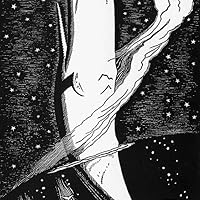
Based on the title and the cover art, my guess as the book got deeper was that it was going to end in the vein of 2001: A Space Odyssey/"It's full of stars" but it didn't. The ending wasn't particularly satisfying either; could have used a second epilogue 34-40 years after the first.
In Assemblers of Infinity, astronauts on the moon find an alien construct. They discover this has been assembled by nanomachines, but for what purpose?
The story constantly switches between a few groups of people. Trainee astronauts and nanotetchnology researchers based in the Antarctic, the astronauts on the moon, the United Space Agency in Washington. There are other characters frequently mentioned but not visited throughout the book. The amount of characters can be quite hard to keep track of, but there is a list in the front which gives an overview of their names and responsibilities.
The bulk of the book is the characters trying to discover what the nanomachine's intent is and therefore is quite a slow paced book, rather than something action packed which you would expect from science-fiction book. There's a lot of character development, so it ends up reading more of a drama between human characters, when what we really want is to learn about the aliens.
In the end, the story doesn't have a complete conclusion. You do discover the purpose of the nanomachines construct, but not the intent.
This was an Analog serial in 1992; I remember seeing the cover in the magazine rack of the local bookstore at the time, but I was not really reading Analog then. Nanotechnology had already gained exposure in the magazine in the previous decade through Stanley Schmidt's editorials; and consider also that Greg Bear's Blood Music was published in the same magazine almost ten years earlier.
The writing style is rather workmanlike. This is a plot and idea book rather than a character study.
I was rather annoyed by one character's supposed precognitive abilities, although in the end they proved somewhat faulty. I'd rather have my hard science fiction without psychic powers.
The book sort of ends just as it is getting interesting, and there are no sequels.
Addendum: I forgot to mention this but apparently Anderson got his ideas about explosive decompression (as seen in the very first chapter) from the movie Outland, where we saw people exploding when exposed to vacuum. Not really what happens.
This book was great in the first half, but I have to say that the second half didn't keep the pace up from the first. I felt like the book should have ended about 100 pages before it did; the final stretch felt like there were obstacles made up just to make the book longer instead of naturally progressing from the story. That being said, I was pretty riveted for most of the book. Character development started out pretty on the nose (having a character named 'Can't wait', or repeating characteristics over and over until the reader gets it for example) but by the end of the book the main players are organically fleshed out to the point where I actually cared about their fates.
I did think it was funny how nanotechnology has become more popular now, but in the book it had to be explained completely to everyone other than the scientists.
The idea behind the story was a fun one and it was enjoyable to watch it unfold. At times it became a bit predictable, but I would blame this on the countless hours I've spent watching sci-fi, rather than on the authors' delivery. The one issue that should have been worked out in editing, though, was how the text jumped from one time to another or one location to another without any transitional phrasing to let the reader know. Often it wasn't until a few sentences in that I would realize that we were no longer at the moon base or a significant amount of time had passed. That being said, I would still recommend this book for fun read.
This book was really good. The idea of something happening on the moon and the technology used to make it happen were very "Avante Guard." the story moved along at a really good pace, keeping the reader satisfied until the next major event unfolded. This is a very good Science fiction story that smoothly moves towards it's climax without confusing the reader. Avery good book which will not disappoint.
I liked these book. It hits most of the bases that I look for in a good Sci-Fi book. Good plot, suspense, character development and interaction. I wasn't particularly fond of the ending, and that's why I didn't give it 5 stars. It was a valid ending in its own right, but really was an ending for a book that was going to continue into a series. As a standalone novel, I don't feel like it was wrapped up nicely.
Anderson and Beason weave a story about adventure, space travel, the ills of misunderstanding technology, and the dangers of recklessly pursuing things you don't understand. I liked their character development, the various plot lines, and the challenges that each character faces as they try to survive in space, understand a new phenomenon, and push the pursuit of human knowledge of nano-technology to new heights.
Very bad writing. Characters are caricatures. Very interesting ideas about nano technology and I did want to find out how it turned out, so skipped some of the more tedious bits, only to find that it just ended on a cliff-hanger with no sequel as far as I can tell. Not that I'd read one. The only conclusion it came to, I had already guessed long before the end. A short story with enough filler to make a book.
Great idea, sloppily delivered. I had to start the beginning of the book several times before feeling I had a grasp of what was going on. Unfortunately that continued. I never grasped the terminology. I couldn't picture the alien structure or the moon base stations. and then it was all summed up in a further sloppy epilogue.