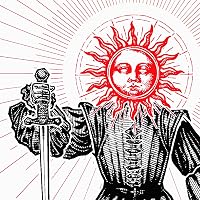
Russian Nights, Vladimir Fedorovich Odoevsky's major work, is of great importance in Russian intellectual history. This captivating novel is the summation of Odoevsky's views and interests in many fields: Gothic literature, romanticism, mysticism, the occult, social responsibility, Westernization, utopia and anti-utopia. Compared variously to The Decameron, to Hoffman's Serapion Brethren, and the Platonic dialogues, Russian Nights is a mixture of genres - a series of romantic and society tales framed by Odoevsky's musings on the main strands of Russian thought of the 1820s and 1830s. This is a unique work of Russian literature, and a key sourcebook for Russian romanticism and Russian social and aesthetic thought of its epoch.
Prince Vladimir Fyodorovich Odoyevsky (Russian: Владимир Федорович Одоевский) was a prominent Russian philosopher, writer, music critic, philanthropist and pedagogue. He became known as the "Russian Hoffmann" on account of his keen interest in phantasmagoric tales and musical criticism.
Aspiring to imitate Ludwig Tieck and Novalis, Odoyevsky published a number of tales for children (e.g., "The Snuff-Box Town") and fantastical stories for adults (e.g., "Cosmorama" and "Salamandra") imbued with the vague mysticism in the vein of Jakob Boehme and Louis-Claude de Saint-Martin.
Following the success of Pushkin's The Queen of Spades, Odoyevsky wrote a number of similar stories on the dissipated life of the Russian aristocracy (e.g., Princess Mimi and Princess Zizi). On account of his many short stories from the 1820s and 1830s, Odyoevsky should be listed among the pioneers of the impressionistic short story in Europe.
His most mature book was the collection of essays and novellas entitled The Russian Nights (1844). Loosely patterned after the Noctes Atticae, the book took two decades to complete. It contains some of Odoyevsky's best known fiction, including the dystopian novellas The Last Suicide and The Town with No Name. The stories are interlaced with philosophic conversations redolent of the French Encyclopedists.
As a music critic, Odoyevsky set out to propagate the national style of Mikhail Glinka and his followers. Among his many articles on musical subjects, a treatise about old Russian church singing deserves particular attention. Johann Sebastian Bach and Beethoven appear as characters in some of his novellas. Odoevsky was active in the foundation of the Russian Musical Society, Moscow Conservatory, and St. Petersburg Conservatory.
Cómo escribir sobre lo que nos interpela en demasía, me pregunto y te pregunto. Vladimir Odóievski fue un destacado filósofo, escritor, crítico musical y pedagogo ruso del que solo se editó en España hace 15 años El día de año nuevo y otros cuentos maravillosos. En la editorial ya cerrada, Nevsky y El cosmorama en Maldoror. Pre-textos nos trae por primera vez en España el libro Noches rusas, salido en San Petersburgo en 1844. Odóiesvki, antecesor de Dostoievski, abogaría por la filosofía y por escribir libros de ciencia ficción y anti-utópicos como este. Estamos, de hecho, ante la primera novela filosófica que se escribiría en Rusia. Todo lo mencionado en este libro tendría un gran calado tiempo después en diversas disciplinas, en diversas filosofías y en diversas artes poéticas, por lo que se convierte en un libro de aparente actualidad, tanto que incluso las palabras reflejadas en él nos interpelan hoy día. Para Odóievski, este libro trata de una especie de enciclopedismo. Nos explica y reflexiona estados del hombre, de las cosas. Se convierte así en un libro de gran calado sobre la esencia humana, sobre lo que nos hace humanos y no otra cosa, sobre lo que la humanidad de de sí en el mundo.
Como nos explica el autor, la mirada poética en la historia fue precedida por las indagaciones científicas; entre nosotros, por el contrario, la clarividencia poética procedió a su elaboración más real. Es de este modo un libro que nos eleva la ciencia, que nos la explica, así como las filosofías que en ese momento imperaban en Rusia y cierta parte de la Europa Occidental. Y no sólo, también trata del aspecto esencial de la figura de Bach en la música, conoceremos su vida y su obra. Como dice Odóiesvki: No hay momentos no-poéticos en la vida de un poeta; todos los fenómenos de la existencia están iluminados para él por el sol permanente de su alma, y esta, como el coloso de Mennón, emite sin cesar sonidos armónicos. La virtud de la poesía es aquí representada en su máximo esplendor. El poeta razona pero siente el mundo, el mundo habla a través de él y asimismo caemos en la cuenta de que el mundo sin la poesía y su mirada se queda en meros aspectos mundanos, superficiales, banales.
La música como la poesía como el deber moral del hombre tienen en este libro un peso sustancial. Odóiesvki nos muestra sus intereses, sus obsesiones, a lo largo de varios personajes durante nueve largas noches. El peso del romanticismo alemán de Schelling, la búsqueda de la plenitud de Fausto, la importancia de las ideas de Platón, la armonía de la música de Bach, la pintura de Durero. Estamos, ante todo, ante un libro que es un ideario, una enciclopedia ideal sobre lo que implica al hombre en el mundo y por el mundo, lo que implica al hombre para sí mismo y los demás, lo que implica la intensa relación de nuestro mundo interior con la espiritualidad, la psique y las relaciones humanas. Es, este, un libro ante todo catártico que nos sumerge en las profundidades del hombre. Exponiendo temas profundos y densos, especiales en cuanto a lo que nos hace ser seres humanos. Habla de la humanidad, de las ideas que la protegen, de las leyes del universo y de las que crea el hombre. No son pocas las citas que he extraído de este libro, a cada dos páginas, ya estaba transcribiendo algo, cualquier cosa que me interpelaba. Y es que estamos ante un libro de tal actualidad que parece mentira que se escribiera hace 200 años. Odóievski era un buscador de la verdad, de lo oculto, de lo que yace bajo nuestros párpados, y con su mirada nos ha sabido trasladar todo el mundo de las ideas, de la belleza, de la poesía y de la música y el arte. Un libro completo sobre la mente y pasiones humanas que nos convierten en seres especiales, seres que sienten que el destino no es solo un destino, sino que las sensaciones que abarca la vida la hacen más proclive a ir por un camino u otro. ¿Libre albedrío? Pensamos con este libro. No, una vuelve a creer en Dios gracias a las palabras del autor por las cosas que nos hace sentir. El destino era leer este libro, era, como dice Christian Bobin: Lo que nos salva no nos protege de nada, y todavía nos salva. Es sin duda un libro especial para leer en estos tiempos tan convulsos.
This book was hard work. The nine Russian nights are not short stories but rather parables, culminating in the position that only the four Slavic Values will save human development while The West is “perishing”. Or Something. It was too intellectual and philosophical for me.
I came to this because I had heard that Odoyevsky was the father of Russian science fiction and/or fantasy. I think he is more the grandfather.
"Russian Nights" is more of a philosophical work. There are stories, but the stories are there to illustrate philosophical points. Characterization is pretty thin.
What Odoyevsky is very good at is extrapolation. He takes aim at the ideas of Malthus and extrapolates them to the nth degree. Likewise when Jeremy Bentham is his target. In this skillful use of projecting how societies develop, I can see the connection to science fiction. But this is still a good distance from what I would call SF.
As Odoyevsky's characters were talking about philosophy, I realized that "Russian Nights" most reminded me, not of science fiction, but of Dostoyevsky's "Notes from Underground" and Tolstoy's "Kreutzer Sonata." (Although those works marry philosophy to characterization and plot far, far better.)
So basically, not what I expected, but still interesting.
Both in terms of subject matter and structure, this work is not particularly accessible to modern readers and, therefore, may not appeal to them. Yet, for anyone interested in the genesis of Russian literature, it is clearly a marker of intellectual and cultural imperatives (especially Romanticism) in the second quarter of the nineteenth century – and it has to be read in that context. That said, I think we have to acknowledge that much of Odoyevsky’s discussion concerning what constitutes knowledge and the means of obtaining it through education or experience remains relevant. Those who have the patience to read him with the attention he deserves may be surprised, for example, as to how closely his statements on the inadequacy of language seems to anticipate, by a century, those of Wittgenstein. Much of what interested the Russians depicted in this oddity of a book was to do with Western European writers, philosophers, artists and musicians – all the while seeking to express a Slavophile opposition to those imported ideas. I have little doubt Dostoyevsky read and digested this work.
El Arquitecto perseguido por las obras que jamás materializó, el poeta que comprende todo demasiado bien, la infancia de un inocente Bach; todo condensado en historias y reflexiones emitidas en 1844 que bien podrían ser de ayer mismo.
The short stories – vignettes really – themselves were sometimes a little interesting or entertaining but for the most part the book was a tedious attempt to be morally and philosophically instructive. I don’t believe the stories stand up on their own as valid literary works because they were too one-dimensional and transparently preachy.
Overall it raised some mildly interesting philosophical questions and thought experiments, however by the epilogue I thought the protagonist Faust was insufferably sanctimonious and plainly wrong in many instances: about alchemists for example, being as knowledgeable as contemporary chemists. Faust admitted no failings in his personal theories and allowed no-one else to have any say, descending into para-psychological and spiritual malarkey and repeating a ridiculous prophecy of doom for the West never came to pass, although it helped me to understand Slavophilism a little. More philosophy than literature, and not a great work.
If you’re not interested in 19th-century Russian philosophy, it’ll be a real slog. And if you ARE, it’s still heavy-going a lot of the time, without much in the way of character or story to engage the heart. But intellectually it offers a fair amount to chew on; some of the philosophy may be dated, but there are passages which remain quite relevant, and some of the anecdotes are quite engaging in of themselves. And on a personal level, I have to appreciate the advocacy of a holistic approach to learning, especially in this specialized age. A mixed bag, but in many ways a rewarding read.
Fabulous philosophical frame novel, sodden drunk on Schelling. "Odoevsky was prophetic: in the early 19th century he predicted blogging and the threat of nuclear war".
Очень сильное и глубокое философско-романтическое произведение. Сама суть книги и её посылы, так или иначе насквозь проходят через дальнейшую российскую историю и литературу XIX века. Думающий и внимательный читатель многое найдёт здесь, кучу мыслей почерпнёт, много паралеллей обнаружит. Тут вам и европейская философия, и немецкий романтизм, отсылки к Пушкину и Гоголю, зачатки философии Толстого. Думаю, вполне можно выразиться, что данная книга - апогелет русской философской мысли первой половины XIX века, финальная глава романтического периода русской литературы.
Still working on this book, but here are some parts I have enjoyed.
"I, at least, am convinced that to speak means nothing else than to arouse in a listener his own inner word."
"He seems to have given himself to sensuality; everything is forgotten, intoxication is complete, but sadness knocks at his heart, an unexpected, incomprehensible sadness. He tries to reject it, to fathom it, and his soul again comes to life in his coarsened body; his mind seeks life; his thought seeks expression; and man's confused and bashful spirit knocks again at the unattainable gates of paradise."
"What will the morality of society be when man reaches this stage? He doesn't answer this question positively, but he turns to America, and here are his observations: In that country the speed of communications, the comfort of going from one place to another have done away with all the differences in customs in the way of life, in clothing, housing, and in concepts (when they do not concern personal gain of an individual). Hence there is nothing new, interesting, and attractive for the inhabitant of that country. He is at home everywhere and crossing his land from coast to coast he encounters only what he sees every day. That’s why personal gain is always the goal of a journey for an American, and never enjoyment. It may seem that nothing could be better than such a state. But for our intelligent Chevalier in his laudable frankness admits that the consequence of such a useful, comfortable, and prudent life – is an invincible, unbearable, boredom!”