

What do you think?

Cime Tempestose
The timeless story of Cathy and Heathcliff's tumultuous love affair, is brought to you by Simon & Schuster Classics, with a stunning, cinematic new look.
Heathcliff, a young orphan, is adopted by Catherine Earnshaw's father. Treated unkindly by her brother, Hindley, Heathcliff is at first protected by the elderly Mr Earnshaw. When the elder Earnshaw passes away, Heathcliff is hurt and betrayed by both brother and sister, and leaves… until the day he returns to exact his revenge.
Emily Brontë's demonic and brooding creation, Heathcliff, and the love-affair between him and Catherine, has fascinated and entranced readers for generations. It is a classic of gothic literature.
Heathcliff, a young orphan, is adopted by Catherine Earnshaw's father. Treated unkindly by her brother, Hindley, Heathcliff is at first protected by the elderly Mr Earnshaw. When the elder Earnshaw passes away, Heathcliff is hurt and betrayed by both brother and sister, and leaves… until the day he returns to exact his revenge.
Emily Brontë's demonic and brooding creation, Heathcliff, and the love-affair between him and Catherine, has fascinated and entranced readers for generations. It is a classic of gothic literature.
Paperback
First published November 24, 1847
About the author
Emily Brontë
1,839 books14.7k followersEmily Brontë was an English novelist and poet whose singular contribution to literature, Wuthering Heights, is now celebrated as one of the most powerful and original novels in the English language. Born into the remarkable Brontë family on 30 July 1818 in Thornton, Yorkshire, she was the fifth of six children of Maria Branwell and Patrick Brontë, an Irish clergyman. Her early life was marked by both intellectual curiosity and profound loss. After the death of her mother in 1821 and the subsequent deaths of her two eldest sisters in 1825, Emily and her surviving siblings— Charlotte, Anne, and Branwell—were raised in relative seclusion in the moorland village of Haworth, where their imaginations flourished in a household shaped by books, storytelling, and emotional intensity.
The Brontë children created elaborate fictional worlds, notably Angria and later Gondal, which served as an outlet for their creative energies. Emily, in particular, gravitated toward Gondal, a mysterious, windswept imaginary land she developed with her sister Anne. Her early poetry, much of it steeped in the mythology and characters of Gondal, demonstrated a remarkable lyrical force and emotional depth. These poems remained private until discovered by Charlotte in 1845, after which Emily reluctantly agreed to publish them in the 1846 collection Poems by Currer, Ellis, and Acton Bell, using the pseudonym Ellis Bell to conceal her gender. Though the volume sold few copies, critics identified Emily’s poems as the strongest in the collection, lauding her for their music, power, and visionary quality.
Emily was intensely private and reclusive by nature. She briefly attended schools in Cowan Bridge and Roe Head but was plagued by homesickness and preferred the solitude of the Yorkshire moors, which inspired much of her work. She worked briefly as a teacher but found the demands of the profession exhausting. She also studied in Brussels with Charlotte in 1842, but again found herself alienated and yearning for home. Throughout her life, Emily remained closely bonded with her siblings, particularly Anne, and with the landscape of Haworth, where she drew on the raw, untamed beauty of the moors for both her poetry and her fiction.
Her only novel, Wuthering Heights, was published in 1847, a year after the poetry collection, under her pseudonym Ellis Bell. Initially met with a mixture of admiration and shock, the novel’s structure, emotional intensity, and portrayal of violent passion and moral ambiguity stood in stark contrast to the conventions of Victorian fiction. Many readers, unable to reconcile its power with the expected gentility of a woman writer, assumed it had been written by a man. The novel tells the story of Heathcliff and Catherine Earnshaw—two characters driven by obsessive love, cruelty, and vengeance—and explores themes of nature, the supernatural, and the destructive power of unresolved emotion. Though controversial at the time, Wuthering Heights is now considered a landmark in English literature, acclaimed for its originality, psychological insight, and poetic vision.
Emily's personality has been the subject of much speculation, shaped in part by her sister Charlotte’s later writings and by Victorian biographies that often sought to romanticize or domesticate her character. While some accounts depict her as intensely shy and austere, others highlight her fierce independence, deep empathy with animals, and profound inner life. She is remembered as a solitary figure, closely attuned to the rhythms of the natural world, with a quiet but formidable intellect and a passion for truth and freedom. Her dog, Keeper, was a constant companion and, according to many, a window into her capacity for fierce, loyal love.
Emily Brontë died of tuberculosis on 19 December 1848 at the age of thirty, just a year after the publication of her novel. Her early death, following those of her brother Branwell and soon to
The Brontë children created elaborate fictional worlds, notably Angria and later Gondal, which served as an outlet for their creative energies. Emily, in particular, gravitated toward Gondal, a mysterious, windswept imaginary land she developed with her sister Anne. Her early poetry, much of it steeped in the mythology and characters of Gondal, demonstrated a remarkable lyrical force and emotional depth. These poems remained private until discovered by Charlotte in 1845, after which Emily reluctantly agreed to publish them in the 1846 collection Poems by Currer, Ellis, and Acton Bell, using the pseudonym Ellis Bell to conceal her gender. Though the volume sold few copies, critics identified Emily’s poems as the strongest in the collection, lauding her for their music, power, and visionary quality.
Emily was intensely private and reclusive by nature. She briefly attended schools in Cowan Bridge and Roe Head but was plagued by homesickness and preferred the solitude of the Yorkshire moors, which inspired much of her work. She worked briefly as a teacher but found the demands of the profession exhausting. She also studied in Brussels with Charlotte in 1842, but again found herself alienated and yearning for home. Throughout her life, Emily remained closely bonded with her siblings, particularly Anne, and with the landscape of Haworth, where she drew on the raw, untamed beauty of the moors for both her poetry and her fiction.
Her only novel, Wuthering Heights, was published in 1847, a year after the poetry collection, under her pseudonym Ellis Bell. Initially met with a mixture of admiration and shock, the novel’s structure, emotional intensity, and portrayal of violent passion and moral ambiguity stood in stark contrast to the conventions of Victorian fiction. Many readers, unable to reconcile its power with the expected gentility of a woman writer, assumed it had been written by a man. The novel tells the story of Heathcliff and Catherine Earnshaw—two characters driven by obsessive love, cruelty, and vengeance—and explores themes of nature, the supernatural, and the destructive power of unresolved emotion. Though controversial at the time, Wuthering Heights is now considered a landmark in English literature, acclaimed for its originality, psychological insight, and poetic vision.
Emily's personality has been the subject of much speculation, shaped in part by her sister Charlotte’s later writings and by Victorian biographies that often sought to romanticize or domesticate her character. While some accounts depict her as intensely shy and austere, others highlight her fierce independence, deep empathy with animals, and profound inner life. She is remembered as a solitary figure, closely attuned to the rhythms of the natural world, with a quiet but formidable intellect and a passion for truth and freedom. Her dog, Keeper, was a constant companion and, according to many, a window into her capacity for fierce, loyal love.
Emily Brontë died of tuberculosis on 19 December 1848 at the age of thirty, just a year after the publication of her novel. Her early death, following those of her brother Branwell and soon to
Ratings & Reviews
Friends & Following
Create a free account to discover what your friends think of this book!
Community Reviews
Displaying 1 - 30 of 126,274 reviews

July 11, 2022
I'm just on fire with so much admiration for Emily Brontë right now. Having read this book, I now understand why it’s generated such fierce controversy since its first publication in 1847. Why early reviews dismissed it as an aberration (with one pearl-clutching reviewer wondering “how a human being could have attempted such a book as the present without committing suicide before he had finished a dozen chapters”) and why writers like Sylvia Plath and E.M. Forster, drawn to the complex and often contradictory open vein of the novel, went out of their way to reject such easy classifications.
This review is, in many ways, my attempt to understand how Wuthering Heights continues to enable many difficult and contradictory stances even today, entrenching its legacy as one of the most dynamic and generative novels of the 19th century.
The first element that makes Wuthering Heights so interesting is form. The novel is presented as a series of second—even third—hand accounts, a story rehearsed and sanitized by multiple re-enactors with the reader being the last in a succession of interpreters. In other words, the story changes hands multiple times, often between hostile and uncomprehending narrators, before it makes its way to the reader. This structure is nuanced in multiple ways; it is also very tricky, for it depends entirely on the reader’s willingness to turn to Nelly—the central narrator—for an authoritative interpretation of the story. Nelly, however, is not a very sympathetic narrator, and her thinly veiled bias against (or for) the characters brings into question the validity of her account. We are forced into awareness, again and again, of the flawed nature of Nelly's interpretations and of the uncrossable distances that lie between what we are reading and what the story is. It is precisely this awareness which challenges us to take nothing at face value and demands our active participation in the process of meaning-making.
To put it differently: faced with the possibility of the novel as the culmination of a flawed—even failed—interpretation, one can only read Wuthering Heights with a kind of longing, with the desire to get close to something inconsolable, just beyond reach. Therein lies, the novel says, the potential for true understanding: in the underground currents of emotion, the not-easily-reached places far beneath the surface of what the reader can see and understand. It is this frame of reference—however flawed, failed, or imperfect—that gives the characters a context in which we can begin to accept, understand, and grapple for their ultimate depths.
This brings us to the second element which makes Wuthering Heights such productive fodder for interpretation: the characters. In a story that is told at one, two, sometimes three removes, Brontë’s characters are not at all remote. Brontë brings a depth of anguish to the characters and engages our compassion no matter how unflattering and biased the gaze through which we see them. This is nowhere as gorgeously epitomized as in the characters of Heathcliff and Catherine, with whom lays the broken heart of Wuthering Heights.
Heathcliff’s vehemence, his grief and naked want, Catherine’s selfishness, her strain and struggle against the confines of her life—these things are rendered so honestly and so rawly in a way that appealed to me despite, sometimes because of, their deep abiding wrongness. Wuthering Heights is not just a story about a “toxic” romantic attachment between two deeply broken and detestable characters. In fact, to argue the degree to which Heathcliff and Catherine’s relationship was “toxic” or “problematic” seems less relevant to me than the incontrovertible fact that in a world that would not let them be whole, Catherine and Heathcliff lent meaning to each other. To me, this is where the simple truth of Wuthering Heights lies: in Catherine and Heathcliff's longing to be recognized by each other in a way that defies and transcends “separation,” and in the subsequent void and loss they suffer when one is intolerably deprived of the other.
Wuthering Heights returns over and over to this theme of identity through the other, the desire to be defined in terms of an “existence… beyond” our “contained” selves. For Catherine and Heathcliff, their very sense of “self” was sustained through the bond of devotion they forged between them in childhood, back when they were flashing with youth and magic and hunger, and their passion for each other has always illuminated the gap between who they longed to be, and who they actually were. Invoking Heathcliff, Catherine confesses to Nelly at one point that “He's more myself than I am. Whatever our souls are made of, his and mine are the same.” In this way, Wuthering Heights is so truthful about what it means to be human: to desire to be known by another as intimately, as completely, as one knows their own image in a mirror, to love and despise and long for and tire of each other because it is a much merciful fate than a lifetime of emptiness, silence, and absence.
Under this light, it is easy to understand Heathcliff’s and Catherine’s unraveling, and in understanding, to love and pity them. We understand that in losing Heathcliff, Catherine lost her life, and in losing her, Heathcliff lost himself. All the proofs of passion, all the crawling devotions that sustained him in youth have yielded to nothingness, and somewhere inside Heathcliff a dam has broken, with nothing in its stead to stave off the madness of being alone, or to ward off the unpurged ghosts of a brutal past.
Through Heathcliff’s unraveling, Brontë lays a carefully layered, generational look at the reverberating effects of trauma and what it costs to give others so much power over us. Raised with the stigma of illegitimacy and of deviancy (and potentially of race, but that’s an essay for another day), and subjected to a childhood of casual abuse, name-calling and cruelty, Heathcliff spends the years following Catherine’s death trying to methodically reproduce his traumatic past, his experiences of degradation and loss, in others. Heathcliff, ultimately, does not just preserve the memory of Catherine, which he feels bound to, but rather transform it into something else, into a display of his wound in full.
It is impossible not to feel at once entranced and horrified and rocked by the horror of what Heathcliff becomes, not to ache with sympathy for a younger version of Heathcliff. But I found myself hurting more for Cathy, Hareton, and Linton, and the complex, many-generationed hatreds that twisted between them. Wuthering Heights paints one of the clearest portraits of generational trauma that I’ve ever read. Brontë's use of intimate domestic spaces as prison, her disfiguring of family into a site for violence, evil, and struggle, and her deliberate re-creation of past trauma in the second generation—is masterful. The result is a novel that understands so thoroughly, so completely, and with bone-deep care that the scars inflicted by childhood abuse, by trauma, by the generational inheritance of atrocious memory, do not just fade away; they stay and linger and fester until we all become a casualty of each other.
That Wuthering Heights was conceived and published before the advent of psychology is absolutely wild to me. The novel is a profoundly haunting experience of a book, one that I am sure will dog my thoughts for a very, very long time.
This review is, in many ways, my attempt to understand how Wuthering Heights continues to enable many difficult and contradictory stances even today, entrenching its legacy as one of the most dynamic and generative novels of the 19th century.
The first element that makes Wuthering Heights so interesting is form. The novel is presented as a series of second—even third—hand accounts, a story rehearsed and sanitized by multiple re-enactors with the reader being the last in a succession of interpreters. In other words, the story changes hands multiple times, often between hostile and uncomprehending narrators, before it makes its way to the reader. This structure is nuanced in multiple ways; it is also very tricky, for it depends entirely on the reader’s willingness to turn to Nelly—the central narrator—for an authoritative interpretation of the story. Nelly, however, is not a very sympathetic narrator, and her thinly veiled bias against (or for) the characters brings into question the validity of her account. We are forced into awareness, again and again, of the flawed nature of Nelly's interpretations and of the uncrossable distances that lie between what we are reading and what the story is. It is precisely this awareness which challenges us to take nothing at face value and demands our active participation in the process of meaning-making.
To put it differently: faced with the possibility of the novel as the culmination of a flawed—even failed—interpretation, one can only read Wuthering Heights with a kind of longing, with the desire to get close to something inconsolable, just beyond reach. Therein lies, the novel says, the potential for true understanding: in the underground currents of emotion, the not-easily-reached places far beneath the surface of what the reader can see and understand. It is this frame of reference—however flawed, failed, or imperfect—that gives the characters a context in which we can begin to accept, understand, and grapple for their ultimate depths.
This brings us to the second element which makes Wuthering Heights such productive fodder for interpretation: the characters. In a story that is told at one, two, sometimes three removes, Brontë’s characters are not at all remote. Brontë brings a depth of anguish to the characters and engages our compassion no matter how unflattering and biased the gaze through which we see them. This is nowhere as gorgeously epitomized as in the characters of Heathcliff and Catherine, with whom lays the broken heart of Wuthering Heights.
Heathcliff’s vehemence, his grief and naked want, Catherine’s selfishness, her strain and struggle against the confines of her life—these things are rendered so honestly and so rawly in a way that appealed to me despite, sometimes because of, their deep abiding wrongness. Wuthering Heights is not just a story about a “toxic” romantic attachment between two deeply broken and detestable characters. In fact, to argue the degree to which Heathcliff and Catherine’s relationship was “toxic” or “problematic” seems less relevant to me than the incontrovertible fact that in a world that would not let them be whole, Catherine and Heathcliff lent meaning to each other. To me, this is where the simple truth of Wuthering Heights lies: in Catherine and Heathcliff's longing to be recognized by each other in a way that defies and transcends “separation,” and in the subsequent void and loss they suffer when one is intolerably deprived of the other.
Wuthering Heights returns over and over to this theme of identity through the other, the desire to be defined in terms of an “existence… beyond” our “contained” selves. For Catherine and Heathcliff, their very sense of “self” was sustained through the bond of devotion they forged between them in childhood, back when they were flashing with youth and magic and hunger, and their passion for each other has always illuminated the gap between who they longed to be, and who they actually were. Invoking Heathcliff, Catherine confesses to Nelly at one point that “He's more myself than I am. Whatever our souls are made of, his and mine are the same.” In this way, Wuthering Heights is so truthful about what it means to be human: to desire to be known by another as intimately, as completely, as one knows their own image in a mirror, to love and despise and long for and tire of each other because it is a much merciful fate than a lifetime of emptiness, silence, and absence.
Under this light, it is easy to understand Heathcliff’s and Catherine’s unraveling, and in understanding, to love and pity them. We understand that in losing Heathcliff, Catherine lost her life, and in losing her, Heathcliff lost himself. All the proofs of passion, all the crawling devotions that sustained him in youth have yielded to nothingness, and somewhere inside Heathcliff a dam has broken, with nothing in its stead to stave off the madness of being alone, or to ward off the unpurged ghosts of a brutal past.
Through Heathcliff’s unraveling, Brontë lays a carefully layered, generational look at the reverberating effects of trauma and what it costs to give others so much power over us. Raised with the stigma of illegitimacy and of deviancy (and potentially of race, but that’s an essay for another day), and subjected to a childhood of casual abuse, name-calling and cruelty, Heathcliff spends the years following Catherine’s death trying to methodically reproduce his traumatic past, his experiences of degradation and loss, in others. Heathcliff, ultimately, does not just preserve the memory of Catherine, which he feels bound to, but rather transform it into something else, into a display of his wound in full.
It is impossible not to feel at once entranced and horrified and rocked by the horror of what Heathcliff becomes, not to ache with sympathy for a younger version of Heathcliff. But I found myself hurting more for Cathy, Hareton, and Linton, and the complex, many-generationed hatreds that twisted between them. Wuthering Heights paints one of the clearest portraits of generational trauma that I’ve ever read. Brontë's use of intimate domestic spaces as prison, her disfiguring of family into a site for violence, evil, and struggle, and her deliberate re-creation of past trauma in the second generation—is masterful. The result is a novel that understands so thoroughly, so completely, and with bone-deep care that the scars inflicted by childhood abuse, by trauma, by the generational inheritance of atrocious memory, do not just fade away; they stay and linger and fester until we all become a casualty of each other.
That Wuthering Heights was conceived and published before the advent of psychology is absolutely wild to me. The novel is a profoundly haunting experience of a book, one that I am sure will dog my thoughts for a very, very long time.

February 9, 2011
This is my favourite book. I do not say that lightly - I've read quite a lot from all different genres - but this is my favourite book. Of all time. Ever. The ladies over at The Readventurer kindly allowed me to get my feelings of utter adoration for Wuthering Heights off my chest in their "Year of the Classics" feature, but I now realise it's time I posted a little something in this blank review space. I mean, come on, it's my favourite book so it deserves better than empty nothingness.
So, what do I love so much about Wuthering Heights?Everything. Okay, maybe not. That wouldn't really be saying it strongly enough.
What I love about this novel is the setting; the wilderness. This is not a story about niceties and upper class propriety. This is the tale of people who aren't so socially acceptable, who live away from the strict rules of civilization - it's almost as if they're not quite from the world we know. The isolation of the setting out on the Yorkshire moors between the fictional dwellings of The Heights and Thrushcross Grange emphasises how far removed these characters are from social norms, how unconventional they are, and how lonely they are.
This is a novel for readers who can appreciate unlikeable characters; readers who don't have to like someone to achieve a certain level of understanding of them and their circumstances. People are not born evil... so what makes them that way? What torments a man so much that he refuses to believe he has any worth? What kind of person digs up the grave of their loved one so they can see them once again? Heathcliff was not created to be liked or to earn your forgiveness. Emily Brontë simply tells his story from the abusive and unloved childhood he endured, to his obsession with the only person alive who showed him any real kindness, to his adulthood as an angry, violent man who beats his wife and imprisons the younger Cathy in order to make her marry his son.
It would be so easy to hate Heathcliff, and I don't feel that he is some dark, sexy hero like others often do. But I appreciate what Emily Brontë attempts to teach us about the cycle of violence and aggression. Heathcliff eventually becomes little more than the man he hates. By being brought up with beatings and anger he in turn unleashes it on everyone else. And Cathy is no delicate flower either. What hope did Heathcliff have when the only person he ever loved was so selfish and vindictive? But I love Emily Brontë for creating such imperfect, screwed-up characters.
This is a dark novel that deals with some very complicated people, but I think in the end we are offered the possibility of peace and happiness through Cathy (younger) and Hareton's relationship, and the suggestion that Cathy (older) and Heathcliff were reunited in the afterlife. I had an English teacher in high school that said Cathy and Heathcliff's personalities and their relationship were too much for this world and that peace was only possible for them in the next. I have no idea if this was something Ms Bronte intended, but the romantic in me likes to imagine that it's true.
Blog | Facebook | Twitter | Instagram | Youtube
So, what do I love so much about Wuthering Heights?
What I love about this novel is the setting; the wilderness. This is not a story about niceties and upper class propriety. This is the tale of people who aren't so socially acceptable, who live away from the strict rules of civilization - it's almost as if they're not quite from the world we know. The isolation of the setting out on the Yorkshire moors between the fictional dwellings of The Heights and Thrushcross Grange emphasises how far removed these characters are from social norms, how unconventional they are, and how lonely they are.
This is a novel for readers who can appreciate unlikeable characters; readers who don't have to like someone to achieve a certain level of understanding of them and their circumstances. People are not born evil... so what makes them that way? What torments a man so much that he refuses to believe he has any worth? What kind of person digs up the grave of their loved one so they can see them once again? Heathcliff was not created to be liked or to earn your forgiveness. Emily Brontë simply tells his story from the abusive and unloved childhood he endured, to his obsession with the only person alive who showed him any real kindness, to his adulthood as an angry, violent man who beats his wife and imprisons the younger Cathy in order to make her marry his son.
It would be so easy to hate Heathcliff, and I don't feel that he is some dark, sexy hero like others often do. But I appreciate what Emily Brontë attempts to teach us about the cycle of violence and aggression. Heathcliff eventually becomes little more than the man he hates. By being brought up with beatings and anger he in turn unleashes it on everyone else. And Cathy is no delicate flower either. What hope did Heathcliff have when the only person he ever loved was so selfish and vindictive? But I love Emily Brontë for creating such imperfect, screwed-up characters.
This is a dark novel that deals with some very complicated people, but I think in the end we are offered the possibility of peace and happiness through Cathy (younger) and Hareton's relationship, and the suggestion that Cathy (older) and Heathcliff were reunited in the afterlife. I had an English teacher in high school that said Cathy and Heathcliff's personalities and their relationship were too much for this world and that peace was only possible for them in the next. I have no idea if this was something Ms Bronte intended, but the romantic in me likes to imagine that it's true.
Blog | Facebook | Twitter | Instagram | Youtube

October 21, 2007
Certain novels come to you with pre-packaged expectations. They just seem to be part of literature's collective unconscious, even if they are completely outside of your own cultural referents. I, for instance, who have no particular knowledge of--or great love for--romantic, Anglo-Gothic fiction, came to Wuthering Heights with the assumption that I was picking up a melancholy ghost story of thwarted, passionate love and eternal obsession. Obsession turned out to be only accurate part of this presumption.
Having an image of Heathcliff and Cathy embracing Gone with the Wind -style on a windy moor ironed in my mind, I was almost completely unprepared for the hermetic, moribund, bleak, vengeful, perverse, and yes--obsessive--novel that this really is. Don Quixote is not about windmills and Wuthering Heights is not really a love story. Heathcliff and Cathy's love affair (if it can be called that) is a narcissistic ("I am Heathcliff!" Cathy exclaims at one point), possessive, and imminently cruel relationship predicated on self-denial and an obsessiveness that relies not on passion, but rather borders on hatred. They are selfish, violent, and contriving people who have borne their fair share of abuses (mostly Heathcliff in this respect) and in turn, feel no compunction about raining similar abuses on those who they find beneath them.
Given this dynamic, it seems perhaps inevitable that these two characters would make not only themselves miserable, but everyone around them miserable--even after death. This is particularly easy to accomplish mainly because there are--with the exception of Mr. Lockwood, the tenant who rents a home from Heathcliff--no outside characters. Everyone in the novel (including the servants) is isolated, trapped between the same two homes, with the same two families, and have truly no chance of escaping any of the events and repercussions that occur.(One character makes a temporary escape, only to suffer all the more for it later.)
More important, however, is the fact that Heathcliff and Cathy don't even need be present (although they usually are in some fashion) for their influences to be felt by the other characters. The sins of the father, are literally, inherited and distributed among the next generation. The children of Wuthering Heights are not only physical doubles of their parents (At least 3 characters look like Cathy, and one resembles Heathcliff), but they are also spiritual stand-ins. They must suffer for past transgressions, and they must find a way to make amends for them. All, I might add, without the particular benefit of ever having the full story, the context that might be necessary to actually change their circumstances. Misery, it seems, is inevitable.
There is, of course, much more to be said about this novel. One could spend quite some time dissecting all the various repetitions and doublings, the narrative structure (the story is told by the housekeeper to the lodger who then writes it down as a diary entry), or the archetypal analogies and semi-biblical symbolism that seems to be implicit to every part of this story.
The point being, I suppose, that while Wuthering Heights may not be the wistful romance one (or maybe just I) expected to be, it is a particularly satisfying one for all of its dark and layered surprises.
Having an image of Heathcliff and Cathy embracing Gone with the Wind -style on a windy moor ironed in my mind, I was almost completely unprepared for the hermetic, moribund, bleak, vengeful, perverse, and yes--obsessive--novel that this really is. Don Quixote is not about windmills and Wuthering Heights is not really a love story. Heathcliff and Cathy's love affair (if it can be called that) is a narcissistic ("I am Heathcliff!" Cathy exclaims at one point), possessive, and imminently cruel relationship predicated on self-denial and an obsessiveness that relies not on passion, but rather borders on hatred. They are selfish, violent, and contriving people who have borne their fair share of abuses (mostly Heathcliff in this respect) and in turn, feel no compunction about raining similar abuses on those who they find beneath them.
Given this dynamic, it seems perhaps inevitable that these two characters would make not only themselves miserable, but everyone around them miserable--even after death. This is particularly easy to accomplish mainly because there are--with the exception of Mr. Lockwood, the tenant who rents a home from Heathcliff--no outside characters. Everyone in the novel (including the servants) is isolated, trapped between the same two homes, with the same two families, and have truly no chance of escaping any of the events and repercussions that occur.(One character makes a temporary escape, only to suffer all the more for it later.)
More important, however, is the fact that Heathcliff and Cathy don't even need be present (although they usually are in some fashion) for their influences to be felt by the other characters. The sins of the father, are literally, inherited and distributed among the next generation. The children of Wuthering Heights are not only physical doubles of their parents (At least 3 characters look like Cathy, and one resembles Heathcliff), but they are also spiritual stand-ins. They must suffer for past transgressions, and they must find a way to make amends for them. All, I might add, without the particular benefit of ever having the full story, the context that might be necessary to actually change their circumstances. Misery, it seems, is inevitable.
There is, of course, much more to be said about this novel. One could spend quite some time dissecting all the various repetitions and doublings, the narrative structure (the story is told by the housekeeper to the lodger who then writes it down as a diary entry), or the archetypal analogies and semi-biblical symbolism that seems to be implicit to every part of this story.
The point being, I suppose, that while Wuthering Heights may not be the wistful romance one (or maybe just I) expected to be, it is a particularly satisfying one for all of its dark and layered surprises.

April 23, 2020
"Hello, everyone. Welcome to chaos." -Emily Brontë upon publishing this book, probably
Inside me, there are two wolves. (I am saying there are two wolves in order to reference the meme, but what would be more accurate is to say that inside of me there are two boring and nonviolent creatures. Like a pigeon. Or an accountant.)
One wolf, or whatever, has such a constant and undying need to share its opinion that it is currently ranked #1 on Goodreads formost annoying best reviewer. (Don't check if that's still true. I doubt it'll stick and it'll be awkward for all of us if it isn't.)
The other wolf (slash what have you) thinks every other wolf (or entity of your choosing) has a better grasp of every concept on earth than it does, and that it should shut up for one second and let the other wolves talk, like seriously, Jesus Christ, be quiet already, oh my god.
The latter wolf wants to let you know that there is a very interesting conversation on the topic of this book, its categorization as a love story, and its history in the comments of this review, and you should scroll down to read that instead.
But the first wolf is going to keep talking up here anyway.
Here is a list of facts about this book:
- it was published in 1848
- its author had a grand total of about 1 year of formal education
- it was said author's debut and written while she was in her 20s
- it contains barbaric characters, total disregard for etiquette, necrophilia (or intent to commit), the devil embodied in a man (who is also the main love interest), The Royal Tenenbaums-style incest, premarital friskiness by 19th century standards, violence, emotional abuse, cruelty, and enough gaslighting to maybe make TikTokers consider for one second how often they use that word.
Kind of surprising, no?
In spite of the fact that I was told one hundred thousand million times that this is not a love story, I was told TWO hundred thousand million times that it was. And honestly I went in expecting something like Agnes Grey: it's not a satisfying romance, but there's something there.
I was not prepared for this.
This is a very intense and stunning and beautifully written novel, and if I ever reread it I think I will like it more then.
But no matter how hard I tried on this first read, my brain will always lump the Brontë sisters and Jane Austen together.
And this wasn't even Jane Eyre-level. It would have given Austen war flashback style nightmares.
Bottom line: We'll get em next time!
-------------
pre-review
well. that wasn't what i thought it would be.
review to come / 3 or 3.5 stars
-------------
currently-reading updates
readathons are all about binge-reading books you haven't been able to make yourself pick up ever until you're in a reading slump.
this is my first time doing one but i'm pretty sure.
clear your shit prompt one: a book in which somebody dies (just guessing but seems like it)
follow my progress here
-------------
tbr review
confession time: i have now amassed 3 copies of this book, in the hope that one of them will suddenly inspire me to read it
Inside me, there are two wolves. (I am saying there are two wolves in order to reference the meme, but what would be more accurate is to say that inside of me there are two boring and nonviolent creatures. Like a pigeon. Or an accountant.)
One wolf, or whatever, has such a constant and undying need to share its opinion that it is currently ranked #1 on Goodreads for
The other wolf (slash what have you) thinks every other wolf (or entity of your choosing) has a better grasp of every concept on earth than it does, and that it should shut up for one second and let the other wolves talk, like seriously, Jesus Christ, be quiet already, oh my god.
The latter wolf wants to let you know that there is a very interesting conversation on the topic of this book, its categorization as a love story, and its history in the comments of this review, and you should scroll down to read that instead.
But the first wolf is going to keep talking up here anyway.
Here is a list of facts about this book:
- it was published in 1848
- its author had a grand total of about 1 year of formal education
- it was said author's debut and written while she was in her 20s
- it contains barbaric characters, total disregard for etiquette, necrophilia (or intent to commit), the devil embodied in a man (who is also the main love interest), The Royal Tenenbaums-style incest, premarital friskiness by 19th century standards, violence, emotional abuse, cruelty, and enough gaslighting to maybe make TikTokers consider for one second how often they use that word.
Kind of surprising, no?
In spite of the fact that I was told one hundred thousand million times that this is not a love story, I was told TWO hundred thousand million times that it was. And honestly I went in expecting something like Agnes Grey: it's not a satisfying romance, but there's something there.
I was not prepared for this.
This is a very intense and stunning and beautifully written novel, and if I ever reread it I think I will like it more then.
But no matter how hard I tried on this first read, my brain will always lump the Brontë sisters and Jane Austen together.
And this wasn't even Jane Eyre-level. It would have given Austen war flashback style nightmares.
Bottom line: We'll get em next time!
-------------
pre-review
well. that wasn't what i thought it would be.
review to come / 3 or 3.5 stars
-------------
currently-reading updates
readathons are all about binge-reading books you haven't been able to make yourself pick up ever until you're in a reading slump.
this is my first time doing one but i'm pretty sure.
clear your shit prompt one: a book in which somebody dies (just guessing but seems like it)
follow my progress here
-------------
tbr review
confession time: i have now amassed 3 copies of this book, in the hope that one of them will suddenly inspire me to read it

December 4, 2009
"all i care about in this goddamn life are me, my drums, and you"...
if you don't know that quote, you're probably too young to be reading this and isn't it past your bedtime or shouldn't you be in school or something?
but that quote, hyper-earnest cheese - that is romance. wuthering heights is something more dangerous than romance. it's one long protracted retaliation masquerading as passion. and goddamn do i love it. i can't believe i haven't reviewed it before - i mention this book in more than half of my reviews, i have a whole shelf devoted to its retellings, so why the delay?? but better late than never.
no, it's not a perfect novel; it's a flawed structure revealing the actions of seriously flawed people. the framing device-within-a-framing-device? totally awkward. having nelly dean tell the story even though where was she for most of the action? totally wrong move, bronte; it makes the beginning such a slog to get through. but that's just stale loaf - the good stuff is all the meat in between.
and oh, the meat... the swarthy stranger of mysterious origins being raised in a family of sheltered overmoist english mushrooms, all pale and rain-bloated, the running wild, two-souls-against-the-world adolescence...childhood indiscretions... vows and tantrums, bonding, unspoken promises, yes i will yes i will yes i will. oh, but wait, what's this??...it's blond and it's rich and it's whats expected of me. very well then. see ya, heathcliff...
it's just textbook gothic from here on out: revenge-seduction, overheard conversations, mysterious disappearances, murdered puppies, swooning, vindictive child-rearing, death, ghosts, moors, phoar...
but this to me, is a perfect love story, even though it's more like torture. the unattainable is always more romantic than the storybook. i don't like an uncomplicated ending, and a story is more impactful with nuanced characters, preferably heavily unlikeable throughout. (this is where i plug head-on - one of my favorite movies ever. do it.)this story just makes me feel good. and i'm well over my teenage fascination with the "bad boy"; i realized pretty quick that "bad boys" are usually pretty dumb. so i moved on to "emotionally disturbed", which is the same thing, really; plenty of drama, and they will leave you drunken "presents" on your lawn (road signs, carousel ponies..), but not complete burnouts, at least. but my teenaged dating pool is neither here nor there, the point is that heathcliff can be romanticized as this victim/villain without having to correspond to the ideal. it's about the level of passion, the size of the grand romantic gesture. devoting your life to destroying the people who kept you from your true love is an amazingly grand gesture.
 come to my blog!
if you don't know that quote, you're probably too young to be reading this and isn't it past your bedtime or shouldn't you be in school or something?
but that quote, hyper-earnest cheese - that is romance. wuthering heights is something more dangerous than romance. it's one long protracted retaliation masquerading as passion. and goddamn do i love it. i can't believe i haven't reviewed it before - i mention this book in more than half of my reviews, i have a whole shelf devoted to its retellings, so why the delay?? but better late than never.
no, it's not a perfect novel; it's a flawed structure revealing the actions of seriously flawed people. the framing device-within-a-framing-device? totally awkward. having nelly dean tell the story even though where was she for most of the action? totally wrong move, bronte; it makes the beginning such a slog to get through. but that's just stale loaf - the good stuff is all the meat in between.
and oh, the meat... the swarthy stranger of mysterious origins being raised in a family of sheltered overmoist english mushrooms, all pale and rain-bloated, the running wild, two-souls-against-the-world adolescence...childhood indiscretions... vows and tantrums, bonding, unspoken promises, yes i will yes i will yes i will. oh, but wait, what's this??...it's blond and it's rich and it's whats expected of me. very well then. see ya, heathcliff...
it's just textbook gothic from here on out: revenge-seduction, overheard conversations, mysterious disappearances, murdered puppies, swooning, vindictive child-rearing, death, ghosts, moors, phoar...
but this to me, is a perfect love story, even though it's more like torture. the unattainable is always more romantic than the storybook. i don't like an uncomplicated ending, and a story is more impactful with nuanced characters, preferably heavily unlikeable throughout. (this is where i plug head-on - one of my favorite movies ever. do it.)this story just makes me feel good. and i'm well over my teenage fascination with the "bad boy"; i realized pretty quick that "bad boys" are usually pretty dumb. so i moved on to "emotionally disturbed", which is the same thing, really; plenty of drama, and they will leave you drunken "presents" on your lawn (road signs, carousel ponies..), but not complete burnouts, at least. but my teenaged dating pool is neither here nor there, the point is that heathcliff can be romanticized as this victim/villain without having to correspond to the ideal. it's about the level of passion, the size of the grand romantic gesture. devoting your life to destroying the people who kept you from your true love is an amazingly grand gesture.
come to my blog!
December 19, 2010
I understand why many people hate this book. Catherine and Heathcliff are monstrous. Monstrous. You won't like them because they are unlikable. They are irrational, self-absorbed, malicious and pretty much any negative quality you can think a person is capable of possessing without imploding. They seek and destroy and act with no thought to consequence. And I find it fascinating that Emily Bronte chose them to be her central protagonists.
When this was first published it was met with animosity because of how utterly repugnant these two characters were. The way they go about their business caring nothing for others but themselves was enough for me to shake my head in complete and total judgment, as if Catherine and Heathcliff could see me and are then effectively shamed by their actions.
Wuthering Heights is epic, in my humble opinion, because I believe that the scope of this story is monumental. Let me explain: it is a simple tale between two families that are bound in such a way that their fates are irrevocably linked. What affects one, affects the other. Its about Catherine and Heathcliff who fall in love and how their relationship ruins the lives of those around them. The book, all 400 pages of it, occur almost entirely at Wuthering Heights, the estate of the Earnshaws, and at Thrushcross Grange, the estate of the Lintons with only a couple of miles of land in between.
And yet it is not a small story.
The emotional magnitude of this book is great and far reaching. The provoking and unapologetic quality of Bronte's writing is seductive. The process of reading this story can feel so masochistic sometimes that its almost if she's daring us to stop reading and throw the book away. Like its a game of personal endurance to see how much we can take, how far we can go. She pushes at us, challenging us and all the while knowing that we have to keep reading because redemption awaits. It is nothing like its contemporaries.
The moors, the darkness of the moors, that curses the household of Wuthering Heights and its inhabitants is ever present. Nature is personified. It is its own character; its there, lingering and simmering ever so quietly, saturating every scene with its silent threats of doom...okay, I have to stop talking like this...what am I anymore?
There is poison in this book, but let me ease your mind by saying that it is balanced with goodness also. This isn't a perfect novel. There were still moments I found myself in perplexion (recently invented word). And while everything about Catherine and Heathcliff may be corrupt, there is hope in Wuthering Heights. If you can journey through the menacing forest of Emily Bronte's imagination, do it because the view is something to behold.
Ha ha ha, this review...what even is this?
When this was first published it was met with animosity because of how utterly repugnant these two characters were. The way they go about their business caring nothing for others but themselves was enough for me to shake my head in complete and total judgment, as if Catherine and Heathcliff could see me and are then effectively shamed by their actions.
Wuthering Heights is epic, in my humble opinion, because I believe that the scope of this story is monumental. Let me explain: it is a simple tale between two families that are bound in such a way that their fates are irrevocably linked. What affects one, affects the other. Its about Catherine and Heathcliff who fall in love and how their relationship ruins the lives of those around them. The book, all 400 pages of it, occur almost entirely at Wuthering Heights, the estate of the Earnshaws, and at Thrushcross Grange, the estate of the Lintons with only a couple of miles of land in between.
And yet it is not a small story.
The emotional magnitude of this book is great and far reaching. The provoking and unapologetic quality of Bronte's writing is seductive. The process of reading this story can feel so masochistic sometimes that its almost if she's daring us to stop reading and throw the book away. Like its a game of personal endurance to see how much we can take, how far we can go. She pushes at us, challenging us and all the while knowing that we have to keep reading because redemption awaits. It is nothing like its contemporaries.
The moors, the darkness of the moors, that curses the household of Wuthering Heights and its inhabitants is ever present. Nature is personified. It is its own character; its there, lingering and simmering ever so quietly, saturating every scene with its silent threats of doom...okay, I have to stop talking like this...what am I anymore?
There is poison in this book, but let me ease your mind by saying that it is balanced with goodness also. This isn't a perfect novel. There were still moments I found myself in perplexion (recently invented word). And while everything about Catherine and Heathcliff may be corrupt, there is hope in Wuthering Heights. If you can journey through the menacing forest of Emily Bronte's imagination, do it because the view is something to behold.
Ha ha ha, this review...what even is this?

July 2, 2008
I never expected this book to be as flagrantly, unforgivably bad as it was.
To start, Bronte's technical choice of narrating the story of the primary characters by having the housekeeper explain everything to a tenant 20 years after it happened completely kills suspense and intimacy. The most I can say is that to some extent this functions as a device to help shroud the story and motives from the reader. But really, at the time literary technique hadn't quite always gotten around to accepting that omnipotent 3rd person narrators are allowed, so you'd have to have a multiperspective story told by an omnipotent 3rd person narrator who was actually a character in the story (e.g. the housekeeper Ellen). The layers of perspective make it annoying and sometimes impossible to figure out who is telling what bit of story; and moreover, because so much is related as two characters explaining things between themselves, the result is that we rarely see any action, and instead have the entire book explained in socratic, pedantic exposition.
The sense of place is poorly rendered and almost entirely missing. Great, the moor is gray.
But ultimately, the most damning thing is that the characters are a bunch of immature, insuffrable, narcissistic assholes with very little self respect. This isn't a story of great love and passion. It's the story of how child abuse perpetuates itself through the generations. The characters are either emotionally abused as children or, as in the case of Cathy I, they're spoiled and overindulged with no discipline and can't muster the restraint and self-respect to ditch abusive relationships. I kept waiting for any of the characters to be remotely worth my time, but I found no respite from the brutish abuse of the horribly twisted Heathcliff or from the simpering idiocy of Cathy I and II. Ugh. Not only are there no transformations or growth, but the characters aren't even that likable to begin with. How this book got to be a classic is beyond me.
To start, Bronte's technical choice of narrating the story of the primary characters by having the housekeeper explain everything to a tenant 20 years after it happened completely kills suspense and intimacy. The most I can say is that to some extent this functions as a device to help shroud the story and motives from the reader. But really, at the time literary technique hadn't quite always gotten around to accepting that omnipotent 3rd person narrators are allowed, so you'd have to have a multiperspective story told by an omnipotent 3rd person narrator who was actually a character in the story (e.g. the housekeeper Ellen). The layers of perspective make it annoying and sometimes impossible to figure out who is telling what bit of story; and moreover, because so much is related as two characters explaining things between themselves, the result is that we rarely see any action, and instead have the entire book explained in socratic, pedantic exposition.
The sense of place is poorly rendered and almost entirely missing. Great, the moor is gray.
But ultimately, the most damning thing is that the characters are a bunch of immature, insuffrable, narcissistic assholes with very little self respect. This isn't a story of great love and passion. It's the story of how child abuse perpetuates itself through the generations. The characters are either emotionally abused as children or, as in the case of Cathy I, they're spoiled and overindulged with no discipline and can't muster the restraint and self-respect to ditch abusive relationships. I kept waiting for any of the characters to be remotely worth my time, but I found no respite from the brutish abuse of the horribly twisted Heathcliff or from the simpering idiocy of Cathy I and II. Ugh. Not only are there no transformations or growth, but the characters aren't even that likable to begin with. How this book got to be a classic is beyond me.
January 15, 2009
Ah the classics. Everybody can read their own agenda in them. So, first a short plot guide for dinner conversations when one needs to fake acculturation, and then on to the critics’ view.
A woman [1:] is in love with her non-blood brother [2:] but marries her neighbor [3:] whose sister [4:] marries the non-blood brother [2:]; their [1,3:] daughter [5:] marries their [2,4:] son [6:]; meanwhile, their [1,2:] elder brother marries and has a son [7:]. Then everybody dies, 1 of bad temper, 4 of stupidity, 3 of a cold, 6 because he’s irritating, 2 because he’s mean and tried to rise above his station. 5 and 7 are the only ones left, so they marry. The women are all called Catherine, the men are mostly called Earnshaw, and through intermarriage everybody is a bit of a Heathcliff.
The Marxist critic: the oppressed and underprivileged [2:] revolts to improve his lot in life, but fails to make allies and loses everything, as always.
The Post-colonialist critic: once again the rich [1,3,4:] meddle with the lives of the poor [2:] under the pretense of improving them, in fact wrecking havoc.
The Feminist critic: if only the Catherines had read The Feminine Mystique…
The Freudian critic: repeated intermarriage and border-line incest make for such good stories!
The Shakespearean critic: Much Ado About Nothing
The Entertainment Weekly executive: stories told by sources close to the protagonists always sell well, because most people live vicariously. And dinnertime has always been the perfect slot for gossip.
A woman [1:] is in love with her non-blood brother [2:] but marries her neighbor [3:] whose sister [4:] marries the non-blood brother [2:]; their [1,3:] daughter [5:] marries their [2,4:] son [6:]; meanwhile, their [1,2:] elder brother marries and has a son [7:]. Then everybody dies, 1 of bad temper, 4 of stupidity, 3 of a cold, 6 because he’s irritating, 2 because he’s mean and tried to rise above his station. 5 and 7 are the only ones left, so they marry. The women are all called Catherine, the men are mostly called Earnshaw, and through intermarriage everybody is a bit of a Heathcliff.
The Marxist critic: the oppressed and underprivileged [2:] revolts to improve his lot in life, but fails to make allies and loses everything, as always.
The Post-colonialist critic: once again the rich [1,3,4:] meddle with the lives of the poor [2:] under the pretense of improving them, in fact wrecking havoc.
The Feminist critic: if only the Catherines had read The Feminine Mystique…
The Freudian critic: repeated intermarriage and border-line incest make for such good stories!
The Shakespearean critic: Much Ado About Nothing
The Entertainment Weekly executive: stories told by sources close to the protagonists always sell well, because most people live vicariously. And dinnertime has always been the perfect slot for gossip.
This entire review has been hidden because of spoilers.

November 5, 2020
The storytelling on this was spot on, almost like a bedtime story for adults. Couldn't put this down!
Connect With Me!
Blog Twitter BookTube Insta My Bookstore at Pango
Connect With Me!
Blog Twitter BookTube Insta My Bookstore at Pango

June 29, 2007
I've tried it three times. I know people are obsessed with it. I hate everyone in the book - and I just can't care about a book where I actually hate the characters.
And, sure, I get the interpretation that as terrible as Heathcliff and Cathy are, it's their love that redeems them, and isn't that romantic.
No.
And, sure, I get the interpretation that as terrible as Heathcliff and Cathy are, it's their love that redeems them, and isn't that romantic.
No.

September 21, 2007
If you think that spitefulness is romantic, and that people destroying their lives is dramatic, go ahead and read this book. But don't say I didn't warn you.

December 16, 2018
4.5ish <3


May 31, 2016
This is a review I never imagined I’d write. This is a book I was convinced I’d love. I just have to face the facts, Emily is no Charlotte.
I’m going to start with the positives. The characterisation of Heathcliff is incredibly strong. He is a man who is utterly tormented by the world. As a gypsy boy he is dark skinned and dark haired, and to the English this rough, almost wild, look makes him a ruffian. He stands up for himself, and bites back; thus, he is termed a monster. In a very, very, Frankenstein’s monster like sense, his perceived outer image begins to permeate his soul. Call a man a monster, and eventually he may start acting like one.
“He’s not a rough diamond - a pearl-containing oyster of a rustic; he’s a fierce, pitiless, wolfish man.”
He is a very complex man, capable of great cruelty and kindness. The world has made him bitter, and in a way ruined him. He reaps revenge, but revenge always ends the same way; it doesn’t solve problems but creates more. So he becomes even more tormented, this time by his own actions. He is very Byronic, and by today’s standards a little bit of a bad boy. He has all the standard tropes of an anti-hero, one that becomes a figure that can be sympathised with and hated. He’s a very complex man.
The Bronte’s were directly affected by Byron’s poetry. Rochester is Charlotte’s portrayal of a similar, albeit less vengeful, character. Love is the key torment in both works. Heathcliff has been rejected, as Rochester cannot open his heart because of his secret wife. But, rather that overcome his personal loss, and subject the world to his dark and broody personality, Heathcliff actually seeks to do others harm. He is a very sensitive man when it comes to his own emotions, though he lacks any real empathy. He does not care that he is creating more pain for others. He spends his life spreading more hate into the world. His only redeeming quality is his love for Catherine, but that doesn’t excuse his tyranny. He knows how nasty he is:
"She abandoned [her home] under a delusion," he answered, "picturing in me a hero of romance, and expecting unlimited indulgences from my chivalrous devotion. I can hardly regard her in the light of a rational creature, so obstinately has she persisted in forming a fabulous notion of my character and acting on the false impressions she cherished."
He's so self-centred:

So I rather like his character, well not like but appreciate the complexity, though the novel’s structure itself was abysmal. I have quite a few problems with the narrative.
Why is a servant telling us this story as she speaks to a visitor of her master’s house? Why are we hearing someone’s interpretation of the events rather than the events themselves? Why is it twenty years later in the form of an extremely long conversation? Why is the servant still actually working for Heathcliff? She would have left. Nobody would choose to work for such a man. It just doesn’t make a lot of sense. At times it felt like the credibility of the story was stretched to breaking point. Nelly (the servant) actually being in some of the scenes was almost laughable. Often it was followed by a terrible explanation attempting to justify her presence. It sounded very desperate to me.
This leads perfectly on to my next point. Half way through the story (the start of volume ii) we are told that the conversation has ended. We then hear the visitor’s description of the servant’s narrative about Heathcliff’s life. I mean seriously? So there are three layers of storytelling. Isn’t that completely unnecessary and overcomplicated? Why not just have Heathcliff tell the story or at the very least have the servant tell the story from start to finish in one story arc with no time shifts. For me, it felt like Emily wrote herself into a corner with her choice of narrative and desperately tried to write herself out of it to the point of ridiculousness. How much of the story can we believe? How much bias is in the narratives?
Then there was the dialogue overloads. Large parts of the novel were entirely conversational. The narration was minimalistic and bare. The only character whose thoughts we were privy to, again Nelly the servant, was completely irrelevant to the plot. Who cares about the servant’s emotion and reactions? This isn’t her story; thus, the dialogue was packed out to the point of unnaturalness to fit in the thoughts of characters whose minds we weren’t privy to. Simply put, the characters said things people wouldn’t realistically say in conversation. It was overflowing with emotions and private thoughts. It was awkward. I’m not talking about private conversations, those don’t happen as Nelly is awkwardly present for every single event, but announcements or decisions (that should be internal) announced to a group of people. This is why plays have asides and soliloquies. And this is why novels aren’t told from the perspective of a random servant.
There is clearly a great story here. Plot wise the novel is wonderful. But the way in which Emily told her story was nothing short of disastrous. It felt like a wasted opportunity. I’m absolutely horrified at how poor it is. This novel needed to be taken apart, re-wrote, and put back together again. Perhaps then it would have been worthy of the story it failed to tell. I’ve never been so massively underwhelmed in such a blatant lack of skill in a canonised piece of literature, one that has immense critical reception.
___________________________________
You can connect with me on social media via My Linktree.
__________________________________
I’m going to start with the positives. The characterisation of Heathcliff is incredibly strong. He is a man who is utterly tormented by the world. As a gypsy boy he is dark skinned and dark haired, and to the English this rough, almost wild, look makes him a ruffian. He stands up for himself, and bites back; thus, he is termed a monster. In a very, very, Frankenstein’s monster like sense, his perceived outer image begins to permeate his soul. Call a man a monster, and eventually he may start acting like one.
“He’s not a rough diamond - a pearl-containing oyster of a rustic; he’s a fierce, pitiless, wolfish man.”
He is a very complex man, capable of great cruelty and kindness. The world has made him bitter, and in a way ruined him. He reaps revenge, but revenge always ends the same way; it doesn’t solve problems but creates more. So he becomes even more tormented, this time by his own actions. He is very Byronic, and by today’s standards a little bit of a bad boy. He has all the standard tropes of an anti-hero, one that becomes a figure that can be sympathised with and hated. He’s a very complex man.
The Bronte’s were directly affected by Byron’s poetry. Rochester is Charlotte’s portrayal of a similar, albeit less vengeful, character. Love is the key torment in both works. Heathcliff has been rejected, as Rochester cannot open his heart because of his secret wife. But, rather that overcome his personal loss, and subject the world to his dark and broody personality, Heathcliff actually seeks to do others harm. He is a very sensitive man when it comes to his own emotions, though he lacks any real empathy. He does not care that he is creating more pain for others. He spends his life spreading more hate into the world. His only redeeming quality is his love for Catherine, but that doesn’t excuse his tyranny. He knows how nasty he is:
"She abandoned [her home] under a delusion," he answered, "picturing in me a hero of romance, and expecting unlimited indulgences from my chivalrous devotion. I can hardly regard her in the light of a rational creature, so obstinately has she persisted in forming a fabulous notion of my character and acting on the false impressions she cherished."
He's so self-centred:
So I rather like his character, well not like but appreciate the complexity, though the novel’s structure itself was abysmal. I have quite a few problems with the narrative.
Why is a servant telling us this story as she speaks to a visitor of her master’s house? Why are we hearing someone’s interpretation of the events rather than the events themselves? Why is it twenty years later in the form of an extremely long conversation? Why is the servant still actually working for Heathcliff? She would have left. Nobody would choose to work for such a man. It just doesn’t make a lot of sense. At times it felt like the credibility of the story was stretched to breaking point. Nelly (the servant) actually being in some of the scenes was almost laughable. Often it was followed by a terrible explanation attempting to justify her presence. It sounded very desperate to me.
This leads perfectly on to my next point. Half way through the story (the start of volume ii) we are told that the conversation has ended. We then hear the visitor’s description of the servant’s narrative about Heathcliff’s life. I mean seriously? So there are three layers of storytelling. Isn’t that completely unnecessary and overcomplicated? Why not just have Heathcliff tell the story or at the very least have the servant tell the story from start to finish in one story arc with no time shifts. For me, it felt like Emily wrote herself into a corner with her choice of narrative and desperately tried to write herself out of it to the point of ridiculousness. How much of the story can we believe? How much bias is in the narratives?
Then there was the dialogue overloads. Large parts of the novel were entirely conversational. The narration was minimalistic and bare. The only character whose thoughts we were privy to, again Nelly the servant, was completely irrelevant to the plot. Who cares about the servant’s emotion and reactions? This isn’t her story; thus, the dialogue was packed out to the point of unnaturalness to fit in the thoughts of characters whose minds we weren’t privy to. Simply put, the characters said things people wouldn’t realistically say in conversation. It was overflowing with emotions and private thoughts. It was awkward. I’m not talking about private conversations, those don’t happen as Nelly is awkwardly present for every single event, but announcements or decisions (that should be internal) announced to a group of people. This is why plays have asides and soliloquies. And this is why novels aren’t told from the perspective of a random servant.
There is clearly a great story here. Plot wise the novel is wonderful. But the way in which Emily told her story was nothing short of disastrous. It felt like a wasted opportunity. I’m absolutely horrified at how poor it is. This novel needed to be taken apart, re-wrote, and put back together again. Perhaps then it would have been worthy of the story it failed to tell. I’ve never been so massively underwhelmed in such a blatant lack of skill in a canonised piece of literature, one that has immense critical reception.
___________________________________
You can connect with me on social media via My Linktree.
__________________________________

July 5, 2020
How to win over a girl??
1. Go down on your knees and say "BE MINE "
or else
(Heathcliff style )
**Spoilers**
Rest in peace Catherine.
1. Go down on your knees and say "BE MINE "
or else
(Heathcliff style )
**Spoilers**
Rest in peace Catherine.

November 9, 2022
5 tormenting and passionate stars for a reading experience like no other, because never have I read a book that altered my emotions so many times in one book. My feelings moved in waves between compassion and despair, admiration and loathing, pity but always regret. Victims or tormentors – that’s for you to decide.
For me, Wuthering Heights is an epic and timeless classic that has everything; obsession, greed, revenge, grief, emotional abuse, inequality, and even light horror. Everything except the thing most associated with this story. In my opinion, this is not a love story – it is the most beautiful love story that never happened, and in that lies the tragedy and the power of this book.
It is a sobering waste of life and love, as the cruelty and selfishness of the characters shape their own story against the rigidity of an intolerant class system that pretty much predestined their fate anyway. Yet the unbreakable bond that existed between the two main characters sees them pursue each other – but always when it was too late, with the haunting realisation that this self-destruction is set to continue into the next generation as the sins of the parents threaten to live on through the children with the same cruelty and brutality they heaped on each other.
A brutal yet passionate story. A story about love, desire, and obsession but with ugly consequences, made all the more intense for its Victorian England setting.
In fact, Victorian realism at its best. Raw, rigid, unforgiving, and profoundly devastating.
The plot
Heathcliff becomes part of the family as Thrushcross Grange, when Mr Earnshaw takes the orphaned boy home to be part of the family. Accepted by Cathy, but bullied by Hindley, Heathcliff’s early start in life is sad and pitiful. Contrast that to the man who becomes obsessed with Cathy, and whose life is turned upside down when the teenage Cathy ultimately chooses wealth over love and marries Linton.
Overhearing a conversation where Cathy admits that Heathcliff will never be a man of means, he flees the Grange and only returning when he has acquired a fortune. What he didn’t hear from the last part of the conversation was Cathy professing her unwavering love for Heathcliff with the iconic words ‘I am Heathcliff’, and later ‘I cannot live without my life. I cannot love without my soul’, despite now being married to someone else. A haunting tale as the flawed decisions and their self-destructive nature dam the lives and outcomes of these soulmates.
However, in an act of revenge Heathcliff marries Cathy’s sister-in-law, Isabella, and fathers the son who is then to meet Cathy’s daughter in the second half of the book. Hope or hopelessness?
Review and Comments
Not all stories have to be cheerful with happy endings – after all that’s life, but it is how we respond to those that defines us. This brings me straight to the characterisation in the book, which is absolutely superb. Whether you like or loathe these characters, there is no doubt they were brilliantly cast. In fact, as a character study not one of the characters can elicit a single ounce of admiration from its readers, with the exception of the young Cathy and Hareton. Yet they all make tremendous book characters.
The writing style is perfect for the storyline and even the dull palette colours depicting the moors and weather reflects the mood of the book and sense of forlorn and hopelessness, as does Wuthering Heights itself. A place naked to the elements, with surroundings that are untamed and raw that mirror the characters central to the story.
A Love story? – Although romantism has a powerful influence on the story, this is not a love story. Instead, it is a powerful story of love and unity of two souls, in life and in death. The iconic words will resonate with many, "I am Heathcliff", as Cathy explains .. "because he's more myself than I am. Whatever our souls are made of, his and mine are the same". Those words get me in the feelers every time. Powerful and heartbreaking.
From the outset and throughout, I was invested in this story, the writing and particularly with the characters as you feel this connected sense of cruelty, self-destruction, and mourning for the countless memories and happiness for the life and love that could have been - but never was. Yet as a reader we are left with guarded optimism for the future of the young Cathy and Heathcliff, or are they too caught in this perpetual cycle of self-destruction, like their parents.
The writing in these classics is not for everyone, and I confess to struggling with it at school. If you can embrace this writing style, then you will love it. In fact, I just finished a mainstream thriller and I turned to my husband and said 'now I really do need a fix from the classics'. If I had one niggle, I don’t like authors writing in local dialect that is too cryptic. For example “aut ne’ink” meaning “ought not think”. For me personally it disrupts the flow of the story, spoils the beautiful writing in these classics but brings little to it. Back to the book.
A painful drama and an unapologetic portrayal of the flawed and imperfect human mind and heart. Dark, chilling and so vividly depicted. Beautifully written but not a beautiful story. A book where love, grief, and betrayal fuel cruelty and revenge.
Heart-breaking, savage, and self-destructive. Nevertheless, a masterpiece, particularly in its characterisation and the character development.
For me, Wuthering Heights is an epic and timeless classic that has everything; obsession, greed, revenge, grief, emotional abuse, inequality, and even light horror. Everything except the thing most associated with this story. In my opinion, this is not a love story – it is the most beautiful love story that never happened, and in that lies the tragedy and the power of this book.
It is a sobering waste of life and love, as the cruelty and selfishness of the characters shape their own story against the rigidity of an intolerant class system that pretty much predestined their fate anyway. Yet the unbreakable bond that existed between the two main characters sees them pursue each other – but always when it was too late, with the haunting realisation that this self-destruction is set to continue into the next generation as the sins of the parents threaten to live on through the children with the same cruelty and brutality they heaped on each other.
A brutal yet passionate story. A story about love, desire, and obsession but with ugly consequences, made all the more intense for its Victorian England setting.
In fact, Victorian realism at its best. Raw, rigid, unforgiving, and profoundly devastating.
The plot
Heathcliff becomes part of the family as Thrushcross Grange, when Mr Earnshaw takes the orphaned boy home to be part of the family. Accepted by Cathy, but bullied by Hindley, Heathcliff’s early start in life is sad and pitiful. Contrast that to the man who becomes obsessed with Cathy, and whose life is turned upside down when the teenage Cathy ultimately chooses wealth over love and marries Linton.
Overhearing a conversation where Cathy admits that Heathcliff will never be a man of means, he flees the Grange and only returning when he has acquired a fortune. What he didn’t hear from the last part of the conversation was Cathy professing her unwavering love for Heathcliff with the iconic words ‘I am Heathcliff’, and later ‘I cannot live without my life. I cannot love without my soul’, despite now being married to someone else. A haunting tale as the flawed decisions and their self-destructive nature dam the lives and outcomes of these soulmates.
However, in an act of revenge Heathcliff marries Cathy’s sister-in-law, Isabella, and fathers the son who is then to meet Cathy’s daughter in the second half of the book. Hope or hopelessness?
Review and Comments
Not all stories have to be cheerful with happy endings – after all that’s life, but it is how we respond to those that defines us. This brings me straight to the characterisation in the book, which is absolutely superb. Whether you like or loathe these characters, there is no doubt they were brilliantly cast. In fact, as a character study not one of the characters can elicit a single ounce of admiration from its readers, with the exception of the young Cathy and Hareton. Yet they all make tremendous book characters.
The writing style is perfect for the storyline and even the dull palette colours depicting the moors and weather reflects the mood of the book and sense of forlorn and hopelessness, as does Wuthering Heights itself. A place naked to the elements, with surroundings that are untamed and raw that mirror the characters central to the story.
A Love story? – Although romantism has a powerful influence on the story, this is not a love story. Instead, it is a powerful story of love and unity of two souls, in life and in death. The iconic words will resonate with many, "I am Heathcliff", as Cathy explains .. "because he's more myself than I am. Whatever our souls are made of, his and mine are the same". Those words get me in the feelers every time. Powerful and heartbreaking.
From the outset and throughout, I was invested in this story, the writing and particularly with the characters as you feel this connected sense of cruelty, self-destruction, and mourning for the countless memories and happiness for the life and love that could have been - but never was. Yet as a reader we are left with guarded optimism for the future of the young Cathy and Heathcliff, or are they too caught in this perpetual cycle of self-destruction, like their parents.
The writing in these classics is not for everyone, and I confess to struggling with it at school. If you can embrace this writing style, then you will love it. In fact, I just finished a mainstream thriller and I turned to my husband and said 'now I really do need a fix from the classics'. If I had one niggle, I don’t like authors writing in local dialect that is too cryptic. For example “aut ne’ink” meaning “ought not think”. For me personally it disrupts the flow of the story, spoils the beautiful writing in these classics but brings little to it. Back to the book.
A painful drama and an unapologetic portrayal of the flawed and imperfect human mind and heart. Dark, chilling and so vividly depicted. Beautifully written but not a beautiful story. A book where love, grief, and betrayal fuel cruelty and revenge.
Heart-breaking, savage, and self-destructive. Nevertheless, a masterpiece, particularly in its characterisation and the character development.
![Profile Image for s.penkevich [hiatus-will return-miss you all].](https://i.gr-assets.com/images/S/compressed.photo.goodreads.com/users/1735525095i/6431467._UX200_CR0,11,200,200_.jpg)
September 24, 2011
When people say they don’t like books where the characters are all unlikable I think “hear me out: Wuthering Heights.” These people are all shit. But I hear you protest “but but, madam, consider if you will that they have reason to be from their past and their—“
Oh I get it and agree, doesn’t make them not suck as people though. But what fun would a happy and content ghost be anyways? On the moors no less. I stand by it. And this book slaps.
Em.B, you penned a real one.
Phantoms sobbing through the night, a shitty guest telling your story based on the cleaning lady’s oddly verbatim retelling, a man more beast than man or so they say, a tale of love a tale of obsession a tale told through soaring statements of euphoric beauty. ‘Honest people don't hide their deeds,’ and this dishonest crew are gonna give you the most notorious tell-all of literary history. Shit will get real and hit the fan and you will love it. This is a classic for a reason. Heathcliff is an eternal little vindictive shit and can go fuck himself but of course I’m gonna read this story gripping the pages and frantically flipping as fast as me wee eyeballs can carry us. Read it. Do it, you’ll love it. Just do it already.
Also, shoutout to Anne Carson's phenomenal poem/essay The Glass Essay which inspired me to revisit this book.
Oh I get it and agree, doesn’t make them not suck as people though. But what fun would a happy and content ghost be anyways? On the moors no less. I stand by it. And this book slaps.
Em.B, you penned a real one.
Phantoms sobbing through the night, a shitty guest telling your story based on the cleaning lady’s oddly verbatim retelling, a man more beast than man or so they say, a tale of love a tale of obsession a tale told through soaring statements of euphoric beauty. ‘Honest people don't hide their deeds,’ and this dishonest crew are gonna give you the most notorious tell-all of literary history. Shit will get real and hit the fan and you will love it. This is a classic for a reason. Heathcliff is an eternal little vindictive shit and can go fuck himself but of course I’m gonna read this story gripping the pages and frantically flipping as fast as me wee eyeballs can carry us. Read it. Do it, you’ll love it. Just do it already.
Also, shoutout to Anne Carson's phenomenal poem/essay The Glass Essay which inspired me to revisit this book.

April 5, 2010
If you've been following my status updates as I read this book, you can probably guess what kind of review this is going to be. (answer: the best kind!) So let's get the good stuff out of the way first, and then I can start the ranting.
Good stuff: I liked some of the characters. Ellen was sweet, and seemed to be the only sensible person in the story. And lord, does she get put through a lot of shit. Girlfriend needs a hug and a spa weekend after all she's been through. I also liked Catherine II and Hareton - unlike their romantic predecessors (and believe me, we'll get to those two soon), they were likeable most of the time. Sure, they had their jackass moments, but considering their respective upbringings, can you really blame them? Also, they reminded me of Bender and Claire from The Breakfast Club. Like I said, kind of irritating and stupid, but sweet.
I also appreciated the incredible passion of the story (and the passionate emotions it raised in me) Sure, I hated Heathcliff, but even I swooned a little during his final scene with Cathy. Sure, Emily Bronte has written the most terrifying portrayal of a love story I've ever seen (Fatal Attraction? Pfft.), but she did it really, really well. Terrifying as it is. Which brings me to the next section of this review...
Bad Stuff: I cannot, for the life of me, understand why anyone thinks this is a love story. It's a horror story of love and passion gone horribly, horribly wrong, and Heathcliff is one of the greatest villains ever created in literature.
Notice I said "villain" and not "antihero." Heathcliff is not an antihero. He is a sociopath, and for the last fifty pages of the story I wanted to violently murder him so badly that my hands were shaking as I held the book. He is evil.
Cathy doesn't get my sympathy, either. She was a spoiled, unfeeling bitch during every moment she was present in the story, and it's only because she was dead by page 200 that she didn't make me as angry as Heathcliff did - she simply didn't have enough time.
But let's get back to Heathcliff - I cannot outline here all of the evil things he did over the course of the story, and to do so would probably be to give away spoilers. Let me just say this: I now understand completely why Wuthering Heights is being advertised in bookstores as "Bella and Edwards Favorite Book!". It should be. As I said in a comment on one of my statuses: Edward Cullen is good, but Heathcliff wrote the fucking book on Domestic Abuse Thinly Disguised As Love.
I don't know why so many readers get all fangirly over Heathcliff. He's an asshole, a sociopath, and even he knows how evil he is. As he says of Isabella, a girl he marries and then treats so horribly I can't even talk about it right now: "She abandoned them under a delusion...picturing in me a hero of romance, and expecting unlimited indulgences from my chivalrous devotion. I can hardly regard her in the light of a rational creature, so obstinately has she persisted in forming a fabulous notion of my character, and acting on the false impression she has cherished."
Hear that, Heathcliff fangirls? Even he thinks you're all morons for liking him.
And, just to end this on a good note: I've shared this webcomic before, but it fits here too because, let's face it, the Bronte sisters had terrible taste in men.
Good stuff: I liked some of the characters. Ellen was sweet, and seemed to be the only sensible person in the story. And lord, does she get put through a lot of shit. Girlfriend needs a hug and a spa weekend after all she's been through. I also liked Catherine II and Hareton - unlike their romantic predecessors (and believe me, we'll get to those two soon), they were likeable most of the time. Sure, they had their jackass moments, but considering their respective upbringings, can you really blame them? Also, they reminded me of Bender and Claire from The Breakfast Club. Like I said, kind of irritating and stupid, but sweet.
I also appreciated the incredible passion of the story (and the passionate emotions it raised in me) Sure, I hated Heathcliff, but even I swooned a little during his final scene with Cathy. Sure, Emily Bronte has written the most terrifying portrayal of a love story I've ever seen (Fatal Attraction? Pfft.), but she did it really, really well. Terrifying as it is. Which brings me to the next section of this review...
Bad Stuff: I cannot, for the life of me, understand why anyone thinks this is a love story. It's a horror story of love and passion gone horribly, horribly wrong, and Heathcliff is one of the greatest villains ever created in literature.
Notice I said "villain" and not "antihero." Heathcliff is not an antihero. He is a sociopath, and for the last fifty pages of the story I wanted to violently murder him so badly that my hands were shaking as I held the book. He is evil.
Cathy doesn't get my sympathy, either. She was a spoiled, unfeeling bitch during every moment she was present in the story, and it's only because she was dead by page 200 that she didn't make me as angry as Heathcliff did - she simply didn't have enough time.
But let's get back to Heathcliff - I cannot outline here all of the evil things he did over the course of the story, and to do so would probably be to give away spoilers. Let me just say this: I now understand completely why Wuthering Heights is being advertised in bookstores as "Bella and Edwards Favorite Book!". It should be. As I said in a comment on one of my statuses: Edward Cullen is good, but Heathcliff wrote the fucking book on Domestic Abuse Thinly Disguised As Love.
I don't know why so many readers get all fangirly over Heathcliff. He's an asshole, a sociopath, and even he knows how evil he is. As he says of Isabella, a girl he marries and then treats so horribly I can't even talk about it right now: "She abandoned them under a delusion...picturing in me a hero of romance, and expecting unlimited indulgences from my chivalrous devotion. I can hardly regard her in the light of a rational creature, so obstinately has she persisted in forming a fabulous notion of my character, and acting on the false impression she has cherished."
Hear that, Heathcliff fangirls? Even he thinks you're all morons for liking him.
And, just to end this on a good note: I've shared this webcomic before, but it fits here too because, let's face it, the Bronte sisters had terrible taste in men.

October 28, 2016
There are some books that you either love of hate; there is not much middle ground. Like some types of food. Marmite or licorice come to mind. Wuthering Heights is one of those books. Since I started using GR I have read many conflicting reviews for this book and they made me increasingly curios to find out which side I would take. Unfortunately, I am more with the hate party.
I will not write a long review here as it was done thousands of times. I will only say that the book took all the joy of living from me and put me into a reading slump from which I hope to heal quickly. After I finished this last night I was considering what to read next and I realized I did not want to read anything for a while, I felt catatonic.
I believe I started the book on a wrong foot. I was expecting a love story, which in my opinion it is not. Instead, I think this is a very well done study of two sociopaths, pathologically obsessed with each other who manage to destroy the life of everyone they know for the fun of it. Their ability to hurt others and each other is so extraordinary that I might consider this book from the paranormal genre.
Yes, I appreciate that the novel is revolutionary for the period and so on but I did not enjoy it at all. Dear friends that love this novel, I am really sorry I did not like it more and I hope you will not take it personally.
Disclaimer: I read it in Romanian, the way I prefer to read all Victorian novels in order to avoid the archaic language. Maybe I was lost in translation.
I will not write a long review here as it was done thousands of times. I will only say that the book took all the joy of living from me and put me into a reading slump from which I hope to heal quickly. After I finished this last night I was considering what to read next and I realized I did not want to read anything for a while, I felt catatonic.
I believe I started the book on a wrong foot. I was expecting a love story, which in my opinion it is not. Instead, I think this is a very well done study of two sociopaths, pathologically obsessed with each other who manage to destroy the life of everyone they know for the fun of it. Their ability to hurt others and each other is so extraordinary that I might consider this book from the paranormal genre.
Yes, I appreciate that the novel is revolutionary for the period and so on but I did not enjoy it at all. Dear friends that love this novel, I am really sorry I did not like it more and I hope you will not take it personally.
Disclaimer: I read it in Romanian, the way I prefer to read all Victorian novels in order to avoid the archaic language. Maybe I was lost in translation.

February 11, 2020
A classic revenge story with two characters with bad temperaments...
I'm not sure how I feel about this book. It's dark, it's pretty messed up and definitely not romantic (really people? I worry about you).
I'm not sure how I feel about this book. It's dark, it's pretty messed up and definitely not romantic (really people? I worry about you).

September 11, 2025
A man who is absolutely not white falls in love with a woman who is almost definitely his half-sister and that’s the most normal thing that happens in the book. A cautionary tale of what a bad idea marrying the only other person you know is, Wuthering Heights is sometimes regarded as an epic romantic tragedy but I think it’s a bunch of abused people who are both in desperate need of therapy to break the pattern of generational trauma they are entrenched in and also deep in the throes of drama-queendom. The heroine dies halfway through because she literally can’t stand to not pull focus for five seconds, and the oft-quoted line “whatever our souls are made of, his and mine are the same” is accurate except “souls” is DNA because those two are RELATED, BRO. Anyway it was great frolicking on the moors with a bunch of emotionally stunted psychopaths.

October 19, 2012
Cathy and Heathcliff, a love story? At the beginning of our narrative Mr. Lockwood a tenant of Thrushcross Grange, visits his landlord Mr. Heathcliff at Wuthering Heights, four long miles away across the cold, eerie, moors, people back then walked a great distance they had few options without much complaining, troubled Lockwood wants to get away from society (he came to the right place). The setting is northern England 1801, in the Yorkshire Moors a vast, remote, desolate and gloomy grassland beautiful and ugly at the same time, a haunting locale. Lockwood is the only person who likes Heathcliff " a capital fellow" in the area, he sees something no one else does on his mournful face, sadness maybe even regret ( like himself) ? Later he learns the story of his landlord's tragic life, through Mrs. Nelly Dean his servant at Thrushcross Grange for three long generations there , she tells him about the life of Heathcliff found in the streets of Liverpool, hungry , crying, dirty , all alone without anyone caring either, at the tender age of two, but the compassionate Mr. Earnshaw a wealthy man , Catherine's (Cathy's) father and takes him home. They never discovered the boy's true identity but because of the child's dark complexion, everyone calls him a gypsy. The two, Catherine and Heathcliff, grow up as brother and sister at Wuthering Heights always together Cathy and the unwanted orphan, playing on the lonely moors, they are soulmates . Resented by Cathy's older brother Hindley, (who beats him many times) in fact everyone does, still the gentle Mr. Earnshaw loves the boy. Morose, showing no emotions he can't afford to, still very angry underneath because of how others treat him, as an inferior, Heathcliff was never given another name. When teenager Cathy decides to marry Edgar Linton from a respected well - off family and Heathcliff hears about it , he disappears to parts unknown the penniless man feels betrayed....Years pass and Heathcliff comes back from America rich, nobody learns how and he doesn't say either, probably not quite honestly and seeks vengeance. The children of each estate the Linton's of Thrushcross Grange and the Earnshaw's of Wuthering Heights, inherit their respective homes, Cathy wants to maintain a friendship and maybe more with Heathcliff, the weak Edgar of course hates the gypsy yet can't stop the two from seeing each other, the attraction is too powerful. The triangle will soon dissolve, people come and go but the moors abide. Strong novel with a bittersweet plot... Love or despise this classic, you cannot help but admire its quality.

February 8, 2008
I read this book for my AP Literature class. I loved the teacher, loved the subject matter, and loved pretty much everything else we had read, so I had high hopes for this book. I must say, I made a genuine and sincere effort to like this book, I really did. I got half way through with no hope in sight, yet I perservered, hoping the second half would show promise in the next generation. No such luck. Although nothing tops the finale "love scene" between Heathcliff and Katherine, with Heathcliff foaming at the mouth and a verbal battle of "no, YOU killed me" "no, you killed yourself" (a stupidity hiterto unknown since the "no YOU'RE prettier" battles). Eventually, the final pages came into view and I was desperate- there must be some redemption for this junk! Some message, some ending sequence, SOMETHING that makes this worthwhile. The characters are so self-absorbed and posses an unprecendeted lack of intelligence, yet are still portrayed as intelligent by the literary world, that it seemed like the only fitting ending would be the characters realizing their stupidity and engaging in a mass suicide. No such luck. Every last word was idiotic and as empty as the first. But you know what grinds my gears even more than the fact that I wasted a week on this worthless pseudo-classic? It kills me that people not only mistake this hoax for real literature, but reference it for ROMANTIC value! Foaming at the mouth, marrying someone you don't love, wow.... now that's a level of romance lovers fantasize about achieving.

May 3, 2020
A new tenant visits his lessee's grand home, the Wuthering Heights, only to find the most dysfunctional house he could imagine, from Master Heathcliff, down to the servants! On (finally) getting back to his lodgings he gets to hear the very dark history (recounted back to him over a number weeks) of the families that lived at Wuthering Heights and at his lodgings, The Grange. This book tells that story, a story of human savagery, artfully penned, taking on themes of gender equality, class, hypocrisy, selfishness, envy, and let's not forget, the frailty of the male ego. Emily Brontë's only finished novel caused a bit of a sensation when it was first published, and even today verges on being a tale of horror! I loved every single page of it, and spent an entire day wolfing it down. I had no idea that this work would be so readable and addictive. 9 out of 12, flaming Four Star read.

2020 read
2020 read

February 6, 2021
Here’s my choice for flashback Saturday at the time of another Mercury retrograde! One of my all time favorite classics: Wuthering Heights.
The readers of this unconventional, provocative masterpiece truly diverted in two sides: haters and true admirers.
I’m one of the admirers because I always like to read about honest approach to the monsters wearing human furs in the real world. Catherine and Heathcliff are irritating, extremely selfish, destructive, illogical characters. They can be definite as threatening monsters. The claustrophobic, dark, agitating world building at Yorkshire moors: desolated, remote, freezing grassland reflects true beauty and ugliness at the same time ( like the reflection of its own habitants) combines with the dark souls of the characters and push you into depressive,intense, bleak world of them filled with grudge, hatred, resentment.
Why a man turn into a monster? Abuse he endured throughout the years from his family can manipulate his mind and make him think he’s not worthy enough. His bottled up anger, growing inferiority complex, sadness pushed him so far to kill the last pieces of humanity left in his body. He turns into a violent man beating his wife, cursing to his faith, becoming more vindictive at each second, fueling himself with the pain of the others just like he suffered when he witnessed his soulmate chose to marry with someone else and deep inside he is still humiliated Gypsy orphan boy even though now he is rich and powerful man . But in the meantime the man is still capable to feel passionate love. Did his obsessive love feed his hatred and push him too far to plan his vindictive revenge?
He’s not the only villain of the story, his true love Catherine is also selfish, vicious, filed with hatred. The anger inside of them darkens their souls. They slowly decay and turn into ruthless creatures who don’t carry any piece of empathy.
Catherine and Heathcliff’s story was too intimidating, destructive, unconventional for 19th century of England but as far as I can see it’s still way too much complex, heartfelt, painful for the world we’re living in, too.
Multi POVed storytelling technique and the heartbreaking, moving, extremely disturbing, dark, traumatic and truly tragic story of two most argumentative characters of the literature still haunt my soul but like a moth to a flame I cannot help myself to be drawn to this book over and over again.
Here are my favorite quotes:
“Do I want to live? . . . [W]ould you like to live with your soul in the grave?”
“Be with me always—take any form—drive me mad! only do not leave me in this abyss, where I cannot find you!”
“I’m tired of being enclosed here. I’m wearying to escape into that glorious world, and to be always there: not seeing it dimly through tears, and yearning for it through the walls of an aching heart: but really with it, and in it.”
“He’s more myself than I am. Whatever our souls are made of, his and mine are the same.”
“You loved me—then what right had you to leave me?”
“I’m now quite cured of seeking pleasure in society, be it country or town. A sensible man ought to find sufficient company in himself.”
“I have to remind myself to breathe—almost to remind my heart to beat!”
The readers of this unconventional, provocative masterpiece truly diverted in two sides: haters and true admirers.
I’m one of the admirers because I always like to read about honest approach to the monsters wearing human furs in the real world. Catherine and Heathcliff are irritating, extremely selfish, destructive, illogical characters. They can be definite as threatening monsters. The claustrophobic, dark, agitating world building at Yorkshire moors: desolated, remote, freezing grassland reflects true beauty and ugliness at the same time ( like the reflection of its own habitants) combines with the dark souls of the characters and push you into depressive,intense, bleak world of them filled with grudge, hatred, resentment.
Why a man turn into a monster? Abuse he endured throughout the years from his family can manipulate his mind and make him think he’s not worthy enough. His bottled up anger, growing inferiority complex, sadness pushed him so far to kill the last pieces of humanity left in his body. He turns into a violent man beating his wife, cursing to his faith, becoming more vindictive at each second, fueling himself with the pain of the others just like he suffered when he witnessed his soulmate chose to marry with someone else and deep inside he is still humiliated Gypsy orphan boy even though now he is rich and powerful man . But in the meantime the man is still capable to feel passionate love. Did his obsessive love feed his hatred and push him too far to plan his vindictive revenge?
He’s not the only villain of the story, his true love Catherine is also selfish, vicious, filed with hatred. The anger inside of them darkens their souls. They slowly decay and turn into ruthless creatures who don’t carry any piece of empathy.
Catherine and Heathcliff’s story was too intimidating, destructive, unconventional for 19th century of England but as far as I can see it’s still way too much complex, heartfelt, painful for the world we’re living in, too.
Multi POVed storytelling technique and the heartbreaking, moving, extremely disturbing, dark, traumatic and truly tragic story of two most argumentative characters of the literature still haunt my soul but like a moth to a flame I cannot help myself to be drawn to this book over and over again.
Here are my favorite quotes:
“Do I want to live? . . . [W]ould you like to live with your soul in the grave?”
“Be with me always—take any form—drive me mad! only do not leave me in this abyss, where I cannot find you!”
“I’m tired of being enclosed here. I’m wearying to escape into that glorious world, and to be always there: not seeing it dimly through tears, and yearning for it through the walls of an aching heart: but really with it, and in it.”
“He’s more myself than I am. Whatever our souls are made of, his and mine are the same.”
“You loved me—then what right had you to leave me?”
“I’m now quite cured of seeking pleasure in society, be it country or town. A sensible man ought to find sufficient company in himself.”
“I have to remind myself to breathe—almost to remind my heart to beat!”

March 2, 2026
Why so popular?

After having finally ticked this off my bucket list, I'm going to say it's because it has some of the most poppin-off-the-pages, stick-to-your-ribs, quotable lines that I've ever read.
I didn't much like the characters past their childhoods, I wasn't much wrapped up in the late 1700s-early 1800s soap opera plot, and so I couldn't bring myself to much care about how any of their nonsense wrapped itself up.
BUT!
"Whatever our souls are made of, his and mine are the same."
Getthefuckoutofhere. That one line slapped me right on the ass and left a handprint. And that wasn't the only turn of phrase that woke me up from my nap.
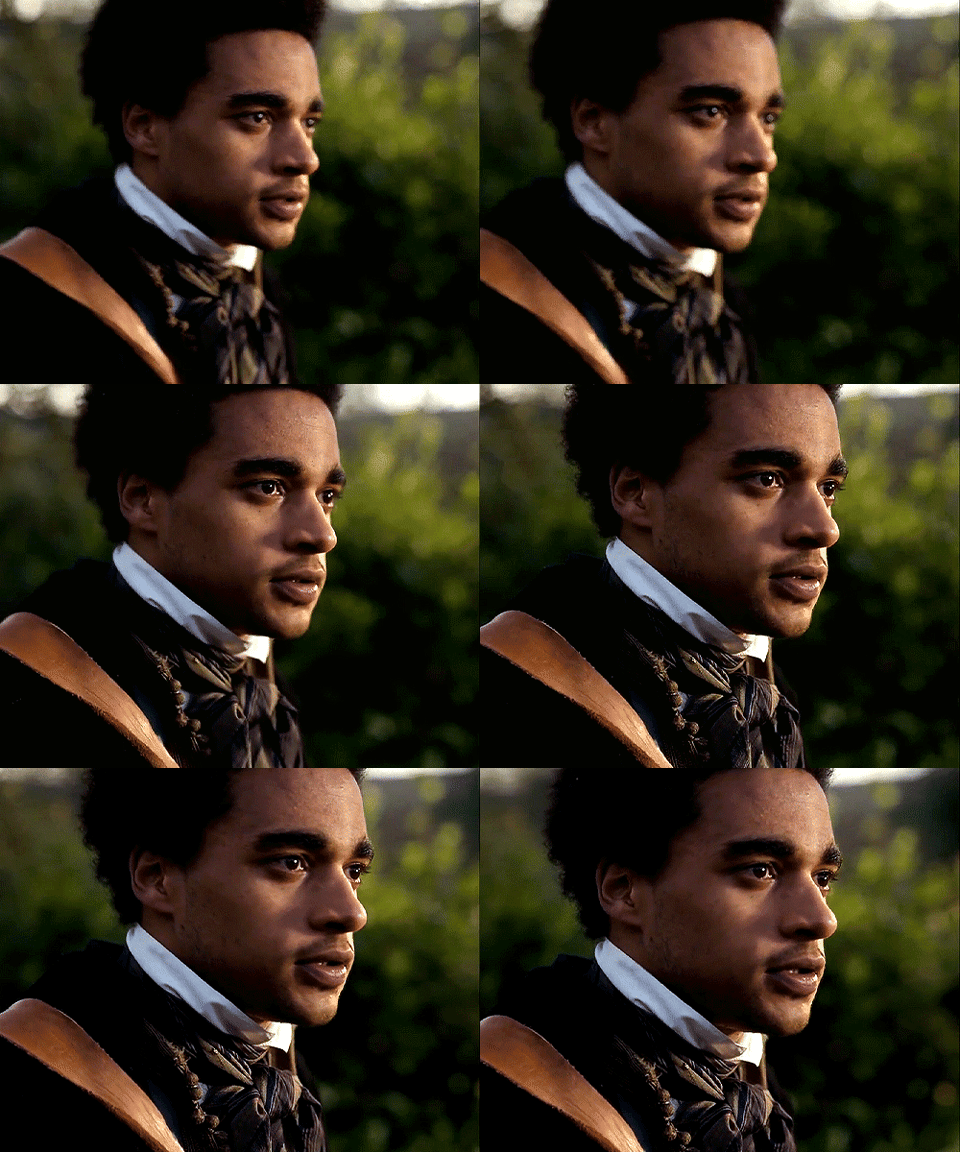
So while I may never find Heathcliff to be a romantic bad boy or Cathy worthy to emulate, I can definitely see the appeal of this book.
Horrible people need love, too. <--is what I tell my husband when he's sick of my shit
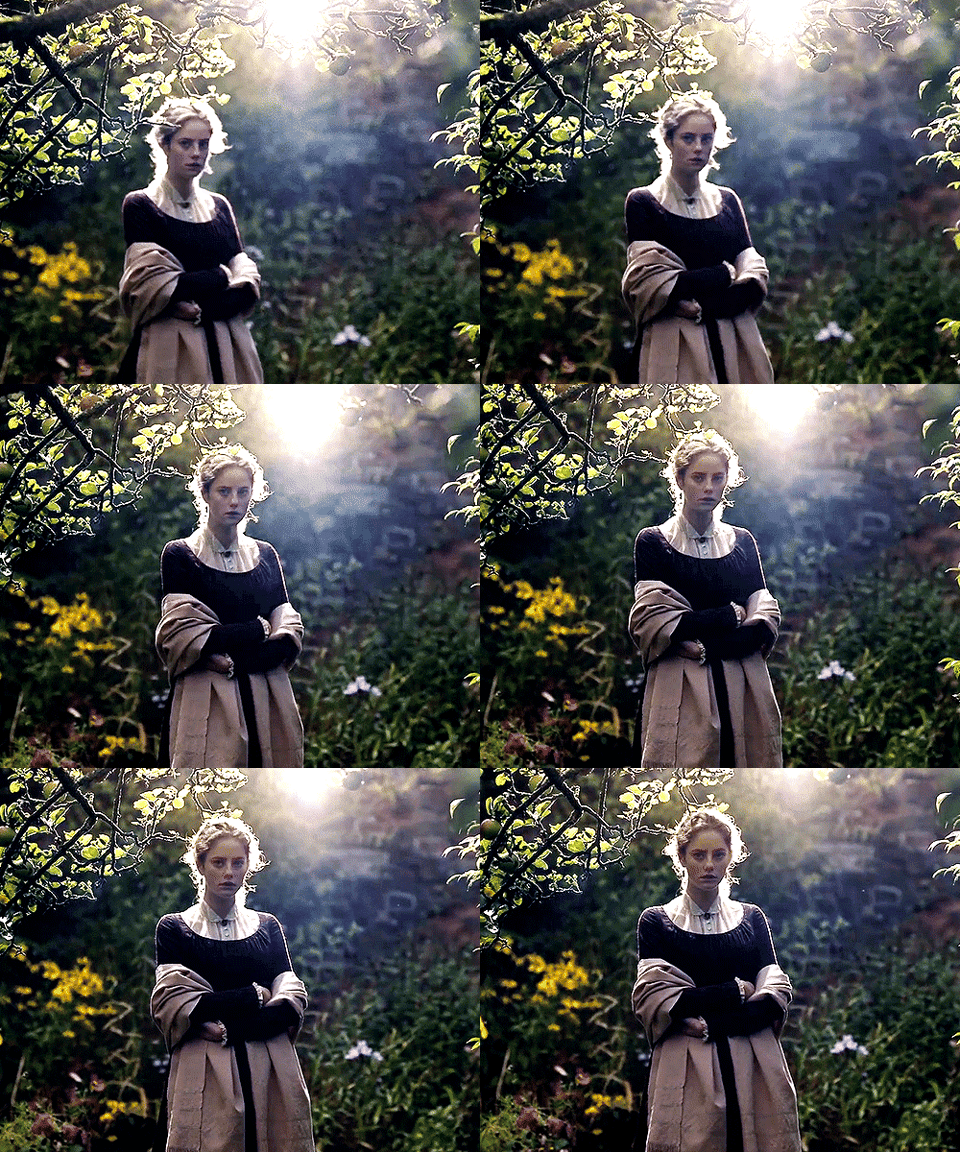
And while I may always be more of an Austen Girl, I get why this is an enduring classic.
Recommended at least once in your life.
After having finally ticked this off my bucket list, I'm going to say it's because it has some of the most poppin-off-the-pages, stick-to-your-ribs, quotable lines that I've ever read.
I didn't much like the characters past their childhoods, I wasn't much wrapped up in the late 1700s-early 1800s soap opera plot, and so I couldn't bring myself to much care about how any of their nonsense wrapped itself up.
BUT!
"Whatever our souls are made of, his and mine are the same."
Getthefuckoutofhere. That one line slapped me right on the ass and left a handprint. And that wasn't the only turn of phrase that woke me up from my nap.
So while I may never find Heathcliff to be a romantic bad boy or Cathy worthy to emulate, I can definitely see the appeal of this book.
Horrible people need love, too. <--is what I tell my husband when he's sick of my shit
And while I may always be more of an Austen Girl, I get why this is an enduring classic.
Recommended at least once in your life.

February 3, 2019

“People feel with their hearts, Ellen, and since he has destroyed mine, I have not power to feel for him.”
Okay, I know that Wuthering Heights is so many people’s favorite book of all-time, and so many people’s least favorite book of all-time, so I went into this not really knowing what to expect. I will be honest, I didn’t really love it, but I was for sure not expecting the wild ride that this story took me on.
But this is a story set in 1801, about a man named Mr. Lockwood, staying the night at Wuthering Heights. He meets a man named Heathcliff, who seems absolutely miserable, and he meets a housekeeper named Ellen Dean who will eventually help us figure out why Heathcliff is so miserable. Oh, and when Lockwood goes to sleep that night, he is awoken by a ghost! He then tells Ellen this, and she promptly throws us back into a flashback, where she becomes the new narrator, and we get to see what went down at Wuthering Heights many years ago.
Wuthering Heights, to me, is a story all about abuse, and cycles of abuse, and how abuse can impact so many hearts and so many generations repeatedly. Abuse and cruelty truly breed violence, and Heathcliff and everyone he has been forced to interact with just showcase that theme over and over. Heathcliff was orphaned and taken in, but everyone reminds him that he constantly is an outsider. But this story focuses on him and the three young people he grew up alongside of, and they are all shitty in their own ways.
➽ Heathcliff is shitty because he only cares for Catherine.
➽ Isabelle is shitty because she only cares about Heathcliff.
➽ Edgar is shitty because he doesn’t care about his sister.
➽ Catherine is shitty because she only cares about herself.
“Whatever our souls are made of, his and mine are the same.”
And friends, it is a truly wild ride seeing these characters interact with one another. And we eventually get to see their children who (you guessed it) are shitty, too! Again, cycles of abandonment and abuse is truly heartbreaking in every aspect.
I don’t want to say too much more without spoiling, because I really do think the twists are pretty decent in this and figuring out more about the ghost was a big highlight for me. Also, the atmosphere was phenomenal, and the Yorkshire moors truly set a beautiful stage for this dark tale. And I feel like this is a little bit of an unpopular opinion; but I actually really liked Emily’s prose, too.
I do want to say that upon finishing this story, I immediately started to look up things about the entire Brontë family, and my heart just broke. The things that those sister, and their entire family, had to go through. I know 2019 is kind of a dumpster fire, but I am so thankful that I wasn’t born in the 1800s, good Lord. Also, reading about how closely tuberculosis impacted this story and Emily’s life truly was so sad. Seriously, I have so much love and respect in my heart for these three sisters, originally writing their dark tales under male pseudonyms, who will now never be forgotten.
Overall, even though I didn’t love this story, this book was enjoyable enough to read. But you’re never going to find me romanticism anything that Heathcliff did. But I truly couldn’t wait to find out what happened next to all these insufferable characters. And I still firmly believe that Ellen/Nelly deserves the entire world. Also, I had the biggest giggle while reading about someone throwing hot applesauce at someone else, because like, just imagine that.
Blog | Instagram | Twitter | Tumblr | Youtube | Twitch
Content and trigger warnings for use of the word g*psies, death, loss of a loved one, a lot of physical and emotional abuse, alcohol abuse, child abuse, animal abuse, humiliation, self-harm, and abandonment.

February 26, 2007
I first read this in AP English Literature - senior year of high school. This book is dense and thick and confusing, and with a class full of haters, it was hard to wrap my head around it. I subsequently read it three or four more times for classes in college and every time I read it, I loved it more. I always found some new, fascinating piece of the story I had never picked up on.
The last time I read it, I suddenly realized that there were many hints and clues that Heathcliff could, in fact, be black. A quick shot at research into Liverpool, where Mr. Earnshaw found the urchin, shows that it was the home to a thriving slave trade. This theory completely changes the story, in my opinion.
Or the thought someone brought up in our seminar on the Brontes - what if Nellie is in love with Heathcliff and subsequently altered how she told the story? You do find Nellie to be coincidently involved in many key scenes throughout the text. What if she isn't the good guy most readers assume she is?
Wuthering Heights is one of the quintessential novels in history. There's nothing else you can really say about it, except that it's one of the best pieces of writing to ever be created. It's just that incredible.
Finished for the 5th time - 11/25/2014
The last time I read it, I suddenly realized that there were many hints and clues that Heathcliff could, in fact, be black. A quick shot at research into Liverpool, where Mr. Earnshaw found the urchin, shows that it was the home to a thriving slave trade. This theory completely changes the story, in my opinion.
Or the thought someone brought up in our seminar on the Brontes - what if Nellie is in love with Heathcliff and subsequently altered how she told the story? You do find Nellie to be coincidently involved in many key scenes throughout the text. What if she isn't the good guy most readers assume she is?
Wuthering Heights is one of the quintessential novels in history. There's nothing else you can really say about it, except that it's one of the best pieces of writing to ever be created. It's just that incredible.
Finished for the 5th time - 11/25/2014

July 27, 2022

Wuthering Heights is a story of great love and passion. It is a story of betrayal. It is a story of revenge. It is a story of complicated relationships in and between families. It is a story of rebels. It is a story of a few selfish characters who will try to do anything for their benefit. This is the beauty of this novel. It can be viewed from multiple angles, and we can see many embedded themes in it, giving us a different reading experience every time we read it in various phases of our life.
Emily Bronte has crafted this story in such a way that the story of the Earnshaws and the Lintons and Heathcliff and Catherine will stay in our minds forever. If you are a lover of classics, this is unequivocally the book you should never miss.
“If all else perished, and he remained, I should still continue to be; and if all else remained, and he were annihilated, the universe would turn to a mighty stranger.”

November 24, 2019
My first re-read*
This story is still one of a kind!
First read (November 2019)*
This book is truly one of a kind! I have never read a book so full of dislikable characters, but still feeling so attached to them at the same time.
I am in awe of the Brontë sisters and can't wait to keep reading more of their work.
Few books make me feel as if the setting is its own character, and Wuthering Heights is definitely its own entity. I could feel her descriptions in my bones! The cold harsh rain storms that overpower the Moors, the vast hills and twisting trees!! It was an incredible reading experience, and now I am so excited to delve deeper into Emily Brontë's poetry since this is unfortunately her only novel! Yet, what a novel it is!! 🍁🍂
This story is still one of a kind!
First read (November 2019)*
This book is truly one of a kind! I have never read a book so full of dislikable characters, but still feeling so attached to them at the same time.
I am in awe of the Brontë sisters and can't wait to keep reading more of their work.
Few books make me feel as if the setting is its own character, and Wuthering Heights is definitely its own entity. I could feel her descriptions in my bones! The cold harsh rain storms that overpower the Moors, the vast hills and twisting trees!! It was an incredible reading experience, and now I am so excited to delve deeper into Emily Brontë's poetry since this is unfortunately her only novel! Yet, what a novel it is!! 🍁🍂
Displaying 1 - 30 of 126,274 reviews