

What do you think?

Icelander
A Nabokovian goof on Agatha Christie — a madcap mystery in the deceptive tradition of The Crying of Lot 49 — Pale Fire meets The Da Vinci Code?Icelander is the debut novel from a brilliant new mind, an intricate, giddy Icelandic lore and pulpy intrigue.
When Our Heroine’s dear friend is found murdered, it’s an obvious job for her mother, a legendary crime-solver and evil-thwarter. But her mother is dead, and Our Heroine has no interest in inheriting the business, or being chased through a sewer, or listening to skaldic karaoke, or fleeing the inhuman Refusirkir, or — But Evil has no interest in her interests, and adventure ensues.
When Our Heroine’s dear friend is found murdered, it’s an obvious job for her mother, a legendary crime-solver and evil-thwarter. But her mother is dead, and Our Heroine has no interest in inheriting the business, or being chased through a sewer, or listening to skaldic karaoke, or fleeing the inhuman Refusirkir, or — But Evil has no interest in her interests, and adventure ensues.
249 pages, Hardcover
First published March 29, 2006
Ratings & Reviews
Friends & Following
Create a free account to discover what your friends think of this book!
Community Reviews
Displaying 1 - 30 of 146 reviews

March 4, 2015
When Shirley MacGuffin is found murdered, everyone looks to Our Heroine to find her killer. Our Heroine, however, only wants to find her missing dog. Since evil has no interest in her lack of interest, she gets drawn into the mystery anyway...
After reading The Boy Detective Fails and enjoying it, someone recommended this book to me since the two were similar.
Icelander is a postmodern, meta-fictional mystery that is a funhouse mirror reflection of the cozy mysteries of a bygone age. Our Heroine is the daughter of a famous detective whose cases have been fictionalized as the Memoirs of Emily Bean. She wakes up after a one night stand to find her friend murdered. Despite her best efforts to the contrary, she gets drawn into the mystery anyway.
The writing in Icelander is beautiful, with Wodehousian wordplay and clever dialogue throughout. The background of the Vanaheim and the Refurserkir was pretty interesting and the motivation of the villains made sense. The characters were fairly colorful and read like twisted Agatha Christie characters. While footnotes in fiction normally annoy me, the ones in this book were justified and usually amusing. Not Terry Pratchett footnote amusing but amusing none the less.
However, it seemed like the book was too occupied with its own cleverness to actually have things happen. Halfway through the book I was still waiting for something to actually happen. For my money, delightfully clever and witty prose doesn't amount to much unless it serves the story.
Overall, I'd say I liked it more than I thought it was just okay. Three out of five stars.
After reading The Boy Detective Fails and enjoying it, someone recommended this book to me since the two were similar.
Icelander is a postmodern, meta-fictional mystery that is a funhouse mirror reflection of the cozy mysteries of a bygone age. Our Heroine is the daughter of a famous detective whose cases have been fictionalized as the Memoirs of Emily Bean. She wakes up after a one night stand to find her friend murdered. Despite her best efforts to the contrary, she gets drawn into the mystery anyway.
The writing in Icelander is beautiful, with Wodehousian wordplay and clever dialogue throughout. The background of the Vanaheim and the Refurserkir was pretty interesting and the motivation of the villains made sense. The characters were fairly colorful and read like twisted Agatha Christie characters. While footnotes in fiction normally annoy me, the ones in this book were justified and usually amusing. Not Terry Pratchett footnote amusing but amusing none the less.
However, it seemed like the book was too occupied with its own cleverness to actually have things happen. Halfway through the book I was still waiting for something to actually happen. For my money, delightfully clever and witty prose doesn't amount to much unless it serves the story.
Overall, I'd say I liked it more than I thought it was just okay. Three out of five stars.

June 25, 2008
This book had so many elements that I love - metanalysis, examination of genre - specifically the mystery genre, farce, mythology, Iceland.... that it's been tough to figure out why it was such an utter disappointment.
Then I realized this was put out by the McSweeney's crew, who I am consistently disappointed with. They're never as funny or as clever as they think they are or they appear to be, judging from the adulation of fans.
There was a sort of meta- thing trying to happen - some kind of nascent attempt at a self-critical mystery about the mystery genre - that just was not coming off right. There were a lot of footnotes; a somewhat annoying if not inherently pretentious tactic that's sadly becoming quite popular lately and one which I've seen used before to better effect. None of the characters were interesting, realistic, likeable, or even that smart. Nor were they funny, despite what I can only assume to be attempts to make them so (especially in the case of the "metaphysical detectives" who struck me as poor knock-offs of simultaneously Croup and Vandemar from Neverwhere and the existential detectives in I Heart Huckabee's.) I think part of this might be that the characters were less supposed to be people and more supposed to fill typical mystery 'roles' or some kind of Archtypes, but that falls pretty flat. I'm kind of ashamed, actually, that this book is even associated with Iceland. Lots of liberties were taken with the mythology as well as the ... feel of Iceland as a place, and its people.
Then I realized this was put out by the McSweeney's crew, who I am consistently disappointed with. They're never as funny or as clever as they think they are or they appear to be, judging from the adulation of fans.
There was a sort of meta- thing trying to happen - some kind of nascent attempt at a self-critical mystery about the mystery genre - that just was not coming off right. There were a lot of footnotes; a somewhat annoying if not inherently pretentious tactic that's sadly becoming quite popular lately and one which I've seen used before to better effect. None of the characters were interesting, realistic, likeable, or even that smart. Nor were they funny, despite what I can only assume to be attempts to make them so (especially in the case of the "metaphysical detectives" who struck me as poor knock-offs of simultaneously Croup and Vandemar from Neverwhere and the existential detectives in I Heart Huckabee's.) I think part of this might be that the characters were less supposed to be people and more supposed to fill typical mystery 'roles' or some kind of Archtypes, but that falls pretty flat. I'm kind of ashamed, actually, that this book is even associated with Iceland. Lots of liberties were taken with the mythology as well as the ... feel of Iceland as a place, and its people.

November 28, 2024
The negative reviews seem to be from people who expected a work of genius on par with Nabokov and Pynchon, but it's really just a silly murder mystery and entertaining enough if you don't take it too seriously.
It is something interior, ineffable, and it yearns to be effed.
There are underground people, who live in a "dark mirror to the topside," hide in tunnels, create non-space and non-sound in which to pounce from, and etc, all tongue-in-cheek.
we recognized the lack of any noise at all emanating from the room—as one might notice the left or right channel’s absence from a familiar stereophonic recording.
I went in with vacation-reading expectations and thoroughly enjoyed myself. There were pretty lines mixed in with the cleverisms.
Ash floated up out of it like negative snow.
The word in English has increased my affection for this time of the day, the Evening… As if it were a time for the evening of all imbalances that the day has carried with itself.
My only complaint is how long it took me to understand that, despite its title, the novel does not take place in Iceland -- at least, not in real Iceland. It's set in an alternate reality upstate New York, with a few chapters in an alternate reality underground Icelandic kingdom thrown in.
It is something interior, ineffable, and it yearns to be effed.
There are underground people, who live in a "dark mirror to the topside," hide in tunnels, create non-space and non-sound in which to pounce from, and etc, all tongue-in-cheek.
we recognized the lack of any noise at all emanating from the room—as one might notice the left or right channel’s absence from a familiar stereophonic recording.
I went in with vacation-reading expectations and thoroughly enjoyed myself. There were pretty lines mixed in with the cleverisms.
Ash floated up out of it like negative snow.
The word in English has increased my affection for this time of the day, the Evening… As if it were a time for the evening of all imbalances that the day has carried with itself.
My only complaint is how long it took me to understand that, despite its title, the novel does not take place in Iceland -- at least, not in real Iceland. It's set in an alternate reality upstate New York, with a few chapters in an alternate reality underground Icelandic kingdom thrown in.

February 3, 2012
Several online reviews have compared Dustin Long to Nabokov and Pynchon - which is precisely what drew me to this book. I like my literature to be entertaining and somewhat challenging. I like to - pardon the cliche - read between the lines. That said, I will admit to using outside help when uncovering hidden meanings beneath and between words on the page - group discussions, Cliffs Notes, Spark Notes, Wikipedia, etc. Without these crutches, I have a feeling I missed a big part of the charm of this novel.
Nonetheless, there were elements that I found enjoyable: the basic framework of the novel (a murder mystery narrated by a begrudging psuedo-detective [with footnotes by an unknown author]); the contrived literary layers piled over the plot (the protagonist is the daughter of a famous detective whose diaries inspired a series of [fictional] novels based on her cases). The fun the author (Long) has with the concepts of literature, narration, and oral tradition is contagious. It's clear he was going for a meta-fiction vibe, but unfortunately, he just misses the mark. (Although naming the corpse at the heart of the mystery " Shirley MacGuffin" is pretty clever.) But there, again, much of the novel feels clever for clever's sake. Also, there are a few moments when Long's (many) influences read as blatantly derivative (for example Wible and Pacheco could be distant cousins of Neverwhere's Croup and Vandemar).
Finally, I'm just over this multi-narrator trend. While the vast majority of the story is told from the protagonist's p.o.v., several chapters are voiced by other characters. The device can be used to great effect, or it can seem like the latest to jump on the bandwagon. (Although, since this novel was published in 2006, it might be unfair to lump it with more recent titles like The Imperfectionists, French Lessons, A Visit from the Goon Squad, etc.)
Perhaps if I had real more slowly and deliberately, I would have gleaned more of the clues, word play, and hidden meanings. As it is, it's just a book with a lot going on that failed to draw me into its reindeer games.
Nonetheless, there were elements that I found enjoyable: the basic framework of the novel (a murder mystery narrated by a begrudging psuedo-detective [with footnotes by an unknown author]); the contrived literary layers piled over the plot (the protagonist is the daughter of a famous detective whose diaries inspired a series of [fictional] novels based on her cases). The fun the author (Long) has with the concepts of literature, narration, and oral tradition is contagious. It's clear he was going for a meta-fiction vibe, but unfortunately, he just misses the mark. (Although naming the corpse at the heart of the mystery " Shirley MacGuffin" is pretty clever.) But there, again, much of the novel feels clever for clever's sake. Also, there are a few moments when Long's (many) influences read as blatantly derivative (for example Wible and Pacheco could be distant cousins of Neverwhere's Croup and Vandemar).
Finally, I'm just over this multi-narrator trend. While the vast majority of the story is told from the protagonist's p.o.v., several chapters are voiced by other characters. The device can be used to great effect, or it can seem like the latest to jump on the bandwagon. (Although, since this novel was published in 2006, it might be unfair to lump it with more recent titles like The Imperfectionists, French Lessons, A Visit from the Goon Squad, etc.)
Perhaps if I had real more slowly and deliberately, I would have gleaned more of the clues, word play, and hidden meanings. As it is, it's just a book with a lot going on that failed to draw me into its reindeer games.

July 22, 2009
When I saw the description of this book in the McSweeney’s store I knew I was going to buy it. It had all the right words - as if it were waiting on Dave Eggers’ site just for me, sending out secret messages: ”Nabokov… Agatha Christie… The Crying of Lot 49… The Third Policeman… Nordic lore and pulpy intrigue.” It called to me.
It’s a cool little faux detective romp regarding the attempts of Our Heroine to mourn the mysterious death of her friend Shirley MacGuffin and not get caught up in trying to solve the case. If you can’t tell by the names, be assured we’re in postmodern territory here. Imagine if Paul Auster’s debut trilogy was a comedy set in upstate New Uruk and Iceland instead of titular New York City. And just like that author’s trio of deconstructed detective stories, Dustin Long’s book is absolutely full of thematic jumping-off-points.
Which brings me to a point I want to make. To wit: One of the traps of these postmodern deconstructionist send-ups is that they can easily turn into something less like a story with characters and more like a doctoral dissertation with grand themes. Even the above-referenced Auster trilogy is sometimes guilty of being too didactic at the expense of fully-realized characters. (To be fair, I’m not sure character is always at the top of Auster’s to-do list. I’m sure he accomplished everything he set out to accomplish with The New York Trilogy.) I always use Nabokov’s Pale Fire as the shining example of a postmodern deconstruction puzzle-book that also has realistic characters. (And here I’m using the term “realistic” in a purely literary sense. Obviously there are arguments as to who or what is “real’ in the confines of Pale Fire qua story.) With Icelander Dustin Long has also managed that feat. Our Heroine, despite her cookie-cutter name, is anything but a mere model of the typical detective as created by the likes of Agatha Christie or Raymond Chandler or their ilk. With her anti-quest to avoid becoming involved in the case of her murdered friend and her disheveled mental state as a result of her recent divorce we have a fully fleshed-out character and not just some stand-in for the role of “Detective.”
It’s things like the intense characterization of Our Heroine and Blaise Duplain along with the intense pace of the narrative that set it apart from its postmodern brethren. I could go on and on about this book. And one day I hope to do just that. I have barely scratched the surface of this incredible debut novel; it deserves a very close reading. But for now let me just give it my highest possible recommendation and leave it at that. Even if you don’t usually read weird experimental stuff, read this.
It’s a cool little faux detective romp regarding the attempts of Our Heroine to mourn the mysterious death of her friend Shirley MacGuffin and not get caught up in trying to solve the case. If you can’t tell by the names, be assured we’re in postmodern territory here. Imagine if Paul Auster’s debut trilogy was a comedy set in upstate New Uruk and Iceland instead of titular New York City. And just like that author’s trio of deconstructed detective stories, Dustin Long’s book is absolutely full of thematic jumping-off-points.
Which brings me to a point I want to make. To wit: One of the traps of these postmodern deconstructionist send-ups is that they can easily turn into something less like a story with characters and more like a doctoral dissertation with grand themes. Even the above-referenced Auster trilogy is sometimes guilty of being too didactic at the expense of fully-realized characters. (To be fair, I’m not sure character is always at the top of Auster’s to-do list. I’m sure he accomplished everything he set out to accomplish with The New York Trilogy.) I always use Nabokov’s Pale Fire as the shining example of a postmodern deconstruction puzzle-book that also has realistic characters. (And here I’m using the term “realistic” in a purely literary sense. Obviously there are arguments as to who or what is “real’ in the confines of Pale Fire qua story.) With Icelander Dustin Long has also managed that feat. Our Heroine, despite her cookie-cutter name, is anything but a mere model of the typical detective as created by the likes of Agatha Christie or Raymond Chandler or their ilk. With her anti-quest to avoid becoming involved in the case of her murdered friend and her disheveled mental state as a result of her recent divorce we have a fully fleshed-out character and not just some stand-in for the role of “Detective.”
It’s things like the intense characterization of Our Heroine and Blaise Duplain along with the intense pace of the narrative that set it apart from its postmodern brethren. I could go on and on about this book. And one day I hope to do just that. I have barely scratched the surface of this incredible debut novel; it deserves a very close reading. But for now let me just give it my highest possible recommendation and leave it at that. Even if you don’t usually read weird experimental stuff, read this.

December 24, 2010
At one point, the author may have had a great idea for a story that takes place in an interesting pseudo-Icelandic alternate reality, but the actual novel is bogged down by dull characters, dull dialogue, dull storyline, and worst of all: a metaphysical structure that attempts to make a statement about the structure of the novel but really just comes off as annoying and pretentious. In a nutshell.

February 15, 2008
A strange little post-modern puzzle of a mystery novel. Overly self-conscious of its antecedents, and seemingly tending towards heavy style over substance, but funny, fun, and entertaining nonetheless. I think I should like to re-read sometime soon, as I'm much better at this sort of thing now.

March 25, 2009
The book inside of this amazing cover probably suffers for it. It's hard to live up to such a cover and such endpapers. I found myself judging the book too harshly for not being as great as its cover. Then I made peace with it, and got into it (but not the footnotes, really). Then the afterword threw me off again. But mostly it was enjoyable. In fact, I really liked a lot of things about it. The weird non-american names for american cities. The whole Vanaheim thing. Dachsunds and Foxes. Conceptual pomo literature/memoir through the form of a house. All that stuff. And I think Nathan is supposed to be Ethan Hawke.
And I liked reading the book as an example of Shirley's "concave, feminine" plot structure, as described on p. 167:
"I would have shaped the stories such that they culminated climactically, but I would not have allowed that climax to be the sole focus of the book. I'd concentrate more on the full process of the act of love--figuratively speaking, of course--and less on the orgasm itself. With less of an ejaculatory, post-coital let down, as well... Ideally, then, I would leave the reader turned on with a few unresolved strands that might lead to further climax upon intense reflection of the experience. More negative space. What is not said placed on a level of equal importance with what is said. The suggestive... And perhaps some form of narrative cuddling afterward."
Which gives one fun things to think about re: the male footnote/editorial voice vs. the Our Heroine narrated (for the most part) text. If you wanted to.
In short: I judged a book by its cover and bought it only to judge it by its cover and begin to not like it only to decide not to judge it by its cover and begin to like it again. The end.
And I liked reading the book as an example of Shirley's "concave, feminine" plot structure, as described on p. 167:
"I would have shaped the stories such that they culminated climactically, but I would not have allowed that climax to be the sole focus of the book. I'd concentrate more on the full process of the act of love--figuratively speaking, of course--and less on the orgasm itself. With less of an ejaculatory, post-coital let down, as well... Ideally, then, I would leave the reader turned on with a few unresolved strands that might lead to further climax upon intense reflection of the experience. More negative space. What is not said placed on a level of equal importance with what is said. The suggestive... And perhaps some form of narrative cuddling afterward."
Which gives one fun things to think about re: the male footnote/editorial voice vs. the Our Heroine narrated (for the most part) text. If you wanted to.
In short: I judged a book by its cover and bought it only to judge it by its cover and begin to not like it only to decide not to judge it by its cover and begin to like it again. The end.

May 26, 2010
The cover art is beautiful. It would be lovely blown up large enough to frame and display. Or at least that's what I thought until I looked a little more closely and realized that it depicted a building exploding and there's an itty bitty dead guy on the ground. Bad feng shui, no doubt.
Anyway, for me the art was the best part of the book. I was worried about it being like Lemony Snickett for adults, but I really wanted to like it. I kept going after the first few pages when I realized that the main character was only going to be referred to cutely as "Our Heroine", even though this type of thing is usually a deal-breaker. At page fifty I decided enough was enough. I think my sense of humor is missing the node that finds this sort of thing funny. It's probably the same reason I don't like Monty Python.
Read this book if you enjoy descriptions of characters using tweezers to pluck ingrown hairs from their legs. Ugh. I should probably just cross spoof novels off my list forever.
Anyway, for me the art was the best part of the book. I was worried about it being like Lemony Snickett for adults, but I really wanted to like it. I kept going after the first few pages when I realized that the main character was only going to be referred to cutely as "Our Heroine", even though this type of thing is usually a deal-breaker. At page fifty I decided enough was enough. I think my sense of humor is missing the node that finds this sort of thing funny. It's probably the same reason I don't like Monty Python.
Read this book if you enjoy descriptions of characters using tweezers to pluck ingrown hairs from their legs. Ugh. I should probably just cross spoof novels off my list forever.

December 1, 2025
3.5
This novel combines a myriad of unique interests of mine (Norse Mythology, Lost World adventure stories along the lines of H. Rider Haggard, Jules Verne, Iceland, Medieval historical texts, alternate history, mysteries, framing devices, Beowulf references, Shakespeare, etc), and, while I enjoyed it, I cannot say that I was fully satisfied with it as much as I wanted to be. This may just come down to me being an idiot, but it felt like there were one too many plot points that were not set up enough for their later reveal—aside from the big reveal in the end which was done intentionally. Overall, I found this book to be a worthwhile read, and I liked the postmodern twist added to what was set up as a more classic adventure/mystery story.
Points lost for constantly using vellum and parchment interchangeably (also claiming vellum was made from lambs (Dr. Gura would be disappointed)), and for trying too hard at being literary rather than just being a good story.
This novel combines a myriad of unique interests of mine (Norse Mythology, Lost World adventure stories along the lines of H. Rider Haggard, Jules Verne, Iceland, Medieval historical texts, alternate history, mysteries, framing devices, Beowulf references, Shakespeare, etc), and, while I enjoyed it, I cannot say that I was fully satisfied with it as much as I wanted to be. This may just come down to me being an idiot, but it felt like there were one too many plot points that were not set up enough for their later reveal—aside from the big reveal in the end which was done intentionally. Overall, I found this book to be a worthwhile read, and I liked the postmodern twist added to what was set up as a more classic adventure/mystery story.
Points lost for constantly using vellum and parchment interchangeably (also claiming vellum was made from lambs (Dr. Gura would be disappointed)), and for trying too hard at being literary rather than just being a good story.

March 30, 2008
Icelander is my first foray into the McSweeney's publishing world, which has often been recommended to me, and into which I have only dipped my toes into it's short fiction and online presence. This book was an absolute mess. I wouldn't recommend it to anyone - the plot was loose and non-engaging and it was hard to give a shit about any of the characters. The style of humor that the author was trying to execute fell quite short of its goal. However, despite my damning review, I could see talent in the author's words, but he clearly needs to hone his craft. If Dustin Long manages to get further books published, I might be curious to see where he is at two or three tales down the line.

February 7, 2014
Murder mystery, literary mysteries, Norse mythology, and humor all mixed together with an erudite style. The footnotes were a mixture of failed attempts at cleverness and delightfully imaginative and funny. Overall, the book came off as trying to be more clever than it was, but it was plenty clever nonetheless. The author intrigued me enough that I have preordered his next novel ("Bad Teeth).

Want to Read
May 23, 2009"Evil has no interest in your interests."
March 27, 2025
A fun, albeit a tad full-of-itself, caricature of a mystery novel. Though the meta-narrative got a bit confusing as the book tried to wrap up, generally I enjoyed the mock-blurred line between fiction/memoir. Overall, the book was a quirky, intriguing, easy read.
November 18, 2020
What did I just read? XD
This book has largely gotten reviews as a comedic parody-mystery with some fantasy adventure thrown in. The cover would seem to suggest that a big, fantastical event is going to occur. The blurb which called this debut "Lemony Snicket for adults" was the whole reason I bought it, as I adore Mr. Snicket's absurdism, rewards for diligent readers, fourth-wall-breaking and philosophical commentary.
This book /has/ those elements... and yet it is /none/ of those things.
The parody of a mystery, where Our Heroine doesn't want to investigate the mystery, and a string of characters - including her - end up investigating her non-investigation as if it were the answer to the central mystery... is /cute/. It's a /cute/ joke, it got a chuckle. But after a couple hundred pages, you realize the various characters are going around in circles chasing nothing, and /you/ are being led to nothing, which is boring. If you're waiting for a break in the parody to provide conflict-resolution for the central mystery, you won't get it.
This story takes place in an alternate modern era, where Vikings were the primary colonial force and cultural influencer, and Norse mythology has some scraps of truth. There is a whole underground society, with a martial arts system inspired by the stealth of the arctic fox, its movements akin to ninjitsu. You would think the cultural differences of this alternate reality, and its clash with fox ninjas, would be plenty of meat for a story! Alas, these cool concepts are mostly background fodder. The big clash between surface and below is just a metaphor summed up in an afterword.
What, then, is this book? A mystery which doesn't resolve, a comedy which isn't that funny, an adventure which doesn't take action... In the end, what's left is all meta-commentary about the importance of perception and writing. It is the story of how we all have multiple biographies: What we know of ourselves, what we show of ourselves, and what other people interpret of us. The themes are reinforced by having multiple, fictional authors and investigators attempting to write about people or interpret the writings /of/ people. It's all very dizzying. There are brilliant insights into both writing and the human condition. But Writers Writing About Writing is SO pretentious. The fact that the central murder mystery is related to the cultural significance of writing is just... so... self-congratulatory. And I don't think this book did enough /else/ to merit its arrogance.
Finally, this book seemed to want to be an experiment in "feminine storytelling". The murder victim, Shirley, describes at one point how Western storytelling is masculine: It builds to a climax then ends. She imagined a feminine story structure: secretive, meandering, as much about what was withheld as what was obvious, leading to tiny, building rewards along its various subplots, until climaxing at perhaps multiple points, and then having a long denouement to resolve everything. After reading her description, and putting it together with the author's choice to name various characters after sexual acts, I thought maybe he was tipping his hand and telling readers to read this book from a feminine sexual-lens... OR, that the author was laughing at us for trying to read TOO much into the book, and hitting investigative readers with a giant sex joke for all of their sleuthing. If a meta book about being an observant reader doesn't /reward/ its readers, then is the whole point a satire? A big middle finger for reading at all? That's cruel. And if the book is just a sex joke, it went over my head, and was in poor taste, since the context holding the joke is a woman grieving her dead mother, dead friend, and estranged husband. AND if the book is trying to be a revolutionary, feminine story structure, I - a woman - have a problem with its lack of climax, heavily dissatisfying.
It's rare that I can't tell if a book is too smart for me, or too dumb. But either way, much as I appreciated the concept and metaphors, those mechanics are not /enough/ to carry a book. A good mental exercise. A lousy story.
This book has largely gotten reviews as a comedic parody-mystery with some fantasy adventure thrown in. The cover would seem to suggest that a big, fantastical event is going to occur. The blurb which called this debut "Lemony Snicket for adults" was the whole reason I bought it, as I adore Mr. Snicket's absurdism, rewards for diligent readers, fourth-wall-breaking and philosophical commentary.
This book /has/ those elements... and yet it is /none/ of those things.
The parody of a mystery, where Our Heroine doesn't want to investigate the mystery, and a string of characters - including her - end up investigating her non-investigation as if it were the answer to the central mystery... is /cute/. It's a /cute/ joke, it got a chuckle. But after a couple hundred pages, you realize the various characters are going around in circles chasing nothing, and /you/ are being led to nothing, which is boring. If you're waiting for a break in the parody to provide conflict-resolution for the central mystery, you won't get it.
This story takes place in an alternate modern era, where Vikings were the primary colonial force and cultural influencer, and Norse mythology has some scraps of truth. There is a whole underground society, with a martial arts system inspired by the stealth of the arctic fox, its movements akin to ninjitsu. You would think the cultural differences of this alternate reality, and its clash with fox ninjas, would be plenty of meat for a story! Alas, these cool concepts are mostly background fodder. The big clash between surface and below is just a metaphor summed up in an afterword.
What, then, is this book? A mystery which doesn't resolve, a comedy which isn't that funny, an adventure which doesn't take action... In the end, what's left is all meta-commentary about the importance of perception and writing. It is the story of how we all have multiple biographies: What we know of ourselves, what we show of ourselves, and what other people interpret of us. The themes are reinforced by having multiple, fictional authors and investigators attempting to write about people or interpret the writings /of/ people. It's all very dizzying. There are brilliant insights into both writing and the human condition. But Writers Writing About Writing is SO pretentious. The fact that the central murder mystery is related to the cultural significance of writing is just... so... self-congratulatory. And I don't think this book did enough /else/ to merit its arrogance.
Finally, this book seemed to want to be an experiment in "feminine storytelling". The murder victim, Shirley, describes at one point how Western storytelling is masculine: It builds to a climax then ends. She imagined a feminine story structure: secretive, meandering, as much about what was withheld as what was obvious, leading to tiny, building rewards along its various subplots, until climaxing at perhaps multiple points, and then having a long denouement to resolve everything. After reading her description, and putting it together with the author's choice to name various characters after sexual acts, I thought maybe he was tipping his hand and telling readers to read this book from a feminine sexual-lens... OR, that the author was laughing at us for trying to read TOO much into the book, and hitting investigative readers with a giant sex joke for all of their sleuthing. If a meta book about being an observant reader doesn't /reward/ its readers, then is the whole point a satire? A big middle finger for reading at all? That's cruel. And if the book is just a sex joke, it went over my head, and was in poor taste, since the context holding the joke is a woman grieving her dead mother, dead friend, and estranged husband. AND if the book is trying to be a revolutionary, feminine story structure, I - a woman - have a problem with its lack of climax, heavily dissatisfying.
It's rare that I can't tell if a book is too smart for me, or too dumb. But either way, much as I appreciated the concept and metaphors, those mechanics are not /enough/ to carry a book. A good mental exercise. A lousy story.
This entire review has been hidden because of spoilers.

May 4, 2015
While entertaining and promising, Long's book built on a legacy of a false saga seems more of an introduction than a true intermix. The story follows as the book jacket says, a reluctant heroine is pulled in to solve a mystery of a friend that she doesn't want to solve. In a way, the ending and wrap seem rather contrived. The writing is clean. The footnotes are a nice touch, bringing to bear the extra "dimension" of the text. But the stumbling of the heroine into the lair, the expected confrontation and lack of resolution is damning (knowledge is often adequate for the mystery to be solved, but inadequate as a true resolution if at least someone is not caught, or a wrong is not righted). In that sense, this book, while organized around a mystery is not really a mystery novel, than it is an exploration into this world.
We have the pieces of all the conspiracy but nothing really happens. It is annoying in your traditional mystery novel where the heros discover the plot and then the last 50 pages is just the wrap up to spoil the bad guy's plans, but in this, there seem to be almost no need to spoil any plans since the bad guys don't seem to have any plans whatsoever.
Instead we are left with a hole where neither side can move forward. The comparisons with Pynchon are many, but we do need to have an ending that extends beyond the text of the book, and that doesn't seem to really happen here. Instead we are left with many pieces where it seems that the bad guy was in fact the other author and not the author of this text. What makes this less of a mystery was the interference of a refined trajectory, and instead, a forestalling of one author attempting to block another author's telling of how things should be.
I did however like the book, since it was entertaining, until the ending, which seemed too easy a wrap up. I guess the heroine needs an audience to preform for. The promise at the start of the text however was a bit too much for the performance.
We have the pieces of all the conspiracy but nothing really happens. It is annoying in your traditional mystery novel where the heros discover the plot and then the last 50 pages is just the wrap up to spoil the bad guy's plans, but in this, there seem to be almost no need to spoil any plans since the bad guys don't seem to have any plans whatsoever.
Instead we are left with a hole where neither side can move forward. The comparisons with Pynchon are many, but we do need to have an ending that extends beyond the text of the book, and that doesn't seem to really happen here. Instead we are left with many pieces where it seems that the bad guy was in fact the other author and not the author of this text. What makes this less of a mystery was the interference of a refined trajectory, and instead, a forestalling of one author attempting to block another author's telling of how things should be.
I did however like the book, since it was entertaining, until the ending, which seemed too easy a wrap up. I guess the heroine needs an audience to preform for. The promise at the start of the text however was a bit too much for the performance.
January 3, 2008
Got this for my birthday. I had high hopes for it when the jacket blurb compared it to The Third Policeman. I enjoyed it, though with reservations. The prose was good, and rarely a chore to read, though sometimes the "Blaise" and "Wible & Pacheco" sections dragged. Referring to the protagonist as "Our Heroine" throughout the novel was more than a bit too precious, and choosing character names like "Constance Lingus", "Philip Leshio", and "Hubert Jorgen" is just cheesy. Long's device of framing the narrative as a manuscript of unknown authorship discovered among the papers of a character mentioned in the text does not excuse these lapses.
I also didn't understand why what was apparently "New York" was referred to throughout the novel as "New Uruk". I think Long did this to indicate that the novel took place in some sort of alternate universe, but the central conceit of the existence of the underground kingdom of Vanaheim (below Iceland) was enough for this purpose.
So, what did I like? I really enjoyed the details about Vanaheim, its inhabitants, ecology, and mythology. Almost everything written from the point of view of "Our Heroine" was interesting. Naming the character whose death sparks the central mystery of the novel "MacGuffin" was a nice touch. And the character of "Nathan" is an entertaining send-up of an affable, pretentious, and self-absorbed Hollywood star. He's based on Ethan Hawke, as evidenced by his description and also in what looks like an acrostic on page 140. I can't figure out if "Nathan" is supposed to be good-natured ribbing of Hawke or a mild skewering.
In the end, I liked Icelander enough that I will definitely look for Long's next novel.
I also didn't understand why what was apparently "New York" was referred to throughout the novel as "New Uruk". I think Long did this to indicate that the novel took place in some sort of alternate universe, but the central conceit of the existence of the underground kingdom of Vanaheim (below Iceland) was enough for this purpose.
So, what did I like? I really enjoyed the details about Vanaheim, its inhabitants, ecology, and mythology. Almost everything written from the point of view of "Our Heroine" was interesting. Naming the character whose death sparks the central mystery of the novel "MacGuffin" was a nice touch. And the character of "Nathan" is an entertaining send-up of an affable, pretentious, and self-absorbed Hollywood star. He's based on Ethan Hawke, as evidenced by his description and also in what looks like an acrostic on page 140. I can't figure out if "Nathan" is supposed to be good-natured ribbing of Hawke or a mild skewering.
In the end, I liked Icelander enough that I will definitely look for Long's next novel.
This entire review has been hidden because of spoilers.
July 25, 2014
I so dearly wanted to love this. It has so much going for it- the plot is good, the worldbuilding is interesting if nowhere near fully developed, the characters are good, the concept is good...
I can't say I didn't like it, but it was lacking. Listen- I want to be on your side for the experiments, I really do, but things need to be extra fleshed out if you're going to switch to as many POV characters, and they have to feel like they're essential viewpoints to the story. Was the reporter's POV necessary? The detectives? Nathan?
You must've been avoiding the most obvious solution, Mr. Long, but I think it would've been the best one. Cutting to chapters of Emily Bean books to flesh out the world rather than giving us a million pointless POV characters and then explaining how all the best action happened "off screen." (A joke that would've been funnier if we'd left more satisfied.) The fantastical nature of the Emily Bean books would've been a good contrast with the actual reality Our Heroine (just calling her this drove me INSANE. Is it intended to come off as empowering? It feels insulting. It comes off as dehumanizing to never give her a name in a way that doesn't add to the story at all).
That being said, there's a gem in here somewhere! The plot twists at the end were great, the world was interesting, and Prescott's bizarre turn made me curious to see what this could've been.
I can't say I didn't like it, but it was lacking. Listen- I want to be on your side for the experiments, I really do, but things need to be extra fleshed out if you're going to switch to as many POV characters, and they have to feel like they're essential viewpoints to the story. Was the reporter's POV necessary? The detectives? Nathan?
You must've been avoiding the most obvious solution, Mr. Long, but I think it would've been the best one. Cutting to chapters of Emily Bean books to flesh out the world rather than giving us a million pointless POV characters and then explaining how all the best action happened "off screen." (A joke that would've been funnier if we'd left more satisfied.) The fantastical nature of the Emily Bean books would've been a good contrast with the actual reality Our Heroine (just calling her this drove me INSANE. Is it intended to come off as empowering? It feels insulting. It comes off as dehumanizing to never give her a name in a way that doesn't add to the story at all).
That being said, there's a gem in here somewhere! The plot twists at the end were great, the world was interesting, and Prescott's bizarre turn made me curious to see what this could've been.

June 13, 2011
Icelander is exactly what I've come to expect in a McSweeny's book. Supremely clever, a little over-the-top strange, and a lot of fun. It goes off the rails a couple times when it gets tied up in its own gimmicks, but by-and-large, I liked it a lot. Something halfway between Chris Adrian and Adam Levin, but a much smaller dose, and told as a detective story. Or perhaps a companion piece to Adam Novy's Avian Gospels, in the way that it creates a whole universe not that different from our own, but for one or two important detail.
I'm probably trying too hard to categorize the book, but the gist is that it was really creative and enjoyable.
I'm probably trying too hard to categorize the book, but the gist is that it was really creative and enjoyable.

October 8, 2010
I decided to move this off my "to read" list because really I already tried to read it and I don't think I'll ever pick it back up. I should have loved it, it has a beautiful fantastical cover, and it's a detective mystery set in Iceland in winter with purposefully over the top characters. I love those things. But the writer is so deadset on seeming witty and comedic, and those are just about the hardest things to actually pull off in fiction. It just annoyed me to read it, and I'm sad about that.

August 5, 2010
This was a really tedious read. I applaud the lofty efforts of a debut novel but, Jesus this thing bored me to tears. I'm very aware of what he was trying to attempt but it fell flat on its face. When you use your characters essentially as living archetypes and everything is a pun inside of a riddle inside of 240 pages of dreck, it makes you want to - as a friend of mine aptly described when he read the book himself - vomit with rage.
October 13, 2010
Having approached it from a "style over substance" prejudice, I found that reading it aloud brought the depth of characters to life in a way that wasn't immediately evident on the page. Which is not to say that the audiobook was an -improvement- over the written text, but that there's definitely a little magic here.
I'd be just delighted if you wanted to check out the audiobook:
http://iambik.com/books/icelander-by-...
I'd be just delighted if you wanted to check out the audiobook:
http://iambik.com/books/icelander-by-...
January 29, 2011
I knew I should probably like this book, and I tried to. But even within its own genre it seemed a little too cutesy. Maybe my mistake was listening to it on audio tape, where eventually I began to dislike the sound of the narrator's voice. Droll and arch at the same time, with an overlay of preciousness.
Did not make it to the end. I'll mark it finished because I'm finished with it...
Did not make it to the end. I'll mark it finished because I'm finished with it...

June 1, 2008
Read a number of good reviews, but I thought it was pretty awful. Maybe I just don't "get" it, but I prefer a mystery to make at least some effort to...you know...resolve the mystery.
I almost gave up halfway through. Wish I had.
I almost gave up halfway through. Wish I had.

January 22, 2009
It's time for me to face that I am never going to finish this book. Based on the 127 pages I read, I'm giving it 1 star. Maybe the last half of the book would garner 5 stars, but I'm throwing in the towel.
I need to create a shelf for "to never finish."
I need to create a shelf for "to never finish."

December 29, 2007
I can't even read this, it's like the author set out to write the quirkiest novel ever. Weird does not automatically equal good.

April 19, 2018
Icelander is an interesting book that think its a lot clever than it winds up being.
This is a novel for writers, which i guess makes sense since its on Dave Eggar's. There are winks at the reader throughout - from story driver "Shirley MacGuffin" (funny the first time, ugh by the 500th time) to the unreliable narrators, to the unreliable "editor", to the unrealiable "author". These are all "clever" machiniations that any writer would enjoy, in theory.
For the first third of hte book, when Our Heroine is the the sole narrator, this works well. I liked hte ideas of person involved in real-life mysteries then subject to mystery novels hating her own fame. I liked the two literary investigators. I liked the plot about the origins of Macbeth. I liked the bookish plot, the bookish characters, 5 stars at this point.
Then it becomes a mess in the middle. Multiple voices, multiple timelines, it just loses its cohesion. The sum of the parts in the middle is less than the whole. Not much plot actual advance,s but just a lot of scattered background.
This goes on for a while and then act III kicks in when ALL THE PLOT HAPPENS IMMEDIATELY. Too much action, too late, with no real pay off. You dont really care about the characters because after switching narrator so many times in the middle, it just becomes a tastesless blur. Characters utlimtaely have no arc - its just to a race to reveal the "mystery" sorta. And then the book ends with the editor clashing with the author clashing with the content of the story, so nothing really conclusive can be said. uh ok? its "clever" i guess.
Other tidbits:
The dramatis personae was needed but it forgets to include like half the characters.
I like the idea of this book and its play on conventions, but i feel someone else could have done a better job.
For a book about Iceland there is almost 0 here about iceland. Id expect every character to have an icelandic name. The icelandic setting never really comes into play other than steam tunnels - which isnt unique to iceland. It should be called Nordicer because its a non-researched mishmash of Scandinavia.
Finally - this is an interesting book that i think should be read in a class about writing plots, as a way to give you ideas about turning conventions on its head. But way too ambitious for Dustin Long to handle
This is a novel for writers, which i guess makes sense since its on Dave Eggar's. There are winks at the reader throughout - from story driver "Shirley MacGuffin" (funny the first time, ugh by the 500th time) to the unreliable narrators, to the unreliable "editor", to the unrealiable "author". These are all "clever" machiniations that any writer would enjoy, in theory.
For the first third of hte book, when Our Heroine is the the sole narrator, this works well. I liked hte ideas of person involved in real-life mysteries then subject to mystery novels hating her own fame. I liked the two literary investigators. I liked the plot about the origins of Macbeth. I liked the bookish plot, the bookish characters, 5 stars at this point.
Then it becomes a mess in the middle. Multiple voices, multiple timelines, it just loses its cohesion. The sum of the parts in the middle is less than the whole. Not much plot actual advance,s but just a lot of scattered background.
This goes on for a while and then act III kicks in when ALL THE PLOT HAPPENS IMMEDIATELY. Too much action, too late, with no real pay off. You dont really care about the characters because after switching narrator so many times in the middle, it just becomes a tastesless blur. Characters utlimtaely have no arc - its just to a race to reveal the "mystery" sorta. And then the book ends with the editor clashing with the author clashing with the content of the story, so nothing really conclusive can be said. uh ok? its "clever" i guess.
Other tidbits:
The dramatis personae was needed but it forgets to include like half the characters.
I like the idea of this book and its play on conventions, but i feel someone else could have done a better job.
For a book about Iceland there is almost 0 here about iceland. Id expect every character to have an icelandic name. The icelandic setting never really comes into play other than steam tunnels - which isnt unique to iceland. It should be called Nordicer because its a non-researched mishmash of Scandinavia.
Finally - this is an interesting book that i think should be read in a class about writing plots, as a way to give you ideas about turning conventions on its head. But way too ambitious for Dustin Long to handle

November 5, 2018
Icelander, c’est un O.L.N.I. Un Objet Littéraire Non Identifié. Enquête policière, roman d’aventure, s’appuyant sur des journaux fictifs présentés comme réels, des romans prétendument publiés mais totalement imaginaires, les notes de bas de page de l’auteur sont décalées, déroutantes parfois. Sans parler de l’héroïne de ce roman dont on ignore du début à la fin le prénom et qui nous est présentée tout du long comme étant « Notre Héroïne ». Déroutant, le récit en lui-même, qui nous plonge d’entrée dans cette intrigue dont nous sommes sensés connaître déjà tous les protagonistes et leur histoire, qui ont fait l’objet de nombreux ouvrages présentant leurs aventures. C’est assez perturbant au début, d’autant plus que le narrateur/auteur place des notes en bas de page qui renvoient à ces récits comme des ouvrages réels. Sous ce pays de glace, où la neige est omniprésente au moment où se déroule l’intrigue, se trouve Vanaheim qui abrite les Refurserkir, des guerriers vêtus de peaux de renards et que l’on remarque par leur formidable silence. On pourrait d’ailleurs trouver en ces personnages une sorte de moquerie de berserkir, ces guerriers-fauves présents dans la mythologie nordique et qui poussaient parfois des hurlements pendant leurs attaques.
On se sent perdus, on ne sait pas vraiment ce qui est vrai, ce qui est faux (ça, c’est la faute du narrateur qui, prend malin plaisir, semble-t-il, à nous assurer que tout cela n’est que fiction pour mieux perdre le lecteur) et le pire, c’est qu’on en redemande! Voilà un roman surprenant et agréable à la fois, dans lequel on se laisse prendre dans une atmosphère étrange, mystérieuse, bizarre, teintée d’humour. Je n’ai pas saisi les similitudes avec Jasper Fforde ou Thomas Pynchon annoncées par l’éditeur, n’ayant lu ni l’un ni l’autre, mais cela ne m’a pas empêché d’apprécier ce roman plutôt déjanté.
On se sent perdus, on ne sait pas vraiment ce qui est vrai, ce qui est faux (ça, c’est la faute du narrateur qui, prend malin plaisir, semble-t-il, à nous assurer que tout cela n’est que fiction pour mieux perdre le lecteur) et le pire, c’est qu’on en redemande! Voilà un roman surprenant et agréable à la fois, dans lequel on se laisse prendre dans une atmosphère étrange, mystérieuse, bizarre, teintée d’humour. Je n’ai pas saisi les similitudes avec Jasper Fforde ou Thomas Pynchon annoncées par l’éditeur, n’ayant lu ni l’un ni l’autre, mais cela ne m’a pas empêché d’apprécier ce roman plutôt déjanté.

January 12, 2019
I read this book when it was published back in 2006, loved it, recommended it to a few people, and then forgot about it (which was easy to do, since according to Wikipedia, Long basically never wrote anything again - not that there's anything wrong with that, it seems reasonable that some people only have one good book in them).
Anyway, I was browsing my bookcase recently and saw it, and decided it would be a good re-read on our XMas/New Years vacation to Paris and Amsterdam. What I remembered loving about it was the really vivid, winter-y vibe it gave off, and I have to say that holds up.
It's the story of a woman (cheekily only referred to as Our Heroine), the child of a pair of famous detective/researchers in what is basically far upstate New York, who has to solve a murder in her small town on the day the town has reserved for the annual celebration of her parents. It takes place in the dead of winter, it snows the whole time, and there are flashbacks to some Scandinavian (I think) country where her parents discovered a race of subterranean, cave-dwelling fox people called the Refurserkir, and those scenes are also really winter-y. People are constantly warming up by blazing fires or taking hot baths, and it's got a great cozy-in-winter vibe that I enjoyed immensely, independent of the plot.
Which is kind of good, because it's otherwise probably a B- of a book. The story itself meanders, the supporting characters are confusingly drawn, and there's not much closure to it, so I recommend this book principally for the truly enjoyable atmosphere it sucks you into.
My final read of 2018!
Anyway, I was browsing my bookcase recently and saw it, and decided it would be a good re-read on our XMas/New Years vacation to Paris and Amsterdam. What I remembered loving about it was the really vivid, winter-y vibe it gave off, and I have to say that holds up.
It's the story of a woman (cheekily only referred to as Our Heroine), the child of a pair of famous detective/researchers in what is basically far upstate New York, who has to solve a murder in her small town on the day the town has reserved for the annual celebration of her parents. It takes place in the dead of winter, it snows the whole time, and there are flashbacks to some Scandinavian (I think) country where her parents discovered a race of subterranean, cave-dwelling fox people called the Refurserkir, and those scenes are also really winter-y. People are constantly warming up by blazing fires or taking hot baths, and it's got a great cozy-in-winter vibe that I enjoyed immensely, independent of the plot.
Which is kind of good, because it's otherwise probably a B- of a book. The story itself meanders, the supporting characters are confusingly drawn, and there's not much closure to it, so I recommend this book principally for the truly enjoyable atmosphere it sucks you into.
My final read of 2018!
January 9, 2023
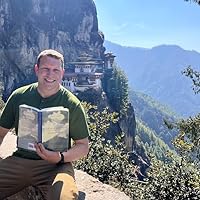
Other reviews reviled this as pretentious, which I suppose is always a possibility when an author is overly meta and ironic about being ironic and such--like "I'm actually really cool and smart because I'm aware that I'm not trying to be cool and smart by pointing out what others do to be cool and smart and that doesn't make them actually cool and smart which, in turn, makes me the real cool and smart." Get that? Well anyways. I found this to be a lighthearted postmodern romp that was entertaining enough even though some aspects really were unnecessary--like the framing device ala Pale Fire which was inconsistent and offered nothing. References to Nabokov were obvious to those who are familiar with his work, but they would be absolutely unnoticeable to those who aren't, so I'm not sure those added much at all. Within the first few pages I also picked up allusions to Whitman and to Beowulf, which made me feel clever even if they were not very hard ones; however, I only found a few other literary references scattered throughout, so either they were offloaded in the beginning, or I was just too dumb to pick up on the rest. I did count myself pretty clever for picking up on the name Mutt Saunders when it was first mentioned. In conclusion, the cover is very nice and served well for great reading pics in Iceland. I just can't believe I didn't bring it to my Northern Lights expedition and I missed out on a picture of me reading under the Aurora!
Displaying 1 - 30 of 146 reviews