

What do you think?
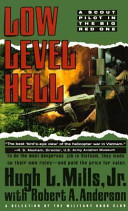
Low Level Hell: A Scout Pilot In The Big Red One
A Vietnam veteran describes his experiences in country, recounting his career as a scout pilot in the Darkhorse Air Cavalry Troop with the 1st Infantry Division. Reprint.
370 pages, Mass Market Paperback
First published January 1, 1992
Ratings & Reviews
Friends & Following
Create a free account to discover what your friends think of this book!
Community Reviews
Displaying 1 - 30 of 88 reviews

July 5, 2018
Scout pilots were a special kind of crazy. One Vietnam War joke went something like "How do you find the cavalry? Easy, just follow the burning Loaches." Scout pilot and author Hugh Mills demonstrates that in spades. He was shot down 16 times and wounded three times, earning three Silver Stars, the Legion of Merit, four Distinguished Flying Crosses and three Bronze Stars, not to mention the Vietnamese Cross of Gallantry with Silver Star and Palm, the Vietnamese Honor Medal First Class plus 93 lesser decorations. But he also truly loved the mission, and that love come through in his stories of hair-raising escapades.
In Vietnam, scout pilots flew the OH-6 Loach, a tiny egg shaped helicopter that normally flew with a pilot, a crew chief hanging out the left side, and a 7.62 mm minigun. The mission was descended from the ancient job of a cavalry scout, getting out in front of the main force, locating the enemy, getting word back to HQ, and fixing the enemy long enough for heavy firepower to arrive. The job required intelligence and sharp eyes, to read trailsign and spot hidden bunkers through triple canopy jungle while orbiting at 70 knots, and stone-cold bravery to troll the enemy, and let their own fire reveal them. Then it was a matter of doing what damage you could with the guns, marking a target with smoke, and getting out of the way of the Cobra gunships rolling in with rockets, and finding an LZ for the aerorifle platoon.
When the mission went well, scout pilots could have an outsized impact. When it went poorly, it meant that helicopters went down in hot LZs, the aerorifles engaged way over their heads, and Mills having do crazy stuff, like land and evac wounded pilots in overloaded birds, drop blood to men who couldn't be evaced, and generally going the kind of things that get you three Silver Stars.
Mills seemed to enjoy his war, despite the extreme personal danger, and I think this was because as a pilot he felt like he was in control of his destiny. Infantry faced dangers like mines and bullets which felt very impersonal, an illusive enemy, and a command structure which demanded more than they could give. Scout pilots had the illusion that they could evade danger. They had a mobile edge over the ground-bound VC and NVA. Their war was still very personal, close enough to look into a man's eyes as the minigun strafed him, but once the day's flying was done, they were safe enough behind the wire. Of course, only the most aggressive pilots volunteered for Loaches, and an elite force is going to do better than the reluctant draftees on the line.
And as always, I enjoy the lighter bits. Like when the scouts were entertaining a couple of new Rangers, who spent the night bragging about their snake-eater credentials, and then had them put to the test when a pilot brought a toad. The Rangers gagged, but one of the scouts ate the thing alive, and kept it down long enough for the Rangers to be laughed out of the O-club. Strange times in II-Corps.
In Vietnam, scout pilots flew the OH-6 Loach, a tiny egg shaped helicopter that normally flew with a pilot, a crew chief hanging out the left side, and a 7.62 mm minigun. The mission was descended from the ancient job of a cavalry scout, getting out in front of the main force, locating the enemy, getting word back to HQ, and fixing the enemy long enough for heavy firepower to arrive. The job required intelligence and sharp eyes, to read trailsign and spot hidden bunkers through triple canopy jungle while orbiting at 70 knots, and stone-cold bravery to troll the enemy, and let their own fire reveal them. Then it was a matter of doing what damage you could with the guns, marking a target with smoke, and getting out of the way of the Cobra gunships rolling in with rockets, and finding an LZ for the aerorifle platoon.
When the mission went well, scout pilots could have an outsized impact. When it went poorly, it meant that helicopters went down in hot LZs, the aerorifles engaged way over their heads, and Mills having do crazy stuff, like land and evac wounded pilots in overloaded birds, drop blood to men who couldn't be evaced, and generally going the kind of things that get you three Silver Stars.
Mills seemed to enjoy his war, despite the extreme personal danger, and I think this was because as a pilot he felt like he was in control of his destiny. Infantry faced dangers like mines and bullets which felt very impersonal, an illusive enemy, and a command structure which demanded more than they could give. Scout pilots had the illusion that they could evade danger. They had a mobile edge over the ground-bound VC and NVA. Their war was still very personal, close enough to look into a man's eyes as the minigun strafed him, but once the day's flying was done, they were safe enough behind the wire. Of course, only the most aggressive pilots volunteered for Loaches, and an elite force is going to do better than the reluctant draftees on the line.
And as always, I enjoy the lighter bits. Like when the scouts were entertaining a couple of new Rangers, who spent the night bragging about their snake-eater credentials, and then had them put to the test when a pilot brought a toad. The Rangers gagged, but one of the scouts ate the thing alive, and kept it down long enough for the Rangers to be laughed out of the O-club. Strange times in II-Corps.

October 13, 2017
Puts you right in the cockpit, barely above the trees and jungles of Vietnam. Excellent memoir of a Scout pilot. These guys were good, learning how to track and notice things out of place just like men on the ground but doing it from helos.

November 12, 2018
Probably the most flat and narrow-minded book about combat in Vietnam I’ve ever read. Author doesn’t provide literally anything else than combat reports: I flew to an action – I killed gooks – I flew back to base. One action after another action, a chapter after chapter. Nothing about his motivation, nothing about how he perceives the war and its reasoning, what he thinks about killing people, what he thinks about the Vietnamese, nothing about his family at home, nothing! He even describes his vacation in Bangkok in single sentence, stating something like „I didn’t like food there, thus I returned back to combat two days sooner“. I don’t know if this was the case, but the author for sure resembles a brainless career officer whose only purpose of existence is to carry out orders. If someone is really interested in air scouts in Vietnam, I warmly recommend entertaining and three-dimensional Tom Smiths „Easy Target “.

February 7, 2017
I have a reasonably large collection of Vietnam War aviation related books and memoirs. This is the one I still read over and again, more so than Chickenhawk.
I think the reason is that of all the memoirs I have read, Hugh Mills somehow seemed to ENJOY what he was doing. Although an incredibly modest memoir, considering the simply dazzling array of valorous medals he brought home from his two tours (he was shot down 16 times and wounded three times, earning three Silver Stars, the Legion of Merit, four Distinguished Flying Crosses and three Bronze Stars, not to mention the Vietnamese Cross of Gallantry with Silver Star and Palm, the Vietnamese Honor Medal First Class plus 93 lesser decorations!) Mills communicates his extreme pride in the professionalism and courage shown day in and day out by the Aeroscouts of D/1/4 in 1969-70.
Low Level Hell covers his first tour as an Aeroscout flying the LOH (loach) OH-6 helicopter. Unusually, they flew with just a scout and a crew chief/gunner, making his a more intimate combat team, and shared with the ever present Cobra gunship crew watching from above. Mills' narrative style is almost the fireside chat, but he knows exactly how to ramp up the thrills when the bullets start flying, which in his line of work was almost constantly! Some of the accounts of dangerous, low level combat are as gripping as any war story I have ever read.
An excellent account of flying, fighting and war, providing a very robust rebuff to the popularly held belief that US soldiers in Vietnam were somehow weaker or substandard by comparison to their predecessors. The stories, characters and outcomes in Low Level Hell firmly anchor the reader in a world of well-trained, professional soldiers and pilots whose bravery, commitment and expertise brook no unfavourable comparison to any group of fighting men before and since. Such men deserved FAR better from their government and countrymen, and hopefully books by men like Hugh Mills will satisfy that sense of injustice.
I think the reason is that of all the memoirs I have read, Hugh Mills somehow seemed to ENJOY what he was doing. Although an incredibly modest memoir, considering the simply dazzling array of valorous medals he brought home from his two tours (he was shot down 16 times and wounded three times, earning three Silver Stars, the Legion of Merit, four Distinguished Flying Crosses and three Bronze Stars, not to mention the Vietnamese Cross of Gallantry with Silver Star and Palm, the Vietnamese Honor Medal First Class plus 93 lesser decorations!) Mills communicates his extreme pride in the professionalism and courage shown day in and day out by the Aeroscouts of D/1/4 in 1969-70.
Low Level Hell covers his first tour as an Aeroscout flying the LOH (loach) OH-6 helicopter. Unusually, they flew with just a scout and a crew chief/gunner, making his a more intimate combat team, and shared with the ever present Cobra gunship crew watching from above. Mills' narrative style is almost the fireside chat, but he knows exactly how to ramp up the thrills when the bullets start flying, which in his line of work was almost constantly! Some of the accounts of dangerous, low level combat are as gripping as any war story I have ever read.
An excellent account of flying, fighting and war, providing a very robust rebuff to the popularly held belief that US soldiers in Vietnam were somehow weaker or substandard by comparison to their predecessors. The stories, characters and outcomes in Low Level Hell firmly anchor the reader in a world of well-trained, professional soldiers and pilots whose bravery, commitment and expertise brook no unfavourable comparison to any group of fighting men before and since. Such men deserved FAR better from their government and countrymen, and hopefully books by men like Hugh Mills will satisfy that sense of injustice.
August 22, 2011
A visceral Vietnam helicopter pilot's story, but from a rarer perspective. Not a 'slick' pilot almost helplesslessy dropping soldiers in, or the more helpless 'dustoff' crews who'd liftout the wounded out of hotter areas, this book extolls the virtues of the 'hunter killer' and straight -'scout' teams in their dimunitive helicopters who would locate the enemy - meeting their fire - and direct the other resources to them. The scouts suffered devastating losses outlined in the book in the process.
It reads nearly as fast as an action novel, but a biography. Few 'chopper pilot memoirs of the era - other than Chickenhawk - even equal this page-turner by such a decorated soldier. I am now looking to read more of the Cobra pilot's stories to better understand the other half of the Hunter-Killer pair.
Its one if those books that only let's you down because it ends.
It reads nearly as fast as an action novel, but a biography. Few 'chopper pilot memoirs of the era - other than Chickenhawk - even equal this page-turner by such a decorated soldier. I am now looking to read more of the Cobra pilot's stories to better understand the other half of the Hunter-Killer pair.
Its one if those books that only let's you down because it ends.

July 26, 2010
WOW is the first word that pops into my head when I think about this book. Low Level Hell is one hell of a roller coaster ride, following the exploits of a American scout helicopter pilot during the Vietnam war. Before reading this book I had no prior knowledge of the role of helicopter scout pilots, now I am in awe of the sheer madness of these pilots. The two authors combine to bring the excitement and the tragedy of young men fighting in war. From hair raising balls to the wall fire fights to the realization of the how fragile life is, this book covers it all. A exciting but thought provoking read, a must for all.

January 19, 2015
I didn't think I would find anything to challenge Chickenhawk as the definitive Vietnam war helicopter story but I was wrong. The escapade of these pilots really does have to be read to be believed, and even then I am not sure you would believe them. Someone once said of war stories, if it sounds believable it probably didn't happen.
At times flying only 2-3 feet above the rice paddies these observers were almost as close to the action as the troops on the ground. In many cases they did become part of the ground action as getting shot down was a daily occurrence.
If you are a fan of Chickenhawk then read this.
At times flying only 2-3 feet above the rice paddies these observers were almost as close to the action as the troops on the ground. In many cases they did become part of the ground action as getting shot down was a daily occurrence.
If you are a fan of Chickenhawk then read this.

February 11, 2019
Having lost a brother in Viet Nam, this would normally not be a book I would read. However, it was recommended to me by a family friend who spent time in Viet Nam on choppers. His service overlapped the time my brother was there. I reluctantly started reading Mills’ and found it to be very enlightening. His words were nothing but matter of fact and did not dwell on the violence of war. His focus was more on the experience of the young, brave service men who focused on doing their job. It gave me a very good picture of what life must have been like for my brother and friends who served in Viet Nam. I advise everyone to read this book lest we forget the far reaching and long lasting effects of war. Let us never forget. My hat goes off to Mills who has earned my respect for quickly learning his duty, assisting others no matter what the cost, and the final experience written in this book.

November 21, 2025
Scout pilots probably had the most dangerous mission in Army Aviation. And casualty numbers verify it. The map was helpful-could have used more.

March 27, 2020
Filled with intense and amazing anecdotes about the brave, some would say 'crazy,' young men in the author's unit. I found it took longer to read than I'd expect. It also felt odd at times, being recollections of events 20 years prior yet filled with dialog, facial expressions, even details that happen to others (who did not survive the events) and of which the author could have had no direct experience.
A must ready for those interested in helicopters in Vietnam, but I didn't feel it deposed "Chickenhawk" as the best in class.
A must ready for those interested in helicopters in Vietnam, but I didn't feel it deposed "Chickenhawk" as the best in class.
May 29, 2023
it's pretty much one fight scene to the next. the scenes seem true but not much about an overall picture plus the difficulties in just flying one of those things. Chickenhawk by Robert Mason gives a better overall picture of the war from a helicopter seat.

August 31, 2020
This is intended to be a factual account of helicopter and infantry actions during Vietnam. Wherever possible, the names of the people are included, as well as where they were from. This is not your typical "war story," where everyone is heroic and everyone comes out alive at the other end. This is messy, gritty, bloody and painful.
The books starts with the author at US Army OCS, deciding he wants to try for flight training. Not only does he get flight training, he ends up getting the ride of his choice: the OH-6A Cayuse (known in the civilian sector as a Hughes 500). If you've ever seen the original Magnum PI, you'll remember that his friend, TC, flies around in a small, fast, agile chopper. That's (usually) a Hughes 500. It would make sense, as TC flew choppers in Vietnam.
The author has nothing but praise for this fast, agile, tough little aircraft. Armed with a crew chief in the back seat, firing a .50 caliber M-60, and a hard-mounted minigun (7.62 mm, 6-barrel, Gatling-style, capable of spitting out 4,000 rounds / minute), he did a lot more than just scout. He flew fast and low, looking for footprints in the mud, disturbed grass, anything which would lead him to where the enemy (whether VC or NVA) was moving or hiding. He got a lot of choppers shot out from under him. He was wounded on multiple occasions (including, quite literally, shot in the a**, with a tracer no less). When you're flying low over active combat zones, you will get shot at, you will get hit and people will die. He makes a point of giving name, rank and hometown, where possible, of everyone he works with who doesn't come home alive.
I spent my time in the Air Force working on F-16s, not choppers. I have seen these birds up close; an Army unit, still flying these things, deployed to my base in Utah for a week. I can attest to the fast that they are remarkably small, very fast and nimble. And yeah, being military folks, the crews really do speak that much jargon.
The tactics used make a lot of sense. The aeroscout (the OH-6A) skims the terrain, looking for Bad Guys, shooting it out with singles and handfuls and dropping smoke grenades on the groups / facilities they can't take out themselves. An AH-1 Cobra fires rockets on whatever they designate. If the Cobra can't take it out, they can call a Forward Air Controller who can bring in anything from a couple fighter jets with napalm to a B-52. If there are Bad Guys to capture or a facility to investigate, "slicks" (Hueys) arrive with men to capture, investigate, etc.
In the Civil War and WW I, if you needed to move a lot of people around, they marched. Or, if they were lucky, they could ride the train or ride in trucks. That's a slow way to move people. Helicopter technology wasn't quite ready during the Korean War. Most of us have seen episodes of MASH. The piston-powered choppers of that era were great for moving a handful of people around, pretty quickly, but they were still quite limited. It wasn't until turbine engines got small enough, and reliable enough, that they could put them in choppers that chopper tech really evolved. The OH-6A, the Huey, the Cobra and the Chinook all saw combat in Vietnam; all of them are turbine-powered. That was when the tech finally came of age. We are still flying all of them, today.
Stuffing a dozen guys in a Huey and hustling along at over 100 knots, taking them from relatively safe facilities straight to areas where they know, or strongly suspect, the fight will be ... much better than marching for days or riding in a truck for hours, arriving tired and beat up and THEN having to fight.
It's rather different from the story of Vietnam most of us see / hear in the usual historical accounts and movies. Most of us get the tale that Vietnam was an utter boondoggle, a colossal waste of life and treasure. That may be the case. Make no mistake, the people over there fighting and dying didn't see it as such. They went where they were told. They developed and evolved tactics, as needed, to find better ways to fight and survive. If it was a waste of lives and treasure, blame the politicians who sent them there. The soldiers who served were doing their duty and doing the best they could with the situation they had.
There's also a lot of "local color." It's not all flying, shooting and getting shot at. The part about swallowing the toad ... unfortunately, I have no difficulty believing this. The author paints a very picture and I can see it.
I found this book to be a page-turner. But I love aircraft and reading about tactics.
The books starts with the author at US Army OCS, deciding he wants to try for flight training. Not only does he get flight training, he ends up getting the ride of his choice: the OH-6A Cayuse (known in the civilian sector as a Hughes 500). If you've ever seen the original Magnum PI, you'll remember that his friend, TC, flies around in a small, fast, agile chopper. That's (usually) a Hughes 500. It would make sense, as TC flew choppers in Vietnam.
The author has nothing but praise for this fast, agile, tough little aircraft. Armed with a crew chief in the back seat, firing a .50 caliber M-60, and a hard-mounted minigun (7.62 mm, 6-barrel, Gatling-style, capable of spitting out 4,000 rounds / minute), he did a lot more than just scout. He flew fast and low, looking for footprints in the mud, disturbed grass, anything which would lead him to where the enemy (whether VC or NVA) was moving or hiding. He got a lot of choppers shot out from under him. He was wounded on multiple occasions (including, quite literally, shot in the a**, with a tracer no less). When you're flying low over active combat zones, you will get shot at, you will get hit and people will die. He makes a point of giving name, rank and hometown, where possible, of everyone he works with who doesn't come home alive.
I spent my time in the Air Force working on F-16s, not choppers. I have seen these birds up close; an Army unit, still flying these things, deployed to my base in Utah for a week. I can attest to the fast that they are remarkably small, very fast and nimble. And yeah, being military folks, the crews really do speak that much jargon.
The tactics used make a lot of sense. The aeroscout (the OH-6A) skims the terrain, looking for Bad Guys, shooting it out with singles and handfuls and dropping smoke grenades on the groups / facilities they can't take out themselves. An AH-1 Cobra fires rockets on whatever they designate. If the Cobra can't take it out, they can call a Forward Air Controller who can bring in anything from a couple fighter jets with napalm to a B-52. If there are Bad Guys to capture or a facility to investigate, "slicks" (Hueys) arrive with men to capture, investigate, etc.
In the Civil War and WW I, if you needed to move a lot of people around, they marched. Or, if they were lucky, they could ride the train or ride in trucks. That's a slow way to move people. Helicopter technology wasn't quite ready during the Korean War. Most of us have seen episodes of MASH. The piston-powered choppers of that era were great for moving a handful of people around, pretty quickly, but they were still quite limited. It wasn't until turbine engines got small enough, and reliable enough, that they could put them in choppers that chopper tech really evolved. The OH-6A, the Huey, the Cobra and the Chinook all saw combat in Vietnam; all of them are turbine-powered. That was when the tech finally came of age. We are still flying all of them, today.
Stuffing a dozen guys in a Huey and hustling along at over 100 knots, taking them from relatively safe facilities straight to areas where they know, or strongly suspect, the fight will be ... much better than marching for days or riding in a truck for hours, arriving tired and beat up and THEN having to fight.
It's rather different from the story of Vietnam most of us see / hear in the usual historical accounts and movies. Most of us get the tale that Vietnam was an utter boondoggle, a colossal waste of life and treasure. That may be the case. Make no mistake, the people over there fighting and dying didn't see it as such. They went where they were told. They developed and evolved tactics, as needed, to find better ways to fight and survive. If it was a waste of lives and treasure, blame the politicians who sent them there. The soldiers who served were doing their duty and doing the best they could with the situation they had.
There's also a lot of "local color." It's not all flying, shooting and getting shot at. The part about swallowing the toad ... unfortunately, I have no difficulty believing this. The author paints a very picture and I can see it.
I found this book to be a page-turner. But I love aircraft and reading about tactics.

May 26, 2023
Over the years, I've read first person accounts, histories, and novels about the Vietnam War - ranging from infantry, fighter-bomber pilots, special forces, and Huey chopper pilots. Some of these books have been superlative (I list them at the bottom). Low Level Hell deserves its own place in this list of well-worth reading books if you are interested in how the Vietnam War was fought at the individual two-man chopper level.
The author, a lieutenant OH-6 Loach scout pilot, did two tours of duty in Vietnam, winning three (3) Silver Stars, four (4) Distinguished Flying Crosses, numerous other medals and was shot down 16 times flying 130+ hours a month over hostile territory at extremely low levels. So, he knows what he speaks in this clear and exciting narrative.
The daily mission was basically to fly low looking for signs of the VC or NVA in the jungle, then, upon spotting signs of the enemy, engaging until return fire got too hot, then calling in the buddy Cobra gunship that was at a higher altitude to let loose rocket and mini-gun fire. Then the OH-6 would come back low and do battle damage assessment. Sounds simple?
Not really. Mills doesn't tell the stories of the routine missions but rather the stories where the unexpected happened and considerable courage was called for. Surprise large concentrations of NVA get discovered, choppers get shot up and shot down, rescue teams get pinned down, incredible heroism despite grievous wounds occurs and more.
If you are looking for a story about disaffected grunts or pointless posturing by the higher-ups with inflated victory claims, this is not the book for you. The 1st Air Cavalry scout platoon (the choppers) were manned by young men (21-22), all well-trained, and dedicated to their mission. They looked after each other no matter the risk. Higher command is competent. In the missions described, they seemed (very) effective (this was in the days before portable surface-to-air missiles so low-level, close combat was possible). It is not a book on war strategy and whether it was war-winning or well-considered.
The initial chapter is gripping and after a couple of obligatory chapters on training and starting up "in country", it gets right down to chapter-after-chapter of hair raising missions, each different in their own way so nothing is repetitive. Picture perfect dialog between pilot to crew chief(and back), pilot to gunship, pilot to base, and pilot to ground forces.
Photos and 1 map (with print so small on place names that you have to squint -- but it doesn't really matter when reading the chapters).
Recommended other Vietnam War reads
* Chickenhawk
* Matterhorn
* The 13th Valley
* Huế 1968: A Turning Point of the American War in Vietnam
* When Thunder Rolled: An F-105 Pilot over North Vietnam
* Saving Bravo: The Greatest Rescue Mission in Navy SEAL History
* Legend: The Incredible Story of Green Beret Sergeant Roy Benavidez's Heroic Mission to Rescue a Special Forces Team Caught Behind Enemy Lines
The author, a lieutenant OH-6 Loach scout pilot, did two tours of duty in Vietnam, winning three (3) Silver Stars, four (4) Distinguished Flying Crosses, numerous other medals and was shot down 16 times flying 130+ hours a month over hostile territory at extremely low levels. So, he knows what he speaks in this clear and exciting narrative.
The daily mission was basically to fly low looking for signs of the VC or NVA in the jungle, then, upon spotting signs of the enemy, engaging until return fire got too hot, then calling in the buddy Cobra gunship that was at a higher altitude to let loose rocket and mini-gun fire. Then the OH-6 would come back low and do battle damage assessment. Sounds simple?
Not really. Mills doesn't tell the stories of the routine missions but rather the stories where the unexpected happened and considerable courage was called for. Surprise large concentrations of NVA get discovered, choppers get shot up and shot down, rescue teams get pinned down, incredible heroism despite grievous wounds occurs and more.
If you are looking for a story about disaffected grunts or pointless posturing by the higher-ups with inflated victory claims, this is not the book for you. The 1st Air Cavalry scout platoon (the choppers) were manned by young men (21-22), all well-trained, and dedicated to their mission. They looked after each other no matter the risk. Higher command is competent. In the missions described, they seemed (very) effective (this was in the days before portable surface-to-air missiles so low-level, close combat was possible). It is not a book on war strategy and whether it was war-winning or well-considered.
The initial chapter is gripping and after a couple of obligatory chapters on training and starting up "in country", it gets right down to chapter-after-chapter of hair raising missions, each different in their own way so nothing is repetitive. Picture perfect dialog between pilot to crew chief(and back), pilot to gunship, pilot to base, and pilot to ground forces.
Photos and 1 map (with print so small on place names that you have to squint -- but it doesn't really matter when reading the chapters).
Recommended other Vietnam War reads
* Chickenhawk
* Matterhorn
* The 13th Valley
* Huế 1968: A Turning Point of the American War in Vietnam
* When Thunder Rolled: An F-105 Pilot over North Vietnam
* Saving Bravo: The Greatest Rescue Mission in Navy SEAL History
* Legend: The Incredible Story of Green Beret Sergeant Roy Benavidez's Heroic Mission to Rescue a Special Forces Team Caught Behind Enemy Lines
January 25, 2019
In „low Level Hell“ Hugh Mills vividly describes the missions, tactics and people he encountered during his tour as a scout pilot with a cavalry unit in Vietnam in 1969.
This is neither a biographical nor an analytical work but a pretty straightforward account, what the author experienced during his combat tour. Thus the reader gets to know some details on tactics and mission profiles but the focus is on the account of what happened. Mills does not attempt to generalize the tactics he or his unit used and hardly puts his missions into a bigger perspective, mainly because he hardly was made aware the bigger tactical picture in his position. He was briefed what he needed to know for his mission and the reader finds himself in this same position.
Mills also does not provide any political or moral reasoning about the war or goes into much detail about his personal life. Here you listen to a professional pilot and an aggressive scout talking about what he knows best and loves – scouting. The scope of the story may seem to be narrow to some, but apart from comprehensive history works and analytical studies this book provides the personal experience of just one officer and his unique perspective. Within this scope the author provides a very readable, interesting and action-packed account of his tour, which he appears to have taken great pains to get down as factual as possible.
In summary this is a well written account of his tour from a man who has some great stories to tell about war and helicopters. It will broaden the perspective of anyone interested but in the end these are some war stories – not more but also not less.
This is neither a biographical nor an analytical work but a pretty straightforward account, what the author experienced during his combat tour. Thus the reader gets to know some details on tactics and mission profiles but the focus is on the account of what happened. Mills does not attempt to generalize the tactics he or his unit used and hardly puts his missions into a bigger perspective, mainly because he hardly was made aware the bigger tactical picture in his position. He was briefed what he needed to know for his mission and the reader finds himself in this same position.
Mills also does not provide any political or moral reasoning about the war or goes into much detail about his personal life. Here you listen to a professional pilot and an aggressive scout talking about what he knows best and loves – scouting. The scope of the story may seem to be narrow to some, but apart from comprehensive history works and analytical studies this book provides the personal experience of just one officer and his unique perspective. Within this scope the author provides a very readable, interesting and action-packed account of his tour, which he appears to have taken great pains to get down as factual as possible.
In summary this is a well written account of his tour from a man who has some great stories to tell about war and helicopters. It will broaden the perspective of anyone interested but in the end these are some war stories – not more but also not less.

April 19, 2019
Fantastic book on Vietnam scout helicopter flying, absolutely full of thrilling and exciting engagements Hugh Mills (author) and others in Dark Horse fought.
My only complaint with the book is that it is quite sparse on anything other than engagements so when the book isn't talking about them it can feel like the end of an adrenaline rush, making you not only crave for a return of the action, but also makes some parts of the book a bit boring, that mostly being searching for the enemy. Other times they can be funny stories but these are few and far between. Upon writing this review, it makes me wonder whether this was Mills intention, and that perhaps maybe he himself yearned for a return to the action in some of the down time and that he wanted to implicitly convey this to the reader, he did serve three tours of Vietnam after-all and after that served as an Under Sheriff and Colonel for the Jackson County Missouri Sheriff’s office.
It is just a thought however, none of this seriously detracts from the overall experience of the book and I highly recommend it to anyone with an interest of the Vietnam War or helicopter flying in general.
If Spielberg turned this into a 10-part TV mini-series he'd have a hit on his hands!
My only complaint with the book is that it is quite sparse on anything other than engagements so when the book isn't talking about them it can feel like the end of an adrenaline rush, making you not only crave for a return of the action, but also makes some parts of the book a bit boring, that mostly being searching for the enemy. Other times they can be funny stories but these are few and far between. Upon writing this review, it makes me wonder whether this was Mills intention, and that perhaps maybe he himself yearned for a return to the action in some of the down time and that he wanted to implicitly convey this to the reader, he did serve three tours of Vietnam after-all and after that served as an Under Sheriff and Colonel for the Jackson County Missouri Sheriff’s office.
It is just a thought however, none of this seriously detracts from the overall experience of the book and I highly recommend it to anyone with an interest of the Vietnam War or helicopter flying in general.
If Spielberg turned this into a 10-part TV mini-series he'd have a hit on his hands!

March 2, 2019
I didn't like the beginning much - it jumped right into an action scene that almost read like a movie script - but it evened out and became better. I considered a '4' star rating but in the end thought that Mills had been there and done that, and he wrote it up pretty matter of fact-like, so I have to recognize that this man lived an experience that demands a lot of respect. That said, the book is one engagement after another with very little else other than, near the beginning, breezing through his OCS, basic flight and rotary wing training. He didn't write much other than his op tour on LOHs but he also put in a full Army career so this year-long tour was only the beginning of a full career (albeit the most exhilarating, no doubt, even more so than his second tour as the war tailed off). But it was engaging and an easy read, and even if there was any degree of embellishment, it was undeniably real.

April 6, 2023
Low Level Hell (1992) by Hugh Mills and Robert Anderson describe’s Mills service as a scout helicopter pilot in Vietnam.
In Vietnam the Americans lost 5607 helicopters. Currently the US Army has 3372 helicopters. Helicopter pilots in Vietnam had a very dangerous job. Mills flew the OH-6 Loach which were perhaps the most risky helicopters to fly. The Loaches would fly with AH-1 Cobras with one of each. The Loaches would fly in low and observe and find targets for the Cobras and also for Hueys to bring in troops. But they were fairly slow and lightly armoured.
The story is almost all mission recollections. There is mission after mission when multiple helicopters get damaged and destroyed. Pilots and crews are regularly lost.
For anyone interested in combat helicopter memoirs Low Level Hell is very much worth reading. Mills tells a remarkable story.
In Vietnam the Americans lost 5607 helicopters. Currently the US Army has 3372 helicopters. Helicopter pilots in Vietnam had a very dangerous job. Mills flew the OH-6 Loach which were perhaps the most risky helicopters to fly. The Loaches would fly with AH-1 Cobras with one of each. The Loaches would fly in low and observe and find targets for the Cobras and also for Hueys to bring in troops. But they were fairly slow and lightly armoured.
The story is almost all mission recollections. There is mission after mission when multiple helicopters get damaged and destroyed. Pilots and crews are regularly lost.
For anyone interested in combat helicopter memoirs Low Level Hell is very much worth reading. Mills tells a remarkable story.
August 2, 2024
A non-fiction story about recon helicopter pilots in the Vietnam War, wilder at times than any fiction, I went through the book like a Loach through its complement of minigun ammo. It's a story of scouts and their guns (not to forget the crew chief, as the author points out many times) who fight crime - I mean the VC and NVA - through 1969. It's a book of thrilling operations, amusing anecdotes and it even has a nice ending. There's some risk of repetition, since there's only so much you can write about the scout and his gun (and drinking coffee in the ops bunker!), but at this length it doesn't overstay its welcome. I personally thought it was a nice touch that we're always reminded who flew which ship - all the one-sevens and three-twos would get confusing after a while. There's a glossary, there's a map, what more do you need? Get down to lima lima and get reading, fast.

September 11, 2018
Facet of hell
You have to be impressed by the responsibility 18 to 20 year olds had in this war. Leading men, responsible for lives and equipment worth hundreds of thousands of dollars into a different kind of war never fought before. Here helicopters came into their own along with the young men who flew and fought in them. This book is well written right up to the organization and cohesion of each unit. Even the men were brought to life and you experienced it through their eyes. Both fear and courage side by side. Not a glorification of war but exposing the horror of it while at the same time developing the steel it took to get through a hellish nightmare.
You have to be impressed by the responsibility 18 to 20 year olds had in this war. Leading men, responsible for lives and equipment worth hundreds of thousands of dollars into a different kind of war never fought before. Here helicopters came into their own along with the young men who flew and fought in them. This book is well written right up to the organization and cohesion of each unit. Even the men were brought to life and you experienced it through their eyes. Both fear and courage side by side. Not a glorification of war but exposing the horror of it while at the same time developing the steel it took to get through a hellish nightmare.

October 29, 2017
The gripping story of the courageous - brave scout pilots in Vietnam
I was so engrossed with this book it was hard to put it down for more than a short break. Extremely well written and captivating. I was in the First Cav Airmobile in late 1969 to May of 1971 based in Quan Loi and deployed numerous times in the Michelin rubber plantation. . Many times the little OH - 6 came over us low level, buzzing around with his crew chief hanging out on his bungy cord and his 60 blazing away. We were in awe of their tenacity and willingness to hang their butts out for us. God bless em.
I was so engrossed with this book it was hard to put it down for more than a short break. Extremely well written and captivating. I was in the First Cav Airmobile in late 1969 to May of 1971 based in Quan Loi and deployed numerous times in the Michelin rubber plantation. . Many times the little OH - 6 came over us low level, buzzing around with his crew chief hanging out on his bungy cord and his 60 blazing away. We were in awe of their tenacity and willingness to hang their butts out for us. God bless em.
December 3, 2022
Amazing true story, reads like a blockbuster Novel
I happen to know the author and had read this book previously. I was looking for something to read and remembered this book. I read it again, and I could hardly put it down. Knowing it is a true recounting of the bravery and sacrifice of many young soldiers in Vietnam, I am still amazed at all that took place.
If you like action and true stories, this book is for you. Riveting, factual, and full of action. I cannot express enough how good this book is.
I happen to know the author and had read this book previously. I was looking for something to read and remembered this book. I read it again, and I could hardly put it down. Knowing it is a true recounting of the bravery and sacrifice of many young soldiers in Vietnam, I am still amazed at all that took place.
If you like action and true stories, this book is for you. Riveting, factual, and full of action. I cannot express enough how good this book is.

September 6, 2017
While I greatly appreciate the efforts and service of the author and all the others mentioned, by I'm just not really fond of 'diary type' books.
Although there are portions that are very compelling as one proceeds through the book it becomes somewhat repetitive in some respects.
A Vietnam era Air Force vet myself I honor the service of all of them, l'm just not much for 'diary type' reads.
Although there are portions that are very compelling as one proceeds through the book it becomes somewhat repetitive in some respects.
A Vietnam era Air Force vet myself I honor the service of all of them, l'm just not much for 'diary type' reads.
May 27, 2018
Outstanding!
One of if not the best book about flying choppers in Nam. I flew Birddogs in the Highlands and watched LOH-6 pilots do insanely brave things with those nimble little aircraft. I was 26 years old and these kids were mostly 19-20 years old. I said then I was too old to do some of the things they did. Glad to see their story being told. No exaggeration.
One of if not the best book about flying choppers in Nam. I flew Birddogs in the Highlands and watched LOH-6 pilots do insanely brave things with those nimble little aircraft. I was 26 years old and these kids were mostly 19-20 years old. I said then I was too old to do some of the things they did. Glad to see their story being told. No exaggeration.
May 28, 2018
Well written.
A comprehensive look at the operations of Hunter killer helicopter combat teams. I had never read of these operators before and thoroughly enjoyed learning of their work. A mentor and friend of mine flew Huey gunships in the same time period and this book rang true compared to my friend's stories of his days of combat.
A comprehensive look at the operations of Hunter killer helicopter combat teams. I had never read of these operators before and thoroughly enjoyed learning of their work. A mentor and friend of mine flew Huey gunships in the same time period and this book rang true compared to my friend's stories of his days of combat.
October 24, 2018
Action packed
I chose this book because I thought that it would not be a replay of a vietnam rerun.it was stunning and real. I am glad I was English .I was born 1950.if I had been American i might have been involved. Sheer guts allowed them to continue .their only reward the survival of their fellows man
I chose this book because I thought that it would not be a replay of a vietnam rerun.it was stunning and real. I am glad I was English .I was born 1950.if I had been American i might have been involved. Sheer guts allowed them to continue .their only reward the survival of their fellows man

April 17, 2019
Not for everyone. Lots of jargon to weed through. Very matter of fact with almost no reflection or commentary that might give you insight into what he actually thought about all this. But, I have it on good authority this is the most realistic portrait ever written of a war time scout helicopter pilot's life.
May 22, 2019
Fantastic read
A thought provoking account of the authors involvement in the Vietnam war. I have read many accounts but this is by far one of the most compelling. Brace and courageous guys who fought for each other and not for the politicians. Loved every minute of the book from the start to reluctantly finishing it.
A thought provoking account of the authors involvement in the Vietnam war. I have read many accounts but this is by far one of the most compelling. Brace and courageous guys who fought for each other and not for the politicians. Loved every minute of the book from the start to reluctantly finishing it.

July 21, 2023
As a retired service member the deep appreciation to all those soldiers before or after that served with such professionalism.
I was neither a pilot or crew chief but was fortunate enough to serve in a support role with the 62nd Aviation Company at Maurice Rose Army Airfield Bonames(Frankfurt, Germany).
I was neither a pilot or crew chief but was fortunate enough to serve in a support role with the 62nd Aviation Company at Maurice Rose Army Airfield Bonames(Frankfurt, Germany).

October 1, 2023
I finished book in a little over a week (I read several books at a time and often read ancillary material on a main book’s topic) as it was grippingly real and brutally honest and ended in such a way that leaves you stunned with its reality and yet nodding in agreement as you see the ironies of the combat soldier/sailor/pilot in Vietnam. Great partner to reading “Chickenhawk”
January 17, 2026
If you do not understand the Vietnam War...
Read this. It is the real deal. It was what we, the volunteer & draftee's, witnessed and/or watched happen. I was weapons control tech for F4-C's (fast movers) in II Corps.
Don't miss this history lesson that schools do not even mention, sadly.
Read this. It is the real deal. It was what we, the volunteer & draftee's, witnessed and/or watched happen. I was weapons control tech for F4-C's (fast movers) in II Corps.
Don't miss this history lesson that schools do not even mention, sadly.
Displaying 1 - 30 of 88 reviews