

What do you think?

Death in Venice and Seven Other Stories
Eight complex stories illustrative of the author's belief that "a story must tell itself," highlighted by the high art style of the famous title novella.
404 pages, Paperback
First published January 1, 1936
About the author
Thomas Mann
2,293 books5,673 followersLibrarian Note: There is more than one author in the GoodReads database with this name. See this thread for more information.
See also:
Serbian: Tomas Man
Thomas Mann was a German novelist, short story writer, social critic, philanthropist, essayist, and Nobel Prize laureate in 1929, known for his series of highly symbolic and ironic epic novels and novellas, noted for their insight into the psychology of the artist and the intellectual. His analysis and critique of the European and German soul used modernized German and Biblical stories, as well as the ideas of Goethe, Nietzsche, and Schopenhauer. His older brother was the radical writer Heinrich Mann, and three of his six children, Erika Mann, Klaus Mann and Golo Mann, also became important German writers. When Hitler came to power in 1933, Mann fled to Switzerland. When World War II broke out in 1939, he emigrated to the United States, from where he returned to Switzerland in 1952. Thomas Mann is one of the best-known exponents of the so-called Exilliteratur.
See also:
Serbian: Tomas Man
Thomas Mann was a German novelist, short story writer, social critic, philanthropist, essayist, and Nobel Prize laureate in 1929, known for his series of highly symbolic and ironic epic novels and novellas, noted for their insight into the psychology of the artist and the intellectual. His analysis and critique of the European and German soul used modernized German and Biblical stories, as well as the ideas of Goethe, Nietzsche, and Schopenhauer. His older brother was the radical writer Heinrich Mann, and three of his six children, Erika Mann, Klaus Mann and Golo Mann, also became important German writers. When Hitler came to power in 1933, Mann fled to Switzerland. When World War II broke out in 1939, he emigrated to the United States, from where he returned to Switzerland in 1952. Thomas Mann is one of the best-known exponents of the so-called Exilliteratur.
Ratings & Reviews
Friends & Following
Create a free account to discover what your friends think of this book!
Community Reviews
Displaying 1 - 30 of 252 reviews

February 16, 2010
european men, stay put. seriously, nothing good ever happens to you when you leave whatever small european town you are from and venture into the wider world. whether it is gide and tunisia, conrad and the congo, robbe-grillet with wherever that was, various graham greenes; statistically, there will be temptations which you are not equipped to resist and you will either succumb or drive yourself to humiliation and despair with the wanting to succumb. and i totally get it - different surroundings, absence of judgmental peer group, it's vacation morality. when i was in prague, i totally stole a guinness mug from the irish pub i fell in love with. so i am no stranger to a wild life of crime and transgression. i left the children alone, though...
(for the record, lawrence durrell is totally exempt from this advice, although since he is dead, it doesn't really matter...)
and just so we're clear - i only read death in venice. the other seven stories can go screw for now - this is just book club fare, and if i have time in my life to read more troubled intellectual germans, i will know where to turn. but for now, i must bake book club cake and enjoy my free snow day.
readers, thinkers, and drinkers feb 2010
 come to my blog!
(for the record, lawrence durrell is totally exempt from this advice, although since he is dead, it doesn't really matter...)
and just so we're clear - i only read death in venice. the other seven stories can go screw for now - this is just book club fare, and if i have time in my life to read more troubled intellectual germans, i will know where to turn. but for now, i must bake book club cake and enjoy my free snow day.
readers, thinkers, and drinkers feb 2010
come to my blog!
March 1, 2011
Elements in a Composition
"Death in Venice" was published in 1912, when Thomas Mann was 37. The protagonist is in his mid-50’s.
Both Mann and his wife, Katia, acknowledged that virtually all of the elements of the plot were modelled on their trip to Venice in 1911. However, I don’t see any value in trying to analyse the novella as an exploration of Mann’s own homoeroticism.
Mann had to choose, prioritise, sublimate and arrange his inspiration as "elements in a composition".
I’d prefer to approach the novella on the basis that it addresses abstract issues that were of concern to Mann for the whole of his life. Indeed, most of them were of equal concern to Goethe, Nietzsche and Freud, not to mention Socrates and Plato before them and Nabokov subsequently.
To paraphrase Anthony Heilbut, I’d prefer to "contemplate the metaphysical implications than the sordid reality". I don’t really care if there was a sordid reality.
"Overindulged Intellect, Overcultivated Erudition"
Gustav von Aschenbach is a prominent writer who has achieved critical, popular and official success. He has his "father’s sober, conscientious nature" (an Apollonian influence) and the "darker, more fiery impulses of the mother" (a Dionysian influence).
Though he had passed through a "libertine chrysalis stage", he "had never [truly] known leisure, the carefree idleness of youth,...he had...stumbled in public, made false moves, made a fool of himself, violating tact and good sense in word and deed. Yet he eventually gained the dignity to which…every great talent feels instinctively drawn."
In the manner of his father, he had "overindulged the intellect, overcultivated erudition", combined the "rapture of the will with clever management" and so never managed to become an "incorrigible bohemian".
He was married, but soon after became a widower with a daughter who is now married. He is unencumbered by any significant female presence.
An experience while waiting for a tram rattles his composure. In a scene that foreshadows the primary drama of the novella, Aschenbach scrutinises a relatively nondescript male in a bast hat who looks at him "so belligerently, so directly, so blatantly determined to challenge him publicly and force him to withdraw it".
This experience awakened in him a latent desire, and this desire "sported eyes". He learns to look, he learns to see, he learns, perhaps, to gaze:
"His imagination…conjured forth the earth’s manifold wonders and horrors in his attempt to visualize them: he saw."
While he has always been "averse to diversion and no lover of the external world and its variety", he feels an "urge to flee his work, the humdrum routine of a rigid, cold, passionate duty."
Aschenbach’s flight from diligence witnesses him depart to Venice, a city which is half fairy-tale and half tourist trap.
He has succumbed to a Wanderlust.
The Lust of the Wanderer
One purpose of the trip might be to satiate not just Aschenbach’s need to wander, but his lust as well.
Not only does Aschenbach embark on a journey into the outside world, but he commences a journey into his own psyche.
Again, Mann uses a "double" to foreshadow what is to come, this time by describing the atmosphere of one of Aschenbach’s novels:
"Elegant self-possession concealing inner dissolution and biological decay from the eyes of the world until the eleventh hour; a sallow, sensually destitute ugliness capable of fanning its smoldering lust into a pure flame, indeed, of rising to sovereignty in the realm of beauty; pallid impotence probing the incandescent depths of the mind for the strength to cast an entire supercilious people at the foot of the Cross, at their feet; an obliging manner in the empty, punctilious service of form; the life, false and dangerous, and the swiftly enervating desires and art of the born deceiver."
This language of dissolution, decay, destitution, ugliness, impotence, superciliousness, punctiliousness, deception hints at the nature of Aschenbach’s inner desire. However, I prefer the view that this pejorative language is intended to describe not the nature of his desire, but the consequences of repressing it. To the extent that we repress desire, we are inauthentic.
The Journey to Elysium
There is a duality in the journey. It seems to be genuinely life-affirming, but it recognises the inevitability of Aschenbach’s death (which is foreshadowed in the title of the novel).
Mann describes the journey in terms of the Elysian Fields:
"Then he would feel he had indeed been whisked off to the land of Elysium, to the ends of the earth, where man is granted a life of ease, where there is no snow nor yet winter, no tempest, no pouring rain, but only the cool gentle breath released by Oceanus, and the days flow past in blissful idleness, effortless, free of strife, and consecrated solely to the sun and its feasts." 1, 2
Implicit is not just the promise of a certain joie de vivre, but perhaps also a joie de mort.
It’s arguable that Elysium represented both the beginning and the end of Aschenbach’s life, perhaps the realization of his life. It is a place where the quick and the dead, mortals and immortals, men and gods are one.
The Middle of the Journey
On the ship out, Aschenbach experiences another potential double, an ugly version of himself– an older man consorting with youths, dressed in an extravagantly cut, foppish, gaudy suit with a "rakishly uptilted Panama hat" (does the hat maketh the man?), whom he describes as a "superannuated dandy":
"...it was repugnant to behold the state to which the spruced-up fossil had been reduced by his spurious coalition with the young…he displayed a pitiful exuberance, buttonholing everyone who came up to him, jabbering, winking, sniggering, lifting a wrinkled, ringed finger as a part of some fatuous teasing and licking the corners of his mouth with the tip of his tongue in a revoltingly suggestive manner."
Note the almost vicious assonance – spruced-up, reduced, spurious, exuberance, fatuous, suggestive – which might owe something, if not everything, to the translation.
Clearly repulsed, Aschenbach describes his feelings in terms of "warping" (bent, twisted, distorted):
"He had the impression that something was not quite normal, that a dreamlike disaffection, a warping of the world into something alien was about to take hold…Aschenbach watched him with a frown, and once more a feeling of numbness came over him, as if the world were moving ever so slightly yet intractably towards a strange and grotesque warping, a feeling which circumstances kept him from indulging in..."
The Weft and the Warp in the Social Fabric
The reference to "indulging" seems to suggest that he might have participated, but for the circumstances that intervened.
This dualism is woven into the fabric of the novel, it is its weft and warp. As Aschenbach summarises the events of his voyage, he remarks:
"The observations and encounters of a man of solitude and few words are at once more nebulous and more intense than those of a gregarious man, his thoughts more ponderable, more bizarre and never without a hint of sadness.
"Images and perceptions that might easily be dismissed with a glance, a laugh, an exchange of opinions occupy him unduly; they are heightened in the silence, gain in significance, turn into experience, adventure, emotion.
"Solitude begets originality, bold and disconcerting beauty, poetry. But solitude can also beget perversity, disparity, the absurd and the forbidden."
Solitude can breed aberrant or deviant behavior. Society is a leveler, a normaliser.
"Wretched Figure"
Mann hints at this duality earlier when he summarises Aschenbach’s novel "Wretched Figure", about a character who acts out of "debility, depravity, or ethical laxity".
Aschenbach’s creative process reflects a moral rigor or ossification as he abandoned his youthful embrace of the existentialist "abyss". He had sided with convention, and "cast out" the non-conformist:
"The power of the word by which the outcast was cast out heralded a rejection of all moral doubt, all sympathy with the abyss, a renunciation of the leniency implicit in the homily claiming that to understand is to forgive, and what was under way here, indeed, what had come to pass was the ‘miraculous rebirth of impartiality,’ which surfaced a short time later with a certain mysterious urgency in one of the author’s dialogues...
"Was it an intellectual consequence of this "rebirth," this new dignity and rigor, that at approximately this time critics observed an almost excessive intensification of his aesthetic sensibility, a noble purity, simplicity, and harmony of form that henceforth gave his artistic production so manifest, indeed, so calculated a stamp of virtuosity and classicism?"
The Aesthetic Form
Still, Aschenbach speculates that this moral rigidity contains a paradox:
"...does not moral fortitude beyond knowledge—beyond disintegrative and inhibitory erudition—entail a simplification, a moral reduction of the world and the soul and hence a concomitant intensification of the will to evil, the forbidden, the morally reprehensible?
"And has not form a double face? Is it not moral and immoral at once—moral as the outcome and expression of discipline, yet immoral, even antimoral, insofar as it is by its very nature indifferent to morality, indeed, strives to bend morality beneath its proud and absolute scepter?"
Something powerful has occurred in these Nietzschean words.
The type of erudition that Aschenbach targets is inhibitory, repressive, inauthentic and disintegrative. It creates a false dichotomy, which ironically intensifies the lure of evil.
Equally importantly, Aschenbach has severed form, beauty and aesthetics from the realm of morality.
This permits the remainder of the novel to concern itself with beauty, desire and the gaze, free of moral connotations.
It’s up to us, the readers, to determine whether this quest is legitimate.
The Beauty of Tadzio
This is when a beautiful long-haired blonde 14 year old Polish boy called Tadzio comes into the picture.
As would later be the case with "Lolita", this sentence might be less disturbing for readers, if the boy’s age began with a digit other than "1".
I wish to postpone my discussion of hebephilia to the aesthetic or metaphysical issues. I also want to divorce the metaphysical issues from any concern whether the relationship is homoerotic or heteroerotic.
Aschenbach first spies Tadzio while seated on the promenade outside his hotel:
"Aschenbach noted with astonishment that the boy was of a consummate beauty: his face—pale and charmingly reticent, ringed by honey-colored hair, with a straight nose, lovely mouth, and an expression of gravity sweet and divine—recalled Greek statuary of the noblest period, yet its purest formal perfection notwithstanding it conveyed a unique personal charm such that whoever might gaze upon it would believe he had never beheld anything so accomplished, be it in nature or in art."
The response is an aesthetic one. It focuses on formal perfection as if the boy was a work of art, a classical Greek statue. To the extent that he is beautiful, he is also divine, a product or act of the gods. However, Mann goes further than pure artistic analysis: Aschenbach observes a unique personal charm, one that might not be found in either nature or art.
Mann elaborates:
"Good, good, thought Aschenbach with that cool, professional approval in which artists encountering a masterpiece sometimes shroud their delight, their excitement."
I’m interested in his choice of the word, "shroud", which could mean either "clothe" (which is relatively neutral) or "hide". If the latter meaning was intended, then it introduces a sense of disingenuousness or insincerity.
Divine Beauty
Later, Aschenbach describes the statue as godlike. He associates beauty with the divine. It is how the divine manifests itself on earth. Beauty is perfection of form, and perfection is representative of the divine:
"His eyes embraced the noble figure standing there at the edge of the blue, and in a rush of ecstasy he believed that his eyes gazed upon beauty itself, form as divine thought, the sole and pure perfection that dwells in the mind and whose human likeness and representation, lithe and lovely, was here displayed for veneration."
Aschenbach quotes Socrates to Phaedrus:
"For beauty, my dear Phaedrus, and beauty alone is at once desirable and visible: it is, mark my words, the only form of the spiritual we can receive through our senses and tolerate thereby.
"Think what would become of us were the godhead of reason and virtue and truth to appear before our eyes!...Hence beauty is the path the man of feeling takes to the spiritual, though merely the path, dear young Phaedrus, a means and no more."
The sight of true beauty unsettles Aschenbach, as if he had never experienced it in nature or in art before:
"This was intoxication, and the aging artist welcomed it unquestioningly, indeed, avidly. His mind was in a whirl, his cultural convictions in ferment; his memory cast up ancient thoughts passed on to him in his youth though never yet animated by his own fire."
Gazing at Tadzio forces Aschenbach to cast off his moral rigidity. He now resides solely within the aesthetic (and therefore, the spiritual) sphere, or so it would seem.
Platonic Forms
The word "form" is vital to Mann’s analysis of beauty. It reflects Plato’s theory of Forms or Ideas. It’s probably also worth mentioning Kant in this context (but that’s a whole other story). The ideal form is the path by which beauty allows us to travel to divinity or spirituality:
http://en.wikipedia.org/wiki/Theory_o...
Still, Mann appears to poke fun at the idea as well:
"Tired yet mentally alert, [Aschenbach] whiled away the lengthy meal pondering abstract, even transcendental matters such as the mysterious connection that must be established between the generic and the particular to produce human beauty and moving on to general problems of form and art only to conclude that his thoughts and discoveries resembled certain seemingly felicitous revelations that come to us in dreams and after sober consideration prove perfectly inane and worthless."
Again, it’s difficult to determine whether this apparent aside is designed to undermine our perception of Aschenbach’s sincerity.
The Subject’s Relationship with the Object of Beauty
Once an object of beauty exists, we can look at and see it. We gaze at it. We desire it. "Our desire sports eyes." To reverse the order of Socrates’ dictum, beauty is both visible and desirable.
The object of my desire is a vehicle through which I can experience something beautiful, feel good, and witness something divine, godly or spiritual.
The German word "Sehnsucht" describes the sense of longing, yearning or craving for the object of desire, as well as the sense that something is missing or incomplete:
http://en.wikipedia.org/wiki/Sehnsucht
Aschenbach feels this Sehnsucht more acutely, because he is a writer. Again, he cites Socrates:
"...we poets cannot follow the path of beauty lest Eros should join forces with us and take the lead…passion is our exultation and our longing must ever be love—such is our bliss and our shame."
Our longing manifests itself as love. So it is that Aschenbach:
"...whispered the standard formula of longing—impossible here, absurd, perverse, ridiculous and sacred nonetheless, yes, still venerable even here: "I love you!"
Yes, Aschenbach has made a silent declaration of love, but has he made a fool of himself again?
Lust in Longing
The perception of beauty gives the subject an experience of the divine. This allows the subject to internalize the divine.
Mann/Aschenbach uses this mechanism to describe a paradox:
"And then he [Socrates] made his most astute pronouncement, the crafty wooer, namely, that the lover is more divine than the beloved, because the god dwells in the former, not the latter, which is perhaps the most delicate, most derisive thought ever thought by man and the source of all the roguery and deep-seated lust in longing."
Socrates’ describes the desire for a whore or a "comely maid" as lust, whereas a man's desire for his wife is love, even though it is also part lust.
Perhaps, the quotation of Socrates is directed at the dissociation of love and lust, where lust dominates, in which case it constitutes "roguery".
While Aschenbach does not consummate his love or longing for Tadzio, some readers might believe that his "love" is mere rationalization of his lust.
Transgressive Lust
I don’t consider homoerotic love to be transgressive. The gender of the love object is personal to the subject. I am more interested in the metaphysics and the mechanisms of desire, lust and love (and their mutual fulfillment) than the gender of the object.
I also don’t see any point in trying to analyse Mann’s personal views on homosexuality within a literary context. I think that he places all forms of love within the same metaphysical framework.
I believe that beauty, desire, lust and love are subjective. Each of us carries around in our mind a "form", which we apply to each object upon which we gaze. To the extent that the object and the ideal conform, we find it beautiful and we feel good. Social standards and ideals of beauty might impact on us, but that does not detract from the subjectivism of our own preferences.
You Can Look, But You Can’t Touch
Readers might wish to form a view with respect to Aschenbach’s hebephilia.
This is a moral and legal issue determined and enforced by social sanction. Mann suggests that Aschenbach lost his moral compass:
"...when he sat in the morning by the sea, his gaze—heavy, injudicious, and fixed—resting on the object of his desire, or when, as evening fell, he resumed his undignified pursuit through the narrow streets clandestinely haunted by loathsome dying, things monstrous seemed auspicious and the moral code null and void."
However, apart from thinking and stalking, Aschenbach never actually did anything either immoral or illegal. He never consummated his passion for the object of his desire. He might have had a cosmetic makeover, he might have been "in search of his lost youth", but he did not transgress with any other lost youth. I think he was genuinely "in love".
Sun, Leisure and Sea Breezes
Aschenbach’s journey took him to the edge of the Elysian Fields, the edge of the sea, Oceanus, a beach where "the sun diverts our attention from the intellectual to the sensual". Tadzio was the metaphorical vessel by which he arrived there.
As we can glean from the title, Aschenbach also died there.
As Aschenbach dies in his chair, Mann plays around with the identity of the perspective he is describing. At first, it is Aschenbach’s, then it appears to be Tadzio’s, then it reverts to Aschenbach. Each one gazes at the other.
I suspect that Mann’s intention was to transmit Aschenbach’s aesthetics to Tadzio, if he did not already subconsciously share them.
If we remove the hebephilic issue by substituting a consenting adult object, then the novella is an eloquent argument not to repress desire, except within moral and legal limits. It is the "overindulged intellect", "overcultivated erudition" that is disintegrative and inhibitory, and therefore unhealthy.
Mann was trying to integrate the Apollonian and the Dionysian spirits. I still think it’s a good idea.
"Death in Venice" was published in 1912, when Thomas Mann was 37. The protagonist is in his mid-50’s.
Both Mann and his wife, Katia, acknowledged that virtually all of the elements of the plot were modelled on their trip to Venice in 1911. However, I don’t see any value in trying to analyse the novella as an exploration of Mann’s own homoeroticism.
Mann had to choose, prioritise, sublimate and arrange his inspiration as "elements in a composition".
I’d prefer to approach the novella on the basis that it addresses abstract issues that were of concern to Mann for the whole of his life. Indeed, most of them were of equal concern to Goethe, Nietzsche and Freud, not to mention Socrates and Plato before them and Nabokov subsequently.
To paraphrase Anthony Heilbut, I’d prefer to "contemplate the metaphysical implications than the sordid reality". I don’t really care if there was a sordid reality.
"Overindulged Intellect, Overcultivated Erudition"
Gustav von Aschenbach is a prominent writer who has achieved critical, popular and official success. He has his "father’s sober, conscientious nature" (an Apollonian influence) and the "darker, more fiery impulses of the mother" (a Dionysian influence).
Though he had passed through a "libertine chrysalis stage", he "had never [truly] known leisure, the carefree idleness of youth,...he had...stumbled in public, made false moves, made a fool of himself, violating tact and good sense in word and deed. Yet he eventually gained the dignity to which…every great talent feels instinctively drawn."
In the manner of his father, he had "overindulged the intellect, overcultivated erudition", combined the "rapture of the will with clever management" and so never managed to become an "incorrigible bohemian".
He was married, but soon after became a widower with a daughter who is now married. He is unencumbered by any significant female presence.
An experience while waiting for a tram rattles his composure. In a scene that foreshadows the primary drama of the novella, Aschenbach scrutinises a relatively nondescript male in a bast hat who looks at him "so belligerently, so directly, so blatantly determined to challenge him publicly and force him to withdraw it".
This experience awakened in him a latent desire, and this desire "sported eyes". He learns to look, he learns to see, he learns, perhaps, to gaze:
"His imagination…conjured forth the earth’s manifold wonders and horrors in his attempt to visualize them: he saw."
While he has always been "averse to diversion and no lover of the external world and its variety", he feels an "urge to flee his work, the humdrum routine of a rigid, cold, passionate duty."
Aschenbach’s flight from diligence witnesses him depart to Venice, a city which is half fairy-tale and half tourist trap.
He has succumbed to a Wanderlust.
The Lust of the Wanderer
One purpose of the trip might be to satiate not just Aschenbach’s need to wander, but his lust as well.
Not only does Aschenbach embark on a journey into the outside world, but he commences a journey into his own psyche.
Again, Mann uses a "double" to foreshadow what is to come, this time by describing the atmosphere of one of Aschenbach’s novels:
"Elegant self-possession concealing inner dissolution and biological decay from the eyes of the world until the eleventh hour; a sallow, sensually destitute ugliness capable of fanning its smoldering lust into a pure flame, indeed, of rising to sovereignty in the realm of beauty; pallid impotence probing the incandescent depths of the mind for the strength to cast an entire supercilious people at the foot of the Cross, at their feet; an obliging manner in the empty, punctilious service of form; the life, false and dangerous, and the swiftly enervating desires and art of the born deceiver."
This language of dissolution, decay, destitution, ugliness, impotence, superciliousness, punctiliousness, deception hints at the nature of Aschenbach’s inner desire. However, I prefer the view that this pejorative language is intended to describe not the nature of his desire, but the consequences of repressing it. To the extent that we repress desire, we are inauthentic.
The Journey to Elysium
There is a duality in the journey. It seems to be genuinely life-affirming, but it recognises the inevitability of Aschenbach’s death (which is foreshadowed in the title of the novel).
Mann describes the journey in terms of the Elysian Fields:
"Then he would feel he had indeed been whisked off to the land of Elysium, to the ends of the earth, where man is granted a life of ease, where there is no snow nor yet winter, no tempest, no pouring rain, but only the cool gentle breath released by Oceanus, and the days flow past in blissful idleness, effortless, free of strife, and consecrated solely to the sun and its feasts." 1, 2
Implicit is not just the promise of a certain joie de vivre, but perhaps also a joie de mort.
It’s arguable that Elysium represented both the beginning and the end of Aschenbach’s life, perhaps the realization of his life. It is a place where the quick and the dead, mortals and immortals, men and gods are one.
The Middle of the Journey
On the ship out, Aschenbach experiences another potential double, an ugly version of himself– an older man consorting with youths, dressed in an extravagantly cut, foppish, gaudy suit with a "rakishly uptilted Panama hat" (does the hat maketh the man?), whom he describes as a "superannuated dandy":
"...it was repugnant to behold the state to which the spruced-up fossil had been reduced by his spurious coalition with the young…he displayed a pitiful exuberance, buttonholing everyone who came up to him, jabbering, winking, sniggering, lifting a wrinkled, ringed finger as a part of some fatuous teasing and licking the corners of his mouth with the tip of his tongue in a revoltingly suggestive manner."
Note the almost vicious assonance – spruced-up, reduced, spurious, exuberance, fatuous, suggestive – which might owe something, if not everything, to the translation.
Clearly repulsed, Aschenbach describes his feelings in terms of "warping" (bent, twisted, distorted):
"He had the impression that something was not quite normal, that a dreamlike disaffection, a warping of the world into something alien was about to take hold…Aschenbach watched him with a frown, and once more a feeling of numbness came over him, as if the world were moving ever so slightly yet intractably towards a strange and grotesque warping, a feeling which circumstances kept him from indulging in..."
The Weft and the Warp in the Social Fabric
The reference to "indulging" seems to suggest that he might have participated, but for the circumstances that intervened.
This dualism is woven into the fabric of the novel, it is its weft and warp. As Aschenbach summarises the events of his voyage, he remarks:
"The observations and encounters of a man of solitude and few words are at once more nebulous and more intense than those of a gregarious man, his thoughts more ponderable, more bizarre and never without a hint of sadness.
"Images and perceptions that might easily be dismissed with a glance, a laugh, an exchange of opinions occupy him unduly; they are heightened in the silence, gain in significance, turn into experience, adventure, emotion.
"Solitude begets originality, bold and disconcerting beauty, poetry. But solitude can also beget perversity, disparity, the absurd and the forbidden."
Solitude can breed aberrant or deviant behavior. Society is a leveler, a normaliser.
"Wretched Figure"
Mann hints at this duality earlier when he summarises Aschenbach’s novel "Wretched Figure", about a character who acts out of "debility, depravity, or ethical laxity".
Aschenbach’s creative process reflects a moral rigor or ossification as he abandoned his youthful embrace of the existentialist "abyss". He had sided with convention, and "cast out" the non-conformist:
"The power of the word by which the outcast was cast out heralded a rejection of all moral doubt, all sympathy with the abyss, a renunciation of the leniency implicit in the homily claiming that to understand is to forgive, and what was under way here, indeed, what had come to pass was the ‘miraculous rebirth of impartiality,’ which surfaced a short time later with a certain mysterious urgency in one of the author’s dialogues...
"Was it an intellectual consequence of this "rebirth," this new dignity and rigor, that at approximately this time critics observed an almost excessive intensification of his aesthetic sensibility, a noble purity, simplicity, and harmony of form that henceforth gave his artistic production so manifest, indeed, so calculated a stamp of virtuosity and classicism?"
The Aesthetic Form
Still, Aschenbach speculates that this moral rigidity contains a paradox:
"...does not moral fortitude beyond knowledge—beyond disintegrative and inhibitory erudition—entail a simplification, a moral reduction of the world and the soul and hence a concomitant intensification of the will to evil, the forbidden, the morally reprehensible?
"And has not form a double face? Is it not moral and immoral at once—moral as the outcome and expression of discipline, yet immoral, even antimoral, insofar as it is by its very nature indifferent to morality, indeed, strives to bend morality beneath its proud and absolute scepter?"
Something powerful has occurred in these Nietzschean words.
The type of erudition that Aschenbach targets is inhibitory, repressive, inauthentic and disintegrative. It creates a false dichotomy, which ironically intensifies the lure of evil.
Equally importantly, Aschenbach has severed form, beauty and aesthetics from the realm of morality.
This permits the remainder of the novel to concern itself with beauty, desire and the gaze, free of moral connotations.
It’s up to us, the readers, to determine whether this quest is legitimate.
The Beauty of Tadzio
This is when a beautiful long-haired blonde 14 year old Polish boy called Tadzio comes into the picture.
As would later be the case with "Lolita", this sentence might be less disturbing for readers, if the boy’s age began with a digit other than "1".
I wish to postpone my discussion of hebephilia to the aesthetic or metaphysical issues. I also want to divorce the metaphysical issues from any concern whether the relationship is homoerotic or heteroerotic.
Aschenbach first spies Tadzio while seated on the promenade outside his hotel:
"Aschenbach noted with astonishment that the boy was of a consummate beauty: his face—pale and charmingly reticent, ringed by honey-colored hair, with a straight nose, lovely mouth, and an expression of gravity sweet and divine—recalled Greek statuary of the noblest period, yet its purest formal perfection notwithstanding it conveyed a unique personal charm such that whoever might gaze upon it would believe he had never beheld anything so accomplished, be it in nature or in art."
The response is an aesthetic one. It focuses on formal perfection as if the boy was a work of art, a classical Greek statue. To the extent that he is beautiful, he is also divine, a product or act of the gods. However, Mann goes further than pure artistic analysis: Aschenbach observes a unique personal charm, one that might not be found in either nature or art.
Mann elaborates:
"Good, good, thought Aschenbach with that cool, professional approval in which artists encountering a masterpiece sometimes shroud their delight, their excitement."
I’m interested in his choice of the word, "shroud", which could mean either "clothe" (which is relatively neutral) or "hide". If the latter meaning was intended, then it introduces a sense of disingenuousness or insincerity.
Divine Beauty
Later, Aschenbach describes the statue as godlike. He associates beauty with the divine. It is how the divine manifests itself on earth. Beauty is perfection of form, and perfection is representative of the divine:
"His eyes embraced the noble figure standing there at the edge of the blue, and in a rush of ecstasy he believed that his eyes gazed upon beauty itself, form as divine thought, the sole and pure perfection that dwells in the mind and whose human likeness and representation, lithe and lovely, was here displayed for veneration."
Aschenbach quotes Socrates to Phaedrus:
"For beauty, my dear Phaedrus, and beauty alone is at once desirable and visible: it is, mark my words, the only form of the spiritual we can receive through our senses and tolerate thereby.
"Think what would become of us were the godhead of reason and virtue and truth to appear before our eyes!...Hence beauty is the path the man of feeling takes to the spiritual, though merely the path, dear young Phaedrus, a means and no more."
The sight of true beauty unsettles Aschenbach, as if he had never experienced it in nature or in art before:
"This was intoxication, and the aging artist welcomed it unquestioningly, indeed, avidly. His mind was in a whirl, his cultural convictions in ferment; his memory cast up ancient thoughts passed on to him in his youth though never yet animated by his own fire."
Gazing at Tadzio forces Aschenbach to cast off his moral rigidity. He now resides solely within the aesthetic (and therefore, the spiritual) sphere, or so it would seem.
Platonic Forms
The word "form" is vital to Mann’s analysis of beauty. It reflects Plato’s theory of Forms or Ideas. It’s probably also worth mentioning Kant in this context (but that’s a whole other story). The ideal form is the path by which beauty allows us to travel to divinity or spirituality:
http://en.wikipedia.org/wiki/Theory_o...
Still, Mann appears to poke fun at the idea as well:
"Tired yet mentally alert, [Aschenbach] whiled away the lengthy meal pondering abstract, even transcendental matters such as the mysterious connection that must be established between the generic and the particular to produce human beauty and moving on to general problems of form and art only to conclude that his thoughts and discoveries resembled certain seemingly felicitous revelations that come to us in dreams and after sober consideration prove perfectly inane and worthless."
Again, it’s difficult to determine whether this apparent aside is designed to undermine our perception of Aschenbach’s sincerity.
The Subject’s Relationship with the Object of Beauty
Once an object of beauty exists, we can look at and see it. We gaze at it. We desire it. "Our desire sports eyes." To reverse the order of Socrates’ dictum, beauty is both visible and desirable.
The object of my desire is a vehicle through which I can experience something beautiful, feel good, and witness something divine, godly or spiritual.
The German word "Sehnsucht" describes the sense of longing, yearning or craving for the object of desire, as well as the sense that something is missing or incomplete:
http://en.wikipedia.org/wiki/Sehnsucht
Aschenbach feels this Sehnsucht more acutely, because he is a writer. Again, he cites Socrates:
"...we poets cannot follow the path of beauty lest Eros should join forces with us and take the lead…passion is our exultation and our longing must ever be love—such is our bliss and our shame."
Our longing manifests itself as love. So it is that Aschenbach:
"...whispered the standard formula of longing—impossible here, absurd, perverse, ridiculous and sacred nonetheless, yes, still venerable even here: "I love you!"
Yes, Aschenbach has made a silent declaration of love, but has he made a fool of himself again?
Lust in Longing
The perception of beauty gives the subject an experience of the divine. This allows the subject to internalize the divine.
Mann/Aschenbach uses this mechanism to describe a paradox:
"And then he [Socrates] made his most astute pronouncement, the crafty wooer, namely, that the lover is more divine than the beloved, because the god dwells in the former, not the latter, which is perhaps the most delicate, most derisive thought ever thought by man and the source of all the roguery and deep-seated lust in longing."
Socrates’ describes the desire for a whore or a "comely maid" as lust, whereas a man's desire for his wife is love, even though it is also part lust.
Perhaps, the quotation of Socrates is directed at the dissociation of love and lust, where lust dominates, in which case it constitutes "roguery".
While Aschenbach does not consummate his love or longing for Tadzio, some readers might believe that his "love" is mere rationalization of his lust.
Transgressive Lust
I don’t consider homoerotic love to be transgressive. The gender of the love object is personal to the subject. I am more interested in the metaphysics and the mechanisms of desire, lust and love (and their mutual fulfillment) than the gender of the object.
I also don’t see any point in trying to analyse Mann’s personal views on homosexuality within a literary context. I think that he places all forms of love within the same metaphysical framework.
I believe that beauty, desire, lust and love are subjective. Each of us carries around in our mind a "form", which we apply to each object upon which we gaze. To the extent that the object and the ideal conform, we find it beautiful and we feel good. Social standards and ideals of beauty might impact on us, but that does not detract from the subjectivism of our own preferences.
You Can Look, But You Can’t Touch
Readers might wish to form a view with respect to Aschenbach’s hebephilia.
This is a moral and legal issue determined and enforced by social sanction. Mann suggests that Aschenbach lost his moral compass:
"...when he sat in the morning by the sea, his gaze—heavy, injudicious, and fixed—resting on the object of his desire, or when, as evening fell, he resumed his undignified pursuit through the narrow streets clandestinely haunted by loathsome dying, things monstrous seemed auspicious and the moral code null and void."
However, apart from thinking and stalking, Aschenbach never actually did anything either immoral or illegal. He never consummated his passion for the object of his desire. He might have had a cosmetic makeover, he might have been "in search of his lost youth", but he did not transgress with any other lost youth. I think he was genuinely "in love".
Sun, Leisure and Sea Breezes
Aschenbach’s journey took him to the edge of the Elysian Fields, the edge of the sea, Oceanus, a beach where "the sun diverts our attention from the intellectual to the sensual". Tadzio was the metaphorical vessel by which he arrived there.
As we can glean from the title, Aschenbach also died there.
As Aschenbach dies in his chair, Mann plays around with the identity of the perspective he is describing. At first, it is Aschenbach’s, then it appears to be Tadzio’s, then it reverts to Aschenbach. Each one gazes at the other.
I suspect that Mann’s intention was to transmit Aschenbach’s aesthetics to Tadzio, if he did not already subconsciously share them.
If we remove the hebephilic issue by substituting a consenting adult object, then the novella is an eloquent argument not to repress desire, except within moral and legal limits. It is the "overindulged intellect", "overcultivated erudition" that is disintegrative and inhibitory, and therefore unhealthy.
Mann was trying to integrate the Apollonian and the Dionysian spirits. I still think it’s a good idea.

May 17, 2013
Don't know if I've read all these stories or not, so the rating is primarily for Death in Venice. I remember (not very well) reading it years ago, and just now scanned it again.
That scanning was enough to convince me it fulfilled all my criteria for a 5-star read. But now I must still go back and read it more carefully. Not because I might change my mind, but because I know I'll enjoy it even more.
When I wrote this short review, I was reading Buddenbrooks, and noted that it was amazing to experience again this great short story that Mann wrote many years after his first triumph with the novel.
The Vintage edition pictured contains two of Mann's earlier stories which are said to be, with DiV, his most famous: Tristan and Tonio Kroger.
That scanning was enough to convince me it fulfilled all my criteria for a 5-star read. But now I must still go back and read it more carefully. Not because I might change my mind, but because I know I'll enjoy it even more.
When I wrote this short review, I was reading Buddenbrooks, and noted that it was amazing to experience again this great short story that Mann wrote many years after his first triumph with the novel.
The Vintage edition pictured contains two of Mann's earlier stories which are said to be, with DiV, his most famous: Tristan and Tonio Kroger.

February 4, 2012
"Read this," you said, handing me Death in Venice, "you'll enjoy it!"
"What's it about," I asked.
"It's a story whose entire premise is based on a perverted old man lusting ghoulishly after the youth of a handsome, young boy," you said.
"Fuck off," I shouted.
I don't usually go in for the old-man-desires-the-youthful-essence-of-a-boy genre, but Death in Venice spoke to me. Maybe it's vanity and the fear of losing the beauty and natural exuberance of youth, or the sadness felt at the passing and irretrievable loss of those carefree days. The fear of growing old and eventually dying, that inevitability of having lived, is strong in most of us. We chase it with creams, ointments, dyes, jells, injections and surgery. But it only comes once for all of us. Even if it's the beauty of another which we wish to preserve, as is also the case with the main character in Mann's book, we must come to grips with the loss. As precious as it may appear, the seeming perfection of youth is fleeting in us all. Enjoy it while you can, but realize you must sooner or later let go.
"What's it about," I asked.
"It's a story whose entire premise is based on a perverted old man lusting ghoulishly after the youth of a handsome, young boy," you said.
"Fuck off," I shouted.
I don't usually go in for the old-man-desires-the-youthful-essence-of-a-boy genre, but Death in Venice spoke to me. Maybe it's vanity and the fear of losing the beauty and natural exuberance of youth, or the sadness felt at the passing and irretrievable loss of those carefree days. The fear of growing old and eventually dying, that inevitability of having lived, is strong in most of us. We chase it with creams, ointments, dyes, jells, injections and surgery. But it only comes once for all of us. Even if it's the beauty of another which we wish to preserve, as is also the case with the main character in Mann's book, we must come to grips with the loss. As precious as it may appear, the seeming perfection of youth is fleeting in us all. Enjoy it while you can, but realize you must sooner or later let go.

August 6, 2012
I found this read quite dense and a bit too philosophical for my taste. I suppose I would have probably liked it better as an undergrad, when I received this book in 2005. I've finally finished it. I enjoyed the title story the most--a "Dorian Greyesque" tale of obsession as Venice drowns in its own waters.

September 23, 2011
Holy hell, Death in Venice is fucking amazing. If, like me, you somehow just never got around to reading it, pull yourself together and do something about that now.

November 27, 2012
It can be a joy to be wrong sometimes. Going into this collection I didn't have much to go on regarding Thomas Mann. I'd heard some biographical details and titles of works, but nothing more. I'd heard his name mentioned in the same breaths and sentences as Kafka, Goethe, Hesse, in German literature particularly, and in the same vein along some of the writers of the highest echelons of the world generally, but I, for lack of a better term, never got around to him. I expected him to be the runt of the German litter, the one who came late to the party and only made it in by the skin of his teeth. I was wrong beyond words.
But one early evening segueing languidly into night in Jerusalem, I popped into a used bookshop (which, wonderfully, Jerusalem has plenty of) and picked up a few tomes for my soon to be coming move back to America. I was in an odd state of mind as I was tremendously relieved to be traveling back to the country of my upbringing with all that that entailed...but I was also more than a bit sad, troubled even, that I hadn't succeeded in Israel. Not getting into the army, not learning Hebrew quickly enough to get a job to improve it further and also being unable to attain the Masters degree I had to set out to obtain...I was tired, so tired, in so many ways.
On that night though, I picked up (if I recall correctly) Peer Gynt, a copy of A History of Ancient Philosophy, and this Thomas Mann collection.
A lot happened between my buying the collection and my actually reading it. For one thing, I left Israel and spent an eventful and infinitely memorable six days in Estonia. After that I made my way back home to California. It was there I started thumbing through Death in Venice.
It was a slow process. I thought after reading Saul Bellow I'd be ready for languid prose that took it's time and suffused the pages as well as nearly overwhelmed the reader with no acquiescence to ease or convenience. But Bellow would be the speaker at the dinner party, the man surrounded by onlookers throwing out as many cultured references and allusions as he can muster in an attempt to do through force what a writer like Mann, the one sitting around a fire place with a sparse but intimate number of friends can do easily, casually, with no less effort, but with infinitely more grace, calculation, and, dare I say, skill.
Death in Venice is haunting to me because it acts, completely knowingly, as a collapsing bridge between two exclusive worlds beyond joining, that are also inexorably linked. The ancient world of the classics, of Greek, of Latin, of Gods and and passion and feeling more fluid, more primal than what we have now. And the second world, our ostensible world, a world trying harder and harder to divest itself of its more flexible, even more sylvan past, and maintain everything through repetitious, near dogmatic assertions of reason, logic, philosophy, science, all of it meant to make explicable, make real, make palatable our reality. But Mann in this story, depicts a man torn in half who vacillates between straddling the line and, finally, inevitably, letting it cut him in two, destroying him utterly. It's a fecund and feverish story that's relentless in its artistry. Objectionable due to the content? Of a grown man fallen in hopeless love and lust for a boy? Oh, most definitely. But that's the point. It's from this vantage point Mann shows us two worlds colliding, and all the passionate and destructive fallout that ensues. It's a lush and even deadly story.
Now, as for the rest of the collection. What can I possibly say? They are all excellent. And considering this is a short story collection that's doubly impressive. I don't think I've ever given a perfect score to any collection like this before, not even Joyce's Dubliners. Tonio Kruger is as beautiful an authorial and even artistic manifesto as one is likely to find (hand in hand with Portrait of the Artist), Man and his Dog is a humble and warm slice of life, Tristan is a maddening look at human frailty and the power coupled with futility of the written word, Blood of the Walsungs is a masterwork of decadence and narcissism and an incredible depiction of an empty and superficial generation descending into apathy and slow irrelevant death. Mario and the Magician is a deft satire about the rise of character based cults in German leadership and chilling given its context. Disorder and Early Sorrow feels like a blueprint for later works, a slow and drawn out exhalation that still holds true and still shows the keenness of Mann's vision. And finally Felix Krull, while funny, is also unexpectedly tragic, so much so that I believe the last few lines of it, of a son paying tribute to a dead father through the gift of his tears, will stay with me for quite some time, if not for the rest of my time I read and think.
It's a powerful collection, at times, many times, even sublime. Please devote yourself to it when you get a chance, make the time for it even. It's worth far and beyond the time and energy needed to read it and will pay you back emotionally, even spiritually, in dividends, as an affirmation or possibly a reaffirmation of the awesome and necessary power of true words written by a divinely skilled hand. And now, as per a friend's advice, I must start the Magic Mountain, possibly even putting my life on hold until it's finished and appreciated fully.
But one early evening segueing languidly into night in Jerusalem, I popped into a used bookshop (which, wonderfully, Jerusalem has plenty of) and picked up a few tomes for my soon to be coming move back to America. I was in an odd state of mind as I was tremendously relieved to be traveling back to the country of my upbringing with all that that entailed...but I was also more than a bit sad, troubled even, that I hadn't succeeded in Israel. Not getting into the army, not learning Hebrew quickly enough to get a job to improve it further and also being unable to attain the Masters degree I had to set out to obtain...I was tired, so tired, in so many ways.
On that night though, I picked up (if I recall correctly) Peer Gynt, a copy of A History of Ancient Philosophy, and this Thomas Mann collection.
A lot happened between my buying the collection and my actually reading it. For one thing, I left Israel and spent an eventful and infinitely memorable six days in Estonia. After that I made my way back home to California. It was there I started thumbing through Death in Venice.
It was a slow process. I thought after reading Saul Bellow I'd be ready for languid prose that took it's time and suffused the pages as well as nearly overwhelmed the reader with no acquiescence to ease or convenience. But Bellow would be the speaker at the dinner party, the man surrounded by onlookers throwing out as many cultured references and allusions as he can muster in an attempt to do through force what a writer like Mann, the one sitting around a fire place with a sparse but intimate number of friends can do easily, casually, with no less effort, but with infinitely more grace, calculation, and, dare I say, skill.
Death in Venice is haunting to me because it acts, completely knowingly, as a collapsing bridge between two exclusive worlds beyond joining, that are also inexorably linked. The ancient world of the classics, of Greek, of Latin, of Gods and and passion and feeling more fluid, more primal than what we have now. And the second world, our ostensible world, a world trying harder and harder to divest itself of its more flexible, even more sylvan past, and maintain everything through repetitious, near dogmatic assertions of reason, logic, philosophy, science, all of it meant to make explicable, make real, make palatable our reality. But Mann in this story, depicts a man torn in half who vacillates between straddling the line and, finally, inevitably, letting it cut him in two, destroying him utterly. It's a fecund and feverish story that's relentless in its artistry. Objectionable due to the content? Of a grown man fallen in hopeless love and lust for a boy? Oh, most definitely. But that's the point. It's from this vantage point Mann shows us two worlds colliding, and all the passionate and destructive fallout that ensues. It's a lush and even deadly story.
Now, as for the rest of the collection. What can I possibly say? They are all excellent. And considering this is a short story collection that's doubly impressive. I don't think I've ever given a perfect score to any collection like this before, not even Joyce's Dubliners. Tonio Kruger is as beautiful an authorial and even artistic manifesto as one is likely to find (hand in hand with Portrait of the Artist), Man and his Dog is a humble and warm slice of life, Tristan is a maddening look at human frailty and the power coupled with futility of the written word, Blood of the Walsungs is a masterwork of decadence and narcissism and an incredible depiction of an empty and superficial generation descending into apathy and slow irrelevant death. Mario and the Magician is a deft satire about the rise of character based cults in German leadership and chilling given its context. Disorder and Early Sorrow feels like a blueprint for later works, a slow and drawn out exhalation that still holds true and still shows the keenness of Mann's vision. And finally Felix Krull, while funny, is also unexpectedly tragic, so much so that I believe the last few lines of it, of a son paying tribute to a dead father through the gift of his tears, will stay with me for quite some time, if not for the rest of my time I read and think.
It's a powerful collection, at times, many times, even sublime. Please devote yourself to it when you get a chance, make the time for it even. It's worth far and beyond the time and energy needed to read it and will pay you back emotionally, even spiritually, in dividends, as an affirmation or possibly a reaffirmation of the awesome and necessary power of true words written by a divinely skilled hand. And now, as per a friend's advice, I must start the Magic Mountain, possibly even putting my life on hold until it's finished and appreciated fully.

February 18, 2008
Golly. I can't believe how much I hated the title novella here. Surprising, I know. Usually, if it's a classic, having stood the test of time, I can find SOMETHING to enjoy about it... and eventually I guess I did find something, but CRAP! it was hard to find, because, through most of the book, I was thoroughly distracted with plans for building a time machine so I could go back and kick Mr. Mann in the nuts (BTW while I'm there I'd like to kick Freud in the nuts too). Mann constantly confuses bloated high diction for beautiful writing, and hoity-toity high-mindedness for art. Mainly, the problem is, he's dizzy on the Greeks. Like the highest thing a story can possibly do is evoke some sense of relation to the classics. Aschenbach, the main character, is set on a playing field with a number of thinly-veiled deities... and I swear: constantly referring to the sun as a chariot wheeling daily across the sky should be outlawed unless you actually wear a toga and burn lamb guts to Zeus. Otherwise, all this classic-ophilia, it doesn't add to the story at all; it only adds to your pompousness, Mr. Mann. This story could've been really funny and really tense (not to mention half as long), but it was so self-consciously wrapped up in being a greatly nobly symbolic poetic wonderwork it was just boring. And, honestly, how can a story about pedophilia be boring? I dunno, but Mr. Mann, you did it.
Okay now I did find some stuff, some adept symbolizing to admire here. The parallels between the faded glory of the main character, a *great* writer, and the once great sea republic of Venice; the ephemeral and disinterested qualities of Tadzio, god of youth... okay that stuff is good. You didn't get a Nobel for nothing I guess, so go ahead and pat yourself on the back (which you kind of do when you're lead character is a *great* influential writer who is obviously just you with a different name). And some of the imagery is fun, like the old codger who dresses too young and dyes his hair and wears carmine on his cheeks, like some kind of comical clown corpse, who Aschenbach eventually becomes — that was pretty strange in a good way. And the ending was, I admit, pretty awesome. But I'm still holding you guilty, Mr. Mann, for smashing all the life out of your story with a heavy load of contrived, "high"-minded bullcrap.
I gave it two stars, but realize that one of those stars is actually a black hole sucking up all the light radiated by the other star. That other star might as well not exist at all.
So... I wonder how the rest of the stories in this collection are?
Okay now I did find some stuff, some adept symbolizing to admire here. The parallels between the faded glory of the main character, a *great* writer, and the once great sea republic of Venice; the ephemeral and disinterested qualities of Tadzio, god of youth... okay that stuff is good. You didn't get a Nobel for nothing I guess, so go ahead and pat yourself on the back (which you kind of do when you're lead character is a *great* influential writer who is obviously just you with a different name). And some of the imagery is fun, like the old codger who dresses too young and dyes his hair and wears carmine on his cheeks, like some kind of comical clown corpse, who Aschenbach eventually becomes — that was pretty strange in a good way. And the ending was, I admit, pretty awesome. But I'm still holding you guilty, Mr. Mann, for smashing all the life out of your story with a heavy load of contrived, "high"-minded bullcrap.
I gave it two stars, but realize that one of those stars is actually a black hole sucking up all the light radiated by the other star. That other star might as well not exist at all.
So... I wonder how the rest of the stories in this collection are?

August 12, 2022
It took 20+ pages to get used to the 1911 vernacular. Once Tadzio arrived with "the lad's perfect beauty. His face recalled the noblest moment of Greek sculpture", I was hooked into a singular reading session to complete this novella. Now, I'll go check out the movie by same name, as well as the 2021 Documentary "The World's Most Beautiful Boy" about the exploitation of Bjorn Andresen acting in that original 1971 movie.
The tough early reading is brought on by passages like: pg 11 "With that world of Aschenbach's creation were exhibited ... (181 total words in this sentence) ... born of weakness." Whew!
Advice? Just read through quickly, since there really is not too deep of a plot early in this book. The writing very much settles down for the final 2/3 of the story.
There were references to works by Plato, that I found myself googling while I read this book, but I'll have to go back to those eventually. I wanted to keep reading! The Wikipedia page for this book has lots of good side-reference material.
The story has a very smooth build-up of the older (50's) Gustave Aschenbach's obsession with the young (14) Polish boy Tadzio that happens to be staying at his hotel with his two sisters and family, including Governess. There are MANY quotes I'll need to look up in the quote section here on goodreads to capture.
Note: I have not read this entire book - only "Death in Venice". But I specifically read it from this version/translation, so I put my review here.
Very solid 4+. Just get me past that 1911 tedious vernacular! But, it does take you 'back', which helped me mentally be at the time/place as I read this book.
This edition of the book was translated by H.T. Lowe-Porter. I read in Wiki that a better translation is available:
Wiki: "H. T. Lowe-Porter's authorized translation, which appeared in 1928, has been less well received by critics due to her reducing Mann's treatment of sexuality and homoeroticism. A translation published in 2005 by Michael Henry Heim won the Helen and Kurt Wolff Translator's Prize. " I'll need to try this version: Death in Venice
The tough early reading is brought on by passages like: pg 11 "With that world of Aschenbach's creation were exhibited ... (181 total words in this sentence) ... born of weakness." Whew!
Advice? Just read through quickly, since there really is not too deep of a plot early in this book. The writing very much settles down for the final 2/3 of the story.
There were references to works by Plato, that I found myself googling while I read this book, but I'll have to go back to those eventually. I wanted to keep reading! The Wikipedia page for this book has lots of good side-reference material.
The story has a very smooth build-up of the older (50's) Gustave Aschenbach's obsession with the young (14) Polish boy Tadzio that happens to be staying at his hotel with his two sisters and family, including Governess. There are MANY quotes I'll need to look up in the quote section here on goodreads to capture.
Note: I have not read this entire book - only "Death in Venice". But I specifically read it from this version/translation, so I put my review here.
Very solid 4+. Just get me past that 1911 tedious vernacular! But, it does take you 'back', which helped me mentally be at the time/place as I read this book.
This edition of the book was translated by H.T. Lowe-Porter. I read in Wiki that a better translation is available:
Wiki: "H. T. Lowe-Porter's authorized translation, which appeared in 1928, has been less well received by critics due to her reducing Mann's treatment of sexuality and homoeroticism. A translation published in 2005 by Michael Henry Heim won the Helen and Kurt Wolff Translator's Prize. " I'll need to try this version: Death in Venice

January 1, 2008
It took me a long time to get to Mann, but I feel in good company with him. Lots influence of Poe and Conrad and clearly in company with Dineson, who he obviously influenced, an operatic tone, ironic, comic, erudite, and seemingly a strange mix of a 19th century feel with more modern concerns and anxieties. Paul Bowles and Bruno Shultz, who are two of my favorite writers, also claim Mann as an influence, and I can see parallels in their work. “Death in Venice” is a masterpiece of symbolism and foreshadowing with a sense of growing apocalyptic dread, strange events, odd characters (the old man pretending to be young, the weird smelling clown), a mysterious epidemic, a Dionysian dream/vision, and the obsessive quest of narcissism/pedophilia. It brings to mind Conrad’s “Heart of Darkness”, Machen’s “The Great God Pan”, and “Lolita; and of course a wealth of mythic allusion. “Mario and the Magician” is an eerie parable of fascism with a sinister mesmerist that reminds of character from Hawthorne’s House of Seven Gables. Hawthorne troublesome parables/allegories is good touchtone for this story. “Disorder and the early sorrow” is satire of the changing social order set during the Weimar republic, examining the poverty and changing/blurring social classes. Told through the viewpoint of the history Dr. Cornelius who refuses to see his era as part of history as it lacks dignity. This is a plenty telling metaphor. The Wagner meets Poe in “The Blood of the Walsungs” a tale with elements of the gothic and decadent, and filled with opera, incest, and misanthropy. So if you like Gogol, Hawthorne, Poe, Dineson, Dante, Greek myths and drama, Conrad, Voltaire, Bowles and Shultz; then you should like Mann. And consider these lines from the opening paragraph in “Mario and the Magician”; “Luckily for them, they did not know where the comedy left off and the tragedy began; and we let them remain in their happy belief that the whole thing had been a play up till the end.”

March 20, 2012
This review isn't going to make sense. I should just say that right now.
I have never read Mann before. Of course one keeps hearing about "Death in Venice" and then one feels guilty about not reading it and so on. Finally, in terms of this year's late resolution of doing something about my TBR pile and book buying addiction (though I didn't buy this. My friend put it on a pile of books he was giving away) and because of a buddy read (thanks Jeanette) I read it.
It is poetry, really truly. You just want Mann (who the Nazis hated) to keep writing and writing because it is wonderful.
Many of the stories in this book deal with loss, but they are not sad. There seems to be something hopeful in the tone, something human and humane about that hope. Even in 'The Blood of the Walsings" which has a wonderfully sharp and witty ending, one that any well read reader will know.
While the title story might be the most famous and the most rich in terms of symbolism and metaphor, I enjoyed "Tonio Kroger", "Disorder and Early Sorrow" and "A Man and His Dog" the best. In many ways, "Tonio" is very much like the work of Karen Blixen (DinV reminded me of Updike's short story "Bluebeard in Ireland" for some reason"). "A Man and his Dog" is a heartfelt story about a man and his dog that any dog lover will love (and no, the dog does not die). "Disorder and Early Sorrow" was the most beautiful story in the collection to me. All the stories are about the human condition and human loss and hope. Absolutely stunning.
I have never read Mann before. Of course one keeps hearing about "Death in Venice" and then one feels guilty about not reading it and so on. Finally, in terms of this year's late resolution of doing something about my TBR pile and book buying addiction (though I didn't buy this. My friend put it on a pile of books he was giving away) and because of a buddy read (thanks Jeanette) I read it.
It is poetry, really truly. You just want Mann (who the Nazis hated) to keep writing and writing because it is wonderful.
Many of the stories in this book deal with loss, but they are not sad. There seems to be something hopeful in the tone, something human and humane about that hope. Even in 'The Blood of the Walsings" which has a wonderfully sharp and witty ending, one that any well read reader will know.
While the title story might be the most famous and the most rich in terms of symbolism and metaphor, I enjoyed "Tonio Kroger", "Disorder and Early Sorrow" and "A Man and His Dog" the best. In many ways, "Tonio" is very much like the work of Karen Blixen (DinV reminded me of Updike's short story "Bluebeard in Ireland" for some reason"). "A Man and his Dog" is a heartfelt story about a man and his dog that any dog lover will love (and no, the dog does not die). "Disorder and Early Sorrow" was the most beautiful story in the collection to me. All the stories are about the human condition and human loss and hope. Absolutely stunning.

August 27, 2016
There's only one thing I need to point out about this and it's after the fantastic Death in Venice, the excellent Tonio Kroger, the good Mario and the Magician, and the underwhelming Disorder and Early Sorrow that the most baffling curveball in any story collection I've read comes barreling in. A Man and His Dog is a novella in which the most respected German writer of the 20th century tries his hand at writing Marley & Me. Maybe someone could point out to me the German sociopolitical allegory baked into this guy's 80 page blog post about his dog, but I know I didn't sign up for this when I got a collection named after the story concerning artistry, aesthetics, philosophy, and lusting after young boys. I just wanted a warning is all. I've seen "stories about my pet" go well before, Harlan Ellison has two very good ones, but I'm not sure if this would even appeal to the people who dig sentimental pet stories since it was 1918 and stuff like lashing your dog or leaving them outside in the winter wasn't as frowned upon. It's a bizarre inclusion, a stepping stone that trips you, and a chunk of page bloat. I'm typically adamant about reading every page of whatever I pick up but A Man and His Dog is something you could blamelessly skip if you read this. Everything else is great or at least good.

August 25, 2009
Had to put it down--
After reading the first three "short" stories - "Death in Venice," "Tonio Kroger," and "Mario and the Magician" - I simply could not slog through Mann's turgid, discursive, and sometimes anachronistic prose that did way more telling then showing without any success at all (some authors, most prominently Nabokov, Chabon, and Marquez, can do a lot more telling than showing successfully).
On top of the clunky prose comes the boring story.
With the possible exception of "Mario and the Magician," his storytelling was glaringly lacking as he spends way too much time on anything but the story in a gushing self-indulgent overflow of lengthy Latinate words and misplaced archaic words that make up the pale intimations of philosophical concepts derived from Nietzsche, Schopenhauer et al.
To make a long story short, Thomas Mann's "short" stories are poorly written and badly told; in short, they are insufferable.
Since short stories are significantly different from novels, however, I still have some hopes for his gigantic novels - The Magic Mountain and Doctor Faustus - and sincerely hope that what other reviewers had to say about them is true.
Just stay away from his short stories.
After reading the first three "short" stories - "Death in Venice," "Tonio Kroger," and "Mario and the Magician" - I simply could not slog through Mann's turgid, discursive, and sometimes anachronistic prose that did way more telling then showing without any success at all (some authors, most prominently Nabokov, Chabon, and Marquez, can do a lot more telling than showing successfully).
On top of the clunky prose comes the boring story.
With the possible exception of "Mario and the Magician," his storytelling was glaringly lacking as he spends way too much time on anything but the story in a gushing self-indulgent overflow of lengthy Latinate words and misplaced archaic words that make up the pale intimations of philosophical concepts derived from Nietzsche, Schopenhauer et al.
To make a long story short, Thomas Mann's "short" stories are poorly written and badly told; in short, they are insufferable.
Since short stories are significantly different from novels, however, I still have some hopes for his gigantic novels - The Magic Mountain and Doctor Faustus - and sincerely hope that what other reviewers had to say about them is true.
Just stay away from his short stories.

May 16, 2021
This long book was my first (rather accidental) encounter with Mann. A few weeks ago, I downloaded a number of short books on my Kindle and could not see the authors for most of them. I was halfway into reading Death in Venice when I realized I really liked this author's style; and the following stories only served to further this conviction: that Mann truly is a craftsman. Surely, this will come as no surprise to more seasoned readers, but I was thoroughly impressed.
The themes of these stories, on the other hand, have baffled me to some degree. It's hard to summarize so many different novels, so I will try to be brief.
A grown man's sick interest in the statuesque beauty of a young boy; a man and his dog's close friendship (Bashan, what a marvelous name!); a mentalist's tragic ending; an incestuous relationship and the (disturbing, however framed) passions of this forbidden love; the memoirs of a smart and infatuated young boy; the artist's condition, etc. These themes are some of the ones that have stayed with me and it is obvious why some would really put me off. I won't dwell too much on those, for I don't feel that it is necessary. Surely, Mann reveals small bits of him, most poignantly through the voice of Tonio Kroger, I believe. I really enjoyed A man and his dog, Tonio Kroger and Felix Krull, with an emphasis on the first two.
I will soon pick up one of his more acclaimed books, that's for sure.
The themes of these stories, on the other hand, have baffled me to some degree. It's hard to summarize so many different novels, so I will try to be brief.
A grown man's sick interest in the statuesque beauty of a young boy; a man and his dog's close friendship (Bashan, what a marvelous name!); a mentalist's tragic ending; an incestuous relationship and the (disturbing, however framed) passions of this forbidden love; the memoirs of a smart and infatuated young boy; the artist's condition, etc. These themes are some of the ones that have stayed with me and it is obvious why some would really put me off. I won't dwell too much on those, for I don't feel that it is necessary. Surely, Mann reveals small bits of him, most poignantly through the voice of Tonio Kroger, I believe. I really enjoyed A man and his dog, Tonio Kroger and Felix Krull, with an emphasis on the first two.
I will soon pick up one of his more acclaimed books, that's for sure.

September 20, 2024
"Death in Venice," the title story, is kind of perfect and nasty and deserves its infamy. I was also extremely impressed by "Mario and the Magician": chilling, boldly antifascist. "The Blood of the Walsungs," in which Mann combines incest and a critique of antisemitism that also participates in antisemitism is...riveting if appalling. The rest of the stories run the gamut from "boring" to "containing moments of gut-punch power while also sort of boring" to "whoops, antisemitic again (also a bit boring)." I'm glad I fought my way through Mann's dense thickets of prose for the rewarding moments, but I'll need at least twenty years to recover before I dare revisit.

January 12, 2019
A tricky collection of short stories that often deals with the consequences of obsession, the Prey is often unreachable and distant yet palpable enough to propel the characters to delve deep down the dark depths of overindulgence. The Predator broods. Frequently, it's too late to extricate themselves from it. Some can be a little inane whilst the other short stories mirror the brewing political turmoil in Germany during Mann's time.
It seems that this collection I procured have different contents compared to what others have around here. Maybe if this collection was comprised of what the others have I would've appreciate it better.
Death in Venice (3.5/5)
Hyper-fixation on a beautiful young boy who undoubtedly represents the frame of youth and the envy plus the repressed desire it entails. This is probably one of the most popular short stories of Mann. Beautiful words.
Tonio Kröger (3.5/5)
An ordinary story with extraordinary prose about an artist as an outcast to society. It's rather depressing and remorseful.
Mario and the Magician (3/5)
A taxing and underwhelming story if not for its themes of liberalism and liberty amidst the growing fascism in Germany which are not too apparent until I made my research.
Disorder and Early Sorrow (2.5/5)
I am still not very sure what this is about. A family chronicle, perhaps, but not that interesting and, well, forgettable. Ask me about it and my mind is blank. Regarded as a portrait of Mann's own family.
A Man and His Dog (4/5)
Dogs, these silly, adorable creatures which always occupy an affectionate space in our hearts. A delightful tale of the adventures of a man and his dog. Tender and amusing, it is another evidence as to why dogs are considered as a man's best friend.
The Blood of the Walsungs (4/5)
Is the most forbidden fruit the most delicious? This short story is both unsettling and (I'm making a stretch) a little disgusting then climaxes (pun not intended) to a sense of emotional revenge. This is intriguingly the most compelling short story in this collection for me. It has left me disturbed and I cannot forget it.
Tristan (3.5/5)
An unrequited love in a sanatorium, anti-romantic with a case of delusions and assumptions like a case of beer you binge in the middle of a wearisome night. A juxtaposition to Tristan and Isolde.
Felix Krull (3/5)
Another narrative chronicling the downfall of a wealthy family and the inevitable change in social status that forces its members to adapt to things they are unaccustomed to (or not). It is paragraphs and paragraphs of family drama that we've all seen in soap operas ending in a sad but not surprising note.
It seems that this collection I procured have different contents compared to what others have around here. Maybe if this collection was comprised of what the others have I would've appreciate it better.
Death in Venice (3.5/5)
Hyper-fixation on a beautiful young boy who undoubtedly represents the frame of youth and the envy plus the repressed desire it entails. This is probably one of the most popular short stories of Mann. Beautiful words.
Tonio Kröger (3.5/5)
An ordinary story with extraordinary prose about an artist as an outcast to society. It's rather depressing and remorseful.
Mario and the Magician (3/5)
A taxing and underwhelming story if not for its themes of liberalism and liberty amidst the growing fascism in Germany which are not too apparent until I made my research.
Disorder and Early Sorrow (2.5/5)
I am still not very sure what this is about. A family chronicle, perhaps, but not that interesting and, well, forgettable. Ask me about it and my mind is blank. Regarded as a portrait of Mann's own family.
A Man and His Dog (4/5)
Dogs, these silly, adorable creatures which always occupy an affectionate space in our hearts. A delightful tale of the adventures of a man and his dog. Tender and amusing, it is another evidence as to why dogs are considered as a man's best friend.
The Blood of the Walsungs (4/5)
Is the most forbidden fruit the most delicious? This short story is both unsettling and (I'm making a stretch) a little disgusting then climaxes (pun not intended) to a sense of emotional revenge. This is intriguingly the most compelling short story in this collection for me. It has left me disturbed and I cannot forget it.
Tristan (3.5/5)
An unrequited love in a sanatorium, anti-romantic with a case of delusions and assumptions like a case of beer you binge in the middle of a wearisome night. A juxtaposition to Tristan and Isolde.
Felix Krull (3/5)
Another narrative chronicling the downfall of a wealthy family and the inevitable change in social status that forces its members to adapt to things they are unaccustomed to (or not). It is paragraphs and paragraphs of family drama that we've all seen in soap operas ending in a sad but not surprising note.
September 10, 2022
I don't remember the number of times I have found Death in Venice listed either as a stand alone volume or in combination with any number of other stories by Mann; but I was amazed to find the edition in which I first purchased Death in Venice (I must admit that I would not have recognised if not for the colour illustration of the cover art. As it was an edition I bought in Findlay, Ohio and then lugged over to London and all sorts of other places (including Moscow and back and forth to places in the USA ranging from New York, San Francisco, LA and Miami) I felt it only right that I attach my review to this edition first (as I find other editions I will copy and paste the review).
There were probably not many teenage gay boys, even in the 1970s, for whom DinV was one of their first gay books but I had spent my equivalent of USA high school in Ireland and my first time away was spent in Ohio and I am not sure that in terms of gay publications that Ireland wasn't a more gay friendly place (I'd managed to see some gay porn magazines back in Ireland and I certainly didn't see any of those in Findlay, Ohio). As a way of understanding being gay or queer or a poof (honestly I don't know how I would have described myself) DinV was not a help to me then and it certainly wouldn't help anyone now - but it did help me - in a very poor way I already new about physical desire - what I didn't know was if there was anything else. DinV told me there was.
Now I can argue about the novella in different ways assert all sorts of other meanings - it is a great story - it not just a tale of older man lusting after a boy (though it is odd how prevelant, but uncommented upon, this type of writing was at one time. Almost accepted as natural and a great deal of it is very problematic) - and Mann was a great writer. This is a story for everyone, even now, but maybe for older readers it will remain that much more special.
There were probably not many teenage gay boys, even in the 1970s, for whom DinV was one of their first gay books but I had spent my equivalent of USA high school in Ireland and my first time away was spent in Ohio and I am not sure that in terms of gay publications that Ireland wasn't a more gay friendly place (I'd managed to see some gay porn magazines back in Ireland and I certainly didn't see any of those in Findlay, Ohio). As a way of understanding being gay or queer or a poof (honestly I don't know how I would have described myself) DinV was not a help to me then and it certainly wouldn't help anyone now - but it did help me - in a very poor way I already new about physical desire - what I didn't know was if there was anything else. DinV told me there was.
Now I can argue about the novella in different ways assert all sorts of other meanings - it is a great story - it not just a tale of older man lusting after a boy (though it is odd how prevelant, but uncommented upon, this type of writing was at one time. Almost accepted as natural and a great deal of it is very problematic) - and Mann was a great writer. This is a story for everyone, even now, but maybe for older readers it will remain that much more special.

October 8, 2021
I know far too much about Thomas Mann's compulsions and neuroses now, but what a satisfying collection and well rounded cast of humans / artists / dogs. After Doctor Faustus and Lotte in Weimar my big complaint with Mann is that his beginnings and endings are stunning but his middles lose their way, but the great thing about short stories / novellas is that there really is no middle, it's all brilliance.
I read a different version with only 7 stories in it but I sought out Felix Krull to finish the collection off
Death in Venice: 5/5 a masterpiece, incredible atmosphere, you won't sleep for a week
Tonio Kröger: 4.5/5 the portrait of the artist as a young cuck
Mario and the Magician: 3/5 holiday disaster for the bourgeoisie
Disorder and Early Sorrow: 4/5 what a lovely little character sketch as the world goes to shit
A Man and His Dog: 5/5 Bashan is a good boy!!!
The Blood of the Wälsungs: 3.5/5 the most beautifully written, audacious and compelling piece in the collection (sorry Death in Venice), subtle as a sledgehammer, and that Cat Person lady has nothing to worry about in comparison to this piece of rpf. Unconvinced that using racist tropes to point out how nonsensical racism is is okay though, especially considering Mann was a white gentile marrying into a secular Jewish family. Hence the lower score
Tristan: 4.5/5 improved on second reading, very very beautiful and sad and yes children are terrifying and music might save us
Felix Krull: 3.5/5 solid effort, a good companion piece to Disorder etc
I read a different version with only 7 stories in it but I sought out Felix Krull to finish the collection off
Death in Venice: 5/5 a masterpiece, incredible atmosphere, you won't sleep for a week
Tonio Kröger: 4.5/5 the portrait of the artist as a young cuck
Mario and the Magician: 3/5 holiday disaster for the bourgeoisie
Disorder and Early Sorrow: 4/5 what a lovely little character sketch as the world goes to shit
A Man and His Dog: 5/5 Bashan is a good boy!!!
The Blood of the Wälsungs: 3.5/5 the most beautifully written, audacious and compelling piece in the collection (sorry Death in Venice), subtle as a sledgehammer, and that Cat Person lady has nothing to worry about in comparison to this piece of rpf. Unconvinced that using racist tropes to point out how nonsensical racism is is okay though, especially considering Mann was a white gentile marrying into a secular Jewish family. Hence the lower score
Tristan: 4.5/5 improved on second reading, very very beautiful and sad and yes children are terrifying and music might save us
Felix Krull: 3.5/5 solid effort, a good companion piece to Disorder etc

January 31, 2023
My favorite is the namesake novella in this book. Mann had a dogmatic practice that "a story must tell itself," and this seems to prove true when comparing his different works, as if each has its own individual soul. In Venice, this is art because the death of this aging writer entails "the voluptuousness of doom" as he spirals down into a desperate attempt at reconnecting with a beautiful youth he has forever lost.
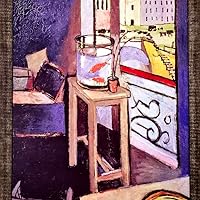
February 13, 2017
Maybe I needed a better translation, but Thomas Mann only suceeded in giving me a headache (and creeping me out a little, there, I'll say it.).

September 25, 2026
I read Felix Krull in 2020 and thought I loved Thomas Mann because that character is hilarious and it was so fascinating to be in his conniving sensualist mind. I thought I should read more by him before taking on the beast of magic mountain and I’m glad I did. I truly did not get these short stories. I wanted to love “a man and his dog” but I do not care that much about literally a man and his dog. I doubt I will care about a mountain for 600 pages either. I do like his descriptions and bursts of psychological takes but the whole of these stories either bored me, disturbed me or confused me.

April 18, 2023
My first exposure to Thomas Mann (other than through Dirk Bogarde); underwhelming.
Mann is evidently known for his ironic manner and certainly there often seems to be a considerable distance here between the author and his characters. Mann holds them up for examination from different perspectives, first showing their transcendental qualities then the grubbiness of their actual lives. Mann seems to have a devoted following, particularly for his longer novels (e.g., Magic Mountain), but these short stories failed to resonate with me. I’ve reviewed each of the stories in some detail below, often checking internet sources for information on Mann’s intentions.
NB. Spoiler alert for the synopses below ... !
Death in Venice (completed and published 1912, ***)
Gustave Aschenbach, writer and critic, is mentally exhausted and fears that his best years are behind him; he yearns for “new and distant scenes” and goes, of course, to Venice where he swoons over the delightful Tadzio. But first we plough through a dozen pages describing Aschenbach’s career, his writing style, his awards, his critics; this is a sluggish, oddly cerebral start to a story of very human passion.
The story includes some wonderful examples of direct sensual perception. Here is Aschenbach, early in his travels, observing a group of youths:
”One of the party, in a dandified buff suit, a rakish panama with a colored scarf, and a red cravat, was loudest of the loud: he outcrowded all the rest. Achenbach’s eye dwelt on him, and he was shocked to see that the apparent youth was no youth at all. He was an old man, beyond a doubt, with wrinkles and crow’s-feet round eyes and mouth; the dull carmine of the cheeks was rouge, the brown hair a wig. His neck was shrunken and sinewy, his turned-up moustaches and small imperial were dyed, and the unbroken double row of yellow teeth he showed when he laughed were too obviously a cheapish false set.”
Mann is offering an ironic glimpse of the humiliation that life might reserve for Aschenbach, an ageing man besotted by the beauty of youth. But Aschenbach refuses to see the world in these terms. His immediate response to the old roue is to cover his eyes ”as though the world were suffering a dreamlike distortion of perspective which he might arrest by shutting it all out for a few minutes and then looking at it afresh.”
Indeed, Aschenbach is all about achieving spirituality despite (or in denial of) his bodily passions or vices. His ideal is San Sebastian, exemplifying spiritual beauty despite being pierced by swords and spears. Thus, after Aschenbach becomes entranced on the Lido beach in Venice by the beautiful young Tadzio, he sublimates his physical attraction into an ethereal, impersonal state of heavenly bliss. Here he describes the sunrise:
”At the world’s edge began a strewing of roses, a shining and a blooming ineffably pure; baby cloudlets hung illumined, like attendant amoretti, in the blue and blushful haze; purple effulgence fell upon the sea, that seemed to heave it forward on its welling waves; from horizon to zenith went great quivering thrusts like golden lances, the gleam became a glare and rolling flames streamed upwards, and with flying hoof-beats the steeds of the sun-god mounted the sky.”
In this overwrought depiction one senses Mann celebrating with Aschenbach his victory over bodily desire. Likely, this was the most that could be hoped for, or at least admitted to for homosexual longing in the early 20th century. For modern readers, this reads as outmoded and an instance of cruel self-repression.
One finds oneself admiring those parts of the prose that are direct, discerning (like the portrait of the old man) while discomforted by the efforts to glorify Aschenbach as a transcendent spiritual hero. The story’s conclusion is less moving than I had anticipated.
Tonio Kroger (written 1901, published 1903, ***)
The appeal of this story comes from the autobiographical insights it offers into Mann’s own youth. The sensitive young Tonio has an unrequited crush on his friend, Hans. At sixteen, he transfers his affection to Ingeborg, whom he meets at dance classes. She is amused by him but unattracted. Tonio leaves his native city and struggles to become a writer. When he eventually returns home, his parents have passed away, his house has become the public library, and he is a stranger to the locals. Later, he finds his two youthful crushes, Hans and Ingeborg, are now apparently a happily married couple. This prompts a soulful letter to a bohemian artist friend:
”I stand between two worlds. I am at home in neither, and I suffer in consequence. You artists call me a bourgeois… The bourgeois are stupid; but you adorers of the beautiful, who call me phlegmatic and without aspirations, you ought to realize that there is a way of being an artist that goes so deep and is so much a matter of origins and destinies that no longing seems to it sweeter and more worth knowing than longing after the bliss of the commonplace.”
Mario and the Magician (written 1929, published 1930, ****)
The narrator vacations in the Italian beach resort of Torre di Venere with his wife and young children. Things go badly. The children are recovering from whooping cough and, following ridiculous complaints about possible contagion, the hotel management asks the family to change rooms. They refuse and leave for a more accommodating hotel. Later, on the beach they allow their young daughter to go naked into the waves to wash the sand from her bathing suit. The locals take offense at this “offense against decency” and, citing the need to uphold “morality and discipline”, the narrator is detained by the police and fined. The narrator reflects back on this stage in their holiday: “Ought we not at this point to have left Torre as well? If only we had!”
Next, the family sees posters announcing a visiting virtuoso, Cavaliere Cipolla. The kids are excited, and the family buys tickets for the evening show. Cipolla demonstrates impressive tricks with numbers, cards, and hypnotism. But there is also something distasteful about him. He is insecure, talks incessantly in “vague, boastful, self-advertising phrases”, belittles hecklers, and asserts his dominance with cracks of a whip. Despite a bizarre performance fueled by regular shots of alcohol, his oratorical skills and aggression win support from some sections of the crowd. The evening ends in violence.
The family’s initial persecution can be read as reflecting the growing nationalism and antisemitism of the 1920s, while Cipolla is a proxy for the mesmerizing power of authoritarian leaders in Europe at the time. Another reading finds similarities between the powers of Cipolla the magician and Mann as creative artist (indeed, Mann’s children used the nickname of “magician” for their father). Just as Cipolla controls his act, the narrator riddles his retelling with false starts, logical jumps, small hints, and even blatant foreshadowing to much the same effect as the diabolical magician and controller-of-wills (see Levi B. Sanchez in campuspress.yale.edu, Modernism Lab). Sanchez also notes that the story can be read as depicting the philosophical debate over free will versus predetermination with the narrator strangely transfixed in the face of magician’s powers; he is fated to see the performance to its end.
Disorder and Early Sorrow (written and published 1925, ****)
This story, which evidently draws on the author’s own large family (six children), was a favorite for both Hemingway and Damion Searls (who translated the 2023 collection of Mann’s stories). The oldest children hold a decadent dance party for their friends during Germany’s 1923 hyperinflation. Their father, a professor, drifts in and out, ostensibly working on his lecture notes but also secretly enjoying the party.
His favorite child, little Ellie, has been allowed to stay up late to watch the party. One of the partygoers, Max, playfully invites her to dance, leaving her entranced. When her father comes to take her to bed, she rejects him, running back to Max. “The Professor feels an involuntary twinge. Uppermost in his heart is hatred for this party, with its power to intoxicate and estrange his dear child. His love for her—that not quite disinterested, not quite unexceptionable love of his—is easily wounded. He wears a mechanical smile, but his eyes have clouded, and he stares fixedly at a point on the carpet, between the dancers’ feet.”
Colm Toibin, reviewing the 2023 collection, notes that “the father’s love [has] an odd, erotic charge.” For Toibin, the publication of Buddenbrooks (1901) and Mann’s later speeches and articles left him able to publish Death in Venice and Disorder and Early Sorrow, both of which “dramatize aspects of sexuality that were strange or forbidden without having to worry to much about his reputation”. Both continue to leave readers unsettled about the erotic inclinations of the protagonist.
A Man and his Dog (written 1918, published 1919, **)
The unnamed narrator lovingly describes his doting dog Bashan, how the family found him, the walks they share, the wild game that the dog unsuccessfully pursues. The story dwells not only on the highs, but also the lows of the partnership: an illness that almost takes Bashan’s life, a time when he falls under the spell of a duck hunter before eventually reconciling himself to the more humdrum life with his owner.
On the surface, this is a painfully dull story told by a bore who drones on endlessly about his wonderful dog. His language suggests intelligence and culture: “…I like to enjoy a few draughts of the young morning air and taste its blithe purity before I am claimed by the labors of the day.” Yet, like many bores, he seems isolated, lonely, He is defined by his relationship with Bashan, with no mention of his wife or children other than when Bashan is first brought home. Indeed, the story ends as he returns home to find “the soup waiting on the table;” almost as if he himself were the pet, left to feed from his bowl, while the family gets on with its separate life.
This is a perplexing story: it is so lightweight that one searches for a deeper allegorical meaning, though without success. Its 1919 publication included an introduction by Mann explaining that he was writing about the real life of his dog, Bauschan, and was not raising societal or higher issues. He warned that “… everyone who considers the occupation with such a trivial subject beneath his intellectual dignity should immediately throw these sheets [...] aside.” Mann’s son suggested there was a political allegory behind the story (with Mann possibly warning of the dangers to Germany of “romantic barbarism”). Others concluded that this was just a “charming canine idyl” but not Mann at his strongest (Frank Braun).
The Blood of the Walsungs (written 1905, published 1921, **)
The back-story here is quite bizarre. In 1905, Mann married Katja Pringsheim, daughter of the Chair of Mathematics at the University of Mannheim. Katja was very close to her twin brother, Klaus, with whom she was often seen in public walking hand-in-hand. A few months after marrying Katja, Mann wrote a story featuring 19-year-old twins, Sieglinde and Siegfried, from a family very much like the Pringsheims. Sieglinde, about to marry, is very close to her twin brother, with whom she routinely walks hand-in-hand. After an evening together at the opera their affection crosses over into incest. Was this true for Katja and Klaus? Whether so or not, why was Mann planning to publish such a story? In the event, Prof. Pringsheim demanded Mann not publish it—which he didn’t until 1921.
Tristan (Published 1903, ***)
After giving birth to a sturdy heir, the young wife of a wealthy businessman (Herr Kloterjahn) falls ill and seeks rest and recovery in a mountain sanitorium. There, she meets a writer, Herr Spinell, who falls in love with her and seeks to awaken her to a world of poetic feeling that he believes she can never find with Kloterjahn. An odd story that sets the poetic against the prosaic without clearly taking sides. While Spinell advocates for the life of the sublime, Mann weakens his case by noting that he has oversized feet and rotten teeth.
Felix Krull (written 1911, published 1936, ***)
Felix is the son of the producer of poor-quality sparkling wine, who later goes bankrupt and commits suicide. The story is written as Felix looks back on his childhood from retirement. He notes his active imagination as a young child, playacting roles of superiority and authority (for example, pretending in his pushchair to be the Kaiser.) His fantasies are encouraged by his godfather, an artist, who brings costumes for Felix to wear while being sketched. As a boy, Felix learns to forge his father’s handwriting to excuse himself from school, and also learns to shoplift from the local delicatessen. We understand from Felix’s wandering recollections that he becomes a conman and eventually serves time in jail.
Mann planned to develop this 1911 story into a novel, Confessions of Felix Krull, but it remained unfinished at the time of his death. With Felix Krull, Mann was evidently parodying Goethe's autobiography Poetry and Truth, particularly its pompous tone. However, for those unfamiliar with the latter, the pomposity is more evident than the parody.
Mann is evidently known for his ironic manner and certainly there often seems to be a considerable distance here between the author and his characters. Mann holds them up for examination from different perspectives, first showing their transcendental qualities then the grubbiness of their actual lives. Mann seems to have a devoted following, particularly for his longer novels (e.g., Magic Mountain), but these short stories failed to resonate with me. I’ve reviewed each of the stories in some detail below, often checking internet sources for information on Mann’s intentions.
NB. Spoiler alert for the synopses below ... !
Death in Venice (completed and published 1912, ***)
Gustave Aschenbach, writer and critic, is mentally exhausted and fears that his best years are behind him; he yearns for “new and distant scenes” and goes, of course, to Venice where he swoons over the delightful Tadzio. But first we plough through a dozen pages describing Aschenbach’s career, his writing style, his awards, his critics; this is a sluggish, oddly cerebral start to a story of very human passion.
The story includes some wonderful examples of direct sensual perception. Here is Aschenbach, early in his travels, observing a group of youths:
”One of the party, in a dandified buff suit, a rakish panama with a colored scarf, and a red cravat, was loudest of the loud: he outcrowded all the rest. Achenbach’s eye dwelt on him, and he was shocked to see that the apparent youth was no youth at all. He was an old man, beyond a doubt, with wrinkles and crow’s-feet round eyes and mouth; the dull carmine of the cheeks was rouge, the brown hair a wig. His neck was shrunken and sinewy, his turned-up moustaches and small imperial were dyed, and the unbroken double row of yellow teeth he showed when he laughed were too obviously a cheapish false set.”
Mann is offering an ironic glimpse of the humiliation that life might reserve for Aschenbach, an ageing man besotted by the beauty of youth. But Aschenbach refuses to see the world in these terms. His immediate response to the old roue is to cover his eyes ”as though the world were suffering a dreamlike distortion of perspective which he might arrest by shutting it all out for a few minutes and then looking at it afresh.”
Indeed, Aschenbach is all about achieving spirituality despite (or in denial of) his bodily passions or vices. His ideal is San Sebastian, exemplifying spiritual beauty despite being pierced by swords and spears. Thus, after Aschenbach becomes entranced on the Lido beach in Venice by the beautiful young Tadzio, he sublimates his physical attraction into an ethereal, impersonal state of heavenly bliss. Here he describes the sunrise:
”At the world’s edge began a strewing of roses, a shining and a blooming ineffably pure; baby cloudlets hung illumined, like attendant amoretti, in the blue and blushful haze; purple effulgence fell upon the sea, that seemed to heave it forward on its welling waves; from horizon to zenith went great quivering thrusts like golden lances, the gleam became a glare and rolling flames streamed upwards, and with flying hoof-beats the steeds of the sun-god mounted the sky.”
In this overwrought depiction one senses Mann celebrating with Aschenbach his victory over bodily desire. Likely, this was the most that could be hoped for, or at least admitted to for homosexual longing in the early 20th century. For modern readers, this reads as outmoded and an instance of cruel self-repression.
One finds oneself admiring those parts of the prose that are direct, discerning (like the portrait of the old man) while discomforted by the efforts to glorify Aschenbach as a transcendent spiritual hero. The story’s conclusion is less moving than I had anticipated.
Tonio Kroger (written 1901, published 1903, ***)
The appeal of this story comes from the autobiographical insights it offers into Mann’s own youth. The sensitive young Tonio has an unrequited crush on his friend, Hans. At sixteen, he transfers his affection to Ingeborg, whom he meets at dance classes. She is amused by him but unattracted. Tonio leaves his native city and struggles to become a writer. When he eventually returns home, his parents have passed away, his house has become the public library, and he is a stranger to the locals. Later, he finds his two youthful crushes, Hans and Ingeborg, are now apparently a happily married couple. This prompts a soulful letter to a bohemian artist friend:
”I stand between two worlds. I am at home in neither, and I suffer in consequence. You artists call me a bourgeois… The bourgeois are stupid; but you adorers of the beautiful, who call me phlegmatic and without aspirations, you ought to realize that there is a way of being an artist that goes so deep and is so much a matter of origins and destinies that no longing seems to it sweeter and more worth knowing than longing after the bliss of the commonplace.”
Mario and the Magician (written 1929, published 1930, ****)
The narrator vacations in the Italian beach resort of Torre di Venere with his wife and young children. Things go badly. The children are recovering from whooping cough and, following ridiculous complaints about possible contagion, the hotel management asks the family to change rooms. They refuse and leave for a more accommodating hotel. Later, on the beach they allow their young daughter to go naked into the waves to wash the sand from her bathing suit. The locals take offense at this “offense against decency” and, citing the need to uphold “morality and discipline”, the narrator is detained by the police and fined. The narrator reflects back on this stage in their holiday: “Ought we not at this point to have left Torre as well? If only we had!”
Next, the family sees posters announcing a visiting virtuoso, Cavaliere Cipolla. The kids are excited, and the family buys tickets for the evening show. Cipolla demonstrates impressive tricks with numbers, cards, and hypnotism. But there is also something distasteful about him. He is insecure, talks incessantly in “vague, boastful, self-advertising phrases”, belittles hecklers, and asserts his dominance with cracks of a whip. Despite a bizarre performance fueled by regular shots of alcohol, his oratorical skills and aggression win support from some sections of the crowd. The evening ends in violence.
The family’s initial persecution can be read as reflecting the growing nationalism and antisemitism of the 1920s, while Cipolla is a proxy for the mesmerizing power of authoritarian leaders in Europe at the time. Another reading finds similarities between the powers of Cipolla the magician and Mann as creative artist (indeed, Mann’s children used the nickname of “magician” for their father). Just as Cipolla controls his act, the narrator riddles his retelling with false starts, logical jumps, small hints, and even blatant foreshadowing to much the same effect as the diabolical magician and controller-of-wills (see Levi B. Sanchez in campuspress.yale.edu, Modernism Lab). Sanchez also notes that the story can be read as depicting the philosophical debate over free will versus predetermination with the narrator strangely transfixed in the face of magician’s powers; he is fated to see the performance to its end.
Disorder and Early Sorrow (written and published 1925, ****)
This story, which evidently draws on the author’s own large family (six children), was a favorite for both Hemingway and Damion Searls (who translated the 2023 collection of Mann’s stories). The oldest children hold a decadent dance party for their friends during Germany’s 1923 hyperinflation. Their father, a professor, drifts in and out, ostensibly working on his lecture notes but also secretly enjoying the party.
His favorite child, little Ellie, has been allowed to stay up late to watch the party. One of the partygoers, Max, playfully invites her to dance, leaving her entranced. When her father comes to take her to bed, she rejects him, running back to Max. “The Professor feels an involuntary twinge. Uppermost in his heart is hatred for this party, with its power to intoxicate and estrange his dear child. His love for her—that not quite disinterested, not quite unexceptionable love of his—is easily wounded. He wears a mechanical smile, but his eyes have clouded, and he stares fixedly at a point on the carpet, between the dancers’ feet.”
Colm Toibin, reviewing the 2023 collection, notes that “the father’s love [has] an odd, erotic charge.” For Toibin, the publication of Buddenbrooks (1901) and Mann’s later speeches and articles left him able to publish Death in Venice and Disorder and Early Sorrow, both of which “dramatize aspects of sexuality that were strange or forbidden without having to worry to much about his reputation”. Both continue to leave readers unsettled about the erotic inclinations of the protagonist.
A Man and his Dog (written 1918, published 1919, **)
The unnamed narrator lovingly describes his doting dog Bashan, how the family found him, the walks they share, the wild game that the dog unsuccessfully pursues. The story dwells not only on the highs, but also the lows of the partnership: an illness that almost takes Bashan’s life, a time when he falls under the spell of a duck hunter before eventually reconciling himself to the more humdrum life with his owner.
On the surface, this is a painfully dull story told by a bore who drones on endlessly about his wonderful dog. His language suggests intelligence and culture: “…I like to enjoy a few draughts of the young morning air and taste its blithe purity before I am claimed by the labors of the day.” Yet, like many bores, he seems isolated, lonely, He is defined by his relationship with Bashan, with no mention of his wife or children other than when Bashan is first brought home. Indeed, the story ends as he returns home to find “the soup waiting on the table;” almost as if he himself were the pet, left to feed from his bowl, while the family gets on with its separate life.
This is a perplexing story: it is so lightweight that one searches for a deeper allegorical meaning, though without success. Its 1919 publication included an introduction by Mann explaining that he was writing about the real life of his dog, Bauschan, and was not raising societal or higher issues. He warned that “… everyone who considers the occupation with such a trivial subject beneath his intellectual dignity should immediately throw these sheets [...] aside.” Mann’s son suggested there was a political allegory behind the story (with Mann possibly warning of the dangers to Germany of “romantic barbarism”). Others concluded that this was just a “charming canine idyl” but not Mann at his strongest (Frank Braun).
The Blood of the Walsungs (written 1905, published 1921, **)
The back-story here is quite bizarre. In 1905, Mann married Katja Pringsheim, daughter of the Chair of Mathematics at the University of Mannheim. Katja was very close to her twin brother, Klaus, with whom she was often seen in public walking hand-in-hand. A few months after marrying Katja, Mann wrote a story featuring 19-year-old twins, Sieglinde and Siegfried, from a family very much like the Pringsheims. Sieglinde, about to marry, is very close to her twin brother, with whom she routinely walks hand-in-hand. After an evening together at the opera their affection crosses over into incest. Was this true for Katja and Klaus? Whether so or not, why was Mann planning to publish such a story? In the event, Prof. Pringsheim demanded Mann not publish it—which he didn’t until 1921.
Tristan (Published 1903, ***)
After giving birth to a sturdy heir, the young wife of a wealthy businessman (Herr Kloterjahn) falls ill and seeks rest and recovery in a mountain sanitorium. There, she meets a writer, Herr Spinell, who falls in love with her and seeks to awaken her to a world of poetic feeling that he believes she can never find with Kloterjahn. An odd story that sets the poetic against the prosaic without clearly taking sides. While Spinell advocates for the life of the sublime, Mann weakens his case by noting that he has oversized feet and rotten teeth.
Felix Krull (written 1911, published 1936, ***)
Felix is the son of the producer of poor-quality sparkling wine, who later goes bankrupt and commits suicide. The story is written as Felix looks back on his childhood from retirement. He notes his active imagination as a young child, playacting roles of superiority and authority (for example, pretending in his pushchair to be the Kaiser.) His fantasies are encouraged by his godfather, an artist, who brings costumes for Felix to wear while being sketched. As a boy, Felix learns to forge his father’s handwriting to excuse himself from school, and also learns to shoplift from the local delicatessen. We understand from Felix’s wandering recollections that he becomes a conman and eventually serves time in jail.
Mann planned to develop this 1911 story into a novel, Confessions of Felix Krull, but it remained unfinished at the time of his death. With Felix Krull, Mann was evidently parodying Goethe's autobiography Poetry and Truth, particularly its pompous tone. However, for those unfamiliar with the latter, the pomposity is more evident than the parody.

January 18, 2009
Among the several stories included in this volume The Blood of the Volsungs is one that stands out in its differences and its use of music as a foundation.
This little drama begins at the dining-room table where both the theme of generational conflict between the parents and children of the Aarenhold family and 'racial' conflict between the family and an outsider, a government bureaucrat named Beckerath who is engaged to Sieglinde, the elder of two daughters in the family. In this story music is intertwined with the plot beginning with the twin brother, Siegmund, who with his sister mirror the siblings in Act One of Wagner's opera Die Valkyrie. But the musical influence goes beyond this as when, for example, one of the children taps out Hunding's motif (Sieglinde's husband from Valkyrie) when Beckerath appears for lunch; through the musical interlude at the opera which the siblings attend; and the ensuing incestuous behavior of the same upon returning home.
These themes are played out over a single day in the life of this family. We see the children, turning away from the valetudinarianism of their father and mother, focusing on their own interests. These interests do not include the sort of hard work that Beckerath represented and they looked down on him as well. And from his perspective "they contradicted everything--as though they found it impossible, discreditable, lamentable, not to contradict."
The importance of race is most intense for Siegmund whom is presented as contemplating his racial characteristics as he prepares for the evening with Sieglinde. But also he is depicted as completely lacking in any interest in creating anything with his life; instead he is consumed with a passion for maintaining his toilette, for preparing himself for the day, as the day passes away quickly with no actual happenings. This was no surprise to the family for they exhibited a "lack of expectations" that conspired to rob him of any "actuality".
This may sound like a strange story. Perhaps it is, but Mann succeeds in presenting high tragedy in the form of melodrama. His satire seems well-suited to critique the superficial nature of the bourgeoisie at the end of the nineteenth century (Mann wrote the story in 1905). The strength of the story comes in great part from the high art of the operatic drama that underlies it. It may be that Mann in an indirect way was indicating how powerful Wagner's genius really could be.
This little drama begins at the dining-room table where both the theme of generational conflict between the parents and children of the Aarenhold family and 'racial' conflict between the family and an outsider, a government bureaucrat named Beckerath who is engaged to Sieglinde, the elder of two daughters in the family. In this story music is intertwined with the plot beginning with the twin brother, Siegmund, who with his sister mirror the siblings in Act One of Wagner's opera Die Valkyrie. But the musical influence goes beyond this as when, for example, one of the children taps out Hunding's motif (Sieglinde's husband from Valkyrie) when Beckerath appears for lunch; through the musical interlude at the opera which the siblings attend; and the ensuing incestuous behavior of the same upon returning home.
These themes are played out over a single day in the life of this family. We see the children, turning away from the valetudinarianism of their father and mother, focusing on their own interests. These interests do not include the sort of hard work that Beckerath represented and they looked down on him as well. And from his perspective "they contradicted everything--as though they found it impossible, discreditable, lamentable, not to contradict."
The importance of race is most intense for Siegmund whom is presented as contemplating his racial characteristics as he prepares for the evening with Sieglinde. But also he is depicted as completely lacking in any interest in creating anything with his life; instead he is consumed with a passion for maintaining his toilette, for preparing himself for the day, as the day passes away quickly with no actual happenings. This was no surprise to the family for they exhibited a "lack of expectations" that conspired to rob him of any "actuality".
This may sound like a strange story. Perhaps it is, but Mann succeeds in presenting high tragedy in the form of melodrama. His satire seems well-suited to critique the superficial nature of the bourgeoisie at the end of the nineteenth century (Mann wrote the story in 1905). The strength of the story comes in great part from the high art of the operatic drama that underlies it. It may be that Mann in an indirect way was indicating how powerful Wagner's genius really could be.

October 11, 2009
[Note that I only read "Death in Venice" out of a different collection of short literature, not any of the other stories in this particular volume. But this was the translation I read.:]
I had been feeling for quite a while that I would like to read something by Thomas Mann, but for some reason never got around to it until now. The urge inexplicably became irresistible this weekend, so although I'd like to read "The Magic Mountain" or "Buddenbrooks", I read "Death in Venice" because Elise had it in a collection of short fiction.
I'm so glad that I did get around to reading him, and have a feeling this will just be the start of an ongoing relationship with his work. Although I don't want to draw too sharp of a connection, there were many aspects of this novella that put me in mind of my current favorite author, Haruki Murakami. They share the intense focus on the solitary mind, and the distorting (for better or worse) effects of solitude on one's perception of the outward world. There is even a bit of Murakami-esque mysteriousness with the strange pilgrim near the beginning. I once heard Murakami speak, and one thing he mentioned was that most of his protagonists (whose broad biographies often closely resemble his own) are not meant to represent himself, but rather are meant to represent people who he could have become, but didn't. I think this perspective seemed very apt for my interpretation of Mann's main character Aschenbach. Mann in fact did fall for a young boy at a seaside resort once, and though he didn't quite respond in the same extreme fashion that A. does, I think he felt those same urges and channeled them into this character.
I loved Mann's extensive use of references to classical mythology and philosophy in this story. I often think of Murakami as a writer of fairy-tales, and these references to archetypal stories help me see Mann in that category as well, to some extent. I thought his depiction of the Apollonian and Dionysian modes of human experience was so rich, particularly the way that one may lead directly to the other. Very excited to read some more of his work.
I had been feeling for quite a while that I would like to read something by Thomas Mann, but for some reason never got around to it until now. The urge inexplicably became irresistible this weekend, so although I'd like to read "The Magic Mountain" or "Buddenbrooks", I read "Death in Venice" because Elise had it in a collection of short fiction.
I'm so glad that I did get around to reading him, and have a feeling this will just be the start of an ongoing relationship with his work. Although I don't want to draw too sharp of a connection, there were many aspects of this novella that put me in mind of my current favorite author, Haruki Murakami. They share the intense focus on the solitary mind, and the distorting (for better or worse) effects of solitude on one's perception of the outward world. There is even a bit of Murakami-esque mysteriousness with the strange pilgrim near the beginning. I once heard Murakami speak, and one thing he mentioned was that most of his protagonists (whose broad biographies often closely resemble his own) are not meant to represent himself, but rather are meant to represent people who he could have become, but didn't. I think this perspective seemed very apt for my interpretation of Mann's main character Aschenbach. Mann in fact did fall for a young boy at a seaside resort once, and though he didn't quite respond in the same extreme fashion that A. does, I think he felt those same urges and channeled them into this character.
I loved Mann's extensive use of references to classical mythology and philosophy in this story. I often think of Murakami as a writer of fairy-tales, and these references to archetypal stories help me see Mann in that category as well, to some extent. I thought his depiction of the Apollonian and Dionysian modes of human experience was so rich, particularly the way that one may lead directly to the other. Very excited to read some more of his work.

December 10, 2024
I just finished Death in Venice. I'm not sure if I will read the other stories yet. The one I did read was good. Though I suspected at times that the translation was not giving full credit to the original text. This was a story of a struggle I recognized in myself and is likely not unique. I would characterize it as the struggle between what one wants to do vs what one feels one should do - the ego vs the universal self.
Two quotes struck me: "...he who is beside himself revolts at the idea of self-possession", which to me reveals how strange, but common it is to want what we know is not rational.
And: "His art, his moral sense, what were they in the balance beside the boons that chaos might confer?" Yes! yearning for "the boons that chaos might confer." I have to remind myself that those boons are often painted on a dark and forlorn canvas.
Ok I read Mario and the Magician too. Wow. I think I liked this one even better than Death in Venice. This one really gets at whether we have free will; which is a question I often wonder about. Here's a good quote that made me pause to think about it. "The capacity for self-surrender, he said, for becoming a tool, for the most unconditional and utter self-abnegation, was but the reverse side of that other power to will and to command. Commanding and obeying formed together one single principle, one indissoluble unity; he who knew how to obey knew also how to command, and conversely; the one idea was comprehended in the other, as people and leader were comprehended in one another." This quote likely won't mean anything unless you've read the story, but having done so it struck me as profound.
Two quotes struck me: "...he who is beside himself revolts at the idea of self-possession", which to me reveals how strange, but common it is to want what we know is not rational.
And: "His art, his moral sense, what were they in the balance beside the boons that chaos might confer?" Yes! yearning for "the boons that chaos might confer." I have to remind myself that those boons are often painted on a dark and forlorn canvas.
Ok I read Mario and the Magician too. Wow. I think I liked this one even better than Death in Venice. This one really gets at whether we have free will; which is a question I often wonder about. Here's a good quote that made me pause to think about it. "The capacity for self-surrender, he said, for becoming a tool, for the most unconditional and utter self-abnegation, was but the reverse side of that other power to will and to command. Commanding and obeying formed together one single principle, one indissoluble unity; he who knew how to obey knew also how to command, and conversely; the one idea was comprehended in the other, as people and leader were comprehended in one another." This quote likely won't mean anything unless you've read the story, but having done so it struck me as profound.

January 1, 2010
Just the story 'Death in Venice' translated by Michael Henry Heim and read by Simon Callow.
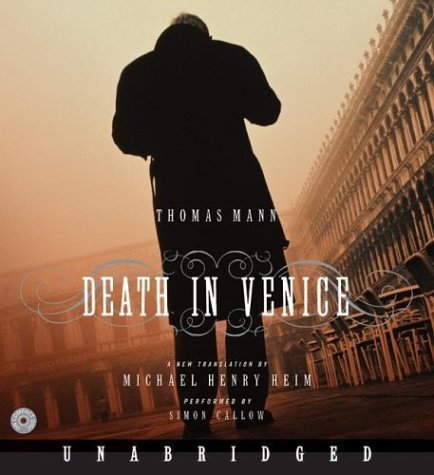
Blurb from Wiki - The main character is Gustav von Aschenbach, a famous author in his early fifties who has recently been ennobled and thus acquired the aristocratic "von" to his name. He is a man dedicated to his art, disciplined and ascetic to the point of severity, who was widowed at a young age. As the story opens, while strolling outside a cemetery, he sees a coarse-looking red-haired man who stares back at him belligerently. Aschenbach walks away, embarrassed but curiously stimulated. Soon afterwards, he resolves to take a trip.
Beautifully written - and that's with the translation factor and beautifully read by the wonderful Mr Callow.
Blurb from Wiki - The main character is Gustav von Aschenbach, a famous author in his early fifties who has recently been ennobled and thus acquired the aristocratic "von" to his name. He is a man dedicated to his art, disciplined and ascetic to the point of severity, who was widowed at a young age. As the story opens, while strolling outside a cemetery, he sees a coarse-looking red-haired man who stares back at him belligerently. Aschenbach walks away, embarrassed but curiously stimulated. Soon afterwards, he resolves to take a trip.
Beautifully written - and that's with the translation factor and beautifully read by the wonderful Mr Callow.
This entire review has been hidden because of spoilers.
July 20, 2021
“When one wanted to arrive overnight at the incomparable, the fabulous, the like-nothing-else-in-the-world, where was it one went?” Well, Venice, of course. Aschenbach looses himself in Venice. His self-discipline and sense of purpose, characteristics he is lauded for, are lost in Venice.
“For one human being instinctively feels respect and love for another human being so long as he does not know him well enough to judge him…”.
“For one human being instinctively feels respect and love for another human being so long as he does not know him well enough to judge him…”.
February 11, 2010
Beautiful prose can be found in here...florid descriptions of such density I practically had an allergic attack to its bouquet. But I was left a bit unsatisfied at the end of each story. The tales seemed to have no closure, or perhaps more accurately, no climax. A bit like Catcher in the Rye: things happen and then, the End.

November 12, 2010
I think I'm fonder of the other Mann I've read, but I would never deny Mann's skill in writing. Some of these stories were a little more contemplative in approach than lived for me, perhaps more intellectualized than suited me at the moment. Still I enjoyed a number of these stories a great deal. After all, Mann is the man.
February 16, 2021
If you can push aside all that you know, and what has been written, about Mann, you will be well rewarded by these stories. Death in Venice may be the headliner but it is not the only story that delivers.
Displaying 1 - 30 of 252 reviews