Jump to ratings and reviews
Rate this book

Portrait of a Marriage: Vita Sackville-West and Harold Nicolson

Rate this book
Vita Sackville-West, novelist, poet, and biographer, is best known as the friend of Virginia Woolf, who transformed her into an androgynous time-traveler in Orlando. The story of Sackville-West's marriage to Harold Nicolson is one of intrigue and bewilderment. In Portrait of a Marriage, their son Nigel combines his mother's memoir with his own explanations and what he learned from their many letters. Even during her various love affairs with women, Vita maintained a loving marriage with Harold. Portrait of a Marriage presents an often misunderstood but always fascinating couple.

278 pages, Paperback

First published January 1, 1973

780 people are currently reading
5600 people want to read

About the author

Nigel Nicolson

88 books21 followers

Ratings & Reviews

What do you think?
Rate this book

Friends & Following

Create a free account to discover what your friends think of this book!

Community Reviews

5 stars
1,612 (35%)
4 stars
1,841 (40%)
3 stars
831 (18%)
2 stars
166 (3%)
1 star
60 (1%)
Displaying 1 - 30 of 385 reviews
Profile Image for Paul Bryant.
2,409 reviews12.6k followers
February 2, 2019
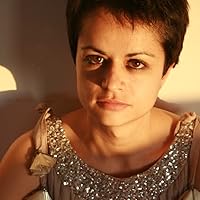
A lurid tale of lesbian lust and cross-dressing capers amongst the upper crust Edwardians. How upper were their crusts? Well, this is our heroine Vita Sackville-West


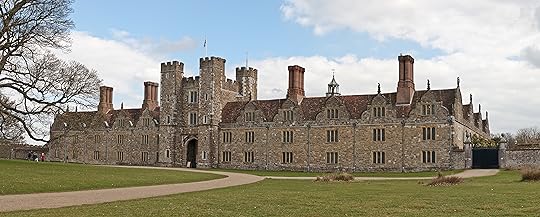
And this is where Vita grew up :


It’s called Knole, near Sevenoaks in Kent, it has 365 rooms, or so, mostly 16th and 17th century, and Vita would have inherited it from her father except that she was a woman, so it went to her uncle. Ah well, you win some, you lose some.

This remarkable book was written by Vita’s son Nigel, after he found his mother’s explicit autobiography stashed away when she died.

NOTHING LIKE MARY POPPINS

Violet Trefusis , 25 October 1918, writing to Vita Sackville-West :

Give me great glaring vices, and great glaring virtue… be wicked, be brave, be drunk, be reckless, be dissolute, be despotic, be an anarchist, be a suffragette, be anything you like, but for pity’s sake be it to the top of your bent. Live fully, live passionately, live disastrously. Let’s live, you and I, as none have ever lived before.

Vita was married at age 20 to a nice young man called Harold. She knew she liked girls, but she thought that it was just a case of her having two sides to her personality. Both could co-exist happily.

And they did, until she met Violet. When Violet's family noticed the V&V affair was beginning to raise eyebrows all round, they put the pressure on, and Violet married the hapless Denys Trefusis on 16 June 1919. Things immediately went all to hell.

Violet, writing to Vita on 18 February 1920, discusses her feelings about her husband:

He is abhorrent to me with his tears and his servility. I told him I looked upon him merely as my jailor, and that my one ambition was to get away from him.

Vita in 1920 writing about Violet’s husband :

I now hate him more than I have ever hated anyone in this life, or am likely to; and there is no injury I would not do to him with the utmost pleasure.

You might be thinking he was a nasty piece of work, but no, he wasn’t. He was a guy who stepped onto a landmine is what he was. After the two women vamoosed to Paris, leaving behind their husbands Vita confessed :

I dressed as a boy. It was easy… It must have been successful because no one looked at me curiously or suspiciously – never once, out of the many times I did it. My height, of course, was my great advantage. I looked like a rather untidy young man, a sort of undergraduate of about nineteen. It was marvelous fun, all the more so because there was always the risk of being found out.

Harold Nicolson, writing to his wife Vita in 1920 :

When you fall into Violet’s hands, you become like a jellyfish addicted to cocaine.


THE UPPER CLASS DEFINITION OF MARRIAGE

Nigel writes :

When I myself married, my father solemnly cautioned me that the physical side of marriage could not be expected to last more than a year or two, and once, he says “Being ‘in love’ lasts but a short time – from three weeks to three years. It has little or nothing to do with the felicity of marriage.”

It seems that in the upper class open marriages were more or less the norm. It was expected that each partner would have discreet affairs that would never be allowed to upset the marriage itself.

Vita and Harold pushed this a little further than most though. After the violent Violet affair blew over (it took three years), they reached a very civilized equilibrium. They both had same sex affairs, and, as Nigel writes:

So carefree were they that quite often Harold’s friend and Vita’s would join the same weekend party, and the four of them would refer to the situation quite openly.

BOOKS COMING OUT OF YOUR EARS

This little crowd were the bookiest people.

Vita : wrote 12 books of poetry. 17 novels (some bestsellers) and a ton of other stuff.

Virginia Woolf, her next girlfriend after Violet, wrote Orlando and Orlando is based on Vita. That’s a fairly good claim to fame right there.

Violet : wrote seven novels, some bestsellers, plus an autobiography (could be interesting) called Don’t Look Round which I first thought was an early diet book but it’s not.

Harold : wrote 40 books of history, biography, and this and that. His diaries and letters became bestsellers.

Then of course many books have been written about this crowd, such as


They were a strange mixture, sexual radicals and horrible political ultraconservatives. This short sharp book includes Vita’s account of the whole white-hot calamitous Violet affair plus Nigel’s cool overview of his parents’ tangled lives. Recommended.
Profile Image for Kelly.
885 reviews4,875 followers
May 24, 2010
So I have this friend (yes, really a friend, not me in disguise, promise). She lives like a character in a novel. I don’t mean to say that she’s acting in some sort of pantomime. I mean that things happen to her, she thoroughly absorbs them and contemplates them, and then acts as if she’s had herself a two chapter period of long walks in the park and insightful inner monologues before each choice is made. All of her choices seem to make sense, as if chosen by an author skilled in characterization, with enough experience that she isn’t likely to make inconsistent character choices in her world, thank you very much. She’s got the trick of coherence in her life, whether good or bad. I don’t mean to say she is predictable (she is not), but all of her stories have a wonderful clarity to them.

Now, this may sound like just the normal process of being human to many people reading this. I hope it does. I wish it did for me.

In both my own life and in the lives of those around me, I see a ridiculous amount of randomness. I’ve known my closest friends a very long time now, and even if I can sometimes predict the words about to come out of their mouths with perfect accuracy, I'm not satisfied I know why. I don't have a sense of a whole character. We’re all very young, a lot of us are still choosing who it is that we want to be- thus, many choices appear inconsistent, silly, incomprehensible, off the wall. I know at least one friend who has been trying to become a character for over six years- and his choices are the craziest of all of them. I’ve decided it is because he’s trying to live in a novel that no longer corresponds to real life. Save her, no one I know, least of all myself, has that sense of being fully fledged to themselves. I do spend a decent amount of time weighing my options whenever I’m faced with a choice, agonizing that if I were, “really a (insert perceived good quality here) type of person, I really would do this, wouldn’t I?” or “that really does make me (insert lame quality here), can I live with that?” I have tried to make my own decisions make sense in some kind of overarching narrative, but all I see is quixotic choices, based on, I don’t know, taking a random dislike to someone’s shoes. So yeah, I do wish that I had more of that coherence thing going on in my life.

Portrait of a Marriage shows me that I’m not the only person who has really wanted that. Nigel Nicolson is the son of Vita Sackville-West, the endlessly fascinating (sorry, mind the brain gap while I fangirl) woman who was so many things to so many people that not even Virginia Woolf could pin down her essence inside one sex, location, or even century for that matter. And yet, despite this elusiveness being one of her most attractive qualities, nearly every person she knew throughout her life tried to make her into some image or other that suited the particular fantasy they wanted to her to be a part of.

Having now read three different portraits of Vita right in a row, I can tell you that this battle over who she was, and especially what she represents, is still going strong. I could not have felt more strongly these last few weeks that all history is indeed narrative. In this case more than most, since everyone involved was literary, wrapped up in their own individual stories (often several at once: the invented ones, the temporary ones, the permanent “real” ones), and everyone attempted to control the script from the very beginning. It almost seems natural that Nigel Nicolson should do the same.

On the surface, Portrait of a Marriage is actually rather an odd title for this work. The central piece of the work is a manuscript that Nigel Nicolson discovered in his mother’s writing room after her death. It was locked away in a leather bag, hidden from view- he had to cut away the lock in order to get to it. Inside was a “confession,” written in 1920. In it, his mother Vita recounts her version of her affair with Violet Trefusis, the daughter of King Edward VII’s mistress Alice Keppel. The affair was both unmentionable and scandalous at the time, and the two women came inches from running off together permanently, abandoning their husbands and families to live together openly as lovers. No one seemed to know of this manuscript’s existance other than Vita herself and perhaps Virginia Woolf (though no one can prove that).

However, this ‘confession’ is broken up into two parts, contained before, between, and after by Nigel Nicolson’s own perspective on the situations she is describing, further detail on surrounding issues Vita only glancingly mentions, and finally the last chapter gives us a sort of extended epilogue on the rest of Vita and Harold’s marriage.

Vita’s story is powerful. She provides us with her background: the isolated childhood at Knole, her difficult, alluring mother, her wandering gentleman father, her constant writing, her lack of friends, and her growth into full maturity, showing us how she became the person who made the choices she did in her affair with Violet. It is in some senses a justification, but the second half of the story, which describes the actual affair itself, offers no justifications, tells the reader awful things that show Vita to no advantage, things that would have utterly disgraced her both in her time and now. She does cast herself as Violet’s (admittedly willing) seduction victim, an unknowing innocent in the ways of love following her heart, her mother as the source of much of her unhappiness and fucked up view of life, and Harold as a fairly perfect angel. She thus claims this story to be a painful plea for understanding of her divided nature, lesbian love, and why she could not deny herself it- she seems to both be addressing her own inner guilt and also Harold, who she expects may read this one day.

Nigel Nicolson has a different agenda. He claims Violet and Vita’s passionate story as part of Vita and Harold’s overarching narrative. In his eyes, the Violet/Vita incident was the ultimate testing ground for the very modern, liberal idea of marriage that his parents had agreed to live by (lovers if they chose, but they would always come back to each other and speak honestly about what was going on at all times), and since in the end Vita did return to England with Harold, he sees it ultimately as a triumph of their solid, loving relationship over the temporary passions of her wild relationship with the “evil” Violet. It is all very coherent indeed.

Now, some people find this a sad denial of same-sex relationships and passion, but surely we can all understand why a son would want to show his parents’ love as paramount, and the lengths he might be willing to go to to paper over as many faults as possible. He spends a whole lot of time talking up his father’s virtues and his mother’s distortions of the truth, but then, what did you think this was going to be? In fairness to him, though he seems unable to forgive Violet, he does understand her appeal. He quotes from some of her most alluring letters, which paint her in a very sympathetic light, and he even he can’t deny his mother’s love for Violet:

“Now that I know everything, I love her more, as my father did, because she was tempted, because she was weak. She was a rebel, she was Julian, and though she did not know it, she fought for more than Violet. She fought for the right to love, men and women, rejecting the convention that marriage demands exclusive love, and that women should love only men and men only women.. Yes, she may have been mad, as she later said, but it was a magnificent folly. She may have been cruel, but it was cruelty on a heroic scale. How can I despise the violence of such passion?”

It was interesting to hear his thoughts on why their compact worked. Sort of ironic to me that had they lived in the 21st century, there would have been no possibility of these two people marrying, given their completely different sexual tastes and lifestyles, and yet, according to him, it worked because of these things: “… it was fortunate that they were both made that way. If only one of them had been, their marriage would probably have collapsed. Violet did not destroy their physical union; she simply provided the alternative for which Vita was unconsciously seeking at the moment when her physical passion for Harold, and his for her, had begun to cool…Vita once put her little creed for Harold in these words: “To love me whatever I do. To believe my motives are not mean. Not to credit tales without hearing my own version. To give up everything and everybody for me in the last resort… The basis of their marriage was mutual respect, enduring love, and a “'common sense of values.'"

It is also worthwhile noting that Vita and Harold conducted most of their relationship on paper- not even discussing the most important issues unless one of them was forced to force the issue. (One of the times Vita and Violet were to run off together, Harold begged Vita to stay with him for two weeks while he recovered from a severe sickness. She consented and went home with him. They said nothing about the fact that she was leaving until the very last day. Harold did not like conflict.) As Nigel Nicolson noted when discussing his mother’s complete refusal to fulfill any sort of official wifely role (political wife at rallies, diplomatic hostess), his mother’s behavior might:

“…sound selfish, but neither of them thought it so. She cared so deeply for her independence that for both of them it outweighed everything else, even their agony at being parted for months on end. There is no suggestion in their hundreds of letters that their misery could be ended at any moment by her joining him permanently (at one of his postings). Instead they exchanged commiserations on his ‘bloody profession’…”

… and chose to deal with their pain of separation rather than give up their chosen paths. The one time Harold did give in to what Vita wanted for him rather than what he wanted turned out to be a bad choice- one he made the best of, but nonetheless- he always regretted it. I wonder if a relationship like theirs might work in the 21st century after all, in a world where contact is ever more virtual, and a need for contact can be solved in 140 character bursts before we go back to work.

Vita and Harold’s relationship was not sexual after Violet. Nigel Nicolson calls that the inevitable cooling of passion, Victoria Glenndinning blames it on Harold’s revelation to Vita that he had a venereal disease from one of his gay lovers after five years of total fidelity on her part, Diana Souhami on Harold’s infidelity giving Vita implicit permission to let her own lesbian tendencies and Wanderlust out into the opening. Whatever the reason, though, and whatever their passions were: I guess what I’m saying here is that though Vita and Harold themselves lived many stories, and told even more, theirs was the story they kept coming back to, again and again. As Vita herself said: “my infinitely dear Hadji, you ought never to have married me. I feel my inadequacy most bitterly. What good am I to you?”…and he replied, What good was he to her? She should have married Lord Lascelles. (The man who could have given her a castle and a more "traditional" aristocratic life.) If Nigel Nicolson’s interpretation of the situation is a bit on the fairy tale side, that doesn’t devalue the deep bond these two people had, and the amazingly high value they placed on their life together. Vita stated many times she would no longer want to live if Harold died, Harold refused to acknowledge the possibility until she actually did die. Then faced with life without her, withdrew into silence and decline until he died six years later. It did seem to be their home base, their safe haven, the place they needed to know existed in order to venture out into the world.

Does anyone watch Mad Men? There’s a scene in the first season where Don Draper is talking to a Jewish lover of his about Israel, asking her what it means to her, why she isn’t there. She responds with something like: “It’s more of an idea than a place to me. My life is here in New York. I’ll never go there- knowing it exists is all I need.” Yeah- in the end, what I see of this extremely complicated mess is kind of like that. Whatever story we might want out of whatever narrative we’re reading, sooner or later we’re going to run up against a core of what matters that isn’t going to alter for any theoretical –ism you’ve got out there.

People are what they are, and you can’t force them to be anything else, however hard you try. That was the real triumph of this book. Nigel Nicolson tried, Harold tried, Violet tried, Vita’s mother tried, even Vita herself tried- all of them failed. Whatever else drowned in the mess of these people’s lives, that gloriously survived.

Or that's my narrative, anyway.
Profile Image for Nandakishore Mridula.
1,348 reviews2,697 followers
July 9, 2016
This was a serendipitous read. I was in India recently, and this old book which was lying about in my reading nook suddenly caught my eye. As I read the blurb, I remembered the story: my great-aunt used to tell it to me often, as a cautionary tale on marrying beneath one's station (maybe she was a bit afraid that I would fall for a pretty face without considering caste and pedigree). On a whim I started reading it, and realised to my surprise that it was much more than the story of an "unsuitable" marriage.

The marriage of William, an artist and the son of a rich businessman to village belle Ruth is unsuitable, no doubt - at least from the point of view of his family. William is forced to abandon his home and stay at Ruth's farm. However, he is also a failure as a farmer, and is relegated to the status of a "do-less" husband by the village: while Ruth is forever barred from William's house, as his mother refuses to see her at all. What makes the marriage function is the love of the couple for one another, despite all the differences.

The novel takes in a vast swathe of time, from the turn of the twentieth century to the fifties. Pearl Buck masterfully creates the portrait of a world in turmoil (as it goes through two world wars and their attendant deaths and heartbreak), reflected in the humdrum daily life of a rural couple. The love of William and Ruth for each other never wavers ; however, neither does their basic incompatibility as persons get ironed out. As the family proceeds through generations, we understand that this is not the portrait of one particular marriage, but marriage (and life) in general. The ending, though rather predictable, is fitting and affirms the continuity of life: the flame is carried forward even though each brief candle burns out in its time.
Profile Image for Justin Pickett.
557 reviews58 followers
August 5, 2024
“And every other face in the world … faded and left him. This was his wife.”

Whereas many novels and plays bring together lovers from different classes or cultures and conclude either with a fairytale wedding or tragic parting, this novel follows the couple throughout their married life, from their family-alienating wedding, to childbirth, through two world wars, to old age and grandchildren. And it should have won a Pulitzer Prize, because it provides a wonderfully realistic portrait of a loving marriage in early 1900’s America—one where the lovers cannot fully explain their love, but know only that they need each other and are most comfortable when together, and one where married life is happy and fulfilling, but not uncomplicated or without difficulty.

“When he woke in the morning he knew that here with her was his home and here alone.”

“Together they plumbed the abyss and found its depth. Together they sprang up again.”

It starts like this. William Barton is a budding painter from a rich, railroad-owning family. He accidently stumbles upon a farmer’s daughter, Ruth Harnsbarger, in the countryside one day while searching for inspiration and falls in love. William is highly educated and book-loving, but Ruth has only a fifth-grade education from a one-room country school. Obviously, William’s parents would never accept such a marriage, so he leaves them to marry Ruth in a small country wedding attended only by farm folk and then to live in an old farmhouse that has been in her family for nearly two hundred years. The above description spoils nothing, as the main and best parts of the story follow from there.

“[H]e knew that for the sake of their love he would never take her away from this house and this land. She was nourished here to her fullest being. At the work she loved best she grew so beautiful, so rich, that he could not disturb that sacred growth.”
Profile Image for Tijana.
866 reviews287 followers
Read
May 5, 2018
Vita Sakvil-Vest danas je poznata kao istorijski bitna ali drugorazredna spisateljica (manje) i inspiracija za Orlanda Virdžinije Vulf (mnogo više). Ova knjiga se ne koncentriše ni na jedno ni na drugo, već, kao što i naslov kaže, na priču o njenom neuobičajenom ali po internim (jedino važnim) parametrima krajnje uspešnom i srećnom braku. Knjiga je sklopljena tako da se smenjuju delovi njenog autobiografskog zapisa i poglavlja koja je pisao njihov sin pa na kraju dobijemo umereno celovitu sliku Vitinog bračnog života. Sin je razumljivo pristrasan, tako da imamo i negativca u liku Vajolet Trefusis koja je pokušala da razdvoji supružnike.
E sad, treba odati priznanje učesnicima na tome što su uspeli da održe jednu tako neortodoksnu vezu uz uzajamnu ljubav i poštovanje u vreme kad je to bilo još teže nego danas. Ali ako se nešto nauči iz ove knjige - onda je to da se sve može pod uslovom da se ima dovoljno novca i socijalnog statusa. Ne, zaista.
Pojedini momenti zbog toga mogu delovati ili nenamerno urnebesno ili ostavljati gorak ukus za sobom ili oboje istovremeno. Mislim na delove priče tipa:
"a kad su zajedno pobegle u Monte Karlo, živele su silno siromašno, morale su čak i da založe svoje dragulje dok im porodice nisu poslale novac"
"nikad neću zaboraviti naš raskid, ona je bila u salonu ispred koga je neka bedna služavka (u originalu: dreary slut) ribala pod, morala sam da prekoračim kofu s prljavom vodom da bih ušla"
"mama /kaže sin o Viti/ nam se uvek nesebično posvećivala, dadilje su nas vodile kod nje svakog dana u šest iako je zbog toga morala da prekida pisanje i nije baš znala o čemu s nama da razgovara"
"naši roditelji su super organizovali naš porodični život tako da je svako imao zasebno krilo kuće a mi deca smo bili u kućici malo podalje"
itd. itd.
Ne znam, baš mi je teško ponekad da se uživim u nečiju patnju, zla sam i bezosećajna :/

Ali znate ko je impresivan? Virdžinija Vulf je impresivna. Ona je najbolji "treći" koga bi iko mogao poželeti. Virdžinija koja za vreme kućne posete bude u fazonu "skloni se, Vita, sad pričam s tvojom decom" i zbog koje se Harold (Vitin muž) brine jedino da je Vita ne povredi jer je Virdžinija tako krhkog zdravlja i koja kao poklon za voljenu ženu uzme i napiše Orlanda. Mislim ok, to o njenoj fabuloznosti smo već znali, ali uvek vredi ponoviti.
Profile Image for BrokenTune.
756 reviews223 followers
April 5, 2015
I read this book in parallel with Diana Souhami's Mrs. Keppel and Her Daughter and the below review combines my thoughts on both books. (Review first published on BookLikes.)


Let the cat fight begin!

In the red corner, Diana Souhami, defender of Violet Trefusis. In the blue corner, Nigel Nicolson, son of Vita Sackville-West and representing her point of view.

No, I'm not going to try and write this as a ring report, but for the most part of reading both in parallel it has been as if I was watching a boxing match - with few punches held.

Both books focus on the lives of the two women at the time of their relationship. Although both books are good general biographies, it is really the relationship between Vita and Violet that gets all the attention. Of course, it is Vita's own manuscript - her detailed confession of the relationship with Violet - locked in a drawer which Nicolson discovered after his mother's death that caused Nicolson to write his book and so the focus on this part of Vita's life is entirely justified.

And it is a fascinating story - one which would even find its way into Orlando, Woolf's adoring mock biography of Vita - full of jealousy, confusion, passion, and struggle for control.

"Behind Violet’s love for Vita was contempt for the hypocrisy of marriage as she had seen it practised by her mother and the King. For herself she knew marriage would be a meretricious show. She wanted proof that Vita was dissembling too."
(Diana Souhami - Mrs Keppel and Her Daughter

So, on one hand we have a book trying to vindicate Violet and attributing the misery of her emotional upheaval to Vita, on the other we have Vita crediting Violet's manipulation as the cause of of her emotional dependence on Violet.

"Then, when I had finished, when I had told her how all the gentleness and all the femininity of me was called out by Harold alone, but how towards everyone else my attitude was completely otherwise – then, still with her infinite skill, she brought me round to my attitude towards herself, as it had always been ever since we were children, and then she told me how she had loved me always, and reminded me of incidents running through years, which I couldn’t pretend to have forgotten. She was far more skilful than I. I might have been a boy of eighteen, and she a woman of thirty-five. She was infinitely clever – she didn’t scare me, she didn’t rush me, she didn’t allow me to see where I was going; it was all conscious on her part, but on mine it was simply the drunkenness of liberation – the liberation of half my personality. She opened up to me a new sphere. And for her, of course, it meant the supreme effort to conquer the love of the person she had always wanted, who had always repulsed her (when things seemed to be going too far), out of a sort of fear, and of whom she was madly jealous – a fact I had not realized, so adept was she at concealment, and so obtuse was I at her psychology."
(Nigel Nicolson - Portrait Of A Marriage)

As a result, neither comes across as particularly likeable and I found myself feel rather sorry for their husbands, Denys Trefusis and Harold Nicolson, who went to great lengths to both enable Violet and Vita to conduct their relationship and at the same time protect them from the destructive nature of their passions.
Profile Image for K.D. Absolutely.
1,820 reviews
January 31, 2014
This book is included in the 501 Must-Read Books under the category of Memoirs. I would not have bought this if I were not in this quest of reading all those 501 books. In my last tally, I've read almost half of them.

Some of those books got 1 or 2 stars from me that proves once again that our taste in literature is really a matter of personal preference. That we bring our own experiences, bias, prejudices when we devour a book. Still, I rely on my friends and all these book lists rather than just randomly picking books straight from bookshelves. To date, I have 2,700 to-be-read physical books that, if I would be lucky to reach the age of 80 (I will be 50 this year), I need to read at least 90 books per year. But can I live up to 80 when my dad died at the age of 60 and my mom is now 78 and has lost her interest on reading due to poor eyesight?

Speaking of mom and dad, this book Portrait of Marriage tells the story of a couple: Virginia Woolf's mistress, poet, author and gardener Vita Sackville-West (1892-1962) and her husband Harold Nicolson (1886-1968) who was a diplomat, author, diarist and politician. Both of them were English and they spent most of their lives in London.

Their marriage is so strange that at first it seemed to me unbelievable. It lasted for 17 years not because they parted their ways but because, Vita the woman died. Vita was gay and during their marriage had at least 3 female lovers and one of them, the last one mentioned in the book, was Virginia Woolf who by that time was very much married to Leonard. So, both Vita and Virginia were married women but they had an affair and their husband knew about them. Harold, Vita's husband had his share of infidelities also both women and men (he was a latent homosexual). This is basically what the gist of the book is: the three same-sex relationships that Vita had: one prior to marrying Harold and two during their marriage. You can say that infidelities happen all around us but the thing is that Vita and Harold loved each other dearly that when Vita died in 1962, Harold lost his passion to live, i.e., abandoned everything, and died one night when he was about to go to bed.

And the telling was done by their second son, Nigel Nicolson who witnessed how devastated his father was. Nigel saw how his parents dutifully did their respective shares in making sure that their marriage worked, raised him and his older brother Ben as normal human beings and loved each other until their deaths.

Can a gay person still passionately love somebody belonging to opposite sex and that love is enough for marriage to work? How can the spouse tolerate infidelities of his/her gay partner? And still not dread sleeping beside him/her at night? How do their children view and endure those infidelities and not affect their view of marriage? How can the people involve in this marriage come out of it not scarred?

These are the questions that this book tried to answer and those answers are enough for you to consider reading this book, 501 or not. Just pick this up if you want to read a beautifully written book about unusual but successful marriage.
Profile Image for Emily Kidd.
379 reviews
May 25, 2014
Since Pearl S. Buck was a MK, I thought this book would be Christian. I was surprised at how much despairing of souls there was in it, like a lostness of one who cannot find the true meaning in life.

Aside from that, it was a good story. Most books go into detail about a certain few years in a characters life… this went from before William even met his wife until his death as an old man, and how his widow coped thereafter.

She was a Proverbs 31 woman to me, living to better his life and keeping up the house and farm just the way he wanted, etc. She put him above herself, even above her own happiness, and loved him in spite of this.
He held back from her in matters of his past. When he died she regretted not knowing every little thing about him; likewise the night before he died he wished he could have united their spirits as much as their bodies, but he knew it was his fault. She had given him everything.

This was also a neat illustration about how your descendants carry on who you were other than just being a namesake. There are little traits, not necessarily physical, but in character and inclinations that come from an ancestor. It makes you wonder who has lived before you, even several generations prior, to help make you who you are now, even if you never met them.

A very good book.

Profile Image for Rosemary Atwell.
509 reviews41 followers
July 2, 2022
Halfway through the second volume of Harold Nicolson’s war diaries and letters I wanted to revisit ‘Portrait of a Marriage,’ read some thirty-five years ago, to rediscover Vita’s childhood, marriage and the madness of the Trefusis affair.

It’s still beautiful, tragic and exhilarating - honestly, you couldn’t make this stuff up - and Nigel Nicolson once again excels in his ability to sort and arrange the details of his parents’ lives to produce a masterpiece of biography.
Profile Image for Sondra.
114 reviews9 followers
September 6, 2017
Long before the advent of marriage counseling and self-help books about “healing your relationship”, Pearl Buck wrote with astounding psychological insight about the inner workings of a marriage. Portrait of a Marriage follows William and Ruth through 75 years of their relationship, from their first meeting when they fell in love at first sight, through courtship, marriage, conflicts with in-laws, childbirth, disillusionment, mid-life crises, old age, grandchildren, and the inevitable family drama that ensues when two people from entirely different backgrounds decide to marry.

Given the spouses’ starkly different backgrounds and personalities, the reader is constantly reminded of the age-old debate: Do opposites attract? Or is a marriage more likely to succeed when the couple shares similar backgrounds and have many interests in common? The marriage in this novel clearly belongs to the first category.

Several reviewers have expressed the opinion that it was the couple’s deep and enduring love for one another that kept this marriage together against all odds. I disagree. In my opinion, most of the credit for the long duration of this unconventional marriage belongs to Ruth, whose display of strength and maturity through multiple marital crises, including the reappearance of an old lover, far surpasses that of her husband, who seems to play a more passive role in the marriage.

The writing is flawless. The plot is not overly complex and moves forward at a slow but steady pace. I was never bored or distracted while reading this novel, which is rare in a novel of this length. I seldom award five stars, but I can find nothing to criticize in this book and must give it five stars.
Profile Image for Marta Silva.
299 reviews102 followers
October 5, 2023
3.5 ⭐️
“Não sabia que ela podia amar e amara daquela maneira, porque não falaria dessas coisas com o filho.”

Dividido em cinco partes, duas autobiográficas pela mãe do autor, as três restantes pelo escritor, este livro retrata o amor de Vita (sua mãe) por outra mulher, Violet.
Desenfreado, desafiador, devastador e levado aos extremos, é assim que este relacionamento se apresenta.
Dá-nos também a conhecer a perspectiva do autor face ao casamento dos pais, os relacionamentos mantidos por ambos e o desinteresse destes em seguir os padrões instituídos pela sociedade.

Apesar de algumas partes do livro se tornarem repetitivas, gostei desta leitura!

331 reviews9 followers
June 9, 2019
Continuing my reading about Vita and Violet, I felt it important to read 'Portrait of a Marriage'.To use the official lingo, is both a primary and a secondary source of sorts. The book is split into roughly for chapters, plus an introduction. Two of the chapters are by Vita, and each is followed by a chapter by Nigel Nicolson, her son and literary executor.

After his mothers death n 1962, Nigel found a locked bag among her things. Inside the bag was a notebook of her writing. After a few pages of abortive poems, he found pages and pages of writing. The first page, dated 1920 began 'Of course I have no right whatsoever to write down the truth about my life...but I do so urged by a necessity of truth-telling, because there is no living so who knows the complete truth...' The 80 pages that followed were her attempt to write down her love affair with Violet Trefusis, and, in working her way through everything she'd been through and felt, to come to terms with the fact that it was ending.

The rest of the book then, is Nigel's attempt to place that affair in the context of his parent's marriage, to show how they weathered it, to add his own insights and explain Vita and Harold's unconventional and amazing marriage, supplimented with letters and diary entries from Harold, Vita and Violet.

The result is so dense that it's almost hard to think of it all at once, except to say that the combined effect of is it all is extraordinary.

It's such a feeling book. Everyone feels so much. Violet and Vita's love, Harold and Vita's love, even Nigel's love for his parents not just as parents, but as people. That's really what came through it for me. All the different kinds of love people have for each other, the ways they can make each other miserable and the ways they can comfort each other, the ways they can set each other aflame, and the ways they can be a safe harbor, just how strong, how destructive and how healing love can be. How it can destroy lives or enrich them.

Vita knew that one day a love like what she had with Violet, and her own nature which was drawn to 'love' Harold, and be 'in love' with women, would be accepted and seen as normal, and I'm glad she was (for the most part) right.

I was also so struck by Vita and Harold's marriage, how they remained each other's anchor, each other's 'true north', as Harold said, regardless of any love affairs Vita had with women or Harold had with men. They loved each other and accepted who each other was, and it's really incredible to me.
Profile Image for James Murphy.
982 reviews26 followers
March 22, 2011
Sometimes I can't get enough of Virginia Woolf. I often luxuriate in rereading one of her novels or even one of the biographies. I have occasion to peek into the diaries or letters again. Reading about those important to her gives satisfaction, too, so that I've read biographies of Leonard Woolf, Vanessa Bell, and Vita Sackville-West to learn how they influenced Virginia. Sometimes I think I might resemble a sad teabag saturated with Woolf and Bloomsbury and unceremoniously plomped into a delicate Victorian saucer. So I'm not sure how Portrait of a Marriage, Nigel Nicholson's loving memoir of his parents, Harold Nicholson and Vita Sackville-West, went unread by me for so long. One forms impressions of books as well-known as this before they're read. I must've thought Nicholson's book attempted to explain and make excuses for Harold's and Vita's unconventional behavior and marriage. But now I know it's a loving portrait and homage to a union of substance and to parents totally devoted to each other and their children. Rather than explanation, it's a song of acceptance and love. Because his parents' commitment to each other and their lives together was complete, Nicholson doesn't feel he has to justify their bisexuality and their loves outside the long marriage. After Vita's affair with Violet Trefusis, none of their many affairs threatened to break the family. What Nicholson explains is how deeply Harold and Vita respected and cared for each other and the shared life they created at Long Barn and Sissinghurst, their country homes. The most serious threat, of course, was Violet. Sharing Nicholson's memoir of the marriage is Vita's account of her love affair with Trefusis recorded in her diary. Confession, maybe. Exorcism might be accurate, too. I was much less engaged with Vita's diary entries, written when she was 28, following the break-up with Trefusis, than I was with Nicholson's tender and understanding remembrance of her. Vita regrets. She and Violet had intended leaving their marriages for each other, and they would have if it hadn't been for the dogged determination of the 2 husbands refusing to allow such a mistake. Vita wrote in her diary, "One should not to allow oneself the luxury of losing one's head." Nicholson keeps his balance. He has the faith and grace to not judge, unless it's the seemingly catty remark about Trefusis, "I met her only twice, and by then she had become a galleon, no longer the pinnace of her youth, and I did not recognize in her sails the high wind which had swept my mother away, because I did not know that she had been swept away." I think that one of the strengths of the portrait he writes is his refusal to bow to the judgemental and his steadfast belief that his parents' love for each other wasn't only good enough but was extraordinary. That's his story. Virginia Woolf fits into the book only briefly. Her affair with Vita was several years after Violet. Virginia's inability to successfully respond to sex contributed to the brevity of the physical expression of it, but her love for Vita was intense for the rest of her life. In fact, the years they were closest were the years Woolf produced her 3 most magnificent novels. Vita was muse, too. Woolf's Orlando, a 4th novel from the Vita years, was another by-product of their affair. Inspired by Vita and a direct portrait of her, it's called by Nicholson "the longest and most charming love-letter in literature..."
Profile Image for George Ilsley.
Author 12 books314 followers
January 9, 2024
Fascinating glimpse into privileged lives, and the accommodations people made when they were not so quick to divorce and move on to the next shiny thing.
Nigel Nicholson draws on his parents’ letters and diaries to compose a detailed and almost unbelievable portrait of their long marriage.

The result at times can be funny but harrowing. Imagine having your grandmother complain to you about your father sleeping with all those Persian boys, and she doesn’t appreciate “that woman” who is threatening the marriage by romancing your mother. And your mother, rather famously, is the inspiration for Virginia Woolf’s gender fluid Orlando.

So fabulously retro-modern-futuristic! Money makes so much free-living and free-loving possible and, in the right light, glamorous. Such was this author’s childhood, with parents who were distant but glowing, incomprehensible but oh so fascinating.
Profile Image for Asclepiade.
139 reviews79 followers
July 28, 2021
A me piace molto leggere o ascoltare storie di famiglia, forse perché nella mia famiglia se ne sono sempre raccontate molte; non capita sovente, però, di leggere storie come quelle radunate in questo memoriale da Nigel Nicolson (1917-2004), anche perché non tutti hanno la fortuna di avere genitori eccezionali sotto varî punti di vista come Sir Harold Nicolson (1886-1968) e Vita Sackville-West (1892-1962); Nigel intreccia qui pagine sue ad altre scritte dalla madre, concentrandosi soprattutto sul periodo iniziale del matrimonio, quando la relazione col marito fu scompigliata da una turbinosa storia d’amore fra Vita e Violet Trefusis. Ambo le giovani dame inglesi erano passionali e pazze d’amore, ma la Trefusis (che in realtà si chiamava Keppel: non ostanti le inclinazioni saffiche però usò il cognome del marito anche in seguito, per tutta la sua non corta vedovanza) doveva possedere un carattere tremendo: Alvar Gonzàlez-Palacios, il quale la conobbe da vecchia, la descrive come una specie d’imperioso carro armato in veli di chiffon che, partita dalla sua villa dell’Ombrellino a Bellosguardo, faceva irruzione a villa La Pietra provocando ogni volta lo sconcerto della madre di Sir Harold Acton, vecchina fragile benché amatrice dei Martini cocktail secchissimi: e, se invitava a pranzo, mesceva champagne per sé, dato che, sosteneva, gliel’aveva ordinato il medico, e Chianti agli ospiti. La pagine di mano di Nigel Nicolson, ancor più dei diarî materni, sono felicissime nel descrivere le scene d’inseguimento fra queste due giovani donne che si prendevano e si lasciavano, litigavano, si riconciliavano, s’inseguivano per mezza Europa su traghetti e trains de luxe come personaggi di Maurice Dekobra: par di vederle fra drappi vaporosi, parasoli, ventagli nacrés, pamele di paglia fiorentina, scialletti di cashmere e sciarpe di organzino; e intanto i mariti dietro, affannati a cercar di salvare il salvabile oltre che le apparenze, con pazienza e civile contegno (il signor Nicolson, che non per niente lavorava al Foreign Office) o con ulteriore fioritura di mélo e scene madri (il povero Denys Trefusis, che decedette più tardi, come annota con delizioso tocco d’umorismo macabro Sir Nigel, “di consunzione”), e le genitrici, vicine o distanti, a dire la loro, o meglio a strillarla, in maniera tutt’altro che sommessamente britannica. Questa parte del libro è la più intensa e godibile per la sua mercuriale agilità; ed è tanto più ragguardevole se si pensa che a scriverla era un figlio che parlava della madre ormai scomparsa: nel rievocare questa vecchia storia d’amore proibito non manca di rievocare, d’altronde, le scappatelle simmetriche ma plurime che si concedeva Sir Harold: con uomini, però (mi viene in mente quello scambio di battute tra Francesca D’Aloia e Alessandro Gassman nel Bagno turco di Ozpetek: “Ma io ti ho tradito con un uomo!” “Anch’io, se è per questo”), e ovviamente non riferite con dettagli del resto ignoti allo scrittore. Difficile però immaginare un grado maggiore di civiltà e finezza: l’autore sa essere al contempo affettuoso, divertito e lievissimo; ché dalle sue pagine ad emergere anzitutto è proprio l’intenso affetto per questi genitori tutt’altro che grigi, normali e prevedibili, e per le vicende ingarbugliate di nonni e bisnonni a loro volta tutt’altro che prevedibili, normali e grigi. Ammirevole nondimeno è anche la delicatezza nell’accennare alla relazione di Vita con Virginia Woolf: delicatezza che corrisponde a quella della stessa Vita, che temeva di far male a una donna molto amata da lei, ma sensibilissima e fragile, e amata con un affetto quieto e maturo ben diverso dalle raffiche tempestose della passione per Violet. Poi venne pian piano l’età più tarda, con le abitudini placide di scrittura e coltivazione di piante nel fastoso giardino di Sissinghurst, mutato dalla Sackville-West da sterpaglia squallida in quel capolavoro che ancor oggi arrivano ad ammirare i turisti di tutto il mondo; Sir Harold sopravvisse di sei anni alla moglie, taciturno e ormai malato di cuore, der Welt abhanden gekommen, tra i suoi libri e le bellezze sovrabbondanti della sua casa e dei suoi ricordi.
Profile Image for Marica.
411 reviews210 followers
August 27, 2021
Volare
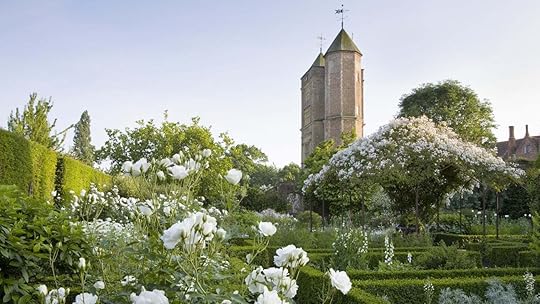
Mi sono interessata a Vita Sackville-West abbastanza casualmente, andando a visitare Sissinghurst, la sua casa con parco nel Kent. E’ una dimora particolarissima: una volta era un castello, che poi era stato distrutto dal fuoco: sopravvisse un torrione, utilizzato come casa torre. Nello spazio vuoto delle rovine, Vita allestì uno splendido giardino, al quale lavorò tutta la vita: ora appartiene al National Trust, insieme alla tenuta esterna. La casa rappresenta benissimo la proprietaria:


Nigel Nicolson racconta il matrimonio dei suoi genitori, Vita Sackville-West e Harold Nicolson, usando parte del diario scritto dalla madre in gioventù e aggiungendo parti narrative ed esplicative.
Vita era una nota scrittrice e Harold un diplomatico di buon livello, il loro fu un matrimonio molto felice, nonostante l’abbandono del tetto coniugale e dei figli piccoli, dovuto alla relazione burrascosa di Vita con Violet Trefusis (i due mariti le raggiunsero in Francia volando su un aereo a 2 posti).
Il diario di Vita sulla sua vita sentimentale venne scritto nella speranza che aprisse la via di una vita più serena a persone più timide di lei e questa è anche la principale ragione per la quale Nicolson ha pubblicato questo libro, che non è certamente scandalistico: lo scandalo lo aveva fatto la madre, notevole, ma era socialmente al di sopra del bene e del male e all’altezza delle proprie azioni.


Knole Manor, casetta natia: la più grande tenuta del Regno Unito

Da parte di Nicolson, è un omaggio all’onestà intellettuale della madre e all’intelligenza di entrambi i genitori.
E’ divertente il racconto di come lui e il fratello vennero a conoscenza dei trascorsi dei genitori: rivelazione fatta dalla nonna materna, indispettita poiché a suo dire si sentiva trascurata: i ragazzi, adolescenti, non fecero una grinza, forse non le credettero o comunque non gliene importava nulla
Profile Image for Beth Bonini.
1,414 reviews326 followers
September 2, 2019
In his Foreword to the original edition of this book (first published in 1973), Nigel Nicolson writes this about the strange, compelling and enduring union between his famous parents Harold Nicolson and Vita Sackville-West:

It is the story of two people who married for love and whose love deepened with every passing year, although each was constantly and by mutual consent unfaithful to the other. Both loved people of their own sex, but not exclusively. Their marriage not only survived infidelity, sexual incompatibility and long absences, but became stronger and finer as result. Each came to give the other full liberty without enquiry or reproach. Honour was rooted in dishonour. Their marriage succeeded because each found permanent and undiluted happiness only in the company of the other. If their marriage is seen as a harbour, their love-affairs were mere ports-of-call. It was to the harbour that each returned; it was there that both were based.<.i>


After his mother Vita’s death, her younger son Nigel discovered an unpublished manuscript in a locked Gladstone bag in her famous sitting-room in the tower at Sissinghurst. The manuscript was an emotional and ‘confessional’ account of Vita’s three year affair with Violet Keppel nee Trefusis - an affair which threatened to wreck her hitherto happy marriage with Harold Nicolson. There were many aspects of the affair which were transgressive - not least of all, Vita’s tendency to present herself as man called Julian during it. After much deliberation, Nigel decided to publish this most private episode from Vita’s life. His reasons for doing so were based primarily on his belief that his mother would have wanted it. She states explicitly that she wants to tell ‘the entire truth’ of her life; most importantly, because she feels it might be of some benefit to people ‘like herself’ - and by that she means not just people who feel sexual desire for their own sex, but people who feel that their deepest psychological make-up is gendered not as female, but male, or a mix of both sexes.

One of the most interesting aspects of this book, for me, is in the way that Nicolson alternates excerpts of his mother’s writing with explanations/corrections from his perspective - or in some cases the larger perspective. As I have been reading other biographical and autobiographical accounts of Vita’s life, alongside this book, it is fascinating to see how the shaping of selective memories can alter (slightly or drastically) the story.

Nicolson points out that the Nicolson/Sackville-West marriage was exceptionally well-documented - both from diary entries and letters between the couple. (They tended to spend the weekends together and the weekdays apart, and when they were not together they wrote each other daily.) They were fascinated by their own marriage, and took great pleasure in dissecting ‘it’ and their feelings for each other. And, truly, they did have an inarguably fascinating marriage. Nicolson makes a good case for the deep and enduring love they had for each other, despite the incongruous nature of their marriage as a whole.

This is definitely an indispensable biography if you are interested in its subject (marriage) or main characters (Harold Nicolson and Vita Sackville-West). 4.5 stars
Profile Image for Marilyn.
572 reviews23 followers
February 13, 2022
It says it all on the front page of this version, “A love story of great beauty.” Pearl S. Buck presents an interesting story of the love of William and Ruth from their 2 different backgrounds. Buck remains a fav author of mine.
Profile Image for Mary.
1,828 reviews7 followers
August 31, 2023
Interesting and well written . William was a bad example of a husband and father.
Profile Image for Kristy.
110 reviews
April 15, 2008
This book is extraordinary. And I dont' mean that in the hyperbolic sense, I just mean that it honestly transcends the ordinary. This book kind of gives me a glimpse of that sort of heightened, cerebral, upper-crust sexuality that isn't really sexy that Woody Allen always slavers over in movies like Manhattan and Stardust Memories. As much as I love his work and those films, there is a very large, Midwestern part of me that always rolls her eyes at that kind of stuff. And I have my reasons, good ones, large and Midwestern though they may be. I will say, however, that this book and Vita Sackville West's explanation of why she felt and did what she felt and did were accessible and identifiable and honeslty beautiful. Her "immoral" choices were explained and explored and, to my own personal satisfaction, they were justified. I don't know exactly what to say, because this book isn't an apologetic or a novel, it is just the publishing of a diary followed by an explication. You can't criticize something like that for not having a point or a structure or a reason, it's life. It just is. I just loved reading something about infidelity and alternative sexuality that wasn't banal and judgemental. And I'm a total prude, ask anybody.
Profile Image for Raquel.
31 reviews3 followers
February 13, 2021
A la manera de las muñecas rusas, este libro tiene historias de amor que entrañan otras. Historias complejas y muy interesantes. La perspectiva del libro, escrita por el hijo de tan notable pareja, hace el libro aún más especial. Antes de que se teorizase sobre el poliamor en la sociedad postmoderna, ya hubo familias tan insólitas que desarrollaron esa virtud. Además de reflejar brevemente una imagen nítida de la calidad humana y la inteligencia de Virginia Woolf, el libro cuenta con el relato de amor pasional más emocionante que haya leído nunca, el de Vita y Violet. Hasta ahora pensaba que la mejor historia de amor lésbico la había escrito Patricia Highsmith. Ahora tengo la sensación de que la historia más emocionante está en los diarios de Vita y en su autobiografía, una historia real además. La delicadeza de la obra la completa y equilibra también el sentido del respeto, admiración y amor de Nigel hacia sus padres, sin tampoco caer en la adulación, aportando en ocasiones visiones críticas y alternativas a los fragmentos de los diarios y autobiografías integrados en este libro. Leyéndolo, no he podido evitar pensar que yo también me habría enamorado perdidamente de Vita. ¿Y quién no?
Profile Image for Sanjana.
115 reviews61 followers
May 21, 2020
Harold & Vita’s marriage was a recipe for divorce - it involved two gay people marrying and having countless affairs. How did it survive? Nigel, their son tells us the story via Vita’s diary entries, her autobiography, letters exchanged between the couple and through his own observations.

Not all marriages are the same and who are we to judge what works for others? Harold and Vita’s marriage was built on mutual respect, love which grew with each passing year and boundless trust. We equate trust to fidelity but they equated trust to telling each other about their infidelities. They gave each other “full liberty without enquiry or reproach.”

“I know that for each of us the other is the magnetic north, and that though the needle may flicker and even get stuck at the other points, it will come back to the pole sooner or later.”


“I do love you so - it’s like a well, so deep that if you went to the very bottom, you would see stars”


Vita knew she liked girls when she married Harold, but she didn’t know “lesbianism” was a thing and she thought that side of her was just a “second personality“.

Her affair with Violet Keppel marked a tumultuous time in their marriage - what with Vita straight up eloping with her. Harold was A SAINT who gave her all his love and knew that it would be selfish to hold her back by force, even going so far as to suggest gifting Violet a copy of Sappho’s poems! It took 3 years for the Violet phase to end and a few years later none other than Virginia Woolf walks into Vita’s life - they have a very special relationship and have both written books about each other, Woolf loved Vita’s sons and they her. Harold had affairs with other men too, but their devotion to each other was unwavering through all of this.

What is amazing is the acceptance of their homosexuality by their intellectual friends and they didn’t give a hoot about what the outsiders had to say. I was shocked to see that there was a LOT of infidelity in general in the marriages in their circle. It is also surprising that Nigel harbours no ill feelings towards his mother, even though there was a lot of neglect in that relationship. It is simply unbearable to read through the parts where Vita hurts Harold repeatedly by her spoilt, selfish and insensitive nature.

The winner of this book for me is Vita’s prose. The descriptions of her life growing up in too-homely-to-be-called-a-palace,-too-palatial-to-be-called-a-home “Knole”, her mother’s own affairs, her very typical Grandpapa who would “demolish her mother’s wretched friends in 6 words”, her love for Dada are all simply SUBLIME. Enough to make me want to read her other works.
Profile Image for Rosamund Taylor.
Author 2 books200 followers
January 8, 2018
After his mother's death, Nigel Nicolson found a short autobiography written by her among her books and papers. This autobiography, written when Vita Sackville-West was in her 20s, describes her brief, passionate affair with Violet Trefusis. Portrait of a Marriage contains this autobiography along with Nicolson's own account of his parent's marriage, and quotations from letters between the Vita and Violet, and Vita and her husband, Harold Nicolson.

Nigel Nicolson is to be commended for his fair and generous approach to the material. He doesn't condemn anyone in his account of his parent's unusual marriage, but treats his parents and their partners with generosity and humanity. His material supports Vita's own account, and he quotes from letters to clarify or broaden Vita's own statements. The first four sections of this book are primarily concerned with the three years during which Vita was involved with Violet Trefusis. In Vita's own autobiography, she describes her initial meeting with Violet when they were very young, and her growing attraction first to a childhood friend, Rosamund Grosvenor, and then her passionate love for Violet. To the modern reader, it is clear that Vita is primarily attracted to women, but feels compelled to marry a man. She clearly does love Harold and wants to be sexually intimate with him, but she is conflicted and passionately attracted both to Rosamund and Violet. Through her own accounts, we see how tempestuous her relationship with Violet is and how both of them struggle to find a way to live honestly in a society that condemns their relationship. Vita has a family she loves and a husband who is kind and respectful, whereas Violet wants nothing other than to be with Vita. Their love for one another makes both women desperately unhappy, and the affair ends in sadness and loneliness.

This account functions as a both an insight into marriage and the trials it can survive, and also a condemning picture of the pain gay people experience when their relationships cannot be acknowledged or taken seriously. Violet Trefusis is driven to suicidal despair, and Vita and Harold endure years of sadness and anxiety. Today I imagine the relationship between Vita and Harold would not have been one of marriage: because while they adored each other and made generous and congenial companions to one another, they both appear to experience more passionate love and lust when in gay relationships. But this account, in both Vita's and her son's sections, shows the strengths of a marriage that exists outside normal conventions, that is founded on trust and intellectual compatibility and that can weather both parties falling in love with other people. In some ways, by happily allowing one another to have affairs, Harold and Vita are more free than many couples today.

It is clear that Vita was writing in a rush, and that her autobiography would perhaps have been edited further had she prepared it for publication. But it remains a vivid and thoughtful account of her life, and Nicolson's clear prose and fair approach to his parents deepens our understanding of the material. Although I am very interested in Vita Sackville-West and have read a number of her books, I think this book stands on its own merits and makes a fascinating read for anyone.
Profile Image for Lisa Louie.
70 reviews6 followers
July 22, 2009
I found a battered copy of this book in musty corner of a used bookstore in Mexico City, and saucily purchased it after reading the cover jacket quotation from the book, something about the husband gasping in horror at the specter of his wife holding a whip in his hand. This, although I knew that since it was Pearl Buck, there wouldn't be anything truly salacious or gratuitous about it. In truth, I've always been curious to discover which elements make a novel timeless and which consign them to the 50 cents bin. Reading this book gave me some insight.

Buck's Portrait of a Marriage is the unbelievable tale of how a high-born New York artist as a young man falls in love with a simple farmer's daughter from rural Pennsylvania, and they get married. In other words, this novel is essentially the daydream of someone who wants to believe that love can overcome class differences. But instead of the poor lover moving up to the wealthy and affluent world of the rich lover, in this novel, the rich lover moves to the country and lives the country artist life while his wife does all the child-rearing and farming. We are made to understand that the couple has a healthy sex life though, and this, fed by the artist's patronizing admiration for his wife's simple-mindedness and stout healthy body, is what keeps them together. I believe that love can overcome class differences, but this isn't the novel that truthfully and courageously explores how.

The novel's language is stale, its ideas are bound to the moment in which they had currency, and their realization in the narrative itself is difficult, if not impossible to believe.
Profile Image for Louise Culmer.
1,186 reviews49 followers
June 12, 2023
This portrait of his parents’ marriage is made up of passages by Nigel Nicholson, and extracts from an autobiography written by his mother in 1920. Most of the book is concerned with the early years of their marriage, and in particular the turbulent period from 1918-1920 when Vita Sackville West was involved in a torrid affair with Violet Trefusis. There are remarkable outpourings of passion by Vita about Violet, and the letters that Violet wrote to her in that period are equally passionate. Violet and Vita kept making plans to run away together, and did for a while, and their remarkably long suffering husbands trailed after them, apparently prepared to put up with anything. Although Nigel insists (in the face of much evidence to the contrary) that his mother was very fond of him and his brother Ben, they in fact seem to have been in her thoughts very little, and certainly not when she was in pursuit of Violet. But then that I suppose was not unusual for the upper classes, who preferred their children at a distance on the whole (and probably still do). Because Sissinghurst is so famous now, I tend to associate it with Vita, but in fact all the real excitement and drama of her life took place before she and Harold moved there, in 1930, after which their marriage was much more peaceful. The Sissinghurst years are dispensed with briefly in The last chapter of the book. All the drama was over long before they moved there, when all passion was spent you might say.
Profile Image for S©aP.
407 reviews72 followers
October 10, 2012
Un diario rinvenuto e una storia da riscrivere intimamente, più che da ricostruire. Nigel Nicolson parla di sua madre, Vita Sackville West, nobildonna inglese, scrittrice, personalità controversa e molto chiacchierata; di suo padre, diplomatico e scrittore; e del loro inconsueto rapporto coniugale, spesso oggetto di attenzioni morbose da parte della stampa, o dei gossip più sfrenati, durante il secolo scorso in Inghilterra. Cerca di ristabilire una verità umana, etica, più che storica o ufficiale.
Testo appassionato, complesso, documentato e interessantissimo. Fornisce quadri d'ambiente, spunti letterari, squarci di conoscenza. Descrive senza reticenze una realtà familiare aristocratica dissoluta e problematica; ma anche colta, intelligente e anticonformista. Rende alla madre il merito del coraggio; ai genitori insieme quello della lungimiranza sociale, oltre a descriverne l’intima fragilità. Descrive bene la sensibilità di cui spesso si condiscono i pensieri, e le azioni, degli intelletti più vispi.
Si resta affascinati dall’anarchia, a volte sovrana. Ma anche dalle debolezze passionali. E dall’intima forza di certe umane cose, che non conoscono censo. Per leggere poi i romanzi della scrittrice con partecipazione più intensa. E maggiore diletto.
Profile Image for Kristi Hovington.
1,072 reviews77 followers
September 12, 2021
Earlier this year, I reread Orlando on a whim; I was transfixed by it, 20 or so years after having first read it. Thus began a renewed infatuation with Woolf which led me through her letters, diaries, more novels, and a book of Vita and Virginia’s letters to each other, easily my favorite book of this year and one of my favorite books, period.

I became enchanted with Vita upon reading her letters to Virginia; her clear prose, more emotional style, and her utter honestly both with herself and with others are so compelling, and she lived a life unlike any other (save maybe Virginia) I have ever read about. So this book- half autobiography that she left in her writing tower for her son to find after her death, and half analysis by her son, is fascinating to me.

Her autobiography is remarkable. Passionate, vulnerable, eons ahead of its time both then and now. I learned so much about her, and much of Orlando makes more sense and after reading this, in that Orlando now seems more of the true biography that Woolf claimed it was rather than a fiction/fantasy. Vita is an extraordinary writer, and more so an extraordinary human being. I long to visit Sissinghurst/Knole/Monk’s House whenever I’m able to get back to England.
Profile Image for Shawn Thrasher.
2,025 reviews50 followers
November 13, 2015
A courageous, honest book, brilliant and blunt, sort of like being smacked with cotton candy - a sticky and sweet sensation. Nigel NIcolson finds his mother's unpublished memoir, and then fills in the bits and pieces - his mother's memoir about her now famous affair and "elopement" with Violet Trefusis; his father's homosexuality; and how the unusual couple built this enduring, strong, unusual, revolutionary marriage. These Nicolsons all must be rara avis, they are absolutely fascinating people. Nigel describes Violet as "always a bird of paradise, different, electric, much loved by young and old, a brilliant, exciting woman." She sounds delightful - but they all sound delightful. And probably terrible too. Like all brilliant, exciting people. He comes from a biased place, but it's an honest place; I think most would have shied away from their parent's queer (pun intended) relationships. This book made me want to explore Bloomsbury even more; perhaps even (finally?) tackle Virginia Woolf. More please.
Profile Image for Jonathan.
994 reviews54 followers
October 18, 2015
A fascinating look at the life of Vita Sackville-West and her marriage to Harold Nicholson. Unconventional in the extreme they stayed with each other while engaging in relationships outside their marriage. Vita is most well known for her affair with Virginia Woolf, although it was the more longstanding relationship with Violet Trefusis that was more significant to her. Partly written as Vita's autobiography and partly biography written by her son Nigel, this is a revealing and intriguing look at an important, rebellious woman who would not live by society's rules.
Profile Image for Velvetink.
3,512 reviews244 followers
June 20, 2010
Written by their son Nigel, he tells the story of Harold Nicolson's 49 yr marriage to Vita Sackville-West, a union based on trust, shared interests, deepening love, frankness and reciprocal infidelity. It's chronicles Vita's love affair with Violet Trefusis, the crisis which nearly broke their marriage.

Contains BW photographs.
Displaying 1 - 30 of 385 reviews

Can't find what you're looking for?

Get help and learn more about the design.