Jump to ratings and reviews
Rate this book

The Boys of the Dark: A Story of Betrayal and Redemption in the Deep South

Rate this book
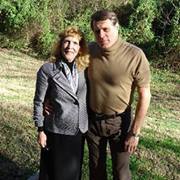
A story that garnered national attention, this is the harrowing tale of two men who suffered abuses at a reform school in Florida in the 1950s and 60s, and who banded together fifty years later to confront their attackers.Michael O'McCarthy and Robert W. Straley were teens when they were termed "incorrigible youth" by authorities and ordered to attend the Florida School for Boys. They discovered in Marianna, the "City of Southern Charm," an immaculately groomed campus that looked more like an idyllic university than a reform school. But hidden behind the gates of the Florida School for Boys was a hell unlike any they could have imagined. The school's guards and administrators acted as their jailers and tormentors. The boys allegedly bore witness to assault, rape, and possibly even murder.For fifty years, both men---and countless others like them---carried their torment in silence. But a series of unlikely events brought O'McCarthy, now a successful rights activist, and Straley together, and they became determined to expose the Florida School for Boys for what they believed it to a youth prison with a century-long history of abuse. They embarked upon a campaign that would change their lives and inspire others.Robin Gaby Fisher, a Pulitzer Prize--winning journalist and author of the New York Times bestselling After the Fire, collaborates with Straley and O'McCarthy to offer a riveting account of their harrowing ordeal. The book goes beyond the story of the two men to expose the truth about a century-old institution and a town that adopted a Nuremberg-like code of secrecy and a government that failed to address its own wrongdoing. What emerges is a tale of strength, resolve, and vindication in the face of the kinds of terror few can imagine.

256 pages, Kindle Edition

First published August 1, 2010

86 people are currently reading
1430 people want to read

About the author

Robin Gaby Fisher

12 books50 followers
Robin Gaby Fisher is a news feature writer for The Star-Ledger in Newark, New Jersey's largest daily newspaper. She specializes in telling stories about regular people living through extraordinary circumstances. She has twice been a finalist for the Pulitzer Prize for feature writing, in 2001 and 2005. She has been the recipient of the National Headliner Award and the Nieman Foundation at Harvard's Taylor Family Award for Fairness in Newspapers. She lives with her family in New Jersey and Vermont.

"After the Fire" is her first book.

Ratings & Reviews

What do you think?
Rate this book

Friends & Following

Create a free account to discover what your friends think of this book!

Community Reviews

5 stars
205 (39%)
4 stars
168 (32%)
3 stars
119 (22%)
2 stars
21 (4%)
1 star
7 (1%)
Displaying 1 - 30 of 77 reviews
Profile Image for ♥ Sandi ❣	.
1,652 reviews75 followers
October 6, 2019
5+ stars

It is not often that I give a book 5 stars. This book is certainly deserving. It is also not often that I read a book cover to cover in one day, not that I probably can't, but I seldom find a book so enticing and gut wrenching that I care to read it straight through in one day. I could barely lay this book down long enough to prepare a meal or answer my phone.

I picked this book up at mid morning just to look at it, knowing it would be one of the next books that I would be reading. I don't read a synopsis just before starting a new book, authors are way too quick to tell you more than you care to know, so I opened the book and and read the first page, expecting to remember why I wanted to read it, then lay it back down and return to a current book that I wanted to finish. However by the end of the first page, I instantly knew that I wanted to read more, then more, then more.

I first became associated with the title of this book after reading The Nickel Boys by Colson Whitehead. Whitehead based Nickel Boys, a fictional book, on the true to life experiences of boys incarcerated at the Dozier School for Boys in Marianna Florida. In his acknowledgements he gives a number of other books and articles he used as reference for that book and this book was one of them.

Originally this boys school was known as The Florida School for Boys. Two men, well detailed in the book, suffered the abuse of this school in the 1950's and 1960's, and carried those long buried memories for fifty years before deciding it was time to bring them to light. The misery they had endured, the floggings, the rapes, the mind and body control they were under is all well documented. As is the hardships they faced trying to convince anyone in authority now 50 years later that these atrocies even occurred. What started out with two men reliving the hell of their youth, and vastly affecting their current everyday lives, slowly became over 500 documented cases.

There were chapters in this book that made me extremely mad, and chapters that made me cry. I did feel that one chapter, chapter 15, was probably misplaced, although I am not exactly sure where it should have been placed, I can see it's relevance. It just felt a bit out of place.

This book is not something of the long lost past. This book was published in 2010 and takes you from the 1950's right into the present, with a lawsuit and pending legislative bills from 2009.

In 2011, the school closed.

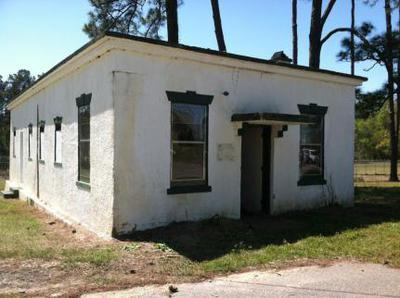
Dubbed the 'White House' this building was used to flog boys in the middle of the night.


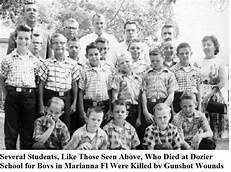
A grave yard was found on the school grounds ~ where many of those interned show signs of gun shot wounds


Following Hurricane Michael in July of this year, 2019, this article was put out by CNN that updates the grave yards found on the Dozier school grounds.
https://www.cnn.com/2019/07/17/us/doz...
Profile Image for Robert.
3 reviews
November 13, 2013
I read this book with much interest because of my incarceration at what was called Florida School for Boys - Marianne later renamed Arthur G. Dozier School for Boys - Marianne. My first time was for ten months summer 1965 to spring 1966. I went "down" once to the White House during that time. The man who administered that punishment was Mr Tidwell. A man with one arm showed a lot of power in every swing with the leather strap. After leaving my return was approximately two months later. I stayed for fourteen months and went "down" three more times. This book shows a lot of the emotional scars many received and barely endured, but it lacks a lot relating to how boys not only had to endure the punishment given out by the staff, but how a lot of us had to survive the taunting, the beatings and abuse that we gave out amongst ourselves. It was not pretty. Not only was there a hierarchy involving the staff, but the boys had their own and not to follow it brought about other punishment unrelated to the staff. Some of those boys, now old men, carry with them scars only God can see.
Profile Image for Sandra.
1,009 reviews57 followers
September 2, 2019
I had just finished reading Colson Whitehead’s latest novel, The Nickel Boys, and noted that this book was cited at the end. The novel was a harrowing read and I was shook to learn it was based on a real place. There was no way I wasn’t going to be reading this book. My main takeaway from this book is that the “reform school” was just as awful as depicted in the novel and in actuality, worse. This was the first time I read a book that made me literally nauseated.

A few criticisms, however. The book is short and should have been a quick read, but I found myself a little bored here and there and as a result found myself picking up other books instead. I feel strange saying such a horrific topic was boring; to clarify the topic is not boring but the way it is presented is dull.

The other main beef I have with book is not necessarily the author’s’ fault. The book was published in 2010. Since then, the main psychological experiment cited (The Stanford Prisoner Experiment) has been criticized to the point where it has been essentially debunked and the book presents it as fact. If you read the book, I would encourage you to skip that chapter as it doesn’t add to the narrative anyway.

As it is a shocking and important topic, I ultimately have to recommend this book, but would encourage you to read The Nickel Boys first.
Profile Image for britt_brooke.
1,651 reviews134 followers
July 26, 2020
Colson Whitehead mentions The Boys of the Dark in his Pulitzer-winning - and deserving - novel depicting the institutionalized child abuse at the Florida School for Boys. In this true account, O’McCarthy and Straley, former inmates in the 1960s, relive their suffering, vow to expose the school, and perhaps gain closure. It was they, and countless others who stepped forward, who ultimately led to the school’s closure in 2011.
Profile Image for SouthWestZippy.
2,122 reviews9 followers
March 7, 2016
In 2006 the death of a 14-year-old boy in a Florida youth boot camp forced Robert W. Straley to confront emotions and memories he had bottled up for decades. Robert W. Straley then contacted Michael O'McCarthy, a fellow victim of the school and they went on to expose the truth about the school’s guards and administrators on how they acted as their jailers and tormentors. After fifty years Michael O'McCarthy and Robert W. Straley no longer held their secrets about what all happened to them and others at the Florida School for Boys in Marianna. The book gives an eye opening and scary picture about the horrific things that went on at the school without going overboard with graphic details.
47 reviews
December 23, 2022
Likely my top book of the year. Hit many of my primary interest areas. Looking forward to reading more about the history of juvenile justice and residential care in the Panhandle Area.
Profile Image for Cindy Dyson Eitelman.
1,471 reviews10 followers
August 10, 2014
I'd read the horror stories--the true horror stories--so I was kind of afraid to read the book. But they had it at the library so....

It's a brief history of the Dozier Reform School For Boys near Marianna, Florida, combined with the story of the two courageous men who exposed the torture and abuse that went on there.

If one believed a place could be evil, this would be the place. It was Florida's first reform school, built in the late 1890s. From 1900 until its final closure in the 1980s, it was a hellhole of pain and death--death by disease, by fire, savage beatings, occasional murder. The first report came in 1903--three years after it opened, it was pronounced a failure. Young boys were being kept in irons like common criminals. Which was humane treatment compared to what came later. The boys who survived would hide the scars and try not to think of the place; never speak of it. On top of their suppressed fear and rage was a secret shame--the shame of those powerless against irrational evil. They couldn't fight back, couldn't escape, couldn't help their friends. They couldn't even help themselves.

The two men of the narrative tell their stories briefly, then describe their attempts to come to terms with the nightmares, fits of rage, and hidden self-loathing. After years of silent suffering they want to remember it clearly, get past it, and try for once to live normal lives. And help the many others with the same hidden pain. And to get an admission from the sunshine state of Florida that something had been wrong, shamefully wrong, for so many years.

One note to the author--as much as I loved the story and admired your book, resist the urge to foreshadow. We know it's going to get bad--we read the cover. You don't need to hint about it.
4,077 reviews84 followers
April 23, 2024
The Boys of the Dark: A Story of Betrayal and Redemption in the Deep South by Robin Gaby Fisher (St. Martin's Press 2010) (365.42) is a true story of the horrible conditions that existed in the twentieth century at the Florida School For Boys in Mariana, Florida. This was a reformatory which regularly featured beatings and torture of the boys/inmates even unto death. My rating: 6.5/10, finished 3/1/12.

Reread 4/21/24 - New rating: 7.25/10. This is just an awful story. The State of Florida allowed this charnel house to continue to torture its young charges until June 30, 2011! Countless lives were ruined and continue to be ruined, as the damage to the helpless victims flows downstream from generation to generation. Florida's failed politics, politicians, and policies merit nothing but contempt for the state's failure to protect its young and helpless charges.

My rating: 7.25/10, finished 4/21/24 (3938).

Profile Image for Karyl.
2,150 reviews151 followers
December 6, 2020
The Florida School for Boys, later the Arthur G. Dozier School for Boys (closed in 2011), was to be a place to house difficult boys that needed a bit of rehabilitation. Unfortunately, it became a place of hazing, abuse, brutalization, and torture for the boys sent there for the merest of reasons. Some boys were truant from school, some smoked at school. Some kids would run away from home. Many of these boys were not violent offenders; they were merely a little wild, a bit of a troublemaker. And for that, they were whipped with leather straps until their bottoms bled, raped by staff, thrown into industrial dryers which were turned on.

The stories of what happened to these boys is horrific, and it makes the reader rage that the adults trusted with the care of these kids could have perpetrated such awful things on them. No one deserves to be abused in these ways. Two of these boys, now grown yet terribly damaged from the abuse they suffered, Micheal O’McCarthy and Robert Straley, help to form a group of survivors called the White House Boys, after the building in which much of the abuse took place. They want an admission that they endured these things, and justice for those who can no longer ask for it. Unfortunately, it seems the state of Florida would rather cover these things up.

This is a difficult book to read, but I think it’s important to know how these boys were treated. The African-American boys, segregated from the white population of the school, endured even worse treatment, and suffered more deaths than the white side of the school. After reading the reviews for this book, I find that Colson Whitehead’s The Nickel Boys is based on this school; I will have to check it out.
Profile Image for Alice.
239 reviews
February 21, 2022
I came across this while culling the 300s at my library branch. Having read Whitehead’s fictionalized account, The Nickel Boys, this account tells the story of two real boys/men and those who assisted in getting their stories out. The results are mixed.
Profile Image for Leslie (updates on SG).
1,489 reviews38 followers
October 17, 2019
Reading Colson Whitehead's Nickel Boys made me want to learn more about the reform school that inspired Whitehead's novel. I chose this book because it focused on two former inmates who worked to expose the sadistic cruelty they and hundreds of other boys experienced. The violence in this book is more detailed than in Whitehead's novel, but it is bearable because Fisher also examines the origins of such behavior, the complicity of the surrounding town, and the effects on survivors. I'm glad to know that since the 2010 publication of this book, the state of Florida has formally apologized to victims and families, though efforts to provide restitution and identify remains are still ongoing.
Profile Image for Katrina.
12 reviews
December 31, 2010
This book is easy to read, but tells a true story that will give you nightmares!
The horrible injustices listed in this book are enough to make you think it's fiction. A haunting story, told in the manner of an investigative journalist, so it's easy to get read.
Basic story: what really happened to young men in the juvenile justice system in Florida from the 1950s on? Why did the Florida School for Boys have a secret room in a building? What happened to countless boys who are unaccounted for?
I think anyone from Florida should read this, and demand that their state government should make amends for the past, and investigate the answers to so many unanswered questions.
Profile Image for Mary Chambers.
309 reviews32 followers
May 20, 2012
This is such a heartrending story. I'm so glad I read it.
Profile Image for Paisley Princess.
66 reviews
July 5, 2023
The Florida School for Boys was so depraved and ghastly it could have been ripped from a horror movie. It was a place where beatings and lashings were everyday occurrences, along with rape and sex trafficking. Those who left the FSB ended up worse off than they were before, while others never left at all.

Robert Straley and Michael O’McCarthy were two boys housed at the FSB. Straley’s life took a tailspin when he read a story about a teenage boy who died two hours after entering a bootcamp. In Florida. Plagued with flashbacks and severe panic attacks all his life, he knew now was the time to expose Florida’s DOJ’s darkest secret. Michael O’Mcarthy was a social justice activist known for his work at getting reparations for survivors of Florida’s Rosewood Massacre. He fought for so many marginalized persons because in his formative years, no one fought for him. Like the time he was sent to FSB. Through trauma, tragedy, and pain Straley and O’McCarthy needed to find other survivors, and bring to light the monstrosity that was FSB .

Boys of the Dark shines a dim light of how FSB was nothing more a concentration camp, where boys were at the whim of sadistic “caretakers,” where beatings went too far, and was so terrifying a place that Florida parents threatened to send their kids there. It tells the story of two strangers who shared their their own war stories, and who vowed to hold the state of Florida accountable for their extreme negligence of those sentenced to FSB. In doing so, both Straley and O’McCarthy had to confront their individual demons, with some being too unbearable to deal with.

Robin Gabby Fischer’s takes Straley and O’McCarthy’s horror stories and frames them into a well-written, well-documented read. The accounts of their incarceration and its after effects confirms how terrible the FSB was, how the state of Florida knew about it for decades.

Because Boys of the Dark is fact-based and uses the experiences of Straley, O’McCarthy, and others to back them up, the book was a tedious read. Although it was necessary to give a historical account of FSB, of the panhandle town of Marianna, Florida, and the complicity of local and state officials in its handling of FSB, it dragged the book down.

Boys of the Dark is a sad, depressing read. There’s no closure for the survivors, nor does it allude to it. Memorial plaques, Florida’s acknowledgement of FSB’s horrors, and reforms in juvenile justice techniques can’t compete with time (poor record keeping, death of perpetrators, widespread cover-up). Scars that were hidden for decades threatened to overtake Straley and O’McCarthy, and no amount of justice could fix that. For the Boys of the dark, justice was denied, and holding the state of Florida accountable brought very little solace to FSB’s survivors.
Profile Image for Paisley Princess.
39 reviews
July 6, 2023
The Florida School for Boys was so depraved and ghastly it could have been ripped from a horror movie. It was a place where beatings and lashings were everyday occurrences, along with rape and sex trafficking. Those who left the FSB ended up worse off than they were before, while others never left at all.

Robert Straley and Michael O’McCarthy were two boys housed at the FSB. Straley’s life took a tailspin when he read a story about a teenage boy who died two hours after entering a bootcamp. In Florida. Plagued with flashbacks and severe panic attacks all his life, he knew now was the time to expose Florida’s DOJ’s darkest secret. Michael O’Mcarthy was a social justice activist known for his work at getting reparations for survivors of Florida’s Rosewood Massacre. He fought for so many marginalized persons because in his formative years, no one fought for him. Like the time he was sent to FSB. Through trauma, tragedy, and pain Straley and O’McCarthy needed to find other survivors, and bring to light the monstrosity that was FSB .

Boys of the Dark shines a dim light of how FSB was nothing more a concentration camp, where boys were at the whim of sadistic “caretakers,” where beatings went too far, and was so terrifying a place that Florida parents threatened to send their kids there. It tells the story of two strangers who shared their their own war stories, and who vowed to hold the state of Florida accountable for their extreme negligence of those sentenced to FSB. In doing so, both Straley and O’McCarthy had to confront their individual demons, with some being too unbearable to deal with.

Robin Gabby Fischer’s takes Straley and O’McCarthy’s horror stories and frames them into a well-written, well-documented read. The accounts of their incarceration and its after effects confirms how terrible the FSB was, how the state of Florida knew about it for decades.

Because Boys of the Dark is fact-based and uses the experiences of Straley, O’McCarthy, and others to back them up, the book was a tedious read. Although it was necessary to give a historical account of FSB, of the panhandle town of Marianna, Florida, and the complicity of local and state officials in its handling of FSB, it dragged the book down.

Boys of the Dark is a sad, depressing read. There’s no closure for the survivors, nor does it allude to it. Memorial plaques, Florida’s acknowledgement of FSB’s horrors, and reforms in juvenile justice techniques can’t compete with time (poor record keeping, death of perpetrators, widespread cover-up). Scars that were hidden for decades threatened to overtake Straley and O’McCarthy, and no amount of justice could fix that. For the Boys of the dark, justice was denied, and holding the state of Florida accountable brought very little solace to FSB’s survivors.
Profile Image for Kimberlie.
193 reviews11 followers
May 28, 2021
Shockingly brutal and heartbreaking.

Trigger warning for extreme violence.

I do not understand how some people can do the horrific things that they do and still be able to live with themselves. How can they sleep at night knowing what they've done.

The fact that this continued neglect, abuse, torture, and murder of these boys, some who were only there for as little as skipping school or running away from a bad situation at home, went on for so many years with no one doing anything to end it is sickening and appalling.

No one ever paid for these crimes. Everyone in the area knew what was happening, but because there wasn't enough physical evidence, not one of these torturers spent a single day in jail. Some went on to have long and free lives. Tidwell, one of the worst of them, lived to at least age 94 and may still be alive and living near Mariana.

There were many who were aware of this brutality:

"Parents in town warned their children that if they misbehaved, they would be taken to the reform school and whipped until their skin tore open, like boys up there were."

"Florida governor Leroy Collins refused to step in. He said he wouldn’t “approve or disapprove” of the practice of whipping boys at Marianna, and that he had told Superintendent Dozier to use his own discretion in disciplining students."

They called this a school, but it was a depraved and savage prison. Boys being rented out for cheap labor, locked in (eight burned to death in a fire), chained (sometimes welded onto them), whipped bloody, beaten (often to death), hogtied for days, left in a tiny concrete cell with nothing but a bucket for a toilet for a month, put into running industrial sized dryers and burned to death, forced to dig child sized graves, and being raped were normal everyday occurrences for these boys.

Over five hundred men came forward with their stories, those who were left alive to tell it fifty years later, and all were very similar and named the same names. It wasn't enough to bring charges against anyone. How could this not be enough?

"At a press conference to announce the conclusions, investigators admitted they relied sometimes exclusively on interviews with former staffers and records kept by the school."

All of this happened in Florida. Florida miserably failed these men as children, then failed them again many years later as they came forward as adults wanting justice and closure. I hope that every person who was involved by doing or by knowing and doing nothing when they could have suffer horribly for what they've done.

"Marianna failed its 2009 evaluation, in which the state conceded that many of the same problems that these men exposed were still going on at the reform school fifty years later."
Profile Image for Bry.
50 reviews1 follower
August 3, 2024
This story, these boys, will never, ever leave me.

This one is not for the faint of heart. It will quite literally turn your stomach. The events described— the violence that was inflicted on these hundreds or thousands of boys over the course of a century — are truly horrific, the stuff of nightmares, literal hell on Earth.

If you read this book, please take care of yourself as you do it. There’s a reason it took me more than two years to finish, and beware of the first few chapters. It is a lot. And it is even worse knowing these are things that actually happened to many children in Marianna, Florida.

Colson Whitehead’s Nickel Boys is a great fictional retelling of this story and, for me at least, was a little easier to read without feeling sick from the horrific descriptions.
Profile Image for Peggy Abeln.
79 reviews4 followers
July 8, 2025
Book about the survivors of the Florida correctional center for young boys that has such a horrific history of abuse of boys from as young as 5 up till 17 years of age. The survivors formed a group called the White House Boys, referring to the building where the much of the torture took place. They came together not to ask for money but really just acknowledgement and apology by the state of what they went through. The trauma they all experienced impacted their entire lives: wrecked marriages, suicides, unemployment, difficulty parenting their own kids. The state of FL did not do enough in my opinion after reading the book.
I was proud of the men who bravely came forward and pursued justice for all of the boys tortured and many killed at this facility.
Profile Image for Maria .
223 reviews
January 24, 2021
I thought this book was very well written and researched. My heart broke for the boys and what they had to experience at the hands of some sick, evil people at this school and how they continued to suffer the rest of their lives because of what was done to them. It angers me so much!

The reason I gave this 4 stars is because when the book ended I, myself, was left expecting a bit more closure - I actually needed it but I didn’t feel that the book gave me that. I think I may have felt better if the author had added a commentary or something like that to explain. I read the last sentence and I turned the page and said to myself, “that’s it?”.
Profile Image for Renae Kline.
3 reviews
December 3, 2020
I loved this book, but if you are tender hearted this my not be the book for you. I loved this book but I DO NOT CONDONE what happen to the boys in this book. I was so angry after finishing this book I started surfing the net looking for the current status of investigations and whether any of these low life abusers were still alive. God bless the hearts of the men that survived this twisted form of what some bureaucrat believed was justice, and bless the souls of the boys that didn’t survive.
Profile Image for Marsha Bentley.
22 reviews
December 25, 2020
A Story that Must Be Told and People be held Accountable

This is a horrible heartbreaking story of immense suffering, fear and lifelong repercussions from time spent at a reform school in Florida. The poor boys whose lives were forever changed by beatings, rape and murder.

The state of Florida must own up to the criminality that it allowed. One day there will be judgement!

I am so sorry boys for your lifetimes of suffering. My heart breaks for you and your families.
401 reviews2 followers
December 26, 2020
I first learned of this story while reading the Jefferson Bass novel, The Boneyard, and was surprised to discover that it was based on true events. This is a well written book about a very difficult to read topic. The memories that these men tried to bury deep inside their minds eventually surfaced and threatened to drive them crazy. The maddening part of the story is the ending. Only in true stories can an ending be so frustrating.
Profile Image for Babs M.
337 reviews1 follower
September 21, 2021
I have been following this story since it broke. I have lived in FL for over 40 yrs. so I was also quite familiar with other incidences that occurred in that time. This story needed to be known and I am
sorry that most of the perpetrators are long dead. Especially sad because of the trivial incidents that make today's news. These kids were subjected to control by instilling fear and they were not able to get the make it known so these atrocities continued for decades.
Profile Image for Susan Akers.
48 reviews
October 27, 2022
It was hard to read at times, but an important story that had to be told. The main characters met after each learning the other had gone through the nightmarish hell of the Florida Boys Home in the panhandle. It's hard to believe this went on so long without more people knowing about it. The ways they could imprison the young boys, the cruel, sadistic officials, the beatings, the deaths, the tattered lives of those who got out...it was a gripping nonfiction work.
Profile Image for Rachel.
11 reviews
September 9, 2018
Good read

Informative reading about torture and murders that took place at the Dozier School for Boys. The end left me hanging a bit and it’s unfortunate that Michael O’McCarthy died soon after the story was revealed. I feel as though I need to read more books about this to find answers.
This entire review has been hidden because of spoilers.
Profile Image for Shannan Harper.
2,462 reviews28 followers
November 20, 2019
After reading The Nickel Boys by Colson Whitehead, I had to read some of the books he referenced to, and this was one of them. This was such a hard read in reading what they experienced during their youth. It's a shame that they were treated the way they were, and I pray that one day they are able to fully heal from the trauma of their past.
Profile Image for Mari Hamilton.
56 reviews
November 28, 2020
Heartbreaking

The boys sent to the reform school (institution) suffered horrible acts of violence from the Florida State workers - workers hired to instruct and care for these young men. The state turned a blind eye for over 60 years. It was hard to read some of the ordeals and to think some were sent there as young as 5 or 6....
98 reviews4 followers
December 1, 2020
The Boys of the Dark

This is the true story of young children and teens being beaten, tortured and even murdered by staff members of the Florida School for Boys in Marianna. The punishment was usually for minor things such as truancy and running away from home. This went on for many decades until a few students joined together in a class action suit.I

Donna P.
258 reviews3 followers
January 9, 2021
Sometimes, the writing was pretty bad. But who could give this story less than 5 stars? Some topics simply transcend preference. I ordered this book after reading Coleston Whitehead's The Nickel Boys, because he recommended it in the acknowledgements. This book was about the white wing of the Florida School for Boys. It's an emotionally devastating story.
10 reviews2 followers
May 6, 2021
Awful awful awful. Heartbreaking tale of abuse unchecked for generations. I’ve been on a deep dive learning about the Florida School for Boys after reading Colson Whitehead’s The Nickel Boys, and as awful as the events as that novel are, the truth is worse. Unimaginable cruelty and sadism. Words fail.
Displaying 1 - 30 of 77 reviews

Can't find what you're looking for?

Get help and learn more about the design.