'I'll put you in my diary!' comedian Kenneth Williams was known to threaten on occasion, although tantalisingly he kept the journal to himself during his lifetime.
Here at last, in one spellbinding volume, are four million words of it. For more than forty years, from his sixteenth birthday until the eve of his unexpected death in 1988, the beloved actor and outrageous 'Carry On' star Kenneth Williams kept a candid diary. Devastatingly honest about himself, he is equally unsparing in his verdicts on his fellow man. In his descriptions of Tony Hancock, Maggie Smith, Joe Orton and countless others, his waspish sense of humour, love of anecdote and ear for dialogue are given full rein.
Malicious, hilarious and harrowing, 'The Kenneth Williams Diaries' are a unique portrait of one of Britain's most popular - and most misunderstood - performers.
Librarian Note: There is more than one author in the Goodreads database with this name.
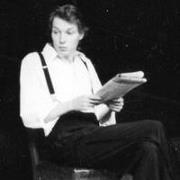
Kenneth Williams was an English comic actor and comedian, star of 26 Carry On films, numerous British television shows, and radio comedies with Tony Hancock and Kenneth Horne.
His professional career began in 1948 in repertory theatre. Failure to become a serious dramatic actor disappointed him, but his potential as a comic performer gave him his break when he was spotted playing the Dauphin in George Bernard Shaw's St Joan in 1954 by radio producer Dennis Main Wilson. Main Wilson was casting Hancock's Half Hour, a radio series starring Tony Hancock. Playing mostly funny voice roles, Williams stayed in the series almost to the end, five years later. His nasal, whiny, camp-cockney inflections (epitomised in his "Stop messing about...!" catchphrase) became popular with listeners.
He joined Kenneth Horne in Beyond Our Ken (1958–1964), and its sequel, Round the Horne (1965–1968). His roles in Round the Horne included Rambling Syd Rumpo, the eccentric folk singer; Dr Chou En Ginsberg, MA (failed), Oriental criminal mastermind; J. Peasemold Gruntfuttock, telephone heavy breather and dirty old man; and Sandy of the camp couple Julian and Sandy (Julian was played by Hugh Paddick). Their double act was notable for double entendres and Polari, the homosexual slang.
Williams worked regularly in British film during the 1960s and 1970s, mainly in the Carry On series (1958–1978) with its British double entendre-laced humour. He appeared in the series more than any other actor. He often criticised Carry On films, his own performances and those of others, considering them beneath him. Despite this, he spoke fondly of the Carry On films in interviews. Peter Rogers, producer of the series, recollected, "Kenneth was worth taking care of because, while he cost very little – £5,000 a film, he made a great deal of money for the franchise."
Williams was a regular on the BBC radio panel game Just a Minute from its second season in 1968 until his death. On television he was a frequent contributor to the 1973-1974 revival of What's My Line?, hosted the weekly entertainment show International Cabaret and was a reader for the children's story-reading series Jackanory on BBC1. He appeared on Michael Parkinson's chat show on eight occasions, during which he told anecdotes from his career. Williams was a stand-in host on the Wogan talk show in 1986.
i just finished the Kenneth Williams diaries and what is amazing is that he barely acknowledges the 60's pop culture around him. No Stamp, a little bit of David Bailey, and almost no acknowledgement of The Beatles! His world had no rock n' roll, no hippies, no teddy boys, no mind-expanding drugs, and no free love His world was British variety music halls, radio shows, occasional TV appearance, Carry On film series, classical music (which he adored), Philosophy, and his hatred or unease with his (gay) sexuality. The fact that he was a close friend of Joe Orton is fascinating as well - because it seems at least on paper they are the total opposites.
He had an obsession with suicide (and he actually killed himself) that's very Morrissey like - in fact one can hear the voice of Morrissey throughout the diary. So what we have here is a man who was sort of mean, politically conservative, but also had a good ear for picking up dialogue and obviously was super funny.
A rare snapshoot of a man who didn't actually live through his times, but was an uneasy passenger throughout the the late 40's to his death in the late 80's. Now I must see every Carry On film possible! Ok, down below are early thoughts on the book...
Because this Kenneth Williams book is a diary I dip into it from time-to-time. Nevertheless it is a fascinating read on what its like to be a British entertainer in the 50's through out the 80'.
The most interesting part of the diaries is when he deals with the great British playwright Joe Orton. They were not lovers, but very close friends - and one wonders what their common interests would be? Williams is quite free making snide comments on fellow stars and theater writers, but has nothing but kind words about Joe and his boyfriend who became Joe's murder.
What we have here is a man not comfortable with his sexuality, sort of conservative, even borderline prude - yet his sexual side does come out in his diary. One gets the impression that his best friend is the empty page in front of him.
For those outside of England, Kenneth Williams is a stage actor who became famous (in his country) for a series of films called 'Carry On." Very low-brow and sexual humor. Williams, you would think, would hate this type of humor and via his diary he seemed to had very mixed feelings working on this iconic film series.
I would strongly recommend this book if you are a fan of the Joe Orton Diaries (and you should be!) because both books cover the same ground, so it's fascinating to go back and forth between the two volumes. Also if you are interested in the London theatre world or pop entertainment of that time and period - this is the book for you!
The English actor Kenneth Williams, best-known for his roles in the Carry On films, kept a diary from 1942 until his death, probably from suicide, in 1988. This book, a necessarily but expertly edited version, functions in effect as his autobiography. It’s astonishingly vivid, intimate and compelling. This is one of the best pictures we’ll ever have of an actor’s life, of the day-to-day realities of a long career. More than that, it’s funny: bitchily, brilliantly funny.
Kenneth Williams was famed for his outrageously camp, mannered persona, and those who remember him on talk shows and game shows will agree that he was even funnier when he was being himself than when he was playing a part. But, in a sense, he was always playing a part, and what fascinates and appals and disturbs the reader of the diaries are the revelations from behind the mask. Williams, it is clear, was both a highly intelligent and literate man, frustrated by the direction of his career (pre-Carry On, he had played legitimate parts, including a supporting role in the Olivier film version of The Beggar’s Opera) and also deeply lonely and melancholic. In his lifetime, it seems, he was never understood. This book shows him as he really was. I should add that, once you’ve read this book, you’ll never look at Barclay’s Bank in the same way again.
I’m so glad that I finally took the time to read the diaries that British comedian Kenneth Williams kept throughout his life. At 801 pages long, ‘The Kenneth Williams Diaries’ are not a quick read, but as you follow the actor from his adolescence through to his golden years, you really unravel the true Kenneth Williams, the sad clown behind the camera.
A truly encapsulating figure, this book delves firsthand into events that left their mark in British history and popular culture: the Second World War, the murder of Joe Orton, the hurricane of 1987 and so on. As the writer scribbles down his thoughts, the loneliness of Kenneth Williams rings throughout. An actor desperate to be taken seriously, struggling with the idea of his own sexuality and desperately tied to his mother’s apron strings, one thing Kenneth Williams’ life is, is never boring.
Still, there’s a certain sadness that such a celebrated figure could feel so devastatingly alone, especially at the end of his life, when ill health, a dying mother and a severely reduced workload placed a strain on him. It’s up to the reader to decide whether or not he took his own life, but it certainly feels like Williams is leading towards a devastating climax after a successful radio, TV, talk show and film career.
Right to the very end, Williams delivers an enthralling performance and his last act is most certainly a good and well received one.
Quite enthralling, though I doubted it when I first started. Quite literally excerpts from Kenneth William’s diaries, which he kept from the age of 16 right up to the night before his death. A very complex character comes through, with a personality that really I would not wish upon anyone. Homosexual, though never coming to terms with it, he seemed totally unable to form normal relationships with anybody of either sex. Fastidious in the extreme and a constant exhibitionist, he seems to have constantly made an exhibition of himself with “low” behaviour and them suffered terrible remorse about it afterwards. Obviously very intelligent, very thoughtful and very well read, his presence as a purveyor of smut seems a dramatic contrast to the person he would have liked to have been. In many ways I found the book very tragic, with a doomed person at the centre. Many of his friends seem to have been in the same boat, though maybe this was the circle he mixed in, many of them constantly threatened by the fear of rejection and yet unable to cope with success when it did occur. Williams withdrew from several successful plays after they became established precisely because they became established. He seems to have had a constant need to prove himself. Made me think of actively discouraging anybody who wanted to make a career of going on the stage, so much were the negative vibes that it produced. A good read but only for those who remember him.
Sad, beautiful, haunting, funny, whimsical and enlightening.
A private view into the head and mind of Kenneth Williams, a private snapshot of the emotions that racked his psyche for years.
Fantastic for a Carry On fan like myself, to really gain an understanding of the person behind the characters - especially as he died before I was born.
There were times I hated him, and his attitude and that's ok. You don't have to love the person who's memoirs you're reading and I think that's important. I hated his cruelty to others, scathing insults and overall judgemental nature. But. I loved his sharp wit, and felt pain for his constant depression, his hatred of himself and of his sexuality, his love for his mother, his pain over her death, his constant wish for death himself.
I am not qualified enough to unpick his issues with his sexuality and his blatant homophobia but only to say how sad I am that his life was left so unfulfilled. I think a modern psychiatrist would have done him wonders.
A haunting and harrowing read that left me glad for his death, and sad for the loss of it.
The word used to describe Kenneth Williams on the blurb is, predictably, "outrageous." And he could be impossibly rude (in all senses), high-maintenance and difficult. But the surprise is that the Kenneth Williams of these diaries emerges as erudite, self-critical, tortured and a brilliantly sharp critic. Above all he is a brilliant diarist: honest, self-revealing and funny. His diaries give a truthful and compelling picture of a life and career in "the business", the Carry Ons, theatre (one serious triumph as The Dauphin), television, radio, actor, director, voice-over: he did the lot. But also the literary festivals, the serious articles and reviews; he was a self-taught intellectual whose mind aspired for high truth with a fearsomely heavy-duty reading list. A true and surprising genius of our times, a cultural icon, wayward, original, still missed.
Like many people my age (38) I vaguely recall the carry on films from my childhood. What I didn't know was how troubled the stars were and how poorly paid they were. These diaries chart Williams life from his early teens right up to his suicide aged 62. Williams was a working class homosexual at a time it was frowned upon, which made him withdrawn and depression was something he fought all his life, often shunning friends and the limelight and reading philosophy books and listening to classical music for solace. Unlike any diary I've ever read, his mood was constantly up and down. Odd book.
This was my first experience of reading a set of personal diaries encompassing such a prolonged period of time and it’s a disorientating experience to see the weft of a life laid out in front of you so starkly. The format lays bare the contradictions and hypocrisies that are embedded in every life, but it also gives an invaluable insight into the private life behind Kenneth Williams’ public persona. And what a life: from World War II to serious stage roles and rep theatre before finding himself chiefly associated with a succession of work he mostly despised. The biggest revelation for me was just how cyclical the process of Williams growing disenchanted with absolutely every piece of work he became involved with was. I can’t recall a time he remained happy with any piece of work for its duration. The insights into the world of celebrities are as scabrous (for the most part) as you might expect but it was a joy to read of those who remained supportive throughout his life, like Stanley Baxter, Gordon Jackson and Maggie Smith. It’s also a valuable insight into his approach to his craft and how critical he is of others doing things in ways he wouldn’t. It’s somewhat surprising how little he focuses on the work though — particularly the work he is best known for — and it is abundantly clear that more often than not it is just work, pure and simple. This volume doesn’t necessarily provide the insight into the Carry On films or Julian and Sandy characters you might expect. How little things like that are given any more than minimal headspace in Williams’ private thoughts are testament to the importance of things other than that in his life. There’s an endless amount to pick through including his sexuality (and the inherent impact of that in the era he was living through), his sneering petulance and his relationship with his mother. But what pervades most of all is the desperate sense of sadness. There’s an air of melancholy hanging over everything, even in the good times. From outright suicidal ideation to the ways he vents his frustration through increasing conservatism and latterly outright racism, it’s an often unpleasant read. From a health perspective, it’s a sobering look at ageing and a gradual slip into ill health and the attendant reflections on morbidity that brings with it. Through it all there’s a complicated portrait of the man and all his foibles and while there is a schism between public and private, the voice and cadence we know is unmistakably evident in every word even when outlining thoughts on subjects we might not associate with him.
I couldn't finish this as you learn all you need to know about by the hundreth page. He was a very unhappy man and, to be fair, was as hard on himself (at times) than he could be on others. But his unmerited sense of superiority gets a bit wearing after a time so took it to a charity shop to share the misery.
A long, looong read. I have to admit I became frustrated along the way (ooooer Matron!) but it gave me the peek inside his life that I wanted. Ironic that such a talent should reside in such a sad, unfulfilled man.
On one level, this is the excellent and insightful diary of a well-known 20th Century performer, going from his war years and demob, through his decision to go into performing and struggling early years in rep., his radio, theatre and film success, and his long, slow decline. As such, it is probably the fullest and frankest record we have of British theatre and show business during that period. On another level, it is a remarkable record of a consciousness. Williams was prone to what we would now call depression from the start, and had intermittent bouts of self-doubt, anxiety, and melancholy throughout his life. Wishing to be dead is a recurrent refrain. Homosexual and never happy with the idea of fleshly pursuits, he longed for cultivated companions and even a monastic existence. Overly close to his mother, which eventually was his downfall as he was left holding her as she turned into his baby, he never found a partner nor had a particularly great time with friends; whilst there are some pals that are constant (Gordon Jackson, Stanley Baxter), he falls out with most people or grows disinterested.
In the early 1960s, one would have said he had a promising future - he had done serious stage roles (the Dauphin in St. Joan, Shaffer's The Public Eye) and successful musicals & revues. But he had a run of flops (Gentle Jack, Loot, The Platinum Cat) and his love/hate relationship with the stage turned into only fear and loathing of a run. His films were limited to the Carry Ons, of which he made many, but none of which he respected. By the early 1980s, having lost his agent Peter Eade, with whom he was very close, he drifted into an endless cycle of radio game shows, TV guest spots and talk show appearances. As the decade wore on, his mother started to lose her faculties, and he was afflicted by a painful ulcer.
The last years are a painful read. Although loved by much of the public, he didn't relish interaction, and he was often subject to homophobic abuse. He turned to popping pills, and the question is left open of whether the overdose that killed him was deliberate or not. He was certainly planning to kill himself, and seems coldly resigned to his mother being put in a home without him. What is beyond doubt is that he died thinking his life had been a failure, despite having begun a new career as a memoirist. Yet it is his writing, and especially these remarkable, candid, painful and frank diaries, which (alongside his radio and film comedy performances) will keep him alive for a very long time.
This entire review has been hidden because of spoilers.
Kenneth Williams was a British treasure back in the 60's - 80's. Acerbic (and first-class b*tch), incredibly fast in thinking, funny, a renowned raconteur and one of the few known (although ashamed and not talked about) gay men of the period; not the best of role models. He was easily recognised for his physical, rather dramatic but effete presence, but also for his distinctive nasal, somewhat whining yet expressive speaking style. He was the voice of the UK show Wilo The Wisp and one of the regular stars of the British bawdy Carry On films.
From his diaries: Thursday 21st December, 1978 (package holiday in Tenerife with striking hotel workers): Made my own bed. Got coffee & milk powder from the supermarket. Back to Atlantis (hotel name) for lunch. It was a carrier bag picnic meal; they're all taking it with the apathetic calm which many mistake for British phlegm. Friday 29th December: O! if I'd been on my own I'd have got a plane out yesterday. Loads of idiots came up to me 'May I say how much pleasure you have given me?' And one mutters 'Too kind' but long to say 'May I just say how much utter tedium you've given me?'
My favourite line from the UK Carry On films delivered by Kenneth Williams playing Julius Caesar in Carry On Cleo: 'Infamy, infamy..........they've all got it in for me!'.
Reunited with my well thumbed battered copy which I bought back in 1993. I think excerpts had been printed in one of the Sunday newspapers and they were so fascinating that even as an impoverished student I went out and splurged on the hard copy. My younger brother took this off my hands years ago and recently mailed it back to me as a surprise. Rereading now, it's lost none of its wit, pathos and a fascinating glimpse into a very complicated man.
It's common for some comedians to be utterly miserable tormented souls inside and i'm not sure if there is a personality basis for it, or the extroversion of wanting to make someone laugh, or pursue some of the dark part of the world or inside in your humor too
williams seemed a repressed asexual self-loathing homosexual. died a virgin
didn't feel too comfortable with the popular low-brow comedy that got him famous like Dr. Tinkle in Carry on Doctor
I have his short book 'Acid Drops' somewhere I think of him as a more fucked up Dirk Bogarde
some comics have a real bitter harsh quality to them and have sometimes gone over the top for cruelty, Chevy Chase and Bill Murray was one....
/////
quotes - and they might not be in the book
/////
[on Dirty Harry (1971)] The morality behind the Don Siegel film is almost Homeric and epic. One man tries to do his job properly and when he does it for the last time under Promethean provocation, he resigns from the police force. It is the story of an individual conscience and it is beautifully shown. One is very glad that such pictures are being made and I hope they make a lot of money at the box office.
/////
The nice thing about quotes is that they give us a nodding acquaintance with the originator which is often socially impressive.
/////
His last diary entry before he took some pills [1988]
[earlier - I wonder if anyone will ever know the emptiness of my life.]
[by 6:30 pain in the back was pulsating as it's never done before; so this, plus the stomach trouble combines to torture me - oh - what's the bloody point? - KW]
/////
his father... a barber
Charlie Williams died in 1962 from swallowing poisonous carbon tetrachloride. The following night, having refused to visit his dying father in hospital, Kenneth went on stage in London’s West End.
Strained relationship: Kenneth's late father Charlie
“My father and I didn’t get on. He was sport-mad and wanted a son who enjoyed that. He also liked to go to the pub for a pint of bitter.
"When I was old enough to go with him, I asked for a sweet sherry. He was shocked and said: ‘You namby-pamby sod.’”
/////
People need to be peppered or even outraged occasionally. Our national comedy and drama is packed with earthy familiarity and honest vulgarity. Clean vulgarity can be very shocking and that, in my view, gives greater involvement.
/////
Being nasty doesn't require intellect; any moron can be abusive. The distinguishing factor of great wit is to be nasty with style.
/////
It was Noël Coward whose technique I envied and tried to emulate. I collected all his records and writing.
/////
All problems have to be solved eventually by oneself, and that's where all your lovely John Donne stuff turns out to be a load of crap because, in the last analysis, a man is an island.
/////
This (Dr Zhivago) may be the Great Russian Novel, but it's a pain in the ass as a film.
/////
I can't stand innuendo. If I see one in a script I whip it out immediately.
/////
Fundamentally, diaries are about loneliness.
/////
A genial and cultured Arab, Ameen Rihani, whose English is perfect and whose eloquence is astounding. He will discuss with equal eagerness and knowledge the merits of Picasso or Van Gogh, or the Zionist question, or the British achievements in Arabia.
/////
I didn't like the King's Cross world: it was grimy and dirty. I always envisioned myself in much more romantic and grand surroundings. I never really thought that I belonged to the working-class area at all.
/////
They say Im demonic in humor in the sense that I think people need somebody to wake up their mental processes.
/////
And I take full responsibility for my actions and whatever consequences my peers see fit.
/////
[diary entry 1984]
Walked home via Aldwych. Reflected that nothing really changes. I’m still walking about this city dragging my loneliness with me, putting on a front, whistling in the dark. It is getting darker all the time.
/////
Carry on Matron (1972)
Matron: Your mail, Doctor. Kenneth: I know I’m male, and what’s more I can prove it!
/////
I liked Fenella Fielding in Carry on Screaming you get the idea that she wished she was as pretty as a victorian vampira every day of her life
I've always rather liked Kenneth Williams, the slightly over the top star of many a Carry On film as well as numerous radio comedy shows. However, It did feel rather odd reading his private thoughts through his diary. This is not an autobiography where the author tells us the story of his life and keeps things in some sort of order, it's a diary, a record of the author's day to day thoughts and sometimes it's hard to keep track of what is happening. In a lot of the diary entries Kenneth refers to people by their initials rather than their name. The habit of using initials can be rather annoying as the editor will mention in one of the many footnotes that SB for instance refers to his friend and fellow performer Stanley Baxter. Later on SB will turn up again and I find myself flipping back through the footnotes because I have forgotton who SB was. Then again its a long book and I read most of it over a period of time.
In the diaries, Williams talks about his private life mostly in a sort of code. He does talk about his many trips to Morocco where he went in search of young men, something he was willing to indulge in in the secret world of gay men abroad. A lot of this activity gave him little pleasure and it seems to me he was unhappy with his sexuality and perhaps he envied his friend the playwright Joe Orton, who accepted himself and who he was in a way Williams never could.
The diaries are actually pretty famous because they reveal Kenneth Williams as being so very different to the persona he revealed to the the world. All of Williams moods are revealed in the book, his anger, his sadness and his disapointments as well as his happier times. It's interesting to read about world events in the entries, for instance the Moon landing in 1969 causes Williams to moan about the TV being all about the moon! I was 13 at the time, very interested in the Apollo programme and couldn't get enough of moon landing TV.
The three day week is mentioned in 1973 along with various entries about power cuts and industrial action, a time I remember well, sitting in my Mum's kitchen lit by a candle and my dad trying vainly to read the newspaper.
I did expect to read a lot about Barbara Windsor, his great friend from the Carry On films but there is little about her although actress Maggie Smith is talked about constantly, his admiration for her very evident.
I did wonder whether Kenneth Williams wrote the diaries expecting them to be published when he died but that same issue he dealt with in a 1972 entry where he claims that the writing of a diary is only something to jog the memory. He goes on to say; 'One puts down what one wants, not what others want. That is what is so delightful about a diary, it is what the self wants to say.'
The strange thing is that the diary reminds me a lot of my diary which I write in these days only infrequently. I started it as something just to get me writing and I still write in it on those occasions when ideas for a story or a blog fail to materialise. A diary can just be a record of your daily life but it also is a confidante, something you can turn to when something has annoyed or upset you or just when your thoughts are so overwhelming you have to get them out onto paper or your computer screen. I ended up feeling an affinity for Williams, a similarity whereas before reading this book I thought we had nothing in common at all.
Kenneth Williams seemed to have many sad moments where he wished he had a confidante, perhaps that is another reason he wrote in his diary. Many entries detail his dissatisfaction with his life and his sadness. 'What's the point?' is how he ands many entries, including his very last one on the 14th April, 1988.
I did not know about Williams theatre career, or even that he had one and it was interesting to read about what an actor and performers life is like, it seems to be mostly waiting for things to turn up, waiting for one's agent to ring or for calls from film or TV producers. When the phone does not ring it can be a worrying time, as it seemed to be for Kenneth Williams, thinking about his tax bill or other bills that need paying.
I don't feel I should really be rating this book. It doesn't seem right to give stars to someone's private (until publication, secret to) thoughts on their life. I will do, as otherwise this wouldn't really work. So I've plumped for 4 as any less would feel like a denigration of Kenneth's life. Although a 5 is too much as it was hard going throughout.
I'm of a generation that watched the Carry Ons through them being repeatedly shown on television, as both a full movie and cut up in a Carry On best of. I have always enjoyed them, as a good comedic institution. They're not the funniest movies ever and some of the humour is dated but they are enjoyable to watch. Reading about the actors behind the characters has always been a must do. Kenneth Williams not only entertained in those but I also remember his voice in Willo the Wisp, as well as other things. I'd heard about his diaries when they came out 30 years ago but never felt the desire to read them. The book looked too imposing and the general feeling I got was that he hated quite a lot of his work, especially the Carry Ons. This year though I thought I'd take a trip into Williams' life. This is the second book I've read (the first being his autobiography) and it certainly is a lot darker. It's Kenneth Williams, not laid bare as such but showing his inner self that not many people were privy to. Should they have been published? That's what I was thinking about a quarter through, as he was a miserable sod. Yes you are not in for an easy ride reading this one.
It isn't a book that I'd say you'd read for fun because as I said above, Williams is a miserable sod. It's a chore in parts to read as he is constantly moaning about everyone and everything. Just when you think he likes someone, he doesn't or indeed visa versa. I don't think it's a spoiler to say he's suicidal throughout his diaries. A lot of depressive thoughts and feeling really down. A lot is through his own making to be fair. You didn't want to get on his bad side but you didn't have to do a lot to get on it. A little quip and Williams would have had enough of you. Sid James continuously derided because Tony Hancock kept him on his show but got rid of Williams. So his feelings on people seemed very coloured by one little event and that was then, more often than not set in stone forever.
If like me you are interested in any of the Carry On cast, go for this book as it opens a lot of Williams life. Or indeed diaries that let you into someones private world (or to put it succinctly, a nosey git like me) then again it's an interesting read. Just don't expect a laugh a minute and uplifting read. This is definitely a hard read to get through but it is worth persevering with.
What a mighty tome this is, it took me nearly a week to finish. Forty one years worth of personal diaries in one volume. Kenneth was a raconteur. Up there with Ustinov, Coward and Fry. The stories he told always amused and it’s sad to read his personal life. Most of the work he did albeit stage, radio or tv generally stressed him out and left him fretting about performance etc usually the poor performance on others. It’s easy to see how he ended up with bowel problems and ulcers from stress. Even his sexuality brought him stress. He would have preferred to be straight but he wouldn’t have been the same sort of character if he had been. Most sexual encounters were mutual masterbation or kissing and hugging. It was never penetrative. I think he had ocd even putting a plastic cover over the cooker. He was hygiene mad, which meant when it came to relationships he wasn’t keen on bodily fluids and wouldn’t let someone use his toilet. It was strictly private. He constantly complained of loneliness yet couldn’t except sharing his life with someone else. He was completely selfish in many ways and insisted on being the centre of attention. Most things he did for attention like exposing his genitals to fellow actors and showing his backside in the pub would be all over the news and internet now finishing his career. Totally unacceptable. He was always generous to his mother Louie, buying her fir coats, cruises and paying for her flat next to his but he had no time for his father Charles who died rather circumspectly of poison. Neither Williams or his mother seemed bothered by his passing and even continued in his play the day he died. Barely a mention of it in his diary either. It was all very cold hearted. Louie apparently had put the cleaning fluid in a cough medicine bottle in the bathroom cabinet and having a tickly cough, Charles downed it and died. Who leaves that in a cabinet in a bathroom? Makes you think doesn’t it? Finally work dried up for Kenneth and his ageing mother became a burden. Friends were ostracised and others died leaving him facing a grim old age. That along with his stomach and bowel problems tipped him over the edge. He spoke of suicide and pills for weeks beforehand, so it’s quite a surprise the coroner gave an open verdict regarding his death. Brilliant actor and celebrity who had a haunting life really but most of his own making. Sadly missed.
I THINK KENNETH WILLIAMS WOULD RATHER BE REMEMBERED FOR PLAYING THE DAUPHIN IN SHAW'S 'SAINT JOAN' THAN SIR BERNARD CUTTING IN 'CARRY ON MATRON'!!!
It's strange how many great performers don't like the work they will always be associated with - Frances De La Tour's stint as Miss Jones (Rising Damp), Harry H. Corbett (Steptoe & Son), Kenneth Williams (his innumerable characters in the Carry On movies - one of my favs is Roland Crump in 'Carry On Behind').
The Kenneth Williams Diaries make sombre, dry reading - the acidic piss-stains of self-loathing mar even the lighter moments. Thing is, Kenneth Williams was a remarkably talented individual who was unable to recreate the world to fit his talent. In the end, the ghost gave up trying - and no doubt left with two fingers in the air.
The best bits of the Diaries are the details about the music hall/vaudeville - the music hall being the apprenticeship mentor of most of those gifted comedians of the 60s/70s. Indeed, Ken Williams will be remembered for his stock-in-trade character performances in the Carry On movies - and why not? He was brilliant in all of them - and he was a bloody good Dauphin in 'Saint Joan' too. 'Infamy, infamy -they've all got it in for me!'
This was quite the read, but totally worth it. Maybe it's just my inherent noseyness but it was absolutely fascinating to glimpse into the weird world of KW.
A word of warning: he refers to himself as a moderate (politically) at one point, but he really isn't. He loves Thatcher. He employs various interesting slurs and terms (some of which I hadn't even heard of!) that no decent person would ever use. He says hanging should be brought back, that charity is a con (most disparaging about *that* 1984 documentary on the famine, and down right rude about red nose Day). None of that takes away from the fact that this is the most fabulously interesting book, even if at the end you're left with the overwhelming impression that KW was, essentially, a very sad and lonely man.
He's also contradictory - rude about a whole race of people in one entry, whilst 3 pages later bemoaning how badly they're treated and isn't it awful. Goes the other way too, gushing over someone in February, and viciously slagging them off in March. And I bet Russell Davies got a kick out of editing together all the ire and fury he seemed to evoke in KW merely by breathing!
I am currently writing a series of reviews on books that I have read in the past, in part because I am new to goodreads. I wanted to post reviews based on my memory of those books and how I felt about them at the time. As time goes by, memory can often be an unreliable thing though. Inevitably, I am finding that it is the books that I really enjoyed which are the ones that I have better memories of. The bad ones have long since been forgotten.
The Kenneth Williams diaries is one that I am happy to give five stars. For a start it is a book that despite its 850 plus pages is just a snapshot of Williams life. He kept a diary for more or less every day of his adult life. The volumes sat there in his home and after Williams died it was Russell Davies that took on the job to condense it down to the book that we get to read. I sometimes wonder what it would be like to read the whole lot. Davies probably had to read through a lot of mundane, everyday life entries to get to the good bits. Even then much was probably left out. Williams diaries and letters collection were eventually bought by the British Library and as far as I know that is where they still are.
Williams was a complex character. Like many in the UK at the time, I got to see him because of the series of Carry On films. Williams view of those films were that he was better than that. I don't think he liked them very much. He wanted more out of his acting. He could be kind, intelligent, caring and very funny. He could also be nasty, horrible to anyone he didn't like and short tempered (listen to some of the radio broadcasts he made for the BBC, Just A Minute to see how he loses it from time to time.) The diaries record his opinions about others and many wondered what he had written about them in his "infamous" diaries.
As he got older his insecurities about his life are on full show in the diaries, especially around his health. His sad end and a mystery around how his life ended (certainly at the time) is there for all to see. He says on a few occasions "whats the point?" I get the impression that in his own mind he never quite achieved what he wanted to get out of life.
It's a fantastic read, but I do think it helps to have seen the "public" face of Williams to really appreciate the other side of his character that comes out in his diaries. I may well read it again as and when I get the time.
Oh my gosh, I wasn't expecting to feel any of the emotions that reading this book evoked. I was so moved by Kenneth Williams' observations (about himself and others), his wisdom, his honesty and his down-to-earth attitude to life. I, like so many, only knew and adored him from his roles in the Carry On movies but knew next to nothing about him. We were also neighbours - he lived a few hundred feet away from my childhood home - so I would often see him pottering about and once even plucked up the courage to say hello to him when our paths crossed at the BBC. He was extremely kind and friendly to me (despite me standing there in my school uniform, having climbed over the wall into the Blue Peter garden to get into TV Centre), which I have always remembered and treasured. By the end of the book, I felt so strongly that KW was a part of my life, so was devastated when I got to the last entry in the book. Even if only for a wonderful snapshot of British life through Kenneth Williams' eyes, this book is worth every moment it took to read over 800 pages!
I dipped into The Kenneth Williams Diaries over the span of quite a few years and I’m very sad to have finally finished them. However, finishing them on what would have been his 100th birthday gives a certain serendipity to the occasion.
These diaries are a terrific read. Sad, funny, eventful, and everything in between. Williams was a complicated man, a walking contradiction and an utterly unique soul. No matter how difficult or troubled he could be, there’s no denying how talented and spellbinding he was on screen, and evidently, on paper.
I have kept a diary for years and Kenneth’s dedication to his private confidant has only encouraged me to keep going. Whilst reading, I saw a lot of myself in him. A fascinating man and a fascinating book. I am putting it on my bucket list to see and handle these books in person at the British Library.
While much of these diaries were filled with the mundane, the thing which makes them extraordinary is that Kenneth was willing to recall his in the moment emotions and reactions to things. With no reflection in the moment about if his emotions are "reasonable". The share willingness to record his inconsistency. His love and delight in a colleague only to be followed a few days later with his hate and annoyance with the same colleague. His racist rants, followed by his outrage at apartheid South Africa. His dislike of homosexuals while at the same time being homosexual. His loneliness and his dislike of others. It's a mess. The sort of mess many of us are, but few would record. While I've enjoyed his comedy in the past, I honestly think that these diaries will outlive any memory of his acting career. They are a true and unique insight into the disfunction of an emotional human.
A thoroughly interesting read. I would recommend it for anyone who's creative, anyone who has to perform, whether as an artist, a musician, an author, a creator in any form. To see the depths between how Kenneth thought of himself and how most people perceived him, is an eye opener. From his work with Hancock, Around the Horne and the like, the Carry On films, the voice overs, the theatrical performances, the chat shows, everything is covered in quite some detail. It's also interesting, historically, to see his views on the government of the day/the current situation then (from the 50s through to the 80s) and how it always seemed dire .. dire then, dire now. Infamy, infamy ..
I really enjoyed this book. Although on times it could be a challenging read. He is one of my favourites from Hancock's Half Hour, Carry Ons and other TV programs however, you really see a different person in these diaries. A man who almost couldn't come to terms with the fact he was gay and every sexual encounter failed (he remained a virgin throughout his life) and unless he liked you, you were scathed in his book, at times it felt tedious to read all these negative comments. He is a comedian and that shows too with some hilarious entries. I wouldn't recommend this book to people who aren't fans of his, but if you are, it's a must read.
This is a bit of an odd yet undeniably honest book by a very complicated and contradictory character. Williams is both supercilious and consumed by self-loathing. The diary contains genuine laugh-out-load moments, but occasionally he reveals outright bigotry and shocking racism. All in all it descended into a whingefest and became a struggle to complete. The same themes of snide dismissals of fellow performers, bad scripts, personal illness (chief of which was undoubtedly hypochondria), holidays to Tangier or Tenerife, complaints about his living accommodation, worries about his mother (always referred to as Louie) and which restaurants he visited for his dinner all became immensely wearing and tedious. What's the bloody point indeed.....
A really interesting read for a variety of reasons. It's hard not to judge a person from diaries published after their death but I think we should step away from that. Once you do that, diaries become fascinating time stamps for the decades, which I just loved reading. Kenneth Williams clearly led an interesting life, but suffered physically and mentally, leading to some interesting entries that I'm sure he never imagined being published. The lack of any wholescale censorship renders the book into a captivating read, with the ending being almost profound in it's starkness.
Fascinating, hilarious yet often dark read. Set from the 1940s to the 1980s the diaries chart, the loves, hates, fears and often paranoid thoughts of Williams. As he tries his best to come to terms with his fame, his increasingly ailing Mother and his sexuality - the latter being illegal for most of this book - Williams life gathers a dark momentum until its tragic conclusion.