"Yarrow," a long poem conjuring up the 1960s, is presented with a group of shorter poems including "The Birth," "Incantata," and an adaptation of an episode of Ovid's "Metamorphoses"
Born in Northern Ireland, Muldoon currently resides in the US and teaches at Princeton University. He held the chair of Professor of Poetry at Oxford University from 1999 through 2004. In September 2007, Muldoon became the poetry editor of The New Yorker.
Awards: 1992: Geoffrey Faber Memorial Prize for Madoc: A Mystery 1994: T. S. Eliot Prize for The Annals of Chile 1997: Irish Times Irish Literature Prize for Poetry for New Selected Poems 1968–1994 2002: T. S. Eliot Prize (shortlist) for Moy Sand and Gravel 2003: Griffin Poetry Prize (Canada) for Moy Sand and Gravel 2003: Pulitzer Prize for Poetry for Moy Sand and Gravel 2004: American Ireland Fund Literary Award 2004: Aspen Prize 2004: Shakespeare Prize
Thank you very much for our third date, The Annals of Chile. It has been a pleasure getting to know you and what you are about, but I'm afraid it's just not working for me. I am a person who values short, brief poetic works that can put me clearly in either a time, place, or person's mindset. I can even deal with poems written as inanimate objects, if done well. However, you seem to prefer long, rambling walks filled with--to my ears--unnecessary lines that dull your clearly brilliant command of the English language.
I'm afraid that "Yarrow", a 150 page digression into your childhood, well, at least I think it was your childhood, was so confusing to me as to cause me to try and figure out if it was a set of linked sonnets, a complex rhyme I just missed, or simply an excuse to make "Chile" more than a chapbook. I'm afraid, upon reflection, that it seems as though the last option is true.
I really do enjoy some of your poems. The last few in part one of our most recent date, where you poetically relay the events leading up to the birth of a child, are quite good. "The Birth" is really a showcase of what I consider to be your considerable talents:
"Seven o'clock. The seventh day of the seventh month of the year. No sooner have I got myself up in lime-green scrubs, a sterile cap and mask, and taken my place at the head of the table
than the windlass-women ply their shears and gralloch-grub for a footling foot, then, warming to their task, haul into the inestimable
realm of apple-blossoms and chanterelles and damsons and eel-spears and foxes and the general hubbub of inkies and jennets and Kickapoos with their lemniscs or peekaboo-quiffs of Russian sable
and tallow-unctuous vernix, into the realm of the widgeon-- the 'whew' or 'yellow-poll', not the 'zuizin'--
Dorothy Aoife Korelitz Muldoon: I watch through floods of tears as they give her a quick rub-a-dub and wish her off to the nursery, then check their staple-guns for staples."
Paul, that's exactly the type of poem I like best. And, I'm afraid to say, it's simply not the type of poem you like to write. Instead, you prefer the 15 page "Incantata" that appears to have something to do with an ex-girlfriend but again, as with "Yarrow", I can't make anything out of it. I'm afraid while we may have a few interests, like wordplay, there's just not enough to keep us together in the end. I'll be happy to see you at anthology gatherings, and I bet I'd love to hear you speak in the essay format. I'm sure you can enliven any discussion at a party and I hope that when I sidle over with a jack and coke in hand, you'll smile fondly and not look away because of our parting.
Best wishes to you, Paul. I want nothing but the best for you, and I'm sorry it didn't work out.
Love,
Trebro Library, 05/08 PS: Trebby's Take: If you do in fact like long poems, this is for you.
next installment in my neverending crusade into paul muldoon & Chile is kind of his most-lauded collection it's better than usual it has a lot in common with Quoof (for better or worse). Paul writes in a lot more Irish here than the usual which is nice to see and he wrings out the influences more than usual I see a kind of Beckettism in him which he riffs on here and there. Huge 150 page poem Yarrow which runs through Shakespeare Donne has an odd recurrence of Plath which I'm really not too sure about among others. anyway definitely one of the ones I'd recommend as an intro to PM
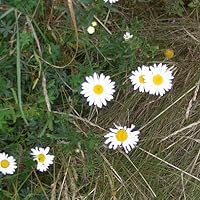
‘Achillea millefolium: with its bedraggled, feathery leaf and pink (less red than mauve) or off-white flower, its tight little knot
of a head, it’s like something keeping a secret from itself, something on the tip of its own tongue.’
(from 'Yarrow')
This collection sees the use of a new, 'ridiculously drawn out' poetic form, what Michael Robbins calls "the muldoon", where 'the ninety rhymes deployed in ‘‘Incantata’’ and ‘‘Yarrow’’ in The Annals of Chile (1994) are the same as those used in ‘‘The Mudroom’’ and ‘‘The Bangle (Slight Return)’’ from Hay (1998); ‘‘At the Sign of the Black Horse’’ from Moy Sand and Gravel (2002); and ‘‘Sillyhow Stride,’’ from 2006’s Horse Latitudes'.
My third (?) time reading this masterpiece collection. Like it literally contains two masterpiece poems in it: the obvious epic, "Yarrow," and then the sleeper masterpiece, "Incantata," which I would argue has a superior ending. The other poem-poems in the collection are generally excellent and demonstrate a unique mastery of the poem. Muldoon's way with language is akin to that of a master builder, a grandmaster, something structural yet cheeky and whimsical. He loves doing the thing where he has the same word twice in the same sentence, rubbing up against itself, to evince the duality of its meaning, and other nifty tricks he's wont to pull. So is he referencing himself with the last line of "Twice," a fun, easier-to-understand one, that describes the memory brought back by a schoolyard class photo in which a wisenheimer chum managed to run from one side of the photograph to the other: "Two places at once, was it, or one place twice?"
Another favorite is "Cows," which despite the simplicity of its title boasts several compound words that I think perhaps only Mr. Muldoon is privy to the definitions of. But the ending provides such an elegant transition out of the shorter poems in the collection to the epic poem that obstructs the rest of the book's 150 pages:
"Enough of Colette and Céline, Céline and Paul Celan: enough of whether Nabokov taught at Wellesley or Wesleyan.
Now let us talk of slaughter and the slain, the helicopter gun-ship, the mighty Kalashnikov: let's rest for a while in a place where a cow has lain."
i have to read Quoof for my seminar but saw the title of this one and i couldn't resist. i thought it would be a good introduction to muldoon's work and it felt almost serendipitous to see my own home country in the title. now, i'm scared about reading "quoof" because i just couldn't care for this one, nationalism be damned.
A cornucopia of images filtered by a poetic imagination that ranges widely over the rich banquet of Irishness & nostalgia; but does it read well? I am not so sure. Muldoon can be difficult; but he makes a few concessions with his lashings of popular culture & namedropping...obscure though many of the references are!...I will re-read this collection again. Poetry is not yet as easily-digested as fiction, its aftertastes repeating like pickled-onions or the last pint from a barrel of porter!