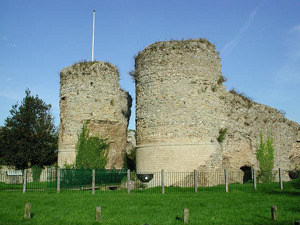
Life at Bungay Castle seems ideal for the De Morney family. Nestled in the abundant countryside of Norfolk, Bungay Castle's massive towers reach for blue skies and its solid stone walls are firmly planted in the earth - but all that's about to change. Strong winds from a violent storm bring the sound of chilling, ghostly cries located far below the castle's floors. The young De Morneys, Roseline and Edwin, begin a frightening search through the ancient subterranean passageways to discover the cause. Among the dark haunted dungeons, they discover a secret from their family's past that will forever change their lives. Cob-webbed passageways lit by a single candle, rotting caskets, ghostly sightings, and a mysterious mournful cry are just a few of the abundant gothic surprises in store for all who dare to wonder beyond the castle's locked doors. Firmly rooted in the Domestic Gothic tradition, Elizabeth Bonhote's rediscovered 1796 classic is a treasure chest of gothic elements. Combining romance, mystery, seduction, and betrayal, Bungay Castle revises and reinvents the tradition of the trapped female heroine. As we follow Roseline's journey, we become aware of one of the novel's most unique aspects: it is a surprisingly feminist novel- a rare achievement in the eighteenth century gothic genre. Rather than waiting to be rescued by men, the young women of Bungay castle achieve agency over their lives, refuse patriarchal orders, and become the rescuing heroines. An exemplary blend of sentiment, romance and the gothic, this reprint is a welcome and long overdue addition to the bookshelves of academics, subway riders, goths, and anyone longing to rediscover the joy of a great read.
Elizabeth Bonhôte, née Mapes (baptised 11 April 1744 – 11 June 1818) was an English novelist, essayist and poet.
Born Elizabeth Mapes in Bungay, Suffolk in April 1744, she was the older of two surviving children of James Mapes (baptised 1714 –1794), a baker and grocer, and his wife, Elizabeth, née Galliard (d. 1789).
She married on 13 October 1772 Daniel Bonhôte, a Bungay solicitor and landowner, by whom she bore three children between 1773 and 1777. One of her daughters, also called Elizabeth, married Rev. Richard Dreyer, rector of Thwaite and a former curate of St Mary’s in Bungay. Daniel Bonhôte later became under-sheriff of Suffolk and captain of a militia company. He died in 1804, after they had moved to Bury St Edmunds.
Little else is known of her appearance or personality. After the death of Elizabeth Bonhôte at Bungay on 11 June 1818, her will disposed of several dwelling houses and a bakery and shop in the town, as well as £3500 in cash and annuities. She also founded almshouses for elderly women and the widows of poor traders that still stand. A street in Bungay has been named Elizabeth Bonhote Close.
Elizabeth Mapes wrote several elegies and poems in praise of the monarchy, and a first anonymous novel, Hortensia, or, The Distressed Wife in 1769. She is said to have been a royalist "perfectly satisfied with our laws and constitution." In the year of her marriage she had her second novel published, The Rambles of Mr Frankly, Published by his Sister in 1772. This is a moralistic work thought to have been influenced in its form by Laurence Sterne's A Sentimental Journey through France and Italy (1768). Frankly learns from observing people during his walks in Hyde Park. The book became highly popular and was translated into German.
Illness after the birth of her children contributed to a break in her writing career, which was resumed with the novel Olivia, or, The Deserted Bride in 1787. Next came a conduct book containing moral essays "for her children's guidance", called the Parental Monitor. These appeared in two volumes in 1788 by subscription, one applying to girls and one to boys. The verdict of a modern critic: "Intended as a guide to her children in the event of her death, it advocated acceptance of one’s lot and dependence on adults."Two further novels, Darnley Vale, or, Emelia Fitzroy (1789) and Ellen Woodley (1790) were both reviewed in the Monthly Review. In 1796 there were two reprints of her Parental Monitor, one in London and one in Dublin.
Bonhôte's most successful novel was inspired by her husband's purchase of the site and ruins of Bungay Castle in 1791. Its grandeur gave rise to Bungay Castle, a Gothic romance which appeared in 1796 with the popular publisher Minerva Press and was dedicated to the Duke of Norfolk. It was reissued as recently as 2006. Bonhôte had written occasional verse throughout her life. Her final publication was Feeling, or, Sketches from Life: a Desultory Poem (1810).
Bungay Castle by Elizabeth Bonhote is a literary artifact of the 1790s. This was a time when London was obsessed with reading Gothic novels by Horace Walpole, Clara Reeve, Ann Radcliffe and their numerous imitators. Minerva Press was a major publisher of all things Gothic and they added Bonhote’s novel to their growing catalog in 1796, the same year that Matthew Lewis published his enduring masterwork, The Monk.
For those of us with an academic interest in Gothic literature, the 1790s is seen as a magical period of enlightened creativity; a renaissance of all things spooky and macabre. The era also contains a never-ending well of Gothic novels that need to be re-read, re-analyzed, and re-discovered. Sadly, these works have been largely neglected by academia and, in many cases, out-of-print for over two hundred years.
It wasn’t until 2006 that Bungay Castle received this re-printing, complete with scholarly introduction and informative footnotes. The academic perspective is useful because it is soon clear that Bonhote’s novel is not a long-lost masterpiece. Even editor Curt Herr opens his introduction with this honest statement: “The book you are holding in your hands is not an excellent novel.”
Indeed it is not. Those looking for a “pleasure read” should steer clear of its pages, which are convoluted with prose that feels dated even by 18th century standards and goes out of the way to lessen any sense of mystery or danger. The premise is so light on conflict, so constantly pleasant, that it is nearly impossible to endure. I only finished by having a steady routine of reading three or four pages a night. Any more than that and I would fall asleep.
Still, there is historical significance here, particularly from a genre perspective. Bungay Castle is a quintessential example of the “Gothic Prisons” subgenre, where an interpersonal drama plays out almost entirely indoors, if not in an actual prison cell. In this case, our heroine is secluded in an enormous castle because the outside world is war-torn and dangerous.
Left with little to do but explore the immense castle, our heroine and her friends stumble upon subterranean passages which lead to the discovery of an attractive, imprisoned man. It is unknown why this man has been jailed and kept secret, but his kind countenance keeps our heroine coming back to care for him. Soon they are in love, but she’s betrothed to a nasty old baron by her father. There’s a countdown to the dreaded wedding day, where she wanders hopelessly, waiting for something to happen.
Herr’s editorial commentary works hard to characterize the novel as a work of proto-feminism. Sometimes his arguments feel like a stretch, but he does draw attention to noteworthy passages where Bonhote plays with gender expectations. This includes making the hero weak, feeble and generally “effeminate”—to the point of dressing in his mother’s clothes. Meanwhile the heroine enjoys far more freedom and is the one who must protect him. By the end the characters feel more traditional, but the twist is nice while it lasts.
While I agree there are some proto-feminist ideas peppered in, Ann Radcliffe’s heroines take on far greater risk to reject assigned marriage. In comparison, Bonhote comes across conservative—and it’s not like Radcliffe was a radical. Far from it.
Not only would I argue that Bungay is more conservative, more sympathetic with the patriarchy, than Herr suggests, I would say that is largely the intention.
For example, much of the novel pokes fun at the melodramatic extremes of Horace Walpole’s 1764 bestseller, The Castle of Otranto. Otranto is famous for being the first “Gothic” novel and for creating the template that has largely stuck with the genre to this day.
Bonhote introduced Bungay with a cheeky comment that she could have pretended to find the manuscript “in some recess of her favorite ruins.” This is a call out to Walpole who, in his first edition of Otranto, claimed it was a found manuscript hundreds of years old.
In Otranto there are iconic scenes of animated suits of armour and terrifying elements of the supernatural. In Bungay, there are also rattling suits of armour, however they are quickly revealed to be caused by natural circumstances.
Otranto was famously inspired by Strawberry Hill, a sprawling Gothic castle where Walpole lived. Bungay Castle was inspired by the uninhabitable ruins of the actual Bungay Castle, which Bonhote owned.
In Otranto, the heroine flees rather than face marriage with a disgusting ogre. In Bungay, our heroine walks down the aisle, willing to do as she’s told for the sake of her father’s reputation.
With so many direct comparisons between the novels, it’s hard not to think of Bungay as designed to be an antithesis to Otranto. While Walpole’s novel contained non-stop melodrama on every page, including outlandish elements of supernatural, terror and fear, Bonhote’s novel strives to be the opposite. She borrows the Gothic setting, but strips away the high stakes and supernatural in favor of light, pleasant adventures which intentionally sooth the reader instead of raise their blood pressure.
Perhaps pleasantries appeal to some. My mother would no doubt prefer Bungay Castle to The Castle of Otranto. For me, however, I prefer my fiction to be juicy and full of shocks and surprises. Especially if I’m reading a Gothic novel. Even if disregarding Bonhote’s prose, which is cluttered and unclear, her preference for the mundane over melodrama is no doubt a major reason why Bungay Castle is not read more widely.
Overall, it’s important to explain that this is still an enjoyable novel—but far more so for its historical significance than its quality. Consider it “research” and not “entertainment” and you will appreciate it a lot more. I will also say that its “Gothic prison” themes are particularly fitting during these secluded COVID-19 times. I often reflected back on the early months of 2020, when my world felt locked down. These experiences gave me a greater appreciation for the environment Bonhote created and her attention to how seclusion impacts psychology.
If anybody else dares to take on this challenging read, please leave a comment and share your thoughts!
I have to admit I haven't read any gothic literature before (that I can recall anyway) and wasn't sure what to expect. This was a charming tale, light on the ghosts, lots of little mysteries to be resolved as the story unfolds, and probably one of the first feminist characters ever put into a tale.
The editor, Curt Herr, does a great job of explaining the gothic genre, and I loved the reference he made to the teen "detectives" of this book -Scooby-Doo and Nancy Drew Too. There are plentiful footnotes throughout the book, but not really necessary to enjoy the story. I did appreciate that the footnotes were at the "foot" of the page and not placed collectively at the back of the book as so many other books are. It wasn't quite so distracting flipping back to read every footnote, so the the story flowed better.
Very pleasant reading, and once you get into the author's style of reading the prose was just lovely. It's not a page turning, can't put it down until it's done type of book, but one like Jane Eyre where you want to slow down your reading pace and savor every moment and word. It's also very nice to see how authors of previous centuries could spin a love story without all the gratuitous sex that is so prevalent in our current fiction.
Highly recommended for those looking to discover an old classic.
I have opened another personal can of worms here, I think, since I know so little about gothic literature. I have to start somewhere, I suppose, and having already read The Castle of Otranto, this book would seem to be a logical progression (in chronological terms) within the genre.
If you are a fan of "scary" gothic, you will be disappointed with this book. It is very light on gothic characteristics and heavy on romance. There are several romantic relationships developing throughout the story, appropriately set at a castle and an adjoining nunnery, but the writing does not evoke the emotions in the reader which one might associate with castles, dungeons, ghosts, imprisonment, and frustrated romantic relationships. Quite to the contrary! As I read, I had visions of the perky little characters which complemented the early version of the children's Playmobil castle in the 1980s.
It seemed to me that about two-thirds into the book the author had begun to struggle for inspiration. The main narratives were temporarily abandoned in favour of two chapters featuring an unrelated side-story and a discourse on morality. I slogged through this section since I was curious to know how the unresolved romances would wrap up. I won't spoil the fun for you by telling you, though!
For me, the value of having read this novel lies in its importance in the history of women writers, since it is a very early example not only of writing by English women but of gothic literature by women. This novel was apparently the most successful of the half-dozen novels which this author published. Surely the fact that it is still being read over two centuries later is a testament to its staying power.
Dedication: TO THE MOST NOBLE CHARLES DUKE OF NORFOLK, WHOSE URBANITY AND PHILANTHROPY MUST EVER REFLECT ADDITIONAL HONOURS ON THE NAME OF HOWARD; BY WHOSE NOBLE FAMILY BUNGAY CASTLE WAS POSSESSED FOR MANY CENTURIES; THE FOLLOWING PAGES ARE RESPECTFULLY INSCRIBED, BY HIS GRACE'S MOST OBEDIENT, AND VERY HUMBLE SERVANT, ELIZ. BONHOTE.
Bungay, 1797.
Opening to the Introduction: Castle-Building appears to have been the passion of all ages; while some have been raising their fabrics on the most solid and lasting foundations, others have been forming them in the air, where the structure has been erected with infinitely less trouble, as their own invention led them to wish, and very pleasant, no doubt, was the delusion of the moment.
Model of Bungay Castle
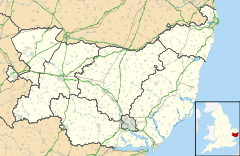
Although the GR blurb-box stresses that Bungay laid in Norfolk, it is to our modern sensibilities, in Suffolk, and nestled in near the river Waveney.
The roots of Bungay/Castle Orchard according to wiki: Originally this was a Norman castle held by the Bigod family. It was confiscated by Henry II in 1157 but restored to the Bigods around 1164. The castle was rebuilt by Hugh Bigod in 1165. It was again confiscated following the 1173-4 revolt and the great tower was pulled down. However it was restored yet again to the Bigods and was further developed in 1294 by Roger Bigod.
BiGawd that was a lot of confiscating and rebuilding.
Drama Llama stuff with lots of swooning that is worth a looksee.
This entire review has been hidden because of spoilers.
Part melodramatic novel and part moral ramblings, Bungay Castle reads painfully slow for a novel so short. Halfway through the maw of life lessons I realized I had very little clue what the point of the story actually was. Never fear for others in this predicament. Editor Curt Herr has not developed the fine art of writing commentary without giving away later plot. If you find yourself missing the storyline, consult the footnotes. If you have in fact managed to wrangle a plot in the spaces between the messages, skip the footnotes as they will indubitably ruin the story.
I bought this book about a month after it came out and I bought it at the little tea shop at Bungay Castle itself, in June 2006. I was in England and visiting my friend and his family in Bungay, Suffolk - they were visiting England too, as his parents lived and worked there.
That weekend around midsummer, I'd been exploring locations of black shuck sightings, Roman ruins, UFOs in Rendlesham, and Anglo-Saxon burial sites.
My friend and I even went out at dusk and hopped over the fence of Bungay Castle itself and took a dangerous jaunt around the ruin, ducking around the bushes of red valerian, and only managing to see by the light of the town lit up by the clouds, and maybe late midsummer sun. We were looking for Black Shuck, hoping and not-hoping to see it, and in a way, we were on an adventure like Roseline, Madeline and Edwin. There were certainly rumours of underground tunnels, that has been known for a long time, and even though the castle seems small to me, it used to be quite tall.
I got bruises on my legs from jumping the fence, but it was worth it!
When I read the book a short while later while living in Kew, London, I realised how gothic our jaunt into Bungay Castle grounds after closing time was. So much like the De Mornay's!
This gothic novel is a good one - Romantic and sweet, but more exciting than the others I have read from that time, which can be quite dull! I can see this one being made into a film or mini series - seriously, Britain has so much they can adapt onto screen. This one was brilliant with all the heroines in it, saving all the men. We need more of this.
Judging from the presented review i'm thinking that Bungay Castle should be loaded with mystery and adventure and all that but apparently i need to read it again... Sometime...
If someone asked “what gothic novel should I read first”, I would recommend Bungay Castle. I have read quite a few gothic novels from the late 1700’s, but this one was special. First the heroes were female, quite different from the shrinking violets of gothic novels written by men. I did enjoy and recommend this novel not just for admirers of the gothic, but for it’s romantic plots.
What distinguishes this Gothic novel from great many of this genre is its predominant romrntic aspect. I've read several good Gothic romence novels, but "Bungay Castle" is by far the oldest written and most romantic. Sometimes it is a family secret and not ghosts and scary monsters that makes a good Gothic story.
It’s somehow reassuring to know that even 200+ years ago, when the USA was freshly minted, and Jane Austen was still in the schoolroom, there were still trashy novels. I'm not a scholar or a literary critic, so I have nothing to say about the book's relevance to the women's movement, or its possible influence as an early work in the genre. I picked it up because I was curious about the 'horrid novels' referred to in Northanger Abbey, (and copycat references in modern regency romance).
I wanted to learn just what kind of reading material was popular at the time as a 'guilty pleasure'. Much like today: people feel obligated to read thought provoking, critically acclaimed works by people like Salman Rushdie, but for entertainment, we look towards Lisa Kleypas and Janet Evanovich.
If you’ve read other gothic works, like Frankenstein for example, you know that in the phrase ‘gothic horror’, the word ‘gothic’ really means ‘not very horrible at all’. Which is not to take away from those works – they were written at a different time for a different audience with different sensibilities. So while I was gleefully anticipating the dramatic scenes of ghostly horror in the bowels of Bungay Castle, I really should have known better.
Similarly, as a love story, it feels flat and forced. The characters instantly and completely fall in love without provocation, and there is much swooning and mooning without ever really getting to know who these people are or developing empathy with them.
And then there are the inherent issues in the narrative itself. Punctuation must have been at a premium in 1796 because on nearly every page, there is a sentence that runs the length of the page, easily passing 120 words on average. By the time the sentence has finished, I forgot what it was about when it started. There are numerous inconsistencies in the plot, the most ridiculous of which is the name of Roseline’s maid, which switches between Audrey and Abigail several times – once even within the same run-on sentence.
But for all that, there’s a certain feeling of exuberance to it, almost like if your best friend wrote a novel on a lark, and even though it’s awful, you can tell she had fun writing it.
So as simple leisure reading, I feel Bungay Castle has little to recommend itself to a modern audience, although I did come away with a better feeling for what the readers of Regency England enjoyed when nobody else was looking.
It's classic Gothic fiction--melodramatic and implausible, with love at first sight, fainting heroines, and sentences as rambling as the castle staircases. You even get the long lost son of nobility whose identity is confirmed by his birthmark. And that's exactly what I was looking for when I picked this up. (I actually read not this edition, but the Project Gutenberg transcription from the 1796 manuscript.)
Bungay Castle isn't going to be everyone's cup of tea, but if you're willing to set aside any expectation of realism (it's about as romantic a portrayal of medieval times as you can get) or brevity (see above comment about rambling sentences--I had to reread a lot of single-period paragraphs), it's a nice glimpse into the early history of guilty-pleasure novels.
I had high expectations from the reviews I read. A strong heroine? Didn't really see much of that that "defied" the social norm of the time the book was written in. Agreeably she wasn't feeble or campy...but she did internalize every difficulty that happened to her---which I could relate to. Still, the shock didn't seem so shocking at the end. Well written, endearing characters, but in terms of plot not that original--to sum up: If Pride and Prejudice and The Man in the Iron mask got together. You'd have this book.
Edit: I retract what I said about not seeming original. Oddly this book was published before the aforementioned books that I thought to be similar. Interesting.
Bonhote is definitely one of the lesser lights among women authors of Gothic fiction. Anne Radcliffe she ain't, but Bungay Castle is more romantic and less unsettling than many tales in the genre. The Zittaw Press edition has an added comedic benefit: some of the unintentionally funniest footnotes ever published. The editor's grasp of gender studies jargon is on par with a first year lit grad student in its ability to pseudo-intellectualize the baldly obvious dynamics of the plot. Only for those desperate to feel they have plumbed the depths of the gothic movement.
One of the first in the famous Gothic novels of the 1700's. It was a mix of boring and interesting in places, had a few nifty gothic-y scenes, but most of all was quite unintentionally bloody hilarious. :D





 Model of Bungay Castle