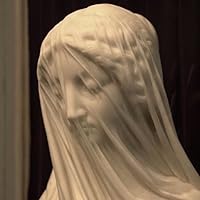
Original and engaging, this exploration of early Western philosophy traces the religious roots of science and systematic speculation. Author F. M. Cornford, a distinguished historian of ancient philosophy, combines deep classical scholarship with anthropological and sociological insights to examine the mythic precursors of enduring metaphysical concepts--such as destiny, God, the soul, substance, nature, and immortality. Cornford illustrates the rise of a new spirit of rational inquiry from traditional beliefs, demonstrating that philosophy’s modes of clear definition and explicit statement were already implicit in the unreasoned intuitions of mythology.
Cornford was educated at St Paul's School and was admitted to Trinity in 1893, being elected a Scholar the following year. Cornford obtained firsts in both parts of the classical tripos in 1905 and 1907; he was awarded the Chancellor's Classical Medal in the latter year. In 1897 he applied for the Chair of Greek at Cardiff, but was unsuccessful. However, in 1899 he was elected a Fellow of Trinity. He was appointed Assistant Lecturer in Classics in 1902 and Lecturer in 1904. In 1909 he married Frances Darwin, daughter of Ellen Crofts of Newnham College and the botanist Francis Darwin.
During the First World War Cornford was a musketry instructor at Grantham and rose to the rank of Captain before transferring to the Ministry of Munitions.
In 1921 and 1928 Cornford was unsuccessfully a candidate for the Regius Chair of Greek. In 1927 he was appointed Brereton Reader in Classics and four years later became the first to hold the Laurence Chair in Ancient Philosophy, a post which he held until retirement in 1939. He was elected FBA in 1937.
Early in his academic career, Cornford became disenchanted with "Cambridge classics" with its emphasis on philology, and published The Cambridge Classical Course: an essay in anticipation of further reform in 1903. He soon allied with like-minded persons such as Jane Ellen Harrison, Gilbert Murray and A.B. Cook in a group that became known as the "Cambridge Ritualists" who looked for the underlying thoughts and myths that underpinned classical Greece. A string of publications ensued: Thucydides Mythistoricus (1907), From Religion to Philosophy: a study in the origins of Western speculation (1912), The Origins of Attic Comedy (1914), Greek Religious thought from Homer to Alexander (1923), The Laws of Motion in Ancient Thought (1931), Before and After Socrates (1931), Plato's Theory of Knowledge: the Theaetetus and Sophist of Plato (1935), Plato's Cosmology: the Timaeus of Plato (1937), Plato and Parmenides (1939). Unwritten Philosophy and Other essays was published posthumously.
Cornford was also active politically on the Cambridge scene. In 1897 he organised a student petition in favour of degrees for women and in 1904 published an anonymous flysheet on the subject of compulsory chapel. To support rationalist moves in the University he joined with C.K. Ogden in founding the Heretics. His most famous excursion into University politics was Microcosmographia Academica, first published anonymously in 1908 and reissued many times since. In it he satirises the Cambridge system and the types of administrator that it produced. During WWI, when Bertrand Russell was deprived of his College lectureship, Cornford was one of the body of Fellows that attempted to get him reinstated.
Cornford died at his home, Conduit Head on 3 January 1943.
It wasn't what I expected but it was a worthwhile read. I learned a great deal about the changes in ancient Greek beliefs -- including about the rise of "Olympian" beliefs (which are the ones we become most familiar with when we study Greek mythology.) I could have done without the dichotomy drawn between the ancient Greeks as the source of Western thought, and the description of more contemporary polytheistic cultures as "savages", but I tried to stay mindful of the book's being published almost 100 years ago. My favorite parts were where a small attempt was made to draw parallels and comparisons to Taoist, and Hindu beliefs, but that was also clearly not the author's area of expertise, so the examinations didn't go very far. I think it could also be a good book to read along with Donna Tartt's The Secret History.
In the same vein as his contemporary Jane Ellen Harrison's "Themis," F.M. Cornford's "From Religion to Philosophy: A Study in the Origin of Western Speculation" traces the origins of the Pre-Socratic philosophers deep into the recesses of the remote, archaic past of the people's of the Greek peninsula. However, while Harrison's work delineates the sources of the religious, Cornford's work illustrates how archaic religious thought influenced, conditioned, and created the early appearances of rational scientific theories. Exploring the theories of thinkers as diverse as Parmenides, Heraclitus, and Pythagoras, this wonderful book explains these theories by referring to more contemporary thinkers such as Frazer, Harrison, and Durkheim, and by doing so "explains" the very intimate connection of the origins of science with magic and the divine. The relevancy of these ideas in light of more modern theories is in doubt; however, as a relic of how the issues were dealt with in the recent past, and as an exercise in how to lay out a concise, thematically tight theory, this book is without equal. So, if one is interested in early theories of the origin of rational thought, one should read this book with alacrity: it is that good!
Lucid and invigorating. Have ordered his book that returns to the topic - Principium Sapientiae a study of the origins of Greek philosophical thought - to see if he eschews some of his more sociologically based thought about the development of Soul and God out of social consciousness.
The book is divided into three parts. Part I, "The Pre-Socratics," provides an overview of the early Greek philosophers who broke with the traditional mythological and religious beliefs of their time and began to develop new ways of understanding the world. Cornford explores the ideas of philosophers such as Thales, Anaximander, and Heraclitus, and shows how they attempted to explain the natural world through rational and empirical means.
Part II, "The Pythagoreans and Eleatics," focuses on two influential schools of thought in ancient Greece. Cornford examines the teachings of Pythagoras and his followers, who emphasized the importance of mathematical and numerical principles in understanding the world. He also explores the ideas of the Eleatic philosophers, such as Parmenides and Zeno, who argued for the unity and immutability of reality.
Part III, "The Sophists and Socrates," examines the philosophical movements that emerged in the fifth century BCE, including the Sophists and the Socratic school of thought. Cornford shows how these philosophers challenged traditional notions of morality and virtue, and how they developed new methods of inquiry and argumentation that paved the way for the development of Western philosophy.
Throughout the book, Cornford emphasizes the importance of understanding the historical and cultural context in which these philosophical movements emerged. He argues that the transition from religious and mythological modes of thought to rational and philosophical modes of thought was not a sudden or abrupt change, but rather a gradual process that took place over centuries.
I feel I'm going to keep coming back to this author. Couldn't ask for more from this work. What a beautiful final paragraph that will perfectly lead me into my studies of Neo-Platonism