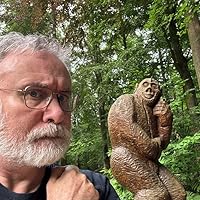
Spider Robinson is one of the only "hard" SF writers who routinely captures my interest. Reading his work never feels like a slog, and the engagement he provides never feels like a cheap thrill or a manipulatively organized roller coaster. The pacing is smart and the ideas are digestible, and the author tends to keep his cast of character small enough that the relationships between each are worth something to read. He keeps his human characters truly multifaceted without it ever feeling stitched together, and he's one of the only "plotty" writers I know of who routinely acknowledges and devotes time to nuanced emotions. For instance, the protagonist has a crying fit toward the beginning that doesn't make sense to him--he doesn't even understand why he's crying, but some perspective indicates that it's a mixture of many emotions finally finding release when it's safe. This really helps with characters like this one, too--because he's a very bright and unusually competent little boy, so seeing that he has realistic emotions is really important in humanizing him.
I like that Spider Robinson is good at writing the kinds of characters science fiction readers relate to. Most of us are nerds, and a good number of us took advanced classes or were gifted. We're curious buggers and we like to figure things out. We can all relate to the curiosity Mike carries, and I betcha almost every reader felt like Robinson was speaking directly to them when he had his characters discuss the phenomenon of understanding a mystery, and how learning the mechanics behind a magic trick DOES NOT destroy its magic. If magic depends on deception and obscured truths to exist, it feels cheaper, not like mysticism preserved for the purpose of entertaining you. I like that both of this book's main characters want to know everything, and don't find it necessary to artificially preserve a mystery so they can continue to enjoy it without understanding it.
What I liked best besides this respect for curiosity was the relationship between Mike and Annie. It didn't feel forced, and I really enjoyed that they both wanted someone around who shared their interests and values, but they were different enough that they enhanced each other instead of just echoing each other. They both had tragic backstories that they didn't tell each other out of respect for each other's privacy, but they could recognize an alikeness and a sorrow in each other, and yet their relationship didn't feel like they stayed together because they "needed" each other. Neither was looking for someone like the other when they came together. And they both became very good at reading each other's emotions, preferences, and needs. I liked that a lot.
And as Dreamworld incorporates a bunch of fantastical themes and well-loved SF worlds, I thought it was cheeky of Robinson to slide a theme park attraction based on his own books into the venue. Ho ho.
I did have some beefs with the book and these are what kept me from offering five stars. The main one was the comparative flatness of the villains. Where else have you seen a fat, ugly, greedy, jealous, bitter man who sends cronies to do his bidding and is driven by a desire to wipe out happiness? Ya know. Most uninspired movies have a villain like that. I'm especially disappointed that the narrative kept drawing attention to the Big Bad's being fat, using it as a shortcut to communicate that he is unpleasant and fundamentally awful. I would really, REALLY like to see authors STOP doing this. You are better than this, guys--you can make us hate your villains without making them fat people and then dropping sentences about their inherent repulsiveness every time they're onscreen. A) It's fat shaming, and B) it's lazy. Beyond the bad guy being fat, though, his motivation felt a little false to me. And the inclusion of a straight-up torture scene from a Bond flick was pretty unnecessary, especially paired with Mike's annoying speech about how Haines will ~never~ really win because he has a black heart and is driven by hate and even his mommy probably didn't love him, which actually works to provoke and anger him. Come on now. That's some Disney villain stuff. (I will say it's nice that the kid had some strategy going in his torture situation, though, and that the narration made it clear that pain throws a lot of that desire to be brave out the window.)
Occasionally Plot with a capital P felt a little too sculpted; you know, stuff like overhearing important conversations people just happen to be having near the protagonist when he's out of sight, races against time whose ticking clocks were pretty contrived, purposeless midnight strolls that have our hero stumble into the story's climax, and Explain Everything at the End scripts that make some of the significance of the action feel slightly hollow. I didn't care for this book's ending, including the entire final chase scenes.
Also, the word "midget" is used throughout even though I'm certain "little people" had been the preferred term for a long time before this was published in the early 2000s. Some little people don't find that word offensive but the great majority (something like 90% in a survey?) do find it to be an insulting or negative term. I'm an inch too tall to technically be considered a little person, but I can definitely speak from experience that being called a "midget" almost always feels negative, and considering it did become popularized from the days when short-statured people were shown in exhibits, I'm kinda surprised it's used like an ordinary word in the book.
Lastly, I'm not sure if this was intentional--probably?--but I never did get a real sense of what was so wonderful about Dreamworld. I got the sense that it WAS wonderful. Everyone was always telling you that it was, and in general it seemed like a theme park on steroids with futuristic technology (some of which was explained a little bit). But the sense of wonder was only believable in that the characters felt it; I didn't often get a glimpse of its actual amazingness from the source, and though the Firefall thing and the invisibility trick with the tree and all that sounded . . . pretty? . . . I kinda wanted it to be more. The feeling of magic was definitely more palpable in the moments behind the scenes in what Mike felt from seeing backstage and gaining access to employee areas and secret areas. Based on how it was described at the beginning, I almost thought hallucinogenic drugs must be involved to get people so emotionally attached and hooked on it, though I do have some friends who are serious Disney fans so I guess that's not that hard to imagine. But yeah, Dreamworld itself felt more and more like an ordinary theme park the more I heard about it, and the characters continuing to discuss how mind-blowingly wonderful it is didn't ever quite make me shake that feeling.
Despite what I consider little shortcomings, this book was well worth the read and really, really fun, and I did consider giving it five stars because of how much fun I had reading it. But given the ending and the nitpicks above, I think four works for me. I have enjoyed every Spider Robinson book I've read and I think most people who like hard SF will really enjoy this.